Charlyne Fothergill, CTO.AI - Founder Journey Series, Episode 9
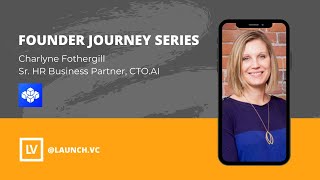
A recorded interview (Founder Journey Series) where Ray Walia interviews Charlyne Fothergill about entrepreneurship, co‑founder dynamics, and startup operational lessons. Charlyne draws on her HR and accelerator experience (GrowLab, Launch Academy, Lighthouse Labs) and her current role at CTO.AI to discuss: what entrepreneurship means (questioning status quo, opportunism, execution), different funding paths (VC vs lifestyle businesses), practical advice for co‑founders (don’t rush partners, formalize contracts, define decision ownership and revisit agreements), importance of execution ('make-measure-fail-repeat'), cultural honesty around turnover, and resources (audible/Kindle, Patty McCord's book). The episode ends with a CTA to check CTO.AI and Launch Ventures resources.
Chapters
Today on Founder Journey, we're going to talk about the traits of an entrepreneur. We're going to talk about how do you find a co founder and when's the best time to actually formalize that co founder relationship. But also how do you deal with arguments? What are some tricks that you can use to overcome those arguments and come to a consensus on the right decisions to make for your company? Because things do change, even in the good times, but especially in the bad times.
3, 2, 1.
Hey everyone. Really excited to have you joining us today again for our Founder Journeys. And I'm actually really excited to have Charlene Fothergill here on our show today. Charlene and I have been working together well over eight years now. She's one of the OGs that's been around since the beginnings of launch days. Thanks for joining us, Charlene. And you don't technically have the title of founder, but you had a very unique position in the ecosystem. You were a program manager at Grow Lab, one of Western Canada's main accelerators and you've worked closely with a lot of founders and myself and you currently work with a lot of founders and you have this unique perspective of what's happening behind the scenes, what's happening underneath the hood. So please give us a quick intro about yourself and about the industry that you're in right now.
Yeah, for sure. Well, thanks so much for having me. I'm super excited and I love sharing my unique perspective with startups in general. So, yeah, so as Ray said, I've been around for a while. I actually have a background in HR, so I have about 15 years experience in HR. I worked for a good kind of five, six years in different industries in HR and then took an HR job in tech for kind of a mid sized company. They were growing, they were getting ready for acquisition and it was kind of my first exposure to tech and the tech scene and that startup kind of world. And I just fell in love. I just was, you know, I drank the Kool Aid and there was no going back. I was really, really lucky through that contract ended and I was given the opportunity to come on board with Grow Lab and join and come on board as the program manager and worked there for three years and Launch Academy kind of started the same time I started Grow Lab. So definitely Ray and I worked together to kind of get Launch Academy up and going. Grow Lab and Launch Academy had a really awesome partnership which was a lot of fun to do some collaborations and we did some really cool community stuff back in the day. It was kind of the heyday of the early tech startup. So that was really amazing experience. And yeah, I had the privilege of essentially looking under the hood of probably hundreds, without exaggeration, startups between Grow Lab companies, which obviously had a lot of touch points with. I mentored for Launch Academy. I still do mentoring for Launch Academy and the startup Visa companies. I was involved with Spring and other various community initiatives, bringing both kind of my HR experience and that operational experience I had to the table, as well as the VC world and that kind of accelerator world that I also had that experience to bring to the table. So it was really awesome. After GrowLab merged with Highline or with Extreme Startups in Toronto to become Highline, I was given the opportunity to start with Lighthouse Labs. So Lighthouse Labs is Canada's top coding boot camp. I joined them year one. I was employee number five. I was a hire.
Yeah, when we talk about unique view under the hood, again, you as grow lab, you were looking at companies that were applying and getting into the system. And so you were responsible for making sure that these are companies that are a good fit for the accelerator, but then also the mentors, advisors and investors and everything else coming down the pipeline. And so again, when we talk about Leidos Labs, Leidos Labs is actually a company that started at Launch Academy and the founders were there building their companies for the first time and then you had a front row seat to watch them grow. And the next thing you know, you are working with them and helping them establish their business and grow the business across Canada.
Yeah, I got to vet them for a whole year and that's one of the reasons I actually approached them. I came up to them and, you know, with the merger happening and I was just looking for what my new next opportunity would be. And, you know, I loved what they were doing. I loved the problem they were solving. Having been someone who hired technical talent, I loved this. I love the disruption of education. And the Grow Lab companies were some of the first companies to hire from Lighthouse Labs because part of my job was helping them navigate things like hiring and growing their team. So it was really awesome. And yeah, being employee number five, I was their most senior hire at that point and really was, you know, I consider myself, you know, an extension of the founder team. There was always the joke of who lost more sleep in the early days. Was it Char or the founders of Legos Labs? So I was with them for five years and grew the career services department. It was just me kind of hustling and doing all the things and then When I left, I had a team of seven across Canada underneath me. You know, we had over 1600 students that had graduated with, you know, 90 plus percent rate of them getting jobs within the first four months of graduation, which was really awesome. And I just really wanted to kind of go back to my HR roots. I was missing getting super involved in the organizational development. Lighthouse was like almost 60 people by then. They had put some things in place organizationally that with my role as career services just didn't give me the time to work on those interesting problems culturally and organizationally and growing a business. So I actually reached out to Kyle Campbell, who was a grow lab company with his first company, Retsley, which was acquired by Zillow. He had started CTO AI. Lighthouse had a really good partnership with them. So again had a chance to watch CTO AI grow and stay in touch with what they were doing and kind of happenstance noticed they didn't have an HR person and reached out to Kyle and was like, hey, what do you think? Let's do this. So joined them back in February and I've been with them ever since as their senior HR business partner. And we are a venture backed product company. We have big goals, getting ready to raise a Series A soon and I'm super involved with the release of leadership team and helping make sure we have the things in place to ensure our success.
That's actually a good segue into. One of my first questions is what does entrepreneurship mean to you? Again, you've got this unique position, but when you look at somebody like Kyle, we know that these entrepreneurs, if they really are cut out to be tech entrepreneurs, failure or success or not, they keep coming back and it's a glutton for punishment. It's a tough road and there's a lot of challenges. But you see these entrepreneurs keep sticking themselves into the fray of things. And so what does entrepreneurship mean to you from the position that you sit in?
Yeah, I mean, I think entrepreneurship is questioning the status quo. It's curious. People that are kind of like, why is it this way? Why can't it be this better way? And then they have vision and ideas of having a suggestion of what that better way could be. I think they're also really opportunistic people. They're the kind of people that question those things. But then when they see that window of opportunity, they jump on it. Whereas I've worked with also not entrepreneurs and different people in my life are definitely not entrepreneurs. Instead of going, oh, wouldn't it be cool if this was the way it is or this is the way it should be. Entrepreneurs really act on that and they just dive in and there's some really good instinct, there's some really good tenacity to get in there and good entrepreneurs fail fast. So they get in there, figure out if there's actually an opportunity to be had and move on if there isn't, or double down if there is. So yeah, that's what it means to me. It's innovation. You could go as far as to say disruption. I feel like disruption is kind of a bit of a cliche term. It's not all about blowing everything up. It's not a winner take all game or world. So I think there's room for innovation. And like I said, questions. That is cool.
Yeah. And some people I've had numerous conversations with new entrepreneurs and they keep being told, you got to think big, you got to think changing the world. But we again sit in these positions where we know that hey, lifestyle based businesses or companies that are changing just one aspect of an industry are still very strong viable business. Sometimes like as an investor, it's the unsexy business that is actually the one that's going to make the most amount of money. So what's your take on entrepreneurs not shooting for the moon and taking on more reasonable size opportunities?
Yeah, I actually really love the lifestyle business, so. And Ray, you and I have talked about this so many times. I think there's this misunderstanding and I think it's getting better now. But kind of back in the day when it was like VC money and grow lab and accelerators and exits and mergers and acquisitions, like that is part of entrepreneurship. And if you take VC capital, that's the expectation, that's their business model, they need to get a return at that big, big number. So you do need to take those moonshots to have VC money. And I think entrepreneurs think they need VC money and therefore they're kind of having to dream big or taking their little idea and they think the only way to make that idea happen is to get investment and therefore they're kind of being pushed to beyond their limits to think bigger than necessarily their idea warrants or is going to be successful at. So I think it all comes down to the entrepreneur. What do you want? Do you want to be the next Facebook or the big company that gets acquired or gobbles up all the smaller companies?
Sure.
Then you need to be playing in a really big market and have a really big opportunity and there's venture capital available for you. But there's also something about as little as kind of other than having a little Etsy store. That's entrepreneurship. And having a blog that you get enough followers that you can monetize. That's entrepreneurship. And that's never going to exit. That might never even warrant investor money. So I think some of it is entrepreneurs.
Yeah. But they could also still just bring in a lot of money for the founder.
Exactly, exactly. Yeah, totally. So I think it's. Entrepreneurs need to understand that funding looks like different things, so they match the right business with kind of what they want to do and their funding options, you know, and it's okay. Like, that's the thing too, is people think it's not okay. But I know my dad had his own business when I was growing up and it never went past to employees. But he's the type of person that, like, probably is unemployable. He's most happy, like most entrepreneurs. Like most entrepreneurs. Yeah, he is. He's a pain in the butt as an employee. He's an employee now and he's just retired. And I'm like, I bet his HR person is super happy. He's not working there anymore.
No. You're making some great segues for me here. And when we talk about entrepreneurs are unemployable and having that right match with the investors and those relationships, another aspect that really comes up quite often is as you need to have a co founder. Yeah. You need to have more than one founder, building ideas and concepts, especially one of the big, big ones. But that comes with its own challenges. And I always say founding a company is very hard. Having a co founder is even harder because it's worse than a marriage. Because marriages, you can get divorced. When you're a co founder and you have the business together, it becomes even harder to separate because in a marriage, you're both working together towards one common goal. And a startup, you are both working together towards one common goal. But then you also have your personal lives, which might not align with each other. So you and I, especially myself, you know firsthand that I had the couch in my office and it was kind of like a therapy couch. Founders coming in on a regular basis.
Yeah.
Talking about. Yeah, those many tiers, both men and women, that it's their business and they're really tied to it. But when you have these founder arguments, these are challenges because you can't talk to your staff about it. You can't talk to other people because sometimes there's a negative connotation. This also applies to founder Depression, people are afraid to talk about the challenging things and this is where people like yourself and myself come and play and we're able to help work people through that. So again, having that special lens of being able to look underneath the hood and being that third party looking in. What are your thoughts on founder arguments and challenges that founders have? Yeah, don't need to get into specific.
Examples, but I'll keep confident, I definitely will say I have been the confidant of many, many founders and I have been the facilitator of several marriage counseling sessions, so to speak. So I mean, yeah, it's really hard. And so I think from a place of advice there's a couple key things. One, I think it's don't rush who your founder is. So yes, there's often a lot of pressure to find that founder from like the board and making sure it is. But you don't necessarily. Everyone doesn't need to be your founder. And I have seen a few examples. I've actually interested Ray as an investor. If you really weigh the founder title versus having a CTO who's not a founder. Right. Like maybe having some of those arm length relationships might be an option and then, you know, giving them options to become a founder a little bit later. So date before you get married is really important because you do need the business and technical side. I feel really strongly you need someone. Very few entrepreneurs can wear both hats. You know, Kyle from CTO AI does wear both hats. He is technical, but then he quickly has to decide what hat he wants to wear and kind of does. So.
So he's on his second or third startup. So it's not like he's doing this for the first time. But those skill sets are rare. And a lot of times the CTO technical co founder that you have when you start out may not be the one that's going to be there leading the team or the technical team in two, five years.
Absolutely. And that's like normal for your whole team. So if anyone's interested in a book recommendation, Patty McCord's powerful, which she was the Netflix HR person talks about that talks about creating a culture of businesses changing and what the business served for you as a person, as a founder, as a staff member, team member Day one year, one year five. You know, post acquisition, post Series A, that shifts and it's okay to say like, hey, I don't want to be part of this anymore. It's change what I signed up for. I'm just not cool with changing along with it. So One of my key things of advice to founders early on, like before there's any disagreement is make sure you have those contracts in place. What does it look like when you part ways? What does that look like if you part ways with six months within one year? Talk to your lawyers about this. And I have a saying, it's funny you brought up the marriage analogy. I always have a saying about contracts is, you know, the person you marry is not the same person you divorce. And it's just, it's just, it's so true. And it's like there's a reason there's prenups in the marriage thing because it's like, yeah, it's all nice when everyone's in love and everyone's excited and lots of energy going and it's like, cool. They would never do that to me. But it's like, listen, like, sure. But when push comes to shove and we've all seen the Facebook movie, that kind of stuff happens all the time where all of a sudden things shift. So I think if you can be really honest up front, even if your startup's in the early stages, take the time to write that stuff down. Talk to a lawyer. That's such a great thing about startups. There's so many lawyers willing to give their time and office hours or provide you templates. They don't make their money on your little founder agreement. They make their money on when you're raising series A and you're exiting and things like that. So they'll gladly give you templates and like things talk you through how to do that, but have that realistic conversation and kind of try to break through the cloud of the romance and the love that's often there in the early days or often there when things get going. And just make sure you're preparing for that bad day. And it's not even necessarily like, oh, we've had this huge fight and now it's irreconcilable differences. It's just people grow and certain sense change. People get married and they have kids and they get mortgages and all of a sudden the pre revenue venture backed startup isn't working for someone anymore.
Yeah. And there's also like economic conditions, there's geographic conditions or there's industry changes and shifts that there are disagreements. So it's kind of leading to my question around these founder arguments. What typically do you see as a cause for a lot of these arguments? Is it the changing roles? Is it the decisions? Once money gets involved and you're getting investment dollars like where do you see a lot of these heads butting early on?
So I totally have the answer to that. The area that I see most is that in the early days when everyone's working together and wearing lots of different hats, even a business and a technical founder will overlap. There isn't a clear delineation of decision making and accountability, and that's really what causes the problem. So I used to play this game with founders once in a while. The few that have had the marital counseling sessions. You know, it's like the shoe game that you, that you play at weddings, right? You ask a question like, who's most? Like, whatever. You raise the shoe, do that, like have job descriptions for your founders. You are the CEO, I'm the cto, you are the CMO slash COO slash cfo. I am the CTO or whatever. Like, and list out the areas that you get to make decision because it's all great when things work and hey, Ray, I don't really like this. What do you think? And we come, come to a consensus, but when we butt heads about the direction of the product or about a technical choice or about whatever, you need to know who's the decision maker, who gets to break that tie? Because that's really clear. And there has to be respect for that, those spheres and going, listen, like, you know, if they, if you fundamentally can. Can't agree and it's like directional type things, then, you know, maybe you shouldn't be in business together. And the business is going in a direction that both people, people can't live with. And then you have that contract and that clause in place to allow that exit and separation to happen amicably. But from the first part is just know whose realm, like who gets to be the decision maker, who gets to, to kind of put the end to the conflict, who's responsible. So I used to play this game where, you know, we'd get them to make their, their job descriptions and then they sit back to back and like, okay, situation. Here's the situation. This customer says this and they want this, this feature built, but it's over time, blah, blah, blah, who, who gets to make the call? Who breaks the tie? And then, you know, they put that, put up the shoe, who they think. And then if you're in agreement, great mental note. Now you have an example of like, where you're in agreement. And if you're not in agreement, okay, cool, let's talk about that and separate those things out. So I did that a couple times.
So you're playing the Wedding game. You're playing the wedding game in business. That's awesome.
Yeah, I mean it's a good analogy. It's a marriage.
That's actually a really great tip. But how often should you revisit that? Because especially with the early stage founders, you're walking in blind. You don't know what these roles entail or what type of decision going to have to make. And different things will evolve, you bring new people into the team and things will have to shift and change. So how often do you think you should revisit these type of agreements?
I mean I think founders should be talking all the time and maybe if you want to revisit agreements formally, but I think it's just any time, I think it's making the safe space to say this isn't working for me. It's the same as a marriage. It's that communication. And again, I think when you have those contracts up front, when nobody knows what they don't know, that you're checking in at intervals, that at the one year mark, this is how many shares the founder gets, or at the six month mark or after raising this, this is kind of where we part ways, like identify those milestones and what that would look like if after that milestone, in between the next milestone, as best you can, that you part ways, what does that contractually look like? Because it just allows someone to feel like they can say like I don't know if this is going in the right direction and sure, try to hash it out. Communication is important. But if it's really that stalemate and it's okay, like the business isn't, it's like a guarantee the business is not going to be the same on day one, on year five and what do we say, like five to seven years to a serious kind of inflection point for most startups, like if you can get there faster, you're probably a little bit more experienced in season. But if you're a first time startup, you should kind of expect to be in it for three to five years until you hit, really hit that kind of like maybe scale up or that kind of rinse and repeat cycle. And even then scaling up looks hard. Straight up scaling up is hard is one of the reasons Lighthouse Labs, like I just career services, my expertise was tapped out of how to scale that part of the business. It's a service based business and I just didn't want to have to solve that problem anymore necessarily.
Money just doesn't solve all the problems, but sometimes introduces even more problems because once you do take that VC money, you have different expectations and you need to scale at a far different trajectory than if you stayed bootstrap or took debt financing or something else. So, yeah, it's ever evolving. People need to realize that your other analogy of the person that you marry is not the person that you divorce. And that's the same thing about your business. The business is going to change, their partners are going to change. It's just humanity. Right?
And it's totally. And that's why it's like it's totally okay that as it changes, it might not serve the team. And even just building a culture. Like fast forward to when you have a team and you're building a culture. Building a culture where it's okay to acknowledge that employees have outgrown a business. I've been part of lots of businesses that have shifted over the years and seen those shift over the years. And it's okay if the dev on day one who liked that crazy startup, their voice was really heard because it was a team of three, despite the fact they're quite junior, maybe doesn't have that same voice in year three when there's a problem, proper structured engineering team in place. And maybe they don't like that. And that's cool. So it's also just creating the space, even for your employees to say, hey, you know, I'm just not here anymore. And like I said that book, I love Patty McCord's book. It's kind of my book. She articulated everything I feel about building a business in HR and operational organization. And she talks about that, talks about that, you know, that reminiscing of like, remember the good old days. And it's like those good old days are over. So if you, if you need those good old days to be happy, let me help you find something that'll make you happy. And that's an okay conversation. Turnover is okay.
Yeah, you're just nailing all the segues here. Cause the next thing I want to talk about is those good old days. Again, something that you and I have a specific lens on. Because we're an outside party. We are mentors, we're advisors, we're investors. And so we have this very different perspective of the get shit done attitude that gets it done required to get your company to the next level. So oftentimes I can see it in the entrepreneurs before they see it in the sales because I'm watching them perform and watching them execute. I'm watching how they adapt to challenges and other circumstances that may change around them. What is that? What does the get shit done attitude mean to you?
Yeah, I mean, I think you said the word execute, so I feel like, you know, entrepreneurs who talk a big game, they have big ideas, it's great. And it's like execution's the new IP. I think that's what Boris Wort said probably like 10 years ago now. It really is. It's the only IP. Someone has your idea out there, someone is working on the same startup you are doing, or the markets are crowded now. There's very few really new and innovative ideas. It's all about execution. So I think it's being able to quickly see the opportunity and innovation and challenge of the status quo, be disruptive, whatever you you want to call it, and then action that in a meaningful way and do so in a way that's, you know, we say fail fast, which is the other thing. Time is, time is the limiter. We don't have infinite time. We can have infinite money. That's possibility, but we don't have infinite time. And often time, the money runs out. So they're really well connected. So it's, you know, being able to, I think a good entrepreneur and that gets you done attitude is being able to see the thing and then translate it into those executionable plans, action them, and quickly figure out if you're on the right track so that you can pivot and do it again. So it's that cycle of, you know, make, measure, fail, repeat, make, measure, fail, repeat. So I think those are the entrepreneurs that do well. I also think the entrepreneurs that do the heavy lifting in the front to even not execute their idea because they realize it's a bad idea or that they're not the ones to execute. The idea is also really a great signifier of a good entrepreneur of like, I had this idea and I did this for a month and I did my Lean Canvas work and I talked to a hundred customers and I did all that work up front before taking someone else's money or putting yourself in debt and realized this business isn't viable, or I'm not the one to do this business, or it's just. It's not for me at all.
Awesome. All right, we're going to do a couple of Rap Fire questions.
Oh, geez.
The first one is for you and for the founders that you work with, what would you say is probably one tool or app that they can't live without or they should seriously look at integrating into their either personal life, business life, whatnot.
Yeah, for sure. So, I mean, either Kindle or Audible, like, always be reading. And I haven't tried Blinkist yet, but just being able to consume the content, you don't need to reinvent the wheel. As a founder, it's a very lonely place. But there's people who've done it before and they've written books about it. That's just how it is. Like, every major founder has some book now. Every major HR person has some book. Every major operational person has some book. Every major investor has some book. So I consume so much audiobooks, and I wouldn't be able to read without audiobooks because I can do it while I'm commuting. I go for big walks with my dog and my kid. I can have an audiobook going on the background. I can have it while I'm cleaning my house. So I live and die by Audible. That's the only reason I get through business books. If you can read, then do the Kindle or Hard Copy if you are a little bit nostalgic and old school. And like I said, if that's like, too much to consume. I've heard really good things about Blinkist, which basically give you kind of the main key points and takeaways. And that might even be a way just to vet a book if it's worth the deeper dive.
Cool. Where do you get your recommendations for books? Like, how do you find your next read?
Yeah, I mean, I think, like.
Or listen, if it's Audible.
Yeah, yeah. I mean, I follow a couple blogs. I mean, I don't really follow anything in the business world really religiously. I just kind of hear things. I mean, and they always kind of build on them. So Ben Horowitz's book, the. The culture one, what you do is who you are, was kind of a really hot one that, you know, I think you're living under a rock if you didn't hear about it at least within the first year that it came out. So I picked up that one. And from there there was other kind of recommendations of people, other recommendations of books. That website had other books, and it just kind of leads you down the rabbit hole of different books to read. I mean, also I think that founders read. I think most founders consume this kind of thing, so it's pretty easy to stay up on what's kind of hot. I think also you can, like, Google search it these days or just ask someone what they should read. There's so many books out there and, you know, it's almost like, again, there's no reason to go at it alone. So so to speak, someone has at least talked about their experience doing it pretty closely to what you're doing.
Awesome. And you've dropped a few books during this conversation. Yeah. So, last one, what's your party advice for entrepreneurs new and old? Like some of our listeners or viewers are entrepreneurs that built a company five, 10 years ago and they're getting back into the thick of things with a new idea. What's some advice that you have for entrepreneurs across the board?
I mean, so I think you have to be adaptable. Change is the only constant. So I think just embracing that. So don't think the idea that you originally sketched on your napkin, as the fairy tales go, is gonna be the idea that you take to market. And then I think if you're early stage, do the prep work all the time. I work with a lot of like and mentor and speak to a lot of really early stage startups. And I'm like, you don't need to spend very much money. It's the Lean entrepreneurship course. I know Launch Academy was teaching for a while and I had the opportunity to teach. It's the lean startup. Just read the Lean Startup. It's got all the steps and really do the research on if this is a really viable business up front. You'll save yourself so much time and money. And then I think the other thing is surround yourself by people who aren't going to be your yes men. Like there's some sayings that like, you never ask your mom what she thinks because she's always going to say it's great. And I think hearing hard feedback or negative feedback is really just off putting to us as human beings. Like it triggers part of our caveman brain that we actually can't really deal with it. So developing the skill to listen to that and really listen. If someone gives you negative feedback or they don't like your thing, it is way more valuable than someone telling they do like it because it's easier, easier to tell you do you like it. It's easier to just go, yeah, that's great, I love it. It's really hard to deliver negative feedback in a constructive way. And you know, if you can really listen to what that is, there's probably more nuggets of truth in there. And it checks yourself because you're probably surrounded by yes people, especially if they're your employees or your friends or your family. So, you know, getting involved with communities like Launch Academy, you know, going to kind of pitch events where there's critical feedback being given is really big and Then just really lean in and listen to that. And especially if you're hearing it more than once, I think that's a really huge key thing. So again, it's all about failing fast. It's about figuring it out.
Awesome. I think you're four for four on the segues because the last thing for us to the audience is check out our launch course. If you are new to entrepreneurship and you're trying to jump into it, we are constantly adding new content out there and, and our goal is for entrepreneurs by entrepreneurs. We want to help them as much as we can. Charlene, I really appreciate you taking the time to join us today. I really think this is a unique perspective from all the other videos that we shared in the series. And I hope. I know I enjoyed it. I hope everybody else that's viewing enjoyed this as well. Charlene, any last call to action? Things that you want to get from the audience to.
Yeah, I mean, yeah, I mean, I'll give the shout out to CTO AI. We are automating the workflow and DevOps process. We're making DevOps more accessible and enjoyable. So if you are a company, you need DevOps to compete in regards to your technical advancement. Check out CTO AI because we're making that easier. You can join our community, you can play with our tool all for free. Right now, we're in that early beta testing. We do have some bigger clients coming down the pipe side, so that's really exciting. But I think, I mean, the one thing I do want to just say, in today's world, I'm actually really excited not by the things that are happening in today's world, but with all the chaos, there's just. I'm really excited to see what comes out of it and what innovations. We're questioning the status quo all the time. With COVID we're questioning the status quo with the things that are happening down in the States and we're looking inwards and going, oh, Canada, we're not that great either. We need to question our own stuff going on. And I think this is just a really ripe opportunity for entrepreneurship and us to kind of pave the way for a better future. So I would just encourage people who are have ideas to, you know, take the course, learn how to be an entrepreneur. You don't necessarily need to be Facebook that exits or acquires everyone else on the market. You know, it can look different for different people. And I'm just excited for change. We really need it. So that'd be my call to action. Is get out there and explore. Explore your business idea and then check out CTO AI too.
Awesome. Thanks Charlene for the audience. This is our Founder series and we will have more episodes coming every week and more great entrepreneurs and industry experts like Charlene joining us on a weekly basis. Launch Ventures is for entrepreneurs by entrepreneurs. If you enjoyed today's episode of Founder Journeys, please like share follow and check out our link in bio for all the other good stuff.
More from Ray




A Founder's Story. Creating the World’s First Laundry Robot — Joshua Rabanne, Laundrx

Bits&Bytes with Sherry Li, Assistant Professor at Berklee, Co-Founder of ICTUS Audio

Why This Young Person Left Child and Youth Care To Work in Tech - Bits & Bytes with Samson Li




