Darius Eghdami, Fans Unite - Founder Journey Series, Episode 4
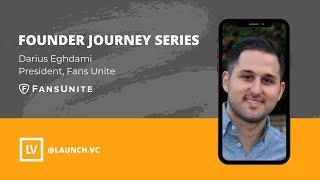
A recorded interview (Founder Journey Series, Ep.4) where Ray Walia interviews Darius Eghdami — founder and president (and Chairman) of Fans Unite Entertainment — about his personal and entrepreneurial journey. Darius recounts entering sports betting in 2009, starting Fans Unite (first iteration ~2013), selling to Victory Square in 2016, spinning out in 2018, and recent growth into a publicly traded iGaming platform focused on sportsbook, esports betting and casino games. The conversation emphasizes fundraising and M&A milestones, navigating pandemic-driven shifts (notably esports), team-building challenges, and the importance of mental health, mindfulness and work–life balance for founders.
Questions this video answers
2009
2013
2016
2018
Boomtown (Boulder, Colorado)
Chapters
3, 2, 1.
Hey. Welcome back to another episode of Founder Journeys. Really excited. I'm always excited because all these entrepreneurs are my friends. So you keep hearing me say that over and over, but this one is a special one. Darius Agadami is the founder and president of Fans Unite Entertainment. It's a public company listed on the Canadian Stock Exchange. We had a bit of a hand in helping through that journey with Victory Square. And we'll get into some of the stories of Darius and I and that journey together. But he's a serial entrepreneur and he's an investor, a good friend. Darius, welcome to the show. Real honor to have you on today.
Awesome. Thanks, Ray. Lucky to be here.
Yeah. So for our audience, tell us a little bit about yourself, background. Tell us about Fans Unite, the industry that you're in. And we won't dive too much into the company itself, but really want to dive into you and your journey. But give us a background about Fans Unite and what you're doing there.
Yeah, for sure. So I'm the president now of Fans Unite, Chairman of the board. We're a publicly traded sports betting company focused on the technology side for sports betting, esports, casino, and now casino games as well. So being at it for quite a while, it's been a long journey. It's nice to see it going public this year.
Yeah. And it didn't start off as this big beast that it's growing into. When you first started, like, I got introduced to the company and handicapping and figuring out what handicapping is. Tell us about the initial journey of Fans Unite or even before that. Like, I know you were at kpmg, you're an accountant and just like me, but how did you go from working a KPMG 9 to 5 type job and then starting your own business and sports betting of all things.
Yeah, for sure. My story is pretty long winded here, so I'll try to keep it as high level as possible. But I actually got into the sports betting industry in 2009. So I was in accounting school at UBC. I was sitting in the back of the class and I had my own little website where we used to predict the outcomes of games. So we picked like four or five games a day, NFL, NBA, NHL, whatever it was. And we picked who we thought was going to win and why we thought they were going to win. And then we charged for that information, we charged 70 bucks week for people to get access to that information. And we launched the site, we started marketing it around a little bit and the money started coming in and we were like, super excited, like, holy crap, people pay for this stuff. And, you know, after a while, they realized we weren't actually very good. So they churn out pretty quickly.
Your picks weren't good?
Yeah, we were like 50 50, which is like, you're not good. You're not making anyone money at that point. But we were pretty good at marketing ourselves. So we paid our last way through university just by making those picks. And then, you know, we realize at that point, like, you know, we're just a couple schmucks doing this. There's so many other schmucks out there doing the same thing. We are charging hundreds of dollars for, like a single pick. There must be, you know, a better way.
So this is global, right? So this is not just. You're just selling to people in Vancouver, Canada, you're selling your picks and data.
All around the world. That's right. Yeah. We had, you know, tens of thousands of members, or I guess that's for the Fanta Night side. But we were selling our picks all around the world because sports are global. Right. Which is what makes it pretty cool. But from there, I actually went to kpmg, worked there for three years, got my chartered accountant designation. Always knew I wanted a designation like that in my back pocket, but I knew I wouldn't stay there. I was kind of an entrepreneur at heart. I knew I was wanting to start my own thing, so I got designated and I left. I had started the first iteration of Fans United while I was at KPMG and decided I want to go work on this full time. So I left KPMG in 2014 to pursue that kind of social sports book concept, handicapping concept in 2014, that kind of started my path and my career to where I am now.
Fans Unite now is a public company, but you're growing. What can we expect from Fans Unite?
Yeah. So, I mean, I guess the last six years has been pretty interesting. So we started that company in 2013. We were fortunate enough to sell it in 2016 to Victory Square and got to work with you guys, of course. And then in 2018, we decided to spin it out. Thought that would be the best way to maximize value for everyone. So we spun it out, raised a bunch of money, build up the team, started building out the concept. And the concept was new about getting into real money, sports spending and building the technology behind that. So we built it out. And then earlier on this year, we wanted to go public. So we did another financing, we did an acquisition, we went public. We just did another acquisition a couple months ago, and so now we're a full igaming platform. So we build technology for not just sportsbooks, but for esports betting as well as casino and casino games. So moving forward, it's just continuing building that technology, getting new clients to license our technology, power their sportsbooks. We're building casino games. We want to build a whole suite of casino games to be able to license out to all the sportsbooks as well, and then focusing on licensing, getting new licenses around the world right now. So a lot of interesting things coming up for us. Being a publicly traded company. You know, people are aware of kind of what we're doing, but that's kind of the major catalyst coming up for us over the course of the next.
Six to 12 months. Yeah, like totally end to end. Where your traditional casino games to sports betting. Sports is now legal. Sports betting is legal in North America. It's actually not legal in Canada, is it?
It's legal, like, from a provincial level. US now is state by state as well. It's a bit fragmented, but it's getting there.
Yeah. Which is a big stark difference from when we started our relationship. It wasn't legal in the US and now you're also with the esports, and that's the new Blue Horizon. Blue Ocean is esports and esports betting. Yeah.
Yeah. And that was pretty cool for us because, you know, we were a little bit worried as we were closing our financing. We were getting ready to go public, and of course, the pandemic hit. But we navigated that pretty well, especially with the acquisition merger of asco, which is an esports company. So we kind of proved to be a little bit pandemic proof because sports stopped, esports didn't stop, and it's the global sport. And so that was really cool for us, being able to kind of monetize on that area.
So this journey sounds really exciting, super successful, and you come across like, hey, you knew exactly what you're doing, but I obviously know from the other side of the table it's not the case. Like this. Your journey, just like everybody else's, is full of a lot of ups and downs. Walk us through some of the obstacles and challenges that you faced and you had to overcome to get to where you are today.
Yeah, I mean, a lot of ups and downs. I feel like a lot of mostly downs over the course of the first, you know, 80% of our journey here. But, you know, as a founder, entrepreneur, you're kind of always running out of money. I feel like that Was always a big stressor for us. We were kind of at the end of our journey, we thought, with the social platform. And we got this lifeline right at the end where we got to go through an accelerator program in Colorado, got to work with some of the top mentors and entrepreneurs in the state.
What was the name of the accelerator? Give him a shout out. Yeah.
Boomtown in Colorado. In Boulder, Colorado. Awesome guys. Amazing guys. I still talk to those guys all the time. A lot of cool companies go through that program. That was a big of a lifeline. And then we were coming out of that program, we were raising money. That's kind of when we got introduced to you guys, and you guys were going to plan on leading the round. And then we ended up kind of selling the company and being kind of a part of Victory Square at that point, where I think we were the first portfolio company.
And you're a big cornerstone. You're a big part of. It wasn't just an acquisition. It was very strategic. And not just the company, but the individuals. I think you guys grew to be very instrumental in helping to build Victory Square what it is today. As Victory Square wasn't helping fans unite, become what it is today.
Yeah, exactly. It was good. Yeah. Really good relationship. Good working relationship. Kind of work with, again, kind of more experienced entrepreneurs. We were a bit. Still a bit green at that point, so that was pretty cool. But, you know, it was always like that extra lifeline you were looking for, and we kept kind of getting it, so. But kind of until you get that lifeline, there's a lot of, you know, a lot of downs.
Right. Yeah. And I'm trying to remember what year that was. That was like 2016.
2016. Yeah.
Yeah. So you. You and I have had a number of journeys and adventures together.
No, I mean, we've known each other now for quite a while. We've had some pretty fun experiences. Got to kind of travel quite a bit together. I know when we kind of sold or I guess, you know, became a part of Victory Square, you know, you, myself, Shaf and the team, you know, you guys took us down to Vegas for the GTV conference, so that was pretty cool.
So it was a work trip. It wasn't just, hey, let's head to Vegas. It was a work trip.
Yeah. Work hard to play hard, though. So, you know, we had, you know, fun times, good dinners, got to balance some sports while we were down there. Got some pretty fun clubbing experience with the guys that was kind of like. We didn't. We weren't as close, you know, at the start. And I kind of think bonded, kind of our relationship, just being able to get out of the work zone and being able to have fun like that for a few days down in Vegas with the whole team. So I think that really cemented, you know, at least the start of our journey, you and myself. So, you know, always kind of look back at that and had a lot of fun.
That's actually a really timely topic. Everyone's kind of shifting to work from home, and we know very well how that type of getaway and that type of event really galvanized our team and then made us very comfortable. First of all, you and I spent more time together when we went to Montreal in 2016 for Startup Festival. And so we've had that opportunity, and I know this from other previous businesses, when you do these road trips, there's opportunities to have a level of bonding and camaraderie that you can't just get in the office. And then we went to Vegas. That just got doubled down even more because different members of the team were there and we were kind of at a different stage in our relationship and that just kind of solidified things. But where do you see the opportunity or the lack thereof of try to do those type of things in today's world?
It's tough. It's a lot harder. Like we did the merger with Ascot two months ago, and there's still a lot of the members of the team that I actually haven't met physically. Right. So it's hard to build that relationship. We're doing kind of like one on one zoom calls just to kind of meet the people and get to know them a little bit more. But it's made it a lot harder just the team bonding stuff. So we're trying to do as many kind of team wide calls as we can and talk about a different aspect of the business every time so that people kind of get to share their story and what they're focusing on at. Fans unite, whether it's the esports or sports betting, the, you know, the building of the game. So that's kind of cool. So obviously, you know, zoom and slack are the kind of the two big things we're using right now. But it is different, like you said. For sure.
Yeah. And one of the other highlights for me on that trip was we got to meet this stud of an athlete, Shaq, and had a couple interactions with him. That was. That was real highlight. But I want to jump from one stud of an athlete to another athlete that was studying. That was our trip in Kentucky. So a little background. Darius and I, and I believe Tom from our Victory Square team, ended up going to Kentucky to talk with the team for the Breeders cup because they were in a situation where horse racing obviously has challenges. It is kind of growing or diminishing in viewership. And they wanted to explore ways to attract a younger audience, use technology, gaming, social media, and all these other new fandangled approaches to wrangling a new audience. And so we went down to talk to them and explore that. We were very hospitable. They put us up in a amazing farm and we saw amazing horses. But one of the ones that we saw was a championship horse that was retired and they were putting it out to stud. And each stud fee was what, 700,000 US and they studied them out 40 times a year in North America. And then in the winter, they would fly them out to Australia and stud them out again 40 times or more. And in Australia. And so when you do the math, that's like more than $50 million a year off of this one horse for just profit. And they had like tons of horses on just that one farm. And that's, that's the model, that's the industry that they. The amount of money that flows through is crazy.
Yeah. And then, and then as those horses, their offspring started to race and actually prove that they were good race horses, that stuff just kept going up and up and up and it was crazy. I remember when they were kind of walking us around, that was obviously one of their biggest prized possessions. But there was this other horse on the farm, this ugly ass horse that no one gave a shit about except for the farm. They said this is the most important horse because that stud absolutely loved this female horse. And anytime that stud didn't want to, I guess, perform the act, they would have to bring that horse he loved into the room. And that horse would get super, super excited. They. He'd spin the horse around, do a switcheroo, and then he'd just mount the next horse, which is the one coming in to get the studs. So I remember that horse. Really ugly horse. But he said anytime there was like a storm or like thunder, they'd always run to protect that horse before any other horse. Yeah.
Yeah. We definitely got a behind the scenes look at the industry that we weren't quite expecting, but it was important for us to learn that stuff. But the reason why I bring it up is it was a moment that a lot of entrepreneurs face that we had to deal with is that you have this old guard industry, horse racing, that is trying to modernize itself and appeal to a new young audience and new digital platforms, a new digital way of doing things. But as we went through that process with them and told them about gaming and other activities that we could do to helped them attract a younger audience and the thinking outside the box, new revenue streams and everything else, it kind of just washed over them. And there's some people in that room that were younger and they got it, but the old guard, the decision makers just didn't get it and they couldn't wrap their heads around it. And ultimately we weren't able to make that deal happen. So you as an entrepreneur, how, how did you deal with that like that? That could have been a very big deal for us if we landed it and it could have totally changed the trajectory of where fans unite went. So when we were faced with that or you were faced with that, how did you deal with it and how did you digest it and ultimately accept that outcome?
Yeah, for sure. I mean, we did what we could. You know, unfortunately, you know, we weren't out there saying we have all the answers, but I think we had a lot of good ideas of what could, could potentially help the industry, which was obviously not appealing to the younger demographic. And I don't think some of the ideas that they had of putting a nightclub at the horse track was really what was going to bring an audience of young people.
Yeah, I remember that.
Yeah. So I mean, I think you obviously learn on every one of those experiences and you kind of reflect and you're like, hey, okay, well what happens if that happens to our industry? Right. So I think for us it's always like being able to be agile, kind of always forward thinking of what the industry could become. And the biggest thing I think we've learned is that yes, you build a product, but you can't just love your product and slowly die by a thousand cuts. If it's a product that's not working, you need to be agile enough to notice that, you need to be quick enough to be able to pivot to get that validation you need. So a lot of entrepreneurs fall in love with their product. We've done that before too. But if it's not working, you gotta be willing to change or I think you're just gonna die by a thousand cuts.
How did you bounce back from that?
Let's look at kind of what other opportunities are out there. Let's not kind of dwell on that, but let's learn, let's reflect Take kind of a bird's eye view. Did we do anything wrong, do anything that we think we can do better, and then move on to the next one? And I think we moved on pretty quickly, you and I, obviously.
And so I, as a entrepreneur, myself and an investor, know that the entrepreneurs that I invest in have challenges and issues and there's ups and downs, but also know that having been an entrepreneur and so I'm an entrepreneur, it's difficult to talk to people about those challenges, especially your team members, especially to your investors, because there's this notion that the entrepreneur needs to have all the answers. The entrepreneur cannot show signs of weaknesses or signs of struggling because it's a bad indicator to the market and to your team. But that's not the case. We as entrepreneurs know how much being around fellow entrepreneurs and then sharing ideas and sharing our challenges and trials and tribulations helps. So there's this notion of taboo topics, things entrepreneurs don't talk about. So I kind of want to spend a few minutes diving into that. Like, what are your thoughts around this? You obviously entrepreneur, but you're also around other entrepreneurs, and you invest as well. So what's your perspective on these taboo topics, and how do we overcome that taboo?
Yeah, yeah, I'm glad you brought it up. I think it's such an important topic. I guess I have kind of two tangents, I think. One, just kind of a backstory, I think I remember coming into your office, you know, one day, and you're like, hey, how are you? And I think I started just talking, right, about the business, right? And you, like, stop and be like, no, dear, how are you? Right. And that's something that, you know, people don't really ask enough. And it was good because, like, I wasn't in a good place at that point. Just to be able to kind of talk to someone about it was really important, I think so. I think AI always sticks out, which is important. But I remember in 2016, I invested in a mindfulness company, and to be honest, I didn't really know what mindfulness was. I was just betting on the jockey, right? I thought I was a really, really smart guy. He knew what he was doing, and he was building a company in mindfulness. So we invested, and then that was part of that Boomtown accelerator. As we came out of that program of the 10 companies, one of the companies was, like, miles ahead of everyone else. All the investors were loving them. They were getting a whole bunch of money. Their product was close to getting out there in the market and being Validated. And I remember a few months after the program, we got a call that the CEO had committed suicide, which was, you know, he really hit home for everyone there because we saw this guy as like really super successful. He had a family, he had a child, and we thought everything was going great, but obviously he was battling something.
Right?
But that kind of opened our eyes to, you know, holy shit, you know, this is something we should probably open up more about. All the founders there started kind of talking to each other, and that's something now that I've been able to incorporate in my life. Like, I was always kind of a little bit, like you said, didn't talk about it with the team because you always want to put on this front that you know everything's going great, you know, you're strong. But fortunately enough for me, the guys on my team now are some of my best friends. So I've been able to open up to them about my issues, my anxiety about work and just life. And I've encouraged them to open up about it too. And it's made us so much closer and made us feel like we're not alone in this journey because there's a lot of ups and downs. And when you're in those downs, if you're not in the trenches with the people you care about and you trust and you can open up to, it makes it a lot more difficult. So I think everyone now is being able to open up more about mindfulness. And me as a entrepreneur or running a public company, I'm okay talking about my issues. And if that helps someone else who's kept them coming, then I'm always willing to talk to someone because I've been there. Last few years haven't been easy. You know, the anxiety, the kind of depression that goes with that, there's a lot of kind of things that people don't talk about, but I think people should.
It takes a lot to open up, but once you do, you see that benefit and you see the positive that has on you. But one of the things you don't realize is it has positives on the other person because oftentimes it's a two way street. And even if it's an investor or somebody that's not there working in the trenches with you every single day, you opening up, as long as it's a trusted person, helps them as well, because they have struggles and they might open up about something, but it also humanizes the whole entrepreneurial journey and gets people grounded. So, yeah, definitely the realization that it's not just a one way street where you're just opening up and spilling all.
Your.
Trials and tribulations on somebody else. It's a two way conversation that you have and the other person on the other side is more likely going to be supportive, but also opening up themselves.
Yeah, yeah. And I think it's okay to be vulnerable. No matter what the position you are. It doesn't matter you're CEO of a company. You know, it's okay to be vulnerable and open up and talk about these things. And you know us kind of, kind of from the sports betting industry and obviously big sports fans, I think it's really cool. A lot of the athletes are now coming out and talking about it and we always kind of put them on a pedestal that this guy's making $100 million. Like how does he have any anxiety or depression issues? But the fact is a lot of people are dealing with this. I'm really supportive of them opening up and using their platform to talk about it because it just makes it more open for everyone else to start talking about these issues and hopefully getting better together as a kind of a one close knit community.
It's work life balance and depression anxiety. All those different things do affect other parts of your life as well. It's not just centric around work. And so once you do have these challenges or depression or anxiety, it trickles through other aspects of your life and other people in your life as well. So let's jump to the topic of work life balance and what that means to you and how you've shaped your life into what it is today.
Yeah, yeah. I feel like I didn't really have that work life balance for the last few years, but it's something that definitely being a little bit more of a focal point for me. You know, I have a two year old daughter, amazing wife, so I always want to kind of be there for them. You know, the first kind of few months I felt like I was kind of missing her life. Working so hard, 12 hours a day, just so focused on everything we were doing. So I wanted to take a kind of a step back. But you know, I don't want to miss her life. I want to be able to be there. Part of that, you know, I think you can be, you know, like I remember talking to my dad once and he's like, you know, he asked me to do something, I hadn't done it. And then, you know, my excuse was I didn't have time. Right. And he made me kind of reflect, you know, what did I do in that day that I didn't have time, you know, and I can look back on that day, and I, you know, did I go on Instagram? Absolutely. Did I go on Facebook? Probably. Did I, you know, read a whole bunch of ESPN articles on, you know, sports? Yeah. So, like, I did have time. I just chose not to use that time to do those things. So I'm kind of a little bit more mindful about what am I doing with my time. I have limits on my phone on things that I go on, and so I can use that time and spend it with my family, spend with people I love, spend with friends, talk to friends, and then even physically get back into shape. That's something I've totally neglected over the last few years. So I've just got a new peloton excited to kind of jump on that. I'm not a big biker, but I know that's probably the. The one thing I'll actually maybe do because it's inside. I don't have to leave the house. I know I'm not going out for a while.
It's entertaining, it's engaging. We've got a few people talking about peloton and the impact it's had, especially during COVID Yeah, exactly.
So, yeah, work life balance is super key now, and something I haven't focused on really, my entire life until this last year.
You've got a wife, a very loving wife and supportive wife. How did that type of relationship help you through those ups and downs?
I mean, interesting question, because probably couldn't have done it without such a supportive kind of family and wife and parents. Because when you're working 12 hours a day and you can't really do a lot of the other things, it's hard on them. Right. And the supportive ones don't really bring it up, but you kind of have to sit back and think about it, like, what kind of impact is it having on them? So, you know, very fortunate to have someone in my life that never gave me a hard time for working, never gave me a hard time for coming home late or missing dinner or, you know, coming home by the time she'd already gone to bed. So I think I always kind of appreciate what she's done for me, and now hopefully, you know, can return the favor by being able to, you know, provide and support them. My child and my wife, so very, very, very fortunate there.
And a key part of it is open communication, having dialogue. And it's hard at times. Like, you come home, you're dead tired from work, and you quickly forget that that person's your spouse and they want to spend time with you. They didn't marry you just to have a dead body sitting next to them in bed. Like, they want to have engagement, they want to have dinner. And so you have to have a positive dialogue. And the other side of it is, like, your wife is a professional as well. She's very accomplished, and she's got a career of her own. So it's not like you're the only one that's face the challenges every single day.
Yeah, I feel like sometimes it was really hard. You know, you'd come home from, like, a really stressful day, and then they would be like, hey, like, how was work? What'd you do? And you're like, fuck, I don't want to. I don't want to talk about it. Like, I finally got home. Like, I don't want to talk about it. But then you kind of realize, like, they're left in the complete dark, so you kind of have to talk about it a little bit. But, you know, I don't love bringing work home. I'm trying not to do that as much, but that was always, like, a point. I could, like, use that communication. Like, I would just get home and I just didn't want. I didn't want to talk about that shit day I just had, you know, but obviously they're loving and supportive and they want to know, you know, what you do and how that day was. So communication, pretty key.
I want to kind of transition to two questions that I want to use to kind of wrap up this talk. The first one is you talked about the time management and everything else, but what are some apps or tools that you've used as a founder that have helped shape your founder journey to what it is? It can be anything that you've used in your life. It can be time management. Could be something totally different, something that's really been impactful for you, right?
I would say kind of two maybe, maybe one work, one personal. So work. You know, we as a company can't live without slack. So on our computers, on our phones, that's just the best communication tool for us. But it's also one that you can kind of mute when you don't want to hear those notifications. But Slack by far is the best app, you know, for me and our whole team. And then personally, I downloaded an app called Calm. So, yeah, yeah. Multibillion dollar company now, amazing for mindfulness and meditation. So sometimes, kind of when I'm in the thick of it or not feeling great. I'll do a quick, you know, 1 minute, 5 minute, 10 minute kind of stress reliever, anxiety reliever. So that's what I have personally, and that's what I've actually recommended to a lot of friends who want to do meditation or get into that type of stuff. So I'm by no means a meditation expert, but I've kind of gotten into it in the last year and I think just being able to kind of focus on your breathing and stuff like that has definitely helped. So calm on the personal side for sure.
Yeah, calm. I've got serious problems trying to meditate. I can't shut my brain off. I've tried for so many years, yoga and meditation. It just doesn't work for me. But calm is a great app because it's got a huge variety of different activities and themes and things. So I found that one useful even though I didn't quite hit that nirvana state.
I'm not there yet either. Yeah, because you kind of put it on and then like 30 seconds in, your mind's already thinking about something else. Right. But it's. I guess, you know, your mind's a muscle. You know, you have to train it over. You've been. We've been training it one way for the last. For me, like, 33 years. Right. So it takes some time for me to be able to kind of retrain and be able to do that. But I'm like, you know, after 30 seconds, my mind's already, you know, what's happening here, what's happening at work, blah, blah, blah. So I have to kind of get myself back into it. So just practice, I think.
Yeah, but it's a great tool to help you keep the rails on and then stay focused in that session.
Yeah, yeah, exactly.
Cool. All right. You've given a lot of insight and a lot of information. You've dedicated a lot of your time to this episode. Really appreciate that. Now's your chance to ask our audience for a call to action. What's your call to action? What can our audience do for you? How can our audience support you? Fans Unite.
We're out there right now. We're trying to build our brand, build our story, get people eyeballs on the story. So if you're interested in kind of sports or sports betting, our company is called Fans Unite. We're always heavy on talent. We always want to acquire talent. So if you're a senior engineer or an engineer or you got people who are looking for jobs, hit us up. And we're always looking to grow our team on the development side. And then if you have a cool, interesting company in the sports betting industry or even anything related to sports or fan engagement, we've done two acquisitions this year, so we're on that path looking for more consolidation. So we're interested in if you have any cool ideas or concepts or built something in the space to definitely reach out.
Awesome. And I can definitely recommend the Fancy Night Team. Both Darius Scott and everybody else are great entrepreneurs, great people to work with. Thanks again for taking the time out of your night to have this chat with me. Please continue to be an awesome entrepreneur and awesome human being and look forward to seeing you again in person one day.
Yeah man. Thanks. Appreciate it. Appreciate our time together. So we'll do a dinner once this whole thing ends. Thanks Ray. Thanks for having me.
Launch Ventures is for entrepreneurs by entrepreneurs. If you enjoyed today's episode of Founder Journeys, please like share, follow and check out our link in bio for all the other good stuff.
More from Ray




A Founder's Story. Creating the World’s First Laundry Robot — Joshua Rabanne, Laundrx

Bits&Bytes with Sherry Li, Assistant Professor at Berklee, Co-Founder of ICTUS Audio

Why This Young Person Left Child and Youth Care To Work in Tech - Bits & Bytes with Samson Li




