Founder Stories | Sarah Main, Co-Founder & CEO of Reach Social
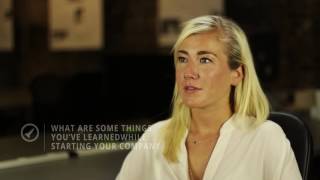
A spoken founder interview with Sarah Main, co-founder & CEO of Reach, an online communication/collaboration platform for students that removes social-media distractions and centralizes course work. Sarah describes the origin of the idea at McGill, building a team (co-founder Brent Hussey as chief product designer), her lack of technical/business training, and how participation in a LEAP/Launch Academy-style program taught customer interview practices and lean-canvas principles. She reports Reach was beta testing over the summer with a soft launch planned for September at BCIT, SFU, UBC and UVic, and credits an advisory board (members from firms such as Vision Critical and Hootsuite) and peer accountability for early progress.
Questions this video answers
An online communication/collaboration platform for students that removes social-media distractions so students can get work done.
At McGill University.
Brent Hussey.
Reach was beta testing during the summer with a soft launch planned for September.
BCIT, SFU, UBC and UVic.
Chapters
My name is Sarah Main. My company is Reach. We are an online communication platform for students where we emphasize the fragmentation behind student communication and collaboration, where students lives are connected on many different platforms and applications. So we're solving that disconnect, but we're also wiping away the distractions that students face at school. So we want to take off the student collaboration communication that's held on Facebook, whatnot, and give them a professional sleep platform where there's no content or there's no distractions of statuses or photos or content they don't need to see. And it's basically just get the work done at school. I had this idea when I was at McGill University and it was a personal problem of mine where at McGill we were spending thousands of dollars on this top education, normally in Canada, but the world and at school you're given LMS system, which is Blackboard, Moodle, my courses, whatnot. And they're pretty archaic around the world at every institution. And that means students then go on Facebook. And my biggest problem was why should we be using our communication collaboration on a personal network when we're spending thousands and thousands of dollars at school? So my idea was to solve that disconnect and create a platform for students where they could share notes, create group projects, send files and whatnot. And they never have to expose more than they actually need and they don't be distracted while doing it. We are currently beta testing right now throughout the whole entire summer. And we're gearing up for a soft launch in September where we're launching at four schools in the Lower Mainland at BCIT, SFU, UBC and UVic. And that's gonna be a soft launch in September for back to school. Basically, I remember light bulb moment went off. It was when I was in class and it was when I was forced to use Facebook and I had to share notes to a classmate. And I was like, this is absolutely absurd. Why I'm sending 25 files to a girl that I don't even know on a personal network while I go to McGill University. So I actually told my ex boyfriend who was a software engineer at the time, and he was like, have you ever heard of a company called Slack? And I looked into it and I realized that online communication was actually in the process of changing and in the corporate world. So I took that idea and I leveraged it to the university world and I basically built a business plan around it. And I went into a business competition and I validated my idea and basically they said I had something there before That I asked my best friend, who Brent Hussey is my co founder partner, to be the chief product designer. And he now heads up all the product design and everything where I'm front end and I do all the operations of the company. I don't have a business background nor a technology background, and yet somehow I'm now here launching this product. So I think the inexperience definitely would be the biggest challenge. But I think building a network and building a team behind you is key to that success so people can take you seriously and have your credibility behind it as well. I think my inexperience actually was one of my best assets as well, because there was no fear because I didn't have expectations. I didn't take any business classes at school, so I didn't know what numbers I had to expect. I didn't know what I had to the real world was about. So everything that I did was kind of more like a learning process. And if it didn't work, it was like, okay, what do I try next? What's next? So I never really got down on anything. So I think inexperience is actually the best thing to happen to me, but also the worst at the same time. But I think behind the network and going to lap and going the next big thing, that's what you leverage. And those are the people that actually build your strength up and make you believe that your inexperience doesn't make a difference and anyone can actually achieve anything. I played sports my entire life, primarily ice hockey with boys from the age of four. So I think my competitiveness and tenacity was definitely fueled by always playing against men. So I always wanted to compete with them. So. So when I went into the tech sector, to me, it wasn't a big shock that women were minority because I was used to it my entire life. So I think my whole competitiveness and my innate personality definitely drove me to want to succeed and beat out the rest of everyone and still try to make it to the top as there are hardly any women still in technology to this day. The biggest challenge, I'd say is role models right away, there's not a lot of people to look up to. We're not a lot of people to reach out to. So my whole entire company right now is male. So sometimes as much as it was, I'm the CEO, sometimes I feel very disempowered. I as when there's all men speaking around the table, sometimes it's hard to get my word out or sometimes I Feel like it's hard for me to lean on someone beside me because there's no other females at the table. However, my team is amazing. It's fantastic. And I don't feel that way, but sometimes I just feel like such a minority. It's kind of personally disempowering. But I also say it is empowering at the same time as I want to beat out the rest and I want to be one of the first females. So it's one of those driving edges that's pushing me to want to succeed because I want to be that role model for people that one day for them to look up to and say, she did it, she outped everyone else. So it's one of those things that I think it's both worked and been against me at the same time. So that's the thing is because I said I don't have a business background, my biggest problem was, well, what do I do? Every single thing that I did was basically off of Google searching, what is this? What is this? So it was kind of fragmented information all over the Internet. And LEP kind of gave structure to context of what we needed to do in order to make it a success. So it kind of was like principles behind what we need to do. And those guiding principles shaped what my business plan and what I had to go out and do in the real world. But without that, everything was just guessing and that was very unsure while going after investors and everything. So it kind of gave structure behind what we actually needed to do. Number one, listening to your customers, number one thing, whatever you do with an idea, you have to go out and talk to thousands of people before you raise money, before you'll do a lot of things. Because at the end of the day, if you're gonna become an entrepreneur and you want to dedicate your life to this, you have to know that this is what the customers want and everything. And I definitely learned through the LEA LEAP program that talking to your customers is the number one thing you have to do. And I didn't realize how much work that actually takes to go out and interview, how much skill and building and knowledge you have to gain and actually get out there. And there's a fear of talking to people and getting over that fear. And at the end of the day, this is who your customers are serving. You have to be able to be comfortable with them. So I think that's what I learned most was your customers are number one and always know your get in their heads and figure it out from them. I think Also having your peers in your class having to do as well. And every single class, you kind of go over a recap of what you did the last week and having them being accountable to things. I think it was kind of like structure, going to school and having to do things. If it's just on your own and then you don't do it, you can just let it slide by and maybe just like forget about it. But having an instructor and having your peers in your class holding you accountable to these things and you having these challenges and you have to beat them and everything, and then you also have your final pitch day, I think that really helped out because you knew you were working towards a goal and you know you had attained things every single week. I think the class today of having it very small was awesome because I think it's the fact that you could be personally structured by someone that was very knowledgeable in the industry. You gained critical information about your company and what you needed to do. Where I think if it was more people or if it kind of was not as focused on every single company individually, you would have just got lost the mess where every single session you were able to tie your company to, to a specific set of questions and have straight feedback on what you want to know. So it was nice to have that where everything was kind of everyone got to speak their word and everyone got attention to talk about their businesses as well. So I also love learning. So to me, I quite enjoy going to this class and sitting in and learning new things. So to me, because I didn't have a business background, I was actually very excited to learn about all these principles because I wanted to build my acumen behind building a business as well. And because of the lean canvas, because of the core, is it eight or 12 principles on it, there's nine principles on it. So because of those nine principles, every single thing we do now, we always reflect back on that. And I think that really carried us where it's those defining nine principles. You always go back to that. Then you always know the root things of all the things you need to take away in your company. And I think that's what we carried away from the program and that's what everyone still follows to this day as well. Definitely working with other people is fantastic just because, like I said, I don't have a tech background or business background. So I was in a room with a lot of people with had a tech background or knew how to code and where I had the marketing side or I knew the people side and I knew how to pitch, so definitely having people, different backgrounds helped a lot because then you could just bounce each other's ideas off each other and someone ask a question and we could also share input with them as well. So it's kind of like having 20 minds helping you out on your one question rather than holding it in and just asking Google about it. So it was very constructive criticism right there on the spot from other entrepreneurs and people who are kind of all in the mindset of wanting to help you succeed as well. I think this program also instills confidence and self esteem within. I think it's important for women right now. And there's a lot of people right there right now when you have an idea, everyone comes up to me and said, how do you do it? That's the number one question I get asked all the time is how do you do it? And how did you get there? At the end of the day, I was just a girl that graduated from McGill University with an idea and I went for it and I went for it and I found people and I found a network and then we got introduced to program and I learned principles and I applied that to the real world setting. So I think this kind of instills confidence and self esteem, especially in women where they can tell you what to do, the right way to do it, they give you the right network, they leverage your connections as well and that can kind of help you build your confidence behind your idea as well. So it's not just someone entering the real world with an idea and it's like where do you go from there? So I think that also just builds the confidence behind the entrepreneurs that makes them believe that they can actually succeed in the world as well. When you're just a student that's a young 20 year old for right now, this thing is when I first had my company, my idea, I also ultimately believed that I could turn into a billion dollar company. But the thing is, I think everyone realizes when you dive into it and you get a year and a half into it, you realize that everything takes years. It's surprising me that everyone says it slacks an overnight success when you actually look in the media, that it started as a video game and it came to now where it is. So the thing is, I think everyone needs to realize everything takes twice as long, twice as much money. But thing is, don't give up. I think that teaches people a lot of skill building things that they can take on to other businesses if they do fail. So it's nice entrepreneurship that Whether or not you have an idea and you believe it can be something, something so big, everyone kind of, once you get in the entrepreneur world, you will never go back to something else because you're just so fueled by those exciting risks and things you take. So that's things I really like about entrepreneurship and that's what really fueled me. But I also think the future of it, I think there needs to be more programs like this and more structure because I think there needs to be more confidence people with these ideas that are graduating because without programs like this, people kind of have an idea and they give up right away and they think, okay, well, it's just an idea. And I think a lot of things go to waste without these programs or it's also a lot of developers have a lot of great ideas, but they don't have the pitching skills, they don't have the people skills. And I think that's also a nice thing is you also compliment two sides of it where you guys gave me the principles and the skill building of the business. You also help people who have the great coding skills learn how to present themselves and gain money and actually create a company behind it as well. Well, I can definitely say that the number one reason I probably have succeeded to this day is my advisory board. Because every single thing that I have or a question that I have, I go to them about it and ask them for their feedback and what they want to do with it because they are the top minds in the industry. And I think because of that I felt confident in myself. And without those connections which I got through the next big thing launch academy, I wouldn't be where I am today. But because this program, people at such a top level of expertise took me seriously and they listened to me and they saw my passion and they saw my drive and they saw that what I was willing to do. So they came in and they helped me out. And these people are at top companies from Vision Critical to Hootsuite to Etc and EHEI Games. And without them, I wouldn't be where I am today. And these are the top minds in the industry. And it's programs like this that have connected me to these people. So I think that's the most thing I'm thankful for.
More from Ray




A Founder's Story. Creating the World’s First Laundry Robot — Joshua Rabanne, Laundrx

Bits&Bytes with Sherry Li, Assistant Professor at Berklee, Co-Founder of ICTUS Audio

Why This Young Person Left Child and Youth Care To Work in Tech - Bits & Bytes with Samson Li




