FounderStories | Greg Smith, Co-Founder & CEO of Thinkific
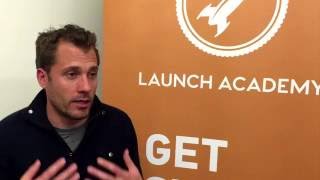
Greg Smith left law to build Thinkific after converting a classroom course online. He bootstrapped from client work into a self-serve platform for creating and selling courses, learning along the way that you need to validate a market before you build and iterate based on what customers actually want.
Chapters
I'm Greg Smith, CEO and co founder of thinkific. I actually started it with my brother after teaching my own online course. So I had actually a classroom course we were teaching in class, created an online version of it and was really successful with it to the point where I ended up leaving my full time career as a lawyer and moving full time into online education. And then we actually found lots of other people coming to us asking how we did that, how we created our online course. And we didn't see a good platform out there to easily create, market and sell online courses. So we created thinkific to help anyone create, market and sell their own online courses. Idea to start up to present time. That's a big picture. So lots have happened since idea and to be honest, even since the original idea, the idea has changed. The funny thing is the original idea that we had is very similar to where we're at right now, but there were a lot of turns in the road along the way. So initially we got started with sort of Lean mvp, getting something out there into people's hands, seeing what they thought of it, getting a lot of customer feedback, often sort of building things ad hoc as customers told us they need them. Which definitely resulted in a lot of work where we were collecting a little bit of money here and there just to keep us going while doing work for clients based on what their needs were. So a lot of non scalable stuff in the early days and then as we started to figure out more and more exactly what people wanted and needed, that's when we really started building what we have today. So that was a couple of years ago now and now we're in a position where we have a platform where it's very self serve. Customers can come and find it and put in their payment information, start using it or even try it out for free, often without even ever speaking to us. We obviously talk to them a lot still. But it is possible now to just go and have hundreds of customers, thousands of customers joining the platform all the time without us having to do anything, as opposed to the heavy, heavy one on one hand holding that we had in the early days. We still do a lot of working with customers, but it's kind of opened the door to scale a lot faster now. Future for the company is to continue doing what we're doing, which is doing our best to serve our clients, which is people who are creating, launching and selling online courses and we want to be the go to platform for that. So when anyone thinks of online education, they're taking a look at Thinkific and hopefully using us as their go to platform for that. I'm just really proud of the team we built at Thinkific. The things that we get to do every day and the accomplishments we have every day are really a result of the whole team. I love the fact that I get to come into work or pull up Facebook or Google and see things that are happening by our company that aren't driven by me anymore. When you start out as that early entrepreneur, every little thing you do starts off as an idea and then you work on it for a while and then you put it out there and then you iterate on it, but you see it at every step of the way. So it's kind of like being the chef behind the meal, where by the time it hits the table, you're like, yeah, I tasted all of that kind of stuff. Whereas now I often feel like I sit down and there's this gorgeous meal. I'm like, wow, who did this? This is amazing. We did this. So I'm just. The team we have is amazing and the stuff they put out is awesome. I'm really driven by helping people succeed. And that's why we went into the core space, is what we do allows people to succeed in their space both for themselves, but also for their clients or for their students. So if we're helping you teach a course, I get to help you and help you help all of your students to learn something. And that, to me, is just the best thing that we could be doing. So I love seeing the things that all of our clients are creating and teaching and just find all of that super inspirational. So for me, influence for this company and for me generally being an entrepreneur has come from so many different places. Definitely my parents. My dad, who's super entrepreneurial, despite being a doctor, has always had the sort of side project in the garage. So that was a big influence, I think, on me and everyone in my family. In fact, if you look at the 10 kids in our family, I think only one or two of them actually have a boss. All the rest are out doing their own thing. And I think that was a lot of sort of parental influence on being entrepreneurial. My stepmom as well is entrepreneurial. And so that's really, I think, rubbed off on all of us is to see the success that they have. And then just tons of other people in the community have been a big influence. So even Ray at Launch Academy, actually in the early days, seeing how hard he worked and how persistent he was and excited and passionate about everything, was actually a big influence on me because I was coming from a scenario where every company I'd started before this, I had often worked from home or set up a tiny office with a couple of friends, but really had no connection to the greater entrepreneurial community. And I heard about it, but hadn't really connected with it. So through Ray and Launch Academy and everyone else there, when I was able to connect with that and see what other people were doing, that just had a big, inspirational, passionate influence and also a driver to just keep going even through the hard parts, because you see everyone else doing it. So that has a big impact on me as well. For me, it's the people I get to work with. When I left my law practice in the early days, I really missed the awesome people that I worked with because you get to work with some really smart people, really smart clients, and now we've got to a point where we build up an awesome team and I just get to work with amazing people every day. And so I am not the smartest person in the room. And so I get to look to all these other people for advice and how we're going to implement certain aspects of our business. And that's just a lot of fun. So a couple of things. One, put all your eggs in one basket. I see a lot of people and I feel the temptation every once in a while that someone has a new idea or you come up with a new idea, or maybe the thing you're working on right now doesn't seem quite right and there's something more exciting. You hit boring points in the business, you hit lulls, you hit stop stages where you're maybe not as excited as you were last week or last year about it. So I would say focus on focus and focus all your energy on one egg. Like, put everything in the basket. Don't spread yourself amongst a bunch of different projects, or jump and pick between different projects. That being said, if something isn't working, if you've decided you're going to call it quits, then decide that first. Decide this, this project is not working. And don't continue to waste effort on something that isn't going to fly. But make that decision first rather than being distracted by the new shiny object in the room. So that would really be one of the big ones. And then the other one is it is possible to build a product and then go find people to buy it. But I think it's a lot harder that way. Every once in a while you see these really cool solutions where they kind of create it and go out and market it and it seems like this market is instantly created for it. And I think even in a lot of those cases they did a lot of work behind the scenes to talk to customers and make sure there was a good fit there. So what I would recommend, especially in web businesses like what I'm in is find the market first. The more you can start to build that audience. You look at companies say like unbounce where they started with this amazing blog about landing pages and actually built up a whole audience and a whole marketplace before they even created a product. If you can do something like that, you're in a much better position from all sorts of perspectives and you can launch your product on day one to customers who are ready, willing and eager to take it. That's a lot better than building something and then spending the next year trying to figure out who's going to buy it.
More from Ray




A Founder's Story. Creating the World’s First Laundry Robot — Joshua Rabanne, Laundrx

Bits&Bytes with Sherry Li, Assistant Professor at Berklee, Co-Founder of ICTUS Audio

Why This Young Person Left Child and Youth Care To Work in Tech - Bits & Bytes with Samson Li




