Just Try It: How We Went from Architecture, Kinesiology & Hospitality to Tech | Launch Team
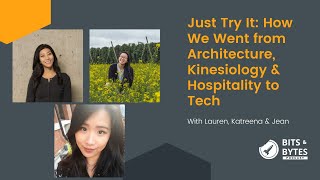
Transcript of a 'Bits and Bytes' podcast episode featuring Launch Academy team members (Gene, Lauren, Katrina and host) discussing their non‑traditional paths into tech and entrepreneurship. The conversation covers each member's prior careers (hospitality, architecture, kinesiology), side projects (ethical sustainable brand; Passion Collective), learning-on-the-job, volunteering, surprises about founders/startups, advice for career-changers, and contact handles at the end.
Chapters
Foreign.
Welcome back to another episode of Bits and Bytes. Today we have something a little bit more special for the holiday season. We have everyone from. Well, mostly everyone from the team joining us and sharing all of it about our experiences at Launch. Don't worry, there's not going to be any dirty laundry being aired this time. But it'd be very.
I only signed up for the dirty laundry.
No tea spilling here on this episode.
Yeah.
So if everyone could just kind of go around, give a quick introduction to themselves. How about Lauren, if you want to start off?
Yeah, sure. Hi, I'm Lauren. I am, I think my official title is the marketing and community coordinator, but I'm part of the programs team, produce content, social media, stuff like that.
She edits this podcast, so if she doesn't like what she says, she actually has the power to just take it out and put it back in. Whereas the rest of us just have to live with it.
Don't worry, I got you, Kat.
Over to you.
Yeah. So I guess my name is Katrina. People call me Kat. I'm a project coordinator and I've been at launch for about five to six months now.
Sweet. Five to six months. I've been here for six years.
Yeah, man, when you compare like the time of like how long everyone else has been working, it's like, oh my God.
It's like I actually think I work here longer than the rest of you combined.
Yeah, probably. So.
So I'm, I'm an old fart here. So I mean, if you want to learn about my backstory and how I came to launch, just go right back down to the very, very first episode of Bits and Bytes where we kind of went at length. So we're not that interested in my story today. But like, definitely, I think the rest of rest of you, you girls that, that have kind of joined Launch in what I call recent years, there's a lot to be explored here. So. So I'm super excited about today's episode. So, so let's kind just kind of popping over and whoever wants to answer can answer. But like, what were you guys doing prior to launch? Like were you already in tech? Like, what kind of background did you come from? And I know like all of it's unique because I have your resumes in front of me. I'm kidding. But, but Gene, like, why don't we start with you?
Yeah, so launch is actually my first tech related job. Originally I wanted to, you know, get into like criminology, csi, like all that, but school didn't work out as planned. So actually most of my experience kind of was all over the place. Most of it is based in the hospitality industry. Worked a lot of restaurants, mostly serving and management and actually prior to joining launch, I was office manager for a cactus club and so that was really fun. But I still had this urge to try to get into the tech industry because I love gaming and esports particularly and I thought getting into tech would be kind of a good step towards that.
No, you like games? We couldn't tell from the past episodes.
Yeah, you can always tell that every time there's something gaming related on our bits and bytes, my enthusiasm just goes up.
That's awesome. What about you, Kat? Just jumping over to you.
Yeah, I guess. I was working in architecture full time. I went to school for architecture. So I was doing high rises in.
Vancouver, like designing or.
Yeah, designing. Designing houses as well too. So I was doing that full time and then working as a cost estimator on the side and then also kind of planning out my side hustle, which you guys kind of already know a little bit about.
Well, the listeners don't know. So why don't we talk. Just take 30 seconds on that. What's the side hustle?
Yeah, so it's basically an ethical and sustainable brand that I launched on June 2020.
So literally. Literally just recently.
Yeah, just recently. Just this year. Than to Covid.
Hey, gives and takes but like how do you get from, from architecture to you know, what you're like, where's the jump? What was missing? Did you just get tired of architecture or like what? Because I don't see any correlation there, at least immediately.
I guess for me it was just I kind of wanted to do my own thing and like working in architecture just, it got a little bit boring after a while. It's something like I love design and something I'm passionate about but you know, it's like when you're in school versus when you're working in the real world, like it's completely different, which is like most things, right. And so I think I just wanted a bit more autonomy and I wanted to kind of do something a bit more creative and kind of manage my own time, my own projects and do something I was a bit more passionate about because high rises and buildings get pretty boring after a while.
I mean you could do low rises and mid rises as well, non playing but. But I can definitely see what you mean. Like, because you know, you can, you know, be your own, not just boss, but like you, you can, you know, front end create as an entrepreneur. But you kind than one person to build a high rise, I'm guessing. Lauren, what about you? What's your background? What did you study actually, Lauren?
So I actually have a degree in human kinetics. So I started out that degree doing kinesiology, so the science side of sports and the movement of the human body. And then that evolved to doing half a degree or a specialization in business. And so after graduation, I was working at a Cairo clinic and I got to do like a little bit of social media content creation there. And I've always just been like, really into photography, like just like gadgets and stuff like that. So I got to use that photography knowledge and that passion for photography in that kind of content creation. And so when I left the clinic, I went to a bootcamp called Red Academy that no longer exists.
Sad four one zero for Red Academy. Love those guys.
Yeah, Shout out. They incredible. They did great. An incredible time.
Yeah.
So I did their digital marketing professional diploma there. And that's kind of also how I heard about launch and like got into tech because they're like immersed in the tech industry. So we did three projects and then each project was kind of like a case study with an actual like startup or organization that was in need of like digital marketing help. So we got to like create plans and strategies for them. So that was kind of my like first step into tech.
Yeah.
So.
So like when you like actually applied for. For launch. Right. Like, I mean, there's practical reasons for applying to any job that, that, that not necessarily the, the angle that I'm looking for. But like, what intrigued you versus I don't know, I think with a marketing background, you could go a couple cases. I think a lot of people I know that are in marketing go work for agencies, for example. It doesn't necessarily need to be tech. And in our case it's a little bit more specialized because we're in nonprofit tech and we're not. We're not directly working with say, but we're working with entrepreneurs. So. So where, where can kind of came the motivation for you to kind of jump in with us?
Yeah, I think the entrepreneurship aspect and working with entrepreneurs, that has always kind of like had a special place in my heart. I've seen an entrepreneur as just a drive and a passion and inspired kind of way of going about things. Just that is like kind of unmatched. And so getting to work with like small businesses through Red Academy. Yeah, it seemed great. Yeah, I wanted more of it. Exactly.
Yeah. And this is a good free plug for your. You have A passion project as well that you're working on.
Right?
Do you want to talk a little bit about it?
Yeah, sure. It's called the Passion Collective. We haven't officially launched yet, but as I kind of mentioned, I have a passion for other people's passions, super meta and sharing those stories and like everybody has something that makes them like light up or like come alive when they speak about it. So in Jean's case, that might be gaming or more recently cross stitching, but like you can really like see a whole change in their demeanor when they start to speak about something that they're excited about. And so the whole idea behind the Passion Collective is sharing those stories and just connecting with people.
No, that's. That sounds awesome. So. So stay tuned for it. Free plug. What's.
What's the handle on Instagram is at the Passion Collective and we'll have a website, Hepassion Collective.
So there you go. You work at Launch, you get free plugs. But speaking of passion, like, Kat, I know you, we already kind of talked about your business and your so called side hustle. Was that correlated with why you wanted to kind of work with Launch and the companies in Launch as well?
Yeah, I guess kind of my reason was like I wanted to surround myself with more entrepreneurs and more like minded individuals, which has been like super great. Because even like one of the projects that I'm working on, which you all have heard about, you know, Founder Journey series has been, it's been great.
This is a, this is another drop here though. So, so curtains. Like the public has not heard about this Founder Journeys, so maybe you can give a little sneak preview, but don't, don't give the farm away.
Yeah.
So it's Bas Ray is interviewing these founders of these great companies and they explain their journey as an entrepreneur, how they got to where they got and how they got to where they are. And it's really motivating and inspirational. And also there's a lot of things that they go through that a lot of people can relate to as well. So I think being able to work on that and just kind of surround myself in a way with people with the same mindset has been something that I wanted to just immerse myself with.
And just kind of surround yourself. Right. Like I. Yeah, that makes a lot of sense. Sense. But what about Eugene? Because it seems like they both had some kind of deep thought when they want to be surrounded by passion, they want to be surrounded by entrepreneurship. But what about you? Where does your use case come in? Did you Expect to be working with gamers or things like that? I would guess no, but I'll let you tell the story.
To be honest, when I first applied for launch, the entrepreneurship was kind of foreign to me in a way, until I started reading more into Launch Academy, what they did, being an incubator and such for the local community. Considering my background, I kind of thinking back to it, what I used to do, which was streaming, is almost like entrepreneurship in its own way. You're building up your own brand, you're building out your own name, you build out your community, and you're producing content that brings in your customers, but they're really viewers. Right. And so I think when I started working at launch, I realized applying my previous experiences to what I knew from in the past to what I was learning so much at launch, like, it changed my perspective on the world, a lot of entrepreneurship, and it's really great to see how many people are capable. And it's not just about, you know, like, you're not born to be an entrepreneur. It's actually like a lot of hard work. It's dedication, it's the passion, it's the failure, the series of roadblocks that you have to push through.
Yeah, no, I think definitely in listening to your stories, I think you can kind of tell if you're not outside listening, like, oh, I want to work for launch someday. Like, my encouragement to those listening would be like, try doing your own thing. Chances are 99 times out of 100, you're probably gonna fail. But definitely what I look for in team members and people I like working with, whether you're working with me or somewhere else on the team, is people who've tasted things, people who've tried things, people who have stubbed their toes trying to start a business or start something nonprofit or for profit or whatever. Those experiences count a lot and I think are really underrated. I know when they teach you in co op and schools and stuff like that, they're like, oh, you want to put your best things first. Nobody wants to talk about the business you started when you were unemployed that got no customers. Right. But like, that actually, if you're able to derive learning from that and you can somehow articulate that in a resume or an interview, to me, that's super underrated and super powerful. And then I think the other thing that you guys kind of all touched on is I don't believe everybody's meant to be an entrepreneur, personally speaking, but I think everybody can be entrepreneurial, and there's a huge difference There in just listening to what all of you have mentioned, there's a drive to create, there's a drive to be passionate about things. And I think it's something maybe we'll touch on a little bit later is just this concept of intrapreneurship, like how inside companies, people can still create things. I think that's something that we haven't yet touched on on the show. But, like, back to, you know, this, this world of, of startups for just a quick sec, right? Because I think the cool thing about, about everybody here is that all of you came from uniquely different backgrounds, right? Like architecture to. To sciences, to hospitality. Like, those things don't generally meet in a room unless we're. We're meeting at Cactus Club for lunch. But, like, were you worried about, like, especially when you're, like, not deemed technical? Like, let's be honest here.
Personally, for me, yes, I knew that I was going to be a total greenie when it came to going to tech. Like, I. For me, before I started looking into the tech industry, I always thought, okay, tech is like, you know, devs. It's always like data scientists. Like, you needed, like, a certain type of skill to be in the tech industry. And so for me, like, looking at my resume, like, I did have a variety of skills from different working experiences, but I didn't have any, like, technical background aside from gaming and streaming. So I was very worried that I was lacking in that experience to be able to work at a startup. But ever since, you know, working here for two years now, I realized, you know, startups are not just about having that technical skill or technical background. There's actually a lot of different moving pieces to it.
Could you describe some of those moving pieces? This is the RE interview, right?
Oh, I feel like I'm interviewing him. Yeah. Like, for example, I guess I found that. But one of the things that I learned a lot from my last job before getting into tech was creating really good spreadsheets, tracking systems and such. And for me, it's like, I feel like you generally want to apply those skills into an office admin sort of position. But I realized working at launch, I'm like, oh, hey, I can actually apply these things. I created a tracking system for all the companies in Maple program so that we have a dashboard that we can just check to see what, what's going on with our company, what stages they're at, where they're from, to things such as. Even like, my streaming experience came into play. Like, here we are, we are doing a podcast, right? Now and you know, normally, like, I don't think public speaking is for me. Like, it was kind of one of the challenges I had before streaming. And through the years of being on live, I grew this, like, confidence to do so and so in transition. Like, I now I can apply those things for our podcasts. So it's really crazy in a way that how these, like, different experiences I've developed over the years play a role into my position now at launch. Like, no technical background, but there's still skills that I can still.
But I mean, you can code, right?
I can do basic HTML, I can change the color of your website.
That's come in handy more than once, right?
Yeah.
What about you, Lauren or Kat? I know like some of you guys dabble in design as well and for sure we need to change the color of things. You guys know, hex codes and all that kind of stuff. But beyond that, is there a worry? Kind of like what Gene talked about, because you're supposed to be coming to this high tech workplace supposedly, right? Like we put quotations on that.
Yeah, I mean, I was kind of nervous because I was like, well, I've never done any of this stuff before. Not sure how I'm going to execute it properly. But I think what's great about working at launch is being able to kind of have that option to like, learn on the job and kind of get the support you need. Like, you know, I can always, always bug Alana, bug Lauren, bug Jean, bug Sam, bug Camille. You know, like, everyone's kind of here. Like, we are kind of a small group, so we're able to, you know, message or talk to each other if someone needs help or anything, or if someone doesn't understand something, someone on the team might be able to do it. And you know, if no one knows how to do it, like, we have the Internet, like, we can Google it, we can all figure it out. So that's something that is a bit more different. Like, like, I think that there was a lot for me just like learning on the job. Whereas, like, you know, like with my previous jobs, it's like, well, I went to school for it and so I know how to do it already.
That's a misdemeanor. I think you're not giving yourself enough credit. I went to school for a lot of things that I don't know how to do many things, including adding apparently misad stuff all the time. No, that's, that's cool. What about you, Lauren? Like, like jumping in. I feel like you, you've Always been kind of the techie of our, our group in terms of, of like you mentioned different gadgets and stuff like that. But was that to you a challenge or.
I think that was more of an excitement. I think where the challenge came in was sort of similar to Gene, but rather than like a technical worry, I was a little bit more worried about like the industry as a whole. Like I knew about entrepreneurship and like I had an idea of what it was in my head and from what I had experienced. But like the technicalities of the startup industry, like learning about funding and investors and like that kind of thing has been the steepest curve for me. But like, as Katrina mentioned, the opportunity to learn on the job is unmatched and we do so much programming for the Maple program that like, I get to learn along with the people in the Maple program. So that's great as well.
What do you. Actually, let's break it down a little bit more. What were your kind of thoughts into the. I think there's two sides here. One is the tech industry and then I think one is like the entrepreneurship side. We definitely touch both parts a lot. But like, which side were you more challenged by?
I think it probably would have been the technical side of the entrepreneurship because like I like to follow tech trends in terms of like gadgets and stuff like that. So that was like kind of almost a no brainer for me. Like that is cool, but I only knew from the surface or like what I had seen about entrepreneurship. And really it wasn't as much as as I thought I had known. And like you guys mentioned before, it's like people don't really talk about like the hard parts of entrepreneurship and like the failures and the things that they need help with. Not publicly anyways, usually. So yeah, I think that was a bit of a learning curve for me.
I mean, on that note, like, what have you seen? And maybe not just for Lauren or maybe Jean or Kat or whoever wants to chime in, like, what are some of the things that surprised you about, you know, meeting these different entrepreneurs that like, you realize like, hey, they're, they're, they're superhuman, but they're also human.
Um, I think for me the biggest surprise was that, you know, the different, like how humanized some of these CEOs and founders are. Like when you read about them in articles like forbes or like TechCrunch and stuff, like, they just seem like so far away from you. But then having the opportunity to actually meet, meet these big names like multimillion dollar companies to the Startup that's just getting in, breaking into the industry, like, you realize, like, they're just regular people. And I think that was, like, such a humanizing and grounding experience to know that in a way, like, you don't have to be born spectacular to become someone amazing, if that makes sense. Like, everyone started from somewhere just like we did. And I think that was, like, the coolest thing to me, like, especially with being able to have the opportunity to attend attraction conferences. That was where we got to meet some of, like, the real big names, like, especially from, like, the Silicon Valley and everything. Like, and just getting to see them up front on stage. Yeah, it was a really humbling experience. Yeah, definitely. Like, that was one of the best parts so far.
Well, actually, maybe for Lauren and Kat outside looking in, like, what did you actually think when someone used to ask you about, like, startups, when you said Silicon Valley? For some reason, I immediately thought it was a show. I don't know if either of you have watched that show, but. But, like, definitely there's. There's bits and parts of that. And then more recently on Netflix, there's a. There's a Korean show called Startup. So, like, what were you guys thinking of? Like, was it cool offices, the. The. I don't know, the. The plaid shirts and the tight jeans? Like, we're stereotyping a little bit here.
But, like, what.
What was your kind of. Yeah, lots and lots of coffee ramen in. Like, what. What were your thoughts coming in?
I didn't really know what a startup was, but, like, automatically, like, I think, like, I had seen the TV series, like, Silicon Valley, and so I kind of. That's kind of what I thought of it. I thought of, like, you know, a very young company working on exciting things. An environment where you have lots, you know, foosball tables in the office. People are just playing games all the time, like, and then also building cool stuff.
So, I mean, some. Some of that's true. Like, the. The foosball table is almost always occupied back. Back when we were able to go to the office. And it was. It was both, like, blessing and a curse because on one end, it's like everybody needs to let off steam. You want to build community. On the other end, it's like that thing is so loud, and that's before the people start talking.
Right.
But that's really, really interesting. I don't know what it is with. With the plaid shirts. Like, Hollywood's done a number on startups for some reason. Like, I guess Zuckerberg with. With his Gray T shirts or whatever also didn't help. No, that's. That's really funny. One of the things I think, think I noticed when working at launch and definitely when I started, is I expected like a lot of younger, ish people too. But what I've been most impressed with both companies in Maple and Launchpad and just all the people we've come across is the willingness, especially for more mature entrepreneurs. We have quite a few of those in our programs as well. And it kind of just shows you, like, you're never too old to learn new stuff, right? Because I would find myself in office hours with entrepreneurs that have doubled my life experience, right. And here I am talking to them about Lean Canvas or, or how. How to hire an app developer or something. But this is brand new to them. But, you know, in so many other facets of life and experience, I should be the one writing notes, right? And there's just, there's something a little bit magical about the agelessness of entrepreneurship that definitely I've been able to find at launch. What are some of the benefits you've had working here so far? And it could be launch, but I think I want to broaden the question a little bit more. So, you know, just being in our.
Ecosystem, I guess something that I thought was like, really cool was like everyone is very supportive of each other in a way that's kind of different than working in other industries. Like, you know, like whatever industry you're in, or even if you're like in a similar industry, you're not so much like competing, you're supporting each other and building each other up. And I think that community is really great also. I kind of like the little bit of like flexibility. Like, I don't know, like at all my old jobs, everyone was so with like clock in times, right? Not clock out times, but clock in times. It was like very on the dawn.
Yeah, it's much more, much more structured that way. And that has pros and cons too, I think. I think a topic we've tapped in in past episodes are things like work life balance. And it can go one way, I think. The other way it could go is if you're not willing to put the work in as an entrepreneur and you're taking advantage of the over flexibility, your wallets are going to be the one that takes the hit in the long run. So, yeah, definitely flexibility is key trait in entrepreneurship. What about you, Lauren? What are some of the things that you've seen that are kind of perks or benef to this Industry, I think.
We'Ve touched on it a little bit already, but like just the opportunity to learn and to grow. And as kind of Kat mentioned, the willingness for people just to like share their knowledge too. Right. Like when we were in the office, we would try to strategically place where people sit so they could talk to each other. And from stories I've heard in the past, the bigger names that have come out of launch or like in tech in general have come out of like community. And I think it's also unmatched compared to other industries, I think.
Anything to add to that, Gene?
Yeah, I think personally what I really enjoy about working at startups and just tech in general is that I think just the nature of the industry is that we're always trying to innovate. That's the key theme for all entrepreneurs, startups, tech companies. And so in that sense it actually translates pretty well to even just the day to day workspace. We're usually like the first industry to try different solutions or different techniques. Like just, even just thinking about current events. When COVID 19 hit, a lot of companies were kind of forced to think, okay, can we start working from home? Like is this something that we can start having our employees do? And I think because in the tech industry, like working from home is pretty common, like we were one of the first industries to adapt that working model and so we're kind of look ahead of that game in that sense. And I think in a way, like, I think the great thing about working in the tech industry is that we're always going to be kind of leading and making breakthroughs with different and new ideas, especially when it comes down to the workspace and how we work. So for me, like, I think that's really cool. I mean, obviously there's going to be some challenges adapting all the time, but like, I think that's one of the cool things about working here is that everything is always going to be, there's always going to be new challenges down the road. There's always going to be different ways to improve and there's always going to be innovation when it comes to working.
In the industry and then kind of in the spirit of community and supporting one another. I know there's going to be people that are going to listen to this. Maybe they're young, maybe their career changing and maybe they resonate with each of your past industries and stories, but they want to get into tech, they want to get into startups. What advice would you have for those people? Because I do believe that and I think this is, this is awesome that we have everybody here on multiple fronts because I'm usually the first to admit that in the tech industry we do have a bias problem, right? It's majority male dominated and I'm surrounded by three awesome females here that are killing it in this industry. But especially for people that maybe they're not the predominant male that I talked about and maybe they're not technical, but they want to get into entrepreneurship, they want to get into tech just like you, all of you have. What would you say to kind of encourage them or, or that, you know, for them to, to pick some advice on so they can actually make it a reality? It's a loaded question.
Speaking from where I used to be before getting into industry is like, my advice is don't be afraid, don't downplay yourself. Be more confident in your own capabilities and your experiences. Like, you never know what you've done in the past, how that can play out for the job or the company that you're applying for. And if you are really excited to work within the industry, like your possible future employers can see that, they can see that passion in you. And sometimes I think, especially when it comes to startups, what a lot of employers are looking for isn't just like, oh, you have like two years experience in working here and you have two experience of management. What they're really looking for is, is your passion and the drive to become an asset to their team. And I think especially with startups is that, you know, our teams are generally very small. So if you're not someone that's willing to, you know, put on a lot of different hats and try to go above and beyond like 150% effort into the position or the company that you're working for, then you might not be a great fit for start startups. But if you're someone that, you know, understands that even if you're lacking in some skill set or sorts, if you're willing to put in that effort and you have that drive to do so, then you will become so valuable to the team and your future employers can see that. So just be confident in yourself and, you know, show them what you're really about.
So what about you, Kat?
Yeah, like, I definitely agree with like what Gene said 100%. Like, I would say to just go for it, just do it, just try it out. Don't be scared to fail. Like you're gonna fail a bunch of times. Like, don't care about what other people think because that was something too for me. Like, I Was like, oh, I wonder like what people will think, like if I start this, like, is it a dumb idea? But it's like, honestly just do it because you're gonna find a whole bunch of other people. You're gonna find another community that will care so much about what you do and they'll be like, your biggest support is like you will find people who will be there for you and who will support you and who will encourage you. So yeah, that, that would be be. That's all I'd say is like, just do it. Nike.
Nike's really killed it with that marketing.
I think. Well, I agree with everything that's already been said. In addition to that, I think just surrounding yourself with people in the industry or just surrounding yourself with the people that you want to work with maybe, or who have similar interests, who have similar like industry like goals, career goals. I think that was one of the biggest, biggest things that I took out away from Red Academy was we spent so much time together and we had like similar goals to like be in marketing, be in tech eventually. But we just created like this group of friends which honestly turned into family. We spent so much time together that like it was so pivotal to have like a group of people who kind of understand like what you're going through when you're like trying to apply for jobs or even just like start your own thing. So like if you're wanting to be an entrepreneur, like surround yourself yourself with entrepreneurial people, people maybe who have a little bit more experience that can just like kind of guide you through. But that community piece, I would say is very, very important.
I mean on community, I just kind of have a quick question. I know you guys might have different thoughts. What are your thoughts on in terms of volunteering in industry related things? Like I guess the first question is would you do it? And the second question is like, how.
Would you do it personally? For me, when I think about volunteering, like I wouldn't even know where to start. So unless like, you know, the opportunity was like laid out in front of me like I wouldn't know where to begin. But if knowing now that there are volunteer opportunities like all over, there's like, you know, for example, Traction, that conference that we host and is currently on hold. We take in like a huge team of volunteers, which is great. And they all kind of range from like being students to those are just like really interested in learning. Some of them are entrepreneurs themselves. So I think volunteering is a really great opportunity for some and I definitely encourage it. If anyone wants to at least like, put their toe in the water when it comes to working in the tech space.
Kat, you or. You or Lauren have anything to share on the volunteering front?
I'd probably say the same thing. Like, if there's something that interests you, like, try it out, see if it works. It's actually, I guess that's kind of how I got into tech a little bit too. Like, I had volunteered for the VR AR Global Summit at parc and that was kind of my first, first event that I had gone to and I met so many people there. I got to help represent Shape Immersive, talk about what they were doing at the time, and just meet a whole lot of really cool people. And so it really helps. Yeah, like, like Gene said, you know, like getting your feet in the water.
Yeah.
And just for those listening that are confused, like, Shape Immersive is, is the company of one of our co founders at launch, Alex Ch Chang. And that's, that's kind of how we met Cat. But I'm a little curious. Let's break that down a little bit. How did you find out about, in this case, the VR AR Global Summit?
I guess through Alex, like through, through friends of friends. Like we're connected through a friend. And then I was like, what you're doing is cool. Like, I want to, I want to experience it, I want to try it out. And he was like, yeah, sure, go for it. Like, here's all the information. Like, I'll see you there. And I was like, here I am.
Yeah. So I think there's something like key. There is, is, I think unintentionally even maybe that, that you were willing to take a risk. Maybe it's a. Because it's a day of your time, two days of your time, whatever. But you were tailing to take a risk on something you basically didn't know much about other than on a surface level. And I think that's something that I think often people take for granted, reaching out that, that first step. Like, I don't remember if I shared how I got into tech, but really, like I was in class and I, to be completely honest, I was never in class all that often, but I was in class at SFU and one of the profs had, had. I can't remember if it was volunteer, it was a job opportunity, but it was something that related to, to mobile relations or something like that, or mobile developer relations. And I was like, that sounds cool. I need a job. So then I reached out to my Prof. For like the very first time. And so for smart students and most people that might be listening, this is a common theme to reach out for your Prof. But for me, I never do that and I've never done it since. So that was like the one time that I actually just got a little bit out of my comfort zone and actually tapped in and tried something. Something. Right. And obviously that move has changed my life. I think to echo both of you, just don't be afraid to try. I think the benefit, especially if you're younger and listening to this, you got time to try stuff, right? The worst case scenario is you volunteer attraction. You're like, hey, I actually don't like tech, I don't like startups. I don't want to be an entrepreneur. Cool. You spent a day on it. Now you know there's no harm in finding out you don't want to do something either. So I think that's actually like a super cool story from Kat. Lauren, do you have anything to add to that before we go to Jean's favorite question?
I would definitely echo everything that you guys have said. And just to add on to your point, Sam, when I was actually applying for jobs, someone told me this piece of advice that I've like never forgotten. And I've like literally told anyone who's ever asked me for any advice and they say said something along the lines of, you're never going to know what you want to do until you know what you don't want to do and you're never going to know what you don't want to do until you do it. And I think that's like just stuck with me this whole time, like volunteer, reach out, connect, use LinkedIn or whatever tools that you have to just try.
That's awesome. Sweet. I think on that note, I can't follow up with that. So let's move on to, you know, what's become a Bits and Bytes classic. So, Kat, you're not with us regularly, so I'm actually going to pick on you you to start. Here's the scenario is if you could create a dream team that, that you want to build, let's say it's a company, but it just a team that you want to work with. And it can be anybody dead or alive, historian, celebrity, fictional character. It could be Donald Duck. Doesn't matter. Who would you choose? A team of three and why?
Okay, so one of them, I think Elon Musk because he's pretty cool and I like Tesla and so I think he would be really cool to meet and work with as well. And then these last two, Ariana Grande and Rihanna, because I think they're badass women.
Wait, you gotta pick three. So you gotta cut Ariana or.
Oh, damn. Okay.
I go with Ariana Grande because lately I've been listening to her a lot. I know she's like a guilty pleasure.
But can you imagine Ariana Grande and Elon Musk in a product meeting? Just hold that thought for a second. Second. Lauren, what about you? You've heard this question asked a lot, but this is your first time answering it.
First would be Walt Disney. He's just, like, the pioneer for animation. Like, just the way that, like, the brand of Disney was built. The way that he was able to build, like, trust for the brand and stuff. That's, like, unmatched for sure. And then another one would be. I don't know if you guys know Morgan Harper Nichols on Instagram. She's like, an artist and a poet. Just, like, the words that she writes, the things that she creates is incredible. So inspiring and encouraging as well. And also, like, a female entrepreneur. Like, that's awesome. I love that. And then the last one might be a little silly and you might laugh at me, but I don't know if you know Maya, the polar bear on Instagram. She's the doggy. Yeah. Yeah. And she is one of my favorite Instagram profiles ever. You know, just for the morale. You know, sometimes you just need a morale booster.
That's a new one. I don't know how to respond to that. You've left me speechless on a podcast. That's never good. Gene, you ask this question every single episode, but you've never answered it. So finally, it's your turn.
Honestly, there's so many people that I would want. I have different combinations of teams, but for the sake of the theme of entrepreneurship, definitely Gary Vee, I love his journey from. He used to, I think, review and sell wine, and then now he's just become this life coach. He's amassed such a big following. And I think the reason why I love Gary Vee is because he's, like, a balance of being very strict and straightforward. He gives it to you real, but he also has this, like, level of compassion when he does give you advice. Like, he's like, you know, don't be too hard on yourself for failure. It's okay to, you know, start when you're older or it's okay to run into these roadblocks. I just love that he has this understanding that some people need that encouragement. And at the same time, he's able to just, like, lay it out for you. He's like, get your stuff together the other first. Well, actually they come in a combo pack because you can't really have one without the other. And I think actually one of our previous guests also did mention this person as well, so it might not be as original, but the Rock and Kevin Hart, because, you know, they're like, why.
Are they a combo pack? Hold up. Do you not see, like, if Kat's not allowed to have both those singers, I don't know if you can have both the actors.
Okay. To be fair, their friendship is amazing. And I, I think just like, answering off of you, like, the Rock has such a great entrepreneurial mindset. Like, you know, he started off with pretty much nothing from being to W. Is it WWF or I forgot what it's called. Like, the Wrestling Mania.
World Wrestling Federation.
Yeah. To becoming an actor. And now he's an entrepreneur himself. Like, he has his Tequila brand and I love the way, I guess, you know, part of it is, like, his great marketing team, but, like, you know, he's constantly hustling and I love that, like, drive that he has. And he's clearly like, you know, a very strong, high moral person. And I think that he'd be great in terms of, like, you know, leadership and then Kevin Hart because, you know, like.
Because you don't want to be the shortest person on the team.
No, but Kevin's just so funny and like, he, like, you know, when things get rough, you know, if the company comes to a hall or we go through a rough patch, like, Kevin will be there to just, like, lighten the mood a bit and also come on. Like, the Rock and Kevin's friendship is just so awesome. Like, have you seen their interactions on social media and stuff? And just, like, how they are, like, in person, like, it's hilarious. And I think having that strong, like, team relationship would be good.
All right. I kind of feel like Jean cheated and so I don't. I don't know if I accept her answer. So make her do it again. Also, like, I felt so old when. When, like, you were describing, like, Gary Vee. So, so, so, like, I remember when Gary Vee, like, started his wine website, like, in 1997 or something like that. And I didn't actually know the Rock as a wrestler before that. He was a football player. Yeah, he was a he. I can't remember what position he played, but. But he couldn't hack it in the NFL. And then he went to the cfl and. And I think he was cut by the Stampeders or something like that. That so, so like I feel so dated when you're like, yeah, before he was in acting, he was a wrestler. I'm like, dude. But, but anyway, so I think that's the episode. Thank you guys so much for, for joining us and sharing your stories and sharing your insight. I hope that for those people that, that have listened, they can, you know, pick up off your experiences real quick. Round table. I mean how can people reach out to you? How can they find out to you whether it's the Twitter, the Instagrams plug?
You can find me at my public page, Kareautum K I r e I Autumn. That's my public facing page for, you know, all business related things. And then yeah, if you want to have any business inquiries and such, you can just email me directly at my work email genetlogicademy ca Lauren.
Yeah, you can find me on Instagram @LaurenMcan. L a u r e n m kan k a n Sweet.
And Kat.
Yeah, same here. Just find me on Instagram. Atrina K a t r e e N A T e C S o n awesome.
Simple enough. Except for ajean we might have to Google her Wikipedia page or something instead. But yeah, that's a wrap here and we're looking forward to having more episodes in the coming year. Appreciate everybody. Take care.
Happy holidays everyone.
Bye Sam.
More from Ray




A Founder's Story. Creating the World’s First Laundry Robot — Joshua Rabanne, Laundrx

Bits&Bytes with Sherry Li, Assistant Professor at Berklee, Co-Founder of ICTUS Audio

Why This Young Person Left Child and Youth Care To Work in Tech - Bits & Bytes with Samson Li




