Lloyed Lobo, Boast.AI - Founder Journey Series, Episode 15
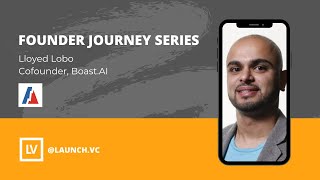
Interview (Founder Journey Series Ep.15) with Lloyd (Lloyed) Lobo, co‑founder & president of Boast AI, hosted by Ray Walia. Lloyd recounts his journey from being born in Kuwait, immigrating to Canada and later moving to the US (San Francisco). The conversation covers Boast AI’s mission (streamlining government R&D incentives using AI), the founders’ decision to transition from manual/service delivery to an automated product, and lessons learned about startup ecosystems (Bay Area network effects vs. Canada), focus/prioritization, relationship-building, and work/life balance. Notable business facts mentioned: Boast grew to ~35 people, the Traction community surpassed 60,000 subscribers, and the company raised a $23M Series A alongside a $100M credit facility. Practical advice emphasizes finding one ideal customer/job-to-be-done, ruthless focus on a small set of channels, and delaying external funding until product‑market fit.
Questions this video answers
September 15, 2021
$23 million USD Series A (reported) plus a $100 million credit facility
About 60,000+ subscribers
Approximately 35 people
Kuwait
Chapters
Well folks, we're at the end of season one and it's only fitting that our last guest is my brother from another mother, Lloyd Lobo, co founder and president of Boast AI. We're going to talk about his journey growing up in Kuwait, immigrating to Canada and then moving to the US and for those that you know, Lloyd lives in San Francisco. And so we're going to talk about the stark differences of building a tech company in Vancouver compared to San Francisco. 3, 2, 1. If anybody that is following launch, you've probably seen that I'm, I've got my hands in a lot of different businesses. One of the reasons I'm able to do all these different businesses is because I've got great co founders that help me build these businesses. And today we've got one of my good friends, really great co founder for Traction Conf Lloyd Lobo. Lloyd is also co founder and I believe title COO of Boast AI co.
Founder and president, co founder and president.
Of Boast AI Lloyd, welcome to the series. I mean I'll let you do a quick intro about you, tell us a little bit about Boast and then we're going to dive into your journey as an entrepreneur.
Definitely Ray. I can't believe we're not face to face. It's been a while funny doing this like screen sharing with you but I'll.
Use for all sense of purposes we never are face to face because you're in San Francisco, I'm in Vancouver and so we're co founders, we're building companies and businesses together. But you are Bay Area based and it's a great asset for you. So I don't know if that's a good thing or a bad thing. I think I would go crazy if I was working with you side by side every day.
Yeah, definitely. A lot of people would say that I think we're in a distributed world but it's funny like you know we're having like this interview style conversation when generally when we've done that we've been in person or like chat over phone but awesome. I'll give you a quick overview of what we do. So globally each year over 300 billion is given by government programs through R and D incentives and whatnot to fund businesses, innovative businesses. But the application process is cumbersome, it's manual, it's time consuming and it takes a long time for you to get money. Boast AI is building the future of these innovation, credit recovery with artificial intelligence so we can get companies more money faster for Less time and risk. Behind the scenes, what we're doing is we're integrating with the company's tech stack and financial stack to speed up the application process and get them these government incentives in their hands sooner. As you know, with government incentives, you're not giving up equity, you're not paying interest. It is government money, non dilutive, and so it's the cheapest form of capital. But the red tape through the government is huge and we want to streamline that process. But behind the scenes, if you look at it, our mission is to help innovative companies become successful. And that's why when we started Boast a couple years later, when Ray and I met, we said, hey, you have the same mission to help innovative companies become successful. And we collectively launched Traction, which has now become a community of 60,000 plus people. And we're bringing leaders from some of the fastest growing companies like Google, Shopify, Twilio, Slack, et cetera, to share advice through weekly webinars, monthly dinners, and the annual conference that we do. So that's the quick journey or background on Boast and how we're tied together.
Let's dive into you and your journey. So born in Kuwait. I know the journey that you had, so maybe you can kind of give us a background. So born in Kuwait, kind of around the time of the war, then make your way to Canada, then the U.S. yeah, definitely.
It's a very interesting story. So I was born in Kuwait. My parents are from India and they were working in Kuwait, so I ended up being born there. If you're born in Kuwait, doesn't matter. You don't get a Kuwaiti passport anyway. In the 90s, the Gulf War hit. I traveled as a refugee with my family through Baghdad, Jordan, and then finally made my way to, long story short, made my way to Canada. And, you know, I think as an immigrant who's also been a refugee, it's always like, you know, you got to look out for yourself and you got to do more with less. I didn't have ultimate. Although it sounds good. Kuwait is a very rich country, but I didn't have, you know, the world at my fingertips here. So everything is, how do you do more with less?
So you weren't baby Sultan in Kuwait. You were just a regular Joe.
Yeah, exactly right.
My troublemaker. I heard the stories about you in school and always getting in trouble.
Very, very bad kid in school, sort of after grade 10. And the funny story there is I was a rebel in school and I just didn't like school. Right. And. And my parents Were like, I don't know what to do. We need to break his company. And so they got me to Canada, and somebody told my dad that, your dad, your son's gonna get ruined if he goes to Canada. It's the west, you know, everything is relaxed there. My dad's like, he's so bad here in Kuwait. If I take him there, it's gonna break the company and he'll get better. And that's what happened. I had, like, sort of done everything through high school that it wasn't cool anymore for me through university. And then I met my wife, Vivi, girlfriend at the time, and she's super bright. She got into med school in second year of undergrad. So I always had that, you know, I gotta live up to these standards if I have to marry her kind of thing. And followed her along. After I finished engineering, moved to New Jersey, where I worked in product at a startup, then went to Philly, worked at another startup, and then came to, followed her to San Francisco, or rather I forced her to apply to San Francisco. So when she was doing her residency at Drexel in Philly, I said, we got to go to San Francisco. And she kept saying, no, my whole family is in New Jersey. We can't leave. And I begged and begged and begged, and she said, I'm going to apply to one university for a fellowship, and if I get in there, which is going to be near impossible, we'll go. And that was Stanford. She got in and that started really. Although I had worked at startups in a true way, coming to San Francisco exposed me more than I had ever been before.
That's like an awesome segue. That's kind of where I wanted to dive in first. It's because almost everybody listening in knows the lore of San Francisco. For a tech company and tech entrepreneur, things have started to shift and change and been accelerated even more with COVID But the Bay Area was losing a bit of its luster. But at the end of the day, it still is the epicenter of tech. So maybe let's dive a little bit about what you feel is different about being a tech entrepreneur in San Francisco and different being a tech entrepreneur in New Jersey or Calgary or Vancouver. Because you have worked and built companies in all these different areas.
Yeah, definitely. So, you know, I think one of the key things is exposure, right? And now it's changing everywhere. It's changing, especially Canada. Vancouver, Toronto, Montreal is booming. You're colliding with a lot of entrepreneurs. But 10, 15 years ago, those collisions weren't happening. When I was working in New Jersey and product, those startup collisions weren't happening. I started to see early phases of that In Philly in 2010, 11, but still nowhere at the level that it happened.
Is that just a level of concentration of where there's so many startups and entrepreneurs, or is it more of a culture where people in New Jersey just don't. Back in the day, people weren't as actively out there networking.
It's a combination. So, like, success breeds success. It's like a virus, right? So, like, what happened was you get all these companies, they start, they bring their friends, they. I mean, all these founders, they have ideas, they launch with their friends, they get some other friends to angel invest. It turns into a big success like PayPal or Facebook or whatever, and. And then all those other people, newbies, young kids, interns, whatnot, they grow through their ranks, they make good money. The company ipos or has a big exit, then they invest and pay it forward into the company. And that model is a viral model here. And it takes very long to replicate. And it's multiple factors. It's pay it forward, it's rapid iteration, it's failing, fast failing forward. It's like a lot of things happen at once. And, you know, there's luck as a factor too. It's a chance that a whole bunch of companies happen to be here, there's investors here, there's good, successful companies. But if there was only investment money and all the companies failed here, then I don't think that carries on very far.
That's not something that happens overnight. It's something that took time to build. But it's that mass effect. When you have so many companies, you're able to churn out more entrepreneurs. One of the examples I always give is like, if you're going to be a growth marketing expert, starting your career at Facebook, you might work there for six months, but you're going to learn so much. You're going to be exposed to so much in terms of tactics and strategies and network that then you get poached by Twitter. You might be at Twitter for six to eight months learning more, building a network. But because in that one year you've learned so much, you would now maybe be a very attractive hire for Airbnb or even somebody newer like hey or Brex or whatever. And now your seniority goes up exponentially. But try to replicate that in Canada or Australia or somewhere else. There's just not that level of concentration. So that six month at Facebook might be the equivalent of two years or maybe even three years at another company, the network and all the learnings. And so it just takes that much longer somewhere to get to that senior level. But in the Bay Area, it happens at such a rapid pace.
In the Bay Area, there's this concept of network effects in tech companies, but the Bay Area is multiple network effects happening at the same time, right? Like, it's like the founders, then they've become successful, there's employees who've tasted success through exits and IPOs, and then they invest back into the community. There's this really good book by Nir Eyal called Hooked. It's like how to Get People Hooked. And I think if you, if you look at that model is like, there's a trigger that pulls you in, you get a variable reward, you feel you're part of the community and you're sucked back in. And there's that circle of getting hooked happens here all the time in that, you know, you join a company, you make some money, you see rapid success of innovation, going to commercialization and big boom. Then you're like, oh, I have like five of my friends over here are going and starting companies right now. Well, I'm not ready to leave yet, but I'm going to put like 10, 10K in all of their companies. And that happens over and over again. And when you, when you add the factor of volume of entrepreneurs, size of the companies hiring and the investment capital, it's like the perfect trifecta, right? And then you get talent in all sorts of directions. So I think that exposure was great for me and you've seen it firsthand. Having that exposure enables us to get some of the best speakers at Traction, build some of the best partnerships at Traction, because you cold reach out to some of these people and they're responsive. But then of course, they look you up on LinkedIn. So you may be connected to 50 people they are connected to. That helps. I think that's helped in multiple different ways. Even my mindset, thinking all of that. So nothing but thankful. But at the same time, would I build a company in Silicon Valley? No, I would build a company in Canada. What we've done with Boast has been phenomenal, right? So Alex, my co founder, CEO and I, we met in university. We're best friends. Him, me, my wife, we all sort of knew each other around the same time and we were partners in every project at Boast. And then after Boasting, I went to the U.S. he got into Johnson and Johnson's engineering leadership program. And then Did a startup, that startup failed. Felt he needed to study accounting. Studied accounting, long story short, ended up at a big four accounting firm managing their R and D tax incentive practice and called me and said, hey, I think we should do this together. It's a big market opportunity, it's a large niche that's a niche that's ignored, but it's under serviced and it's manual and we should just automate it and do it better.
And.
That was enough because I knew him so well, Alex was virtually family that I could leave the Bay Area and his wife was articling at the time. So we started the company out of his bedroom in Calgary and I was shuttling back and forth. But honestly, if I was just a rando guy in Calgary, I don't think we would have cut through the noise. Right. The fact that we had all these connections in Silicon Valley and we could bring like Startup Weekend and Startup Grind and make all these connections and, and support the ecosystem. Now coincidentally, we service companies in the ecosystem too. We serve entrepreneurs, our target market is entrepreneurs. So having the connection from Silicon Valley really helped us get off the ground, I would say. But would I build a company in Silicon Valley? No. Like as you know, bootstrapping boast was tough enough and like a lot of the times in the early days there wasn't enough money to go around. So I joined the early team of a Bessemer incubated company called Speakeasy and I was running product and growth there so I could make some money. But effectively I built the team there and helped get it to product market fit and was there through all the challenges of the raise, through pitching to investors at the end for the next round, through helping make the decision of shutting it down. And you realize the thing is, Silicon Valley in a way has also created this culture of I guess, super gratification, right? People want to be a part of the next big thing and they want to see like this fail fast, fail often, fail forward, right? So if you have that same philosophy to join, if you have that same mindset towards relationships, what happens, you're going to be breaking up all the time, right? And some places that does not translate to. And one of my fundamental learnings this year has been life and business is a marathon, it's not a sprint. And so that fail fast, fail often it applies really well to doing companies because of course you don't want to waste like the next 10 years of your life to just drag something along. So you want to make sure there's product market Fit. People love it, you can build it and then you can scale it. But when you apply that to relationships, that falls flat, man. And that's the thing, building a company here. If people are coming into your company viewing you like that, meaning typical mindset, oh, you haven't raised a round of funding in the last one and a half, two years. What's the opportunity cost of my stock options? I'm out. I'm going to the next company that offers.
And that's one of the downsides of the Bay Area is that people live and breathe that culture a little too much. And as you're alluding to it, it's permeating into other aspects of their lives. So it's not just work, it's the personal relationships, it's the way they view the world, it's the way that they move themselves through life and it's short term gratifications that they're always looking for.
Yeah, and that short term works really well when you're validating idea to get to a seed round or you're like, you know, validating a channel to go from seed to series A because you want to like test a few things, double down on what works, kill the rest. Of course, that's the great business philosophy, doesn't work with relationships. And ultimately to build a big, long term relationship, sustainable company, it rests on people, man. You can't treat relationships, you treat relationships like a transaction on their way and they're going to treat you like a transaction on the way out. So it has to be. Billing companies is not an yes. In the early days, it's an experiment. But when you're taking it long term, it's a, it's a relationship. And you got to once you figured out like, okay, I have product market fit, like my customers are really sad. If I didn't exist, how do I take this to the next level? Then you got to like slow down, focus on relationships.
Right.
And in general, overall, you need to focus on relationships because, you know, the people you're validating the idea with, they may sort of, you know, you may have to shut down the company. Those relationships will last. Or like at Speakeasy, I think my whole dev team wanted to come with me. We just couldn't afford as a bootstrap company at Boast. But one of our salespeople, Brian, he went to Intercom and then he's like, no, I'd rather work with you.
And he came and Speakeasy for the Audience was a startup in the Bay Area that you were actually scouted to join by Bessemer. And Bessemer is a VC fund, one of the top VC funds in the world. We met them, or you met them through Traction Comp and our network there. We'll kind of get into some of the other relationships that Tractions help build for you in a few minutes. But Bessemer, Brian from Bessemer that came and scouted you, right?
Yeah. So it was Byron. Yes, I met Byron through Traction Network and one of Byron, Byron Dieter's colleagues came and spoke at Traction and I've been in touch with Byron and I spoke with him and he's like, yeah, this perfect company, you should join. And I'm like, hey, I'm doing both. But like, we needed, we needed enough money so like, you know, me and Alex could both eat. So I'm like, okay, I'm gonna do this as well and sort of, you know, parallel track both of them. 20, 15, 16.
And that's something a lot of founders have. Do you realize that sometimes you do have to take side gigs or deviate from plans because financial issues and other factors come into play? But I think also for you, I remember sitting there on the sidelines watching, I'm like, yes, I understand the decisions that are being made here, but this is actually might be a good thing because the network and the other resources that you're able to tap into as a Bay Area company as opposed to a Canadian company, can potentially really benefit you down the road.
Yeah, definitely. And the other thing was a lot of rapid learnings, right? Being a part of a company that's gonna blow up 6 million bucks in two years, build a team like, you know, flight or freight kind of thing. Like it's, it's either you boom or bust, model you learned a lot of things that are great to do and you learn a lot of things that are, that you should never do. Right. And I think one of the concepts when you run a venture backed company is the concept of data and iterating rapidly based on that data to validate or invalidate. So those are a lot of the learning. The thing is, what I do appreciate learning from working at startups is the experience of urgency, right? When you're. Sometimes a lot of companies don't have urgency. And Elon Musk says this, and maybe not the best example, but if you're an industry with many competitors and you work twice as hard as them, then you're gonna grow twice as hard. And Silicon Valley teaches you urgency and speed. But I think the whole instant gratification thing can be improved on.
Well, there's also this whole new realization about the hustle porn that the notion that if you're not working your ass off, you're not worth it or you're not going to make it successful. That also has come to a realization that there's a lot of false beliefs or burnouts out there. Yeah, burnout is real.
So there's multiple ways to skin the cat of like working hard. Right. I think like ruthless prioritization and focus is key as an early startup. What do you want to do? You want to get to product market fit. You want to get one type of customer user using your service or product and coming through one type of channel and not churning, that's what you want to get to. And you get to maybe ten hundred of those, then you scale it, meaning put fuel on fire on that one channel that's working. What happens is you create stress for yourself. When you say let's do everything and let's go too broad and let's do it all at once and let's everyone work, you know, 80, 90 hours a week and do it. And then you get like small, you basically go an inch wide, or rather a mile wide and an inch deep. And Peter Thiel has a very, very good quote on that saying if you nail one channel, it's enough to build a massive company, but if you try several and you nail none, your business is finished.
Right.
So that focus is a way to really not kill yourself and your team members. Even if you're killing yourself as a founder, it's important that others, because you may have passions like me, I'm around the clock doing stuff for traction, boast. I'm tinkering with other things. Your team shouldn't feel that impact because if you're passionate about working, that's great. But your team wants to have a work life balance because they may not be passionate about things like that. Right. So you shouldn't force it. And that was a key realization for me out of Philly because I worked at a startup there where the CEO one day told me I used to stay in the office till 9, 10. And one day I got an email from him saying, I used to like it when you used to be in the office till 9 or 10. For the last week you've been going home at 6, your wife is a resident, so she's working 100 hours anyways doing residency. What is your urgency to go home? And that was the week my parents were visiting from Toronto. And that day I Think I called Alex and I, like, almost cried because he asked me around the same time. I think we should start the company. And I'm like, man, let's build a company that we want to work for. I'm with you. Like, you know, I'll be eternally thankful to Alex for calling me and giving me the opportunity because I, you know, had the opportunity to build the company that I wanted to work for. And Alex, the same thing, right? Like, like, enough of this hustle porn. And, and yeah, like, you know, I like to do all kinds of things, and they're all related to digital marketing and startups, but lots of people, like hiking and biking and working out and like, you know, doing the Olympics and whatnot.
More life than just just your business. And I'm a victim of this as well. Like, I've been an entrepreneur all my life, and it's always been work, work, work. My business is my life, my businesses are my life. But you do look back and think, oh, I might have missed out on some really important things by focusing more on superficial things like work. Right.
It's passion, right? I always say passion is greater than transaction. So if you feel like you're not passionate towards a skill or whatever, then don't do it or you'll do it poorly. It just so happens that all my passions maybe, and yours as a function of growing up in this environment has been tied to that, but others don't necessarily have those kind of inklings.
And there's nothing wrong with that. Like, you're starting a business, you're going to have all different types. You want diversity in your team, and you want people of different perspectives. And you have to realize that some of them are not going to be as die hard about your business. And if they do go home at 6, like, that's. That's nothing wrong with that.
I think the key thing, one of my key realizations this year is, you know, you've met both my kids, you've been to my daughter's baptism. You know, we had a very hard challenge with, with my second kid there, being born five months early. I mean, you virtually family, right? So you've seen the journey. But one thing I've realized is my first kid pretty much happened around the same time we started Bose. And I was traveling a lot and I didn't get a chance to spend with her, and she didn't grow up very close to meaning moms first. Right. And I thought I did a good job with my second kid. And then I think this year doing During COVID last few months, I like went a little overboard work and I see her like now, you know, dad's turning into uncle kind of thing. So the one of the most important thing is invest the same amount you do in work that you do at home. And life is a balance. And, you know, it's a marathon, it's not a sprint.
There's no easy formula. Like, things changed. Things change month to month. Like relationships change as well. And your wife or your husband or significant other might have other priorities that might pop up that you have to adjust to. So there is no easy answers. But it all takes effort.
Yeah, definitely. So that's the key thing, that's the key realization. But it's a balance, right? Like you can't apply the startup methodology, like I said earlier, towards your relationships, right. Fail fast, fail often.
I don't know. I know some guys that have tried that strategy back in high school, college.
Relationships are, you know, the metrics. The KPIs for relationship is very different than your business. Right. And that's what, you know, I always say is treat the people that surround you right and they will treat your business right and your business will grow. And that is the recipe for doing it long term.
Right?
I mean, like, effectively. With Traction, neither of us are making money in it, right? It's helped build a community. Today we've got like 60,000 plus subscribers. Yes, it serves your business. You're serving the same audience. Yes, I'm serving the same audience. But it came out of a greater mission of helping innovative companies become successful. We're not making money from it. It's going back to fund the community and all these free things.
Right.
That karma has come back so many fold. And I look at all of that as a relationship. Right? Like, treat people right and they will treat your business right and effectively, things will grow.
Yeah. At the end of the day, like, we're not an events company. We're not out there to make a million bucks off of Traction, but it does serve its purpose and we built it accordingly. Like, basically, it's three people that run Traction. You, me, and Alana. And yeah, there's more people that come along during the actual event, but pretty much for the most year, it's run by three people. And so. Exactly. Right?
So that's the thing. It's very lean. It's effectively immigrant DNA, like bootstrap. Do more with less barter, beg and then pay.
Barter, beg and pay.
Yep.
That's very much in line with our strategy. I want to jump Back to Boast because your journey with Boast for both you and Alex is very similar to what a lot of people go through in sense that you started off more as a service based business and you were definitely doing a lot of hands on work with clients. You were very beneficial to them. The service that you were offering was extremely valuable. Like when it comes to extending people's Runway, given the non dilutive capital, it's, it's a good thing. But you were successful where a lot of people failed in transitioning that service based business into a, for a product based business. So let's kind of talk through that journey of the decisions that you had to make, the compromises that you had to make to get towards that product and where that's led you today.
Yeah, definitely end up. You know, I'll share a philosophy of product management that I subscribe to even, even before that is technology is not the solution. First, first concept of building products is you need to understand the outcome your customer wants. Then you need to understand or like what is the job your customer is trying to do or what outcome they're trying to get to. Then you need to understand how are they doing that today, what are all the manual steps, how are they consuming that? Then you need to work towards can I remove some steps, can I combine some steps, how do I streamline that? And then once you deliver, have that streamlined process nailed down and you've gotten people that outcome, maybe wizard of Oz manually, then you start to advertising and building, turning that into a product. Now when you're a funded company, that process is expedited because you have the money and you can fail rapidly and whatnot. When you don't have funding, you can't build software on day one. It's like do I get customers? Do I build product? So our focus at Boast was let's follow that methodology, get customers. Let's make sure customers are really happy. They are connected with our brand, with us as people. They love doing business with us. They see us as a trusted advisor. That's why we partnered to do traction. That's why we're adding all this other value. It stemmed from the mission, help innovative companies become successful. Yes, we can go and build software on day one. Alex had one thing in mind and we were on board and aligned on it is I don't want to go and raise money and give up all my control and equity and everything else from day one. I don't want to be work for somebody else. You want to build the business that you want to work for. Also, when you start raising on day one, you know, nine or ten times when things don't work out and, you know, it stresses the company. Right. And we had come from that environment.
And that's, that's, for some people, that's unrealistic. In some of the markets that our audience are in, like, raising money in day one just doesn't happen, but in San Francisco, it does happen. And that's, that's where that comes from. And that logic of you can just raise money and go build product, but nine out of 10 times, that's a path for failure.
Yeah, but they also fail fast here. Right. They take a seed round. If they fail, they shutter and move to the next thing, like one, two years.
That's also, again, a challenge of where people fail fast with other people's money. Whereas a lot of companies that are bootstrapped, a lot of other entrepreneurs, they have their own money and they got their family's money in. And so failing fast and just shuttering isn't as easy of a decision because you're basically telling your family, like, sorry, I, my plan didn't work. I'm giving up after three months and I'm moving on to something else. Exactly.
So the mindset there with, with Alex and, you know, I was coming strong from, maybe you should raise money. I'm in the startup community and Alex was like, you know, let's build a sustainable company. Me and Alex are like yin and yang. Right. Like, he is like, very. When I say, how do I describe him? He, he is very real.
Right. And he's methodical thinking. He's very realistic and he's very tactical.
Yeah.
On how he wants to execute.
Yeah. And I'm very hyper aggressive.
Right.
Like, sort of like parts of Silicon Valley and me. But like, I've learned along the way, working closely with Alex. Right. But like, yes, it's a lot of be aggressive, run fast, break things. And you've seen like, you know, the first traction we did, you're like, get 200 people and 500 people showed up.
And we didn't have seats on the floor.
It's like, it's always that mindset because, you know, I guess my career grew up in like the US startup ecosystem. Right. But I think after a while, you need to balance that or else you'll just choke and break everything. So the moral of that story here is if you compare boast to speakeasy, where you raise money on day one and then you fail two years later. Yeah, we took a longer time to build boast, but it's sustainable. We're doubling revenue year over year. We're 35 people. I see us going to almost 70 people next year. We just raised a large round of funding. We raised a large 23 million USD Series A combined with $100 million credit facility to basically disrupt the R and D tax incentives market with artificial intelligence and help people get access to their money faster. Get access to more money faster for less time and risk. But this was the first money in. So we have a lot of the company, we have a lot of the control. Things are in our favor. We can run on our terms. One of the people we both admire is Jason Lemkin. He's the founder of Saster and he always says, don't accidentally bootstrap to death. You need to know when's the right time and when. Yeah. And if you can leverage government incentives like we've taken IRAP money, right. There's shred in Canada, which is what we automate. And there's angels, your own money, customer revenue. The way I look at it, customer revenue, government funding, and you know, I guess customer revenue, your own money, then government funding than angels and whatnot. Because when you take external people, they also have expectations. Right. And so who's. If you're building a company, the first expectation you should serve is your customer, not the investor. You're gonna get all this competing advice when things are down. When things are up, nobody cares to give you any advice to the next thing. But it's like when things are down, 10 people, you hear 10 things from 10 different people. So it's like, get customers and you can do this easier in a B2B setting. It's hard to do it in a consumer setting. I don't even know how I would do it. I think consumer settings are capital intensive to begin with, and you need to raise a bit of money unless you have something that you landed on a gold mine. But in a B2B space, you can bootstrap with that same model I gave you. Like, deliver something manually, figure out the outcome first, figure out the pain points in how they're consuming that outcome, map out a process, deliver that process to enough people, get them to pay you for it, and then automate the flow. Right. And we're doing that year over year over year, trying to automate as much as possible to make it more efficient.
And that's. You guys have a very solid customer base that you're able to test and validate a lot of things with. And they love you guys so much that they're willing to ride through some of the ups and downs with product tests and new business models.
Customers don't even know that we're preparing all these claims in our software or maybe some of them. A lot of them know. A lot of them don't know. So that's not entirely true. But our customers want an outcome and I think the world's going to eventually move towards outcome based products. Customers want an outcome. I give you something, you give me that outcome. The jumping in hoops in between. Like, you know how many times you sign up for products with the best intentions and then you don't use it because you got to do something. Right. I think this is the whole concept of artificial intelligence as there's this. I have, I need an Outcome X product. There's this do something box in between and I got to interact with it and whatnot. And this is where artificial intelligence, machine learning, all of this comes in is like, how can we use humans and intelligence and data to take this do something away from the customer so they can get to an outcome faster with less time on their end?
Yeah, this is not something new. It's like traditional business. Like, I came to you for a cake. I may care where you got the flour from and some of the ingredients are going in it, but I don't care as much as the cooking and baking process. I just want the cake because I have to go to my birthday party. And so it's the same thing with products and services. People want. They're paying for a service or they're paying for a product. They want the outcome. This has been really, really great conversation, Lloyd. And obviously I was joking when I said I don't want to be next to you, but I do hate the fact that we can't hang out as much as we did a year ago. But hopefully this is coming to an end and we're, we do plan as launched having more regular activities in San Francisco. And we have always had our CXO dinners for our CEOs to go and network with other CEOs and VCs in Vancouver, Seattle, San Francisco, New York, Austin, Toronto. So hopefully those are coming back soon and we can start to hang out face to face. But before we let you go, I want to wrap up with two specific questions. The first one is for you as an entrepreneur. What is one app or one tool that you feel our audience should definitely know about that has made a big difference in your entrepreneurial life?
Yeah, I'm gonna skip through the Chats and all of that stuff, right? Because like when I say chat, meaning like I use WhatsApp a lot to communicate. I use a calendar a lot my whole life, effectively you'll see, is calendar reminders. And that is an important thing because one of the most calendar key things as an entrepreneur is staying on top of things. And effectively, I don't know if you can see, can't see it, but is effectively trying to remember stuff and stay on top. Because what I hate is a pet peeve is when somebody makes an intro to me, I reach out to somebody, I want to respond right away. The more responsive you are, they build a level of trust with you. You take like two days to respond. So staying on top of things, I'm glued to like schedule send on Gmail and the Google Calendar. Like I use a lot, but like, you know, that's the standard stuff. And like work, Facebook workplace for chat and WhatsApp for chat. Like basically something that helps you stay on top of things and communicate very rapidly. LinkedIn has been a good thing for me this year. I've been spending a lot of time sharing those love notes on LinkedIn and getting some engagement, but nothing out of the. Nothing out of the ordinary. I think, like, you know, similar to what I said on the product side is nail down the process. What is your goal as an entrepreneur? My goal is to stay on top of things and be responsive to people because ultimately people do business with people. Trust is the cornerstone of all relationships and you can't build trust with somebody if you're a flicker. So those kinds of things. And if there are tools that I use, something like mixmax for example, it's been a great tool for me because it helps me follow up with people, it helps me send, it helps me follow up with the sequence. If somebody doesn't respond, it sends an auto follow up. I use this tool called Zoom AI. It's for calendaring and that's a great tool. So I use Mixmax instead of the calendar stuff. I use Zoom AI and Mixmax.
So it's really a lot of stitching tools together. So not one specific one, but stitching a bunch together to help you stay on time, on point and not be a flake. Yeah. So I want to wrap it up with the last question being what's your advice in building a startup in today's world?
So, you know, some of the principles are going to be the same, but what I would share is the first thing is know when you're ready to grow and you're not ready to grow when you don't have an ideal customer profile. One type of customer coming to use your product to get one job done, and two, if they don't keep coming back to get that job done. So your, your, your first two steps before raising money or anything is figure out your ideal customer segment. Figure out what job they're trying to get done, what outcome they're looking for. Mac up, map all the components to get them to that outcome and build something that they would use. And once they keep coming back to your product over and over again to get that job done, I think it's time to fly, right? So I think that is a key piece people forget. It's like, let's build something, put it out there and sell it to lots of people. And you know, so getting, getting those two ingredients right is key. And the way, and the second thing is focus. Focus is so important from a business building perspective. Look at both too, right? Like one kind of audience. We sold to startup owners, tech company owners, CEOs, one kind of one or two channels. We have four salespeople. All we do is sales and we build a massive community with you guys through traction. We don't do a hundred other things. We don't go and run ads and like, you know, do all kinds of things. It's like focus is very key. And to get from an idea to a series a around is focus. Like if you focus on one kind of customer who keeps coming back to your product over and over again to get one kind of value and you find them through one or two channels, then you can be like, okay, you know what, I measure all of this and I put fuel on fire and now I can expedite it, test other channels and whatnot. So the focus is key and so focus. And the second thing is prioritization based on that focus. Like how do you prioritize? And so you know, when you, when you're looking at even initial markets, I think one of the key things is do a simple Google spreadsheet and put like three markets and put like how many people are in those markets? What is my ease of access? What is their propensity to pay? Put a hypothesis score on a scale of 1 to 5, multiply it out, get a thousand contacts, you know, scrape it or get buy it or find it, message them on LinkedIn and try to get your messaging perfect. Like, you know, what is the message that would resonate with them? And if you get like, you know, reach out to a thousand people and 10 people agree to do pilots with you. You pick that segment, right? And then. And then the same thing with your marketing channels. You're going to apply the same methodology. Pick three marketing channels. You know, do the hypothesis of what is the ease of implementation the result of it. Like what is. Do I feel what is my confidence in this turning out well. And then put a little bit of money across each and. And where you're getting the results. Start like squeezing.
Double down.
Yeah, double down. A lot of people just try many things and they go broad in the early days and they fail. And if I can share one thing, the key to getting from like an idea to at least your series A is focus and ruthless prioritization. Not doing everything, saying no.
It's definitely solid piece of advice. Focus is key. Lloyd, we're at that point where we want to wrap it up, but I want to give you one last chance to ask something of our audience. You've been very valuable with your insight advice, but here's our chance for our audience to give back to you. What can our audience do for you? What's your call to action?
Yeah, definitely. So check out Boastboast AI. If you're a founder that is innovating, we can help you get money from the government faster, cheaper, better for less time time and risk. Also, we're hiring. We have a lot of positions open. So go to Boast AI Forward slash careers.
Awesome. It's a great service. I know hundreds and hundreds of companies that have used it and have made brought in hundreds of millions of dollars in funding. Non dilutive. It's a great alternative and something that every company should be using. So check out boast AI. Check out tractionconf.IO and more links in our link tree. Keep on watch out for news on that and promo codes galore. Thanks, Lloyd. Awesome, man. This was fantastic.
And look forward to hanging out in person. Maybe we can go to Miami again and almost get shot.
That's another podcast we can do on the adventures of Ray and Lloyd. All right, thanks man. Launch Ventures is for entrepreneurs, by entrepreneurs. If you enjoyed today's episode of Founder Journeys, please like share, follow and check out our link in bio for all the other good stuff.
More from Ray




A Founder's Story. Creating the World’s First Laundry Robot — Joshua Rabanne, Laundrx

Bits&Bytes with Sherry Li, Assistant Professor at Berklee, Co-Founder of ICTUS Audio

Why This Young Person Left Child and Youth Care To Work in Tech - Bits & Bytes with Samson Li




