Lunch Academy EP 014 with Alex Benjamin
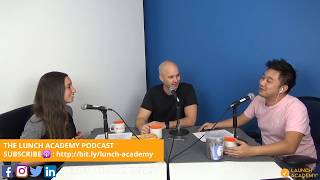
Alex Benjamin moved from Australia to Vancouver on a Startup Visa in 2015 and built Lenfol, a fintech company acquired by People's Trust in June. He talks about customer discovery, partnership-led growth, and securing debt from a Canadian bank.
Chapters
Yeah, and you're doing it again. Welcome everybody to Lunch Academy episode 14. Don't mind the Facebook message we wrote 13. It's episode 14, Alex Burroughs episode. Yes, we are tired and we'll get to that in a quick, quick sec. But I am Sam, your co host and here as always have the star of the show, Sade.
Hello world.
And we're joined today by Alex Benjamin. How could I mispronounce Benjamin?
I'm sorry, you did not mispronounce Benjamin. You did a great job, Sam.
I'm already slow with that.
You're going to be Mr. Betterman.
I like it.
Thanks for having me on the show.
So you're the founder and president of Lenfol. So we'll get to that in a quick second here. But you had a quick intro for Alex and his background.
Very quick intro. Alex is one of our long standing alumni, came here, built his company Lenfo, which this year got acquired by People's Trust. So we'll get to talk about that. So it's great to have an alumni that has seen us go through everything from what were you here like four years ago?
Yeah, I was here in March 2015.
Yeah.
So just come to four years ago.
That's a long time.
Almost four years.
So Alex is also becoming one of our mentors in the new year. So he's got a lot of really great entrepreneurship experience and we're excited to hear about it, especially in the fintech industry. I personally don't know a lot about fintech in Vancouver, so excited to talk.
You're a mentor too.
Nah, yeah, that's my brief ranch. Obviously we want you to kind of give us a little, definitely a background like of how you got into founding Landfill and your entrepreneurship background as well as a little bit of your startup Visa experience.
Sure, love to share that.
Yeah.
When does the music queue music already?
Cute. That's the thing we didn't give, we didn't give him a head. So he's like, oh, what's going on? But before all that fun stuff. I know, Shade, when we approached you about being a guest on the show, we decided to do something really, really stupid. Well, I'm calling it really, really stupid. But you were game and we really appreciate that. And so for those that you haven't been paying attention to our launch Academy Instagram, we've been doing something called Damn early days. And it is exactly what it sounds like for this whole week. Sade and I and Alex were to wake up at 4am every morning to see if it could increase our productivity. So, lady and gentlemen, how did it go?
Well, the whole goal was to fit a bunch of personal goals before your workday. And if you're an entrepreneur, your personal goals are your workday. So you might have a different approach. But for me, it was I just wanted to increase how much I was learning and how much I was doing that was outside of work on a daily basis. And this is why I suggested this challenge, because I had a couple friends who had done it and said that it really increased. Hey, actually, my mom's calling. Shout out to my mom.
Hello, our number one fan.
This is the joke. I can't do this right now. But yeah, so I was really excited to try it out and I'm so glad you guys were game. And the point was to then regroup in a week and go over sort of the things that we achieved.
Yep.
So I'll give you a little list of what I did. I got through a few chapters of my Illustrator Adobe course, shout out to Skillshare, did a bit of Portuguese, went on a 7am run, did a morning workout, and then a whole lot of contemplation of me just sitting in the dark really early in the morning.
It's very early. It's too early to be waking up at that time.
Being awake, but not, not awake.
There's nothing really happening at 4am in Vancouver.
It's so dark in the morning lately.
I thought that was the point though, right?
There's no distractions.
There's no distractions.
You just focus. So what was your experience?
What was your experience like?
Look, I had one day of 4am I'm not going to deny it. My other days have been 5:00am and 6:00am I generally speaking, wake up at about 5, 5, 15 every day. So 4:00am, I think, I think it was actually 10 to 4 that I got up one morning. But it does, it just, it allows you to so much more space in your day. You can actually, you know, get into exercise, read more, write, if you journal, do some journaling. Meditation is also very nice at the time of the day. So come 6, 7am, you know, you've already really crammed, you know, a good three hours in. So I know that less sleep actually helps me perform for really shorter periods of time. And I've had this, it's very interesting when you can you repeat that.
How many hours of sleep would that be like?
Less sleep around five, five hours sleep. What it actually does over a short period of time does give me much more energy and I find that My performance goes up a lot. What tends to happen by day four or five? I do, I plummet, I drop. I'll have a day of. Yeah.
I was listening to this other podcast about sleep and they had this neuroscientist on the show talking about the effect of sleep and how it affects your health and the amount of sleep that you should be having. And all the tests and studies that they've done and they're like really intense about how if you sleep less than seven, seven hours a night, it's actually pretty bad for your health.
Yeah.
But that being said, it, like, people react differently. So there's some people that, like, if they sleep seven hours, they feel groggy.
Yeah.
And if you sleep five hours, you feel better.
It really. There's so many contributing factors.
Exactly.
I'd love to hear your experience too. But I think, I think one of the things that it's combined with coffee, how much work you've got going on, all the other stimulants, exercise, you have to tee it up. And it has to be sort of a combination of things to be really impactful because your energy just focuses. It does help your brain focus, but after a while you can become quite wired. So I think if you use less sleep at times, it's a little bit like fasting. I think with energy and how you control energy and inputs, it can actually improve your happiness. And I know that there is evidence that I read a study a few years ago for people with depression. Depression to actually not oversleep. But don't quote me on that entirely. I can't remember where I read it, but it is worth. It's worth investigating for sure.
And I do actually know somebody that only needs four hours sleep a night. And like, I mean, some people say it, like, I can tell you, especially in college, we was like, oh, yeah, I only need to sleep four hours a night. But it's like, not true because you're sleeping through every class. But. But he actually does and it works for him. And he's up and he's, you know, 2 to 6am and like, like, to me, like, that's a genius move because he just gained four hours that other people don't have.
Right.
But it's. It's rare. Like, I know one person that can do that. Right.
It's definitely.
Yeah, yeah.
It's a balance. You have to find a balance.
Yeah.
What I've often offset early mornings with is an afternoon nap. So for a long time, especially when.
A bit.
When I was building lenfil in the early days I would need a 2 or 2:15pm nap for 15 minutes and I would take one and I'd be very open. No, I'd be very open about it with my board and people I was working with just to say, look, I need that time just to recharge and it would allow me to really work really efficiently into the evening. And I think you've got to find what really gels well for you. And if it is a nap, it's really worth doing it.
You think Ray's gonna be down for that?
Honestly? I'm sorry Ray, but I've taken multiple. In this room you guys can't see, but there's a couch on the other side of this and it's here. Keep massive. And sometimes I book out this meeting room for an hour and I come in here and I'll do half an hour of work. You're discouraging bad behavior.
I just encouraging bad behavior.
I think the key with it is if it works for you and you actually know what your output is like and you're actually aware of it, then use it and don't let anybody take it away from you.
Yeah, for sure.
I don't do it often, but sometimes I feel like if I reach a point where I'm just staring at my computer blank, like not even paying attention to what I'm doing because I'm so tired, then I'll decide to take a nap. It's not worth just like wasting a bunch of half assed work. Rather sleep it out.
Yeah, so. So the only reason I agreed to this and the backstory of this is is I knew I would be coming back from a trip from Brazil and Brazil right now is six hours ahead. So I was thinking 4am that's, you know, it's still 10am Brazilian time.
Like you'll be fine.
I'll be fine. Right. That was the worst decision I've made in a while. I wouldn't say ever but, but in a while. And the reason for that is one, the, the jet lag advantage as I would put it was, it was nothing. I was back normal in like half a day. Like I went to bed at nine.
The day I came in, the first day.
Yeah, I got, I got up at 5:30. But like it wasn't like I could have slept, I could have went, no, no, I went chill, I went to basketball. But I did really bad at this.
Yeah.
After that first day, the second day was like that was it. I was back normal. Waking up at 8, 9 and I'm very much like a night person. I'm not a morning person. So it was like I was living in another time zone. But the requirements of my life require me to be in this time zone. Right. And so add on to the factors that I didn't realize, which is I've been away for a week. Mean, I was away on work, but I'm not working.
Right.
So I'm a week behind on work. Plus, like, I haven't seen my family, haven't seen my wife, haven't seen my dog. Like, I'm not just going home and going to bed. Right. Like. Like there's things that need to occur and, And I've had the most stressful week. And I never, I never say this at work, but it's been extremely stressful because I'm trying to catch up on work. There's this thing hovering over my head that I need to get up at.
4 and Sam's gonna be sleeping all weekend.
You're off the hook now. It's over.
Yeah.
And I think trip to Brazil was not all for nothing because you came back with.
Yeah. So, I mean, like, I do see some value in this kind of early days because, like, just because I didn't make four. Like, instead of my usual, let's say 8am Now I'm doing like the six, seven. And that extra time, like, does help, assuming I don't fall back asleep. But it's also pushed me to sleep just a little bit earlier. Right. Like, I'm still approaching the 11:12. But before it was like 1am, 2am and that's not necessarily great either. So I have mixed results about this. I did, I definitely didn't make the 4:00am I had two fives and like a 6:30.
Okay. But you have to keep trying.
So I'll agree that I won. I know it wasn't, but I.
100% sure. Sure. So this, this is your prize. So. So from my trip in Brazil, I got to meet a lot of cool people. So shout out to the people at the Chamber of Commerce, Brazil, Canada. If anybody's looking to do business from Canada to Brazil or actually to Latin America, really, they're the, they're the folks that you should reach out to. They're just, they're just great. And they, they, they're willing to ask for help when it's an industry they don't know something about. They have a lot of connections down there. But through those guys I met, guy named. I'm gonna mispronounce his name is Jamie. So we're gonna roll his picture up in just a second. But Jamie works for a group called Apex Brazil. So that's a government group in Brazil. And what they do is they help startups, like all the guys here, like potentially yourself, find funding within Brazil and outside Brazil as well. So I was telling Jamie about our podcast and how we always feed our guests interesting food, and I was like, okay, what can I bring back from Brazil? I can't come back empty handed. Right. But at the same time, like most food I'm not gonna get through a 19 hour flight with. Right. Like, you can't just bring back some Brazilian steak or something like that. So Jamie was really, really awesome. Yeah, we're gonna sample this. But he actually snuck out of whatever meeting we had, popped by grocery store, and he promised. Actually did zero research on what the heck this is, but he said these two things are what every Brazilian child would eat.
Okay, well, so.
So this one's gluten free. I'm pretty sure this.
This one's.
I can't even pronounce that. It's Pacoquito. It's something to do with peanuts. So thank you, Jamie, again.
Yeah, yeah.
Big shout outs to you. Yeah, there were some rapper noises. So. So this is a, like, I think this is like some sort of like peanut. It looks like hard peanut butter pastry candy thing.
Oh, wow.
Wait, that's so good.
Oh, that's a very rich peanut. That's why I need to double check. I'm like, if you got a peanut allergy.
This is like a peanut butter cup. Trader Joe's or something.
He did say something about it being similar to like Reese's Cup. Exactly it, but without the chocolate.
Without. Without the chocolate.
Yeah.
So we can.
We can kind of snack them out a little bit.
Amazing.
See if they can get recommended.
I like it.
Assuming you don't have a peanut allergy, this is pretty much 100% peanut. So pacochita, if you guys are into peanut delicacies. So this is the other one that we'll kind of give a shot. Now I'm kind of glad we got the water. It is a little on the sweet side. I haven't tried either of these, by the way. So this one's called Pengo Delite.
That's fun.
My pronunciation is not great.
Let me see if I can fudge.
It's a fudge.
Fudge. So if you're. If you speak Portuguese and you know how to properly say this, leave a comment down for us. How is it?
I don't know if I like this one.
Oh, it crumbles.
Yeah. I was expecting it to be like, chewy.
It's a fudge. It's nice.
Throw one to our producer. Amazing.
I think, I think the peanut one is. It's intense though. It's better, but it's intense. This one. So. So yeah, yeah. Shot is not a fan.
No.
You thought it was okay.
I like it. I'm a fan of the peanut butter one. A little bit more. That's some more of a refined taste.
Yeah, yeah.
Okay.
It's all right. Cool. So. So that being said, I'm back from Brazil, back from the land down. It's actually a very far place. I keep thinking it's still under here, but it's actually really far away. It took 19 hours to get there and took 19 hours to get back and I lost the. The armrest battle both ways and on the plane. Wow.
19.
So there's a little like two hour gap in between where you have to lay over in Toronto faster to get.
To Australia from Vancouver.
Because it's direct, right?
Yeah, it's direct flights now.
So are you going back for Christmas?
No, I'm going back early in the new year. So just catch the summer still a little bit, which would be nice, actually.
This is a good transition. So Alex is from Australia. He came to Canada through the Startup Visa program.
Correct.
Launch Academy is a certified host for the Startup Visa program. That being said, Alex didn't go through our program. It wasn't put in place yet. But tell us a little bit about that experience of.
Or even like where, where in Australia are you from?
So I grew up in Melbourne. I lived in Sydney for about nine years and then actually took a year off work maybe seven years ago, went traveling for a year and realized that. That I wanted to get into startups.
Okay.
And ideally it would be great to do something overseas. So if you want me to talk you through a little bit of the Startup Visa experience. For sure, yeah.
But even what motivated you to actually just, you know, I guess what Were you working before in the banking industry?
Yeah, look, so I had a career for an Australian with an Australian investment bank called Macquarie bank for about nine years. And really, I mean, look, it taught me a lot. It was fantastic. It was great, great sort of structure that helped me develop the skills that I've got now, especially around raising capital, dealing with investors, giving advice to people. I didn't get a lot of business strategy experience. And I think stepping into a startup you really get and building your own Business in some shape or form. It's incredibly diverse. You know, you get a lot of different exposure to different skills. But for the motivation, for me personally I was really looking for professional fulfillment. So I wasn't necessarily loving what I was doing, I was getting paid well. But I had this battle internally which was to become a, you know, to become more fulfilled in my work. What do I need to do? And what I actually came to the conclusion was I need to try and attempt to build something. And my first startup was a. So we'll go back six, seven years ago. I started to create an idea from the side of my desk and it was in the aged care, so senior care space. And this is the classic, I think what a lot of first time entrepreneurs experience, which is amazing idea according to me and everybody who I mention it to thinks it's a great idea. So I, I set about. And you happy for me to go into this part of the conversation?
That's exactly where we want to go.
Into like the transition of like.
Yeah, so, so I was, I was really 31, 32, I'd had the year off work, I, I was working with another group, an investment group for two years. But I was just thinking there must be a better way for aged care in Australia where families can find better solutions for their grandparents or parents using a TripAdvisor type platform. So, okay, I had seen TripAdvisor work in other mediums, obviously in hospitality being the big one, but reviews were helping people make decisions about accommodation and travel. So I hypothesized that this would just work in a really important decision being aged care. So whether you place your family member for that final stage of life. What I didn't understand or what I didn't appreciate was that the purchasing decision, so the key decisions for why a family would choose somewhere was not going to be a review engine online. It was actually going to be the network of professionals that, like your doctors, your nurses, your aged care specialists who actually really influence the family of where they should, should place a family member. Reviews would give a nice little bit of context. And reviews are great when you're choosing coffee, they're great when you're choosing a holiday destination or the clothes to buy or furniture or a car, things where the risk of getting it wrong isn't necessarily dramatic. But in aged care it's a different, it's a different beast. So I spent a full year, basically 10 months building it and I built a beautiful website that had lots of photos on it but no customers basically. And I Kept thinking that that will come, that will come, that will come. And I didn't really get the product out there. I had a business partner and just a small investor that helped us with a lot of our graphic design and website development. But it reached a point where I had to make a decision, you know, like, I can't keep working for nothing for a year. So during that year, I met the Bixby brothers, actually Jonathan and Joshua Bixby, who have a foundry, Stanley Park Ventures, some of you might know them, they have a group here that were based here in Launch Academy. I don't believe they're based here at the moment.
But just to divert for a quick second, could you quickly explain, I guess, for our audience what the foundry is?
Yeah. So Stanley Park Ventures created a foundry. And a foundry, I think, is a fantastic place for somebody who maybe has a lot of skills in one particular area. And it might be running hard at building a product line within another company. But if you don't want to do an MBA and you want to actually get your hands dirty, own some of the equity, get a small salary, but get some really, really solid mentorship around you to actually accelerate, you know, do the jobs of six people at once with one person and, and fail really fast and learn new skills. A foundry is a really good. A really good setup, a really good model for you to get involved with. And so that's the decision I made. There weren't any in Australia at the time.
How did you. How did you even find them?
So I got introduced to the. To Jonathan, actually, through a mutual friend from Australia. And John and I met actually a year before I moved to Canada and we met down in San Francisco and John and I just developed. I stayed in touch with John. I wasn't sure what I was going to do. I wanted to get over to North America in some shape or form. And John. John sent me an email, I think it was October 2014, and just said the email was titled what are you going to do differently in 2015? And he'd written an article about, you know, basically not getting bogged down in the same thing. If it's not working, it's not working. Go about making a change. And so that's really how that, that started. John sowed the seed and I came over for a visit in the January and then I moved back here in the March 2015 to start Lenvall.
That's amazing.
So when you went through the startup visa program, were you already ready to found Landfall?
Yeah, so we. So we had Sat down and we worked out a few different businesses. We talked about a few different models and projects that might interest us. Given my background in finance and knowledge of, say, banking and essentially how consumers behave to some extent in finance, we, we decided that it would be good to have a crack at building a lending business. And so from Australia we started to, to do all of the due diligence, customer discovery, started to do a lot of the building block work.
Yep. So I think it's important to highlight, like, I'm presuming a little bit, you can correct me if I'm wrong. As part of the startup visa program that we talk about, you know, kind of often on the show, even one of the most important aspects of it is getting that, that letter of support from what Canada calls a designated entity. So for you, was it through Oak Mason?
That's right, yeah.
So Oak Mason is an angel investor. So essentially what they were doing is Oak Mason was investing in Alex. But I think to highlight your kind of whole journey is a lot of people are looking for that kind of route that you took.
Right.
But it really was a mixture of you met John through a mutual acquaintance.
And then that's definitely right. And I think however you get there, it's really, you do need to do your research, you do need to understand what, what motivates you and why would you want to come to move to another country to build something. For me, what was really the strong motivator was actually I realized I didn't have a set of skills that as I got to know John, they had an immense, immensely deep set of startup skills that I didn't have, which was the key driver. If that had been in Australia, that would have been fantastic. The reality is there weren't the depth of businesses and people with the type of experience that I wanted to develop for myself. And so I was prepared to take that risk of like, okay, well, here's an opportunity to come overseas and build a business. And we, we managed to hit the ground running and yeah, and that's where things started.
Did you guys ever consider Toronto over Vancouver?
No. No, I didn't actually. It was more. Look again, it was, the opportunity was here in Vancouver and it's such a pretty spot. It's such an amazing place.
And actually in fintech there's that whole, like, Toronto really carries the weight in terms of like fintech in Canada.
Yep.
And that's, that's something we did want to talk to you about what the fintech landscape looks like in Vancouver because I personally, I Don't have a really good insight on it. And how many fintech companies have we had through the space? Like not that many.
Half dozen?
Yeah, it's really interesting. Vancouver is a hotbed of fintech startups. There's a lot of financial technology that's been built in Vancouver, likes of Mogo, Progresa, Coho. So Dan started with, with Stanley Park Ventures as well there, there's Finai, there's a number of different groups that, that started here. I know Kevin Sandu with Grow, so that was group lend. And I think the beautiful thing about Vancouver versus Toronto is you can really put your head down here and build a company and you're not getting caught up in a lot of the distractions of come to an event, come and talk at this, be seen at this, be seen at that. You can actually really just get on and focus and put your head down and start working really, really hard with a lot of. Sometimes when you're in a heavily competitive environment, I mean Toronto is probably, I'd say really, really competitive. A lot of people want capital. There's a lot of competition for early stage business. I think there's a ton of opportunity in Vancouver for people if you want to come and just put your head down, get going and just start proving with results.
So a bit less distracting.
Yeah, I think for sure. There's one other factor too is like, you know, look in fintech, some of the biggest lending companies in the world have come out of San Francisco and it's worth just, you know, that's two and a half hours away.
Proximity itself.
That's right. And so getting that sort of exposure and easy, you know, easy access to mentorship out of the, out of the west coast was excellent for me at the start.
Did you end up going down to the Valley quite a bit?
I did in the early days. I spent a bit of time getting to know a lot of the, a lot of the existing lenders that were in the space and how they built their businesses. But then it just came back to how do you build it? How do you build a company here?
Was there a culture shock for you to move? Well, I think there's a couple different differences. One, you built the company here, right. So it's, it is a career change whether we label it or not. But also you're literally going to the other side of the world. Right. So what kind of experience, both I guess personal and business was like learning experience for you?
The pressure was just right for my personality to perform. So I had funding, limited funding and very clear KPI's milestones to go after. And I think being away from this is one of the key things. I think moving out of any structured work environment into a highly risky startup. And it's not to, not to beat around the bush like building a startup is so hard. I don't think that people really understand how challenging it is when you're earning two or three thousand dollars a month. If you've got any money to pay yourself and you, it's all on you, you know, and you've got your team, you've got a team around you, but you really, really have to hustle to make things happen. That shift from where you've got the regular paycheck rolling in, it's a totally different feeling psychologically that you won't ever experience unless you're fully in it. Yeah, we often have this joke. It's like, you can't be in Los Angeles if you're in Vancouver. You have to go there with startups if you want to be in. If you want to build something, you've got to go all in and really lean and give it everything to really, really make it work. So to come back to your question, moving abroad, I was in the perfect kind of pressure zone to make it successful. I really, really wanted to succeed. I didn't want to have to turn around and go home. I didn't have the distractions of people asking me, like, you didn't know as.
Many people here, right? Like, that's part of it, right?
Totally. And I had to build a network very, very quickly. But I also didn't have to justify anything to anyone. There weren't the, the same society, societal pressures from back home of family and friends saying, like, why are you, why are you doing that? You know, you've done this and you've done this in your career. You've been building up. Why change it? And I think you have to get the right people around you for that type of fundamental change. It's a structural change, like, I don't know, in your early 30s, making a shift like that. For some people, it's quite challenging getting out of that zone, getting out of my home city into a totally different environment. I could just run and build. Yeah. And that's what we did.
Yeah, for sure. Because not a lot of people know this, but when Launch Academy started getting more involved with, with the startup visa program, Alex was actually one of the people that I went to and said, okay, what was your experience like? And I remember I sent him an email of like 80 questions. He was like, okay, let's just do a phone call. And it was really about like, okay, what were the actual pain points of the move? Because I feel like on paper, when we look at a website at something as complex as immigration, they try and make it seem like, oh yeah, you just do this, you do that, you just need an idea and then go and do it. Right. But the reality of it is there's so many different factors. Some are related to your business and some are not at all. Right. Like, I know a lot of people, not for you, but a lot of people. The language barriers is a big one for them both mentally and skill wise.
Right.
And that's how we actually ended up building the Maple program is based on, you know, stuff that you went through, both good and bad. And you re emphasized like you had to rebuild the network really fast. It's like, well, hey, we have a pretty big network here at Launch Academy. Can we help companies that are coming over here to provide that for them instantly?
Right.
Like if they're in fintech, connecting them with people like you.
Right.
I think there is a correlation there, I think, with if you've got the hustle and you've got the ability to fail and be okay with really failing, how bad can it fail? And I think when you're close to failure, it teaches you a lot about being resilient, being tenacious. I had had a number of incidents in life before I chose to do this where I'd come close to, you know, things that were very challenging for me personally, that, that hadn't had. Had been out of my control. So I definitely felt like, okay, I can have a go at this. Like, what's the worst thing that happens? I probably pack my bags, go to the airport and fly home. But I was, I was, I think, one of the, I think the third or fourth recipient of the startup visa in Canada of their program.
That's pretty cool.
And I landed here in Vancouver and the customs offices didn't know what the program was. So I had the, they were like, you were meant to apply for this outside of the country? And I was like, well, no, I've just flown in from Australia, 15 hours. They told me to, told me to apply here at, well, here's the application form. And so they just said, look, take a seat. And then they got onto Google and they researched the startup visa program and they called Ottawa and it was just like it was a Tuesday afternoon at 10 to 5 and the right person answered the phone and said, oh yes, Let him in.
As if that's what it was like.
That's what it's like. And that's what, like the picture that I'm trying to paint.
Right.
Because you, I think you actually got lucky because you landed in Vancouver at a time when Ottawa was still open.
That's right.
Right. If you had a night flight and it was like 9pm In Ottawa, you would have been sitting in the airport going back home, right?
That's right. So my then girlfriend, now wife and I booked, we rented an Airbnb in the West End for four weeks, like, while we just sat down and said, okay, how are we going to do this? And I just came down to the Launch Academy every day. And by the way, for those who haven't been to Launch Academy and those that have, it's a wonderful sort of ecosystem, melting pot for new beginners, for people who are trying to get started. And for me, it was just, it was like an immediate family that embraced me and really just helped set me up for success early. So introductions, getting to speak at events, and Ray, who runs it, really took me under his wing and introduced me to a lot of people. So I think that's one of the great things I think that you guys would offer in your program is just that immediate network and access to people, which I really benefited from, for sure.
That's, that's, that's, that's the name of the game, and that's genuine. But, but tell me a little bit about Lenfo and it's, it's. Yeah, it's a little bit disgraceful. We haven't gotten to it yet.
Tell me how we still got to.
What.
What is it? And, and, you know, what did it start out to be? And is that what it ended up being? Or did you guys pivot at any point?
And how does it tie in now to people's trust?
Yeah, great questions. We just saw a big opportunity in the unsecured credit space. So there's over a million Canadians who borrow money on credit cards. So they're paying 20 to 23% their $20,000 credit card balances that people have.
Racked up 29% sometimes.
Yeah, right, right. So what disruption has done in a lot of markets, like, you know, we've seen it, Airbnb, Uber, everybody talks to. But it really has disintermediated the traditional ways of people getting products. And especially with finance, this notion of having to go into a branch to go and get help sorting out simple things like finances really was revolutionizing sort of 2010 especially after the financial crisis, a number of countries had really adopted Fintech. So they were basically taking out the middleman in a lot of instances, which, or redefining who the middleman was in financial transactions. And so we, we took the opportunity to, to go after the Canadian unsecured credit market. There, there weren't really anybody, there weren't.
People who were doing balance transfers and stuff like that.
Okay.
So we, we went for, we, we sat back early and we said, okay, what does the market look like? Who's in the market? Is there an opportunity? Every startup that I've been involved with that works really maps out their demand early on. One of the biggest issues I think with any startup is you don't do enough customer discovery to understand what the demand's like. So we assessed the demand. We thought there was a big opportunity there, we did a lot of testing and we went after it. And as a result we grew up, we developed some big partnerships. We signed up a large demand partnership with a mortgage broker in Canada. We got a debt facility from one of the Canadian banks and we basically brought the two together and started originating.
How did you actually get the word out?
We did a lot of customer discovery. I spoke to 182 other people who were in roles of VP marketing, VP sales early on with the business and I worked out how do people acquire customers in lending companies. And essentially there's a direct to consumer model which you run things online, Facebook ads, direct mail or partnerships. And we basically said the cheapest channel to acquire customers through is the partnership model. And we started actually targeting partners, people who would send us really good quality.
Customers and then that way the trust is very much built there.
Right? Yeah, I think. And it also gives you a much stickier. You can build like a very defensible business model by going after like the partnership model. And you can just learn a lot about your partners. Your partners can develop trust with you and you don't have to spend a ton of money bringing the wrong types of people into the top of the funnel.
Yeah.
So to fast forward, I mean we, we, we sold the business this year to People's Trust. People's Trust is a, essentially a pension fund, but it's a Vancouver based financial institution and they have a number of different lending verticals. So they do mortgages, they do leasing, they do cards, and they didn't have an unsecured lender in their mix. And so we started discussions with them late last year and we did the transaction in June. And, and I'm still running the business and a lot of our team are based out east as well. And you know, it is a really, if I can say it myself, it is a startup Visa success story. So it's been great, you know, building it from an idea on a piece of paper, doing all of the validation, the building, the scaling, the capital raising and then the acquisition and you know, we're all very happy. So it's great.
And they're, they've been around for a while.
Like 30 years.
Yeah. I was looking at their site, like 30 years. That's a pretty, pretty amazing company to get acquired by.
Yeah.
Really sets you guys up for a long term success big time.
And they've got 12 billion of assets under management. It's Canadian owned. And yeah, there's a huge opportunity in there for us. So it's really cool.
And then you guys got to keep all your branding and your company intact.
That's right. So we're a sub entity so that they own Landfill. But Linfool has a very strong brand positioning in the market. Our customers know who we are. The types of customers we go after know who we are and what we represent. Personal loans and. Yeah, that's, that's it.
Cool.
And like, I can't, I can't reemphasize how important that trust is. So. Tangent point. I spent two months once working at a bank I won't name as a, what do they call it? Inbound customer service agent. What the real job is, is I have targets to, to resell. People call in and say like, I just want to move 50 bucks to my son or something. And then it's my role to upsell them on something.
Right.
And a lot of times like the rates are absolutely terrible and you can see like, you know, if this person already has $3,000 in credit card debt or whatever it is, like they're gonna make this move and it's gonna alleviate them for the next four months and then the four months after that they are completely screwed.
Yep.
But they do it. And, and the math shows that, you know, enough people do it that the banks can keep pushing it because, because they don't, they don't know any better. Right. Like, well, it's like, oh, this bank's telling me to do it. I've banked with this guy in my whole life. Why would they do me wrong right now? Right. And so that, that's, I think that that's really interesting.
That's where fintech really works. I think there is a, there's definitely a trust element and many people believe in fintechs that they're moving the needle, that they're changing the game, they're changing the way that people use financial institutions. And you know, we've demonstrated that we were able to do it and that people believe in our product and hence we've been in business for four years. So you know, it's really, really exciting to be able to build something like that. You can't just do flash fast. You got to stand in the market and really try to build a sustainable business model that really understands its customers and delivers value.
So in terms of, for the consumers, let's drop some knowledge bombs. In terms of people dealing with loans or maybe they have repayments like that, what's one the one piece of advice you would give to those folks?
Yeah, it's a great question. I think really high level with credit it doesn't just happen. You know, loan balances and so on don't just appear from nowhere. It does. It is heavily driven by consumerism and people's desire to have things now. So what we often see is people have built up credit card debt which they don't have anything to maybe show for and they refinance to us and it's because they want to get their credit, they want to get their lives in check, they want to pay off their credit. The difference with us by the way is credit cards are just interest only, whereas we, our loans are principal and interest. So you have to pay off the principal as well as the interest. So they generally help people get their credit under control. So I think for any 18 year olds or people who are stepping into the world of employment and you do get a credit card, I think it's really good to develop a good set of rules and a good set of habits around how you spend money. You know, we put so much effort into our work and what we do with our time and to generate income and it's really, really good to put as much thought into that as to how you, what you do with it when you get it. It's not me telling people to not, not spend more than what they have as well. But I think there are some really good opportunities to, to think about how people spend money and how they build up credit, how they build up debt. But, but the cool thing is there are ways to get out of debt if people are in debt. And there's ways to, you know, there's no better time to take action than today. It's worth thinking about, it's worth getting help and speaking to a financial advisor or to a mortgage broker and saying, okay, this is my current situation, what would you propose? And get a team around you, get a coach, get somebody to help you that can get on top of your debts and there's plenty of ways to do it and there's a lot of similar people in the same position. If you do find yourself in debt, I think it's one of those things people feel very ashamed about or they feel like it's a really tricky conversation to have a conversation about. One of the key things is don't worry alone. Spread that worry with somebody who can actually help you develop a plan, like a personal trainer to get on top of it. That would be what I would share.
That's some really good advice to hold not worrying alone, because worrying alone, it just escalates and nothing.
Yeah, you can really run into brick walls. And I think how do you get around that? Somebody will have experienced what you have before, whatever that is. And that's the same to the entrepreneurs out there or people who are in the hustle and really worried about that round not closing or the next thing you know, somebody's left their team. These things always work out. It's really just a matter of who you consult with and how fast you move on it.
And that's something I think I've experienced in the few years that I've been around at Launch Academy with entrepreneurs. It seems like it's a very lonely process and my entire goal as coming on as a community manager was to kind of like at least take that away from, from the process and make it feel like it's. That you're part of a family. Like you said, when you walk in and you feel like you belong here and you're not alone. And there's a lot of people going through the same challenges as you, you just have to find them and connect and talk. And we try to do that as much as possible through like peer to peer workshops and just social events and networking events and just getting people in the same room talking about their challenges and at least getting that like social support.
Yeah, 100%. It is, it is. There's a vulnerability that's required to overcome things. And I think especially with you go back to debt, all the way down to debt. And also in, in working in the startup world, there's a lot of correlation there with actually putting your hand up and saying, I need help. How do I get on top of things? And that's really the great thing with Lenfall. Lenfall's name is Based on mindful lending. So taking on the base, taking on the. Being thoughtful, like, what am I doing? How do I get. How do I get to where I want to go?
Yeah, yeah, for sure. And one of the. One of the questions I always ask every member that comes in is, what is your Runway? And it always throws them a little bit off guard because, you know, they've met me for 15 minutes on a phone call, and now I'm asking about how much money they have. But I think it's really important, not just for me to know, but more so for them to know. And I think lot of entrepreneurs, and this is a knock, is there's. There's a mix between. You have to dream big, but you also have to be realistic within your means, right?
100%.
So. So a lot of times when we're too busy dreaming and. And you're like, but my runways, two weeks. But don't worry, we're gonna make it big in this two weeks. Like that. That's an issue, right? When you know, okay, I have five months to realistically give it a go at this. Or in your case, it was like one year or something like that, right? That way it kind of puts it in a box a little bit where. Where, you know, you have to react. You have to do something different. You're not just going insane doing the same thing, trying to make it work, right?
There's one way to, like every startup, it's like, how do you make revenue? How do you make money? Like, doing things for free is like, okay, it can be nice, depending on what type of business it is, but really, there should be a value to what you're offering and what you're bringing to the market. And it's really like, a lot of the funding issues can start to go away or improve based on how much revenue you have. So really thinking about. If you're sitting there thinking, how do I monetize what I'm doing? Find out. Like. Like, it's. It's one of those things where you've got to. You've got to. You. You do have to get into revenue, and you've really got to put that the front of your mind. It does help a lot of your problems go away.
So for startups, is there a role that that potentially Lenvul would. Would play a part in or a different search and maybe stage that they're at?
Where. Where. Come and talk. I'm happy to connect LinkedIn, Facebook, wherever and. And have a conversation.
More from Ray




A Founder's Story. Creating the World’s First Laundry Robot — Joshua Rabanne, Laundrx

Bits&Bytes with Sherry Li, Assistant Professor at Berklee, Co-Founder of ICTUS Audio

Why This Young Person Left Child and Youth Care To Work in Tech - Bits & Bytes with Samson Li




