Lunch Academy Episode 018 (Feat. Sarah Goodman of VItalSines)
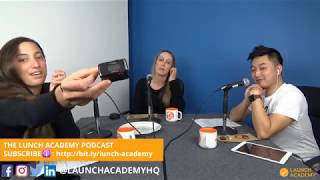
Episode of Lunch Academy (recorded Mar 16, 2019) featuring hosts Sam and Shadeh with guest Sarah Goodman (founder of Vital Signs). Conversation covers Vital Signs’ product iHeart — a finger sensor + app that measures aortic pulse wave velocity and reports an “internal age” — its origins (Sarah’s father developed early prototypes informed by aortic stiffness research), manufacturing approach (partnered with a medical-device manufacturer in China to avoid heavy tooling costs), business milestones (Dragon’s Den exposure, surpassing $1M revenue, hiring CEO Kzar Hasanji), user guidance (test at rest in the morning; readings respond to stress, exercise, sleep), pricing and distribution (device US$199; app free; website goiheart.com, Amazon), and broader themes about stress, sleep, longevity metrics, fundraising challenges for women founders, and hardware go-to-market tradeoffs.
Chapters
All right, welcome everybody, to another episode of Lunch Academy. Episode, I think it's 18 18, the Jake Vertanan episode.
We're approaching 20.
I am Sam, your co host and I'm with me as always. Can't talk today. Not good for a podcast host. Shadeh, star of the show.
Welcome, everyone.
And we're joined by Sarah. Welcome back to Launch Academy, Sarah.
Thanks.
Sarah is one of our longtime alum, one of the first companies I worked with, actually. But we'll go a little bit in Sade. Why don't you go ahead and introduce our lovely guest today?
Well, as Sam said, Sarah is one of our number one almost alumni. She developed a company called I Heart Internal. Age is that company.
The company is called Vital Signs.
Vital Signs.
The product is iHeart.
Okay. Vital Signs product is I Heart six years ago. And if you know, Launch Academy, we've been around for seven years. So you were with us right at the beginning?
Not exactly. She. You go into the story.
Well, yeah, I thought you guys were pretty.
Yeah.
Pretty developed by the time.
Yeah, we. We started in 2012, so. So Sarah came to us in 2015. But technically, I guess Vital Signs started around the same time Launch Academy started.
Well, well, our product was in development for a long time, and then when it was like way pre beta, I kind of came into the picture because it needed to be commercialized and like, so I needed a lot of work to be done.
Exactly.
But, yeah, this was the first, like, Office of Vital Signs.
First Office of Vital Signs.
Yeah. And I remember the reason that I reached out to you guys was because I was always working at home and like, we're very remote. Like, we have people in all over Canada. And I was looking and there was like a quote from Ryan Holmes. I think that was just like, surround yourself with people.
Shout out to Ryan Holmes.
Well, it was just like surround yourself with people who are, like, going through the same struggles. And I was like, I feel like I'm struggling. And also I was just like, working with my dog. I need to talk to people.
We still have that quote.
Customer Discovery. Customer Discovery, yeah.
So that's how you got me.
Yeah, that was the quotes and the customer discovery and the dogs. And you could bring your dog here.
I did bring Nora all the time.
Nora was here. She was. She was a stationed here.
But Sarah actually started Vital Signs with her dad, which is very exciting, I think.
And one other. One other technical founder, too.
Amazing. And developing hardware which we don't see a lot of here in Launch Academy, I think right now. We've got one hardware company as part of our space. I think.
I think hardware, because it starts with the word hard, so it's generally harder.
It is harder.
It can be harder. Right? Like, it's a lot easier to spin up a website or a web. I shouldn't say the word easier, but. But each has its kinks.
Well, yeah. Think about, like, making changes to an app on the fly. Like, for us, the hardware isn't the most important piece. It's really in the software and our algorithms and ip, so that kind of stuff we can still change on the fly, but if we needed to change the hardware, it's a pain in the butt.
Yeah. So before we dive too deeply into it. So this is your first time on Launch Academy, but. But there's a couple of things that Vancouver Eights always love to talk about. So one, of course, is food, which Sade's brought us some of, but the other is the weather. We love talk. We. We're obsessed about talking about weather. So Shade always gives us bi weekly weather updates.
I always give the worst weather forecast. It's cloudy.
It's not that cloudy.
Cloudy.
It's kind of nice.
It's gonna be cloudy tomorrow, and then it's gonna be so nice on Sunday. Like, so nice. 14 degrees sunny. That's exciting.
I read that it's gonna be 17 degrees on Monday.
Yeah, it's pretty much summer. Summer just hits all the ones. No, it's spring. It's exciting. Today I saw flowers starting to grow.
I wore sunglasses on my way here when I was walking.
Isn't that nice?
Yeah.
And you're in squamish, so on a Sunday, beautiful weekend day, like, what, are you just out hiking?
Yeah. With your dog. We're actually going snowboarding on Sunday.
Oh, so nice.
With the dog.
Not with the dog.
Air Bud. 6.
Honestly, I wouldn't be surprised. I feel like Vancouver people, they.
They do it.
She does the hikes.
They love their dogs and they love their snowboarding.
So she does the hike. She's okay on a paddle board, but, like, the snowboarding isn't for her yet.
Yeah. So that's the weather forecast. Go enjoy your Sunday is the moral of the story.
All right, so. So you've brought us some things.
Let's start with some food. Since I figured this episode will be focused on health, tech, and health in general, I decided to bring in some protein bars and some health bars. So there's this new trend out there of making protein out of crickets. So you as a nutritionist Nutritionist. I hate that word. Know all about it. Yeah. A couple of brands have started out of B.C. and so what I decided to do is get a couple different protein bars and mix in two cricket bars and. And have you guys taste and a, figure out which one's your favorite, and B, try to guess which two are the cricket bars. The other bars are regular protein, just whey protein and pea protein spelled. When I told Sam I was bringing in pea protein bars, he asked me, how do you spell pea? I said, P, E, A. Yeah, I.
Have my limits too.
I was real scared they were made out of actual pee, so neither do ours. I'll show the camera people listening.
As a nutritionist, there's no protein in pee. No, I don't know that for sure.
You're like, oh, I'm pretty sure all this stuff my. My trainer told me not to eat.
I know I love peas, and when I found out that they were pretty much just carbs, I was devastated. I'm like, I thought I was being healthy eating my peas.
Really?
I'm just.
I knew beforehand, so I just generally dodged Sam just.
I pick up the keto diet, and I've been offering him random things, and he's like, that's not keto.
I'm like, how is keto? She's so mean. If my trainer is watching this, she's the worst. She's actually the worst. Shout out to trainer J.
Eating. So what are we doing? Okay, so you're gonna taste them in order. Okay. Starting from the top.
Okay, I'll let you go.
All right.
Sure.
Are we tasting at the same time?
I guess. I guess so. I have to eat all this? I just had lunch.
It's like wine tasting. You just spit it out after.
Where's the bucket?
Okay, Are we gonna guess after all of them?
This tastes like grass, dude.
You can line them up.
Okay.
You fed me a lot of weird stuff on the show, but this might be one of the worst.
So this is why the water's here.
Not a fan of the first one.
Tastes like earthy fruit. I haven't had the second one yet. And they're both laughing.
So this one is definitely keto.
It's definitely gross. I don't know. I don't care what it is.
I like. I'm never a been a huge fan of protein bars. I like, make some, like, energy ball type things.
But this one's okay. This one's kind of like what you expect when you eat a protein bar.
I felt like power bars tasted like the wood That's Ikea furniture is made out of.
Yes.
Oh. Oh.
It's the consistency. Like you need a liter of water when you eat.
That sounds bad.
I'm glad we're not saying the like, names of these companies.
We're not.
Because I would feel really bad because.
But I think most people who are eating protein bars aren't eating it for the taste.
I don't know.
I bought like, I. Maybe I'm just trying to be an optimist. Like when I'm like so hungry and I get one. Okay.
This one's got the third one's got a different texture. I'm like one behind, but I'm okay with the taste with them. It's got a little like toffee like.
Thing to it if you like the third one.
Okay, I think I have my guesses.
But what. What am I ordering? Guessing between.
Two of them are cricket based. One of them is pea based. The other one is just whey.
Salty.
I kind of like when there's salt in them.
I did not expect that.
I took a photo to remember the order so that I didn't mess up. So. Okay, Sarah, take your guess.
I don't know if the colors is throwing me off, but I feel like these two are both cricket.
The first and the last one.
You're right.
Yeah. Because they both taste like dirt.
We won't name the companies for the companies out there doing cricket protein. Hey, we love you because it's a sustainable and amazing.
I love the idea. I just like, I can't not.
Not down with the taste.
I think that this one's the pea protein one.
Okay.
And that. That one's just regular. But they. I don't know.
I'm guessing that one is actually a quest bar. And then so whey. And then this one is P. Okay.
So the dry one. I like the P one.
Yeah.
Which one did you think were cricket?
The first one for sure. And then I don't know. I would have guessed the second one maybe. The last one was really weird.
The last one wasn't as bad. I didn't think the first one was like. I was like, yep. Immediately.
This is.
So you didn't like the last one? The second cricket one wasn't as bad.
Yeah, the first, the first.
So we like this one. Okay. So then we can say the name. Cuz I do want to say the name.
Yeah.
Cuz that's actually our. One of our local brands. So. Coast Cricket protein brand.
You did it. Shout out Edible.
It's.
I'm going to Eat the whole thing.
Never done. Butter flavored.
I do taste the peanut butter.
That covers up. Good texture.
Yeah.
The first one, I'm like, I'm sorry, but it was just. It did taste like dirt. The first cricket bar.
No.
Okay. Yeah, don't buy that one.
That's that on your phone.
Don't buy that one.
I'm sorry. I'm not sick. I promise.
So thank you, Sade, for filling us with. I. I don't know, I feel I.
Protein.
Hey, maybe this is gonna help our internal age.
So. So that's the thing. So let's. Let's jump into it now. Like, what it. What is Vital Signs. How did it start? And what's. What's the device? What's I Heart?
Sure.
So Vital Signs, it's the parent company, and our first product is I Heart Internal Age and how it started. This was like 15, 20 years ago when my dad is a medical doctor. He. He was a tai chi master and he. He studied under.
Sounds so cool.
He's pretty cool. Pretty cool guy. He. He was studying under a Dallas Monk, and they started a bunch of rehabilitation centers in Ontario to help people rehabilitate. Rehabilitate through movement for, like, mental illness, physical illness. And so they made all these centers together, and the. The Dallas Monk ended up getting pretty sick. And my dad was helping him as a doctor, and. And really on his deathbed, he asked my dad to do him a favor. And the favor was to help show people that stretching between, like, the heart and the kidneys are stretching in this zone was the answer to longer life. Soon after, the Dallas Monk died, and my dad thought, like, of course I need to make this, like, promise true. How do I do that? As like a doctor and like a scientist? How do I. How do I make this valid? And so he kind of took it and kept in the back of his mind. And Then probably about like 15ish years ago, studies started coming out about something called aortic stiffness. So the stiffness of the biggest blood vessel in your body that, like, runs right in front of your spine has proven to be a marker of risk of developing heart disease, risk of developing dementia, and risk of death from all causes.
How do you know that your aortic is stiff?
Well, you didn't before.
Mine's probably stiff. Every other part of my body's.
I'm scared.
But the thing is, so it sounds super scary and, and like, so since then, a ton more of more studies have been published and, like, super interesting. And even recently, I think it was the University of Pittsburgh published this study that said that increased aortic stiffness is the only indicator of risk of developing dementia down the road. That's actually reversible. So if you go to get a scan and they see signs that you will be getting dementia, you will. If you track aortic stiffness.
Oh, my God.
And you see that you have an elevated level of aortic stiffness, which we've turned into internal age, then you will be able to reverse that and then reduce your risk of developing dementia.
So.
So my dad saw all these studies and thought, I have to figure out a way for people to measure this. How do people. How is this measured, anyway? Like, how are these scientists measuring it for research? And it was this big machine that was from a company called Atkore Medical that's out of Australia, the gold standard of, like, aortic stiffness testing. So what they do. And so the only other product that you can measure, what we measure, it's 25 grand. And you would lay on a table with, like, a researcher. You're like, this isn't something where you can't go to the doctor and get this test done. And they would put a sensor on the carotid artery in your neck and then one on the femoral artery in your thigh. And you'd lay there, and they would test the distance and the speed of a wave coming from your heart going through your aorta or your arteries and your aorta and back, and then determine the speed, and that would be, like, your aortic stiffness level.
Okay.
So my dad thought, okay, how do I make something that isn't $25,000 that, like, regular people can use? This was never to be built for doctors because that takes a really long time. And he wanted it to help regular people because he made that promise. So even before I moved to BC, which was, like, 18 years ago, I would come home from, like, university and see my dad at the kitchen table at, like, midnight, working with, like, circuit boards and trying to figure out how to make this thing. He's, like, a crazy inventor as well.
That's amazing.
And, yeah, it wasn't until, like, six years ago, he was like, hey, we did it. We made it. And I was like, what? The machine, the age thing. And I'm like, oh, my gosh. Well, and I was running my own company in health and wellness, and I was like, I want to see it. And when I saw it, which didn't look like this at all, it was giant, and it was developed by a mathematician, and My dad and they said they were just going to throw it up on Amazon. I think people were going to buy it, but it wasn't like no one would ever understand it. But they were pretty pumped that they had made this thing work. And so that's when I came on and I, I was just like, let's make a. An actual company and brand and product out of this that regular humans will get and it'll help them.
That's amazing. And then out of all that came this. Yeah, I'm just gonna point it at.
The camera so people can see. Go nuts.
It's pretty small.
It's really small. It's for your fingers.
Yeah, it. It looks like.
How big was the initial machine?
So there was a couple, but. Yeah, like that. And then there was one that was like a big. It looked like it was from 1980. Like a big square with like an attachment.
And then think about Iron man and how tech shrunk.
It was really finding the right partner. So we were talking before the podcast about like, going to market as a hardware company is really, really hard. You need a lot of money. But we kind of leapfrogged over a lot of those hurdles because we found a partner that's actually an investor in our company that are a medical device company in China and Shanghai. And. And so this is their mold. We branded it as our own. We changed the inside so the sensor capability was a lot stronger. And then our special sauce is all of our algorithms and our intellectual property that we've built and our data over. Over time. So we didn't have to go into the design, tooling, manufacture, like all of these things that cost millions of dollars. So we went to market as a 2.5 person team. Like my dad's is still a doctor, so he's the. But he. To launch this and ship it worldwide.
Wow, cool.
So what's. What's your internal age or how. What's my internal age? I've done this a couple of times.
Now, but I'm hoping So it takes 30 seconds. So maybe like while I'm testing. Sure, we can talk more. You can't talk though.
I can't. Oh, I can't talk.
You can't talk.
Excellent.
Wow.
This is a one in a lifetime opportunity to experience a moment with Sam.
Not.
Not talking. This is awesome.
So I'm just gonna put my brightness up and I'm just gonna put this.
On there a story while you set him up. Yeah.
So. So we're all on our devices while live on a podcast recording so I'm.
Gonna use my profile just so we're.
Quick here.
You know, on your finger.
Sure.
And then just rest your hand flat and try not to like doing talk or move around.
So.
So I'm going to start with this. And it's Bluetooth, so it just connects. If you want, you can. Oh, excuse me. So we show you your heart rate and your blood oxygen level in here. But the special thing that we're measuring is that aortic stiffness reading, which is measured by measuring something called aortic pulse wave velocity, which no one understands, and it goes over people's heads. And when you start talking about it, they don't care anymore. So we change it to internal age so that they do get it right away. Anyone gets it. Like, when we present at any kind of trade show or we have a booth, there's lineups, like, around the corner. And it's not just like our target market. It's like, kids, they want to know. Everyone wants to know.
It's exciting. So, like, what if maybe I'm, like, 80 years old internally? That'd be crazy.
So this is gonna say my actual age because I'm using my profile, but your internal age. So your Internal age is 35.
35.
How old are you? Actually?
31.
Ooh.
A little bit older, but that's not bad. And also, you're supposed to test in the morning when you haven't eaten or drank. Especially crickets. Crickets really boost me.
Yeah, the crickets boosted me.
Like, four years are just aging.
But you're supposed to be doing it, like, when you're relaxed at home, you've sat for two minutes, no food or drink, because it's really responsive. So you can, like, see changes after things like exercise or stress or. So when you want that baseline reading, you do it in the morning, and then you want to see that one change over time. Time. Wow. Usually our. Our users will test, like, three times a week, and they'll see trends, and then they'll start incorporating good things.
That's exciting.
Yeah.
It's your turn to be quiet.
I am so scared.
Oh, don't worry.
No, I did do the test in. In, like, a couple years ago, and I was, like, almost 40, so.
Look at that.
I've actually.
What's changed? Oh, you personally.
I ate some crickets. Yeah. So I guess. I guess that's it.
It's just the crickets. What's the company again called? Coast Coast Crickets. Lowering internal age. Since today?
Since today. No, but it's Shadi's trying not to like, laugh or be too engaged. He has to stay calm. Right. Like, that's the hardest part is it's like you can also like, it also measures like your heart rate and stuff like that. So you're like, oh, it's going up, it's going down. Calm down, calm down.
We've actually definitely corrected for like, over the years we've learned a lot about, about the testing and a lot of our ip, which like we have a patent like worldwide, but a lot of our IP isn't in the patents because we've corrected for a lot of different things and found. Just found out a lot, which is really interesting.
Yeah. But I mean, for a while there was this weird lineup in the office. And this is before your time here. Like when we, we had the one device that was at my desk. And then people kept trying to get their ages over.
You guys are the same.
There's no. Yeah, that is so.
So for, for those that are just tuning in, the whole premise of this entire show when we, but before we did any episodes was the whole concept was like, I eat a lot of crap. She lives a healthy, rockin mid-20s lifestyle. You know, she does runs, she does marathons, all that jazz. And so the whole point was like I was gonna feed her something crappy and she was gonna feed me something healthy, so on and so forth, kind of emphasizing how unhealthy I was and how healthy she was. And we're the same age.
It's a starting point again, it could be totally different in the morning. And I've actually noticed that women test a bit higher. I don't know what it is about us. Like, so my internal age is 43.
Oh my God.
I'm 35 actually. But I was in a really bad car accident. Like I was hit by a car walking. And that was, was that when I was here? It was like three years ago. So.
Yeah, you were, you were just recovering.
Yeah. And so I have. My internal age was really low before. Like I've always been super active and I have a really good diet. Like after studying nutrition, I'm anal about that kind of stuff. But after getting hit, I couldn't walk for a few days. And then I, I was doing the I heart test to see what. How my reading was. And I was 85 after stiffening up. So it's directly related to your spinal stiffness. So like it's. And running is actually.
Yeah.
Not very great for it.
And runners, I haven't ran in a long time, so.
But yeah, I'm still working my way down three years later from 85. So like 43 isn't that bad.
But wow.
I'm hoping Squamish changes.
You know what? Like I don't know, maybe I don't know how much this affects it but like I tried to live a very healthy lifestyle since I was a kid. My parents are very healthy and everybody knows me as like sort of a health nut. And this is why it's incredible because Sam just eats fried chicken all day.
But he has a personal trainer.
Yeah, it's only for the last like three weeks so I knew this show was coming and yes, just imagine. So I haven't had a coke in a month.
You have an I heart here. I see it on the table. Do you test with it?
Not lately, no. I have to charge it. I should restart.
Yeah.
It has batteries.
Oh, it has batteries. There you go. I didn't know.
So I've been trying to be healthy my entire life and. But my. And only. And it's like it's not a hard thing. Like it comes very naturally. I just like healthy food and I like exercise and I like going to bed early. It's all the things that I like. I'm really not, I truly am not forcing myself. But the one issue that I've had for a long time that I'm like actively working on making better is I'm hyper and anxious person.
Like stress is so big and so.
I literally got nervous just putting that on because I know how like in the last five I have anxiety induced asthma and so in the last like five days I've had such a hard time breathing and it's really weird because it comes randomly. Like my body sort of goes. I've done like every single test out there but my body sort of goes into this like fear shock mode when mentally I can be relaxed or nothing is going on but it'll just do it by itself for no reason. There must be a reason. But we haven't found it. But anyways, so I like in those times I have like a hard time breathing so I was super worried because.
I'm like oh my God.
So I had the hardest time breathing in the last five days. I'm probably going to be like 80 cuz I'm so stressed out.
Stress is so big. I remember one time like so this is not the best situation for you to be testing and maybe let. Let sh. Take that home and then she can start doing in the morning. So you'll probably see a difference. Yeah, but like, one, one time we were at an event and one of the promo girls was like, so pissed off that her reading was so high. And so we sent her backstage to go do a guided meditation on her phone and it dropped it. It dropped the reading by seven years. Just like, it's a short term change, but that just shows you that, you know, other things are impacting.
Exactly. So I was wondering if, like, anxiety is like, has probably a big impact.
On, like, you're reading and you work with me. So.
And so I think maybe you will probably hopefully agree with this. But what I found out in the last, like four years trying to better my life is that the two most underestimated things that impact your health are sleep and stress. Totally. And they're the two things that people don't really like. They don't. They treat it as like, it's a normal thing. It's like, oh, I'm just really stressed. And like, that's normal.
It's almost in the startup community, people are like, proud of it. Yeah. Are you serious?
And then people are like, oh, I don't need that much sleep. Like, I'll sleep like four to five hours. I'm like, no, but you do.
Yeah.
Like, there's so many studies that shows all these effects on your health, especially with like, Alzheimer's and like, mental issues when you're older. Directly correlated to lack of.
Look at Ariana Huffington. All she writes about is sleep. And I've. I remember like being in this community and like in the tech community and having competition, like, everything is so competitive. Right. And. And I remember one time this one founder was like, yeah, how many hours do you work a day? I was like, I don't know, 8, 10, like maybe. He's like, oh, my God, I do, like 16. And I was like, cool, man. Like, that's a super easy way to burn out and like, not be good for your business. Which I did do that at the beginning. I got super. I was just like, everything was on my shoulders, had to do it. And then I realized, like, you need to take time to do good things, like go hiking and just like chill out.
To like, go for change, like a health change in their life. They immediately go to diet and exercise, which is good. But they're the things that are usually like, pretty hard to change in your life because now you have to put in all this time and you're eating things that you don't normally eat and exercising is hard and annoying. So those are like, hard changes. But it's amazing. That like when people are living like a stressful life for so long, they don't even think about making a change towards like, what if I just even breathe for 20 minutes? Like 20 minutes of breathing. That is so much easier than an hour workout a day and probably has way more impact on your health in the long run.
We've actually. So my dad, he, he writes a lot of thought leadership articles and like this metric that we're measuring is very holistic. Like it's very much related to like organ health and brain health and heart health, everything. And he writes a lot about breathing and like breathing affecting your spinal fluid, going, going through the, like getting to the right places and being clear and clean and.
Yeah, yeah, send me some of those articles. Yeah, I'm trying so hard to focus on my breathing because like I said, it's like I'm healthy, happy person. The one thing that really sucks is my breathing.
Stressful anxiety will make you like the stress really hurts your ability to breathe deeply and like you forget about it. Yeah. You're focused on something else.
Yeah.
Anyways, speaking of stress and speaking with working relations, so one of the things we wanted to dive a little bit deeper into is I guess not even technically you are in a family business. Right. What is it like working with family? And you mentioned you started your own company in the past. What's different? What do you need to know? Do you recommend it?
Okay, so my situation is pretty different, I think. And the companies I started in the past were very much like lifestyle companies. This is like a high growth tech company. So very different. I think a lot of people would have like, I don't think working with family is really easy, but I've had a, I've had it pretty good one. We're on opposite sides of the country fair, we talk constantly and like I already said, our team is primarily all remote and with like tools like Slack and hangouts and Zoom and all that kind of stuff, it's fair. Fine. But with my dad, like when I came on and I saw the product, I was like, hey, I think that you might need some help creating something that people would actually get because no one's buying this thing. So let me help you part time. And so I just started like rewire framing the app just like on paper and like creating a website and brand voice and trying to figure out how they would actually commercialize it, which like snowballed a bit. And I think like, if it was the other way around and I was the parent and my kid was helping, I would be like a control freak and, like, looking over their shoulder and like that. I, you know, I'd be really nervous. But my dad was like, oh, you're right, I don't know anything about this, so just go do it.
Oh, that's nice.
Very cool.
Obviously, you know, like, we reviewed everything, but he. I was working with the kind of people I thought would be our customers. And yeah, he and Ben, our other founder, just believed that I had the ability to do that. So it's been a really awesome experience for me. And, like, being able to do it all with my dad's been really great. Like, we used to fight all the time when I was kids. When I was a kid, it was. It's so funny to think that we work together now, but he's the coolest dude. And yeah, we work really well together.
That's awesome. And then. And then from that, I know one of the other kind of interesting parts and you guys made an announcement, I think mid last year, late last year, is you decided to actually hire a CEO for the company.
Yeah.
So what was, what was the driver between that and maybe you could tell that story a little bit.
Sure. So that in August, we hired a new CEO. I was the CEO up until then. Well, I was like director of marketing and something for a year. And then I remember meeting with a bunch of advisors here at launch Academy and being like, them being like, you're not a. You're not a. Like the marketing manager. Like, you're running everything like you're the CEO. So. Yeah, like, come on, just put it.
Yeah.
And I always told my dad that once we reached a certain point of sales, revenue, or milestone, that we needed to bring someone on who had really been there, done that. And my dad, in true, like, dad, fashion was like, but you're so good at it. Like, okay, this is exactly why as well, like, we need someone because our goal really is a merger or like an M and A in like three to five years. Like, we want to incorporate our tech into a giant company that can help people all over the world. And I thought, yeah, maybe I could do that. Maybe. But, like, I'd probably flail my way there. It would take a long time. And it would be much better to get somebody who's actually taken a company through exactly what we want to do. So we started the search about a year ago to look for that person. We looked at men, we looked at women. We looked at people who are working, who had worked in consumer health tech. And then we found someone and wooed them to come to come on our side. So we hired a man named Kzar Hasanji and he developed the first ever smart sports bra. So it was, it was. Would measure metrics through the fabric and that was out of a company called Textronics and then they were acquired by Adidas where he was the VP of innovation there for eight years. And when they stopped their wearables, that's amazing division. He, he did some consulting for a bit and then we kind of said hey. And he loves, he loves our product, he loves the, where we want to go. And yeah, we got them on our side. So now we have an office. He's, he's in Philadelphia. So we have office in Philadelphia, in Vancouver and R and D in Toronto and Calgary. So.
Wow.
Yeah, it's, it's great. And so we, when we surpassed the million dollar revenue mark, I was like, it's time. Yeah, let's do this because yeah, we have goals and I want to get there. And, and it's been really, really great for me too just to be working alongside someone as on the like we're, we're co leading. I think I, the, my role hasn't changed too much but he just brings in a lot of strategic, I don't know, help and it's just really nice to have somebody else on that same level with you.
Yeah.
Yeah. I think that's definitely an incredible move to do just to make sure that you guys are, you have momentum and now you can take it and like double that momentum if you just bring in someone who's like been there like you said. Yeah.
It's been kind of like interesting though, the feedback that I've gotten from some people because some are like, oh, did you bring in a man to like raise more money? I'm like, no. And honestly, if I was going to bring in a man to raise more money, I'd hire a 20 year old white guy. Like, yeah, I get the hoodie. I hired like a 55. Like he a 50 Indian man. Like and he's super experienced. He's the perfect man for the job.
Yeah.
And we're, it's just like a crazy awesome ride for us both to be on now and my, and my dad and the rest of our team too.
Like, yeah, it's crazy that you get that because unfortunately it is like a thing, right? Like women start companies, they realize how incredibly hard it is to raise money as a female led especially in tech. And then they're like, screw it, I'm just gonna bring on a male leader and give them some percentage of the company and at least it'll move forward. And it's so sad.
I know, it's super sad.
You would hope that. I mean, I'm hoping that most women that do that do it strategically as well, where they're like, this guy is a man, but he's also like this real good strategic partner for my company. So it's like a two birds, one stone kind of thing.
I still am very much the, Like, I, I'm still out there raising as well. But. Yeah, I was just reading an article the other day and like, this women in tech and funding women tech is just so such a trendy thing. And it has been for like two years, but the number of like the percentage of funds going to women hasn't changed at all. Everyone loves talking about it, but it's still like, not any easier for women. And it's, it's just so irritating.
What's your experience been like, personally in terms of being, I guess, fundraising in one aspect, but being a female founder, being placed in Vancouver, I think that.
The, the tech community here is awesome and I've like, been able to grow a really good network of people. I've been, I've, I, I've taken advantage of the women in tech events. I've been able to talk on panels like. Yeah, but it's not like, like funding has been the bane of my existence for the whole time and I've been rejected so many times. Developed like a super thick skin. But it's not easy. And I think like, it's, it's been really tough in Canada with raising money.
But what's it like in the States? Have you tried out?
It's. We're raising in the States now and the questions are very different.
Yeah.
Instead of like, why is your valuation so high or why are you raising this much money? It's, it's like, how much money do you need to get to this point?
Interesting.
Yeah. And there it's, it's there it's not as focused on like the raise amount.
Yeah.
They want to see you get like.
Yeah.
To the point where you think, like.
It opens the discussion that like already you're at that next level talking in terms of like being open.
Yeah. We are talking to some Canadian investors too now. Like, we're at a different stage than we were before. So, you know, we'll see what happens.
Yeah.
Yeah. And I'd be remiss if I didn't mention that, you know, a couple years back you were on Dragon's Den. So what was that experience like? And going through all of it? I mean, I'm sure it was good.
Press, but, yeah, it was really fun. And I. I went on thinking it was totally just for publicity. My dad was so excited. Like, we all do that with my dad too.
Is, like, so cool.
Yeah, we had, like, matching little outfits.
Yeah, the dad daughter combo is probably a crowd.
Yeah, you can. You can actually, I think on cbc it still streams.
Yeah, we have the link on our. On our website too, but. And it went really, really well. And I. I told my dad, like, they're gonna rip us, like, to shreds. So this is just like, you're the science guy, I'm the business one.
Let's.
Let's just have the best kind of commercial we can for iheart. And we walked down those stairs and we started pitching. And I was like, what's happening? Like, they're so nice. Like, they're being so nice. And they all got it. And then they started, like, fighting over us. And I was like, I remember we went to that back room. My dad goes, pinch me. Like, oh, my God, you can see him say it. It's like the cutest thing in the world. And we were really excited. Like, I didn't expect that to happen. And we ended up doing a deal with Michelle Romano because she was like, you know, the one. The only one that was really, really experienced in tech. And she kind of won us over when they were fighting, saying, like, I know everyone who invested in Fitbit, and we're gonna make this a giant tech company. But the reality of Dragon's Den is, like, it's a show, it's a TV show, and it's A lot of it is for, like, the ratings. I do know companies that have been funded. We didn't get funded by her. We didn't really even hear from her for a very long time for like, nine months. And then it was just. Just didn't work out. But we made a hundred grand in a week of sales from, like, in Canada. And we didn't even really have very many. We were selling just a lot to the states. Yeah. From that, like. And that's kind of what we wanted. And we got the exposure and, like, the Canadian market open for us because it was more like, so how does that work?
Do you have to apply or do they. Is it an application process to be.
On you audition you. I think you. I. I'm pretty sure it was so long ago because we applied twice and we got in twice. And then at the first year we were supposed to go on. It was the first year Michelle Romano was actually on it. And I. I said, like, we've been accepted. And we had a producer that was like, like, our personal producer to, like, craft the pitch. And at one point, I was like, sorry, man. Like, we're not ready, and I want us to be. Have the best potential pitch on there. And he was so pissed off. Like, he was like, no, like, you're tech. You're tech. And, like, we have this new tech girl. And, like, you have to come. And I'm like, like, we're gonna do it next year. Like, our revenue is not there, and I want it to be, like, really good. So we pulled out, and then we auditioned again the next year.
That's a real smart move. Most people would have just felt like, I'm gonna go ahead. What if I lose this opportunity?
I thought. I thought it's. Unless the company fails, we're gonna be better next year.
Yeah, they're gonna want us next year. Yeah, that's a good move. That's.
And then I think we only had, like, 250 grand in sales when we pitched. Like, we're at, like, 1.4 million now. So, like, wow.
It.
Yeah, it wasn't like, I was like, whoa, we've made it 250 grand.
Yeah. No, but that's so exciting, like, because how long did it take you guys to get there? Like, when you were at that point, at the Dragon's Den point, how long had you been.
I think I was with the company, like, three years.
Yeah. That's awesome.
And we've been selling for two, maybe.
Yeah. I have a question. In terms of sales and marketing streams for a product like this, like, where do you see you get the most traction? What do you do that actually gets you the most roi?
Well, things like Dragons Den, when we were able to, like, go, like, that was the best thing, because there's people that. That are, like, celebrities that people really trust. And so when they try the product and you can see it on a screen and then they're. They're excited. People were like, like, the sales. Our website went down, like, multiple times. Like, that kind of thing. That kind of thing really works. And then, like, new segments and PR is huge. And then, like, digital marketing, we're going to the consumer, right? So we need to reach them. But, like, we've kind of pivoted. We would spend a lot on digital marketing and still, like, make money off of our. Our. Like, our acquisition cost was less than our product. Obviously. But now we're thinking more like thought leadership and being able to be educating people on this, like the longevity industry. There's this whole, like, biological age and people are actually of two ages and, and it's just like, there's so much media hype about it. And we're the only product other than like a DNA test and things you can do once a year, maybe that or like really expensive tests that are blood tests to determine that biological age. And we're the only product, one that measures aortic stiffness. That's a. For a consumer and is like something you could do daily if you wanted to track and reduce your internal age.
Wow.
So, yeah, it's more like content marketing, digital marketing, pr, that kind of thing.
Yeah. Do you work with any sort of, kind of. When you said thought leadership, like, do you work with any sort of like, ambassadors or people that are meant to go out there and talk about your product and write about it or things like that? Like, is that something that you look into, into?
Well, we did look into influencers for a while, but it's really like, not a guaranteed. We didn't have a good outcome with some of them. And the ones that you really want are asking for a lot of money. So we, we have a good scientific advisory board of like, cardiologists and researchers. And my dad's a doctor and then Kar is also. He's a.
He.
He's a, a doctor as well. So we kind of use our own team as thought leader.
Yeah.
Pieces, like, we're about to publish a bunch on Forbes and we just try to do a lot of like, pieces on Medium and LinkedIn and, and there's. They are. There are some scientists, though, that are like, leading the charge on like, anti aging and, and longevity and where we are trying to get their eye. There was this one guy named David Sinclair who was on the Joe Rogan podcast recently. She'll have a listen. It's like two and a half hours. But he. It's super interesting. And he actually has now started this, like, whole coalition with a bunch of scientists only work on, on reversing aging. And a lot of it's through, like, drugs.
Yeah.
But there's also things like this that can be put in people's hands. Wow.
That can go on the Joe Rogan podcast. Hey, Joe Rogan, I'm available. I love the Joe Rogan podcast. It's actually where I like learned so much about this whole impact of sleep on your health. I was watching that episode with what's his name? Yeah.
What's his name? And who's that?
Love that one.
I'm gonna find it so that everybody can listen to it.
But, but in the meantime. So age is 35. So shoddes. I love rubbing that in. Now where do we go from here? Like what, what's next for, I guess for your consumers or now that they, they have some sort of measurement of aortic stiffness, what's next for them?
Yeah, so the what's next is the biggest question that we get obviously from people. What we have here, like this I heart device was really our minimum viable product and we launched it and now we're working on more of like individualized guidance and allow and, and trying to integrate our product into existing like hardware solutions for people, but like giving them the what now? But it's different for everyone. So like what might lower your internal age might be seeing the personal trainer or like stopping eating fried chicken. And then for you it might just be meditating.
Yeah.
You know, like, so it's, it's with this product, a lot of the people, so our target demographics, like 50 to 65 year olds, kind of baby boomers. Um, and they really like it because they can put in notes and, and start figuring out what really is lowering that internal age. But it's not something that's gonna happen overnight. It's something that, you know, there, there's scientific evidence that says it takes about three months to see a decrease in aortic stiffness. Um, so to see that lasting result, you need to, you know, stick with things.
And. Yeah.
And is the goal for your internal age to match your actual age or to be lower?
And there's a, there's an interesting graph that shows like the range of the aortic pulse wave velocity, which is like that standard of aortic stiffness that can, like someone who's 75 can actually be at the level of like a 40 year old or a 35 year old. And that just means that they're at a way more decreased risk of developing disease. And it's all about like their body is moving more fluidly and things are working. And so if things are working really well, then, you know, you'll, you'll live longer.
Yeah. That's amazing.
Sweet. So before we wrap up, where, where.
Do we get this, this episode before we go? Matthew Walker.
Who is Matthew Walker?
This neurologic.
Oh, the sleep one. Okay.
He's that guy, professor of neuroscience and psychology at Berkeley that has all these studies on sleep. Cool. Matthew Walker.
Anyway, Cool. So anyway, where can we get one?
So our website is goiheart.com.
Okay.
So we sell them on there and we're actually looking into some retail solutions now, but we've been mostly online, so Amazon or. Or our website. Cool.
And what's the price point?
It's 199 and then the app is free for life and you get five user profiles for your friends and family.
Oh, that's awesome. So one device can be kind of like for a household.
Yep. For household.
Yep. And we have, we have one for the office already.
Yeah, there you go.
You can take it home.
Cool. Sweet. So, so before we kind of wrap up, you guys have any announcements or anything or any shout outs you guys want to do? More podcast guests?
We have some fun events coming up. So this weekend we're on Saturday, is it? Yeah, tomorrow. Tomorrow at 12. So if you haven't signed up, sign up. It's. We're having a co founder, speed dating. So helping out people in Vancouver, find co founders because it's actually probably one of the number one issues that. And questions that we receive. So bringing on a bunch of technical people and non technical people and putting them in a room, sort of like speed dating that's happening tomorrow. And then on March 25, we have Kim Kaplan from Plenty of Fish coming to do a talk about monetizing strategies for your digital product.
Yeah, sounds useful.
She's been with Plenty of Fish since the very start, so she's got lots of experience and we love having women talking about interesting things. So that's exciting. March 25th at 5:30pm so if you're free and want to hear about monetizing your product, join us. Those are my announcements.
Great. Do you have any announcements, any shout outs, announcements, people you want to call out, anything like that?
I think I'm good.
I think we're gonna do a shout out for your dad and then a shout out for my mom because we always shout out.
We always shout out.
So shout out to our parents.
Yeah.
Yes.
Thanks, dad. Without you. Yeah, I wouldn't be here in many ways. Podcast, literally.
She made it to this podcast, guys. Like that's amazing. So. So if you guys are watching this on Facebook Live, thank you very much. Launch Academy hq. Please give us a follow other guys, Instagram, Twitter, Launch Academy hq all across the board. Subscribe on. I think it's Apple podcasts. I don't actually know how people on Android listen to podcasts, but I'm sure they have their ways. We're actually on all the different podcasts, platforms, Spotify, Castor. I don't know, there's a whole bunch of them that we just aggregate to. But make sure you subscribe so we can come back. And we still have quite a few episodes in this season before. Before we wrap up the season, but thank you very much, Sarah, for coming by.
Yeah, thank you so much for coming.
Letting me know that I am just as healthy as Shade.
Yeah, that's just a bit of a slap in the face for me. I'm obsessively gonna now.
No more anxiety.
Yeah, that's just gonna create more stress. You gotta. You gotta relax. That's the whole thing.
You gotta relax for a week.
It's the podcast life. I mean, off air, she will be like, take 10 years less. I swear.
If Ray is watching right now, our CEO, this is a sign. I need a week off so that I can now be lowered in San.
Yeah, I'm. I'm the bar. So. So thank you very much, guys. This is it for us at Launch Academy. So any last words?
Bye.
Bye.
More from Ray




A Founder's Story. Creating the World’s First Laundry Robot — Joshua Rabanne, Laundrx

Bits&Bytes with Sherry Li, Assistant Professor at Berklee, Co-Founder of ICTUS Audio

Why This Young Person Left Child and Youth Care To Work in Tech - Bits & Bytes with Samson Li




