Lunch Academy Episode 019 - The Daily Hive (Feat Manny Bahia)
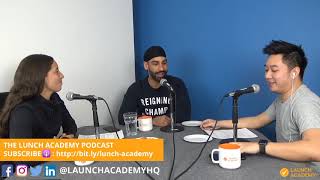
Transcript of Lunch Academy Episode 19 (hosts Sam and Sade) with guest Manny Bahia, co-founder and CRO of Daily Hive. The conversation covers Daily Hive’s origins as Vancity Buzz (a passion project turned business), early monetization and bootstrapping, the rebrand and expansion to multiple cities/channels (food, real estate, venture), lessons on scaling culture and hiring, and Manny’s investing perspective and plans to move to Toronto. The episode mixes casual banter (food, weather) with practical startup/media advice.
Chapters
Academy. I am. I am muted. Welcome, everybody, to another episode of Lunch Academy. This is episode 19, the Marcus Nasland episode. Sweet. I keep dropping these hockey bombs every single week. Shade looks at me blankly.
West Coast Express.
Every single time. But I appreciate that I have a guest that finally recognizes I've been doing this every single episode.
You know what's crazy? The first thing, I thought it was Marcus Nazi when he said 19.
Yep, exactly. That's. That's how Vancouver boys roll.
Die hard, you die hard.
Yeah. So. So this is. I am Sam, your co host. As always, as star of the show, I have Sade here with me.
Hi, everyone. I'm working on my hockey skills. You're not.
You see more. You see more muted. You seem more muted. Today we're going to have to get those energy levels up. So why don't you introduce our lovely guest today?
So today we've got Manny with us. Pretty fortunate, busy guy. So thank you so much for your time for coming in. Manny is the co founder and CRO of Daily Hive, and Daily Hive is actually Canada's leading hyperlocal digital publication, which is amazing. Congratulations and thank you, guys.
Research.
Yeah, I think you guys reached over 3.1 million readers.
Four million now.
Four million. Oh, my God. I read this this morning.
Sorry, sorry. Our stats guy in four hours.
They just came.
Sorry, we're just going too fast.
Growing so fast. Manny's also a local entrepreneur and investor, so tapping into all the. The hot industries in Vancouver, and I'll let you talk a little bit more about that later. But, yeah, that's the lowdown.
Sweet. So we're gonna get back to Manny in a second, but since it's your first time on the show, we. So we're known for a couple of things, and really, this comes back to the culture of being a Vancouver podcast. And there's two things that people love about talking about in Vancouver. Can you take a guess what those things are?
Talking about the weather. And talk about real estate.
That's a close third. So we always do a weather report, even though it's always, like, late and we always have food. So give us the weather report first.
The weather report. Best weather report in Vancouver, by the way. So for everybody who needs accurate weather reports, please tap into Launch Academy today. It's sunny. It's really nice out. Did you wear a jacket? I didn't wear a jacket. I just showed up.
You could thin jacket layers.
Going to have some more sun this weekend and then a whole week of rain. So suck it up because it's going to suck.
Next week is rain.
Next week is all rain. But this weekend is nice, so enjoy it. That's the weather forecast.
Great weather forecast.
Oh, man.
Enjoy what you have now live in the now is the weather forecast.
So it looks like we're not seeing what's on screen here. So I'll do my best to describe it as our technician works out and I'll kind of sneak out to the back. But it was my turn to bring you food. So to go back into the history, now that we have like 19 episodes, we do have history. This originated around this podcast himself originally around this office chat that Shadi lives a very healthy lifestyle, as you can tell. She goes running, she eats healthy. She eats all the yogurt and hemp and whatever. I do not. So the point of the podcast originally was we were gonna feed each other really weird crap. And it's evolved into hopefully something a little bit better. And so now anytime we have a guest on or anytime we have an episode, we always wanna bring something interesting for our guests to eat. So it was my turn this week. I was at a coffee shop in Coquitlam that's very, very far away for Shade. Shade. He's never been to Coquitlam in her life. Like, it might as well be like Moscow.
I think I have been to Coquitlam.
I think you're gonna. I actually think she's gonna hit like some obscure city in like the middle of Spain before she goes to Coco. Like, that's how rare I think, like, her go. She may never go.
I hear great things about Coco.
Anyway, so. So I was, I was at a coffee shop and it's called Standing Egg, and I saw this. I was like, meh, it's safe enough that Sade is going to like it. So what?
We had no idea what the dietary restrictions were until the show.
But I mean, it's dessert. So for those of you that are looking or can't look, they are cartoon themed macarons. We have a Tigger, we have Cookie Monster, we have Elmo, we have Minions, we have. I think that's like a green hello Kitty.
They look ways and cute to eat.
But the cool part about this, and we've seen themed food before, it's nothing that new. But the cool thing that's like, I gotta get this on for the show is they're actually flavored. So each of those are different flavors. So give it a shot. I'm gonna pop over to check out where our video screen is at.
Do we have to guess the flavor.
Yeah. Do your best. I do have it on my phone somewhere. So pick your. Pick whichever one looks the best for you to eat.
Cookie Monster, of course.
Yes. What's the name of this dude? It's like he's in Winnie the Pooh, right? Tigger.
Is that Tigger?
I'm gonna choose Tigger.
Tigger, Pick.
I can't believe how fast you answered that. Just like on it.
You don't know Tigger. What's wrong with you? I never been to Coca Cola before.
Wow.
I didn't watch cartoons until I was like, 13h. Okay.
Look pretty good.
I have no idea what flavor this could be.
I have to pull up my picture.
To figure out what flavor it tastes. How's yours tasting?
It's pretty good. It's something.
The colors. Colors are so vibrant.
He's just saying this for on air, trying not to offend me. It's like, what are you guys feeding me?
Oh, good.
So let me. Give me a second. This is live. I'm gonna pull up the flavors. So Cookie Monster is hazelnut. So if you had a.
What's this one?
Nut allergy. This is gonna be a very different.
Episode with the EpiPen.
Which one did you have? The Tigger one. Yours is really interesting. It's passion fruit milk chocolate.
Oh, my God. I would have never guessed that.
I don't think of the things to guess. Not exactly.
That would be badass.
It's really good, though.
Yeah. So. So I thought initially that, you know, Standing Aid made these things, but my wife was telling me, like, oh, there's actually, like, someone in town that actually designs all these and I guess sells them to bakeries in bulk. So I know there's another place. I think it's called Crackle Cream, and they also sell something similar.
So shout out to whoever makes these.
So it might actually be, like, the same batch.
So I don't know if the cameras work anyways.
I don't think they can see it, but they're gonna have to. We'll have to do it by ear. But, you know, going along, like, we got Manny here, and we're really excited to do that. It's been a while, so we've been. We've been kind of planning this for a while. Newsflash. We do plan for these podcasts.
Yeah.
Most of it is ad hoc. Some of it is planned, but, like, we, of course, like, we want to go dig pretty deep into how Daily Hive started. I know for myself, I recognize it as Vancity Buzz. That's the good old days. Right. That just tells me that I'm old. Like Shade was in high school somewhere in Victoria or something like that. But let's go back to the very beginning. I know there's a couple of you guys who started it. What kind of triggered I guess back then, Advance City Hive and did you guys have media background or what's the story?
Yeah, really. To be honest, it just started as a passion project and a hobby. We were sitting around playing video games. It's something that we do on a weekly basis just to always reconnect. We grew up together myself in Carm and I was like, hey Carm, you want to start a blog? Blogs were becoming popular back then. And he goes, yeah, sure. What do you want to write about? Like I don't know, what do you think? He goes let's write about Vancouver. And then so then we just started and it was more opinion based before. We've had to take a lot of those articles down since it wouldn't apply today. But yeah, and we were super passionate about our city and at the time it was, it was known as like the no fun city.
And if you remember, I remember that.
Hashtag or something, it was rainy and like that it was all like negative stories and like no fun coover violence and crime and no grizzlies. Like it was just like the news was just reporting everything that was wrong with the city. And we were like, hey you know what, why not? Let's, let's talk about the positives and the cool people doing cool things and help people connect with their city and let's help make it a better city. So that was, that kind of quickly became our mission.
Very cool.
Yeah.
And so prior to that like did you guys study like media in school? Communication journalism.
Nah, nah. Karm was an accountant. He was working at Blends Coffee. He was a controller.
And that's amazing.
Yeah. And I was, I was finishing up at sfu.
Yeah.
Finishing my BBA joint major in economics. Yeah, I've always been entrepreneurial. You know, I started coding and like making websites when I was in elementary school.
Yeah.
Just had some good tech background, just like learning on my own. And then yeah to computer science. I was supposed to become a software engineer. I switched in my first semester to become to switch over to business because it's more challenging and more fun and more money. Although software engineers do amazing.
Yeah.
But I've always been entrepreneurial. I'm a bad employee. So I knew I was gonna be a business owner.
Yeah. Because I remember I think one of the first iteration it was on. It was on WordPress. Right. I don't know if you guys are still on WordPress now, but yeah, we're still on WordPress.
It's a little different.
Yeah, yeah. So.
So back then, no, sorry, the wherever, the posting and all that stuff and everything. But we got Ruby on Rails. We're switching everything over. We're going to react.
Yep. Yeah, that's the trend. You heard it here first, right? Like who goes deep into the code source of Daily. Yeah, it's like this is the only podcast that does that. No, that's super cool. So like I guess at what point when you guys. From a passion project to what were kind of like your. Your umph. Moments like this could actually be business. I. This could actually feed me my family, so on, so forth. Like I'm sure at first like any. Anybody can start a blog. I've started like eight blogs. At no point during any of my blogs did I think like, hey, I'm gonna eat off this. Right. And then you know, beyond that, obviously now Daily Hive being cross national and stuff like that. But what were kind of like some of the moments that you thought like, hey, this is a thing.
Yeah. I mean you won't believe how much time we put into it. Right. Like just invested and just super passionate about it and it was like a second full time job.
Yep.
Carm especially just was all over Twitter and it was his face for the longest time as Avatar. Just actually a few years ago we switched over and it was all about like, you know, building relationships and being genuine and you know, connecting people, even with coffee offline and you know, being like, thank you for being in a loyal supporter. And we grew slowly but very organically in Vancouver and that's been our biggest strength is we have that close connection with people, that loyalty, that brand equity that we built. And then as we grew and I think in terms of monetization in 2010, we saw a spike in traffic during the Olympics. Okay, cool. I think we're onto something. Let's. Let's continue because we were assessing at the time. Okay, is this kind of.
So you guys all still had kind of side jobs and.
Yeah, yeah, I did all sorts of things.
Yeah.
Like I was doing pizza delivery while I was in university and even after for a little bit and I was just like, you know, let's focus on the business type of thing. Carmel's at Blend Coffee. He's four years older than me. So he had been through school and everything. And then like, 2011 was a Canucks playoff run. Some good traffic then. And a lot of the mainstream started jumping on social media. Facebook became more popular as well. And. And then. And then in 2012, we started focusing more on news, news stories and informing people. Because what we realized was people were coming to us for all their information. And we felt like, oh, we have a responsibility to actually inform people on what's going around their neighborhood.
Because you were saying at the beginning it was very opinion pieces. Like, this is what you noticed, right?
Yeah, yeah, yeah. So then. Yeah, then in terms of when we thought it was gonna become a business, we were just super focused on just building our following and we knew we could monetize it after. I mean, look at Instagram, right? Like, they had like 13 employees, had whatever, 100 million followed whatever how many followers they had and sold for. Like, was it 1.4, Bill? 1.4 billion. Right. Has zero revenue. Right. But it's easy to monetize.
Yeah.
Instagram now, as you can see. And so we knew it was just about, you know, different ad placements and, you know, selling content and all that. And we had seen that brand equity.
As you said, building.
Yeah, it was more focused on, you know, building the best product possible, improving, you know, every day, improving our content every day, improving our website every day.
And then when did you guys actually make your first dollar?
If you.
If you're allowed to say, I guess.
We made our first dollar in the first few months, actually.
Really?
Yeah, yeah. So we put up a. We put up a fake ad which attracted other ads.
Okay, smart.
So we put up an ad for Blends coffee. Thanks, Blens Coffee.
For being our first non paying customer.
They don't know. And then we had our first advertiser, which was. I don't know if they're still around. I've never used this service. But the bachelor plan, and they plan stakes.
Okay. That's awesome.
They paid us 75amonth, and that was our first revenue. We've been profitable since day one. We started on a free website.
Very cool. Yeah, that's amazing. That's awesome. And you guys, did you guys at any point, like, do fundraising or anything like that or.
No. No. We've been bootstrapped since day one. I came on full time in 2014.
Okay.
Of August. And my goal was to further monetize. We had like four or five employees at the time. Full time. We were just reinvesting all the profits we made into the company and into our employees. And I promised karma. I was like, hey, Listen, I'm gonna make sure we get the revenues up so that you can come on full time as well. And so, you know, paid myself minimal, got the revenues up to the goal, like, earlier than I expected by December. And I was like, hey, Karm, come on full time.
He.
He's like, man, he's like, I got a wife and a kid. I can't just, like, jump on full time. I got a pretty steady job right now. And I'm like, just do it. Watch, I'll prove it to you. And then so a couple more months went by, and he's like, all right, cool, I'm in. And so then he came on full time. March of 2015. And then I think it just makes a big difference when the. When the founders are on full time.
Yeah, but you guys took it. Took it very methodically and organically. And I think that's the story that we, you know, at Lunch Academy we were trying to tell is. Is like, lot of people think, well, there's this overnight success thing. But. But, I mean, you're talking. You guys started what, 2009 and 2008. 2008. And it was, what you just say, 2014, before you were like, this is all I'm focusing on.
Yeah, we didn't pay ourselves for six years.
Yeah. So. So that's. That's an incredible story that I think not. Doesn't get enough light. You get what I mean?
Like.
Like, people think it's like you just drop everything and you go do it for six months and in a way goes. But if you want to build something lasting and in your case, completely bootstrapped, that's. That's not an ordinary timeline.
Right?
Yeah. So what about. What about going from. From Vancity Buzz to Daily Hive? Like, and I guess the. The push for that was really, like, you didn't want to just be Vancouver anymore. You were right. You were going.
So before we switched over to Daily Hive as our brand name, we actually had expanded to Calgary as Calgary Buzz. And I knew it was going to be an issue when it. When it came to having different brands in different cities, just in terms of when it comes to the actual marketing costs, admin, the layers offices, and all that scalability, I mean, you got to go with one name. And so we decided it was tough. We had built so much brand equity. And Van City Buzz, it was like, you know, we walked around the T shirts with Vanity Buzz. I had to stop wearing my T shirt because everyone would just be like, oh, Van City Buzz, do you work.
For you Got every once in a while you can, you can get that retro.
I'm like on the street team. Yeah.
So.
So then we, we made that decision. It was a business decision. And still after two years, after we had switched over to Daily Hive, people were still calling it Van City Buzz. And coming up to me like, hey, how's Van City Buzz going?
But it's pretty awesome to know that you've built like a brand awareness so strong that it's hard to switch over. Like it can. It's almost like a good sign. That's annoying. Cuz now you want it to be gone.
But it was a good problem to have. Of course we still got it trademarked. Who knows, maybe we'll bring it back one day in some sort of other.
Form, sort of retro. Was. Was there, you know, internally especially, like between the founders. Was there some kind of like, turmoil? Like, dude, no. Like we. Van City Buzz is our baby. Like, why would we get rid of it?
No, because we're both like business people.
Yeah.
So there wasn't really no emotion. There was. There definitely was like, back and forth from both of us.
Yeah.
Like, okay, should we do it? Should we not do it? Should we keep Vanity Buzz? Keep the rest Daily Hive? What do we do? And then like, there's other things too, like SEO. Like, we lost all of our SEO.
Yeah, that's hard.
And so rebuilding all those inbound links and everything, like, it took time. And we were on Google News, we were doing really well with Vancy Buzz on Google News, high up there in the searches. So yeah, it was. It took. It took a couple years to get that get back.
Yeah, it's crazy.
Big move.
That's a big pivot and people don't think about that. It's just like a simple name change. But I guess in your industry that's massive.
And you've now like, sort of opened up like different brands within your brands. Right. Because when you go onto your site, like publications are like. Yeah. And those, like actual brands and those logos, like when I go on, I actually recognize them as like an. I feel like they're their own little brand, you know, so you guys have done really well into actually monetizing that and making it so that you can have multiple brands and just increases your brand awareness overall.
Yeah, thanks. Yeah. And we're starting to notice that as well from the public where it's like, hey, how do I get on dished?
Yeah.
And that's our food category. And yes, it's one of the most.
Popular, I would imagine.
Most popular channel that we have. And then you know, we have urbanized for real estate, which is, you know, really real estate focus, of course. And then we have venture, which we just launched, which is focused more on, you know, business, tech and finance. Awesome, that'll be good. We want to really push a lot of, you know, local tech content.
No, that's awesome. So, so drawing back a little bit, I think one of the things about like that I love about Daily Hive is, is even when you entered the market, there was some very clear what we call 900 pound gorillas in the market. Post media, global mail, I don't know all the names but. Yeah, but obviously they were there reasons.
Not to do it.
Yeah, yeah, like there's a million reasons not to do it. And especially like you mentioned like to, you know, Carmen's a wife and K, like that's not an easy just wake up and decide to do decision. What kind of advice do you have? Entrepreneurs, not necessarily in print or whatever, but they see the Microsofts or whatever. What advice do you have for those guys that know they have known entities in the market that they're competing in?
Yeah, I mean when it comes to a lot of those 900 pound gorillas, especially in the media business, they're just so traditional and they have just so many layers and just they have unions and all this and it's, it's actually in retrospect it's pretty easy to break in, into those industries when there is so much of that, you know, bloatedness. And you're, you as an entrepreneur, you're much more agile and you can, you know, switch your business strategy, you know, in a day. Whereas a 900 pound gorilla, it'll take them months. Right. They got to go through freaking planning and you know, multiple approval processes and then, you know, got to go to finance and this and this and that. Right. Whereas as an entrepreneur starting up, you can like just switch just like that. And we never had a plan. We just like recently started developing plans as we've gotten bigger because we want to make sure like obviously our employees are taken care of and. But we just went on instinct to be honest, for a long time.
Yep.
And it was just like, okay, this is not working, switch to something else. Right. The whole fail, fasting, whatever.
Yep.
Right.
Yeah.
So yeah.
What would you say one of the, you know, at least publicly, what are the biggest failures that you guys experienced early on?
I don't know. We've had so many really. Nothing's been really big. It's just like sometimes. I guess, maybe more sometimes. Maybe we'd publish something we shouldn't have published. Or sometimes. Yeah. Like we. We publish something that, you know, causes an uproar or whatever. But it's. It's fine.
Media is a crazy world to be in. For. Sure. You get so much judgment left, right, and center. Like, that must be hard to navigate. For sure.
Yeah. I mean, but it's. It's actually kind of funny when we read the comments.
Yeah.
On Facebook and people are really funny on the Internet and that's a nice.
Way to say it.
Yeah.
Put up the gif.
We'll just say it's not funny.
There's people that were. We reposted an article. We did this a few times, and they would put up this back to the future gift. Like, oh, I've seen this post before. Hello. Another patio post.
That's so funny. Yeah, that's funny. That's awesome. Would you say you're. Well, you said dished is your most popular. What do you think that, like, in after ditched. What's the most popular kind of thing? That.
What are people reading?
Yeah. Like, what are people.
What do people care about?
Because we know people like food. Food is like, big.
And that's never going to change.
Right.
Like apart. People eat.
Isn't crazy that food just like runs the world. Apart from it being vital, like, I'm thinking.
You mean like our body? Like, where's she going with this? Yeah.
No, but like, look beyond it being something that we need to survive and just the culture of food and the industry that it is in itself and how far it goes back.
Yeah.
It's crazy to think about it's the most saturated industry and yet it keeps just like growing and merging and there's so much fusion happening. I'm just like going to this, like, Japanese Mexican restaurant. I'm like, I don't know what's going on anymore.
People got to eat.
Yeah.
Like, gotta eat.
And Vancouver has actually had some pretty exciting options over the past few years, especially of new places opening up new different types of cuisine and, you know, better quality and different types of ice cream and, like, different fads and things. So.
So beyond food, what are. What are the things that are getting read beyond food?
Probably be news. People do want to be informed.
This particular type of news. Or.
Yeah.
Weather.
So. So we're bang on. So we're ban. So there's no reason that our content shouldn't go viral because we did the food, we did the weather. Yeah. We bring the guests, and that's the three steps.
Keep being persistent.
That's hilarious. What about. What about from city to city? Like, like, and this is me going on a hunt, I would find that perhaps Vancouver is more obsessed with reading real estate content because, you know, all those factors are going on. What about like, compared to other cities? Like, are there specific issues in say, Ottawa or, I don't know, Manitoba, wherever you guys are at, that you're noticing like certain trends?
Yeah, definitely. I mean, there's different tastes. Food is popular everywhere, that's for sure. But when it comes to like reading habits and what people interested. Yeah, definitely. You know, real estate in Vancouver, Toronto obviously is more like, you know, finance and sports and business and is more that a city, you know, hustle, Go, go, go. It's just different topics. I mean, the channels can be popular. For example, oil is popular in Calgary.
Fair enough. Yeah.
The oil industry, the pipeline issues and news. The reading habits are different. People tend to read more in the evenings and nights in Vancouver and during the day during work. But whereas in Calgary, they don't read during the day because they're more on shift work. And so. So, yeah, so they'll read more in the evenings.
That's fascinating.
Yeah, it's interesting. Those things that we kind of just learn on the go.
That's very cool. What about. What about. So, so sorry, how many cities is Daily Hive in now?
Four.
Yeah, four different cities. So. So I'm guessing there's staff in each city. So as you guys went from, you know, two, three guys doing this while delivering pizzas, working at Blends, all that.
Karmic at the same pizza place too. Shout out to supreme pizza. Victoria 49th supreme pizza.
That's how supreme got popular. We're talking about the streetwear brand and she's like, so, so completely off topic. Like, I. I gave Shade my old work laptop because she's starting to do more video editing. That stuff needs some more power. And I had this supreme sticker on it. So for like two years, people were like coming in, like, give her this like, dap. I know.
I get so much street cred from a Supreme sticker and I'm just like, I feel like such an imposer that I feel the need to buy something supreme. Because I just like, I'm tired of being a fake. I need to be part of this hype game.
So I mean, shout out to Supreme. But besides that, I completely lost direction of where we were going with this. Yeah. So from. From there, like, and going into, you know, you guys, we talked about Office space off air. Right. How do you scale culture and how did you guys decide like what kind of culture you guys. Guys want to. Want to build?
Yeah. Well, you know what I mean. The business itself only gets easier. You only get better at it. It's just certain things you got to take care of finance wise and scaling on that for that. But in terms of the culture, it's very important. You really got to look when you're hiring for culture fits, things can get out of hand, you get the wrong hires and things can get toxic and it's not fair to the person that you're hiring as well because you're wasting their time too.
Yeah.
So you got to really make sure that it's a good fit.
Fit.
And scaling wise, you gotta, I mean, you gotta give autonomy for people to grow and make their decisions and become managers. And trust. Like before we used to know about everybody's performance and how they, they were doing and if they were hitting their goals. And now we have to rely upon obviously the, the middle management.
Yeah.
And, and you know, how they're performing and how their teams are hitting their goals and give them the autonomy to, to hire and fire. Yeah. Scaling wise, you gotta just really be careful of not hiring too fast. I've seen other companies, you know, hire too fast and we've been guilty in the past as well, just getting a little bit too bloated and like, oh snap, like we gotta make sure our revenues catch up and exceed so we can take the next step. So you gotta be you. I mean, you get a bunch of money coming in. Don't just hire right away. Just have a, you know, a thought process behind it.
Fair enough.
For sure. And if you hire the right people, like they'll step up to the plate if things get like. Yeah, very, very busy.
Yeah.
In that transition period of kind of adjusting your, the size of your team.
Yeah.
So I feel like some founders are scared that they won't be able to handle the workload. But if you trust your employees to like go above and beyond in the meantime, you should be good to go.
And sometimes it's, it's, it's much better to pay 10 or $20,000 more for a role and get someone more senior and experienced than to be cheap and get like half the, half the body or half the performance.
Yeah.
Fair enough. Switching, switching sides a little bit. So you mentioned the venture arm, that's brand new, so I know, I know you're an investor in yourself as well, but talking specifically about Vancouver and specifically the tech Sector of business. What do you see as its prospect? What are you not seeing or what do you think it's missing?
I think Vancouver has a lot of potential. I think it hasn't gotten to the point where it can be. Not even close, but we're definitely seeing some promising events taking place and things happening. I think that Vancouver, it's very interesting how different it is from, let's say Toronto and the west coast in general is. Vancouver is a new venture city for sure. A lot of ideas come out of here. People are more creative. Everyone here usually has like a side hustle. Very enterprising sometimes just to, you know, survive.
Yeah, yeah.
All right. And, and we have, we take time out for more of a work life balance. Yeah. Go for a hike and just be outdoors, which leads to more ideas or smoking weed, whatever your cup of tea is.
Right, yeah.
Whereas the east coast in Toronto is more process driven and it's more inside the box and all about a straight work ethic and not so much about work life balance. But I think if you can combine the two, it can lead to that, you know, mindfulness, but also that work ethic which can become, you know, very powerful. So I think in Vancouver, unfortunately, we see a lot of companies that exit and then you see the, you never see the founder again. You know what I mean? They buy a boat and they fuck off. Like, they're gone.
They've got enough money to just like chill on like a modest lifestyle for the rest of my life.
Yeah, yeah. And so like, we need, we need more unicorns in Vancouver. We need to step it up with the ecosystem. We need more leaders and people to.
Put it back in.
People to put it back in, reinvest. We need, you know, more unicorns that actually pay their employees well as well so that, you know, they have a little bit of capital to invest in projects. And I think capital is, is definitely one of the biggest weaknesses in Vancouver as well. I mean, even when it comes to like corporate sponsorships for like, let's say New Year's Eve, the fireworks which we, we founded, it's so hard to get sponsors in the city for such an easy, like, you know, awesome event where they get so much brand recognition and so capital for investment into tech companies as well is so difficult. And I hope that changes. I mean, we do have Apple and Amazon coming in on that Georgia corridor there and you're starting to see some, some, you know, more office buildings planned and pop up around that area. I think that area is going to be really special. Microsoft is already there as a great anchor as well.
I'm excited to see that happen for sure.
Yeah, there will definitely be a lot of growth in that area for startups as well. So that'll be exciting over the like next five years or so. So there's promise. There's promise for sure, but it's just that we need more people to, you know, reinvest within the startup scene here.
Yeah.
And then so, so that, that's actually a good, good pivot as well. Like you're, you're an investor yourself. Like what, what do you look for in what you're investing in and, and what led you to choose in the, I guess the companies you've already invested in.
Yeah, so I invest in. Again, it's cliche. Like people, right. You know, are they going to perform? Are they going to execute? How hungry are they? How much blood, sweat and tears are they able to put. Put in. Are they willing to put in and. Yeah, let's go with that. And I've invested in several companies, not only just in tech. I'm really proud of the companies I've invested in and the, you know, relationships built. Some of them like, like with a share shed. I invested in that. They exited.
Daniel, right?
Yeah. Daniel.
Yeah.
That was awesome. I invested in nude vodka soda.
Sweet. I know those guys.
Yeah, Yeah, I love those guys. So two years ago, they're good friends of mine. So I invested Nude vodka soda. And you've seen that just blow up.
Yeah.
And we, you know, we had like a partnership with Daily Hive as well to really get to the masses and build the brand. G Pack is these pods for like coffee.
Okay.
100 biodegradable.
Cool.
Yeah.
So yeah, I saw them, I think at a BC Tech or something.
Yeah, yeah. So invested in them years ago. So at some point they're gonna go public, I hope. Waiting for a liquidity event. And then Victory Square Technologies invested quite a bit in them as well. They got like 23, I think 24 now companies in the portfolio.
Yeah, they're doing well.
Yeah. They're in saying they're fundamentally really strong. The stock price sucks, but it'll get there. It'll slowly, hopefully reflect their true worth, which is a lot more than what it is right now.
Cool, cool. So for startup founders that are out there today, maybe they're pre seed, maybe they're just in their basement working. What advice would you have for them? Just a word of encouragement or whatever, speaking from someone who's literally been in their steps. I mean, I can't Think more entry level than pizza delivery. So, so, so it's like, you know, it's a grind for sure. So, like, what advice would you have for those guys?
Yeah, I mean, you just gotta keep grinding and you got to be able to let go of ideas that are not succeeding and pivot as necessary. Sometimes it could be drastically. And you gotta be persistent. You just gotta get over those humps. Right. There's gonna be obstacles along the way. There's gonna be adversity, whether it be with your company or whether it be in life. And, you know, this intertwined, especially as a founder, it gets lonely sometimes as well. Right. So definitely, you know, having relationships with other founders as well, talking about business and their struggles, having a mentor or a few, just being around just that culture in the scene where you can show ideas, but you get shit done, right as Launch Academy says.
Yeah. He literally did another infomercial for Launch Academy without saying your name. So thank you for that.
Come hang out at Launch Academy. That's what you need to do.
Or I guess one last question from me, and I'd be remiss if I didn't ask this, what about in terms of. In your expertise, leveraging media, pr? Because I know there's a lot of founders that. It goes both ways. There's founders that like, you know, they get their first dollar and they're like, hitting Daily Hive, hitting province, everybody up. It's like, dude, I got my first dollar. Write a story about me. There's that and then there's the. Wait a sec, guy. Like, every milestone they hit is like, they don't. Oh, it's no big deal. I'm just gonna keep up myself, organic and not. Not really celebrating and, you know, leveraging media. Right. So, so where. Where do you suggest for founders to stand? Like, how do they use media effectively and properly? And I guess even for. For people pitching you guys stories like, like what, what. What goes through your mind? Especially, like they want an article on venture or something like that, right? Like what. What goes through? What should they be have ready?
Yeah, yeah. I mean, since capital is so scarce. Right. In Vancouver, you got to be very careful in terms of how you spend it. Marketing is the most difficult thing to tap into when you're a founder of a startup. And when it comes to media, depending on obviously what the product is, is you got to go in. I think you really got to build that relationship and hopefully you can just get, you know, an article done, some sort of. Some sort of exposure by just providing, you know, either an Inspiring. Or an amazing story.
Yeah.
Which is that discretion of whoever you're speaking to. Or maybe you slip in some free product.
Right.
And that works. And maybe sometimes it's like, hey, listen, I don't have a lot of money. This is all I got, budget wise. Yeah. Help me out. I'm a startup founder and this is all I got. And hopefully you guys can do something for me. And on Daily Hive side things, we do take equity in companies as well in exchange for our marketing services. Really good. On the B2C side of things. Like we've seen with nude vodka soda, of course. Right. And we got some more products on the way, which. Stay tuned.
That's awesome.
Yeah. But we will have some series as well too. Hopefully bring some old ones back like small business profiles and entrepreneurs and Toronto entrepreneurs and all that.
Yeah, cool.
Yeah, cool.
So I think wrapping things up. Shade, Manny, any announcements from you guys?
Well, it's for you. Is there anything you want to shout out and thing that people should know about that's happening right now in your world?
Yeah, shout out again to Supreme Pizza.
Seriously.
But other than that, I'm actually. I'm moving to Toronto.
What?
No. Is that. Is that breaking news again on our podcast here?
Yeah.
Yeah. Hey, listen.
Let's listen.
We just spent like 45 minutes talking about how Vancouver needs more people like you, and now you're leaving us.
Hear me out.
Here we are.
I am a Vancouver boy. I am going to completely miss the scenery, the ocean, the mountains, the beauty, the nature. They don't have that in Toronto. They have a beautiful skyline, but there's no mountains behind it.
It sucks.
So definitely going to miss that. But I'm. The thing is, like, the energy there in terms of like the work ethic and making things happen and just the capital and just expanding the network like here in Vancouver. Kind of tapped out, to be honest. We can really just. Just meet with anybody now. It's like, okay, we gotta kind of spread our wings and Toronto should be funding our entire business, if not more. And so I need to be there as a Chief Revenue Officer to really ramp it up on the business development side of things. For that and also for networking. And hey, our headquarters will always be in Vancouver.
That's really exciting though.
As long as Karm, myself and Farhan own Daily Hive, we will always make sure that, you know, the headquarters are in Vancouver because we're Vancouver boys first. That's what matters. And so, hey, maybe I can take some of that east coast capital and bring it over here to The west.
Coast wouldn't mind that. No, it was funny. I was joking with them off air. He's like, so for those of you can't see, like, our screens or whatever. And I guess for those of you listening to. He's wearing this reigning champ sweater. And. And. And again, like, most people don't know what the heck I'm talking about, but that's Vancouver brand, right?
Yeah, yeah.
So there's.
It's crazy because. So my girlfriend lives in Toronto as well, so that's another reason.
Okay, okay.
It's all adding up. But, like, she'll be like, hey, you know, we got this. We got this amazing Cactus Club. Or like, you know, whatever it is. Right. Oh, you know that started in Vancouver, right? And she'll be like, what? And then after a while, she's just like, oh, my God. Does everything just start in Vancouver?
All the cool. Only the cool stuff.
Yeah.
Joey and Earl's there.
Lululemon, Lush.
Lululemon, Lush.
Yeah, they're all like, sage, like all these companies.
See, that's the thing, though.
Ritzia started in.
Yeah, it does. They're in. They're in Real town. Yeah, yeah, Aritzia's in real town.
All the cool stuff.
But the new ideas and the new ventures. They started Vancouver because everyone here is, like, high on weed and think of new ideas.
Yeah.
You think he wasn't smoking weed when he thought of.
We cannot say.
I don't even smoke weed. But I'm just saying.
No, there is a lot of inspiration in the air here. And I do think, like, it goes right back to what you were saying, like, having that work life balance. People have time to think. I think that's the problem with East Coast. I don't think people have time to think. I was actually reading or not reading. I was listening to.
More from Ray




A Founder's Story. Creating the World’s First Laundry Robot — Joshua Rabanne, Laundrx

Bits&Bytes with Sherry Li, Assistant Professor at Berklee, Co-Founder of ICTUS Audio

Why This Young Person Left Child and Youth Care To Work in Tech - Bits & Bytes with Samson Li




