The Key Qualities of Launch's Successful Startups | Sam Chan, Launch
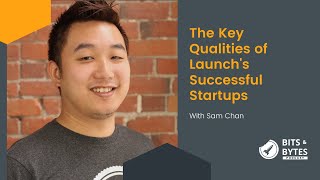
A pilot episode of the Bits and Bytes podcast featuring Jean (host) and Sam Chan (longtime Launch team member). The episode opens with a lighthearted marshmallow (Chubby Bunny) challenge, then moves into Sam’s background (five years at Launch), practical startup advice (red flags: secrecy about ideas; green flags: early customer validation, selling before building), hiring reflections (flexibility, motivation, not hiring jerks), day-to-day culture at Launch (small, dynamic team in Gastown; Maple program helps international entrepreneurs relocate), and Sam’s side project (co-hosting the Ready, Set, Pwn Overwatch/esports podcast). The tone mixes humor, candid anecdotes, and pragmatic guidance for founders and job-seekers.
Questions this video answers
Five years ("Five years this January").
Chubby Bunny (marshmallow-stuffing game).
A 1959 Peanuts comic featuring Charlie Brown and Snoopy (mentioned in-episode).
Maple (a program to help international entrepreneurs relocate to Vancouver).
About 60 episodes (Sam: "we've done 60 episodes").
Chapters
You can do it again.
Hello, everyone. Welcome to the official first episode of Bits and Bytes, hosted by yours truly. For those that might not know me, my name is Jean. I'm the program coordinator for Launch. We decided to create this podcast to kind of talk about the unfiltered view on what it's like to work within the tech startup. But I got a special twist for all of the guests that will be joining us. I have kind of a sadistic food humor, so I'm going to get all of our guests. Oh, you should be very scared.
For long time followers of Launch, you guys might have known something we used to do with Sade and me called Launch Academy, but I can promise you we never did in a single episode with food and a garbage can.
It's just. It's just security, you know, just in case you don't want to dirty the.
Walls or dirty the walls. What are we doing here?
Honestly, today we're going very easy on you. It's the first episode, so I didn't want to actually, you know, have any collateral damage just yet. So, anyways. Well, so for those of you, most of you probably already know. Sam.
Yeah, I'm on screen a lot. I'm also in all the Q and A questions of all of our programs, and people like, treat me as. Like this, not a celebrity, as a. Like, oh, I watched all your questions. You answered them kind of awkwardly.
He's the face of Launch.
I'm a face.
Launch Academy celebrity, very own.
We're too poor to have real face actors.
Anyways. All right, so how the show is going to kind of go down is every episode, we'll have one unique guest from any position within the tech community. So it can be your next door intern, or we might bring in a CXO from Facebook. Who knows, maybe if we get that far. But the whole point is, everyone will be treated the same in the sense that I will be introducing a very unique food experience or a food challenge.
The word food experience gives me chills.
You should be. I mean, like I said, you got a very easy food challenge this time around.
There's a lot of things I don't eat, though.
Perfect.
Great.
All right, so for our first food challenge with Sam, like I said, we're going very easy on him today. I think most of you guys might know this food challenge already. Chubby Bunny. Oh, let's put that. Wait, wait. So we got a bag of marshmallows here. So for those that might not be familiar with what Chubby Bunny is, essentially, it's a food challenge game where you compete against one another to fit the most marshmallows in your mouth. Each time you put in.
Fit the most what in your what?
Marshmallows in your mouth. That's why we have the garbage bag. So how it works is every time we put one marshmallow in, we have to say Chubby Bunny. As long as we both agree that we can still hear the words Chubby, punny. Chubby Bunny.
She can't say she doesn't have a single marsh. I win.
I guess I'm already at a disadvant. Whoever is able to fit the most marshmallows in their mouth while pronouncing Chubby Bunny wins the competition. The loser will have to actually never thought of a.
Because she knew she'd lose. That's why.
You know what? If we. Next time I'll think of a punishment. For now, we'll just do it as a friendly competition.
Friendly competition. Wait, are these. Are these marshmallows organic, natural, or processed sugar?
Definitely processed sugar.
Non gmo.
We're not fancy.
I don't know. I don't know if I can partake in this. What does my trainer say?
I mean, you already. You already signed a disclosure agreement, so I don't think you're getting out of this one here.
Ray, this is your fault.
All right, just for, like, some interesting facts, just kind of going into the history of Chubby Bunny. So for those that you might not know, Chubby Bunny first actually appeared back in 1959, a Peanuts comic where Charlie Brown was stuffing marshmallows into Snoopy's mouth and counting the amount of marshmallows that were going in his mouth.
So what I'll tell HR is you're treating me like a dog.
Well, I wouldn't classify Snoopy as, you know, a dog. A dog. He's more of a.
That's a controversial topic.
All right, so let's get started here then. See?
Should open the bag before. Now we just got the rustling of bags. Let me describe this asmr.
Oh, yeah, we should do, like.
Oh, I. I think we're not gonna get any subscribers this way.
All right, cool. So I'll let you pick your Marshall dude.
I'll do a one plus one. Let's start with two.
You want to start with two?
Okay, so I can't swallow it. What's up?
Okay, now you have to say Chubby Bunny.
Chubby Bunny. Chubby Bunny. Chubby Bunny. She's gonna lose.
Chubby Bunny.
She's still Gonna lose. This is not even fair. Like, I can have a proper conversation. She's like. Like she made this up. But then she's the one that's like, choking already. And we're like, first. First level.
All right.
It's not pleasant on the eyes though, so I gotta keep changing. Chubby bunny.
Okay. Marshmallow.
Yeah.
So we're in marshmallow number three.
They're melting in my mouth though.
Okay. It's cool.
Sweet. This one's already melted. She's so bad at this. Cha. Bunny. She didn't think this through when she made the game up that maybe. Maybe I have bigger mouths than her, But there are like. There are like marshmallow bits appearing on my lips.
Okay.
Which isn't that pleasant. Is she tapping out? She's tapping out, so I don't know. That was pretty easy, guys. Let her know what she should do instead as a punishment. That was pretty soft. No pun intended. So I can swallow now, Right? Cool. I can survive that. Maybe she's not as sadistic as she thinks.
Oh, my. That was a lot.
What was that? Was that four marshmallows? That took a turn.
Wow. That was a lot more challenging than I thought would be.
She never thought to pre try this game on her own. I didn't know going in. So, you know, that's a thing. Do you need the garbage bag?
No, I'm good, thank you. I do process with preparation for myself. Oh, my. That's a lot of marshmallows.
She can't. She can't survive on air like this. So this is what we call dead air as you're choking to death, actually.
I guess. Not really Fun fact, but more morbid fact, there has been two cases of deaths from this challenge.
That's depressing, guys. Just. Just chew, man. It's all good.
I don't know how far they went up into terms of, like, how many marshmallows they got in their mouth, but.
You might get diabetes, but, like, not like this.
Yeah, it's a very unfortunate freak piece that happened.
Well, I'm glad the food challenge wasn't anything on the vegetable scale. So. Yeah, just pure sugar.
As you can tell, Sam's diet consists of fried chicken, coke and more fried chicken.
No, I've been healthier since the first show. I changed to Coke Zero.
Oh, oh, oh, right. Sorry, guys.
So you, like, you amped up my sugar intake.
We got more varieties. So Sam's upgraded his lifestyle to the Coke Zero luxury.
Moving on up.
Alrighty, so let's get back to the actual content now. So thank you for participating in the food challenge.
Awesome. I won that. Make a note.
One, zero.
Yes.
All right, so Sam, I got a couple questions for you then, so.
Sure. It's weird being on this side of the mic.
I know, right? Finally being on the guest will interrogate you quite thoroughly.
Awesome.
So as we. Out of all of us on the team, you have by far been the longest employee standing asides from Ray. So how long has it been? Five years or so?
Five years this January.
Five years. Wow. So what kind of. You know, you must have seen a lot that kind of came through in and out of launch. Like, talk about some of the experiences you went through. Like.
There'S been so many things from when my wallet got stolen here to when other people's things got stolen here, to when we got our iPad stolen. So basically a lot of thefts. Right. But I mean, five years is a long time and I never really thought I'd stay here for five years, to be honest with you. But I also didn't keep track and it just is what it is, right?
Yeah. So, you know, what's Ray doing? What's the secret? What has he done to retain you for so long?
I don't know if it's anything that Ray's done. Maybe, Maybe nobody's recruited me.
Oh, so you're saying you haven't been approached yet?
Like, I don't think so, other than like. Like there's this prince. I don't know if I'm allowed to talk about this on air, but he's from Nigeria and he promised to send me, I think $16 million, so I don't know, he seems pretty legit. I might take up a lot.
Wait, hold on. Did he message you over Facebook too? Was he wearing the blue collared shirt? Stripes?
I don't want to say it because I don't want to lose out on this opportunity.
Oh, no, I think I might be. I think I got the same message, though. I don't think you're that special, Sam.
Okay. Another five years, Ray.
You hear that, Ray? You gotta keep him to his word. So out of those five years then. So you must have seen a lot of companies come through. You know, some good, some bad, some amazing unicorn level companies. Let's start with the bad ones then. Has there any been any, like, major red flags that you seen when you were working with several companies? Like, you don't have to name names obviously, but like, you know, like, let's just say, like, you know, I think.
When it comes to startups. And you hear this a lot when you go to lean startup talks and you go to different events. Every. Every idea can be a crazy good idea and every idea, but can be a terrible idea. I think one of the red flags that we notice at launch a lot is, is when people are very protective of what I call the wrong things, and that's the idea itself. They don't want to talk about it. They want to keep things hidden. And really we've just seen that that doesn't work. No matter what type of startup, what kind of business you're building, at the end point your customers are going to be people. And so at some point you need validation from some sort of people. Is it true that maybe, perhaps at some points NDAs are needed and whatnot? Like, I don't want to get into specifics or the to say that this is true of everything, but for the most part, when you're just starting out and you don't have any customers, you don't have a product yet, you need to talk about it as much as possible. Because no matter what role you're in, you're technical, not technical, whatever. You're constantly trying to convince either other people to work with you or other people to invest in you, whether it's with time or money or whatever. But you have to sell that vision, because when you have no product and you have no customers, all you have is a vision. So what makes that vision interesting?
I see.
Because you have to talk about it. So for red flags, it's people that don't want to talk about what they're doing and they're not excited about it. That's probably my biggest red flag.
Okay, what are some of the green flags then? Because there's been some pretty notable companies that have came through, like later battlefi, Clue, and then also some from Maple companies as well, like Datatrue. So what were some of the things that you noticed about them? Like what made them. Did you always know that they were on the way to success or was it kind of like it just kind of happened gradually with time and with effort and participation within the community?
I think some of them, like, especially the Maple companies we work with, and just to give everybody background, Maple is a program that we run, free plug that, where we help international entrepreneurs actually relocate to Vancouver. But in the case of Maple companies, a lot of them already are very successful entrepreneurs in their own homelands or their original homelands. And so it's just a matter of helping them convert that success and whatever advantages they had back home. How can we recreate that here in Vancouver in their new home? But in terms of green flags, I'd say it's just the reverse. I love it. There's people like there's product managers here who live and breathe this and do it way better and can describe it way better than me, but I love it when people are able to build something without building it. There's lots of lame startup terms like hacking things together or whatever. I'm not privy to the language but just this concept of I'm going to use Google Slides or I'm going to use Keynote and kind of fake an app so that I don't have to pay a developer to see what the user experience is like doing, doing a lot of testing that way. Getting people's money before the product's built. And I don't mean scamming them, but you're selling it so hard that, that you don't even know what I'm gonna buy or what I'm gonna make and what I'm selling you. But you're already giving me your money. That to me is very. Those are signs of savvy business people.
Do you think part of it is largely like passion? Like because it sounds like if you are entrepreneurs make them stand out is like they're passionate about what they're building. They have like a whole idea of like what their end product is going to be. And in turn I think part of.
It is, can be passion. But I think that passion. This is going to sound more controversial. Is a bit overrated. And I mean by that is there are plenty of people there, multi time entrepreneurs who just know how to build a product and sell it. And so for them it's a rinse and Repeat process. Find 10 people, sell it to them, tell them to tell it just on your friends. Sell it now you have 100 customers. This kind of rinse and repeat that later when you get real gas and you're not getting my filler they can talk about and they're just very good at that. Right. So are you passionate about, I don't know, organic pesticide? I am not sure. But people need it and you have the ability to make it happen, then that's what it is. But yeah, I've seen so many people just build product and I think the mistakes people make is one when we as founders make too many assumptions. I think that's the first one. When we know that Gene needs it or we know that Lauren needs it. But we never asked you and we Never got your money. So do you really need it? I don't know. Right. You might say pleasant things, but until you give me money, that's not a proof point yet. The other thing is I find that especially earlier stage entrepreneurs, they start selling too late, right? Like, they don't pitch until they have their product ready and they've spent $20,000 on building a prototype or whatever it is. Again, not always the case. There's hard goods, hard software, hardware, different things that need to be built before you have anything to show. So I'm not for anybody that's like, well, this is the reason that I need to do it like this. I'm like, all the power to you, man. But I'm just talking in terms of people that come through our doors, for sure.
Oh, I see. Okay, so aside from the company, then, what is it like to work at launch? Because, you know, we have a very, very small team. For those that might not know, it can fluctuate between four. I think we're at our peak now at six people, six team members.
It's super weird. So coming into work today, I was promised delicious Korean food, and I got all I've eaten today is a bag of ketchup chips and four marshmallows. So I think that gives you an example of everything you need to know about what goes on in laundry. I mean, we're dynamic. Every day is different. Like, I don't think I'll be eating marshmallows on Monday, but it's fun, right? Because we work with so many different companies and they're across so many different industries. The touch points that we have with people to help them are so varied. So. So there's never, there's never a, a lack of, of issues that we can work on.
So you must have participated in some of these interviews, right? Including myself. Full disclosure. So.
So you're talking about interviewing people?
Yeah.
Okay. Like our staff. Yeah, sure.
So let's kind of start with, like, you know, talk about, you know, what were some of the, I guess, like, things that you noticed about interviews that didn't go so well? Like, what were things that immediately kind of made you decide, like, okay, this person's not going to be fit for a team like us at a startup?
I think, I think flexibility is key. I think expectations are key. I'm pretty transparent when it comes to what we are and what we're not. What we are is definitely a small, nimble team that goes and does many crazy things, whether it's something small like eating marshmallows or like at other times, we've had the founder of Uber walk through our door and give a talk with press and whatever. Or we're running one of the biggest conferences in North America and that's all just day to day, that we need people that can not just stay in their box. And there's nothing wrong with understanding your vertical and knowing what you're good at and doing a lot of that. But this isn't the right place for that because there's just absolutely no way that we can go from just doing social media. And the next thing you know, you stick a mic in front of my face.
Yeah, just from personal experience too. Like, let's just say my title's program coordinator, but this has happened. I've also been the office manager at one point. Media manager.
Chased any mice away yet? You haven't chased any mice away?
No, not yet. An exterminator, but so far I haven't come across any.
So one of the earliest problems with launch, that's no longer a problem. And people that have worked at launch kind of know this is, is very early on. I think I joined in 2015 or something like that. There were quite a few plumbing issues. And so, I mean, I mean, Ray's trying to be a good boss and he's kind of like, okay, well, if you see like toilet that stuck, just let me know, we'll take care of it. But like, if you're like, oh, you know, I want to help, like, I want to be a good employee. Especially when you're new, you're like, oh, I got, I gotta show my good side. But you keep walking into those situations. So. So definitely when, when you're not flexible, when you're not willing to just, just, you know, work for the entity, you'll suffer in roles like this. And I wouldn't say that's true of all incubators or accelerators and things like that, but definitely small teams and startups for sure. You kind of have to literally roll your sleeves up.
So actually I feel like this is a good opportunity to ask this question. So I noticed that in our launch handbook, there is a rule when it comes to washroom usage. So I just had a question about one of them. So there's one that was, that was just like, you know, don't play angry birds for 30 minutes on the toilet. I'm assuming. Was there a backstory to this one or.
That's. That's from our co founder, Alex. So. So here's the funny thing about terms of Services Alex might be watching right now. So. So he might have the full story. I don't know if he wants to type in the comments, but, but like when, when you're writing a terms of service, one it's important to do because I think legally there's, there's things that have to happen. But we all know, like how many of you guys have read through the Apple itunes Terms of service. Nobody, I promise you. I've maybe met one person that's been like, yep, I've done it, and that's just a smart ass. But for the most part, terms of service are boring legal jargon and it's things like that toilet thing, I think, that kind of keep health, keep us sane. Right, like that. And I think that's a very good representative of what we try to do at launch. Yes, we're doing lots of things, some of them are very serious, that involve implications of moving your family or whatever the next step of your startup is, whether you're raising money or hiring employees or firing employees, whatever. But at the same time, this is life and we have to have fun. So that's why it's a dog friendly office. That's why we put in weird little tidbits into our terms of service. Just kind of poke fun at ourselves, like not to take it too seriously.
Awesome. Okay, so let's kind of go back to working with us then.
I'm starting to think, like, I should have read these questions before.
Yeah. So, you know, have. Has there been what was like the. I don't want to say intern story. Let's just say like, you know, team story. What was like the craziest, like, workday you've ever encountered? Or what is something that, like, was so ridiculous offhand that maybe you saw while working here and you just, you know, that was caused by a teammate or something. It could be something funny, it could be something really off, something really weird.
Nothing really that exciting comes to mind. I'm trying to rack through my brains because for those that aren't in Vancouver that are listening to this, we live in the heart of Gastown. And Gastown is a very vibrant community in Vancouver. Very vibrant, but I use the word vibrant very deliberately. It's vibrant in that it has a lot of culture. There's a lot of food, there's a lot of pubs, and just a lot of things to do. But just across the street from that is one of the poorest communities in Vancouver. And because of that, there's a lot of mental health issues, there's a Lot of poverty, a lot of people, panhandlers, all that kind of stuff. So in our area, any given day, anything weird could happen. And, and I'm trying to rack my brain through weird experiences or different experiences. I think one that comes to mind is every now and then, and I haven't seen him for a couple years now, so maybe I'm a little bit worried, but I think every couple months there's this one younger guy, I think, I think it was a guy I can't really remember, but they would come in and be selling chocolates and they'd just come up and I mean, yeah, it's solicitation, but also, you knew he definitely had some special needs, so he'd come by and sell chocolates every couple months and people kind of got used to just him walking through the door and being like, chocolate, chocolate. So you see stuff like that. I'm like, hey, when you think about it, we're a place of startups, a place of businesses. He's just trying to hustle. So I think that's a simple example for you. Another example that is much more painful. Well, funny to me because I wasn't there but one year when we had a special VIP group that we decided to actually take out for a boat ride and buy boat ride, I mean, cruise. But there was some, some malfunctioning in the. Either it was weather related or it was boat related. But, but I think it was like 200 or 300 of our fanciest guests were stuck on a boat for, for four or five hours. But from, from my understanding, they were, they were fine because it was open bar, so. Oh, but that's, that's definitely one of the things that we've seen that we'd like not to recreate. One time for the lore is enough.
Yeah, write that down on the launch history mementos. All right, so let's see. So what kind of like got you into working at launch then? Because I know, you know, just did a little bit of the LinkedIn stalking, of course. Geez, you graduated with a communications degree, but did you ever think that you were going to end up working within tech?
So it's funny because I've told variations of the story throughout the year years, and I think it actually starts with co op, but not for the reason you think. So sometimes university students do pick our brains that come to launch. They want to tour, they want to hear the history of launch, they wanted to hear each of our history and how we got into tech and all that kind of stuff. And I always start by talking about a co op job that I got. And I won't name the source, but it was a financial institution and it was kind of like my first co op job. And I was very excited because I was going to get paid regularly for the first time in my life, but I didn't really care what I was doing. And I think I want to say that the position was something called Inbound Customer Correspondent. It meant nothing, right? Like it's just some weird fancy name. Reality is I was on the phone 10 hours a day taking inbound calls of people who can't pay their credit card bills. And my job is to upsell them on stuff. So six weeks in, I burned out crazily because the office was deep in Surrey. You had to be there at 6am in the morning. That means the sun wasn't up. Because I ran 10 hour, four day shifts, I left at 6pm, which means that I never saw the light of day. Like literally never saw the light of day. It was also winter time at that time, so I was miserable. And that was really the first kind of starting point in my life where I'm like, huh, I can't just do any job. I have to do something that I kind of like at least. And that was kind of my motivator because honestly, I'm not a good student. I was like moping my way through classes. And even after that epiphany, I still didn't do well in class. I thought it was kind of mundane and it's just not real life enough for me. That's when I started messing around with WordPress building. First I built a blog for myself. I thought I was going to be a blogger. That didn't turn out well. I was going to be a blogger boy. But from that experience building a blog, I pretended like I had a job, even though I was typing stuff on WordPress like so many teens at that time. And then I got myself into different tech roles. The other thing that I did was there was a communication course with a profile and his class was frankly very boring, like all the other classes. But the stuff that he did outside of class was interesting to me. So I remember actually talking to the Prof. And that's a hint for anybody in university, if you're there anyway, make use of the connections, whether it's people around you or the PROS or the TAS or whatever, because that's much more valuable than the grade or the Wikipedia stuff that you're gonna get out of the class. And he was the one who actually hooked me up with my first tech opportunity. And it's kind of, you know, history from there.
Wow. So I guess what would your advice be? Asides from, you know, for the. I guess what made you. Okay, so you got your first tech opportunity. So then after that, I'm assuming you had a little bit more options now. Like, you knew which direction you were going. You knew that you kind of wanted to work in tech. What made the companies that you worked with previously, like, appealing to you? So for those that are, like, you know, looking to hire on students or people like, you know, new graduates that might not kind of have a distinct idea of what they're looking for just yet, but, you know, they know that they want to work in tech.
You want the real answer?
Sure. Let's hear the real answer.
What all. What all those. What all those companies had in common is they hired me, right? Like, because. Because I think. And I sound like a grandpa when I say stuff like this, but definitely our parents and our parents. Parents, they had less options than us. And people that are younger than us listening to this, they're gonna have more options than we do or did. But I think you can get into this hole of too many choices and not knowing what to decide. I get a lot asked a lot, like, how do you know this is the right decision? Or I have two startups. Which one should you go with? The answer is just either do both at the same time and see which one you're interested in more and which one find traction first or just pick one. The faster it fails, the faster you can get onto the next one, right? So. So when it comes back to your original question of jobs, like, I literally have said, I've never turned down a job in my life. I've said yes to anybody that's hired me, which makes. Makes me sound a little bit like. Like, you know, like whatever. But I also believe that, like. Like the job with. With that financial institution, I didn't like it. I quit. But to this day, I still reference that as the starting point of my tech career. Because what I learned was that I hated it so much, I had to move my butt to actually do something that I liked doing, right? So a lot of it is trial and error. So when you're just starting your career out, just take any job, right? I also hear that a lot of people, they're in high school, they're like, oh, I know, I don't want to work for someone. I want to be my own boss. But, dude, you've never worked a day in your life. Like, go work at McDonald's, go work at Old Navy, whatever. And you're gonna experience a lot actually, like, working retail is my number one advice, whether it's retail or some sort of customer service thing. Be a server, go work at White Spot, whatever. Because you're gonna realize that, like, not everybody's nice to you and you start to build thicker skin.
So I guess what advice do you have for them, the companies or the hiring managers? Like, how would they find a Sam if they're going through?
You know, I'm not sure they do. I'm not sure they want to.
Well, how about this? What are. What. When you were, you know, hiring to fill positions within launch, what were some of the key qualities? And that kind of like, made you realize, like, okay, like, oh, actually, no, I guess we did cover this. Someone that's flexible and like, open source.
Someone that's flexible. But I think. I think the key part is, is you're always trying to figure out expectations and motivation, right? Like, what does this person want to do in your company? Do they want it for the paycheck? And I say that tongue in cheek because some people think that hiring someone for a paycheck is the wrong reason because it's not idealistic enough. I don't necessarily agree with that because everybody has different needs, everybody has different financial situations. Fact of the matter is, rent in Vancouver is high. You want to live a certain lifestyle and you're motivated to work hard to do that. But that understanding from day one is important when you're going into hiring. If you're trying to hire someone that's going to live and breathe your company, then that's a different motivation. And you understand that they'll be happy as long as the company does well. But if it's someone with a paycheck, it's actually easier to manage because, you know, as long as the monetary motivation keeps coming, then they're going to be good and they're going to work hard for you. Right? So motivation is a big one. And then I think a kind of side rule that we have, both Ray and I, is we just don't like working with jerks. We like working with people we like hanging out with. Right? Not necessarily like we have to be best friends or anything like that, but you're gonna spend 40 hours a week with these people that you're beside, right? You should at least be able to. I'm not gonna say tolerate, but like, we should be pleasant to a degree with each Other, Right. Like we should have a good working relationship. And even to that degree, it's the same for companies that we work with. We work very closely with them. We get to meet their spouses, their kids, all that kind of stuff. And it just makes it so much better when it's people we like. And so that's something that I'd never put down on a piece of paper. But it's reality and it goes the same both ways. Right? Like if you're looking for different works, different opportunities, you have to have to figure out that sometimes it's not the title or the role or the sector. Like, oh, I really want to work in sports, so I'll just be the ball boy at baseball games or whatever. But you never get to talk to anybody or do anything. You just pick up dead balls. Other than that, it's like, who are you working with? Do they care about you as a person? Do they care about your future?
Awesome. That's pretty good advice. So let's see, for those that have not really worked within a smaller startup space, we all hear things about how amazing it is. Dog friendly offices, really cool office spaces, unlimited breaks, or the ability to work from home. What are some of the negative sides of working within a startup space compared to, let's say a more structured company, like a corporate or you know, working at like a bank or something that has more, I guess, just structure, you.
Know, you never shake the feeling that you know what you're doing or is that the right way to phrase it? You never feel like you know what you're doing. And I think that's part of the struggle is, is five years in a lot of times when I'm in a panel, in a conversation, I feel, I can feel inadequate, right? Like I don't know this topic, right? Like I've never done X or I've never done Y. Personally, I've talked about it a lot, lot. But when you're in small teams, you kind of have to step up. And if you got two founders and one does the technical work and one does what we call everything else. But your major could have been in marketing, but suddenly you're doing books, you're doing accounting, and you're doing stuff that you never thought about. Right. I just did quote marks for those listening and you just kind of have to tough it out. But you do that and let's say your startup becomes like a semi successful business. It's surv and your family for five years. But do you consider yourself knowledgeable in running the numbers? Of your company. You might not feel like it. Right. But the fact of the matter is you have 5 years experience running that. So that's one of the hurdles you get over is you have to have a lot of pep talk to yourself about self confidence.
I see. So what were some of the, you know, when you first came into working in tech? Like what were some of the skill sets and you did develop or what were some of the, you know, prominent strengths that you decide? Like that came out of working in the tech industry for so long, you.
Have to force yourself to talk behind a mic. We're doing that with you right now.
Unexpected, but.
Yeah.
I never thought I was gonna come hosting a podcast when I first started working.
There you go. Right. It's full of different expectations. Is. Is I think the nice thing about where we are and what we do is that we have the ability to learn things in areas that we're interested in. So whether that's becoming a better public speaker, becoming a better moderator, or becoming a more technical person. I talk about things like building websites. We don't have a developer on our team. Somebody on our team does all that technical stuff, making sure our website's up, making sure our wifi is up. Right. Like, these are all things that you just kind of have to pick up and those are things that you can tangibly move on, like. Yeah.
So let's kind of go back to a little bit more of a fun subject. So I know that asides from working at Launch, you also co host an Overwatch podcast called Ready, Set, Pwn, another free plug and I believe and you focus on the Overwatch team, the Vancouver Titans.
Yep. Yep.
Yeah. So tell me a little bit more about that. Like how did you get into doing that and why? Or you know, like, how long has that been going for?
We've been doing it for. For just a bit over a year. Chris is really the mastermind behind it. His. His Twitter handles iforce. So shout out to him. He's just traveling at the moment, but. But he's what I call a serial podcaster, so. So he loves making content, he loves building content. Basically he finds topics and he wants to build a podcast. But he has a long. He's one of the, I guess you call founders of one of the longest running Canucks podcasts in. In Vancouver or I guess in the world because I don't imagine too many Canucks podcasts outside the area. But, but when we were getting news that there's going to be come a professional Overwatch team here, honestly, I'M not a huge gamer that I definitely am bad at games. But Overwatch happened to be randomly one of the games that I picked up and Overwatch isn't even that popular if I'm being honest. There's a lot more, a lot popular games like games that you play. That was a segue for your plug.
But you know, League of Legends, dude.
Legal Legends doesn't need the plug. Your Twitch streaming needs the plug. Come on, man.
Yeah, so just interjecting here for those that are that might not confused as my side gig. I guess I also am pretty involved with gaming as well as I don't do podcasting. Oh. Actually I guess I can't say that now. Here I am. But I am also a video game Twitch streamer. So mostly play League of Legends, but if you ever want to check me out, it's just at Cariautum or that'll.
Be in the show notes or something like that. But yeah, like this Overwatch thing, we kind of fell into our laps. Like I knew I liked working with Chris and eventually we met our third co host, Omni, who's much more knowledgeable about the game than I am. And we decided that we wanted to just chat about esports every week. And I was excited, not just about Overwatch, but about esports and the industry in general. I understand team competition, I understand sports. So that's kind of how we got into it. And we've done 60 episodes.
Wow, that's really impressive.
That's a lot of talking about what's supposedly a Dead game.
Yeah. Wow. All right, so the last kind of question I have for you then is let's say if you were able to add on an additional team member to launch and it could be anyone. I'm talking like your next door intern to Mark Zuckerberg. Who would you decide to bring onto the team and why?
I think I definitely want someone really, really muscular. There's a reason for this. I think I'd go with the Rock. I've put some thought into this. The Rock, I think, I think the Rock would be a great addition to our team. One, he's super, he's super tall. I think, I think all, all our other team members would be quite happy that the Roc works with us. That would be motivation to go to work. He'd keep us fit with his energy.
And you know what else? Sorry, I just got interject here. He's actually starting his own. Well he started his own tequila line too. So he's also probably got the plugs. So.
I Didn't think about that. But now that I think about it, one of the funniest stories is I think right now and for the last little while, other than when we had one other guy who worked in our company, I'm, like, the tallest member of our team at, like, 55859, depending on, like, what shoes I'm wearing. And so I'm always having to reach for stuff or carry heavy stuff. Like, we have. We work in a heritage building, so we always have to go up three flights of stairs for anything. So if you want to bring in boxes of tequila, guess who's carrying it every time. Yeah. Right. So. So, you know, the Rock would be amazing for something like that, and that would just really alleviate a lot of my pain.
I mean, adding on to it, too, though, like, the Rock, he seems like, you know, he's.
He's smart guy.
Yeah, definitely smart guy. Very business savvy. Like, very motivational. Inspiring to kind of, like, look up to, so. And plus, he seems like a hilarious guy. I mean, him and Kevin Hart's relationship, like.
I mean, I was thinking about Kevin Hart, actually, but Kevin Hart's too short. He can't reach the Christmas lights.
He is very Jack, though. Okay. He's got some big guns on him.
You could have the biggest guns. You still can't reach the Christmas lights.
Okay, well, all right, well, I'm out of questions now, but, I mean, now.
I'm gonna be dreaming about the Rock on our team.
So. Yeah, that's it for today's episode. Thank you, everyone that's tuned in today. This is our pilot launch of Bits and Bytes. So once again, on the next episode, I will definitely have a cooler guest. Cooler guest. Of course, not on the level of the Rock, but, you know, someone within the.
Someone in between Sam and the Rock.
And we'll also come up with a more sadistic food challenge for them.
Yeah, more difficulty.
Yes, definitely way more difficulty.
The next guest is gonna hate you.
That's what we have the garbage bin for. But thank you again, everyone, for joining us on this first episode of Bits and Bytes. We hope that you tune in to our next episode. Please make sure to follow us on our social media handles that we will have on our show notes, and we're excited to see you next time.
Peace out.
It.
More from Ray




A Founder's Story. Creating the World’s First Laundry Robot — Joshua Rabanne, Laundrx

Bits&Bytes with Sherry Li, Assistant Professor at Berklee, Co-Founder of ICTUS Audio

Why This Young Person Left Child and Youth Care To Work in Tech - Bits & Bytes with Samson Li




