The Need for More Diversity in the Tech Industry | Amy Tom, HackerNoon
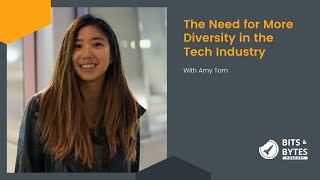
Podcast episode (Bits and Bytes) interview with Amy Tom—podcaster, senior editor at Hacker Noon—covering her role, Hacker Noon’s open publishing model, her transition from corporate to startup/freelancing, daily responsibilities, podcast projects, and advocacy for greater diversity (especially women) in tech. Practical tips include freelancing strategies, combating imposter syndrome, and encouraging diverse hiring and employee feedback.
Chapters
Foreign. Hi, everyone. Welcome to another episode of Bits and Bytes. Today we actually have another podcaster joining us as well as among other responsibilities that she'll probably be sharing more with us, we have Amy here, who's joining us as our guest this month. Amy, how about I'll let you kind of take off with your introductions and share with our listeners what you do.
Okay, great. Hi, I'm Amy. Thank you so much for having me. I am a podcaster, I am a editor, I'm a writer, I'm a marketer, I wear a lot of different hats, but right now I am working with Hacker Noon as their podcaster and senior editor. And I basically live everywhere on the Internet, but technically I'm based in Vancouver, bc.
On the Internet you can be everywhere. Yes, and under different disguises. Maybe. For those that are listening in, could you kind of share with us what Hacker Noon is and what it means to the tech community?
Yeah, so Hacker Noon is a tech publication company and we allow people to write on our publication without any prior publication content. So any. The premise is that anyone can write technology content so long as you have kind of basic English literacy. And it gives a more accessible platform to people to publish technology articles and to read articles by technologists.
And so if I'm hearing this correctly, then like, if, you know, someone's very passionate about what they do or about the tech industry, like, as long as, you know, they got the pen and paper, like they can also send them their own content.
Yeah, and it's really, really cool because we get contributors from all around the world, so they don't necessarily have to be North American based. We have a lot of contributors from India, from all over Europe, from Africa. So it's really cool and exciting to be able to have this knowledge being shared with so many people in such an accessible way. Because it's a lot of it is not just like high level technical knowledge, it's really a lot of tutorials. It's like developer content. It's cryptocurrency knowledge. So people are able to share their thoughts and opinions and expertise without having to go through all of the hoops to get published on, you know, Forbes or something like that.
No, that sounds really awesome because it really does encourage, because I know even within our own community as well, we have a lot of like, superstars that was always like, talking about what they're passionate about. Like Sam, for example, unfortunately can't be here, but like, he is currently, like very obsessed and very involved in NFTs right now. And I'M sure he's already written a few articles like he's one with like top shot as well. And like, you know, it's really great to see those kind of Hacker Newton like creating this like platform so that more passionate people can kind of share what they're interested on and what's going on in their lives and what's a hot topic for them.
So yeah, and it's really great also for startups as well because we provide links to startups websites or things like that, so long as it's not too promotional. But if you have a project that you're really working hard on and you want to share the development story behind it, that's a place that you can do so and tell everybody how you actually developed your project. And people love to read that kind of content on Hacker Name.
Wow, that's actually really amazing. Yeah, like, I mean, hear what we do at launch. Obviously I think you're kind of familiar, but we have so many startups from all over the world and you know, on a personal level we get to learn about their story, but their story doesn't get heard from like the rest of the community. So I think, you know, some of them might definitely want to like share because they've got some like really interesting backgrounds. I can't, I don't know how much I can share, but there's definitely some really great steroids going on. So hopefully we can talk more on that. And so, you know, being an editor at Hacker Noon. So like I'm more curious then, like what does your day to day kind of look like? Because I know you have a lot of hats that you're wearing and a lot of titles and responsibilities they have to juggle. So what is it when you work at Hacker Noon? Yeah, what's your day to day routine?
Yeah, it's very jumbled because it's a startup, I believe at this point we have 12 full time employees and around 20ish part time employees. When I joined I was the 16th employee overall. So we've kind of doubled the team. But yeah, because it's such a small team, I kind of do a little bit of everything. There's no real boundaries of what I can and can't do. Maybe the development stuff, I'll leave that to the devs. I do the podcast and so that means that I do of course, you know, all of the scheduling and the interviewing, the managing, the editing and all of that. And then I also edit the actual articles. So I, I spend a lot of time reading technical content that people write and making sure that, you know, their grammar is good, that their spelling is correct, that their content makes sense, that the flow is great, and find any way that I can to help them to make the piece a little bit better and more readable. And I also work with a lot of different team members on lots of different projects. So we do writing contests for, for people to win money or different prizes. Right now we're running a Startup of the Year award, so different cities have nominations for Startup of the Year. So in Vancouver, there's a bunch of different startups that are nominated, so everyone can go check that out and vote for your favorite startup of the year. But yeah, all over the world, different startups are nominated. So we're running that campaign. We have different, lots of different contests and things for our contributors to win money and different prizes that I have a lot of hand in running too. So lots of different stuff.
Sounds very hectic, but I think, you know, that's what it's like when you work in the startup. Like, actually, do you want to share with us? Like, because I think, you know, the intention behind this podcast was just kind of like, enlighten listeners to understand, like, you know, maybe even break stereotypes about what it's like to work in the tech industry or to work in startups, but also to, you know, encourage others that are interested and maybe even partaking in the industry and stuff. And maybe if you want to share, like, you know, can you share with us, like, how you ended up at Hacker Noon? Like, you know, was it the transition for you? Smooth. Like, where were you before this? And yeah, like, what was the differences that you found between working, you know, maybe a regular job and then suddenly into the startup industry?
Yeah, so the job that I had, I guess before the Hacker Noon job or a few years back, I used to work at a company called Absolute Software, which is also Vancouver based. And then I did that for a few years. Unfortunately, I got a major concussion, so my. Yeah, so it was really difficult for me to do my job and I just needed to change and do something different. So I quit and traveled the world for seven to nine months pre pandemic. And then after the pandemic hit, I decided to come back home and did kind of odd jobs here and there. And while I was doing that, I decided that I wanted to do freelancing instead of going back into a corporate role just because I wanted to make my own hours. And it was the pandemic, and I wasn't sure what was going to be happening. So I didn't want to commit to going back to a full time corporate job, so I decided to just freelance instead. And while I was looking for new clients, I was reaching out to people on LinkedIn and just people that I knew and eventually got connected to some people at Hackernoon and they asked me if I wanted to join them part time to do the editing of the content. So I was like, yeah, that sounds like a great role. I love editing, I love written content, I love technology. So that sounds perfect for me. And yeah, that was like eight months ago, I believe now. And then as things progressed, I got offered a full time role. I got offered to start the podcast and while the pandemic was happening, I started my own podcast just for fun. And, and so I had prior podcasting experience. So it just sort of worked out really well and so I kind of just fell into this role and yeah, that's how it happened.
That's awesome. Like, I mean there's so many different like directions I want to go here. Like, you know, taking that time off to travel, 7, 9 months must have been a huge like, you know, major change. And then obviously going from the corporate life to startup life, there's so many directions. But let's start with maybe like, let's go with the freelancing a bit. Like, so when you were doing freelancing, how did you like, what were you doing for like in contract wise and with your customers and stuff, what were you offering for them in terms of services?
Yeah, I was really keeping my ear to the ground in terms of what people wanted and I think that's like really a key to freelancing, especially when you're doing it for the first time and you don't necessarily know what you're doing. Because I didn't really know what I was doing. So I just asked people what they needed. I kind of have a really general marketing background, so I can do ads or I can do copywriting, or I can do, you know, even photography sometimes or design. So I have a very wide background of skills that are freelanceable, I guess, just because I'm so interested in so many different things. But I just kind of kept my ear to the ground and what ended up happening was me offering copywriting services to technology companies.
So yeah, literally a jack of all trades then. And then that's how you eventually went into Hacker Noon. And then, so I guess the other topic I kind of wanted to touch upon as well is like, are you currently still freelancing then while you're working as an editor at Hacker Noon. So how do you find kind of, like the time to, like, juggle all of the different responsibilities that you have? Must be kind of hard sometimes. But, like, what are some ways that you kind of work on those things and make sure that what you need to get prioritized is done and so forth?
Yeah, well, that is something that I'm always working on time and time again because I am a huge workaholic. I love. So, yeah, I. And I love my job. That's the thing too. It's like, until I started working at Hacker Noon and freelancing, I felt like a job was a job, which is fine, and I think a lot of people feel that way. But when I started doing what I actually really wanted to do and kind of more dictated the direction of where I wanted my career to go, I was so much more happy. And so it doesn't really feel like I have to get up and work. It feels like I get to do what I want to do. So that makes it easier for me to keep working and doing all of this stuff. But that being said, I do work in the evenings a little bit and on the weekends sometimes. So I think right now, in the pandemic especially, it's been easy for me to do that because there's not a whole lot going on. But in the future, I'm not sure if I'll continue doing that. But, yeah, it's been great thus far.
Yeah. And, you know, like, entrepreneurs always say, you know, be passionate about your. What you're working on. Be passionate about what you're building. I think that's really awesome because you definitely see the entrepreneurial spirit in there. And I think that everyone can kind of channel that within themselves. It's just a matter of finding what, you know, you want to build or what you want to do. So thank you for sharing with that with us, Amy. I wanted to kind of talk about a little bit then, like, you know, transitioning from kind of like the corporate life to the startup. I think, you know, for some of the listeners that may not, you know, have worked in the tech industry or they've only seen, let's say, like, the movies where they have a fancy, you know, startup offices and everything looks kind of glamorous. Or maybe they've seen, like, the TV shows, like, where, you know, they see the devs just working out their basement to build up their products. What do you think are some of the, like, stereotypes of working within a tech industry and what are the actual kind of like positive truths to it and maybe even just like the, you know, the negative sides. Like what are the downsides of working in the tech industry?
Like, okay, there's a. Okay, so there's a lot of facets to this question. I think the first is like, what is it actually like to work in the tech industry in the sense of like all the perks they give you? It's real, it's true and it's great. I love that part. We had like people gave us food all of the time and there was beer day and there was pizza days and like it was delightful. In the tech industry they really value like building up their employees with a lot of extra job perks, I think, and that's really nice. So that part is real. The parts that are more difficult, I think are the fact that it's really heavily male dominated. So it's difficult to, as a female to be in the tech industry sometimes because you really need to make sure that your voice is being heard and that you are loud enough to have a seat at the table, I guess.
Yeah, yeah, definitely, for sure. Like, you know, just like any other kind of industry is always going to be kind of the topic of diversity, I think that needs to be addressed a little more. But I think with the way that the climate's been changing, I think it's really great to see more and more, you know, founders, managers, companies realizing that diversity is so important. Like it's, it's how you can grow your company. And you know, everyone has really great, like everyone comes from really great background, everyone has different experiences and they can all bring that and shape it in some way to help one another out.
Yeah, yeah. And I think, I think in the, in the bank in Vancouver, in the tech industry specifically, especially in software sales, it's very heavily male dominated and, and it's. Yeah, it's sometimes difficult to make sure that you're being heard and that you, your opinion matters and that, you know, you are not perceived as weaker or less than because you have quote unquote, like softer opinions or something like that, you know, Like, I think that traditionally in like a tech sales environment, everyone is very macho, everyone's very male, everybody's very like, it's a, it's a, it's a vibe.
Kind of like Wall Street. Wolf on Wall Street.
Yeah, it's very Wall Street. Yeah, it's so wa. And, and so, yeah, I really advocate for women to join the tech industry and that's part of like my, I feel like my personal platform or Something that I just really believe in is for, like, more women to join stem, especially so that we have more varying opinions and different. And diversity within the tech industry. And to go back to your original point too, of like, what are the differences between working in a startup versus corporate life? It's so night and day. And I think that almost like there's kind of like a negative perception of like, not wanting to work in Corp, which, like, honestly, I don't really ever want to work in Corp again. And it was not anything wrong with the company that I was working with at all. I loved working there and I loved all of the guys that I worked with. And it was not that, but it's just the structure of the job. It's like the nine to five. It's the. Yeah, it's the meetings. It's like dressing up. It's not for me. And I think there's a misconception or a. Like, almost like people look down on you when that's not that life is not for you, but to realize that there are other options out there to make money, that you don't have to go and sit in a desk every day for eight hours a day. There's. Yeah, there's more options than to just work in Big Corp that are still respectable careers. And startup life is so much fun. It is the best. You get to do whatever you want. And like, I think people who you work with really respect the things that you do because everything that you do makes an impact to the whole organization so much because you're so small. Yeah.
Yeah, most definitely. Like, I've also kind of came from that, like, transition of like working corporate and then launch was like the first, like, startup environments. And I'm like, wow. Like, like you guys said, it's definitely like a night and day difference, but it's really cool to see that, you know, small changes that I wanted to make or opinions that I had. Like, obviously when you're in a different setting, like, it's. You feel a little bit more quieter and more subdued because there's so many hoops and ladders that you have to go through to, you know, get your suggestion across or plans across. But like, in startup, it's like, hey, guys, I have an idea.
And then they're like, hey, should we do this? And they're like, yeah, do that. And you're like, okay, cool, I'm gonna do this. Yeah, it's great. And I've, I've worked Big Corp many times before, and I've always felt like Every time I got to like maybe a six month period, I've just been like, oh no, I feel suffocated. Like I don't know what to do. Like there's so many, it's like there's so many rules there. So it's so stiffy in here. Like I need, I have a really big personality that needs to like expand and for there to be so much structure, I feel like it's not good for me and my creativity in my mind for me to do my optimal work. And there's no shame in that.
For sure. For sure. And so kind of branching off into that. Then like what would your advice be then for? Let's say there's like listeners that, you know, they're still not ready to take that like next step forward to like jump into the tech world. I'm sure there's going to be like nerves. There's like things that they may fearful of, maybe even like pressure to like go towards the standardized like traditional job administrative work and so forth. So like what kind of, you know, advice or words do you want to share with some of the listeners that you know, want to push and get out of their comfort zone?
Yeah, for me my experience in entering the tech industry has been a lot of imposter syndrome. Like a lot of imposter syndrome. I constantly am telling myself, you don't know anything because there's so much tech knowledge out there that you're never gonna feel like, you know, there's so much to learn that like you'll never know everything. You need to specialize in something. And so for, but for me, I love to figure out how everything works and like dig into all of the little deep holes. So for me it's really hard because I feel a lot of imposter syndrome a lot of the times. But for me to combat that, I just tell myself like, it's okay, you do know who you're talking about. Remember all of the stuff that you did? Remember all those articles you've been reading? You got this, you're good. So I think it's a lot of like self pep talk to, to get into the tech industry and say like no, you deserve a spot here and you, you can be here.
And also kind of going back a bit about you know, encouraging more diversity, especially women, to kind of be more represented. Like how, what are some ways that you've kind of built yourself up to be that change in your workplaces? Like how have, what steps have you taken to keep, you know, channeling that energy and building yourself to be that person.
Yeah, I think that recently, and this is not something that I've always done, but I think as like the world grows and I grow, I. I see more and more issues and more. I feel like I take more and more responsibility for diversity in the workplace because everybody has a role in it. But one of the things that I've been doing more recently is pushing more for diverse hiring. And so just saying, like, what are our hiring practices? Like, are we sure that we're 100% diverse in our hiring practices? Is there something else that we can do? Do we have unconscious bias in our organization? And also there are other things that people can do within an organization to address diversity. Like, do you know for sure that you have a diversity issue or don't have a diversity issue? How do your employees actually feel an anonymous survey would help or asking, actually asking your employees what their thoughts are and what they need. I think it's really important, especially in big organizations where there's so many people having been having the ability to collect feedback is really important, I think. And yeah, I believe that, you know, people shouldn't necessarily have like quotas on diversity for hiring. But are you doing your best to attract diverse workforces or are you only trying to hire a certain kind of person? You know, these are questions that organizations need to ask themselves in order to address diversity.
I think Fantastic feedback, I think. And it's good things that I think every, you know, manager, founder, CEO needs to hear is like, you know, ask yourself those hard questions. Are you really trying to improve the workplace and trying to bring that diversity without.
Yeah, I think it's more than even just like the founders and CEOs, I think that this responsibility, responsibility really should fall on everyone. And even if you're a low level employee, raising your hand and saying like, hey, I think we have a problem here, or I would like to do something about this issue. If your organization truly values you and the work that you do and your opinion, then they should listen to you.
Yeah, you know, definitely. Right. I think, you know, I find myself that I do tend to talk so much and focus on, you know, the CXOs and the higher ups. But going back to where I wanted to make bits and bites was to focus on people that weren't holding those titles, like even just like, you know, the interns or essentially kind of like the superstars that help build the team and help build up the company. So thank you for bringing that up because I realized, like, I catch myself doing it too. I'M like, hold up, like we should talk more about like us guys too. Like we are part of the team. We also make those changes and impacts in the work environment.
So everybody has the power to make a change no matter what the title you hold is for sure.
That's great. Awesome. So I guess I wanted to kind of wrap up into kind of one of the last questions that I usually kind of ask every guest. And I'm sure you kind of saw it in the interview, but I mean pre interview questionnaire. But you know, if you could build up, let's say it's a dream product or whether it's your team, say a team that you can currently build. Your boss was like, hey, bring in two, three people, whoever you want. They can be dead historians, they can be cartoon characters, they can be real life people. Who would the three people be and why would you want to bring them onto your team?
Okay, that's a very hard question. And I put a lot of thought into this. So I think that first of all, the project that I would want to pursue would have to be something that would make tech and tech accessible to more women. And especially like with something that's on my mind recently is of course women's rights and how we can support the needs of women and the just basic fundamental human rights of women as well. So something that I would like to start is like anything that could bring together women to learn more about technology. And then I was like, okay, who do I need to bring onto this team? And then the first person would have to be like the President of the United States because of the power and sway that this person has. Because like, how are you going to get anything done if you don't have the President of the United States on board?
That is very true in terms of.
Like laws, politics, international business. Like I think that's got to be a good one. Number two, I think would be like somebody like Amal Clooney or something. Someone who is like a human rights lawyer and activist, who is really well respected and well known and who people would listen to and would have like knowledge on human rights law. And then number three would have to be like, I don't know, that's a really hard one because I kind of went on like an entertainer, almost like a female entertainer to be like bring like sway into the project. You know, like someone like Lizzo would be beautiful to bring on because she's very like passionate about female empowerment. But then also somebody like Emma Watson would also be great to bring on because she's very. She's got the academic side, but also, like, the celebrity side, too. I don't know. So many avenues. Maybe Emma Watson, maybe Brene Brown. That would be Also be a good one. I don't know.
I really love this answer. Like, it is so well thought out.
I feel like, you know, not trying.
To, you know, dish on my previous guest, but, like, whenever I put our guests on a spot, they just kind of name a few celebrities or, you know, very notable figures, and I'm like, it's great because, you know, I feel like the. It's usually kind of like, leans for celebrities, but I love that you went, like, out of the box, and I was like, the President of the United States. I was like, wow, I did not think about that. Like, you're totally. Once you have the President of the.
United States, you can do anything. Yeah, you really can.
And, like, such a presence. Like, she is such a powerful, Like, I love it.
Like, imagine, like, Joe Biden, Amal and George Clooney. That would be a beautiful team, too.
Oh, fantastic. And it's just like, being around that, like, star presence just, like, constantly. Like, oh, man. Yeah.
I mean, if I was around this team, though, I probably would not say a word. I just feel like, okay, you guys do it. You're the best. I love you so much.
Do you guys need some, like, water?
Yeah, things just like.
That's amazing. Thanks so much, Amy, for sharing some time. Like, I really want to make sure that our listeners are able to, you know, especially when it's a Hacker Noon. And, like, if there are any listeners that are passionate about wanting to write and share their content with you, like, is there, like, a process that Hacker Noon does? Like, is there an application or, like, a submission process? Like, how can they kind of reach out to Hacker noon? Yeah.
Visit hackernoon.com anybody can write. You can sign up for an account for free and submit your first publication. We have a team of wonderful editors who will review the publications and make sure that they are publishable for you. So help you with your grammar, your spelling, make sure they're readable. And just so long as it is, like, a decent level of English and has something to do with technology, we would love to publish your content.
Awesome. And I actually forgot I do want to bring up your podcast as well. So I know that you have two podcasts right now. Could you quickly share with us, like, what the. What those two podcasts are? I know there's one that's related to Hacker Noon, but what is the other One that you started? Yes.
My first podcast that I started is called the Art Hustler Studio. That one is actually has been sunsetted for now, but I have 20 beautiful episodes available for everyone to listen to. And a lot of the content from that podcast is local. So a lot of the artists that I had interviewed were local. The premise of that podcast was to help people who are interested in art entrepreneurship to start an art business. So it's very specific to art. So I interviewed some people from the Vancouver Mural Festival. I interviewed some local tattoo artists, local actors and actresses. So, yeah, that one is called the Art Hustler Studio. Then. My other podcast is called Tech Stories by Hacker Noon, or the Hacker Noon podcast, we also refer to it as. And that one is about tech stories in general. So I interview different founders and CEOs of tech companies. I interview developers, I interview interns, I interview everybody who. Whoever wants to come on the podcast about technology and about usually how they started their project or how they developed something or something like that. So if you're interested in development in cryptocurrency in tech startups, then that podcast would be great. It's called Tech Stories by Hacker Nan.
Perfect. I'll make sure to link those in our description with the podcast episode. So if you guys want to hear Amy's podcast, we'll definitely make sure to share those links as well as hacker news information. And if there's anyone that wanted to kind of directly reach out to you, maybe whether it's, you know, for advice or whether it's, you know, just to talk with you and learn more about what you do, how can. Is there, you know, somewhere that you're more comfortable if they wanted to reach out to you? We can share those with you as well. Oh, yes.
Get me on all of these socials at amymtom.
Amymtom. Okay, we'll make sure to include that in the descriptions for everyone. Thank you again, Amy, for joining us today and taking the time. I really gotta say, though, for those that can't see the video, there is an amazing Nicolas Cage. Is that a curtain? It is a curtain.
It is a curtain. It's a giant Nicolas Cage in a British officer uniform.
It's Gloria. So if you can't see, if you're listening onto the audio file, definitely make sure to check out the video version, because then you can see Nicolas Cage in all his glory.
Amazing.
Thanks again, Amy. This is an absolute fun and I will hopefully, like, you know, post Pandemic. We are looking to bring back guests, and this time we're going to put them through the actual food challenges, which is why there is a bites at the end of our podcast. So it's going to be kind of a recap. See what's happened since we last chatted, and then we're going to, you know, put you through some food trials, so.
Okay. Looking forward to the bites then.
Yep. Awesome. Thanks so much. And thank you, everyone that is listening right now. That is a wrap for our episode. We hope to see you all at our next one. Bye.
More from Ray




A Founder's Story. Creating the World’s First Laundry Robot — Joshua Rabanne, Laundrx

Bits&Bytes with Sherry Li, Assistant Professor at Berklee, Co-Founder of ICTUS Audio

Why This Young Person Left Child and Youth Care To Work in Tech - Bits & Bytes with Samson Li




