The Secret Sauce To Being a Full-Time Foodie | Emma Choo, VancouverFoodie
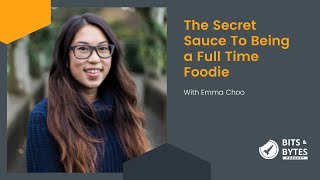
Emma Choo turned a food Instagram hobby from high school into a full-time career. A Chinese Restaurant Awards campaign was the turning point, followed by her first paid client, the Robson Street Association. She spends hours at restaurants shooting and editing, and handles every part of her solo business.
Chapters
Coming in now.
So you. You haven't met Camille. Camille's like the. She's our. She is our program coordinator. So.
Sure.
She's just helping us out manage like the back things. Like if our volumes go crap and other stuff like that, she'll just ping me. Like literally, like the house could fall down and we. I'd still keep talking, but she's there to remind us like if times go over and whatever. But yeah, yeah, like she works on our programs team and like, so. So this is the entire team.
Love it.
That was talking about. I think I gave you a brief history of launch. Right. Like, you guys, you definitely didn't know us before, right? Before.
No. Yeah.
All right.
Okay, so three, two, one, go.
Hi, everyone. Welcome back to another episode of Bits and Bytes. Today we actually have a very special guest and actually plays into the theme of Bits and Bytes. We have Emma, AKA I know, right? Took so many episodes to get here. We have Emma here from AKA Vancouver Foodie. Emma, how about you quickly introduce yourself and kind of give us some background.
Of who you are for sure.
Hi, everyone. I'm Emma, also known as Vancouver. That's like my YouTube intro. But what I essentially do is I do content creation for my page, mainly on Instagram. I've sort of dabbled into TikTok now trying to expand into more long form content for YouTube. But I do all things food and I've tagged on travel when it's possible, but those two are my passions, my loves, and all things visual and exciting. That's where I'm at.
Honestly, that sounds like the best job ever. Combining food, travel and then just like social media is all you. That's amazing.
You're living Jean's dream. Don't give her any.
I actually, I actually did try to dabble a bit into like a food page. I was just like, I can't keep this up. It's hard actually. Yeah.
Can you explain more?
Like, how did you get into food? Influencing or just being an influencer for travel and blogging in general? Like, where did it start?
Yeah, it's a funny question because whenever that comes up, I'm always like, where do I even begin? Because it's always like, do I start from the very moment I like, signed into Instagram and created that page and made the login? Or do I go that whole, like, how I even like my childhood and my love for food and how that became, you know, that whole extra section before actually logging into that whole social media realm? Because I like to tell people that social Media is not the ends, but it's actually the means through which you communicate what you love. And I guess to be more practical about it, I started my page back in my grad year of high school, going into my first year of university. And at that point, my friends, I had my own personal account and I would be posting naturally, food photos. And my friends are like, you're making me way too hungry. Let's just make a separate food account for it. So there's like a designated space and you know, you have those random conversations where someone throws an idea out to you and you're like, why not? Let's try this out. And ironically, back then, the word foodie with an ie spelling was not a trend. So. So that was made available because everyone's like, how did you get that name without the underscore, without the period, the one, the number? And I was like, it was a matter of time, right? And I had no idea that that was going to be the way it was going to carry on for the X amount of years.
Right.
Me little bug here didn't know, but I just kind of like did it for fun. For four years during my undergrad degree, I studied sociology and minored in law and society at UBC for four years. And then I had actually been working part time at a law firm to kind of potentially pursue law because that's what my dad had probably wanted me to do. Those four options that you have of an accounting engineer, some science or like medical. Yeah, let me just try to choose one that maybe makes sense and like, at least try it out in some sort of extent to see if there's something that I want to pursue. I do love law and law and justice and that kind of realm. But for me, when I went to work at that law firm, I just got to observe the life of a lawyer. And I was like, I don't think this is the way I want to be helping people. There is obviously a way that it does help people, but maybe not in the way that I desire to be on the front lines of engaging with people on the daily basis and looking like. Sociology has taught me to look on the bigger picture where everything plays into account. Whereas, you know, the law system, it's like, let's pick and choose. These are the only things that make sense. And I was like, I want to be just, just like engaged with people all the time. So that's when this came to the forefront, you know, in your grad year of university, you're like, what do I do next? With my life, where am I going.
To have a job?
You know those big nice questions that you get? Well at that point, you know, God had placed on my heart. It was like, you know what, this is scary. There's no one ahead of you. But I have been building this thing for the last four years in a very casual hobby like way and you love it. So the fact that this potential industry is going to grow, we have no idea where it's going to go because literally there's like the word influencer was not a thing, which is weird. Like people were like, oh they're a blogger, they have a blog on a website like on the Internet. And now the word influencer, social media all ran tiktokers. It's like a weird words that are very new but back then I didn't have people to look at up to or ask hey, how do I do this? So it was a lot of like unknown for me but I knew in my heart like this was a moment I listened to my 80 year old self at the same time, you know the person on the deathbed being like, this is what you know, your life. You only have one life to live and you better live it now and like get on that train before it like takes off. And it was also an ode to my like my younger self who yes, I did school, yes I could get like what the B plus, A minus, whatever that like passing grades in that sense of the Asian mindset. But not, I don't like something about the academia or like the structure of reading and writing the more like traditional ways of doing things. I could do it but I never like came alive. But when it came to visuals somehow I would put in so many hours and yes, I was so exhausted and tired but I never felt like I was like laboring for something that was not worth it. So it was owed to myself that was like I've been created so uniquely and if I take on this opportunity now, like this is for you. So that's sort of like a long story of how I ended up making that decision. And I'm like eight years into this whole thing so it's crazy to think about and talk about.
So before we get too far, I want to make sure that you dropped, you dropped a lot of knowledge bombs in like that, sorry, 45 second span. But I want to make sure that listeners here don't, don't miss it because I think something that's really missing is because, because it is really easy to look today and I'm specifically talking to listeners that maybe are in high school or in university or whatever.
Right?
Like, I have no idea who the other line listening to this. Right? But, but like, a lot of times they can look at your account or X's account or they'll look at. Even, even if you look at Mark Zuckerberg and go, yo, the guy dropped out of college and he did, and he followed his passion, right? But I think what was really important, but what you did is, is you were, you have a minor in law. You thought that was one of the potential routes. You go, and I think most importantly, you tried it out, right? Like, and I think that's what's missing a lot today. And in fact, frankly, a lot of the young people that I talk to that they tell me they want to, they want to do a startup, they want to, they want to be their own boss because they don't, they don't like working for people. I'm like, you've worked for three people, right? Like your mom, your dad, and your grandma. So, so, like, you know what? Like, go work at London Drugs for a year. See what it's like facing, I don't know, 10,000 people who are very angry at you that you're making them wear a mask or whatever it is, and then see what you learned from that, right? And I think that's super cool. What you did is because you didn't just be like, well, I'd rather be on my phone posting photos. You actually gave that a shot. So I think kudos to you on that.
Thank you.
And then secondly, going back to you kind of leaving college, like, was that a hard decision and were you like all in on it from. From day one post graduation?
I guess, yeah, I guess A big pivotal moment, I would say is actually my last grad year. There's a big opportunity that God had placed on my lap, like, not even kidding, it was, I think February and I was graduating in like two months later.
There's an opportunity to.
There was a big contest going on with the Chinese Restaurant Awards, which I now get to work with on a regular basis. But that time there was a big contest that was like a whole week of campaigning, voting, like Monday to Monday. It was probably even two weeks for me. It sounded like a week or a month or whatever, but I think it's two weeks and the person with the most votes gets to go on a trip to Hong Kong, work with the tourism board, meet all these Michelin star chefs, go behind the scenes, see what.
It'S like and sort of like the.
Trip of a lifetime for someone who loves Chinese food. Represents, wants to like, create content around that. And that very last hour, I'm not even kidding, was 100 vote difference between me and the person before me. And my grad photos was that week. And I remember taking those photos and being like, my face was like, this whole time. I deleted them for a little bit.
It was that bad.
But that was like, I think a, a breaking moment of seeing my community come together and champion me on in a passion that they've seen me love. And I had friends have WhatsApp chats with their, like, relatives of cousins from Australia. Like, I have an auntie awake at that last, that last hour of voting. She was awake in Toronto. She's three hours ahead. Okay. And she's calling friends in Hong Kong.
And like her network.
And honestly, that was a huge moment for me to be like, first of all, there's so many people coming chanting me on with this. I want to do a good job of this. And to be able to get onto that trip and to understand that that was a break. Like that one week or so, literally was that moment I realized, this is I, this is what I want to do.
And it was confirmation of next steps for me. Right. As much as, yes, it's only a week worth of an opportunity and there's nothing set up for the next part of the year. But I just fell in love with this whole process of like, let's do this. You know, getting to that mindset.
And then from that point on, was it just a matter of like, okay, I gotta find a way to make this work.
Yeah. So the next few months was like, okay, what do I do with it? Obviously it was like, let's push out the content that I had been making on that. So there's obviously a few months of like, let's talk about this whole thing that just happened. But when I decided to, to do this, like, let's just do this full time, I actually had no, it was so scary. Cause I was like in this weird empty space of like, okay, what next?
Right.
Once all that dies down, okay, what next? And it was like a literally two to three months where I would just maybe like take on any opportunity I have. Didn't know how to charge a dime or a cent to the work I was putting in. And my dad, the accountant, of course, tiny dad with the finances in like, mind, was like, if you don't start charging people for the work that you're doing, you're going to have to go find A nine to five. So yes, pressure. And these things are good when they push you towards something that makes you like have actionable steps.
Right.
I could either be fearful of like, oh my gosh, like this is the end of be all and stay in that space forever and then like be scared and jump back into that nine to five kind of mindset, or take it as a challenge, like, okay, now I have a date by which I need to make decisions on. Therefore it pressures me in a good way to be actionable about that. So now I started to break down. These are the hours I've been putting in. Let's just say I go to a restaurant, one to three hours, like minimum. I'm not even kidding. You go eat, you document, you talk to the people there, you go home, you post about it, you filter what you want to do, like go through everything, you edit everything. The time you post it, it's like midnight. I'm not even like it's a whole day's work and I was doing that for free. And if I want to do a job and realize my value that I bring, like, even if I had two people go into a restaurant, it's already like makes up for whatever value they gave me, right. In terms of food they put on my plate. But I had to realize, okay, I have a voice. Yes, I'm a marketing platform at the end day and start to break down logistically. What do I have to offer and what is a value that I can actually pitch to people and embrace? Like it's okay for me to say no to certain opportunities because wait for the ones that do truly value what I can bring and then focus more attention and efforts into those and then reinvest my, my, my ecosystem is like reinvest the money that I make from like brand partnerships or those opportunities into my everyday organic like content. So that I maintain my voice, I maintain my integrity. I still am investing money into like the day to day activities. I try to go into restaurants and be like, I'm an everyday person. I don't really tell them I'm going in events, I order like one to three dishes or if I'm with friends, not right now, obviously, then I do it in a more like natural way where you can see yourself doing the same thing that I'm doing and try to break that barrier. So there's like sort of a working ecosystem and the everyday ecosystem that makes it all work together for sure.
Do you remember the first time that you gave someone maybe like a quote for your services or, or Whatever. What. What was that? Like?
I. I actually remember it was Robson Street Association.
What was that like? It was a very exciting moment for me in the way that, like, oh, my gosh, I know Robson Street. I literally walk there almost like every week, you know, like, this is huge. And what was scary was, like, I don't know how much to charge, you know?
And that's what I'm getting at, right? Because I think a lot of times, like, people when they're first starting out, and we see that in a lot of passion entrepreneurs, I find, because they love what they're doing, and a lot of them started like you, where it was like, oh, I would do this for free. Like, you hear that a line a lot. But reality is like, nothing's free, right? Like, even if you wish to do it for free, someone's paying for your rent and your lights, et cetera, right? So, like, I'm always really curious to see, like, how. How agonizing it was or wasn't for you to be like, I'm gonna make up a number. So this is for people listening. This is not real, but let's pretend it was like a $500 contract, right? Like, are you going in super nervous that, like, people are gonna rip it up or. Or. Or they're gonna be like, oh, this is so cheap. And you're like, oh, crap, I just undersold myself by $3,000.
Like, what.
What's kind of going on through your mind? I guess try to go back in retro.
Honestly, that's like, my life for the last four years of doing this full time is learning the wins and learning through the fails. And what I. You know what I mean? Like, as an entrepreneur, honestly, you will not know your next steps for, like, forever, because it's evolving. Each client is different. You're not going to treat a small local business the same as, like, a big corporation. So you're constantly adapting, stretching yourself. And rather than staying in that space of, oh, my gosh, I lost so much from what I could have been. You learn from your next opportunity, right? You have to move on.
It's all up.
Like, the entrepreneur is learning. It's being humble enough to be like, everything is a learning experience. I don't have it all together. And to be open to this, that's why I love having these conversations with people that are like, let's try this unknown space, right? It's about creating your own place in that space, but being open to where it leads you. Therefore, it's like, okay, yeah, I mourn for those moments, I probably should have quoted more, but now I can go better and have the language to best navigate the next opportunity.
Right?
It's always not staying in one place, it's always moving and growing, regardless of whatever it looks like.
And I definitely feel like that's a very common theme when it comes to entrepreneurship. Like every episode that we've had, it's always mentioned at some point like, you're not going to be perfect, like 100% with the butt. Like, you got to learn how to work through the failures and pick yourself back up and just be resilient and keep going at it. Like that's the only way you can actually develop. And I think, like, you know, a lot of people outside of the industry, they just see the success, they don't see the work, they don't see like the hours, they don't see the like experience that went into this. And actually that kind of leads to my next question then, you know, like, when you were building up, you know, your brand of Vancouver foodie and stuff, like, what were some of the challenges? Like, the bigger challenges? Like, you know, obviously one of the challenges would be like finding a price, like a good quotation for the work that you do. But you know, what were some of the surprising challenges that you didn't kind of expect? Like, that just completely caught you off guard if there were any.
Challenges in terms of difficult ones or.
Like, yeah, sure, let's say difficult ones. Let's start with a difficult one.
We're not talking about when you had a really bad one ton or something.
So unforeseen challenges of building up Vancouver foodie. Yeah, okay, let's go through that one.
Let's go through that.
I think an unforeseen challenge. I don't know if this actually answers the question directly, but the first thing that comes to mind is doing this on my own. And the only other person I technically work with more on like a formal part time Basis is my YouTube editor. But other than that, every single thing is like, this is okay. This is like my room and I'm here most of the time cranking out like ideas on this laptop, working emails. I am high. Like, let me put on the hat today. I'm the accountant. Hi, I am the manager. Hi, I'm the content creator. Hi, I'm this. Because normally, you know, when you look at your, when you're in the mindset of like, I'm just doing this for the sake of the hobby, it's a different mindset, but when you transition into it let's do this for like, let's take this for real and do this as a more structured work format. Then you start to realize there's more than just let's do it, you know. So the biggest challenges is all the other elements, all the other working elements that come into making this a full.
Time gig for me, right?
Because I could have kept it as a side hobby, let me go pursue my 9 to 5 and this is what it is. But to transition into that challenge of like, oh my goodness, I do. I wasn't trained as an entrepreneur in school. I was a sociologist. Like, no, nothing about that really gave me practical steps. I was not in solder. I was not in like a business school of any sense, but like the, I guess sociology. The one thing shout out to sociology is honestly like helping me think big picture, understanding that everything is not just a singular man matter. So that has helped me to understand that this job comes with a lot. But I did not know what that meant when I got into it, if that makes sense.
Do you find that like anyone has kind of like when you kind of explain what you do full time, do you find that anyone kind of has these like, misconceptions? They're like, oh my God, you get to eat food. Like, that's amazing. Like, like, I don't know, like, how do you deal with like misconceptions about your job a lot? Like, do you just play it off and just be like, yeah, no, like it's great. Or do you kind of have to break it down for them? Like, no, this is a real job. Like. Cause we have this idea of like what an influencer is and I don't know, I think it's very divided on like people saying, oh, influencing is not a real job. But like even just from you said, like you spend hours just to get like a couple content posts out right after going to a restaurant. Like, yeah. Do you want to like elaborate a little more? Like what? I guess like your general reaction is to people asking about, you know, what it is to be an influencer and stuff or misconceptions that they had.
It's funny because you even talk about the word influencer. I tend to not want to explain it as such. But the reality is that only because it has a negative connotation, right? Like I'm like, oh, I'm an influencer. That's my job. It like makes me sound like, oh, we all cringe a bit only because we don't.
We only see the good parts.
And that is literally our job is to make it look see seamless and effortless. Right? Like what you see at the. What you see is probably 5 to 10% of what goes on behind the scenes. It is every job. Right? Let's talk about so many jobs out there. Like, nobody sees the behind the scenes. That's what I love about TikTok and.
Social media and how we're moving into.
That place of like, let's expose the in, like the behind the scenes.
More from Ray




A Founder's Story. Creating the World’s First Laundry Robot — Joshua Rabanne, Laundrx

Bits&Bytes with Sherry Li, Assistant Professor at Berklee, Co-Founder of ICTUS Audio

Why This Young Person Left Child and Youth Care To Work in Tech - Bits & Bytes with Samson Li




