10X Clarity: Pioneering Disease Detection through MRI Scanning Technology
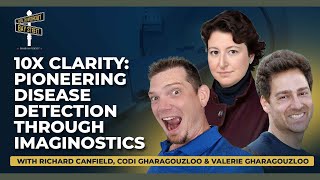
Interview with Cody and Valerie Garguzilu about a novel MRI approach that combines new scanner software and a non-toxic iron‑based contrast agent to produce higher‑quality images and vascular biomarkers (blood volume, vessel reactivity, blood–brain barrier leakage). They plan near‑term commercialization as a gadolinium alternative to enable preventative screening, accelerate drug development, and support clinical trials. The team has patents, early pharma partnerships, and grant funding for Alzheimer's studies.
Questions this video answers
2018
About 40 million MRI scans per year; ~20 million use contrast agents (as stated).
$915,000 from the National Institute on Aging and $725,000 from the Alzheimer’s Drug Discovery Foundation.
They estimated being on the market in about two years (stated as a hopeful estimate).
Three‑Tesla scanners (they said it works very well on 3T and better there than on 7T).
Chapters
Obviously, you know, accessibility is a big thing, right? Like we need MMOHA machines, we need to be able to. But I think as we provide this information we hoping that, you know, the mentality or the mindset will change as well. Right. Whether it's like in terms of cost, reimbursement or accessibility because it's the advantageous as well of the health care system as a whole. You know, to prevent a disease, not only you save lives, you impact, you know, life quality, but you also, there is a lot of like a cost savings opportunity in catching a disease as early as possible. Right.
Today we're going to unveil a game changing technology that will revolutionize, at least in my opinion, the medical industry. Is it possible to create 10x better medical image scanning to prevent and catch diseases like never before? We're going to find out. My guests today are taking MRIs and scanning technology to the next level for everyone's future. They presently have six patents in place and I'm sure this power couple will have more to come. Please meet Cody and Valerie Garguzilu who are incredible people. Valerie holds multiple law degrees, an extensive career and a managing partner at a firm in Boston, Massachusetts. She's basically a legal wizard. And we have Cody, who is an expert in MRI physics and nanoparticle imaging. Say that three times fast. With a PhD in bioengineering MRI technology, he's got degrees in physics, mechanical and nuclear engineering. Basically we have two of the smartest people on planet Earth and they're a dynamic duo really reshaping diagnostic approaches for longevity in the areas of neurology, cardiology and oncology. I'm excited about this. Now this, this episode is going to go in our longevity playlist here at Senate Financial and Wealth Bay Street. Our goal is to help people not only increase and have more wealth, but also to have better health so that they can enjoy the wealth they create for a longer time frame. You guys are going to be a big part of that. So welcome to the program. So happy to have you here.
Thank you so much.
Thanks. It's a pleasure to be here.
Now for everyone listening, I had the pleasure literally yesterday at the time of this recording to actually delve a little bit deeper. Here's some more insights into this incredible technology. Cody gave a great presentation to a group that we're all part in called the Brepic Network, which is a great entrepreneurial organization. Thanks. Shout out to Justin Breen who told me I needed to join the program. Very happy that he did that and you know, I've had a couple of conversations with you, Cody specifically, and you've shared so many incredible things about this technology. I would love for you guys to share maybe together. What was the impetus that caused you to hone your skills and your ideas and your directions down this route of MRI technology, of, of better scans to help the medical industry? What, what prompted that direction in your life?
Yeah, so, you know, my background is in engineering and physics and I really wanted to make an impact in healthcare and when it comes to physics, I mean, there are some choices that are away from diagnostics, like radiation, oncology, you know, but I saw a lot of limitations there. I really thought that, you know, probably the best place for me with physics is in the diagnostics and, and, you know, because if you can't see something, you're not going to be able to beat it. And so it's kind of how I started, I guess.
If you can't see it, you can't beat it. I like that. That's a, that's a great statement. Now, you know, at some point in this journey, there was a decision to start, start your own company and to, to, to birth this thing that you've got created together. And you know, Valerie, I'm, I'm. It seems at least something that Cody mentioned in the meeting yesterday that you were part of the inspiration of that. And so maybe you can speak a little bit to, you know, your law background, watching what Cody was up to and, and helping kind of push things into motion where this business was formed.
Sure. So actually I discover really recently by talking to Justine Breen that I'm a quick starter. So I was already an entrepreneur and a lawyer and I was working with a lot of entrepreneurs, either as clients or as friends. We were sharing a co working space in Boston and it took me actually a really long time to understand what Cody was doing. I said he was just doing pretty pictures. And when I understood the value proposition and why he was doing it, why it was so beneficial for patients, that's when, you know, I, I thought, you know, we absolutely need to bring it to the market for patients at hospitals. And the best way to do it is just, you know, get started. Right. So I help him to fund the company, but actually it took me a long time to join, so I joined recently, maybe like last summer. And part of my role has been to help him promote the company in the media, apply for competitions, you know, advise, look for partnerships, collaborations. So that's how I help, you know, the best I can.
Got it. So you're, you're on the. Grow the business side and Cody's on the. I'm going to build some really awesome cool tech and we're going to change the world side and together that's how you're going to get it done. Am I, Am I, Am I with you both there?
Yeah, yeah, that's about it. And, and as we're focusing on the commercialization, because you can have amazing science, but, like, trying to find a way to go on the market. And I think we've been wrestling with that, you know, trying to look for a path to, to get, you know, the FDA approval and FDA clearance. So, you know, the business is growing as well, you know, in itself, like, from. I would say from the baby step we took like five years ago to, to now. We've, we've come a long way already and we have, we estimate that we will be on the market in about two years, you know, hopefully. But yes, this is growing with us at the same time that we work on it and, you know, kind of nurture it, as you say, you know, like, it's been a, an adventure, a.
Great and crazy adventure, and I'm sure there's been hurdles that you've had to jump over, a multitude of them. One of the things that I'm curious about, you know, I think for our listeners, I'd love maybe, Cody, if you can share a little bit about what is, what exactly is this, this technology and how is it working? And, you know, you gave an example in the conversation you delivered yesterday about a, about a movie with Matt Damon. And I thought that, that for anyone who's watched the film, it would really connect them on what it is that you've built and what you've created and how it can help the world once it gets out to a larger marketplace.
Yeah, it's, it's, you know, it's. We're living in exciting times, right, because there, there are so many promises of, of new therapies that can help us live healthier in longer. Healthier and longer. And, and that's incredible. At the same time, it's, it's difficult to get those therapies available for everybody if we don't have, you know, a measurement to say who needs it and how well it's working. So, you know, in this movie with Matt Damon, it's, it's called Elysium. And, you know, everybody, it's in the future, you know, futuristic. Everyone's scrambling to get to this machine that will, you know, scan their body and give A readout of whatever is going wrong and then heal them. So you can imagine like a, you know, just this picture of somebody's body being generated, or there's the cancer, you know, there's the dementia, there's, you know, the diabetes. Whatever it is, you see it kind of pop up and there it is. And then, and then the machine formulates some kind of strategy, some drug. It drills up and it injects, and then they're healed and they're cured. But if you don't have that first part of the machine, if you can't see it first, you don't know where it is, what stage is that, you know, you can't develop a strategy to treat it. And so what, what we have here is a new technology that is so far superior to existing scanning technologies that it can almost even be a screening technology. And so it is a 10x better MRI compared to gadolinium imaging. But gadolinium also takes, is itself a toxic contrast agent. And so, you know, if you wanted to do preventative diagnostics, you're not going to go get a gadolinium MRI scan. So really, the value proposition of this technology being 10x better than gadolinium is a hundred x better than just an MRI without contrast. So preventative diagnostics right now are being done without contrast. So it, it is not just a leap or a jump, but really, you know, a huge, you know, paradigm shift here that we're making.
Well, and you mentioned the contrasting agent. And so this is, you know, being someone who doesn't know anything about medical whatever and never had an MRI done, very familiar with them in that. I know people who've had to get them done and have been on wait lists. But to, to understand that, okay, we have MRIs that don't have a contrasting agent. Then you have MRI scans where it is being utilized, but the contrast agents itself that is utilized in those circumstances is actually a toxic substance. And you, you mentioned something yesterday that I picked up on in the, you know, in the entrepreneur group we were in that there's a large bulk of the population and I believe the number was around 37 million people who aren't even able to say, ingest and have that contrast agent in, in a scan. So if we're looking at doing preventative or even just verification of something that's wrong with an individual, often, often an MRI is saying, hey, we think XYZ is wrong. The only way we can check to see if XYZ is wrong is if we plug you into this scanning machine, by the way, you need to drink this horrible substance that's probably not good for you before we put you in the machine. And then they, then the scan happens. That's how I understand the process works to some degree now. And so for the people who aren't able to maybe use that contrasting substance and, and the fact that it's even a toxic one to begin with, how does you know the, the, there's the scanning technology itself and then there's additional components that are, that are adjacent but included in the implementation of a scan. And you've also developed some stuff in that regard. So maybe speak to why you needed to come up with that in the first place and then how you see that changing the medical industry somewhat.
Yeah. And so let's, let's zero in really on, on what are the pain points. Right. What are the problems that we're solving? So, yeah, gadolinium is a toxic agent. That's definitely a problem. But more important than that because, I mean, it works for whatever we're using it for. Right. Just to visualize blood vessels, really. I mean, there's 40 million MRI scans a year, 20 million are going to use this agent. You're going to be able to see blood vessels, by the way. You don't ingest it through the mouth. You get it injected into your blood vessels and they try to do this first pass imaging, you know, where, you know, it's, it just gets injected and then right away you image and you, you visualize. That's what they're doing right now. So gadolinium is a toxic heavy metal that should not be in the body. And then in 2018, the FDA put a black box warning on it because we find out it's accumulating in the brain and tissue and bones of every healthy person that's getting it. And so they're actually at the same time advocating for a new solution. All right, so it is toxic. That's true. It's working for whatever we're doing on, you know, most of the time people don't even know, you know, what, what toxic consequences they'll have. We're still trying to figure out the long term consequences. But more important than that, the real, the real issue here is that mri, with or without that contrast agent, is just a qualitative scan. So the images look nice. We see all these pictures of the brain and that's amazing. And we hear about FMRI and we might have some idea that this machine can do something more useful, but it can't it's really so limited to just a visual inspection of what a radiologist can do. All the cool stuff, all the research and so on that's done in academia. I was at Harvard Medical School. You know, I've been in academy. I've lived the academic life doing my postdoc there and so on and so forth. PhD and so all of that, you know, the, the cool research, it's done at the group level. So you're going to need a group of people who are hitting the head and a group of people that aren't. You're going to need a group of people with, you know, Alzheimer's and a group of people who don't. And then you can see what, you know, the effect based on this group level stuff. All right, your clinician, when you go into the hospital, he's just going to be eyeballing your MRI scans. And AI, when it's applied to your MRI scans, is going to be getting up to the level of a radiologist, but not beyond that. There's just nothing more in the data. All right, so that's the true problem that we're overcoming. It's a huge limitation. And so, you know, how do we get to that Elysium machine that identifies, you know, you know, you know, okay, we see these black and white images of the brain, but show me, you know, what's the problem? Where's the dementia? Pinpoint it for me. So we quantify the vascular physiology, and to give you an idea of our biomarkers, for example, we can map the blood brain barrier leakage. Every single person who has mild cognitive impairment and of course, dementia, which follows will have blood brain barrier leakage. So now we're going to start seeing individualized maps of this blood brain barrier leakage. Think about it as a, you know, you can look at the globe or a map of the United States of America or something. You look at it on the table. Here's Kansas, which is, by the way, where I spent a lot of my life. But, you know, now you're going to look over top of that, you know, you got. The weatherman is showing you the thunderstorms, the red region coming in the green and now it's blue. So that's what we're throwing on top of that, you know, we're adding that new information, that new data. The images are crisper, they're better than gadolinium images. Radiologists say they're 10x better. All right, awesome. But we're adding that new information which is really the paradigm shift. So the vascular physiology, when we can quantify that the structure, function and leakage of all the small vessels in your body and we make those maps and we. And now, you know, almost any disease has a vascular component to it. And so in that sense it's a data driven screening mechanism.
And if I can just add a couple of things, I'll say for the non expert and non scientist that I am. So we have several value propositions. So the go to market, we focus on visual inspection which you know, as you understand like this is the normal mri. You know, you have a visual inspection of black and white images and the hydrologist, you know, look at it or some, you know, imaging expert look at it and try to understand what's going on in the body. So with how software and I say methodology. The innovation is rooted in quantum physics because Cody is a physicist by background. So the innovation is not so much in just a software. It's really like in a way to acquire the signal much earlier. And it's based on MI physics. So we use a software that's gonna provide not only like better quality images, which is how go to market. So go to market again is a safe contrast agent the software. And we're using a particle that is already administered to people for anemia. The only thing we're doing is that we're using for a different indication which is medical imaging. All right. And we, we think that the reason why it's not available yet is because it doesn't work with the traditional MRI methodology. So with our software we will be able to demonstrate this contrast agents iron based that is non toxic can work for medical imaging. And we think that there's going to be like a shift as well in the FDA approach and analysis which is like a balanced approach. You know, yes, gadolinium is toxic, but right now the benef how to weight the risk. Right. So it's a really like, it's a legal analysis. You know, you, if you have more advantages than a risk, you will approve some kind of medicine or contrast agent. But with how technology we probably gonna change this balance analysis, you know, from experts when they see that iron works for medical imaging purposes and then you know, in the second time. So after go to market, what Cody is saying about changing the paradigm of care from curative to preventative and the early diagnosis of disease is based on the biomarkers for which we have awesome patents. And those biomarkers is about quantifying the vascular physiology. So let me just try to kind of translate A little bit. So you imagine your black and white picture, right? Like an MRI scan is black and white. And for the first time we're looking at the black part, so not the white part like, but the black where you cannot see anything. Well, for the first time at a pixel level in three dimension, so, which is called a voxel, so 3D pixel, I'll say we can quantify the volume of blood, which is a vascular structure or vascular density. And in the brain, you will call it like cerebral blood volume. All right, we can measure, is there a diminution or augmentation of this blood volume if we administer challenge or administer drug and kind of measure the vascular reserve. And so we're going to see if, you know, blood vessels constrict or delate, you know, in how the brain react to this particular medicine. And then the third biomarker we measure is the leakage of small blood vessels. And in particular in the brain. But not only in the brain, right, because it works anywhere in the body, but in the brain we measure the blood, brain barrier leakage. And that's, you know, this is really like novel data that is unfortunately is not available to people now, you know, not available to patients, not available, you know, by, you know, by, by any other means, you know. And so when I understood this, you know, this is not just the quality of the image. You really have data that right now is invisible to the eye in the black of the black and white images that we can start using for analysis. You know, the medical state of someone, you know, their health status. I mean, this is really like the breakthrough we're trying to bring to patient at hospital, you know, and we, we have identified a way to get to the market to be able to offer those biomarkers. And that's, you know, why we are putting so much energy into this, you know, to bring it to people.
It's amazing. What I really took away from that, Valerie, is, you know, the, the interpretation, you know, again, current scanning technology, based on your description that both of you provided, it's, it's a 2D image in black and white that requires interpretation primarily. Or it's, you know, it's, we're just looking at, you know, an image now that the radiologist or the professional who's been trained has to now interpret. What does this mean? And they need to make a judgment call. Now, obviously they're well trained professionals, but you're saying your new advances are going to help them be able to minimize the requirement for that interpretation, but also give them new Things to interpret that they couldn't even interpret before. So we're still going to require that interpretation and those professionals to be able to read and understand that. But additionally, with their, their providing feedback on that interpretation, because of the data sets, you'll be able to capture, you know, previously you could train AI up to the level of a radiologist, you said Cody. Now you'll be able to train them up to the level of whatever the scanning technology will allow them to interpret. Is kind of how I'm, I'm gaining some insight here. Am I on track, would you say?
Yeah, because if, if the, if the data has, you know, certain features that indicate a person has dementia or cancer or any other abnormality, once the data contains the information. Now, now the AI is more powerful right now. Now, even if even analytical approaches to, you know, even, even without AI, if you look at the map, you can see what's going on. So that's kind of the power behind it. Yeah, yeah.
We want to build, it's called decision super tools, again, decision support tools. So basically, like from the data we analyze, we will compare it to the data we have. Right. And help, you know, provide information to help the clinician to make, you know, a pre diagnosis, basically, you know, like a diagnosis really early on a complex disease, maybe even before the symptoms, like decades in advance in the case of Alzheimer's, for example. So, so, you know, so that's what we want to build.
Let me, Maybe I can clarify this. I, you know, it's such a powerful technology. We've been working on it for so long. I feel like sometimes it, it gets complicated with all the stuff that's going on. So let's cancel out the noise. So, yes, we have an amazing technology that can do all kinds of brain mapping and find disease. All right? It's solving the problem of early detection of disease. It's solving the problem of showing how drugs work to accelerate that drug development. It's solving the problem of toxic contrast. It's critical. But how do we get, from, you know, what's the plan? How do we get, you know, this technology out there? There are so many different applications, so many. So the plan is, you know, first we just go in, we enter into the current workflow, we replace those black and white gadolinium images with our black and white images that are better. All right, and how do we do that? We get clearance of the software that enables that scan at the scanner and approval of the, you know, contrast agent, which is an iron oxide, and we sell that contrast Agent and we sell it and we sell it and we make a lot of money off selling that contrast agent because we're going to need a lot of money to reinvest into those other applications, like for Alzheimer's disease, that are going to take millions and millions and millions of more dollars to develop for a paid per clip application so that you got enough data to where we know what Alzheimer's looks like throughout the whole process so that we got enough data to know what a stroke looks like. It's going to take so much data, it's going to take so many millions of dollars. So our plan is first just get the black and white images out there, sell the ink. Right. Which is the contrast agent. Sell the contrast agent and fuel these, these other innovations.
Yeah, yeah, I like that. You're kind of like you're the HP or the Canon of printers, but for MRI scanning technology is really what you're, what you're doing. You know, hey, it's not so much that we're selling the printer, it's that, it's the, it's the constant utilization of the ink. And we're going to use that stream of revenue so that we can reinvest into the actual things that matter that are going to help fix the, the health issues that are facing our society today. And we're going to revolutionize the ability not just for us to see the potential problems, but to, you know, one of the things you identified was how do we test for those problems? And specifically your, your, you know, the industry of developing additional drugs, which is not what you do, but people who are doing that now in test groups and beta test groups and, and double blind placebos and all these different types of testing that's required to get FDA approvals. You're going to be able to now see the immediate and instantaneous impact of the effects of drugs that are being tested so that you have data sets to say this works, this doesn't work. So you can take the testing phase and you can shrink it substantially to be able to implement potentially, you know, drug cocktails or whatever they may be that can actually have a serious impact on improving the situation in these various areas, whether they're, you know, cancer, Alzheimer's, stroke, these type of related activities that you've identified. Am I catching up on that correctly?
That's right, yeah. You know, first we, we get just the, the imaging modality out there, an alternative to gadolinium imaging, something that enters into the workflow. Instead of getting injected with gadolinium, you're going to be injected with these iron oxide iron supplement. You know, you're going to feel boosted instead of, you know, your, your body burning with the heavy metal. All right, so first we get to that point to where we can do it. We have an alternative, maybe we replace the whole thing. Because, you know, I really don't even think that it's, you know, doctors take the oath not to do no harm, right? And so if you, if you can inject iron or gadolinium, I mean, you know, an iron supplement or a heavy metal, you know, and this one's better, I don't know that we can really justify using that anymore. So let's get to that place first. Let's get to that two to three year plan where we got our software cleared on the scanner and that one approved now as a contrast agent. Everybody can use it everywhere and we've got that revenue. We take that revenue, we throw it back into these advanced applications like early detection of dementia. We, we go hard at making this available for advanced diagnostics so that drug companies, when they're testing their drugs, they don't need a thousand people or a hundred people to see if something works. They can take one person and see what happened and it's gonna, they can take one animal too, by the way. So we really think this will streamline drug development. I mean, there's some cool things out there right now, right? Because you know, we, we see actually an exponential increase in pharmaceuticals that are being, you know, novel pharmaceuticals, even AI is designing them. But while that's great, how do you test it to see if it's gonna work? You don't have a billion dollars for each one of these drugs to take it. So let's take a small group of animals and let's do a high throughput. Does it work in this small group? No. So now we can start testing drugs much faster because Instead of needing 100 animals, we need eight or something, you know, or, you know, and so, you know, that's sort of the strategy and the approach.
And I'm going to just say we can already help pharmaceutical company. Like right now we, we don't even need to go through the FD clearance for preclinical studies. So that's something we, we've started to actually offer to pharmaceutical companies. And we can analyze like real time drug effect, I think. Can you explain a little bit about that?
That's right. And you know, we really think that once our, once our stuff is FDA approved and out there like it's going to be more attractive to pharmaceutical companies. Like it's when it's going to gain more traction to really accelerate drug development, which because we care about diagnostics, but we want people to be healed, right. If we see a disease, we want it to be cured. So we really want to work alongside those drug developers. So while we do know that once our stuff is approved and out there, it'll be easier to get them as our clients, we have now a couple of clients. One of them is a huge pharma company under mutual NDA won't say who it is. And we have a small project where we first start in animals for a neurodegenerative disorder. And if that works, we'll move on to clinics. So actually we don't need FDA clearance and approval to help accelerate drug development because it's always under the grounds of a clinical trial anyway. We probably just need it to get kind of more attraction, more buy in from pharma. But because we already have some on the hook as we serve them and succeed and help them succeed, well, maybe we'll get our clients even faster. So.
Yeah, I love that. That's very interesting. And you know, you do have, it sounds like lots of partnerships and collaborations that you guys have been very instrumental in building and in one of those, you know, I believe is with one of the manufacturers of a large volume of, let's say, MRI machines or technology. And I'm not sure if that's something you can speak to or not, but that allows the, the methodology by what you've built isn't, you know, for people who are listening in. It's not that you have you created a brand new MRI machine. It's not that you, you're manufacturing physical components of, you know, giant machines and shipping them about. It's working with what is already there and making that a much better mousetrap by implementing the, the software that you've designed and the methodology by which you're able to capture the scanning. And you know, and sure there's much more to it than, than my oversimplification, but to a large degree that, that allows you to be able to move to some velocity and speed once this picks up. So that you know, and correct me if I'm wrong, but fundamentally, virtually almost every MRI machine probably out on the planet that's working in a hospital today could essentially be retrofitted in such a way to implement this technology right away. Is that, is that a fair assessment?
I think most MRI machines, Cody will speak specifically, but I just wanted to kind of rebound on what you were saying. And it's T.R. like we really want to focus on, on how niche, you know, bring this technology to the market. Acquiring data during image processing, image analysis. But we do want to partner with you know, with a large MRI manufacturer or you know, by the analogy with a printer maker. Right. And we, we are in this kind of, you know, philosophies that is better to partner and work with other companies instead of, you know, starting all over. You know, we're not trying to like build a huge in house sales team. You know, we really trying to like have those collaboration partnership with us for you know, the software distribution but as well with manufacturing the contrast agents, you know, selling the contrast. So we are looking, you know, actively looking to establish those connections. Collaboration, business collaboration and partnerships. With regard to the MRI machine.
Yeah, I mean our, our software is actually now designed and we've done this thing in a GE specific way where it only works on GE scan. We did it in a Siemens specific way where it only works on Siemens scanners and now it's actually done in an open source way. It'll work on any scanner. And we're working with one of these big manufacturers who you know, wants to make their scanners open source and wants to, you know, have more people using their scanners. You know, why not enable new features, why not, you know, be, be the one who's innovating there. So you know, but I think because we've designed it an open source way, we'll put it on any scanner with anybody. We're agnostic to that. We, we just want to make that available. Right.
I'll say, you know, you, we, I mean I think we'll always have to like do an, I would say analys of maybe the physics because for example there is this new machine that they developed in France at the CEA. I think it's like 10 Tesla if I remember correctly. Like it's a super powerful MRI machine that deliver 10 times better quality images for research purposes.
Well, when you, when you go up in field strength, yeah you're going to get a better SNR. You're going to get a linear increase in SNR from 1 to 2 to 3 to 4 to 5 to 6 to 7 Tesla scanners, you know, but this thing works really well on three Tesla scanners. I'm going to say for the reason of physics, actually it works better on three Tesla scanners than seven Tesla scanners. And three Tesla scanners are everywhere. We don't require any additional hardware. It, it works out on, on those scanners that are available right now in the hospital.
So yeah, but we will have to see because I mean, I mean again, the lawyer in me, like, I think he works on most, you know, existing hardware and MRI machines, but I cannot say for sure for all the machines because for example, I'm aware that there are some portable MRI machines that are being developed or very small that might use the different physics base, you know.
Like, so this, this lawyer here is doing real well. But I'll, I'll say, you know, right now what's in the hospitals are the 1.5 and the three Tesla scanners and it works real well on those. And the 3 Tesla is, is the best.
And that's where the bulk of diagnostic activity, both for probably prevention and for immediate need are happening. Where you know, we, you have someone's in some form of critical path requirement, we don't know what's going on. The only way we can proceed with any form of medical treatment, if it's possible, is to get the scan done. And we need to get you in a scanner. So those are really the points of contact where you're going to see immediate and instantaneous, I guess I would say gratification of the utilization of this better scanning technology because it'll allow for quick decision making for medical professionals in treatment and it'll allow for quick decision makings around preventative care as well. And so there's a combination of those things. But again, being someone who's never been in an MRI scanner before, I, I, I'm speaking from, you know, what I've seen on TV and, and people that I know who've been in MRI scans. And I know in Canada at least, you know, there's often wait, you know, really, really long wait times in, in the States due to the different types of medical systems that we have. You know, it seems to be much easier, although probably not cost effective to get into an MRI scanning machine. Whereas in Canada it's, it seems to be much harder to get into one because they're always, you know, earmarked for who's, you know, who's on the list that needs it the most or needs it next. And maybe you don't need it, but you've been recommended to have it. But because your reason for recommendation is a knee injury or something that doesn't fundamentally it's not life threatening, you get put push down the bottom of the list. And so sometimes, at least in Canada, people are waiting maybe as much as even two years to get a scan done for something if it's, you know, you know, let's say like I say a knee injury or sports injury or something to that effect. So there's a, there's a, there's a large, you know, degree of like wait times, I think at least in, in the north of the border for you guys, where there's probably a huge advantage to some of these things as well, especially on the preventative maintenance because now you can have the smaller diagnostic centers be able to maybe churn through some of that stuff at a quicker basis as well. So I see a lot of additional opportunities just in capacity. And I suspect that, you know, medical systems vary quite substantially across the globe. Even just, you know, Canada and the U.S. being in proximity and probably the most similar of nations and how we go about doing things in general life, there's quite a difference from a medical perspective on how things operate in our given societies. So recognizing that there's a lot of opportunity beyond just what the technology itself does, but I can see little areas where it can break into and add efficiencies potentially to even existing medical practices. Speed of implementation. At the end of the day, I think, I don't think any hospital or medical, you know, community wants to drag things out longer. Everyone's looking for a way how can we get it faster, better, quicker. And in this scenario you've really been able to identify that and you know.
As well like this, this iron supplement we use, you know, with gadolinium, you gotta get injected at the scanner, right? It's something where they're trying to look at that first pass imaging kind of thing with this, I mean you could get injected, you know, you could get a, infused with this iron supplement a few hours before you scan. It may not make any difference for us. It's got, you know, it hangs around for so long in the, in blood circulation, you know, half of it will be, you know, metabolized within 15 hours. So compared to gadolinium, it's like 20 minutes. So it's a very different. So you could, you could have a group of people who are getting infused and then they're already have the contrast on board, they go in, they get in the scan and it's already ready to go. So I mean in that sense, yeah, it could, could go faster and we can always apply AI as well to accelerate our images. That's, that's something that a lot of the innovation in MRI right now is, is really, I would say around, you know, using AI to accelerate image acquisition. So those are Just very standard and straightforward strategies we can implement as well. You know, ultimately, you know, it, it will take maybe less time, maybe as much time, but now more.
I'm just gonna add something about preventative, diagnostic and preventative health. You know, again, I think how objective is really like making an impact on transforming health care from this reactive system to proactive, from curative to preventative. And the real impact, I mean, obviously accessibility is a big thing. We need Mr. High machines, we need to be able to. But I think as we provide this information, we hoping that, you know, the mentality or the mindset will change as well. Right. Whether it's like in terms of cost, reimbursement or accessibility, because it's the advantageous as all of the healthcare system as a whole, you know, to prevent a disease. Because I mean, not only you save lives, you impact, you know, life quality, but you also, there is a lot of like a cost for savings opportunity in catching a disease as early as possible. Right. And, and I think, you know, in terms of, of Alzheimer, the cost savings are pretty significant. You know, so I think when, you know, clinicians, I mean, right now we're mainly talking to clinicians, to experts explaining the value of our technology. But when people in the government or, you know, in politics understand the cost savings opportunity when care system and private health insurance, as it is the case here in the United States, or even with foreign governments such as Canada or France, we trying to expand to France, which has a universal healthcare system over there. I think when people in the healthcare system understand as well how we can use this technology to really diagnose early, catch those disease early and save so much money in helping people, you know, not develop this disease to the point where it's so hard to treat. Right. I think we'll have, you know, much more support behind on how to implement.
It, you know, and I think one prime example of that is Alzheimer's disease and related dementia. And that's one space where we already have a tremendous amount of support actually, because, you know, we have a, you know, a 915k grant from the National Institute on Aging and also 725k investment from the Alzheimer's Drug Discovery Discovery Foundation. And actually with those funds, we're doing the first controlled clinical trial. It's actually a study because it's a trial, you have to intervene. We're not intervening, we're validating that we can make measurements of the vascular pathology that occurs at mild cognitive impairment. So early detection of dementia. So that's going on right now. Funded by those groups. And if you think about it, you know, from the perspective of targets like the Alzheimer's Drug Discovery foundation is the foundation that invested in PET imaging for amyloid. They invested in that, and thanks to that, in the 80s or whenever it was, we've got anti amyloid therapy now, finally approved the first treatment for Alzheimer's, because you could see in the image, you have these amyloid plaques in your brain. You take this anti amyloid therapy, now the plaques go away. That's what PET imaging does. Likewise. Now we're imaging in the brain. We're showing you where the blood brain barrier leakage is. We're showing you where the vessels are, you know, where there's ischemia, where, you know, you don't have as many vessels as you should have, or those vessels are not as responsive as they should be. We're really giving you a pretty amazing look at the vascular physiology. And in the case of Alzheimer's disease, the reason why we're funded in that space, you know, obviously we have amazing preclinical results in aging and APOE 4 models and, and so on. But vascular pathology is up front and center. It just got actually added to the diagnostic framework from amyloid and tau to amyloid tau and vascular features, you know, this past summer. And so, you know, it's really critical.
And I just want to add, like, you know, I think there are a lot of opportunities or I'll say, you know, there are many medical applications that, you know, we need to pursue and see how technology can really help in the early diagnosis or even help with finding new treatments. Because again, our mission is twofold. Change the pattern of care and accelerate drug development by providing how it comes to show the efficacy of novel treatments. But I just want to say, in a way, what we're doing, I mean, we're really trying to change healthcare, right? Like, we're trying to build the future of healthcare. You know, we are kind of calling out to visionaries, you know, that understand, you know, what the issue is with healthcare right now and how we can change the paradigm and build together the future of healthcare, right? So in a way, you kind of need to imagine what's going on with current medical system, you know, or. Or, you know, the current technologies. So in my case, for example, I have a brother that have a rare disease that is incurable, you know, so I grew up going to hospital with, you know, different type of cures, you know, treatment and, you know, curing the symptoms. But as it is, as of now, with the science There is no way we understand the cause, what's going on, and why he has this disease and how to cure it. And I think with this type of information that is completely novel, for the first time, we're gonna bring insight for all those experts in different fields that can use the data to make those discoveries that we need, you know, in the field of neurology, oncology, nephrology, rare disease in cardiovascular health. And that's what we are building. You know, so it's like a tree with different branches. And as you can imagine, it's like a huge walk. And we're looking for collaborations, for partnerships and, you know, so if anyone wants to reach out and work with us, please do. Because we are building this and we, you know, we rely on, we are small team, so we do rely on the external support, you know, from, from experts at hospitals, and we're building our.
Network, you know, that's right.
One of the interesting things that you mentioned about, of course, how this preventative type of approach to medicine allows for really cost savings metrics available to, you know, governments, healthcare systems and so on. What popped into my mind is also really the insurance industry. I mean, medical insurance is a large industry on its own, especially in the United States. And it seems, you know, so, so there's, there's some insurance companies in the life and health category where they've, they've made some innovative products that actually essentially, you know, if you, if you have a smartwatch, you know, you, you're tracking certain health metrics, you can almost get like a preferred rating. But then if you, if you also behaviorally do the wrong things, you could actually then get a downgrade to your, to your rating. And so it's an incentive model essentially to maintain a healthy, active lifestyle. And so I could see how, you know, certain, let's say medical insurance companies might consider, wow, well, we have this access to technology. We want to reduce our claims experience. We now have certain mechanisms in place through this advanced technology that would allow us to control, understand and minimize future claims experience if we can get more of our people scanned who are on our, on our program. So maybe that can now go to employers, and employers can be incentivized to get their employees scanned and so on and so forth. So maybe it can bring down their group benefit plan costs. So, like, I could see a bit of a catalyst of opportunities available there just through the insurance industry, which is, you know, connected to, but adjacent to the medical industry itself, all based around the, the claims costs that are being actuarially calculated that can now be potentially mitigated and minimized based on having that preventative outlook.
Yeah, I mean, again, it comes back down to information. Right. So if you've got this, the healthy blood vessels of a 25 year old, you're going to be in good shape. Your brain's going to be in good shape. You know, if you've got some part of your brain where you know, like in Parkinson's or you know, some motor area, is something going on, we're going to see that there. If you got big strong muscles, they're going to be nice and well vascularized. If you've got type 2 diabetes, you're going to have leaky blood vessels everywhere. I'm sorry, but it's a systemic disease. It's also why it's the leading risk factor for Alzheimer's. So, you know, coming along with the clean bill of health from a full body vascular scan, I can see why, you know, an insurance company would should be interested in that. I don't know if this. But, but, but, you know, in terms of cost savings, I mean there was a 2018 facts and figures that was picked out, put out by the Alzheimer's association that said, well, you know, the cost savings per year at 2050 in the US is going to be over $300 billion with what they call a partial early diagnosis. If our technology is out there, we'll be saving $300 billion a year at that time in 2050, just in Alzheimer's. So, you know, there you have it. Yeah.
You know, I mean, we cannot know for sure how, you know, an insurance will have to use our technology. You know, I do want to, you know, I mean, for our intention is for, you know, people to choose to use it. Right. And have the freedom to, to use it if they want to have, I'll say, you know, some kind of control back or power back on, on their life, you know. You know, some people prefer to not know, you know, which I respect, you know, it's a personal choice. Some people like us prefer to anticipate, you know, what could happen. And personally, like if I could, you know, gain 10 or 20 years, you know, in life or in life quality because I, I knew that, you know, I was gonna developed such and such disease. Personally I would, I would prefer to get scammed, you know, but I, I do respect that some people, you know, might not want it, you know, so for me, you know, it's a freedom choice. But I say as well, you know, it's kind of very, you Know, some. One of my friends said, you know, it's very occidental, you know, to kind of cure symptoms, you know, like treat symptoms, go to the doctor when you are sick. In other philosophy or culture, maybe more like, you know, Eastern or Asian, there is more like a holistic approach where, you know, it's, it's about staying healthy, you know, so you might go see your acupuncturist, you know, every week or so, but just to stay healthy, right, to, to have this life balance. So I think, you know, I'm hoping we more into, you know, this philosophy of enabling people to enjoy the maximum of their life by living, you know, to the fullest. I'll say because like, realistically you, if you are sick, there is only one wish, right? To be cured and to be healthy. And you cannot really like, you know, make, project or, or, you know, discover the world or build anything if you are struggling with health issues. So we really want to give back opportunity to people to, to live the best life that they can, you know, so for, for me, it's really like a justice, you know, mission, like, you know, give everyone the same chance to live the best life they can.
Yeah, and I just want to piggyback on that because, you know, vascular, you know, physiology, you know, may not be the genesis of many of these diseases. Right. So we're not, you know, but, but all, you know, almost all these diseases, they, they have a, the, the signs are there in the blood vessels. So, so if you've got some novel drug for, you know, Parkinson's or whatever the, the, the disease may be, if you can rescue the vascular physiology, get rid of that pathology, you're going to probably be curing the disease. So in that sense it's just an excellent target. You know, it doesn't ne, it doesn't need to be the pathogenesis at the root, but if you can have a drug. So it's, it's an amazing target because again, for, for Alzheimer's, it was such a controversial topic with Aducanumab from Biogen because they saw the, the plaque go away, but nobody got better. All right, so, but if you could have the healthy brain with the blood vessels of a teenager or a 20 year old or whatever it is, you know, at 70, I think your, your brain would be quite healed. And, and so there's the external problem, right, is we can't see the disease. And it's funny because there's also the internal problem. Like if we saw it and we knew we're 20 years old. We know we're going to develop Alzheimer's at early onset or something like that. It'd be scary. Would you want to know? Well, I think that the point is that that's how diseases are cured, right? So it's not just about you having it and knowing about it and can't do anything about it. It's when you have it and you know about it and you can't do anything about it that drug companies start doing something about it. Because hey, now they have a target. You know, they want to eliminate that plaque in your brain. Oh, they want to rescue your vascular physiology, make you have the healthy blood vessels like a 20 year old. That's the kind of stuff that is needed now. So that when we do develop new drugs, you know, while it may not be immediately available because the diagnostics come out before the therapeutics is what is the key enabling factor for those therapeutics? Right.
At least to the cascade effect of creating the thing that that's necessary to actually solve the, solve the problem. Fundamentally.
Why don't we have cell therapy approved? I think cell therapy from the placenta is an amazing, you know, a little shout out to cellularity. I think it's an amazing company. I think Bob Hariri is an amazing person. I think that their drugs could heal a lot of people. Why are they not here? Why can't we have them? Well, it's because the FDA wants to see a dose dependent response. I asked Bob, I said, bob, why? He said, the FDA wants to see a dose dependent response for this cell therapy. People are getting cured. He said, people getting cured. This guy's cured, that guy's cured. But we don't have any individual biomarker that's gonna, you know, and so now they, you know, so, but so the point is, is that we, we need better biomarkers to get past, past the FDA as well. So we're living in an exponential time. It's incredible abundance. But if you can't beat the fda, we're gonna have an exponential wall we need to climb over. And AI doesn't solve anything. Sometimes you do need a new technology, right? So here we are. Right? So yeah.
Well, I love it. Guys, I'm really impressed with what you've created. I love being able to learn about it. I love the great introductions that I've had to get to, to meet with you, connect with you so that we could take what you've developed and we can share it at least to some small part with our community and the people that watch our program. As part of our longevity playlist. Longevity is a way of the future, the ability to think about it, think that it's possible, recognizing that you can do certain steps and initiatives to make it possible in your own life. And you guys are certainly on the forefront of that. And so my question for you, for each of you before we close our show today is who is it that you would say that you most want to be a hero to?
For me, it's like, it's, you know, I had to, because I'm a lawyer by background, I had to overcome imposter syndrome to join a high tech, you know, deep tech, mi, physics based technology startup. And I pitch really recently in a international deep tech competition in Paris. And I remember saying to my daughter, you know, I'm preparing and preparing because I want you to be proud, you know, proud of me. And she said to me, I'm already proud of you, mama. You know, so, you know, yeah, I'm doing it for, I'm, I'm doing it for my kids for sure.
Yeah.
And, you know, I don't want to be a hero. You know, I, I, I think that you're a hero. I think that human beings are built in the image of God and you're a hero. We're, you're, you're all heroes. And so what I want to see is, I want to see people empowered to live the longest, healthiest life they can. Because, you know, death is the ultimate killjoy. If you, you know, believe in God, then that's not the end. And at the same time, it's important. You know, I think what's even worse than death is the fact that we don't, you know, we don't have 122 years of healthy, vigorous existence. Right? And near the end, if you're lucky enough to pass in old age, one in three people are going to have dementia. And that's, that's, to me, the thing that I want to, I want to, I want to empower those heroes with a healthy life, even near the end. That's what I want. And so, you know, my call to action would be, you know, if you want to be a part of this mission that we have, you know, reach out to me personally, reach out to Valerie, you know, see how you can help and let's talk, you know, but we love all the support we can, you know, like, like our page on LinkedIn, you know, that's where we're, that's where we're active mostly and, you know, follow us and, you know, see what it is but takes a village to get this thing out there. And so that, that's, that's, that's what we're into.
So could this says like I said doesn't want to be a hero. I'm like I want to be a shero. Right like, like the, like she the Hulk girl, you know, because for me so as when you as well about a woman empowerment again at ELO tomorrow, you know, it was really nice because it really, you know encouraging and empowering women in tech. So yeah, I mean I'm all about feminism. So I said, you know, for the question I, you know, it's more like a shero.
Very good. Great stuff, guys. I really appreciate it. Thanks for being with us today. Of course, for those of us listening and watching on YouTube, you're going to see that poof right there. A magical little recommended video just popped up and you should probably check it out. Might be another one in our longevity playlist. For those of you listening in, make sure you keep a long and healthy outlook on your own life. And here's to your own longevity. Thanks for being with us today.
More from Richard





How Do You Use a Policy Loan to Buy Dividend Stocks? #dividendstocks #infinitebanking #shorts


Can Compounding Dividends Pay Your Bills? #wealthbuilding #investment #financeeducation


Should a Corporate Policy Offset Your Personal Coverage? #shorts #insurancetips

What Is Human Life Value? #shorts #insurancetips #dividend #wholelifeinsurance