Always Learning With The Infinite Banking Concept
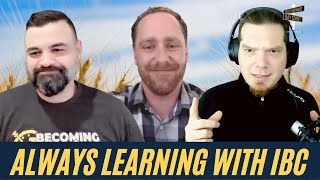
John MacArthur has used the Infinite Banking Concept since 2017 to roll his mortgage into policy loans and finance farm equipment. He works with coach Vernon McCarty to manage whole-life policies as a banking system, citing Nelson Nash's framework and the emotional control it provided during COVID.
Questions this video answers
2016
Since 2017
Around the start of 2020
April 5, 2022
Chapters
It's important to have a coach that you're on the same wavelength with. In the process of rolling my mortgage into my policy, kind of right before it was going to happen, I kind of got cold feet and I was about ready to just pull the plug and back away. Just because this isn't something that we're trained to do. It kind of, it goes against what we know, which is insane because this is a better system for everyone out there. And when, yeah, when I got the cold feet, Vern, he, he pointed me back in the right direction and thankfully he did his job. And I, yeah, it's important to have a coach that you can have that open dialogue with. And I, I think in that same conversation, I told Vern that he has permission to hit me across the head next time. I try to do that too, but you got to stay focused.
Part time farmer, agricultural expert, and infinite banker since 2017. We are joined today by John MacArthur in our client series. And you'll notice that Jason Lowe looks very different today. In fact, he looks like Vernon McCarty. We've completely phased Jason out and we've brought Vern in today for this fabulous episode. We're excited, Vern, to have you here to introduce John. Talk a little bit about how the coaching relationship works out with you guys in the process of becoming your own banker. And John, we're excited to have you here to share your story and your experience with this process in your life and to just share with our listeners about what this whole thing about infinite banking is about and how does it show up for you and your family. So welcome both of you gentlemen. I'm so glad to have you here in this episode. And John, let's, let's, let's kick it off, why don't you, you know, let's take us back a little bit to the point where you first learned about this idea of infinite banking. How did that show up in your life?
So it, it kind of kicks back to 2016. And I'm sorry that my printer's going off in the background now currently, but my brother actually went to one of the boot camps that Jason was speaking at, and I wasn't able to attend it that day. And he came back completely mesmerized and energized about this new concept. And I mean, to be honest, I kind of thought he was a little bit crazy. It sounded too good to be true.
You thought he joined a financial cult of some kind, perhaps.
Exactly, yeah. So, but, but I'm always eager to learn, so I actually Signed up to go listen to the same boot camp a few weeks later. And I came back mesmerized and excited about this new concept. I. To be honest, the first. Probably the first three nights, I didn't sleep. I was up all night thinking and was reading my existing insurance contracts and just. Yeah, starting the process of what would be. Yeah, years of reading and listening and reading and listening and learning more. And the more I learned, the more I realized I didn't know so.
Well. I love the way you said that. In fact, I was on a chat earlier with Vern and some similar commentary came up. So, Vern, why don't you talk a little bit about how your relationship with John began in this process and. And talk a little bit about the. The coaching relationship that you have when it comes to engaging on ibc.
Yeah, thanks, Rich. Appreciate that. Well, John, actually, I was lucky enough to meet John through. He ended up seeing some kind of a link or an ad or something for Ascendant Financial, and him and I got connected and we met and had a conversation, and I actually found out that John, oh, he's already got policies in place. He's already been practicing this concept. Excuse me. And he said to me, he goes, yeah, Vern, I just really attracted to what it is that you guys do at Ascended Financial, and I feel like I. I want to expand my system, and I need some really good guidance about how to do that. And I, you know, I got all these objectives that I want to accomplish. So we sat down, we met, and I actually had the pleasure to connect with John and our good colleague Sarblo Gibble, who's been on the podcast many times. And as we started to learn a bit more about John's situation, we started thinking, john, I don't think you need more policies right now. I think we need to put the policies that you currently have to work. So we got together and started talking about some good ideas, and I'm sure we'll expand on that. And we put a program together for John, and it's been going pretty good. And since then, we've gotten together a few times, and now we've expanded into the Farm. Into the farm as well. Is that right, John?
Correct. Yeah. So, yeah, I think it was officially. I think it was the start of 2020 that you and I connected and. And yeah, so we. We. With. With you and Sarblo and his master spreadsheets, we created a plan, and yeah, we're moving forward. I mean, it's. It's been good. I've I've really enjoyed the process. I, I think probably, yeah, I'm using the policies to, to, to control my own debt, to, to recapture interest. And yeah, I'm in complete control of the situation.
So now talk a little bit about that control now. You know, being surrounded in the farming world, you know, I've, I grew up in a farming community myself. Not being much of a farmer, however, but certainly knowing lots of them and always enjoying what it's like to be out and around the farm. I'm, I'm curious. You know, I think when farmers get together, they talk about lots of things, you know, crops and such, but they also talk about things like control and where they, they don't have it and where they'd like to have it. So I'm curious, how does the feeling of being able to control this environment show up for you and your life? And what kind of an impact, John, do you think that would make for.
The farmers that, you know, I mean, it means the world just. Yeah. Being able to control your finances by yourself, it just really gives you a leg up on the situation. I mean, I, I guess I kind of go back to my own personal system, aside from the farming, as a good example. Me and Vern first connected there at the start of, of 2020, and we all know what evolved later on in 2020. And just the way that, just the way that my job was at the time, things were fairly tight and I actually wasn't able to. In theory, I didn't have enough money to pay my mortgage for two to three. I think it was almost three months. But because me and Vern were able to put that system together, I was able to take care of it myself. So I was able to delay those mortgage payments and then catch them up a few months down the road. And I didn't have to work with the bank to do that. It was, it was all up to me. I didn't make a single phone call. I don't think Vern even knows about that either, but I was in control.
Oh, that's awesome.
So, so, and I'm guessing the feeling like I would imagine, you know, like, you probably talked to your spouse about these kinds of things, and that would have been a moment of, for, for, for anybody who was going through a similar circumstance. And, and for many people who've listened to our podcast, many clients, they've experienced similar situations like you've just shared, John, because of, you know, the old, the old Covid thing happening there, and it seems to be still weaving its way through conversations pretty much every day. But that experience and the empowerment that comes with being able to be in that control position to the, there's an underlying feeling that comes with it. How would you say that that's, you know, showing up for your, in your relationships with, with other people around you and your family?
Yeah, I mean it, it, I guess with my wife in that circumstance, I mean it. Money wasn't an issue at that time. I mean we, like I said, 2020 was crazy and we were worrying about other things and it was just, it was powerful to not have to worry about money at that moment. So yeah, I probably, I mean money is the, the root of most issues everywhere and we, we didn't have to worry about that. So I'm very thankful. The process.
Wow, man, that is powerful. You know what? I, this is so good. I often say to people, I go, you know, I'm pretty sure, like regardless of your beliefs or higher power of your choice, right? Like we're not here to worry about paying our Visa bill or keeping the lights on. Like, that's not why we're here. And there was a gentleman by the name, I'm sure we're familiar with a guy by the name of Jack Canfield. I heard him use this term, he calls it attention units. So every, you know, the light switch I need to fix and the wall I need to paint and whatever, those are unfinished tasks that take up attention units in your mind, right. And you only have so much RAM up here. And so imagine how much energy and time we spend, how many attention units we spend thinking about money and oh, how am I going to retire and how am I going to pay off the mortgage and how am I going to sometimes during COVID how am I going to keep the lights on? What does that actually do for a person? To be free of all that and have that peace of mind and be able to focus on things in life that actually matter more. Like your family and your community and the impact that you want to have. Like what does Nelson say? Richard? A peaceful, stress free way of life. Right?
That's what this is all about. It's, it's about, you know, we're being able to have the control that John's walking us through, have the confidence to know that you can take advantage of things that show up and, and, and, and just be at peace with the knowledge that every day that you put your head on your pillow, the next morning when you wake up, there's more cash value in your policy system than there was the day before. And that is there, there's a tremendous value to that and a lot of things don't provide it. But when you get involved in this process of becoming your own banker, that happens for everybody because they're, they're engaging in that system in their life now. John, I, I love what you're sharing with us here and I, I, I'd love to talk a little bit about you exposure kind of in 2016, really you learned about this through, through your brother. So it was a recommendation from a family member, the excitement and you know, now you also indicated again, it's been years of continued learning and engaging and reading. And so it sounds like you're very actively engaged in the continuity of this education. Can you speak to us and the listeners about why that's important? How has that shown up to add value for you to be constantly engaged in more growth and more.
I guess I, I, I, I, I kind of go back to Nelson Nash and how he says it's, it's caught, it's not taught. As soon as I, as soon as I took the first boot camp and I started reading his book and a light bulb went off in my head and you'd kind of sit and think about that a little bit longer and you'd read the book again and another light bulb will go off from your head. And it's just a, a steady progression of, of amazing little messages in this book in the system that just lead from one thing to another. Still I, once a month I still, the light bulb goes off and I, I figure different ways to implement the system and to take advantage of it. It's, it's an amazing book that he, he read and, or that he wrote. And yeah, I just, it's never ending how you can use this to improve your life.
So now with, with the reading and the rereading of the book. So first of all, thank you for doing that because, you know, sometimes Jason and I, and I'm sure Vern, we kind of sound like a broken record because we're just like, read the book, read the book, read the book. What's that? You haven't read the book, read the book. And you know, I can imagine, you know, for listeners that they probably can get a little old, but we're saying it because it's that important and it's the message that you're sharing, John, the impact of rereading that book that it has on you, which is exactly why we keep bringing it up. And so I'm curious if, you know, if someone were, you know, what would you share with someone who. Maybe they're watching this episode, it's their first exposure to ibc, and you have the chance to kind of be like your brother, to now share with them the reason to go to that. To go to an event or to, you know, watch, you know, watch a webinar that explains how this concept works or to. To help them know that they can get Nelson's book in their hands. How would you advise them go, getting started in this process, to start learning more and really engaging with it to see if it's right for them?
I think so. I would just say that it's. Through the process, I've. I've realized how we've kind of been taught incorrectly to take care of our finances throughout school. I mean, there's really no focus on it through elementary, junior senior high, through college. Unless you take that specialty. It's kind of taboo to talk about your finances. And we're all just kind of trained to put our money in a regular bank and put our money away in RSPs and just don't look back and just follow the herd. But as you. As you go to the boot camps and you. And you read the book, you. You figure out that there's. There is a se. A different way of doing things that actually is advantageous to you and your family. And, yeah, it. It can. Yeah, if you just give it the. The chance to. To get a hold of you. I mean, it's, It's. It can create some generational possibilities. So.
Now, Vern, we talk about generational possibilities in a lot of our discussions that we have as a team. And I would imagine some of those conversations have come up, you know, for you and John, as you guys talk through and you spitball ideas about what's possible. So, you know, maybe in. Just share with everybody a little bit about what it's like being a coach in that environment and being able to have those creative and constructive conversations and what really gets you, you know, engaged and juiced up about being able to meet with your clients like John, to, To. To really pick those things apart and try to figure out how you can optimize aspects of their life with this process more.
And that's a loaded question. But think, Think about. Like, for me, it's exactly what John's here sharing. Like, look at the smile in his face. Like, how could I not get excited? I. Sometimes I literally wake up in the morning and I'm going, like, I actually get paid to do this. Like, as cliche as that sounds, like that's the point is I get to use my brain power. Don't get me wrong, I learn from my clients too. They have ideas, they have things that they want to accomplish. I just get to step in and coach them on how to implement the process. And then I get to hear these stories of how their life is literally getting better and how they're having an impact and how they're able to do other things. And it just gets me more and more excited because to have any impact on that outcome at all, I just, I just get super excited about it because it's no different for me. I have a family, I have kids, I have things that I want to accomplish. I don't come from, you know, a wealthy background. In fact, I don't have anybody in my family who's ever really created that kind of wealth. And so as I learn and grow inside this process for myself, and as I'm able to help my clients create more momentum, I'm going to have an impact, you know, not just on my wife and my kids, but actually extend out into my own family.
Right.
So it's sort of like the policy system itself. The more people I help, the more time I spend doing this, the more I expand my own system, the more it kind of compounds and I get even more jacked up about what it is that we do. And I just want, I want to literally go up on the rooftops and start screaming and throwing books at people. Like, we just gotta, like John said, give it a chance, just get after it because man, it makes a huge difference in your world. So it doesn't take me a lot of, a lot of pep to get up and get ready to do what I do.
So if anybody's listening and you're driving through residential streets of Calgary and you got hit by a black book on your windshield, that's Vern up on his roof throwing those things about now. You know, John, I'm, I'm curious. You, you kind of mentioned generational aspect. And so, you know, what, what are you thinking about when you, you, you put yourself out into the future and you kind of imagine off into the distance as Nelson does, thinking long range. What is, what is this going to look like? Do you think for your family? You know, when, when John is gone, leading up to that point, how are you thinking about that generational impact creating a ripple effect?
I think it's going to be part of it is that I have a five year old son and we've already kind of, we're starting to teach him about money, trying to get him started a little bit earlier than normal. And I'm excited to kind of gradually teach him about this process so that as he grows up he, he can really capture the opportunity that is, it's going to be there waiting for. I, I mean we have an opportunity that through these, these policies that I can create or me and my wife can create some wealth for ourselves in this lifetime, but as we pass on, there's, there's some, some benefits to that for, for my son and, and other members of the family that we can kind of amplify and, and, and grow into other policies, hopefully. And hopefully it's just a ripple effect that spreads from generation to generation.
Now I love that you know the ripple effect and you, you've identified how much study you've done of Nelson's book and that sort of thing. And so I'm curious, before you were able to be exposed to this message, prior to learning anything about ibc, did you have thoughts of that nature? Were you considering, you know, what the generational ripple effect of your life was going to be like prior to learning about ibc?
Probably not, to be honest. You just, you just work your, your butt off and you, you hope they have a nest egg when you retire and you hope that you have an inheritance for your, your loved ones when you leave. But I, I wouldn't say, I wouldn't say I ever thought generations down the road about, about that. But with this, I mean once your mind starts wandering and you realize the possibilities, you can't help but think about that.
Very interesting how, how this concept stretches us, it stretches our imagination. And Nelson says at the very beginning of the book that this is an exercise in imagination, reason, logic and prophecy. And he really focused on imagination in person. He talked about that in a seminar a great deal and that the more that you recognize as possible, the more you know, the more you see, the more you see you didn't see. It really begins to take your brain down the path of seeing things, including opportunities in life. And now you guys talked about starting at the family, now moving into a part of your system is now incorporated more so with the farming aspect that you do. So can you give us a bit of an example as to how you intend to use your system, engaging with your, your farming?
Well, it's going to probably all start with my own personal policies because we're rolling my mortgage into my, into my policies as policy loans to, to get the bank out of the way, hopefully for good. So hopefully within about five years I won't have to walk into a bank except for a new bank card when mine doesn't work just for limited transactions. But yeah, so hopefully I'm, I'm going to be able to control that debt. And as I begin to pay back my, my mortgage technically, but, but that I control within my policies, as I begin to, to have policy loans available that I can take note, then I can start to use that in the farm. So, I mean, with the farm, we have incredible equipment purchases that need to. Need to be made, and it's just kind of never ending. You have to go to the bank each time and you need to prove how you don't need the money to get the money. And now we can just keep that all in house. So I can, I can loan, hopefully loan the farm the money out of the policies and that helps benefit the family. And then by that time, hopefully, the actual farm policies will have been built up enough that we can start to use that money as well and we start the snowball effect and eventually, hopefully, the goal is that the farm will never need a bank at some point either.
I'm starting to see the domino. The first domino is these policies you set up for yourself and, and taking out that mortgage and reclaiming the control of that payment stream that's been walking out the door back the financial energy that used to exit, keeping that energy inside of your house and then being able to repurpose that energy into your farming business. That's what we're talking about when we're talking about this process. And nowhere, John, did you, did you say anything about a rate of return? It was all about controlling that energy so that you can maintain it and use it as many times as possible for as many members of the family as possible as we move throughout time. Powerful, powerful stuff. Now, Vern, I know you get excited about this. You get excited about conversations with your clients. You get excited about conversations with John when he talks about how he's looking at, you know, he's recapturing that mortgage and he's planning on using this in the farming business. I'm curious what kind of things come up for you guys in conversations? What comes up for you as you think about this now and we're discussing it here on the podcast?
Well, I was actually saying to John, just before we started recording, I said, hey, John, it's time for you and I to get together. And now I'm even more excited to just connect and see where everything's at and see what kind of creative ideas I can Bring to the conversation. But. But that's the point, you know, And I kept hearing this word hope, right? And in fact, you said before he got, you know, learned about the process of becoming a world banker, what was it like? And he was like, oh, well, the first thing he said was, I. I hoped I had a net nest egg. Right. And I find that interesting because that's really what a lot of people are out there doing, is they're just hoping. And we talked about this earlier, Richard, when we were recording. We, you know, it's all about what you can do. It's all about what you can control. And we're just focusing on what we can control. And I gotta tell you, I don't wake up every morning hoping. I wake up every morning knowing. I wake up every morning knowing that I have more cash available in my system than I did the day before. And that's exactly what I'm excited to talk to John about, is like, you know, every policy that I start, I think of it as like a little. We were talking about that steam engine, right? It's like a little engine that could. It just. It's just pumping out momentum every single day. And policy number one in Paul in year three, four or five has more momentum than policy number two, three or four, or whatever it is whenever you start that policy. So every time I start a new policy, they get. I'm just creating more momentum and more energy in my system. And one of the things I'm going to do, I think, is maybe if John's open to it, maybe I can record some more content, some conversations with him to share with my other clients, because he is just a shining example of exactly who you need to be to implement this process. He's extremely disciplined. He cares about his family. He's reading Nelson's book, he's using his imagination. He reaches out with questions. He's not trying to do it on his own. Like he's doing all, every, all of the right things. So I have no doubt, I have full faith that he's going to achieve whatever it is that he wants to achieve long term and probably more than what he's even seeing at this point.
Another check mark I'd put in there is that he repays his policy loans. You get a high five for me on that too, John. And it's interesting, you know, just talking about that because, you know, earlier, Vernon and I had a conversation before we had this recording and we talked about capitalization. And yes, it does take time to build things up, but it doesn't mean you can't start using the policy right away. In Nelson's book, he doesn't show examples of doing that right away because it's still a book. It's, you know, there's only so much you can do in print and but you know, I'd imagine John, as you got started with the very first policy, you are able to start putting some capital to work within a reasonably short period of time. Maybe you weren't sure exactly where or how to deploy, but you had the ability to. And so that's where your continued engagement, your continued learning, reaching out to a coach and actually asking good questions and really running ideas. It's, it's a brainstorming opportunity that you have when you get together with your coach. Is that what it feels like to you when you get together with Vernon?
Yeah, it's important to have a coach that you're, you're on the same wavelengths wavelength with, I mean throughout this process. I guess I kind of go back to over remembers this when, when we're rolling, beginning the process of rolling my mortgage into, into my policy. Kind of right before it was going to happen I kind of got cold feet and then I was about ready to just pull the plug and back away just because it, it's, this isn't something that's, that we're trained to do it. It kind of, it goes against what we know which is insane because this is a, a better system for everyone out there. And when, yeah when, when I got the cold feet Vern he, he pointed me back in the right direction and thankfully he did his job and I, yeah, it's important to have a coach that you can have that open dialogue with and I, I think in that same conversation I told Verm that he has permission to hit me at across the head next time. I try to do that too but you gotta stay focused.
So kind of Tommy boy boy style, you know, it doesn't hurt so much here or here but right here with the two by four landed and you know, so I love that and speaking about your coach and you know another thing to kind of touch on and I'd like maybe just to get your take on this John, to share with our listeners is resources because we talked about one of the primary resources, Nelson's book. You've indicated that you know you're reading from that book very frequently and you're discovering new things as you do so what are some of the other resources that you found have been very helpful for you in the learning journey and Being engaged in that continued learning process. What are the things that have been either other books or, you know, resources that you've been finding have been working really, really well.
I've literally went through all the, all the books several times that discussed the topic so front to back, all those books several times. But I. Probably the thing that helps me most is since I travel so much for work, the amount of podcast content out there. So thankfully you guys came up with your, your podcast here, and I've enjoyed that. But there's a lot of knowledge in the podcasts in the United States as well. There's all kinds of content. Sometimes it's, you know, sometimes it's a little bit different than what we're doing, but generally speaking, it's the same. It's the same principles. And I mean, there's hundreds of hours of listening there. And I really enjoy you guys. You guys have done it on your podcast and some of the other podcasts about going through the becoming your own bake book chapter by chapter. I think that's important. That kind of expedites the, the kind of. The light bulbs that were going off in my head. If you hear someone else's take on that right after you've read that chapter, kind of expand some possibilities.
So sometimes it could even be validating because maybe there's a thought that you had, you know, like a fleeting one. I'm sure we've all had fleeting thoughts, but then someone else has a similar thought and you kind of. You reach out and you snap it back again and you have a chance to really, you know, take that thought to another degree. And so I, I really appreciate you sharing that because. Exactly. Those reviews of the book have been very helpful. And, you know, right now we. We're launching a YouTube live series on our Bankers Vault channel with Nelson Nash going through a live seminar. And there's some really good stuff there because hearing it from Nelson's mouth is. Is really powerful. And of course, the documentary film, for anyone who hasn't already watched that, make sure to check out Nelson Nash film dot com. It's a nice, easy way to go find the. The film. It's one hour. You can spend that hour with, with Nelson and learn about what made that man tick and how this idea and this concept really came into being. So just so grateful, John, to have you here and Vern sharing this message with me. And for anyone who's interested in learning more about this, we have a simple way you can do that. You can go to seven steps ca. That's Seven Steps Cat, there's a great little report there that gives you a quick guide on the recommended path for learning to really get yourself up and running with this process and to really see if it's the right fit for you. Now, John, I'm curious, you know, circling back to getting started in the process. It's been a number of years. You started in 2017, you know, so we're getting a few years under your belt and of course that system is expanding and now you're really laser focused, it sounds like, on attacking this, this mortgage from the third party bank. Now a few years down the road that that debt instrument that used to be under someone else's control is going to land under the MacArthur Family Bank's control. What is that day going to feel like?
It's going to, yeah, it's going to feel good. I'm excited for it. I mean, when that day comes, that's, that's also a day that I have to really figure out what I'm going to. I mean, that's just one step of the process. I need to, I need to take, I need to pay off those debts that I own myself as I accumulate cash in my policy. I need to find ways to passively find a home for that, whether, you know, loading to the farm or what have you. But yeah, I mean, I'm rambling on here. It's going to feel great, but it's just the start. I mean, this is a lifelong process, so.
Lifelong process. You know, Vern, you and I again in our chat earlier today, you indicated that this is a lifestyle. And that's something I suspect that you bring into conversations with your clients. Expand a little bit more for our listeners on what IBC as a lifestyle means to you.
Yeah, thanks, Rich. First, I want to just mention that conversation that I had with John. That was awesome. John, we sat down and he said, he emailed me and he said, vern, I think it was an email. I said, look, I get that this is the right thing to do and can we just sit down and have like a pros and cons conversation? And that's what it was like, right? John, we just went through. And I said, okay, you tell me. And John's actually, he's an incredibly self aware person. Because I said, John, we went through the pros and cons. I said, now what would actually have you not take action and do this? Because he already had policies and everything set up, it was already good to go. He just had to pull the trigger on renegotiating. Some things with his mortgage and whatnot. And he said to me, I don't know if you remember this John, he said, well, honestly, he goes, I'm just so used to doing things that, the way that I've already been doing them and it's just uncomfortable to do something new, something different, even though I know that this is the thing that I should do. I said, awesome, well, guess what, you get to just sit with that and decide whether or not you want to take action on it or not. You know, so. And then fortunately he did, he did pull the trigger. So that's good. And you know, maybe I drew a blank earlier when you said, hey Vernon, like what are some things that you like helping your clients with? And this is part of the reason why I want to get together with John. I really get excited about showing people how to use their system early because John's so darn responsible. He's like, oh yeah, I'm going to build up that farm policy for a little while. Then eventually I can start using it. Like, hey John, we can start using it right now. Let's just identify some low hanging fruit that we can achieve some objectives. And anyway, I mean, hammering on so much that I forgot what you asked me, but it was about lifestyle. Yeah, it's exactly what you're, what you're talking about, what John's saying. Like, you know, I always try to make people see, or get them to see that this process really isn't much different than what you're already doing today. It's just a little bit of different thinking.
Right.
All I'm going to do is I'm going to, you know, for example, if I'm using my policy system to recapture debt. Well, most people who are trying to pay off debt, they're paying their minimum premium, or excuse me, their minimum, you know, line of credit payment and then they're putting extra on the line of credit. It's like, okay, well we've capitalized the policy, let's pay the minimum on the line of credit. Now let's go access some policy values via policy loan. Chunk that under the line of credit. That's going to bring the line of credit down. That's going to bring your minimum payment down. Now anything extra that you would have first gave to whatever bank, let's just redirect that right back to your policy and recycle cash through that policy just like you're already doing at someone else's bank. You're just giving up all the energy on that money. You're not gaining any momentum. So I just, I try to boil it down real simple to obviously, yeah, we got to change things around a little bit, but just make it a lifestyle. Just continue to do what you're already doing, Use that exact same programming that you've already got. Just put Richard's name or Vern's name or John's name on the budget. Nobody ever puts their own name. They talk about pay yourself first, but nobody actually really does it right. It's all about paying the light bill and the mortgage and all these other things first. Everybody else is always getting the money. So I just encourage people to make themselves a priority like they do everybody else or every other bill collector.
I guess I'd just like to add to that too. I mean, once I have these policy loans, why should I have my own savings sitting in the bank? Checking account, savings account, a vacation account, why should that, why should that be building up in someone else's bank? And they get to use the velocity of my money to profit from it. So why don't I store that in my policies, apply that against then that same amount of money that I'm directing towards those loans. More of it's going towards principal and I paid it down faster and I haven't changed a single thing except for storing my money in my own bank.
Rich, I can't take any credit. Like this guy makes the job way too easy, man. That's awesome, John.
And meanwhile, while that whole thing is happening and you're taking that control over your family is protected. There's this layer of this peaceful knowledge that, you know, hey, heaven forbid something happens. There's this big fat chunk of tax free death benefit that, you know, CRA isn't going to get any of and it's going to go to my family. And that's going to solve a lot of problems that could be left behind, which, you know, we all know that we're going to leave, we're going to leave behind. We're going to be gone at some point in time. Everybody's aware of it. They make you get insurance on your car to go out and drive on the roads to protect somebody else in the case. You cause an accident, but nobody makes you get insurance because you know we're going to leave a big mess behind the day that we go. You know, one of our mentors, the late Bob Shields, he was based out of Ontario, he passed away a few years ago. And Bob Vern's pointing at the book in the back there, you don't have to die To Win is the name of the book. And Bob says everyone should have to die for a week just to see the amount of problems and the mess that they leave behind. And so with the same financial energy that used to go to someone else's pile of money, you're redirecting that pile and you're also creating a huge growing amount of protection, tax free for your family, which is going to help create that generational ripple effect. Now, just for the listeners, think about this. You can save and you can go and borrow money over here at a traditional bank, whatever that bank is you're working with now, you can go get your bank account, you can go put money in there and then you can go borrow money from them, assuming that they give it to you and you're a good credit risk. Or you could save and you could borrow money over here from an entity that you have ownership and full control over and you can control the repayment turns. This entity is called a mutual insurance company. They operate in very similar ways and, but you get to have more benefits when you do business. It was free contract. Free contract meaning you voluntarily choose to enter into a whole life insurance contract with this company. They administer the contract. They don't own it. You own it. In this case, John owns it and John's family and John's farm owns that and they control that financial value that is being administered by the life company. And you know, if Richard's got a policy and his family has policies with that company and Vern, and Vern's family does and John and John's family does and we, we all are mutually contracting with that company in free contract. No one's putting a gun to our head, forcing us to do it. And you know, those guys share the profits with us every year. Isn't that fantastic? That sounds like a great way to do business and to run your life. John, I'm so excited you were able to be with us here today. And you know, I, I do have a question for you, but before I get to that question, I would like to know, is there any final thoughts you'd love to leave behind for our listeners about this process, what it means to you and what you're excited about?
For your final thoughts, Take the plunge, Go listen to the boot camp. Your mind's going to start exploding and first thing you're going to do is you're going to go to Google and you're going to search. If IBC is a scam, I'd recommend just talking to Richard and Vern and Ask them all the exact same questions because there's a lot of noise out there that will distract you. So it's important to talk to a coach. Vern didn't make a dime off of me for far too long there. He's. He. He did it just out of the goodness of his heart. And now we're working together, and, yeah, ask the question to the people that know is the main thing.
Awesome. And, Vern, for yourself, anything you'd like to leave behind for our listeners today?
Oh, I think John summed everything up pretty good. John, I appreciate you very much, and I'm just excited to see what we create together in the future. And. And that's just it. You said it as well, Richard. This is all about free contract. It's about what we could do together. And to your point, you know, we're all already sending all of our money to someone else's bank, and they're capturing all that energy. It's repetition. We keep saying it, but we can do the exact same things at the Mutual Insurance Company. We can put money there. We can. We can circulate all that energy that. That business. They can put that money to work, and then they actually share it with us. So do exactly what John said to do. Take some time, take some energy. Read the book, go into the Wealth Without Bay Street Podcast, the Bankers Vault, and just binge content and get in touch. We're happy to help.
Maybe that should be the. The. The title of this is do what John says when we end the episode. So. So one final thing for you, John. I mean, you know that farmers are often unsung heroes of our world because they feed the nation, they feed the world. Very little would happen if we didn't have farmers. So for my. For my, my money, I consider them to be heroes. Now, you may not wear a cape when you're out in your John Deere tractor and you're out and about doing things on the farm. You are showing up as a hero with what you do in that environment. And today for us, sharing your story about IBC and what's true for you, I certainly think you're showing up that way. But our real question really is, John, who most would you like to be a hero to?
I thought about this fairly long and hard, and I would say it's my great grandkids. I probably won't meet them, but I want them to. To have something very special that I've taught, taught my wife and my son and, and his kids, and I want that to be passed down. And I, I want them to say, who the heck was this John guy? What a, what an amazing guy and what amazing opportunities he's giving to us. So.
Love it. The, the, the patriarch leaving behind a legacy of knowledge. Well said, John. Thank you for that. Thank you for joining us today. For those of you watching on YouTube, make sure to check out one of the videos that's shown up on the screen. Check out a playlist. You may want to look at the client series that we're in here right now because we have lots of great conversations with folks just like John. And thank you, gentlemen, for joining us today. Have an incredible rest of your day. Amazing start to 2022, and have a blessed financial life. Thank you so much.
Thank you. Thanks, John.
More from Richard





How Do You Use a Policy Loan to Buy Dividend Stocks? #dividendstocks #infinitebanking #shorts


Can Compounding Dividends Pay Your Bills? #wealthbuilding #investment #financeeducation


Should a Corporate Policy Offset Your Personal Coverage? #shorts #insurancetips

What Is Human Life Value? #shorts #insurancetips #dividend #wholelifeinsurance