Are You Prioritizing Your Mental Health as an Entrepreneur | Mark Fujiwara
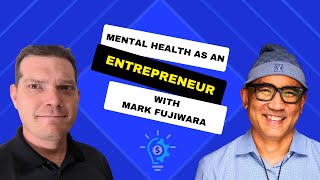
A recorded interview (YouTube) in which Mark Fujiwara discusses his long-running struggles with mental illness, suicide in his family, panic attacks, addiction and recovery; explains why entrepreneurs face distinct mental-health risks (loneliness, extreme highs/lows, loss of purpose after exits); and describes practical interventions he uses and promotes — vulnerability, ‘emotional bank accounts,’ 24/7 emergency contact lists, community models (Epic Fit, Ikigai Court) and plans to scale support with vetted communities and AI-enabled matching. The piece combines personal testimony, concrete recovery steps, and a vision for community-driven solutions.
Chapters
You talk about emotional bank accounts, right? And there's no better way to fill the other person's bank account, emotional bank account than you telling them something that is deep inside your heart, an emotion that they will probably react like, oh my gosh, now they have, now we have a space that we can all share.
Our guest today is an international speaker, Race, recently speaking on the Private Wealth Reset at Oxford Union in England. He is the executive producer and a featured speaker in the award winning documentary Big Stages. A strategic investor in over a dozen high character, high alignment companies and co founder of the Epic Fit Network. Together with his wife Amy, they co head a Reading World which is a nonprofit focused on building libraries and supplying books for schools in Uganda. He is also a dedicated supporter of the American foundation for Suicide Prevention, national alliance on Mental Health and his most recent charity is called the Ikigai Court which supports the mental well being of entrepreneurs by providing a safe space to speak openly about their mental health. Welcome to the show. Mark Fujiwara. I'm so excited to have you on the program today.
Same here, Richard. Very honored, very honored to be here.
Now I've had the pleasure to know you here over the last year, of course, being a member of the Epic FIC Network which is an incredible organization, really a phenomenal gathering of entrepreneurial minds, visionaries finding ways to collaborate with one another and also finding ways to support one another in their, in their journey, their entrepreneurial vision and journey of the world. And we all need the support and the nourishment of supportive people and individuals in our life. And you've really taken the charge of finding ways to delve into that especially for entrepreneurs. And I've learned some incredible things from you in the time that we've known each other. What I'd love to do, Mark, is maybe take us back to an experience that you've had where some of this, this need and this desire for you to help others to help people in the entrepreneurial and the recognition of the help that they need to make the entrepreneurial journey functional. What's transpired in your life that's led.
You down that path I can go back to just as far as I can remember. I've always struggled with mental health and I'll say it, mental illness really. I had a very close cousin of mine 33 years ago. I was 21, he was 15 at the time and he was like a little brother to me. He took his own life and I remember everybody in our family asking the questions, why would you want to do that? And I was the one sitting in the back corner saying, well, I know because I've had those feelings before. And then just kind of fast forwarding. It's just mental health has always been a secret. First 47 years or so, and then just being in an entrepreneurial world, it's interesting. Just, just, you know, in the last few years we've been more open about talking with that. But I was suffering in peace or suffering by myself. It was lonely, it was panic attacks, anxiety, depression, suicide, ideation. And all of a sudden when I started opening up to other people and feeling safe about that in some rooms, it was amazing how, how others would, would share. In fact, one of my best friends actually who exited a company for like, well over, well over, well over nine figures. That's exactly how we met. We met not talking about what we do, but about our mental health struggles. And within 10 minutes, we both shared just the deepest and darkest secrets and feelings and emotions that only, I believe our wives knew.
It's incredible the, just the ability to have a conversation like that with someone that you kind of just met. But how the, the similarities, maybe the experiences that you've gone through, perhaps, maybe magnetically drew you together so that that conversation could be had. And so being able to have that discussion seemed like almost a bit of a pivot point for you to a degree. Is that a fair assumption?
That's absolutely correct. And it's interesting because I don't. Me and him would go on these hikes or runs and stuff, and Wendy kind of looked at me, he goes, what do you really do actually? Right? What do you actually do for a living? I actually think that's the most beautiful way to know somebody. I want to know about their character. I want to know about who they are, what they struggle with, what brings them joy. And you're absolutely right because I got to really experience what goes on in a mind of someone that sold their company. And for, you know, just being in the business of helping people sell companies, all of a sudden it really hit home, which was here we are in this industry. Call it what you want, private wealth, investment banking. And the focus is on to get the highest price right and to exit with the least amount of taxes. And then you allocate the money so that you can have enough income for 1, 2, 3, 4, 5 generations or whatever. And no one really addresses. The elephant in the room is like almost every single one of these people suffer. And why is that right? You have all this money in the bank and you're lacking purpose because now you have those 12 hours a day, you were working, you're sitting at home, right? And most of these people don't plan because they think money is going to bring them happiness. And that's a bigger problem when you think money is going to bring you happiness. Or I can golf all day or I can surf all day or train for triathlons all day. All of a sudden it becomes reality that this isn't fun, this isn't what's lighting me up. So I feel like recently with those types of clients, that's what we're addressing before we even talk about what price you want to sell your company for. Because I'll tell you one thing on my phone here, because I have 16 people on my speed dial, you know this, it's a 24, seven person who can call me anytime. And we have a pack. Before you think about hurting yourself, you gotta call me. This rings during the night and I would pick up or you, you text 911 during the day and I will pick up. And I have eight exited entrepreneurs on this phone, okay? Two in the last six months have called me because they were thinking and they knew how they were going to do that. That's the scary part. They were thinking of taking their own life. And so that's kind of what I started to see very quickly as I became aware of that.
Now, your own scenario and the own, you know, the, the things that you've grappled with over your own life and where would you say that you, you've seen that develop or, or what, what are the connections? What are the, what are the, what, what are the, what are the interconnecting web of scenarios around entrepreneurial life that you think maybe stems some of this? I mean, mental health exists. We all have some form or battle of, you know, we're always trying to make our way through life. Life throws us curveballs, it gets in the way. We're, we're constantly trying to figure our way through challenges and problems. But what is it about the entrepreneur specifically and your experience in dealing with people, helping them groom companies to sell, selling companies and so on. And just your experience and being. You're involved in a lot of coaching groups, networks, you're a very well connected individual. What is it about entrepreneurs and the struggles that they have that you think there's, there's a lack of awareness on mental health issues and, and you know, maybe there's just not enough resources for them. What is it that you think that perhaps they're suffering in silence to some degree more than some other people might be.
That's a, that's a phenomenal question, Richard. The, the thing is that I think everyone struggles from some sort of mental health issue, right? If you're really honest with yourself, whether you're entrepreneur, whether you're retired or whether a corporate person, it doesn't matter. You, you struggle in some way, shape or form on that. If you're real with yourself. And then you take the entrepreneur. Now what really in my experience and a lot of others experience, entrepreneur or not, when you have something that kind of throws it off. And what can throw it off? Trauma, uncertainty, loneliness. Really throws it off, actually. So you take all of that, you take the life of the entrepreneur as opposed to someone works a 9 to 5 job. And I discovered this early on is just like you go from these highs to the lows, right? Everything is on you. There's a lot of pressure. There's a lot of pressure that we, Richard Wheaton, we love. There's that. But there's also pressure that we don't really love. And then too much because we gotta do it ourselves. Accumulates over time and they come in different forms. Maybe we have an outburst, like an anger outburst or anxiety or you know, maybe we start to spiral into depression. But I feel like the other thing I talk about is loneliness, loneliness as an entrepreneur. Because think about like, I don't know this, this is what I get when I go to functions where most of the people are not entrepreneurs. And it's like I can talk about surface level things, but once I start talking about deeper things, they don't really get it. They don't really get the mind. They don't really get the fact that we can't shut off from our business is 24 7. And there are times when we're by ourselves. There are times when we have to do the work and everybody else is sleeping. I'll even say like my own, my own friends and family don't really get me. And then they see that I'm an entrepreneur and I do well, right? That's, that's the, that's the image that they see. So it's very difficult for an entrepreneur to talk to a regular person, a non entrepreneur, and say, hey, I'm struggling. I'm. I'm depressed. I'm so anxious about what's on the other side of this. Oh gosh, I'm get. I get so angry when things don't work out. They don't get that because of the fact that it's a certain of Course, you have to live it. But I feel with all those components, I mean, it happens on a regular basis. Right. We could be going. You get this. We can go. Going straight up. This happened in yesterday is going right in the right direction. And then something throws it off, Right. Oh, this is uncertain. And all of a sudden my mental health struggles, which is like this small, become this big, and it starts to grow and grow, especially if we don't have someone right next to us that completely gets us.
Yeah, the importance of having that. That line of communication where you can speak in the same language to some degree. And I'm excited to delve more into this because I think we're uncovering something that needs to be discussed and that people need to be more Aw. And I want to get into this deeper when we come back after these messages. Have you ever wanted to be a part of a network of visionary entrepreneurs? People who get you, who understand you, who think differently? They're actively going out and making things happen. They're making the world a better place. They're creating incredible change, incredible innovation. And they're having discussions about how to make the world a better place, how to create a bigger, brighter, better future, how to take what they already know, combine it with what someone else knows, and make something grand. Well, you're in luck. There is such an incredible network. It's the Epic Fit Network. You can go to theepicfit.com to learn more, apply to be a member of this incredible organization. I'm a member and I love it. It's been fantastic. And I can't wait until we have more amazing people just like you joining this incredible group. We're back here with Mark, and he's sharing the incredible impact of the mental health aspects that exist in the entrepreneurial community, sharing from his own personal experiences. Mark, I'm curious a little bit about how would you find, you know, the circumstances really appearing for you in real time, in the real world? Obviously, there's things that have been there from the past, from, you know, different experiences. They. They kind of like blossom. They develop more in certain, you know, stressful environments. When you're an entrepreneur, stressful environments happen all the time. And so what did you. What did you see happen? How would these materialize for you in such a way where you would start to recognize them? And what would you want to maybe have our viewers understand about how to. How to recognize and see it happening in other people?
Until just recently, I've always had a fear of public speaking, and pretty much most of the Time I talk in front of a group of more than five, I have a panic attack. That doesn't really bode well for my ikigai because I love to teach and help other people through my speaking. So that was very difficult. And in the businesses that I'm in, you have to be front and center. And so it was. It was rough. I would tell you if it was. You know, I kind of put things in perspective. I was going to talk to a group of high school students, and it wasn't a large group. I think it was about 15 or 20 of them. And I was talking about how, you know, why you want to find your guy and what I do for a living. And I just remember having the worst panic attack before I got not even on stage, into the classroom. Into the classroom, right. So this became very evident. Now, I will say, though, that once I started to feel like it was accepted, then all of a sudden that started to go away and I kind of shifted it in a way and accepted. I mean, because I've. I've kept all these mental health struggles a secret for so long. It wasn't until about, let's see, I was 47 at the time when it was this massive spiral. And I just, you know, it was one. On one of my talks, I went outside my comfort zone every single day for 100 days. And then all of a sudden, I told one of my cousins, you know, about everything, about the panic attacks, the. The suicide ideation, depression, adhd, everything. Everything that I was. That was going on. And all of a sudden it was just like, you know, she told me that she had those same struggles. And it was like, oh, my gosh, that was the best kind of therapy. No pill on the planet could take place of that. And so I slowly, I'm not going to say quickly, but slowly started to see these opportunities where I can share with other people. Because what was happening is because I'm very empathetic. I love to help. And it's like, wow, if I open up like this, that other person would open up and they will get that same feeling as I, they. Because I got to tell you something, being in this private wealth business for so long, I have to ask the question, what your charitable cause? And they'll say something like, oh, it's this. Because I have a story behind it. And I would just. So all those charities that you just listed off, I've donated thousands of thousands of dollars. But not until. Not until I was 47 did I ever tell somebody that I supported mental health Charities because I didn't want to get found out. I didn't want that client to find out that, whoa, he's weak, he might jump off a bridge. So I don't want to keep my money here. And, you know, that was just in my head. I remember the day. It was like the day after I told my cousin, I told the client what my cause was and why that completely shifted the way I managed your portfolio. Because that client opened up about one of his struggles. So that struggle, by the way, he thought he could achieve it by making more money or by selling his business at a higher price. And I said, no, there's a rare, easier solution, and we could sell that company right now. Why do we kind of keep this inside? Why do we keep it inside? Because we're afraid someone will judge us. That's it right there. And I got to tell you, every single person who I ever said something about my mental health struggles has never, ever walked the other way. Has never, ever walked the other way. In fact, almost all the time. It elevates the relationship. It makes them feel safe as well.
You're creating an environment where you yourself get an opportunity to. To. To share what's. What's important, what matters. You're speaking from truth, and you're giving people permission almost for them to be able to do the same thing. And it takes a lot of courage. And you mentioned character earlier. In fact, I had another recent interview with a wonderful gentleman who speaks all over the world about the topic of character. His name is Lawrence Reed. He was the president emeritus of the foundation for Economic Education. And when you talk about courage, and I think anyone listening will recognize that it takes a lot of courage to step into a conversation, certainly a room, and to share, you know, some very deep personal aspects about what's going on, a struggle. It's hard to talk about struggles in general, let alone struggles around our mental health. And so I really resonate with the power of that. And you. You mentioned something as well. And so for our listeners, I'd love for you to share. What exactly is ikigai? And why is that important to you? It's a Japanese term that I've learned from you, and I think it's important that we share that with who's watching today so they can understand why that term matters.
Thank you, Richard. Yes. Ikigai is actually right. This is. This is it right here. It's tattooed on my arm. This is what this is. This is how I was raised. And ikigai, you know, on the surface, ikigai means high level purpose. But really what does high level person, what does really ikigai mean? To simplify this, it means doing something that checks off four boxes. This is the hedgehog principle, if you will. So for one, you're doing something that you love. Two, you're doing something that you're pretty darn good at. Right. Number three, you're doing something that makes the world a better place. And number four, it's providing your family with some sort of capital, usually financial or emotional. Now you may say something like this, well, you playing with Stella, she's my five year old, is not ikigai. Well, yes it is. Right. Think about all those boxes that are checked. We're getting emotional. And by the way, emotional capital creates financial capital, in my opinion, in money.
Well, and you know, one thing I've always talked about is emotional bank accounts. And so you, when you're, when you're stepping into conversations, you're having very in depth and I think the bulk of the world would suggest uncomfortable conversations with people. And you're allowing a format for those conversations to exist around mental health and the challenges that we face in, in that regard, you're creating a deposit in an emotional bank account. And the more and more that you make deposits like in any other bank account, the bigger the balance becomes. And then when it's time to make a withdrawal, it's a lot easier to make a withdrawal if there's something in there. If you haven't put anything in the account, there's nothing to draw from. Right. So in a way the, the, your, you know, you mentioned your empathy, your desire to want to help other people, but you're, you're also creating an environment through the action of doing that allows for help to be reciprocated the other direction when the time calls for it. And because of your own internal struggles, you've kind of identified, you know, that there will be a potential time in the future where you might need to draw upon that, that bank account balance with some of those people on your 911 dial list.
That's correct. That's absolutely correct. Yeah. Yeah.
So when you think about going through that experience now, and you mentioned, you know, at 47, a lot of this started to occur for you. And just to give people context, I mean, at the age of 47, a lot of life experience has taken place. And you know, you've been in business a long time, you've helped a lot of businesses, you've grown a family, you're married with children, there's so much taking place. How is it that we should think about people that we know that are in our circles and recognize that they could be at any stage in life and they could be going through something we don't even know is happening in the background. It's kind of like everyone that we see, if we take a scan around, they're all just ducks on a calm pond, but underneath the surface, those feet are just given her.
Yeah, that's a great question, Richard. I think that for one, if for being a depressed person or someone that has suffered from depression all my life, we're the people in the room. You never ever consider to be sad or have any kind of mental. I did a little talk for my oldest daughter and her friends one time and the premise around it was that I went around the room and said, hey, give me three words that describe me. And it was. I got things like happy, joyful, positive, uplifting. You kind of get the picture of that. No one said depressed. No one said anxious. But it surprised the heck out of them when I told them that I suffered from depression. Just like half the room, actually, as I was talking to. And I feel like. So the things not to do is just say, hey, are you depressed? Right. Don't just go up to your friends and start asking if they're depressed. The best way to do that. And which is why I find just being open book if I feel safe in a room like I did the other night. Two nights ago, I am filling in for a dad's group, a very high level dad's group. And I asked that question, actually, what is courage and what makes you courageous? Or when were you courageous? And it was, we kept going back to. Courage is vulnerability. Courage is doing the uncomfortable and showing up as your highest, truest self when you're, when you don't want to be your highest and truest self. And so what do I mean by that, though? So when someone asks me a question, I'll tell them the. I'll tell them the honest answer. If someone asked me for a challenge that's going in my life, I'm not going to be like, oh yeah, Nvidia stock went down today. I will go a lot deeper. And I was like, let me tell you about a panic attack I had about two weeks ago. And that kind of scared me. And what. That's the best way to have other people by being honest in your true self and actually being vulnerable about your feelings. There's nothing. No, there is. This is just a beautiful way. You know, we talk about you talk about emotional bank accounts, right? And there's no better way to fill the other person's bank account, emotional bank account than you telling them something that is deep inside your heart, an emotion that they will probably react like, oh, my gosh, now they have. Now we have a space that we can all share in.
Amazing. And with that in mind, we're going to circle the wagons and we're going to start getting into the concept, the idea of recovery and how important that's been for you on your journey and the people that you love to serve right after these messages. In the year 2009, my life completely and totally changed. Something momentous and incredible happened to me. That thing was this incredible book, Becoming youg Own Banker. It was written by my mentor, an amazing friend of mine, R. Nelson Nash. It completely revolutionized and changed my entire life. You can learn all about it by registering for a free on Demand webinar@learnibc.com Take the initiative. You won't regret it. We are back with Mark here and we're delving now into the circumstance around how do we overcome these mental health challenges? Talking about it, getting the doorway open, beginning to recognize that a conversation should happen is a good start. And you mentioned during one of our breaks when we were chatting about recovery and the role that's played for you and how can people seek and get recovery. You're involved in a lot of charities. Talk to us a little bit about that so that we can give people watching some tactile tools and advice on how to recover, move forward, find themselves the kind of help that they may want or need, or they can help a friend or a family member, an entrepreneur that they know be able to access the right kind of resources.
Forty days ago, I finally admitted I have an addiction problem. Now, to answer the part about how do you know when someone's going through an addiction phase or even the stages before that? Because there's signs. For me, it was a lot of stress this year. Started out with my mom falling down, her Alzheimer's just spiraling, she going to hospice. You know, I had had a close friend that is that I was actually two that I was supporting in terms of their mental health. I mean, it was getting, you know, we were at a point where they needed a lot of hand holding. Epic fit was going through a nice stage, my private wealth business. There's all kinds of great types of stresses that were going on as well. Writing a book, a movie coming out, you name it. And I was also doing a lot of Traveling. And so the first part was just a lot on my plate. The second part is I became. I was starting to check out from my family. And I mean, that's part of the addiction problem. And I was starting to go and say I got to travel, right? Feed the addiction, can feed that addiction. And. And I felt like I could take this overwhelm. And I started to break down a little bit, but didn't admit that I was breaking down. And my amazing wife started to see some things that were happening, but I was closed off on her. It's like, no. Because I was afraid she'd come in and say, whoa, stop what you're doing, right? No good things are happening. You don't understand. So I was keeping everything. And 40 days ago, she discovered I had a problem and an addiction. And that's when I got serious. And it's like I'm a high quickstarter. It's like, well, I had already mapped out what I needed to do, right? A meeting a day for 90 days. 90 and 90. 12 step meetings. Get a sponsor. When the higher power tells me I get a sponsor. Talk to the sponsor every day. And so I've been into at least one meeting a day. Sometimes I go to two. The first day, I went to four. And so the big part of that, which was I was denying. I was denying I had any kind of problem, because I could. I could do this. I could do this in front of Epic fit. I could do this in front of my team. I could do this in front of my family. But the person that knew me the most said, nah, nah, things are going. Things are going haywire. And if you're not going to tell me, I'm going to try to figure it out. And thank God she did. Thank God she did. Because as all addictions, it just doesn't stay right here, Right? We're going to have more stress, or even without the stress, you're going to. You're going to spiral, right? And it was almost like, okay, I'm glad you discovered that. Because out of this. Richard, Holy moly. I was just talking to one of my good friends. The last 40 days has been so much more clarity in terms of saying no, in terms of being with the people like you, surrounding myself with those people that are the high conscious, high character, high courage individuals. And to say no to those people that I don't need to be a part of that or the things that I don't need to be a part of because my time, my energy is sacred, is even more Sacred right now.
That makes a lot of sense. And I think that from the entrepreneurial side, again, thinking about the challenges that we face, and I don't know any group of individuals that suffer from workaholism more than people in the entrepreneurial community. It's something that I know I've been very guilty of and it certainly does rear its head now and again. Something that's helped me a lot in that regard has been access to great communities. Yes, coaching. And so you know, I want to shout out to Dan Sullivan and the Strategic Coach organization and really it's through that organization and the ripple effect of entrepreneurs that attend those sessions and the community that surrounds it, it's led me to meet and be introduced to other high caliber people like yourself in an aggregate format. And so there's this capacity to surround yourself with the right kind of people that are the right kind of people for you. What that means is there's similar lines of thinking, there's similar language that you could communicate on and things like as an example, the Colbier index and some of the, you know, personality type assessments that are adjacent to that that are more on the effective kind of world that allow us to have a bit more of a deeper understanding about not just ourselves, but the people that we communicate with. And I found that to be very helpful in, in learning and recognizing that hey, maybe I don't need to take everything on learning tools, strategies and skills, developing skills that can help offload some of the things I would normally say yes to. Instead of saying yes, I'm saying hey, I'd love to do that, but I'm not willing to commit. Tell you what, I'm happy to help if you absolutely need me, but I'm not willing to commit to being there for every meeting and for every day. And so being able to kind of disengage from some of those over committed pieces I know for myself has been very beneficial because I'm a natural over committer and I, I recognize someone who's similar to me in that regard. Mark would probably be yourself. And so being able to just the power of saying no. And as an entrepreneur, especially in like a sales environment, you're taught and you're trained all the, all the, the sales and training education teaches you how to get someone to say yes. And, and it's so interesting because I actually do the exact opposite. I try to get people to say no, say no as soon as possible so that we don't have to spend any more time, your time or my time and we can get that time back. If you say no right away, I can go sit with my family. I can go to the river and hang out and go dunk in the beautiful waters of the river. That's two minutes away from my house. You know, that, that environment and I really want to recognize where the time is important. So, you know, your wife stepping in and seeing that, being able to kind of jump ahead, you know, you know, you're, you're steamrolling ahead like a bus, and she was able to get in front of the bus and stop you on the road to be able to have that pause that was necessary to think through what was going on. There's lots of areas where recovery can exist. There's hotlines, all kinds of things. You do something again, you kind of have like a, like a, a personal 911 list. You put yourself in a position where you're there to support individuals who need it, that, that you're, you're a trusted individual that they can reach out to and you even talk about. And I've been in some rooms and some environments where you've talked through the idea of being able to be that, go to person for an individual that needs help and helping them understand when and how they can get a hold of you when that's necessary. Maybe talk through what that concept looks like for you and why that is important to the entrepreneurs that you do help.
This is something I got from. He's my doctor, Dr. Dan Carlin. He's the founder of World Clinic, biggest telemedicine group. He's just off the charts amazing when it comes to all of these things, specifically mental health. And I approached him, this is a while back, and I just said, hey, hey, Dr. Carlin, I have a entrepreneur friend here. I'm worried about him. Can you help him out? And so as I was talking to him, I realized that this friend of mine, I was the only one that he was talking to about any of the struggles. And so this is from Dr. Carlin. He said, this is what I do every single time that someone near and dear to my heart is suffering like that. I tell them the next time you are thinking about hurting yourself or harming yourself, before you do it, you gotta call me. And I will stick their phone number so they can see on the 24 7. And I said, when my watch, the phone goes off, if you call me, anybody on that list during the day, you call me twice or you 911 text message me and I'm right there for you. So you could do whatever you want after that call, but you have to call me before that. And every. See, I, you know, I told you, I have 16 people on that list. Every single person that I've told that to has had a very similar response. Most of the time, they cry tears of joy, gratitude. I've had a few even say, I think just by you doing that saved my life. Because, you know, think about it. Think about the, like for my. Myself suffering for 47 years. And then someone comes to me and says, you can call me 247 if you're about to harm yourself. And all of a sudden, right there, you're not alone in this process. You're not alone in this process. It doesn't matter. Your family doesn't know, but you have somebody right there 24 7. And most people don't call it. And like I said, though, a couple have in the last six months, and it's usually, you know, of course not, of course, but they, they, they ended up not doing it. But it's just that action that you take right off the bat because I have people are on my 247 who I can call anytime. And that's like just, just looking at my phone and saying, oh, like, I can choose. All you need is one, though. I got. I can call. I can't call this person. You know, just knowing that and that actually sometimes, sometimes prevents. That stops that downward spiral when you're about to pick up the phone. So, yeah, that's, that's the premise around that, for sure.
Amazing. What an incredible way to stand up and be courageous for others and give them an opportunity to have that, that need, that feeling, that peace of mind that there's someone they can reach out to. With that in mind, we're going to talk more about some innovation that you have about how to get these ideas out into the marketplace more so that more people can be served and helped. The power of communities. Right after these messages. What is this incredible thing called the Colby A Index I keep hearing about? I'm a certified Colby consultant. Consultant. And I can't wait for you to discover what your natural instincts are. It works incredible for teams, for business owners in families with our kids. The more you can develop and understand your knowledge of how you go and get things done in the world and how that happens with the people around you, everything can get so much better. Take the initiative. Learn more about how this might show up in your life. As a certified coach, I'm happy to sit with you and help you understand the depth of your own Superpowers. Get the process started by downloading my free guide@coachcanfield.com now. Mark, you have an incredible mission. You want to take the power of this idea on how you can help more and more people, entrepreneurs around the world, be able to get the help that they need, be able to satisfy how they can move forward, regardless of what might be going on in their world, the stresses that they're under. And you recognize that you can do that through the power of community. But we need to be able to build those communities somehow and to some degree of speed and expanse. So what's your vision around that? And how are you using innovation as part of that process?
Thanks, Richard. Yeah. So my vision is that we have a fully conscious world, a fully conscious will. And how do we do that? Do we go one by one? No, we go to the people who have the biggest networks and who are willing to share and who are willing to spread. So I get 75 in EPIC. 75. 75. But I don't want to stop there because I see the value of communities for the individuals that are in the communities and can't be just any community. It has to be a community of people that I call them high plus twos, give each other energy, are givers without, without even thinking about taking. Highly aligned, high character, high consciousness, high consciousness, high consciousness. That's the important part, because I feel for me, as I'm going up this consciousness map, the more I am higher in my consciousness with inner love and inner wisdom, and towards that enlightenment part, my mental health struggles seem to go away. So we can achieve that. That's going to greatly help. The full focus at first was to build Epic Fit. And then all of a sudden I notice that, well, I can go member by member by member. But I also saw that there was a sort of gift that I had, unique ability, as Dan Solomon calls it, the unique ability in terms of building communities. Because I helped another entrepreneur, it was a smaller community. And like, oh, it's easy. Ask a question, something simple as, what is. What is your charitable cause? Okay, so let me give you an example of this, where this, this really backfired. So for the other person, so if someone says, what's my charitable cause? Am I going to read from a script? Am I going to think about the things that I'm supposed to talk about? Like you asked me right up, right up front, I wasn't just like, well, let me tell you, number one, number two, number three, no, it has to flow. If it doesn't flow, that's a little red flag. And then you ask them, you know, when you ask why, I want to hear a story. I want to hear a story. So I was talking to someone about perhaps being a member or being a client even, and I asked that question. And all of a sudden I was just like, oh, wow, that's near and dear to my heart, what you're saying. And then two and then three, and then four, and then five. And wait, wait, wait. You have eight, nine now nine causes. What the heck is going on here? Why? And there was no strong connection there. And you know, you just keep asking why and why and why? And then finally it got down to he gives the charities that can, that can give him back introductions. He gives to charities based on the fact that how much they. That how much that he gains. Right. So I always like to ask the question, what's your purpose? What's your ikigai define purpose? And they define purpose. And then it's like, okay, you could take this with, with courage. You can do any, anything. Now are you at the, are you at your highest dharma, your highest eti, highest purpose? If they say yes, it's like out the door. Okay. But if they say yes, I or no, I'm not, but here's my purpose. And it just kind of like flows out of them. So I'm helping someone build a 100 person community and we could do it by the end of the year, $15,000 a person. Now, do I want to you talk about saying no? And I told her, I said, I don't want to be in every single meeting. In fact, I'd like to be in no meetings. So we can put together something in terms of figuring out this person has a massive following. We can figure out. And I can help you figure out now. It's going to be beautiful once we get the AI thing going. And you can have a five minute conversation with a person. You can have a five minute conversation with a person and then that will pick up on are they authentic or are they not authentic?
Yeah, it's very interesting because, you know, there's a similar, just general concept around, you know, the putting a price tag on things. And you know, I, I can't remember who it was that said this to me originally, but as an example, like a strategic coach organization and there's different layers and levels and there's multiple, multiple groups that are incredible organizations. You know, the things like the genius network, Abundance, 360. And to be a part of these organizations or these networks, there's a price tag involved and depending on the level or the tier that you want, changes the price tag. And so what I've heard from a few people is that one of the reasons that they go to, let's say a group that's a $50,000 a year group is because they're going there for who's not in the room. Not, it's not that they're there because they want to spend $50,000 and that, you know, Bob Jenkins is the master, you know, coach that's going to teach them everything under the sun that they need to know. No, they're going because of the community of people that they get to associate with and that they've all made a similar commitment. And by the virtue of that commitment, it puts them at a playing field that allows conversations of a certain type to happen. And so it's not that it's trying to be exclusive of other people, but by the virtue of a price tag, it automatically has people decommit from attending. And what you're talking about, Mark, is now, okay, we have this idea, but now we're going to incorporate on top of that idea what are some of the fundamental questions, mindsets, language that we also want to see as call it a filter or maybe a barrier to entry to some degree so that, you know, it's, you're trying to create the right environment. And so, you know, every single year farmers plant crops and those crops aren't going to grow unless certain things happen in the environment. They need the right kind of soil, the right kind of nutrients, they need sunlight, they need water, they need to be able to survive through the storm season, you know, all these kind of things. And so the, all the farmer can do is they can make sure they're trying to match the right seed, the right crop, right fertilizer, right soil type to the environment where. And they planting it in an area where hopefully it's going to get the right kind of sunshine. Some plants don't grow in full sun, some require it to grow. And so you're trying to create and almost position a way for communities to accumulate and grow by leveraging some AI technology. And the mindset that you have about being able to dictate these things and being able to now position it in a group format. Am I kind of on track there?
That's absolutely correct. You know, which is why I'm developing other communities for those types of purposes. And like what's in back. Back here, which is different. This is the, the exit and entrepreneur, athlete, artist and the, the Value it brings is again, you have a higher price tag and they will know it's a safe place for them. People aren't going in here. The exit entrepreneur isn't going to say, hey, I wonder if I can, you know, make even more money. Right? The exit entrepreneur is not looking for that, but what they really are is looking for purpose. So to, to, to, to go, go into this a little bit is that, yes, we need a heavy gate at the door in terms of the exit entrepreneur. As heavy, as high as possible. Right? And it's almost like that's, that's a little bit more on the vetting side. Like, I want to see that you have a charitable cause and then you hold near and dear to your heart. I also want to see that you have a high ikigai, which is what we discuss, a high dharma, and that you're always striving for more. And that part of that dharma, there's nothing to do about capital. It's all about serving and impacting. And that's where your purpose comes from. Now I take it a step further. You take these elite exit entrepreneurs and one, yes, you're getting on purpose by gathering in a room. But think about it this way. How amazing would it be? And they're all very open about their mental health struggles, which is pretty much every one of them. Now how beautiful would that be as you take a growing entrepreneur and you pair them up. So these are all of the highest of the highest character, highest consciousness. You pair them up with the right entrepreneur who has exited. Now you have somebody or the startup, even better yet, the startup. Think about it. You take a startup company and they're struggling because I hold that near my heart. One of my really good friends, brother, brother took his own life because he thought his startup was going to fail. So to have somebody not only as a mentor in terms of entrepreneurship, but also mental health and similar types of not just industry, not even industry, but just like, hey, I'm very similar. I've gone through that too. I know what you're have, you know, going through right now. Okay, so you have the, the, the, the high carriage exit entrepreneur there to pull him up, him or her up. And then also the 247 factor, how valuable would be for someone that's in the early stages or hyper growth stages to have somebody that has done it. And it's like, I know what you're going through. But to be paired up, that's where AI comes from too. But to be paired up perfectly to that, to that individual. Now you have purpose on both sides. So this is just a way and it's just not let everything, every single startup through the door. There's a criteria for that. There's AI for that as well.
Well, that's an incredible way to look at taking modern technologies, creating some speed of implementation, solving a problem for exit entrepreneurs by helping them create purpose, helping them create more value. Solving a problem for the startup by making sure they're linked to the right groups, the right individuals, so they have the right playing field to get through the challenges that are ahead in their startup business and their startup phase and they can learn from someone who's already made that exit. I love the concept, I love the idea. And that's a perfect way to consider how innovation is taking place in the entrepreneurial world and how we can solve more problems in the entrepreneurial space around mental health. Mark, I'm so grateful for your time and your opportunity to share your story with us today and share what you've been doing and working on and how you're supporting other people and bringing awareness to the mental health challenges that entrepreneurs face. And for everyone else, make sure you tune in next week where we go deeper into the stories of entrepreneurs and their generation journey and how they're overcoming challenges, just like Mark shared with us today. Thank you so much.
More from Richard





How Do You Use a Policy Loan to Buy Dividend Stocks? #dividendstocks #infinitebanking #shorts


Can Compounding Dividends Pay Your Bills? #wealthbuilding #investment #financeeducation


Should a Corporate Policy Offset Your Personal Coverage? #shorts #insurancetips

What Is Human Life Value? #shorts #insurancetips #dividend #wholelifeinsurance