Are you too old to become your own banker?
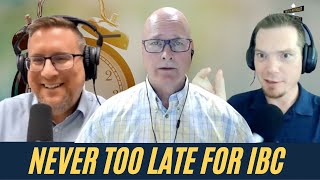
Dan Allen discovered Nelson Nash's Infinite Banking Concept in his mid-50s and switched careers because of it. He argues it's never too late to become your own banker, and credits mentors like Jason and Nelson Nash for showing him the way.
Chapters
2018, when I think it might have been Nelson's last formal presentation from the stage. And, and what did he do? Like he really, you know, challenged us to go on with what he started. Yeah. And to me that was just powerful. I can just, I can still remember sitting there and then, and I didn't have the same relationship you both did with Nelson because I come in later and, and just being a bit, you know, laid back and such, just the way I am. I didn't engage with him a lot. But I know here's one thing I figured out since then. I'm writing a list of questions down that I've got for him and I am going to ask him those questions because there's still lots of things in the book becoming your own banker that I still wonder why he put it in there that way. But no, we were blessed. I was hugely blessed to be on in that audience when he challenged us with taking this message on. It's changed the lives of thousands, hundreds of thousands of people across Canada and the U.S.
Being an authorized Infinite Banking practitioner out of Lloydminster, Alberta, we are so pleased and so excited to have with us today Dan Allen, who is just an incredible colleague, a dear friend, just a wonderful person and an authorized infinite Banking practitioner with the Nelson Nash Institute, an incredibly valued member of our team here at Ascendant Financial who also looks after compliance, which will definitely tell some great stories about. It is just an honor to have Dan because this is another episode in our advisor series on Wealth Without Bay Street. And so Dan, it's such a pleasure to have you. Thank you for being with us and of course you know our amazing co host and colleague and dear friend Richard Canfield, who's hailing from Chilliwack, bc, otherwise known as the wac. Dan, welcome. Welcome to Wealth Without Bay Street.
Well, thank you. It's just a real pleasure to be here and I'm looking forward to having a great conversation with the both of you today because when it comes to good people, these are two good people in my life. That's what I would say.
The question I had with the first question was are you going to audit this video as well for compliance before it goes up on the, on the YouTube channel?
That's a really good question. I'm hoping I don't have to, but I'll keep an eye ear out as we go through it just to see if there's anything I have to think about.
But I say that in good humor because you know, Dan being, you know, generous with his time and generous with serving his fellow teammates and working with us in that capacity has just been awesome, and we appreciate it. And, Dan, I think probably a good place to begin would be maybe to share with viewers and listeners, describe a little bit about your journey and what led you to. From being a person who is practicing this process in your own household to being inspired to become an authorized practitioner and to start your. Your professional journey with this process. Where did it all begin for you?
Yeah, that's a great question. Thanks for. Thanks for asking that one, Jason. So, obviously, once I got to a place where I understood what becoming your own banker could do for me and for my family, then I started to really wonder about, because at that point in my career and the career I had before, which is a very good career, I was. I kept thinking in the back of mind, I want to do something else in life, and I want it to be something that I can support people as I do it. And so as I started to get to know the process called becoming your own banker and what it could mean for other people, I started to think about, well, maybe when I retire from what I'm doing now, because I don't believe in stop and work. Like, at the age of 65, I know that's not on my radar anymore. I'd have to honestly say at one point it probably was. But as I got older, I think I hope I got smarter. And I realized that, you know, 65 is way too young to retire. I want to do something that I can really give back to people in the latter part of my life. So as I just thought about that and resonated on it, I just go, okay, well, this is an opportunity. And I can honestly tell you that, you know, someone told me 10 years ago that I was going to be selling life insurance. I'd have laughed him out of the room. But it wasn't what I got into do into this to do. It was about teach people the process that I'd been taught. And, you know, and that was the powerful thing. Like, I always tell people, why did you get into it in the first place? And I go, because I was blessed in the job I had in life. I had a lot of money flow through my hands. Like, I mean, a lot of money over my previous career. And yet I wasn't keeping any of it. And nobody told me how to do that. And so I thought, more people need to know how to keep the money that's flowing through their hands in their control and not giving it away. So it might be A long winded answer, but I have a tendency to ramble, so I hope that's okay.
That's okay.
I think it's a great answer, Dan, but I think it would be interesting too, just to maybe even take it a little bit step further than that. And you know, so that's a little bit of how you got started. And you know, we can recognize where the desire came to, to have that secondary career, probably the career you're meant to have as the way I would look at it and, and think, okay, so what if we walked the, you know, wound the tape back a little bit further. We said, okay, at what point did IBC and Nelson's message even enter your life for you to even know it was available and kind of what stage of life were you at when that took place? I think that's going to be helpful for our listeners to understand while you were in that career and then how long was it before, you know, you kind of got to the point where you made that decision? You know, I really think that as I exit my old life and I enter my new life, this is what I need to be doing in support of that new life. Can you maybe take us to that stage?
Yeah, it's a good question. So, yeah, and I get, I go back to, you know, really when I started to hear about it. So, you know, it was Jason on the radio talking about something and I have no way of knowing how many times I heard him speak about this. But the one thing that resonated with me is you could buy a car and recapture the interest. And I kept hearing that and I go, I don't think that's possible. I wonder how you could actually do that. But I got intrigued and more I got intrigued. Then I started to do some high level investigation and then took some live training around it and really started the journey of understanding what I didn't know before. And so when I think back about that, Richard, which is a really good question, what got me going, it was like when I realized again, I go back to how much money has flown through my hands, maybe I'm going to go back a little further and maybe not won't be back further. It probably was 2014, the first time I met Nelson. And I think that's a story I like to tell people because it really gave me a clear understanding about how all does start with the way you think. And so you guys would have been there. It was a live event, Nelson was speaking and he was going through his whole presentation and how he discovered and that's one of the things that's really resonated with me when I go to page 12 and 13 of his book, becoming your own banker, how the infinite banking concept got started, that's always resonated really well with me. And he was just telling that story and. And I started thinking about it all does begin with the way you think. And so Nelson had gone through the early 80s in business when interest rates went up over 20%. And I always got a kick out of how he always said prime interest rates went to 21.5% and I wasn't prime. So just like Nelson, I was in business in the early 80s and just like Nelson, I wasn't prime. So I was paying an operating loan up in the 23 to 24% on the farm because at that point I was farming and you know, and then I had to, you know, take a job outside of the farm just to make and pay the bills. But as I sat there listening to Nelson, I come out of that period of time with this way of thinking, well, if I can get to be debt free, that will be the best thing I can do. I don't want to owe anybody money. And it still influenced me to this day, like that mindset. But as I realized, Nelson come out of it thinking there's got to be a better way. And he went about discovering that there was a better way. So I always liked that. And about that first time I sat there and listened to Nelson, that was one of the key kind of things that I took away from that meeting was it all does begin with the way you think. And you know, as I got into this whole idea of becoming your own banker and what it can mean for me and my family, I just, you know, I can honestly say I watched the DVD that, the Banking with Life DVD and I had to shut the TV off because I got so angry. And my wife said, if you're going to be like that, I don't want you watching that anymore. Because I started to realize how much money had flowed through my hands and I'd never get the opportunity or my family would never have the opportunity for that to do them any more good than it already had. And that's just lost opportunity. So I don't know if that answers your question, Richard, but that's what came to mind as you asked me.
No, I think that's great, Dan, because it's especially tying into the Banking with Life dvd, which was put together by our good friend James Nethery and incredible video. And you're right. There's a lot of things in there that for someone, once you make that realization. I had a similar anger situation that came up for me, Dan, when I first read Nelson's book, because I thought, why didn't I know about this?
And it was a desk flipping moment.
It was a very. Yeah, there was, there was, there was, there was some, there was some. There was some rage. And like, the weird thing is I literally had a chip on my shoulder for like 30 days and I was snippy with people. It's like, snippy. Like someone would say something to me and I would just kind of pounce down their throat. And I didn't know why I was angry, but I was fundamentally angry because there was something that could have been happening in my life that wasn't in it, and it probably would have been easy to adjust had I just known about it, but I didn't. And, and everyone's small things like that come up in our life. So I recognize and I feel, I think, to some level your pain that you experience there. And I think sharing that is really important because people there, we all have a level of financial something that's been going on in our life. It's either been good or bad or a combination of both. Probably a good combination of both over several years of time. But money is. The flow of money is always taking place. And how much of that flow is something that we're going to be able to harness for longer than like our. For the rest of our life, but also be able to now leave behind in a legacy format and if you could just do the exact same thing you're doing and augment those two things more to the end of your life, plus leave it beyond to you, when you leave it this world is to. To bless someone else's life, whether it's your own family, a charity, you care about, whatever it is, by not implementing this process, we're literally taking money off the table that could otherwise be there.
Yeah, it's so well said. Going back to your question too, Richard, I think if I wasn't 55, I was 54 when I got introduced to the whole concept. And I was blessed beyond imagination to have Jason as my coach right from the start. And that was just a great experience for both me and my wife. And so I got into it, started doing my due diligence, started practicing it when I was 55 years of age, and I think it was probably within two years. And Jason probably knows some of this because we had some good conversation about what I was thinking as far as my existing career. And I was thinking already then about winding it down. I know I was. I did. I was 36 years in that career, and it was a great career. I worked with a lot of good people, got a lot of great challenges in life, but I was tired of, you know, laying people off because I was in the oil and gas industry, and it was a real issue then. And given my nature, which is, you know, show me your care. And, you know, it's really hard to show someone your care when you're. When you're laying them off. And so it was always challenging me in ways. And so that was happening. And as I started to get to know about the concept of becoming your own banker, and I just go, what a beautiful fit. I want to be able to keep working with people. I want to be able to help people and help them get to a place that they aren't right now financially. And I knew this route could do that. And the more I studied it, the more I got excited about it. And then just again, I have to really give kudos to Jason because he was able to open doors for me because I had no background in the financial world, and he was able to open doors to allow me to get access to the training with the Nelson Nas Institute and just mentor me. So that's kind of how I got started. And I still enjoy learning from the great people around me, and it's just been a real blessing to be able to help other people that way.
Brings me to what Nelson often said, it takes two to tango. And to have you as a teammate is. I'll tell you, honest to goodness, I sleep much better at night knowing that you're a teammate and that you're right there with us and you're helping us every step of the way, and it's just been awesome. And the journey is only going to continue.
Yeah. And I guess, you know, when we think about what we do, and I know you, you guys would probably find this. It's. It is the relationships we build not only with, you know, our clients, but with each other and, you know, being able to build relationships, help people out, I don't know that, to me, that's just a dream job. If I could. If I could, when I wake up in the morning, if I can help someone have a better day than they had the day before, then that's a win for me. I get to. And this is what this job really allows me to do.
Something that you said, Dan, I think is really Important for people to hear. And it's something that, I mean, I. I spend a lot more time on this, certainly, than I did before, but I'm finding it's becoming a lot more ingrained into my just natural discussions that I have with clients and people who are looking at everyone in the process. And it all. It all kind of rolls downhill from Nelson again. And additionally, you know, things that Jason and I have been learning from, you know, our. Another one of our coaches and our mentors, which is Dan Sullivan with the Strategic Coach Organization and really rethinking longevity and what kind of life you want to live and how long do you want to be here? And well, if you're going to be here for, well, how do you want to spend that time and who do you want to spend it with? Well, I think what you're identifying, what I'm hearing, what comes up for me, Dan, is that you want to spend it being of service. You know, you want to be engaged in the doing of things and not be kind of sitting like a bump on a log as the word retire means to be put out of service. So you're not, you know, what you did is you ended one career and you exploded into another. And you're just looking to thrive as long as you can for. And to help others do the same, so you get that fulfillment that's available to you. So if anyone's considering or thinking about doing this as part of their life and you really love to help people, I can't think of a better personally, a better way to do that in the world today than to be blessed by what we get to do. So you sharing that, giving people, understanding that your life, your career, your job, whatever you might end a job or end a career, but there's a lot. There's a lot you have left to give. Consider how you might give more of it while you're here and do it for as long as possible. And a career like this or a mechanism that allows you to live something part of your truth where you can get to help others and also earn, earn, earn an income and et cetera, be profitable in the same respect, is all. Is all great. There's nothing. No. Only people are blessed by that activity.
For sure.
For sure. Yeah. And I think too, if you guys were Both there in 2018, when I think it might have been Nelson's last formal presentation from the stage, and what did he do? He really challenged us to go on with what he started. And to me, that was just powerful. I can still remember sitting there. And I didn't have as the same relationship you both did with Nelson because I come in later and, and just being a bit, you know, laid back and, and such, just the way I am. I didn't engage with him a lot, but I know here's, here's something I figured out since then. I still, I'm writing a list of questions down that I've got for him and I am going to ask him those questions because there's still lots of things and in the book becoming your own banker that I still wonder why he put it in there that way. But no, we were blessed. I was hugely blessed to be in that audience when he challenged us with taking this message on it's changed the lives of thousands, hundreds of thousands of people across Canada and the U.S. and he just said, your job is clearly just to keep on taking this message to the people. And that was huge for me. So I was blessed to be there.
That really was a wonderful moment. And he left us with some documentation as well, and some articles and things that he had asked everybody to go back and make sure that you reference over and over and over again, one of which being the fisher last to see the water. And it was, yeah, that was a really, really remarkable moment. And if you think, Dan, you know about all of your experience with this journey and both as an implementer in your own life and now in your profession, what would you say, what would you say to someone who's watching or listening, who is at that very first stage of just being exposed to the process? What words of wisdom would you impart upon them?
That's a good thing. Good question, Jason. So I guess if whenever I get that opportunity and someone really wonders that question, I'd say, well, first and foremost, keep an open mind, because it's going to challenge the way you think. I can tell you that. And I guess it goes even to a point where when you think about, if you want to be someone who, you know, always goes with the crowd, it may not be for you. You're going to have to be comfortable, you know, thinking differently and challenge yourself in a different way. But if you do and take the time to educate yourself, really, you know, there's nothing wrong with healthy skepticism. You, I want people to really understand what they're doing. But once you do understand what I find, people do it. And that's what, that's what happened for me is once I started to understand how this can make a difference for me and my family, I wanted to start it. And I Wanted to get started right away. And I think you would have both experienced this in your careers too. Doing this is that when people get to that stage, they just want to go, how do I get started? How quick can I get started? Because they figured it out, it comes to them and it's just like, so that's the opportunity I would say to somebody is like, you know, keep an open mind. Educate yourself. And, you know, if you do and if you understand how this process can make a difference for you and your family, then I think you'll be hard pressed not to want to line up and just start doing it.
Something that Nelson would ask, you know, and people would ask him, hey, Nelson, how would you approach this subject to somebody new or, you know, bring it up? And Nelson says, well, I'd probably just ask him, do you ever have the gut feeling something is fundamentally wrong in the financial world that we live in? Here, give me 20 bucks. Read this book. Yeah, and that's so true.
Yeah, here, give me 20 bucks.
Read this book. And so, you know, and, and the reality is, is that, so I think what you're saying, Dan, is like, you know, if, if you have that feeling, but then all of a sudden you recognize that this process or this idea or this concept, it will be the thing that helps solve that feeling. It'll be the light. It's, it's the thing that gives you the feeling of, of that peace. And it's, you know, it's like, you know, your gut knows that there's something here that you just have to move forward with. There's a reason you are called to learn about this and you are asking all these questions. You know, you might not know every single detail. And you know what? You don't need to know every single detail. What you need to know is the fundamentals. You need to understand what is the problem and what is the solution. And if you recognize that the only way to get that solution is to get started in this journey, everything else will become clear. And you know what? You don't have to put, don't all of your money or all your eggs in basket or have the, the best policy design that ever could exist under the sun. You just need to get started. You know, we were talking about one of our other interviews earlier today with the incredible, amazing David Stearns, and we were reflecting on something that Nelson would say. And we, you know, we would ask Nelson, hey, Nelson, you know, what's, you know, what's the best policy? Or whatever Nelson would say, well, the one you started.
Yep. A good way to put it.
Am I right, Jay?
Totally right.
Brings back a lot of memories that the three of us, you know, the times that we had with Nelson, he was, he's just such a character, you know, and. But when, when he spoke, he commanded your attention.
I agree. And just that example you gave Richard of what he would say, I just, you know, right away my mind went to one of my clients who said that he knew there had to be something else out there.
Yeah.
And as soon as he, you know, discovered this concept, he just goes, that's it. And that's what I encourage people to think about. Just like Nelson said, there is something that you think is wrong with the way things are done financially. And. Yeah, that's a great way. I couldn't say it any better than he did.
Well, a couple things I want to do before we end our time here, Dan, I think is really important is that one of the questions we get asked a lot, and I'm sure you've been asked this question. I know, Jason, you have. And Dan, I think it's really interesting. There's some similarities between yourself and Nelson. You talked about farming, the early 80s, the interest rate spike, how that impacted you, how this, those similar connections that you had with Nelson. And the reality is that Nelson was, when he really got started doing this, he really started to understand this. He was already into his 50s.
Yeah.
When you first discovered IBC, you were into your 50s. Moving forward, you're, you don't look a day over that, but you're, you know, you've, you've added a little bit of time under your belt some, some wise years since that period of time, maybe just share. For people listening in who are looking at this and they're at a stage of life where they think it's too late for them.
What would you just, what would you share with those people?
Well, that's a great thought, Richard. And question. It's like, yeah, so again, you know, we've all heard this multiple times. You know, what's the best time to plant a tree 20 years ago? And of course, the second best time is today. And what I found is like, you know, I would encourage someone, you know, don't put it off for tomorrow because every, every day in life matters. Like, when you really think about life, it's like you're only, you're only given an infinite amount of time and you don't know about tomorrow. So start today. And if you start when you're 55, if you start when you're 65, you're still, you know, by the grace of God, you still got a lot of good years to live. Yeah. And you're going to need. The need for cash. Money is going to be there right up till the end. And this process only supports that. And, you know, it gives you so many things that, you know, can build a legacy and for you, and an estate plan. And there's just all kind of good things, but never too late to get started. That's what I tell people. It's like, get started as soon as you can, but don't let your age be a barrier because it works. I proved it. And I work with people that are starting at my age and older, and it just keeps on adding value to their family. And none of us know about tomorrow. We don't know. I'm. I've read the book now that I push my thinking differently. So I'm going to live to 121. So I've got a lot of time left. And I would encourage anyone else to start thinking, you know, just look at it. Statistically, people are living longer. It's one of the, you know, quickest growing populations now. It's the what, the centurions. That's right. So, you know, don't let age be a factor.
Love it. Dan, thank you sincerely for being a part of the Advisor series podcast episodes. And gentlemen, it was a pleasure and appreciate you guys so much. Amazing teammates and Rich, you want to take us across the finish line?
Well, Dan, you know, not all superheroes wear capes. Whether they're on either side of the straddled border of Lloydminster, I don't know, they might have different colored capes depending on which side of the border they're on. But, you know, when you help farmers, you help people. All the different people that you help learn about this process and you share your life's wisdom. You know, the years, the 55 plus years that you've been here developing, taking all the bumps and bruises along the way that life has to offer, and then you get to share that wisdom with others. You're adding value into their lives. You're helping them see and discover things that maybe they didn't otherwise, including this process of becoming your own banker. Who is it, Dan, that you think you'd like to be a hero to?
That's the easiest question you've asked me so far, Richard. And I guess the answer most people expect, and it is a factor that I want to be a hero to the, you know, the great people I work with in this career. But more than that, it's the three grandsons that I have. That's. Those three boys are probably. Yeah, that would be the simple answer for me, Richard. It's those three boys. That's who I'd want to be a hero, too.
Well, you're definitely a proud grandfather and a great one at that. So, on that note, gentlemen, thank you. And for all of our viewers who are on the YouTubes, if you look right over here, there's a recommended playlist to continue your journey. And we appreciate you joining us and want to say to all of you, make the rest of your day great. Thanks so much, gentlemen. Have an awesome weekend.
Thank you.
More from Richard





How Do You Use a Policy Loan to Buy Dividend Stocks? #dividendstocks #infinitebanking #shorts


Can Compounding Dividends Pay Your Bills? #wealthbuilding #investment #financeeducation


Should a Corporate Policy Offset Your Personal Coverage? #shorts #insurancetips

What Is Human Life Value? #shorts #insurancetips #dividend #wholelifeinsurance