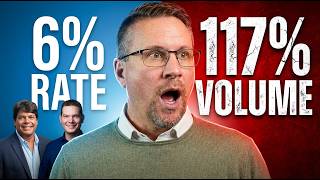
A 6% mortgage can cost 117% in interest over its life. On a $1,000 monthly payment, roughly $750 goes to interest, not principal. The hosts explain how amortization keeps banks paid and promote whole-life insurance strategies to keep wealth in families instead.
Chapters
Learn other things with a different mindset. And now you've got a multiplying effect.
My friend and my teammate Mike Smella, he's a proud third generation Detroiter who's been living embracing the infinite banking concept since 2011.
Where's it going? It's going to somebody else. Figure out how we can get that back to us. It's banker's math. Look over here. I'm going to rob you blind over here.
You may not know this, but Jason and I actually did an episode based on a post that you made on Facebook one time and it's episode 39 and it's interest rates versus interest volume. And so if anybody is interested in, you know, checking out that particular episode, I believe you can go to wealthonmainstreet.com interest volume and it'll take you right there. And it was a post that you'd made and you'd calculate it on like on something. I don't know if it was a mortgage renewal or something like that, but the interest volume on something and you'd made this calculation. It was this really awesome post and we thought, oh man, that's so good. We're gonna, we're gonna, we should do an episode on that. And then literally I think it was the same day or the next day that Jason and I recorded. So that was like five years ago that we did that essentially. And so it's kind of fun to have you on the program because again, your experience, 17 years in the mortgage industry, you know, you understand more than the average bear. What is that cost of interest volume when it's flowing away from you versus when it's coming back towards something that you can control.
Oh, it, yeah, that was. Once I started to learn about that and it was, you know, a, whatever. A 6% mortgage is really, you know, 117% interest volume over the life of the loan. It's. And where's it going? It's going to somebody else. Why not figure out how we can get that back to us? That's going to outperform anything else that's out there and provide the stability for us to then also leverage this system to go out and do other things with. It's not, oh, stop what you're doing and do this, it's do this and do whatever else you're doing or learn other things with a different mindset. And now you've got multiplying effect that it ultimately works for you and your family and their family and everything else.
And, and I think with interest volume People don't really understand or recognize what it is because everybody talks about rates. You're talking about what's the rate of return I'm getting on blank. What's the rate of this, the rate of that. And you're always trying to arm wrestle the mortgage broker or your local banker over a better rate, which is fine. I mean you, yes, you should try to get a lower rate on your loans. There's nothing wrong with that. Don't stop doing that activity. But understand who's actually getting the money. What do you care more about? Is it the rate that's a calculation or is the actual amount of physical dollars that's going to leave your bank account never to be seen again? And so an example would be you have $1,000 mortgage payment and it's a brand new mortgage. You're making the very first payment, it's 30 days in arrears. So you make, you get the mortgage, they give you the money and then you make the payment 30 days later and it's $1,000. Well, if the interest component of that was $750, which is probably about right. If we're Talking about a 30 year note, it's probably around 750 bucks at a current interest rate. Today might even be a little bit more than that. Well, didn't, didn't, wasn't 75% the interest.
Look, we want your family to have more money. That's our goal. That's our job at wealth on Main Street. Our goal is to have you keep as much of that hard earned capital where it belongs, with the people you love and care about. Easy way to do that. Pick up a copy of this book. Don't spread the wealth. This book is all about keeping the money in the family. Think of it like an aquarium. The money never leaves and you can use it and reuse it as many times as possible. Go ahead and pick up a copy today@don'tspreadwealth.com I used to walk families through that.
I said, let's get your mortgage statement. And okay, you've got a, whatever, 4%, 5% interest rate. Great. Look at your mortgage payment. Like I said, it's $1,000. Well, 750 of it is interest, 250 is principal. How does that come out to 4, 6, 8%? It doesn't. It's banker's math. How they calculate is very different than what they, you know, it's, you know, look over here, I'm going to rob you blind over here.
And, and it, and it's not really smoke and mirrors, but it appears that way because, because we're just not informed enough. So the issue isn't what the bank is doing, the issue is what as a population, as consumers were doing by not asking better questions and not recognizing what's really going on. They're charging you 4% or 5% or 6%, but they're charging you on the entire balance of the loan that you owe. So if you, if you had whatever, a million dollar loan and it was at 6%, well the annual interest on that is 60 grand for the year. Well, that's five grand a month basically, if you kind of just did the third grade math on that. Now month one, you make a payment and so you pay a little bit of principal. Well the next month they can't charge you on that. A little bit of principal you paid down, but you still owe the rest of it, so they're going to charge you on the rest of it. So the amount of interest that goes down is not very much. So like that's how amortizations work. And it's not, again, it's nothing bad about the bank or the banking system. They simply built the system in the same respect. Look, you got a mortgage that you otherwise wouldn't have a house if you didn't have the mortgage, most likely. So they're fronting money that you don't have because you don't have it. So you're always dealing with borrowed money. You're borrowing your own money and, and seeing it disappear so you can't earn from it or you're borrowing from a big fat pile of someone else's money. You need money to do things. It's either yours or someone else's. There's no two other ways, right? You can go, you can go and get things by stealing them, but that's going to get you into jail. And we don't encourage that either. So like, you know, just because you could go get it another way doesn't mean it's a legal way of going about it. So having that clarity, I think is important for people. And the more that you become aware of those things, the more you can see it or calculate it in your own life, the more you can come to terms with what's really going on and then you can make a decision. Is this the behavior, is this the situation I want to see for my children, for my grandchildren going forward? If we could stop this process or start to take some of this back into our life so that we could retain as much of that energy as possible and do it for multiple generations without having to ask anyone's permission. How much more freedom and stress and like, how much more joy could we have because we can work together rather than separating everything and just seeing the banking system and the government get everything instead of the people we love and care about? Watch more amazing great clips from our episodes right here. Or if you want to watch the full episode, click right here.