Building Legacy: The Jim Sheils Journey
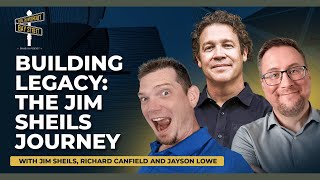
This YouTube interview (Building Legacy: The Jim Shields Journey) features Jim Shields discussing his book The Family Board Meeting and the family board meeting strategy: scheduling one-on-one quarterly time with each child and with a spouse to build relationships, catch problems early (defense), and fuel passions (offense). Shields grounds the idea in personal stories (he has five children — two biological, three adopted — and has practiced the meetings for about 12 years) and links family intentionality to his real-estate success (24 years in real estate; build-to-rent business). The conversation also covers retreats for entrepreneurial families, practical communication tips (phone calls vs. video), and the role of financial freedom as a vehicle to prioritize family and purpose.
Questions this video answers
The Family Board Meeting
Five children: two biological and three adopted
About 12 years
About 24 years
About $3 million in property in the first year of building
Chapters
The number one reason the family board meeting strategy fails. The number one reason because people forget that which we schedule gets done. And that whole saying Jason was that reason. It sounds impersonable at first, but now being, you know, a dozen years in on this scheduling time, you know, the time with my children, one on one with my wife, it has been one of the biggest blessings, one of the biggest offenses, one of the biggest defenses in my family life.
Let's talk about Building Legacies the the Jim Shields Journey. And I want to extend just a heartfelt welcome, as we always do, to all of our viewers and listeners and wish you a warm welcome to this particular episode. As I was sharing with Jim prior to hitting the record button. This one in particular is really special. And so welcome to Building Legacies, the Jim Seals Journey, where real estate meets real life. And we're going to do a deep dive and explore the world of high stakes property investment, the power of passive income and the stories who've shaped a man who's not just a Wall Street Journal best selling author of this incredible book, which we're going to talk a little bit more with you about here today. But he's also a surfer. He's a lifesaver. He's a father of five. And from bulk foreclosures to family board meetings, join us as we journey through the life of a man who believes in building wealth, family and purpose. And so along with Richard Canfield, my co host and I, it's our pleasure and honor to welcome today's special guest, Jim Shields. Jim, thanks for being with us. How are you?
Good. Good to see you guys again.
It's great to see you. Now this book titled the Family Board Meeting, thank you sincerely for getting a few copies to me. Mike Kings had suggested that you and I get to know one another and we place a high degree of emphasis, much like you do, on the importance of family, the importance of deep connection. And I'm curious right out of the gate, what inspired you to write such an amazing book?
I think sometimes you, you teach what you need and this was not something that I ever planned to do. I wasn't comfortable sharing my family story, but I started to share it in some small circles, this little strategy that I was doing. And it came with some pain of, of, you know, the, the awkward start of my own family, the overworking, all the things that we deal with. And it just, it took to such a, an effect when I started to see how people was and it was quite emotional the first start talking about that a few Closer entrepreneurial friends, some of you would know, said, you need to make this a book, and if you don't, you're being selfish. So here it is, a real estate investor talking about family. I mean, I'm not. I'm not a family psychologist. I'm not a therapist. And I think that's what helped resonate, because all that's important. But a lot of people could see themselves in me because they had the same fears, the same struggles, and the same desire to. To, as their family grew, that their family came with them. The last thing we want to do is be a success in business and a failure at home. And so this book was really kind of a. It was definitely a passion project and also dedication to my sons, you know, and I'm sure we'll talk about that here. I was, I have five children, two biological, three adopted, and my two oldest. You know, I adopted very young. My wife was in a first marriage to very bad situation, abuse, alcoholism, stood up for herself, got out of it, and here I am. I fell in love with this perfect girl. And these two little guys came with it, and we fell in love instantly as well, although they had trust issues, and we'll talk about that. And two years later, they asked me to adopt them. And that was part of the legacy story, you know, but it was struggle. I mean, this was not some perfect Cinderella story. And so I share my struggle and some of the principles in that I think can help a lot of other entrepreneurs. And that was it about.
Oh, I love that. And, you know, we've all heard, or perhaps some of our viewers and listeners haven't heard, the expression that everything begins and ends with family.
Yeah.
And this book is. It's. It's the perfect, perfect addition, and it's arrived at exactly the right time. And we're going to encourage all of our viewers and listeners and our entire client community. We want you to get your hands on copies, plural, literal copies of this book, and get that in the hands of your family, your loved ones. You will be glad you did. There. There are a number of really key messages that you want to get across in the book. And so I thought I would invite you if you were to. If you were to sort of stack rank all of the key messages that you've put together. Which one resonates with you the most that you want people to really grasp from reading the book?
I think one of the most important ones is there is no perfect family. And so we have to start by taking that pressure off our plate. You want to talk about, you know, pride and, and desire to be honorable to your family. Sometimes we can put so much pressure on ourselves that we start to even hear, I want to have the perfect family life. I want to have the perfect family. I haven't met one yet. And that's in over 10 years of working with thousands of, you know, incredible families. But none of them are perfect. And what I found is when you take perfection off the table, it just, it takes pressure off your spouse and your children, and you can start to enjoy each other. And that's what it's about. Family life is not about perfection. It's about bridging imperfections and then making the most of the time we have together. And that's what I talk about in the book. Okay, how do we make the most of the time we have together? Is there some simple rhythms that we can follow? And that's really what the book's about.
You know, I find it interesting because, you know, being a member of Strategic Coach, of course, you know, we're familiar. We talk about this a lot on our, on our program. Jim, this was one of the first books, you know, within the, about the first six months of you joining the coach program that was recommended me to me by another coach member. You know, it made. Made the rounds throughout our, you know, every coach session. There's, there's like a. Usually there's a period of time where people go around and make book recommendations. Someone's capturing it on the, you know, on a board or a notepad. And so this is one that I purchased and read right away. And, you know, I, I definitely wouldn't say that I've been an expert level trying to implement the, the content of this book, but I, I am striving. And so, coincidentally enough, it was almost accidental, but I was on a meeting earlier today with my assistant. I have a new assistant who's helped me out, and she's taken over a lot of responsibilities from someone else, which is great. And I have a time block set every, every Tuesday for trying to plan my free days slash family board meetings. And, and although that time block is in there, that time block doesn't get honored all the time. And so we made a correction to that. And I said, well, you know, what's going to help me honor that time is if I have an accountability partner. And I said, lynn, you're the new accountability partner. I want you to add your email onto there. Let's change the title. And your sole job is to sit on the line and make sure I Plan some stuff out so I can implement, you know, some better quality free days. My Quickstart doesn't do the best at maybe planning and routine oriented things and, and implementing, you know, the, the idea of having these, these board meetings with my kids more frequently. And coincidentally you, you said about the not having, you know, the perfect aspect. And, you know, everyone wants to strive for that, of course, in a lot of things that we do. You know, I just made an investment in a turf, artificial turf, my yard. It just got installed and finally finished this morning. And I spent this, you know, so I'd love to get your take on this, but we made that decision about a week and a half ago. Everything lined up very quickly, which is great, but, you know, the sun had basically destroyed the yard. Two dogs had destroyed it. So. So it wasn't a place where the kids could even play very effectively. And I noticed that as I was observing through the summer that it was difficult for them to play and do simple things like play soccer. And I said, well, what, what amount of joy in me watching these kids, these kids in their own environment are we missing out on? Because we don't have the right landscape to allow for it to happen. So we made the investment. It's done. And the kids lost their mind yesterday. Playing and rolling around. They're doing all this crazy stuff. They brought blankets out, you know, we laid out, they made like a little picnic last night. And we're staring up at the stars on this new artificial turf. And so in, in less than a day, I've gotten more value out of the yard than I had the entire previous summer, just based on the quality of what's available for us to work with as a canvas. So I kind of. And then as we're having this conversation about the book, I just felt like, hey, this is an investment in something that's going to allow me to have more quality family time. And what an unbelievable experience. For $11,000, I can increase my quality of life like an exponential, you know, curve.
Yeah. And there comes a point, and I love that. Richard, first off, thanks for telling me something like that, because when I hear, I mean, Dan and Babs have been extremely good to me. Some of their top staff have gone to our retreats before, and I'm very humbled. I mean, really, it's, it, it's. It's kind of overwhelming because I'm like, I'm getting recommended a strategic coach where I've been in, you know, for years and I'm learning, and here it was not in My main business, but something that, just as Dan said, dare to be different. And I said, this is going to be a different family book where it's not a lot of content, but it's a lot of sound, small sound principles, a lot of action. And so when I hear that's happening, I love it. And, and when I hear you're doing something like that, Richard, I'm like, wow, he's, he's intentional. As you said. I'm not getting it perfect, nor will you ever. Here it is, the, you know, the creator of the family board meeting strategy. There's been years. I've only done three in a year instead of four. Right. There's, but, but the principles have become more ingrained and, and there's an intentionality. Just when it starts to become an awareness, which obviously you have. And look, there is nothing wrong with things, but I, I've, and I forget who said it, it certainly wasn't me. But there, there comes a difference between things and experiences and you just kind of hybrid them. It's, there's nothing wrong with a Rolex. It's just not for me, really. I just, it's, it's just, I'm not saying it's a bad thing, but for me it's not. I would much rather have that $11,000 turf, like you said, for the experience. And there's going to come a time and I think for all entrepreneurs, you do want to take assessment, you do want to take inventory and say, am I, am I going too heavy over to the things side and am I doing that? And now sacrificing the experience side. And when you just have that awareness which you, it seems like you have. Richard, you should be really proud of yourself because I have yet to meet a person who is disappointed at the end of 18 summers with their children who is like, dang it, I can't believe I took that extra one month vacation. I can't believe I put turf in the yard for all these years to have all that fun. I just haven't heard it yet. So hopefully that gives you some, some validity validation and some encouragement that I think what you did is awesome.
Little third party validation goes a long way.
And you know, Jim, on page 39 of your book, one of the, you begin to talk about how the, the board meeting strategy works. Right? The board meeting strategy. And one of the things that you mentioned is that we must treat our kids with the same level of respect that we do our work colleagues and our business associates. Could you just expand a little bit on the family board meeting, what the essence of that is?
It's, you know, what is. What is the point of a board meeting? You know, normally for a more entrepreneurial group, let's say an entrepreneurial group that goes to strategic coach. Well, every quarter, you get together for a meeting that reunites the team and then looks ahead to the next 90 days. Right. It's a real positive thing. It's a bringing together. It's a connection time. And I started to think, am I honoring my children in the same way? And this might sound almost impersonal, where people are like, oh, my gosh, you're looking at your kids the same way you would your top clients or investors or key team members. Well, I'm an entrepreneur. I'm wired a little differently. And so I'm not going to fight that. I'm not going to try to rewire and say I'm very entrepreneurial, I'm very driven, and these people in my business are very important to me. And if I remember to do that same thing with my family, like, would you ever, let's say you guys, for wealth without Bay street, you have a couple thousand investors, but you have your top 1% investors. Are you going to not schedule time with them? Oh, my gosh, that'd be like business suicide. And so that's the way I look at my family. Like, if I'm scheduling time with my top key team members, my top clients, my top investors in my company, how am I not giving that same honor to my children or to my wife? And that's what that was about. Just, you know, giving them that same assimilation that if I schedule time with these people in my business, and frankly, they're not as important as my wife and children, I'm sure all of us would stay the same. Then something's wrong here. So. So, like what, what you just said, Richard, for your calendar. The number one reason the family board meeting strategy fails. The number one reason, because people forget that which we schedule gets done. And that whole saying, Jason, was. Was that reason. It sounds impersonable at first, but now being, you know, a dozen years in on this scheduling time, you know, the time with my children, one on one with my wife, it has been one of the biggest blessings, one of the biggest offenses, one of the biggest defenses in my family life.
Wow.
Offenses and defenses. I find it very interesting that you use that kind of language. I'd love for you to just kind of expand on that a little bit. Jim, give us an example of how you. You've. You've recognized it showed up on the offensive side. I'm assuming that means like business success and wins and you can maybe, you know, expand on that. And then from the defense side, I would just really like to you give us an example of what you mean.
So let's, let's talk offense. Offense, you know, the family board meeting strategy. The good news for everyone out there, it's the shortest book chosen. So I always joke when, when it's passed out at events, it gets read first. Not because it's the best, because it's the shortest. And entrepreneurs want that easy dive right to start, get us rolling.
It appealed to me that way for very much the exact same reason.
I'm an ADD entrepreneur. Like you said, fire red. You know, I'm a quick start, so wanted it short. So 10 seconds, guys. The family board meeting book is about scheduling time individually with each of your children with three guiding principles. That's it. And you do it every quarter, so it's kind of a reset in your relationship and it builds off of each one off of each year. So I've been doing these 12 years now with, with my older boys, the offense. Everyone says, I want my kids, you know, to support their gifts and their talents and, and their interests. Well, these family board meetings that they plan this day, they'd get a day, a quarter with me, each of my children, one on one, they got to plan. When you let them plan the day, the creative juices go off. You know, anything we want, anything you want to do. Well, my son started to choose fishing almost every board meeting that we would go on, you know, he loved to fish. Now guys, I'm a surfer. If I have a choice to go surfing or fishing, I will choose surfing 10 out of 10 times. But I love my son that much where I'm like, let's go fishing. Well, now here he is a 20 year old and he has his own charter fishing business. That's pretty good offense. He was trained by a friend in the Florida Keys who came to our family retreats. But I was open to this and I was present and I was given this advice of if you can find a spark of enthusiasm, especially in a young kid or a teen, dump gasoline on it and set it on fire. And that's all I did. That was my offense with my son. Now with defense, when we have this time, look, when you go through different ups and downs of, of, you know, entrepreneurial difficulties, financial shortages, whatever it is, you know, and I've been through the gamut of them. These one on One times were a time that, and we'll include both spouse and children. My children. I could say, you know what, I haven't been around, or I've been a little short or impatient, and that's not you. And I'm sorry. It gives me a chance to, to really play some defense to, to say I haven't been around. Is there anything going on? And, and I might have missed some things, especially for teens. I wasn't there. And when teens really get into trouble, it's when you're not available and it's not necessarily they're being bad kids. Sometimes, you know what they'll say. And I've worked a lot of teenagers now through this over the last 10 years. They say I, my, my dad was already working so hard, I didn't want to put something else on his plate.
Yeah, yeah.
And that you want to talk about honor and, and selflessness. So when you schedule this one on one time with your children or your spouse, and again with my spouse, this is when we could really connect. Where she could say to me, you haven't been showing up for me, and it really hurts. And then you got to put your guard down in those moments. But that's a defense to, you know, stopping it where it is, not having it go any further and say, okay, how do, how do we fix this? You know, where did I go wrong? What can we do to reforge, you know? And I, I can say I have a very strong marriage, but without these deposits of one on one time, consistently with my wife and my children, there's no way our family life would be where it's at. And, and I gotta tell you, Richard, I'd be scared to know where it would be without them because I've worked with a lot of families and the lack of scheduling this quality time with their families, it can spin things out of control.
All day long. And we, you know, we see that, we encounter that. Right. With prospective clients that we interact with and that we try to, we try to keep the family together and strengthen bonds just through, through a different path. And this, this whole notion of having a family board meeting and creating that opportunity to reconnect and making sure that, you know, no electronics are available in the meeting. You get to pick something, your children get to pick something that's fun. You're devoted, you're there, you're present. Children are much smarter than I think adults can give them credit for. And what came up for me in reading the book was in our family, you know, we have four children and my beautiful, intelligent wife, Rebecca, who's amazing, she has five full time jobs and I'm one of them. And she's just, just phenomenal.
Like you. Like, like, like my wife. You're the most difficult kid that she.
Exactly. And we decided, when we decided that we were going to start a family, we said, you know, rather than have this laundry list of 8,000 rules that we want to impose upon our children, let's really condense it down to three. Be respectful, be responsible, and be kind. And you, you can attribute positive behavior and negative behavior to any one of those three golden rules. And the adults are not exempt from that. So, for example, we just got back from a trip and we took all of our team leaders and their spouses on this amazing retreat as a token of gratitude and as a token of let's get together and let's strengthen bonds and let's get to know each other better, et cetera. And on our way home from that trip, I was really irritable for some reason. It was a long travel day and I was short with my wife, Rebecca. And after we had an opportunity to reconnect and talk, I said, I literally broke all three golden rules. Literally. And that's on me, 100% accountable for that. I know how I can be better, but I just want to acknowledge and respect the fact that I did that. And in that moment, you fe, you just feel closer together, you know, and.
Don'T, don't not give yourself a lot of credit here, Jason, because let me tell you, one of the biggest difficulties I found, and I don't know if you ever saw me speak about this through the lockdowns and pandemic was, was entrepreneurial immunity. And it was a very scary thing where we all started to feel like, like you just said, you broke the three rules, which I love how it's three rules. It shows, like this doesn't have to be like some 50 page constitution. You're talking about three values. And that's what you, you know, kind of strain all of your, all of your, you know, efforts and actions through. So you kept it simple, but you also, you, you didn't give yourself entrepreneurial immunity and what that is and what I saw, and it's happened for years, but especially the last few years, it's, you were short, you were, you were, you broke a promise, you did this, and, and you give yourself immunity and you say, well, we had a long travel day. I'm running two businesses here. You know, what I've been on to and what I'VE had to come through and, and you all of a sudden don't think you have to play by the rules. And again, let me tell you, immunity will work for certain amount of time. But it's like that, you know that, that slow tumor that grows and then bursts and then it's, it's too late. Especially with children and with spouses as well. So I'm going to give you a high five because you didn't give yourself immunity. We all have at certain points and it is one of the biggest traps, one of the biggest curses that you can start to do for yourself because it'll work in the short term, but in the long term, it comes back to bite you.
I agree. It's, it's like, it's like sandpaper on trust.
Yeah, there it is.
Just, you're just grinding it down. And I don't ever want to be even associated with that. And so I just took out my sword and I said, just give me one second before we board the plane.
All on it. Well, and it's not easy, right? I mean, not for me. I mean, to apologize, you got to again, as entrepreneurs and if people aren't seeing I have my dukes up right now.
Right.
We're in boxing position. It's not easy what we do. I don't, I don't know who said entrepreneurship or running businesses. So sometimes we have our guard up.
Right.
We have to if we're in a tough business world. But then we go home and we still have our guard up. Or you're coming off this thing, you.
Have your guard up.
We got to lower our guard down, show humility and say I was wrong. Even though I'm trying so hard in my business, it doesn't give me immunity from breaking the three. And, and I'm going to hold myself to that. And I got to tell you, no doubt, Jason, you felt closer because you were closer. I mean, that's the highest level of respect that you can show.
Thank you.
And something that's rich. My apologies for interrupting. You go ahead.
I was just going to mention that something very interesting kind of associated with this is that, you know, we just got back up from a little trip and then in two weeks I have another trip heading to Edmonton to be where Jason is. We've got a great event going on. Super pumped about that to be with our clients. But something's come up. I actually have my brother in law who's moving from Seattle back to towards Vancouver on Victoria Island. Vancouver Island. And then you have a short term childcare need. So because we have a business the way that we do, and I don't really need to be situated at a specific location, we're able to pack everybody up, hop in a van and we're going to drive out there and help them out for the week. It does mean coordinating some things. I am going to be working, but I also going to have some great present time and to see my, you know, my niece, my nephew, which is going to be wonderful. So, you know, but there's, there's the, the idea of being able to stay home and get more work done was present. And my wife thought, hey, you know, this just came up. You know, I'd love it if you could come for a couple of days, but I understand you've got a lot of work to do. And I said, well, yeah, we do have a lot of work to do, but I'm not gonna go. I don't want to be three weeks away from my family. Yeah, let's just get it done. We'll reorganize the calendar and we'll just make it happen. So, you know, just the, the, the, the recognition that you. We have an opportunity to make different choices. The brain might say, logically the right thing to do is to do a. But if you check that against what your heart says, we might come up with a totally different answer.
No. And, and, and this is one of my favorite conversations, Richard, because we're talking about the how and I'm not. So, so when I say the how, it's not. I do real estate investments. You guys are experts in whole life insurance and other strategies or whatever it is. That's the how for entrepreneur. But I'm talking about the journey how. Because there used to be really bad advice out there. I remember you guys probably heard it. Not a strategic coach, but others before. It's saying, put your head down for the next 10 years. Don't look up, get back to your family. They'll understand. Like literally that was advice, horrible advice. Because the years are not all created equal. My friend David Bach taught me that. I met him in coach, actually. And what you, what we have to realize, it's about the journey, the how. So, so, you know, the end of the 18 summers for you, Richard, you're going to be able to remember that. Like, yeah, I still kept business going, but, but how did I do it? Well, I packed up and went for three weeks and, and spent that time with my family. You know, we did all these adventures. For me, it's, I want to look back on how did I get there? Because what if by the time my kids get up and they leave and they're gone? Yeah, I've done well financially, but I sacrificed everything. Strained relationships. Right. I gave myself immunity. We're always checking. Like you just said, I'm checking back with myself on that. And that's the how, like how are we going to reach it? And for me, I want to make sure there's lots of adventures, that I was able to support them in their gifts and their passions, that I knew their friends, that, you know, just all these things that, that's the how.
Oh, so good.
And let's talk a little bit about real estate because one of the things that I have yet to mention, 300 plus million in deals. You're no stranger to real estate investment.
Yeah, I know. Real estate has so real est has definitely opened the doors of entrepreneurship, financial abundance for me and in 18 summers the family boarding would never exist without it. So I'm so grateful for real estate investing. Been doing it 24 years now. You know, incredible journey, just like Dan Sullivan talks about. Not all sunshines and rainbows. I mean near bankruptcy in the 08 global meltdown, but it's, it has made such a difference in my life in our investors lives that we work with. You know, I'm so grateful for real.
Estate investing growth and the, the build to rent strategy, the, you know, what you've got going on. When you and I had spoke, you know, prior to recording our, our interview today, do you mind sharing a little bit about what's keeping you busy in the real estate realm?
Sure. I'm, I'm a partner in a, in a build to rent company. So build to rent is a very interesting thing that came about nine years ago really for, for me and my now partner. He and I were, were doing bulk foreclosures, buying the old houses, fixing them up, reselling them or keeping them for ourselves. And that went well until they started to dry up. And he had this notion that just well, what if we built our own houses instead of, you know, tried to find old ones to fix up. And I'm, you know, this is the old dog now learning a new trick. I'm like, oh, I've been rehabbing properties for 15 years and you know, badge of honor. Well, we started with an experiment of building our own properties. We're talking simple residential, a single family, a duplex or a quad. In that first year we built $3 million worth of property and it went okay to not so good at best. But we saw the model was there, we could buy in better areas, we could provide better product, we could avoid the three year curse. And I don't know if you guys have done a lot of rehabs. The three year curse for me is I buy houses, old houses built in the 50s or 40s, you know, I put on a new roof, heating and cooling, plumbing update, kitchens, bath, electric. Man, I just knew in three years, for whatever reason I'd had to budget more for maintenance and repairs. It was called the three year curse. You know, now nine years in on new construction properties, we haven't hit the three year curse. So we really liked it and it took some doing, but we, we continually fine tune the system and now, you know, a decade later, we did 185 million in sales last year. We're in 12 different markets in Florida and we've made a lot of millionaires of our clients who we are able to build successful real estate portfolios for them in high growth markets in Florida with new construction homes.
Amazing.
Gotta love two words, passive income. Yeah, and plenty of it.
Our friend. It is our friend. And because you know that first real estate class I took 24 years ago, Phoenix, Arizona, you know, write out your plan. And guys, my plan was so simple. I mean I don't tell you that because you saw short my book is. But you know, I was like, I want to get my real estate in place so I could get to the good stuff. That was, that was my plan. And you know, and so I forget who said, you know, don't wait to buy real estate. Buy real estate. And wait. And you know, it's, I've been doing it 24 years now, so it took a little more time. But now being able to go the place I want to go, support the causes I want to support, not only financially, but with time keep my hobbies from surfing to family history, you know, that, that for me is getting to the good stuff. The real estate is a vehicle and it's a great vehicle. But I didn't really want to just work on real estate my whole life. I'm still involved in it, but I wanted to get to the good stuff. All the other stuff we've been talking.
About and that's what the pursuit is all about, right. It's, it's much like we can all relate to what Dan Sullivan talks about and, and really helps you to wrap your brain around from the get go. Pursuing more freedom of time, purpose, relationships and money. And money is the tool that enables you to pursue all of those other freedoms. Yes, And I think that. And again, it bears repeating because I had brought this up rich in, in another recent episode where people. So people can spend an entire lifetime pursuing financial freedom without ever realizing that it's not actually more money that they're looking for.
Yeah.
It's all those other deeper connections. And I, I know I'm not going to be on my deathbed going, wow, gosh, you know, I wish I would have spent more time at work or I wish I would have spent less time with my children or my beautiful wife Rebecca, or my extended family like that. Those that would be the farthest from what would be going through my mind. I would be wanting to run the film to say, you know, what if I'm checking out, I want to make sure I'm watching a good movie on the, on the way out. And it's all those family memories and you know, quality time with your children and your spouse and people who you just love to be around.
Yeah, yeah. It's kind of the, that's kind of the end game, I think. And sometimes we forget that along the way. And that's where I think setbacks can be a good thing. You know, a business setback, a health setback, a loss of someone, you know, we've all lost people. It is those things. I'm not saying they're good things, but man, can they be an opportunity to reset, you know, the foundation of your values, what you really care about, be. Give it honest, brutal assessment. I call it the taking inventory. None of us like to take inventory, but man, when we honestly do, and then course correct in a short period of time, a few days, a few weeks, a few months, you can feel so much more as you, you know, on purpose fulfilled. So I always encourage people in those tough things where I've had anything from health setbacks to scary situations, almost losing a child, losing a parent, you know, almost going bankrupt, you know, bad deals, going bad. This is where you can really reground. It can be absolute blessings you'll ever have.
Absolutely.
And one interesting thing that comes up for me, Jim, that I, I don't think I realize, but I, I would say probability is it. It stems back to reading your book already a number of years ago is, you know, I made the decision. My wife and I had a nice chat here I was a couple several months back, but actually about being intentional going back and visiting my parents. We moved away about three years ago, so we're no longer where, you know, I guess we still call it home, but we're no longer where home is anymore. So, you know, the, the we're going to be. We go back once a quarter. If we don't all go, at least I go. And, and we're being very intentional. So coincidentally, that's happening two weeks from now. And it coincides with doing some stuff at our office and business, which is great. And, and so the idea of doing that also, I would say, probably does stem from your book as well. The idea of being able to make that connection on a more regular basis. And, you know, so I'm just, you know, very grateful for that and I think it's going to be wonderful. And then a small thing that's come up recently, and I'll share this, and I think it's. Again, to me, it's in alignment with your book. The idea of technology today is, is different. How people communicate has shifted from when you were dealing with your, your kids, your adopted kids at the age that they came into your life versus the age that they are today. And what parents are dealing with today is very, uh. My kids are just, just turned six and about to be eight. So we're in a little bit of different stage because of that. And so the idea of video calls is very prominent. And I've noticed that there's a, there's a weird alignment that happens, at least with the grandparents. You know, we want to try and set up the video call so they can see the kids. But the result is that the kids interact so much differently. They're. They're jumping around, they grab the phone and they shake it. And so, like, someone's going to have like a stroke or whatever on the other end of the line because.
Blair Witch Project.
Right, exactly. So. So the whole communication level is just very, very different. And I, and even, even myself, if I go away and I'm doing some traveling or we're doing something, Jason and I are off doing something together, whatever it might be. Maybe we're coming to attend one of your events, who knows? And we're, we're having a conversation. Well, the idea is to go with the video call too. And I said, you know, this isn't working. We need to try something different. So we actually went for a regular phone call and we have a home phone, which is weird these days, but we have one. And so I actually had my. I had my wife say, can you help the kids dial the number so they can practice using this old phone and this physical device. Just couple of days. I had some of the most epic telephone conversations with my kids because it was A real conversation. And it was one on one. It wasn't everyone trying to be involved in this group screaming fest.
I love that.
And I thought, wow, what an incredible method this has turned out to be. Just kind of by accident. And the simplicity of it is quite, that is so simple. I'm going to now test this out and we haven't done it yet, but I'm going to test this out with the, the, the grandparents as well and see if they can give that a shot. Because not only will it be easier and more, I think, just more standardized for them, it's a, it's a simpler transaction to accomplish. It'll automatically create more capacity and engagement, I think, with each individual child because they each get their own moment. So I love that it's an interpretation of some lessons that really kind of come from the book. So again, not, not intentional, but just something that's kind of shown up very, very recently. So I wanted to share that with you.
No, I appreciate that and I think, you know, just to backtrack and I'll talk about the technology in it, but with your parents, you will never regret that, Rich. So I, I think, you know, in the book I talk about a little bit, but, but a big, a big part of this, of where this book came from. Again, when I decided to write this book, I had just been, you know, I, the boys had just asked me to adopt them. I'd been in their life a few years and they asked me to adopt them. And I'd also just been approved to donate a kidney to my father. And that was a huge thing in my life. And we did it, you know, way too much to go into now. It was a profound experience. And I got another 11 years with him and he died Christmas Day a year ago. Yeah, no, thank you. But, but the reason I'm saying this to you guys is, look, it was hard, it was sad. But a good friend of mine said when you, when you, when regret is absent, your pain is eased. And with my dad, I had no regrets. I had gone the extra mile, I had taken the trips like you are now, Rich back there, you can't be there all the time. But to set these again, rhythms in place and to have that quality time. Right now you are easing regret. You are taking advantage of the moment and the time. And I gotta tell you, I was sad, but I was so much more fearing that. And just the, the ease of my pain because I didn't have any regret was huge. So, you know, not only for the enjoyment of now, but but you know, regret is something that can come to us all. And again, talk about defense against it. You're hitting that right now. So, so true. And, and with, and with the, with the, with the phones, you know, for our phys. My. I, so I have a six year old and a nine year old as well. We go from two to 20. Like we're, we're Partridge Family here. All but my six year old, rich, if you guys are watching, he'll, you know, he'll get the phone, he'll just be going, he's not even paying attention. He's not talking. So I'm the same way. It's either mom holds the phone, you know, or one person does, or they get on the phone because you know it. But, but that's good that you're trying different things. But, but I, I'm really happy to hear that, you know, you're going back to see your parents because you are now once again to get back to the. How you should be really proud. And I know that's a weird word to say, but I say that to people. You should be really proud of the how that you're demonstrating because not everyone's doing that.
Powerful. And when you talk, Jim, about, you know, taking stock, I had, by December of last year, it was about mid, midway through December. I had, I had saw and been with Dan Sullivan a short while before this, this had happened, but he had, I was talking to him and just sharing, you know, all the ambition around 20, 23 and all the, you know, big, big things that we want to do and how I also wanted to, to be, be even more present with my family. And he said, you know, and I wrote this down, I'll never forget it. He said, none of your future plans matter if you don't have your health to support achieving them. And today I'm 40 pounds lighter than I was.
Wow.
December of last year. And taking stock and reconnecting as it relates to my children. My son Jackson, he's 15, he's 6 foot 5.
Wow.
And he started, he started to pay even closer attention to what I was doing and he began to emulate what I was doing. And at six foot five, being as big as he is a devoted hockey player, he's just an incredible human being. I love him more than I can ever Express. He's lost 26 pounds this year.
Isn't that amazing?
And if you saw Jackson, you would say, wow, like he, he really looks like he, he looks like he's, you know, really, really fit. And, and when I asked him, when I spoke to him as he was starting on this journey, I said, well, I'm very curious, like, what is inspiring you to do this? And he said, exactly what you read to me that your coach, Dan Sullivan said to you.
Wow. Yeah, that. That's. That priceless.
I just, like, literally, I kind of re. Because I'm six three. And I reached up to him to kind of hug him, and I said. I said, jackson, I am. I am just. I'm so proud to be your dad. And I would just encourage you to be proud of yourself. And. What a kid. And so.
Well, what a dad. What a dad. Hold on. This is where we discredit ourselves. And believe me, I've had a. I'll tell you something. Shannon Waller, who hopefully will listen to this. It was her who gave me. Because I said, shannon, I can't write a book about family. I'm not qualified. I'm not this. So we were constantly beating ourselves down on our certifications or that. I mean, what you just said is huge for your son because what we do speak so loudly you can't hear what you say, but you did it. And he said, I'm following my dad. And that gave him pride. It gave him something to strive for and great accomplishment. So you got to give yourself credit. That's where it started with. So high fives to you. What I was going to say before is I'm only 5 10, so you'd have to boost me up to Jackson to give the hug to him.
Well, you're going to get a chance to meet him. You're going to get a chance to meet him, because we're definitely going to prioritize, you know, attending the event that you host. And I thought this would be a great segue for you maybe just to share a little bit about that special event that you host. And I'd love for our viewers and listeners to. To know what that is.
Yeah. You know, again, it was about 12 years ago. There was so much good stuff out there. Strategic coach. You know, what you guys are doing, so many others. There's great things for entrepreneurs to be better entrepreneurs and better people, but not a lot for entrepreneurs to be better families.
Yeah.
And most of the events were not. You could sometimes bring your family along. So it was kind of a side piece, not the. The main course. So our thing is. Is a family event for entrepreneurs. It's not a entrepreneur event.
It's.
It's a family event for entrepreneur families. And we tried to design it where it was all the Things from, you know, and I've spent hundreds of thousands on lots of events and masterminds. All the things that I think came to us too late and I wanted my family to learn. So the whole goal of these in a fun experiential way, in a good environment like a Costa Rica or the mountains of Utah, you know, we try to deepen the relationship in this family in a fun experiential way and teach the important lessons that we weren't taught in school that the three of us had to find in a strategic coach or some other mastermind. I want my kids to get around other people that want, that want to learn it and we can teach it to them and, and get them involved. I mean one of the, it's. What does Dan say? I mean transformation doesn't take place alone, it takes place in groups. So when you get a good group of like minded families together and a mastermind. It was actually Steve Sims. He's, he's got a pretty big name out there, him and his son, his son said I finally took my mask off. I'll never forget that. And it gives you the chance to take your mask off without all peer pressures or anything and have a true mastermind with other families. It is by far the most important work I've ever done in my life. And it's only for two and a half days but in those days we learn personal development, we learn financial intelligence, we learn relationship skills, things that will help you on the professional side and personal side. And also there's always a piece of service and contribution. When I, when I started to interview people to do these retreats, I asked what is one of the biggest concerns you have for your children? And guys, 99% of the time on this survey and this was hundreds of entrepreneurs. What came back and this might resonate with you guys was I want my children to appreciate what they have. None of us wanted that entitlement, none of them want. So the way that I've found to do that is active service and contribution with my children, building houses for people less fortunate, taking paraplegic surfing this, these are the ways in active, not lecture that I've learned it and that's always a part of our retreats as well. So the goal is within a few days you're going to meet other families that are like minded, bridge off of them, learn from them, learn from each other and by the end you come out with kind of our 18 summers blueprint of how do we move this forward, how do we stay better connected, how do we help support each other's gifts, passions, and goals, you know, and. And be learning these important lessons that look not to our fault, guys, but sometimes we come home from a great event, like a strategic or ones that you guys host, and we don't share it. Well, how do we get them more involved so they're coming on that learning journey with us.
Well, on that note, again, Jim, what an incredible honor it's been to have you as our guest today. And for all of our viewers and listeners, again, the book that we're referencing is titled the Family Board Meeting. We're going to include links in the show notes not only to get your hand on copies, again, plural, copies of this book, but also to develop a deeper understanding of Jim and the great work that. That he does. Jim, it was an incredible honor. Again, Richard, take us home, brother.
Yeah.
Jim, this was awesome. Thank you so much. I was so looking forward to this today. And you certainly delivered with lots of nuggets of wisdom for all of our audience. And, you know, talking what you just shared about the retreat and how that retreat operates and the lessons that go into it, I. I suspect if I were to ask any individual family who's gone to that event, they might not. They would probably hold you in very high regard. They wouldn't say that you showed up in a. In a superhero cape and acted like a superhero when you facilitated that event, but they would probably put you right up there in that category. And so our question for you is, who would you most like to be a hero to?
I mean, no reason to change the theme. I mean, I'd be lying if I didn't say the word. First word that came to me is my family. I mean, hands down.
Jim, you're incredible. And the work that you're doing, we appreciate you very much. And I've just gotten to get acquainted with you, and I'm looking forward to nurturing that relationship. I have a lot to learn and coachable and to all our viewers and listeners, make the rest of your week outstanding. This was one of my favorite episodes in the entire history of wealth without Bay Street. And if you're on the YouTubes, you would have seen this playlist that just showed up. There's another video that we've recommended that you go ahead and watch because we want you to continue your journey of learning. There's no such thing thing as having arrived in knowledge. There's always something new to learn. And so on that note, gentlemen, this was so much fun. Thank you both sincerely, and have an outstanding rest of your day.
Yeah, thanks for having me.
More from Richard





How Do You Use a Policy Loan to Buy Dividend Stocks? #dividendstocks #infinitebanking #shorts


Can Compounding Dividends Pay Your Bills? #wealthbuilding #investment #financeeducation


Should a Corporate Policy Offset Your Personal Coverage? #shorts #insurancetips

What Is Human Life Value? #shorts #insurancetips #dividend #wholelifeinsurance