Building Safe Spaces for Women Entrepreneurs | Juliet Peters
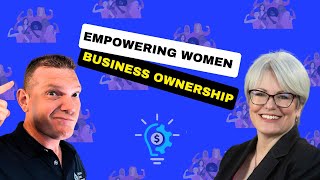
A hosted interview with Juliet Peters about empowering women entrepreneurs. Peters traces her confidence to an all-girls Catholic high school and describes challenges she faced in male-dominated newsrooms and law firms. She highlights a coming wealth transfer to women, rising rates of women starting businesses, barriers such as limited access to capital and mindset/head-trash, and recommends cohort-based support (masterminds), mentorship links, financial literacy (bookkeeping, pricing), and flexible entrepreneurship as ways to build safe spaces for women to grow businesses.
Chapters
Everything really bad that was really old is new again. So I think that we have to surround the women entrepreneurs who are behind us and build a bridge so they have a safe space to be able to grow their businesses really in peace.
Welcome back to Innovate and Overcome. Now, our guest today is a former journalist turned lawyer. Now she's on a mission to help women see that they can lead from who they really are, not what society says they should be. She's a true champion of women in business. Really, she's a warrior. Even at an early age, she learned to tackle injustices both big and small. Now she's been talking tough and hanging out with the boys in newsrooms, boardrooms and courtrooms for a good chunk of her life. And we're excited. Welcome to the program. She Juliet Peters.
Thank you, Richard. So happy to be here. When you say all of those things, it makes it sound like, was that me? Did I do that?
Well, you didn't show up to the TV show wearing a cape, but you may have been walking through your life to some degree with one. And I'm excited about this conversation, of course. I think it's incredible. There's so much value for and growth really in female entrepreneurship taking place these days, but it hasn't always been the case. And being that you've been in the business realm and in all these different types of environments, you've almost gone through somewhat of a, I don't know if I would say a reinvention to a point at multiple stages of your life. And so if we were to rewind the tape a little bit and go back to some of the early days, when did you start to recognize and notice, Juliet, that maybe you were operating at a different level in the environment that you were in, you know. Cause, you know, if we take yourself back to maybe your youth or you know, some of the early stages, it hasn't always been a predominantly fun experience for females in different areas of the workplace, let's be honest about it.
No, but I think, you know, Richard, that's really interesting that you asked that question right off the bat because I have to say that even though I spent my high school years in a religious education at a Catholic all girls school, that actually probably is what empowered me. And I am grateful every darn day that in high school, where I was, when I was growing into myself, growing, you know, my self esteem, that I was doing in it in a predominantly female empowering environment, we can debate whether or not same sex or single sex education is good, better, and Different. I'm not here to really talk about that. But for me personally, I have to say that I don't ever recall a time where anyone at that school said you couldn't do it. Right. And I think they were used to turning out really strong women. And you know, there were 500 people in each of the class, 2,000 women in that high school, right. And, and we were surrounded by a lot of female educators, all of whom were really kind of trans formative in the way they approached how you as a woman could lead. Even though the environment was pretty traditional. Right. So I think that I would have to say it starts there, right? And in terms of, you know, my professional background, I've never really suffered from a self esteem issue, probably because I, in those formative years where I could have, you know, dumbed down, if you will, I didn't because I was an environment of empowerment. Right. Which is why it's so dang important for, you know, younger women to be in those kind of supportive environments because that really sets the table for what happens later on. And then, you know, in terms of my career trajectory, you know, I started in a very heavy male dominated journalism is not, was not super integrated in terms of women. When I was in there, there were a lot of women in the newsroom, but a lot fewer than you would expect. No camera people that were women, no editors that were women, very few, you know, producers that were women. There was some on air staff, obviously reporters and such that were women. But it was pretty, it was pretty male intensive. And honestly, you had to hang with the dudes or you would not have survived. Right. And so that has, as I'm looking back, some downsides, I think long term because I learned to get along and to take a lot of things that maybe I shouldn't have. It was, if it was today, had to deal with. Right. But you know, if I saw someone else, of course, being subjected to that, I always spoke up. But for myself, right, I succeeded at higher levels by not being the one who complained too much. Right. I took the jokes, I took the, you know, the expectations, which were often lower. You know, I took the limited path because it was all that was open, right. And I succeeded at doing that by really not being too much of a problem. Right.
That's interesting. So you, you actually, it's almost like you kind of created mental shortcuts. You could, you could see like the path of least resistance, I think. And, and to some degree, I think we all take that because it's, it's obviously Easier to do. But we don't even recognize sometimes that we are doing it until we have a point of self reflection later. There's a couple really interesting things you mentioned, Juliet. Number one, class of 500 people in a school of 2,000 just in the high school. So your class was bigger than the town that I grew up in. So my entire school from kindergarten to grade 12 in Canada was less than 300 students. So you have a very different experience on several ways for that. But you mentioned the word formidable years and environment several times as you're talking about that early upbringing. And I really connect and resonate with that. And I think our audience will. There's something about being these impressionable period of time in your youth and how it sets the stage and the groundwork for everything because you're really building a foundation. And so what I. What really becomes clear to me in your story is how important that that environment that you were in shaped certain aspects of your behavior. Maybe it create. Gave you a thick skin as an example to, to handle certain areas. You mentioned you have a great self esteem, self confidence. Not everyone develops that and probably not everyone in your school had it. But maybe there was a higher probability of it happening in their environment to some degree because of that upgrade, which is quite fascinating.
Yeah, I mean I, I do think that, you know, and this is an interesting conversation because I don't usually talk about these things because it's very early on. But I have thought a lot about this in the, in the years that have passed, which is those women that ran that school, nuns and laypeople, g us all a great gift in that they never allowed us to see limitations and always empowered us to reach really as high as we could. Whether that be in the arts settings, which we've had a lot of successful, very famous people come out of that school, whether that be doctors, lawyers, scientists. I mean it really was a very, very amazing place to be. And like I said, I may not be the person I am today without that. And that's why it's so important to me that we, we do that with, that we have those educational experiences, particularly for women. Because as you know, the research shows that you lose women, you know, at sixth, sometimes at sixth grade. Right. So that middle school becomes a tough turn for women. I will say that we've obviously cracked through a lot of that. Women are going to graduate school at much higher rates. Right. They're graduating from programs, they are more educated on balance now than men are. And I think what's hard about that, though, is that does not necessarily translate into an easy path once you hit, you know, the job area. Right. And all of the challenges that you face as a woman in, particularly in stem, in, you know, engineering, there are lots of, even in law, women, you know, 60%, about 60% of every graduating class is women. And yet the numbers of women who are leaders or managing partners at large law firms, it's pretty much remained the same for like 25 years. Right? So because women opt out, and we can talk about why women opt out, but the bottom line is that I, I think women have been begging and working for a seat at the table. The table wasn't built for them. Right. That, you know, trying to cut into the table is not working. So I think what I've seen women realize and where women are moving is got to own table, got to build your own table. And, you know, the wealth transfer among women is happening. It's going to be the largest wealth transfer is going to be to women in the next 15 years. Women are going to have the economic power. We have some things that are endemic to us as women that we have to work through, but we also have to realize we are not the minority. We are actually the majority. Right. And we have a tremendous amount of economic power that we need to begin to really take the reins of and use to make a better society. That is the other thing that the research shows is that women, when they do well, they don't buy Ferraris. They don't. Not that there's anything wrong with a Ferrari. Right. I love them. But still, that's not where women put their money. Women put their money into their kids education, into their community, back into their businesses, that, and that strengthens communities, period. And end of story. Right? That's not a narrative, it's a fact.
Very, very interesting. I resonate with a lot of that and it makes a lot of sense. And yeah, I'm, I'm very keen to unpack more of that, especially this idea of the wealth transfer that you're talking about. And I think we'll get a chance to do that when we come back after this important commercial break. Are you looking for a great book to read? Turns out I have one for you. It's called Cash Follows the Leader. It's available anywhere books are sold, but if you want to get a free copy and you can download it right to your inbox, you can go to coachcanfield.com forward/cash follows. Welcome back. We're here with Juliet Peters talking about her incredible life experience and the power of the female entrepreneur, all the incredible things that they're doing in the world and some of the reasons why that's taking place. Now, Juliet, before the break, we talked a little bit about a transition that's taking place over the next 15 years. You'd indicated a wealth transfer and you know, I have some ideas as to why it's taking place, but I'd love to hear your perspective. I think the baby boom has a little bit to do with it, but maybe give me from your vantage point how you see that progressing and why it would be important for our listeners to understand.
Well, I think it's important for a couple of reasons. When you look at kind of the historical data, women have always controlled a certain amount of the buying power within households, right. They actually, you know, make a difference in brands. They, you know, that's always kind of been the case with the baby boom and the, the transfer of wealth from the hands of the baby boomers and even in some respects the greatest generation, those that are left right back, that is primarily a large portion of that will go to women. Right. So that buying power, which has been heavy, is now going to be primary. Right. It'll, there'll be a lot more of that kind of out there messaging around that Women are going to be a much larger part of the conversation. Women are also opening businesses at twice the rate of men, right. So in the last number of years, the number of women starting businesses has really ballooned. The trick on that is that only 1.9% of women business owners ever crack the Seven Figure Inc. Seven Figure, you know, profit, if you will, in their business. Right. Or revenue top line, not even just bottom line. So, so that's disturbing, right? Because if you have all of these women starting businesses, but they are stymied either in what we call the messy middle, which is somewhere between 4 and 500,000. That's a, you know, a decent chunk. It's like 4%, the vast majority and never going to even crack six figures in revenue. Right. So there are a lot of reasons for that. It's kind of a complicated picture. It's not one size fits all. But one of the things that I think is there's a lot of, you know, work that has to be done on mindset around that, you know, primarily and particularly related to money. Now it is true that women don't have access to capital at the same rate that men do. Again, not hyperbole backed. And then there are some sort of internal drivers where women don't reach for going out on a limb in terms of growth. They want a bootstrap because they are more risk adverse as a general population, not all women, but as a general population, more risk.
Everything comes back to a bell curve of some kind.
Absolutely. More risk adverse on finances than men. Right. So there are some things that we as women business owners have to work on. And one of the things for me that I see Richard all the time is that women work better in communities. So programs where women are in cohorts, where they're in masterminds, those are really important for women because one person rises, they all rise. Right. And so for me, one of the things that I'm very passionate about is I've always been a self help and a lifelong learner. Right. I'm into personal development. I always have been. I think it's really important for women business owners to surround themselves with women who are succeeding at a higher level even than they are. Right. You don't want to be the best in the room. You want to be the one who is going to be raised by the discussions and the decisions made by other women. So those, those are the things that I am, I had seen work really well over the last number of years.
It's very interesting. So, you know, I, as you're saying this, I, I see a lot of reflections to some degree actually in my own life. I, my mother was a strong, independent woman that I've always looked up to. She's been a great mentor and a guiding light for a lot of things for me. And a lot of that was because, you know, she was the, of a large family and her father passed away when she was quite young. And so her mom actually was in a farming community, you know, grew up having to tackle all of these things. And so she was forced into a position to, to lead, you know, with some measure of authority. And so she had a great role model to see that. And of course, farmers are quite, they have a lot of ingenuity in things. They, they, they make do with what's available to me to put things together. They invent a lot of things because they work with what's on hand. And so she developed a lot of those skill sets and I got to see that to some degree in my life growing up. So I always had a strong female leader presence in my life even to this day, which is wonderful. So I really recognize that growing up in a family household with a service based business, we certainly understood how to work hard. We didn't know a lot about delegation, but we Learned a lot of other things, but my mom was a big spearhead of making sure that business got created and flourished to the degree that it did. And so I see that as well in my own life. And it's interesting circling back to the transition and the baby boom and so on from an insurance perspective, being that I operate in a life insurance industry, we help people teach them how to become their own banker with the infinite banking concept. But understanding the mechanics of insurance, I mean, everything's based on math and actuarial tables. And quite literally what I share with my clients is us fellas are going to go quicker than the ladies because we tend to do a lot of dumb things in life. And so mathematically we don't live as long. Yeah, again, it's a bell curve, but statistics are very clear and they haven't changed in like 200 years. Yeah, men simply don't outlive their partners. And so it's a natural consistency. If we think about the transition of the baby boom and we have widows left and then of course they, they're going to survive for a number of years. Medical technology is advancing. So if they're already younger and often another thing that happens in the baby boom is you often would have an older male, you know, sometimes male spouse to some degree, you know, and maybe by a few years. So there's a couple of reasons. So that could add, you know, potentially a decade even, maybe even more of additional span for that, for that widow to continue. And then you're gonna see a secondary transition to kids and grandkids. So there's a ripple effect taking place there that I think you, you bring awareness to, which is really, really important.
Yeah, yeah. And, and we have to, you know, as women, we have to help each other help ourselves, which is we, we have to strengthen our bonds and, and messages around money and around business ownership and around what we are capable of, how we price our services. And those are all things that I think women, particularly when they get in business, have some additional challenges that they have to face head on or they will remain in that bottom group. I mean, imagine how phenomen, phenomenal it would be, right, if all of these budding entrepreneurs really kind of hook in and make what, you know, really kind of build businesses that, that then feed others. And you know, it's, it's, it is a ripple effect. Right. And I think that, you know, what's tricky is whenever you talk about business ownership, whether or not you are producing an enterprise level business, meaning that's how you've grown your business because you want to be able to sell it. Right. That's one path. And then, you know, the lifestyle business path is also a choice. And you as a woman could make that choice, which is you could have a very nice and very lucrative business and never really intend to sell it. Right. And you don't have to. It's also a choice not to grow it. There's a great book out there called the Company of One. Right. Which I love that book because I think there are people who want to be a company of one, and they use a lot of, you know, outside contractor labor, and they are able to do great things and build great businesses, but they don't intend to build a business they're then going to sell. But those are choice points. You shouldn't. And I think we have to have more dialogue around that because you shouldn't just sink into a decision simply because you can't get the head trash out of the way to make a firm decision about which avenue you're taking and why. Right.
That makes a lot of sense. And I mean, you talk a lot about the importance of mindset. I'm a huge fan believer. Mindset. We talk about that a lot on this show. As a Colby certified coach, that's something I work a lot with my clients on, is on mindset. And of course, I'm always working on my own because I have coaches myself. And so I think there's an important element of coaching that's necessary here, and I think that'll lead us into some of the things we're going to talk about later in the show. But, you know, it's. It's not easy to develop a mindset, and there has to become a moment of awareness first that says something needs to change and adjust in your life, and then you can start to seek what those things are. It doesn't, you know, always happen naturally. It usually happens because of some kind of a catalyst event is what I find for most people, both. Both women and men.
Yep. Yeah. I think there is no gender difference on that. Right. It's. It's a catalyst that is always pushing you to look deeper at whatever it is that, you know, you are holding yourself back on. Right. So, yeah.
Now, one of the things that we, you know, have kind of unpacked here, of course, is the importance of certainly the mindset. But you've also, you know, circling back to your. Your beginning of your story and working in, you know, the newsroom environment, having to deal with that culture, you know, dealing with the Jokes and the jeers, but, you know, keeping up with everybody and that sort of thing. You know, at some point in time, Juliet, there was a transition for you, and you ended up, you know, moving from that role into another role. So how. How has things progressed for you on this journey? And it seems to me like in our conversation, we're doing a lot of taking your own life lessons and trying to apply these things to the people that you most wish to serve, which is the female entrepreneur. So where are some of these roadmap items for you that have created such transition in your own life?
I think that for me, I feel very drawn to building a bridge between the sort of where I'm at now in my career and the people that are of my ilk, which I would say say, you know, I am the back end of the boom.
In the year 2009, my life completely and totally changed. Something momentous and incredible happened to me. That thing was this incredible book, Becoming youg Own Banker. It was written by my mentor, an amazing friend of mine, R. Nelson Nash. A completely revolutionized and changed my entire life. You can learn all about it by registering for a free on Demand webinar@learnibc.com Take the initiative. You won't regret it.
I am the back end of the boom, right? Like the second of the last year. And I. I read more like as, you know, an X than I do a boom because of the cultural, you know, time in which I really came into my own, which was in the 80s, right? So that. That's much more like an X. Right? And then that high X group. I think we have seen a huge shift in the way women work. We've done some things really wrong. We all know it. And I think we. We are uniquely situated to reach across and help those that us to kind of walk through some of these issues. I really love the idea that women don't kind of follow the path that is typical, which is, you know, you go into someone else's business, you help them build their business, and then one day you go, hey, wait, I. I could build my own business, right? What if we stop doing that part of it, the helping other people build that business and start kind of moving back to, why not have the courage and why not have the training to do that a little bit earlier on? Give yourself a little bit more Runway, right? Because I think a lot of people come into entrepreneurship, particularly women, because they've had it with whatever it is they're doing or where they're not going or, or, Or Right. So, you know, that's, that's really important to me, I think. And the other thing is there were not a ton, you know, to talk about media for a minute. That's a weird, it's a weird, you know, industry, because forget being a woman, it's all based on kind of the individual performance. It's highly competitive.
It's a dog eat dog type world.
It's a dog eat dog world that's even harder for women because there weren't, you know, as many slots for women. Right. And so that was kind of a, you know, that's a head, that was a head turner. Because I had come out of an environment where I was in a supportive environment, you know, and then I was thrown into this where you really had to pick your friends really carefully. Right. But then when I went into law, the interesting thing was that I found that to be completely different. And part of that is because it was. There's a trench mentality that is built among women who are in that environment. And so I always had a phenomenal group of women who I could benchmark with and against that were lawyers. Right. But this idea that women are starting their own practices, which is happening at a large, in large numbers in the legal field, is really a response to, you know, the disgust of having to deal with what happens in a law firm and how really incompatible it is with life, period. It's not just women's lives either. It's incompatible with family life, with having an adjusted life. I mean, obviously lawyers have a, have a terrible, terrible substance abuse problem. It's one of the highest, you know, groups for drug and alcohol addiction for a reason. Because we are very unkind, not, not to one another and to how we. Our own expectations of what we should be doing in terms of a work environment. Right.
There's almost like a trend that's developed over 50 some odd years of what's expected of a lawyer. And you probably learn it from the ground up that this is the way it works. And then you get caught in that bubble a little bit. Is that kind of what you're getting at?
It's like bad steeping a teabag. Steep, steep, Bad, bad situation. Yeah, it's, it's, it's very, you know, the hustle culture is to the extreme in law. Right. And everything is based on the billable hours. How many hours did you bill? How many? That, that's a really tough way to live. And the pressures are enormous. Think about it. People are paying you to take on their problems. That is literally what you do as a lawyer. Right. So you're taking on all these added stresses that are not your own stress. And so if you don't, if you don't learn how to moderate that, that is the one thing I would say is really good with women. They, one of the reasons women opt out of law firms is because they're like, oh no, not doing that. Right. So they, they say, okay, I, this isn't, this isn't going to work. And then they, you know, they basically say, I'm leaving, you know, for family reasons or some other thing like that. But they're really reasoning leaving because it's incompatible with decent life. And women realize that way earlier than men. Right.
They tend to internalize, I think other people's problems more to, again, on the bell curve than men do. There might be not as much opportunity for compartmentalization. There's generally a more care oriented model of the world for the, for the female, at least the ones that I know. And they seem to take, you know, it's easier for them to maybe take on and absorb the problems of others. But also when, when do you recognize that someone does that? Well, then what they do is they give you even more of their problems. Absolutely.
Yeah, absolutely. And I, and I think to kind of wrap back to your, you know, original question is that the coping mechanisms that I, as a professional used, I don't, I would never recommend now. Right. I think we're, we did not do those behind us a service by going along to get along. It was not the right, you know, it was not the right way to approach it again. If I ever saw, you know, I can think of, I think of a moment that I had in a, in an elevator in a law firm and this pretty much sums up life as a female lawyer. So we're in this elevator and there is a notoriously yucky, we'll just use the word yucky partner who has a reputation around the city and somehow ended up at, at this firm. Apparently they just didn't hear all the rumors that had been, you know, spreading around. So I'm on the elevator and there is a female staff member on the elevator. And then this, you know, bozo basically, and he reaches over and her bra strap was kind of hanging out a little bit. He reached over into her shirt, right. And pushed her bra strap back in in front of me. He didn't care. Right. So I got off the elevator, right, to hr. So, you know, I. Mostly because he had a, he had a reputation. He had drummed out a Couple of places in town for harassment. Right. So again, if I witnessed that on behalf of someone else, I would have immediately done what I did there, which was said, oh, what in the hell's bells is this about? Right? But for yourself, I can think of other sketchy situations where I could have but did not speak up on my own behalf because I was trying not to be the problem child. Right.
Didn't want to stir the pot.
Didn't want to stir the pot on my behalf because I might need to stir it on behalf of someone else. Right? So that's, you know, I raise that only because I think we shouldn't be tolerating any of that. I think every person, every woman that's been in business you talk to will have 17 stories like that, not just one. Seventeen, right. And some of them are, are actually horrendous. But, you know, it's that wearing down. If that happens to you once a year for the entirety of your career, you really become numb. Right? You really do. And you, you expect it because it's all that's delivered. Right? So I think that we, for, for the young women that are coming up and, you know, we, we are in a very weird time on top of it, where things have objectively gone back. Everything really bad that was really old is new again. So, you know, I think that we have to surround the women entrepreneurs who are behind us and give them build. Build a bridge so they have a safe space to be able to grow their businesses really in peace, to be honest. So, you know, and fight the fight, which isn't about that, it's about the economic, you know, we trade some amazing things that could be happening by women business owners. We are trading that because we don't want to deal with some systemic issues. Access to capital is a huge one. Right? Women just don't have access to capital. I love when I hear, you know, that there are more and more women's banks opening. I love that. I hear that there are VCs that have funds specifically designed to, you know, to fund women businesses. And I love that, you know, in Arizona there is, you know, a movement in femtech. I love that because I think that that those. That is what has to actively happen. And as other women, successful women, we have to support those efforts, right?
Yeah. Makes a lot of sense. And I mean, there's so much ingenuity there. And I think something that I see is, you know, again, a common trend has been for a long time, and I still think it is to this day. In fact, it may even be to some degree even reverting to that. There's a pull to that family core nuclear family aspect. And my wife is incredible. I absolutely love her. And she works at home in that she looks after our kids and makes sure that they're alive every day, which is amazing. It's quite much harder than everything. I get to do this and she gets to do all that stuff. I think we're a really good team, but we're always looking for ways to support one another. And with all that being in mind, it is such an incredible amount of work to handle and do all that stuff that it doesn't leave a lot of time to do anything else.
No, that's true. And women, and women who work, right, they're still doing all that. They have a second full time job. And the, you know, again, the research really shows that women are still carrying the lion's share of that even when they are working full time outside the house. And I, I am definitely not one to say you should be, you know, working and not raising. I, I, I think as, you know, women, we can't put people into buckets just like we don't want to be in buckets. Right. There's important work that goes on. If you as a family make a choice that you're going to do this, that or the other thing, you know, that is the way it should be. Right. But I also think that we are, are making it very, very difficult for women business owners to succeed because we do not have, that's a whole other area, family policies, you know, that's a whole rabbit hole we could go down. And again, you are limiting, as a country, as a world, the success of all people when you limit the success of some people. Right.
Makes sense. Well, and on that note, when we come back after these brief messages, we're going to talk about the future of female entrepreneurship. What is this incredible thing called the Colby A Index I keep hearing about? I'm a certified Colby consultant and I can't wait for you to discover what your natural instincts are. It works incredible for teams, for business owners in families with our kids. The more you can develop and understand your knowledge of how you go and get things done in the world and how that happens with the people around you, everything can get so much better. Take the initiative. Learn more about how this might show up in your life. As a certified coach, I'm happy to sit with you and help you understand the depth of your own superpowers. Get the process started by downloading my free guide@coachcanfield.com we are back with Juliet Peters, unpacking the the future of female entrepreneurship. Now, Juliet, we've had an incredible conversation up to this point. We're talking about how the female entrepreneur is really beginning to create a space of their own in the marketplace. The trends we're seeing an increase in female business ownership and even a gravity towards that. Now a couple of things come up for me is I see that the technology has created an environment where it's easier maybe for females to do that both because what they can do from home work, from home models the ability to create a little bit more maybe balance between the work load and the, you know, looking after kids and probably looking after husbands as well. I know, at least in my household, that happens.
And parents.
Yeah, all of it. Right. So. So there's, you know, I feel like that's probably a little bit of a. Of a cultural connection that's making some of that more possible, but I'd love to get your thoughts on that and really start talking about how you're assisting and helping the people that you like to serve to raise them up with the right mindset so they can tackle the world in the new world.
Yeah. So for me, I'm really in the exploration space this year. I'm starting a podcast myself, really, designed to highlight the stories of women who are doing amazing things in the community. But may not that those stories may not not be out there. Right. Because they're siloed. They're working in their particular area. So that's one thing. The second thing is I'm working on coaching and training. Particularly, I would like to provide a link between more experienced women and younger women. The tricky thing about forced mentoring, Right. Is it doesn't really work. So we have that. That's. That's one thing we're, you know, I'm working through. Like, what does that look like? I think that cohorts, you know, mastermind groups for women business owners are critically important. I think they need to be occurring regularly that for women, I find to be not just for myself, but when I talk to other women. That's an amazing coaching model for women. Right. I see lots of even coaches that are not necessarily working with women moving into that community kind of space. But there is such a powerful dynamic that happens in a mastermind group of women business owners. It's actually incredible to watch. So that's something that I think we need to facilitate more of. I don't see women entrepreneurship slowing down. And I think, as you mentioned, it's gonna pick up again. I don't want to force all women into, listen, you gotta crack the seven figure thing or you're leaving, you know, you're leaving the 98, you know, or 97 point whatever percent of us in the lurch, right? That's not what I'm saying. I, I think it's amazing that women start their, see a need and fill the need and whether or not they want to grow it or not grow it doesn't really matter. But I want women to get the education they need around money and financial stuff and setting up their QuickBooks from the get go, keeping their, you know, books and records clean, paying themselves first, you know, using systems that are out, that are proven, that don't have anything to do with women or men or just systems in general. Right. Find one you like and apply it from day one. Right. So I see that, that idea of women, of women's entrepreneurship really taking hold. I don't think we're going to see that lessening. And I think the more it gets a little crazy out there, the more women are inclined to do that. Because you hit a really important point, which is one of the things I never appreciated until I started my own business was the flexibility. Now, do I work harder and longer hours probably than most, you know, employed people likely. Because, you know, as, you know, running a small business, you're wearing 17 hats, right? So that can wear you down. But having said that, you know, if I got to take a parent to, you know, an appointment or I got to take a kid somewhere, right. Or pick a kid off, I have the flexibility to do that. And I think the one thing, and I don't care if it's a women or men, I think one of the things that you're seeing is, you know, after the pandemic, during the pandemic, we cracked that independent working thing open. And despite all of the push this year to have everyone go back, Jeanne, back into the bottle, that's not happening long term. I really don't think so. I think people are going to find a way to make work, you know, live around work, not make work their life. I do, I just don't see that going back. I may be an outlier on that. And I'm sure that's not what the commercial real estate brokers want to hear. I'm just saying that I think, I think that's, you know, and that's even more important for women because they do have all of these other things they're in charge of. And carrying the responsibility for and they cannot. You know, it's so much easier for them to work their own businesses than it is to have to be somewhere from eight to five. Right.
I'm an outlier with you, and I have to concur. And I've been working from a virtual model for the better part of a decade. In fact, probably greater than a decade. And so I 100% agree. And I think that if you just recognize how much time people waste driving on the road in traffic, the fumes, the stoplights, the frustrations and the traffic, all the things that get in the way, that that become part of the bother that exists in your life. You can eliminate almost all of that by being able to work from home with a strong Internet connection, which is really powerful. You talked a lot about networking groups and that model. I really love that model, by the way. And as an idea, you know, one thing that we do with our clients, we have quarterly group coaching sessions over zoom that we do, and.
More from Richard





How Do You Use a Policy Loan to Buy Dividend Stocks? #dividendstocks #infinitebanking #shorts


Can Compounding Dividends Pay Your Bills? #wealthbuilding #investment #financeeducation


Should a Corporate Policy Offset Your Personal Coverage? #shorts #insurancetips

What Is Human Life Value? #shorts #insurancetips #dividend #wholelifeinsurance