Cashflow Management Is Key for Service Professionals - Jos Willard | WWBS Podcast
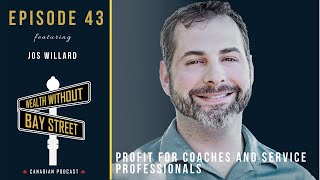
Transcript of a Wealth Without Bay Street podcast episode (Dec 29, 2020) featuring Jos Willard discussing cashflow management for service professionals. Willard describes his path to Profit First certification, how he implements Profit First and cashflow discipline with clients (coaches, financial advisors, other service professionals), and emphasizes making business decisions from values rather than bank balances. The episode includes practical coaching themes (habit-building, responsibility vs blame), examples, and closing contact/resource pointers.
Chapters
Wayne Dyer, in his book Excuses Be Gone, talks about. And this is one of my favorite quotes of all time. The full quote is this. You are where you are in life solely because of the decisions that you've made to this point. And you have always made the best decisions you knew how to make at the time. Right. So what that does is, is it allows you to take responsibility without taking blame. When you have responsibility, you have the power to change things.
That's right.
If it's blame, you can't. Right. And the thing is, the part that is the detail in there that I really love is the you've always made the best decisions you knew how to make at the time. It doesn't mean you didn't know that there were better decisions to make. It just means you didn't know how to make those decisions.
You were listening to the Wealth Without Bay street podcast, a Canadian guide to building dependable wealth. Join your hosts, Richard Canfield and Jason Lowe as they unlock the secrets to creating financial peace of mind in an uncertain world. Discover the strategies and mindsets to a financial future that you can bank on.
Our guest today, Joss Willard, a gentleman who believes that you should make decisions based on your values, not the contents of your bank account. We're really excited to have Joss with us today. Jos is Profit first certified and an amazing business coach. And so, Joss, welcome to Wealth Without Bay Street.
Awesome. Thanks. Happy to be here, Jason. I'm excited for our conversation today.
Likewise, and of course always joined by my famous co host, the one and only Mr. Richard Canfield, coming to us live from Chilliwack, BC, otherwise known as the WAC.
Welcome, Richard. I'm definitely the one and only on this podcast. I suspect there is another guy named Richard Canfield somewhere, but I don't know him and he's probably not as cool.
As I am, so probably not funny. Oh, no, sorry. I'm going to cut right in because funny story with.
Go ahead.
I just want to. I just want to pick on Richard a little bit because when I was growing up, um, I was first seven years of my life, I lived in Portland, Oregon and my next door neighbors were the Canfields.
Is that right?
But it was Rob, not Richard, was, was the dad. But so that was cool. But then Chilliwack. So another story with a friend of mine who lived in Portland. When I got married the first time here in Canada, a friend of mine, childhood friend drove up from Portland where he lived through, through B.C. and into Alberta and he's like, you have some. Some of the strangest names of places in the. In the world, in this country. He's like, I drove through someplace called Chili Whack. Like, is it just. They make really whack chili there. What's the deal? Like, And I was. I was laughing, right Then he talked about Moose Jaw and Salmon Arm. And just. It's like, okay.
Which is really funny is because the GPS actually says it like that. It says Chilliwack.
Yeah, it's weird. But anyway, so, yeah, that has nothing to do with anything other than I have connections to Richard and Jason. I guess you're just along for the ride because.
Okay, that sounds. That sounds good.
No, you were going to ask a question. Sorry, I kind of.
Yeah, I was just going to say, so talk us through your journey with profit first and what compelled you to go down that path. And for all of our listeners, as you know, what we're referencing is the book that was authored by Mike Malkowitz, whom we've also interviewed on the show. And so just ease on over to the episode where we interviewed Mike. It was a fantastic interview. And if you don't already have the book titled Prophet, first, you have an opportunity. You should access that book, whether it's a hard copy or audio download. You'll be glad you did. So, Josh, take it away. Maybe walk us through that journey.
Sure. So for 20 plus years, I have done coaching, consulting, training, that kind of stuff. No matter what I've tried to do, I always come back to this coaching and consulting that I do. And like all entrepreneurs, well, not all, but the vast majority of entrepreneurs, I went through the ups and downs, Right. The cycles. And as Mike talks about in the book, you start spending like you make some money and then you start spending to catch up to what you're making, and then you make more and you start spending and then you lose that money. But you don't adjust your income. Right. Well, I had learned over 20 years of ups and downs that to recognize, okay, it's time to adjust income, or, sorry, time to adjust spending to match income. So I could do that a little faster than I normally did. And so I was going through one of those cycles where I was like, okay, it's time to start pulling back. And I was actually canceling my Audible account, which is one of the last things that I do because I'm a big believer in constant learning. But I was going to cancel my Audible account, or at least put it on hold, but I had some credits there, and so Audible, they like to do Their. They're very good at client retention. The first thing they do is they threaten you and say, you know, if you cancel, you lose all your credits, so you better use them, right? Or actually what they say, so you better stay here so that you don't lose them. It's like, no, I'll just use them all. So I bought some books. I had like five credits or something. So I bought some books, which, by the way, if you have five credits stored up in your Audible account, it means that you don't need that subscription because you're not using it. Just tip for money management there. But I had like five. So I bought three or four the books, and I was like, I got one credit left. What am I gonna do with it? And Audible had been suggesting Profit first to me as a. As a read for, I don't know, months. It's like, fine. Like, okay, fine, I'll grab this one. I've got. It's my last credit. I'll use it. Did that cancel my Audible account? Listened to profit first and was like, holy crap, where was this, like, 20 years ago, right? And it existed 20 years ago. It was called the envelope system. Like, your grandmother used it. Just how do you apply that to business? Sorry, it's throwing me off that my ear keeps disappearing. But so I listened to it and I was like, this is great. And I did what I do with most books when I. I will get the audiobook version first and I'll listen to it. And if I find myself going back and listening to parts or wanting to look something up and be like, I don't want to go scroll through 60 minutes of this chapter to figure out where that nugget was, then I'll buy the paper copy. So I listened to it twice, ordered the paper copy, gave it to my, at the time girlfriend, who is now my wife. So Mike claims credit for hooking me up with my wife, so gave that to her. She listened, and she's like, yeah, we absolutely need to do this. So we started implementing it. And so we were implementing it in my practice, and I called up Profit First Professional headquarters to say, hey, I want to do this right. I want to work with a profit first professional because I know how it works, right? You get a book, 1% of people who get the book will actually finish the book. Sorry, 10% of people who actually get the book will finish it. And of that 10%, only 10% of them will actually apply anything worthwhile from the book. So that 1%, right? So I was like, well, I don't want to be the 1% or so I want to be the 1%. So called him up, said, hey, I've got some questions. How do I apply this to my book? Hook me up with a Profit First Professional. They introduced me to somebody, I talked to that person, had questions they couldn't answer, got bumped up. Bumped. Eventually, I was talking to Ron Saharian, who is Mike's business partner at Profit First Professionals, and he answered my questions and then he said, well, I got a question for you. I said, okay, cool. What's your question? He said, he said, why aren't you a profit first professional? I said, well, because I'm new at this. Like, I called you with questions, remember? And he's like, yeah, but you're a business coach and clearly you know about business and how money works. Because your questions were advanced enough that, you know, other people couldn't answer them. And he actually, Ron had actually had to do some research. And I'm like, okay, well, yeah, but I'm a business coach. I'm not an accountant. I'm not a bookkeeper. Profit first and proffers professionals clearly is for accountants and bookkeepers. He said, no, no, no, we're a third. A third, A third. We're a third accountants, a third bookkeepers, and a third coaches. And we need, we need more good coaches that understand how to do this. So that was his, his sweet talking pitch, right. Made me feel good about, oh, I'm.
A good business coach.
He gave me the audible pitch, basically, yeah, exactly, exactly.
We need you. So, So I went and I did the research on what does it take to become a profit first professional. And it's not like most of the like, like most coaches, I went through a period where I was collecting certifications, right? Thousand dollars here, $5,000 there, a couple hundred bucks here. And you've got all these letters and certifications and things that you can put after your name that all they mean nothing. All they mean is, hey, this guy paid me five grand so I can. So he can use my sticker.
They look good on the garage wall, right?
Yeah, exactly. If you put them on the ground. I don't. Yeah, I might have a. I might have some in a folder somewhere. But I looked and so the Profit First Professional certification, that's a hard certification to get. Like, yeah, you pay for the licensing agreement, but you got, like, you open your books to them. Like they, you have to prove to them that you're actually using it in your own. In your own business. It's a It's a, at the time it was a six month course to go through. You had, you take quizzes along the way. You have to have a 90% pass rate. You take the final exam, you got, I think it's 95% on that. I'm like, man, you guys have some high standards. I never would have done it like in high school. I would never have been able to do this. But went through like you do the work and then you have to recertify now like started last year. I think you have to recertify every year as a profit first professional. So that for me was like, okay, like this is a, this is a big deal. This is not just a, a sticker for my wall. This is a real certification. So got that and started applying it with my clients and we're seeing amazing results. So sorry that, I don't know if that fully answered your question, but that was kind of my story. My introduction to Prop First. It's been three and a half, it'll be, well, yeah, close to three and a half years now. I think that I've been certified. So.
Wow, congratulations. And you know, in your practice. So describe for our listeners what would typically life be like for your client before implementing Profit first and what's life been like for your clients after implementing it.
Gotcha. So most of my clients are service professionals. So you're talking financial advisors, other accountants and bookkeepers. Coaches obviously. One of my brands is Profit for Coaches. So people who they, they rent their brain to people for a living, right? Is basically what they do. And they're really, really good at what they do. What they do is not run a business. Right. And so that's the vast majority of coaches and investment advisors and service professionals is they're, they're great technicians, they're, they're brilliant at what they do, but they suck at running a business.
Right.
And they've been listening to all of the business advice that's out there in the world which doesn't work for service professionals because service professionals can't take themselves out of the business and still be a service professional. What they do then is they just, they own a marketing company and they're marketing packages, right? So my clients that will come to me there, I'm a service professional, I want to help clients, I want to make a difference in my clients lives like you guys do on wealth without Bay Street. You know, you sit down with your clients, you make a difference, right?
Definitely.
The problem is they're not, they don't have enough clients or the clients that they're working with, it's not paying them enough. For whatever reason, they're not profitable. They're still going through all these peaks and valleys, ups and downs. So their biggest challenge is I'm working my backside off, either trying to get clients or working with those clients. And I still don't have the cash flow that I want. I still don't have the money in my pocket that I think I should have. I still don't have the ability to invest in myself to create my own bank. Like all those important things that we want to do, they can't, right? So they're frustrated, they're struggling, they're close to burnout sometimes, right? So they'll come to me and they'll be like, this is like, I need to make, I need to take the next step. I don't know what it is. And oftentimes they think the next step is sales. They just think, I need to sell more, I need to get more. So I've. There's two branches to what I do. One is client acquisition. I help people, I help my clients bring in more clients. And that's often when they'll come to me. It's like, I think what I need is to bring in more clients, right? That's. I've got the book solid logo behind me. Because that's what we do is we get your book solid. But the other half of it, and often the more important half is the cash flow management. Because like I had Mike on my podcast a few weeks ago, actually a couple of months ago now, and that was the story he tells, is how so many small business owners, they think it's sell, sell, sell, but when all you're doing is selling, you're just creating more obligation for yourself because you've got to deliver what you've sold, right? If you're ethical, you have to deliver what you're selling. And so that just creates more and more stress. And it's like people will come to me and say, well, I just want to add 20, 30% more revenue to my business. I think that'll solve the problem. Okay, well, listen, if you're any business coach who is worth the time can get you 30% in their sleep. But here's the problem. Most business owners are running at 60 ish to 70 ish percent capacity, right? If I just add 30% to your revenue, we just add 30% more clients. You just hate me because now you're working at 90 to 100% capacity, you have no time and you're stupid busy and you're stressed out and you're burned out, right?
You have to take all that excess and go and hire somebody to help free up the time so that you can actually create scale.
Exactly right. So instead of doing that, let's focus on building your practice or building your business so that it supports your ability to deliver. And one of the ways to do that is let's make sure that every dollar coming into your practice or into your business has a place to go. It's not just, hey, let's, if I sell to this guy, it's going to be $5,000, and that'll save my things. But you've got $10,000 worth of bills that you haven't paid in the last two months, right? Or you've maxed out your line of credit or whatever that case may be, because you didn't. You haven't set up. No, no. When that $5,000 come in, this amount is going here. This amount is going to pay down the bills. We snowball whatever is we have to do. This amount is paying me so that I can actually eat something other than ramen noodles. I can go to the gym if I need to. I can, I can put shoes on my kids. Right? Whatever the that thing is. We need to set your practice up, your business up, so that every client is profitable for you. Not because you need to be ultra uber wealthy, although, hey, there's nothing wrong with that, but so that you can show up for your clients and you can show up for your family and you can show up for your life fully present without having in the back of your mind constantly, how much is this costing me? Can I afford this? Should I be working instead? Is this person potentially a client? Should I talk to this person about being a client? All those things that mess with your life, mess with your life because you don't have your business set up.
Right?
And so what are the optimum mindsets of clients that you most love to serve?
For me, they have to be someone who wants to make a difference. They have to believe very much in what they do. Now. They can. It's okay to have doubt, right? It's okay to. Because a lot of them will be in that position where I've been doing this. I've been grinding on this for three years, five years, and I'm starting to wonder because my business just isn't where I want it to be. So it's okay to have those doubts, but what, what they need to really fundamentally believe in is that they can Make a difference for the right clients. Right. And they need to know that if they have the right tools and if they commit to doing the work, that they can be successful. So that's kind of where they need to be. Oftentimes when they come, they'll be thinking, I need to be successful. I need to do something. Something's got to change. Right. I've been doing this way, I've been doing things this way for however long. Something's got to change. I'm willing to do whatever it takes to make it work. I just. I feel like I don't know what that is or even if it's. I feel like I do know what it is, but for some reason I can't make that. Just, I have never been able to make the decision to do it. Right. Right. Because Wayne Dyer, in his book Excuses Be Gone, talks about. And this is one of my favorite quotes of all time. It's a two part quote and most people hear the first part and stop. So the first part is this. You are where you are in life solely as a result of the decisions that you've made to this point. Now, a lot of people. Stop it. That's the first half. But a lot of people think that's the whole quote. And you'll get one of two reactions to that. Either they go, yes, absolutely, you're right. And they just beat themselves about, I make terrible decisions, I've screwed my life up. Like, either they do that or they go, that's crap. There's all these other things outside of me. And they just start throwing the blame around. Right? All these different reasons. It's like, oh, hold on, timeout. Chill out. There's the second half. Second half is this. We'll start with the first half again. I'll do it all at once. Get my microphone. Sorry, you can't see it because it's all green screen. But so we'll go back. The full quote is this. You are where you are in life solely because of the decisions that you've made to this point. And you have always made the best decisions you knew how to make at the time. Right. So what that does is it allows you to take responsibility without taking blame. When you have responsibility, you have the power to change things.
That's right.
If it's blame, you can't. Right. And the thing is, the part that is the detail in there that I really love is the. You've always made the best decisions. You knew how to make at the time. It doesn't mean you didn't know that there were better decisions to make, it just means you didn't know how to make those decisions. Right, Right. So, like how many smokers think smoking is healthy? I'm sucking on my vitamin C stick right now. No, nobody says that.
I have never heard a smoker say that.
Never heard that before.
No smoker thinks smoking is healthy. Not anymore. Like back in the 30s when they, you know, nine out of ten doctors smoked Camel. But sorry, there's my pitch for, I don't know, is Camel even still around anymore? Never mind. The point is, smokers don't think smoking is healthy. Right? But they don't know how to make the healthier decision. Doesn't mean they don't know it exists. They just don't know how to make it for themselves. So part of what we do, part of what I do at least, and I think you guys do too when you're working with your clients is we help them learn how to make that better decision. And then just like any muscle group, like, okay, I got my flabby, skinny arms, right? It's weak. So it's, I have to get used. I have to strengthen it by making that action over and over again. I have to make my decision making ability stronger by making that decision over and over again. So as a coach, just like a personal trainer would be or would do, we're helping you strengthen those muscles.
Right. But the client has to be the one that does the lifting. And you know, we often say, as Richard can attest to, you know, we share with prospective clients as an element of our process and an element of our approach is that as a coach we're responsible to you, not for you. And it's just a big, it's almost an aha moment when the person realizes that because, you know, getting a membership at a gym and working out there are two completely different things.
Absolutely.
And I really liked your analogy too of the reps. And that's what it is. It's all about reps. And, and the rep that's taking place in this as you identified. It's the, it's the act of making the decision repetitiously. And, and so starts, it always starts with the first, the first act, which is making that first decision. And then it's a series of repetitive decisions beyond that that gives you the proficiency to be able to make that decision automatic. And that ties into habits and making profit. A habit which circles right back to the profit first. You know, it sounds to me like a lot of your practice and coaching you do you focus on that habitual nature. You know, I love your quote with Wayne Dyer. I think that's great. I don't think I've ever actually heard that entire quote smashed together. So I thank you for sharing that with our listeners. I think that's going to be an awesome little sound bite. What I, what I'd really love to know is, you know, you, you have people reach out to you, they want to get booked solid, and then what happens is you, you almost say, well, actually, what we really need to do is we need to focus on this cash flow pie. So then you, you go down that conversation with them and then that ends up solving a lot of additional problems. So then they may not, you know, I'm sure they still also want to be book solid, but this actually solves the real thing that they were looking to solve, doesn't it? At a lot of times, yeah, absolutely.
It's that we tend to be really, really bad as humans, as business owners, at knowing what we actually need to fix. And there's an old sales thing out there, you know, sell them what they want, give them what they need, which some people will, you know, like, they'll use that as a bait and switch, which I think is totally unethical and not cool. But it's. If I go out and say, hey, you know, financial advisors, or hey, business owners, or hey, you know, coaches, like, I've worked with, I've helped other business coaches, right? So it's like, hey, coaches, you want a profitable business? They'll be like, yeah, absolutely, I do. Great. Well, let's talk about your cash flow management. Like, no, I don't have any cash flowing. Like, how do I, like, there's nothing to manage.
It's cash hemorrhage management.
Yeah, exactly. Right. So, yeah, sometimes it's a case of saying, let's do this instead or first. And sometimes it's a case of saying, let's get you the clients that you need. But while we do that, we're going to make sure that every single one of them is profitable for you. Right?
Well, I'll tell you, Jos. I mean, with the business owners that we work with and in conversation, if we asked a business owner, what is your profit plan? It's one thing to ask the business owner, what is your business plan? That's lingo that every business owner has experienced at some point from someone who is advising them in some way. You need to have a good business plan. You have to have a solid business plan. We've all heard that before. But we ask the question, what's your profit plan? Could you share that with us? And they're like, our what? Our profit plan? You want to know what our bottom line is? No, I want to know what your profit plan is. And then that opens the door to discussion. And so I absolutely agree with everything that you're sharing. Now, being that you're headquartered out of Calgary, Alberta, do you serve clients nationwide or is there a particular area of the country that you most like to work with clients in?
So I'm always careful when I answer this question. Like, the easy answer is, if you have an Internet connection and you speak English, I can help you.
Okay.
But that's not necessarily true. If you have an Internet connection, you speak English. Logistically, I can probably help you. I work. I've had clients in Singapore, South Africa.
Awesome.
Australia, like, but. But you still have to be a good client fit.
Right?
Right. I can't help you if you're looking to be rescued. I. E. You just want to pay me money and have me fix your business for you. And you're not going to do any work? No. Can't help you. If you are somebody who wants to blame the world around you. Listen, it is totally okay to tell me that you have external circumstances that have. That have led to you being where you're at now. That's totally fine. We can work with that. What I can't help you with is, well, my wife's dog died, so I didn't do any of the things that I wanted to do. My kids, best friend at school, their canary ate their goldfish. And so that just created drama in our house. And I couldn't do any of the things that I committed to doing.
And so I started smoking.
Yeah, exactly. I decided I needed a vitamin C stick. Yeah. Like, so there's. That's. Yeah. I can't. I can't help you if you're not ready to make a difference. But that said, if you are a person who wants to make a difference, you're ready to make a change. You want to have a profitable, you know, six figure income. And I hate that expression, the six. The mythical six figure income. You need 250 to have a six figure income. Just so you know, because you want to keep six figures. But if you want to keep six figures, you want to work with clients, you want to do good work, and you're ready to make the change. Dude, you speak English and you have Internet connection. We can probably work together.
Absolutely. And I really respect, you know, again, what you indicate on your website. And we're going to provide in the show notes for listeners, all of the particulars that you need to know in terms of how to get to know Joss a little bit better by taking a look at his resources and even arranging a time to connect with him. Now, Jos does limit the number of private clients that. That he works with, understandably so, because, you know, obviously, the caliber of the coaching and the services that he provides requires that. And so it's what I really respect, Josh, that you've indicated, too, is that you mentioned, you know, on your website, if you want to explore working together, you know, privately, whether it's through coaching or, you know, advising a management team, training your sales professionals, et cetera, and you have a real budget that you wouldn't object to having your own clients pay you, then the next step is to, of course, be going through your process to schedule a conversation. And I really respect that because no capable person should ever negotiate their value. And that's something that we believe is so fundamentally important, because your ideal client, and there may be several who are listening to this episode and who may want to connect with you and talk to you.
That'd be great.
I can share with listeners just from the time that I've been getting acquainted with Joss, that I would wholeheartedly recommend that if you think you would be a good fit, that you schedule a time to connect with him, because ultimately, wouldn't you want to know? And especially if you're in a business where. And rich. You can attest to this. When we talk to people about how much money they're making, whether it's. How much money is your business making, what are you making personally? When we get the number, we clarify that's the amount of money you're handling.
You're not keeping that. How much is left for you? What's left over after you paid all those other guys or gals? What do you got left behind?
Right?
If you're dealing with the corporate owner who connects with Joss, and Joss looks at the books and says, okay, well, you wrote checks for 2 million bucks to everyone else this year. Are you comfortable writing a check for 25k for yourself or, you know, whatever that is that it's going to take to get the work done, well, if the answer is no, you've got the wrong fit client.
Coincidentally, on the same topic, which it ties into profits first. To me, it marries really well with Nelson's book. And I have. I actually was in a conversation earlier today with a gentleman And I re emphasized this, and it comes right from page 65 of Nelson Nash's book, Become youg Own Banker. One of the most important words. How do I get started? One of the most important words that comes to mind is desire. Without it, you probably can't do it, right? Remember Parkinson's Law back in part two? Everybody is already spending all financial resources on what he thinks is best. There's got to be honest introspection at this point, and a commitment to get out of financial prison must become a burning desire. This is going to require a change in priorities in life. Recognizing that controlling the banking function personally is the most important thing that can be done in your financial world. And that ties, I think, perfectly to the profit first model. It's. They're very synergistic in that statement. It's almost like. It's like Mike Michalowicz, in his book is channeling some of Nelson's presence as he was writing. And it's like, I remember when he shared with us his epiphany moment at that one financial session he was at where he really recognized how he'd been going about things incorrectly. And we've heard those kind of stories, those moments of epiphany where it's like, wait a second. I've been doing all of this, and I've been struggling and going down this road, doing what I thought I knew was best. And now all of a sudden, bam. It's like a light bulb hits you, and you're like, wait a second. If all I did was change these couple of things here, everything would have been different. But I can make the change today.
Yep, totally. One of the things I love about Michalowicz and love about profit first is that it's based on behavioral psychology. Like, it's not about, you need to make these massive changes in your life. It's, what if we just tweak a little thing so that what you're already doing works for you? And I say this a lot, and sometimes I get challenged. Some. Some people say that, say, this is a little aggressive. Others love it. We'll see. But when I talk about making decisions from your values rather than your bank account, people will tell me, I value my family, I value this. I thought, okay, great, cool. I want you to show me two things. Show me your calendar and show me your bank statement. Back in the day, it was, show me your check register. Right. But show me your calendar and show me your bank statement, and I'll tell you what's really important in your Life. That's because what you're investing your time and your money in is you're investing your time and your money in the things that you think are important. Like you might say, my values are this, this, and this. But your actions show me that what you actually value more than that are the things that you're spending time and money on. Now, does that mean you're a bad human? No. Does that mean that you are somehow a hypocrite? Or maybe. But typically it just means I aspire to these values. I live these values over here. And we need to take those two. Sorry, my mic keeps getting away. We need to take those two. Like, here's this picture, here's this picture and let's bring them together. And maybe it's bringing this one up here, maybe it's going like this. It depends on where these values come from. These aspirational values. Are those actually yours or are they what you think other people tell you you should be living right?
Very, very good point. Very good point. I wanted to share with you, Jos, and I think we had discussed this a little bit previously, but when we decided to really embrace and to implement the Profit first model, we went about it without first consulting with a Profit first professional. And we thought, hey, we think we've got a pretty good grasp on this. And it was an easy model for our organization to embrace. And when we went about it, we said, okay, we're prioritizing Profit First. We take on a quarterly basis, we look inside the Profit first account, we take 50% of the money in that account, we reward all of our T4 income earning teammates, and then we ask our T4 income earning teammates to decide what to do with the remaining 50% of the profit first account to bless other people's lives in a positive way. And when we shared that with Mike, he was blown away because from his perspective, the Profit first account is to reward the owners of the business to take care of the owners. And so when he heard this interpretation, he said, wow. He's like, that is a really unique way of kind of going about it. And so as an organization, we decided to embark on the Profit first certification pathway. And we, while that may not lead to our organization actually delivering the coaching and doing that. Our philosophy in our firm is all about who, not how, and so who possesses the unique capabilities to deliver the hows that we want to have implemented and then how do we come from a place of authenticity and integrity to say we are intimately familiar with this process and we've certified in this process, but it may lead to collaboration where we have people who are living and breathing the coaching element of this process to be able to deal with the.
How.
Because I'll tell you, we're all passionate about it in a big way. It's a perfect, perfect marriage with our existing process that we coach our clients on. In becoming your own banker, the infinite banking concept and taking control, that's a big element of our process. Taking control of the function as it relates to your needs and taking control of prioritizing profit first as it relates to your needs. And so it's a perfect marriage. And my belief is from those that I've interacted with, like Josh. I really appreciate you sharing with our listeners and telling them a little bit about you and your business and what you believe in, because I thoroughly believe that you're genuine and you're authentic and you show up that way. And so it's a great day to have you on our show. That's for sure.
I appreciate being here.
Did I hear you say as well, Joss, that you are. You also have launched a podcast. Did I hear that correctly?
Yes, I do have a podcast. It's called Profit for Coaches. All right behind me, if you go to profitforcoaches.com podcast, you can listen to all the episodes. And Mike Michalowicz is on there, Matthew, Kimberly, a bunch of other cool guys. I have a feeling that we might get a Jason or Rich on there as well. We'll see. We'll do some negotiating behind the scenes, see if we can make that happen. But, yeah, it's good. The focus for that one is coaches because of my business. So josswiller.com is the website that you're referencing, Jason, and that's where my coaching business is basically headquartered. And there are two streams. If you are a service professional, if you're a financial advisor, if you're a lawyer, I guess if you're in that world, you can work with me there. But specifically if you're a coach, because the coaching model is so unique, like the Only to be profitable as a coach, coaches, especially business coaches, were the worst case of do as I say, not as I do, because as a business coach, you can't take yourself out of the business. You can scale up, you can do things, you can build up a larger team and all that kind of fun stuff. And you, Jason, have done a great job of doing that at wealth without Bay street and the stuff that you guys do there, surrounding yourself, as you like to say, with a team so that you can work in your area of brilliance. The point is, where was I as a coach? That's the only way to do that. Right? But so many people teach the only way to scale is sell info, products, right? Never actually coach anybody. So profit for coaches is focused on that. But I've had a lot of folks that are not coaches listen to podcasts and say, dude, there's some great stuff in there that I've applied in my life. And it's a combination of profit first, book yourself solid, which is another thing that I'm certified in, and some of the other tools that I use. And it's basically, do you want my coaching without paying for it? Go listen to my podcast, right? Because I'll give you the gems or what I've got now. And I bring in other people who are, who are geniuses in areas that I'm not. But I wanted to go back real quick. Sorry, I don't know how much time you guys have. But real quick to Jason about how you have set up wealth at Bay street, the way that you work with, like you said, your T4 income earning employee or team members, you have set this up in much the same way that I teach my clients.
Oh, wow.
Which is your business has to be built to support your client delivery.
Right?
To support what you do. Right. And so many of us, going back to what I said in the beginning, so many of us as business owners suck at owning businesses because we're not business owners. We're like, I'm a coach, right? I'm really good at being a coach. And what I had to learn through 20 years of beating my head against the wall was how to set the business up so that the business supports me delivering to my clients, doing the things that I'm here to do. And you've done that, I think so very well with your company, with the way that you're put together and that's how you're profitable. That's why Profit first works for you in your business. Right. I mean, Profit first will work for a solopreneur very well and help them to get to where we want to be. And I just like what. The more that I as like you said, it's been a process over the last several months of getting to know each other. And the more that I've looked into what you do and how you do it, I'm just like, yep. No, he's. He's built it. Right. So congratulations for that. And you know, if people are looking at you and rich and Your company and going, I. I want to be like that. You do. The answer is yes, you do. You want to be like that. Right. So I'm humbled. Do what they're doing.
Thank you. Yeah.
Very grateful.
All the credit goes to our teammates. They help Rich and I operate in our unique ability, and we respect them and value them enormously. And so it's very humbling to hear that. Thank you. Thank you so much.
Well, and I think it's a great example of. Because people, some of the biggest pushback we'll get is profit first, right? Profit first. Profit first is about profit. No, listen. People first. You can only put people first if your business is profitable.
Yep. Agreed.
If your business is struggling, you'll be. You'll be laying people off, or you'll be making the worst decision you can possibly make, going up to your eyeballs in debt until you can't possibly borrow any more money, and then shutting down and leaving all of your people in a lurch and leaving no one with a job and no one supported, in.
Which case, the people you put first was the bank.
Exactly.
Absolutely. Exactly. And, you know, as one of my coaches, Joe Polish, you know, the founder, the creator of the Genius network, who's an amazing guy, he often says, profit is only good to the degree that it can be used. That's the only thing that makes it useful. When you create that and you prioritize it in your business, amazing things happen. I can't share with you the enormous sense of fulfillment that that brings to our team when they go through that quarterly process. And I, by design, as the current CEO of Ascendant Financial and Rich and I, co founding wealth of El Bay street and all these things that we're doing, I purposely stay out of that part of the discussion. I don't want to have any direct influence. I want our team to. To look inside that account and say, okay, we've got a pool of thousands of dollars here. What are some unique, amazing things that we can do to bless other people's lives in a positive way? And what do we want to see next quarter? More or less money in that account? Well, more. So what do we need to do to get there? Well, we need to have a really high degree of understanding of everything that we're doing and how it's contributing to. To achieving the painted picture vision of our business. And it's all tied directly back to serving other people. And it has caught on inside of our organization in a very big way. And so I'm super excited, Josh, to Explore collaboration opportunities as we look ahead to 2021. Having you as a guest on our show has been just awesome, and I wanted to open it up to Rich if he had any closing remarks, any hero questions that we'd like to ask. Josh.
Well, yeah, you know, we always like to end off our podcasts. You know, we like asking questions, I think, that give an opportunity for people to share a little bit more about them and connect with our audience and our listeners. And so this comes from one of our coaches, Dan Sullivan. Dan. And you may be familiar with it, but it's true that not all heroes wear capes. Spider man doesn't as an example. But you might and you might not think of yourself as a hero. However, every time that you're out there creating value for others, which you've done for our listeners today, which you do for your own, your own podcast, et cetera, you're benefiting people by making their life easier or better for them in some way, helping them obtain the profits that they seek and reorganize their business structure. So the real question we have for you, Joss, is who would you like to be a hero to?
Who would I like to be a hero to? I think the best way to answer that is I believe that people need good coaching, that people need good help. And so many really good coaches and professional service professionals can't help because they're too busy struggling with money. So they either go out of business and then they're not available, or when they do show up, they show up stressed out about money, so they're not able to fully give who they are. And so what happens is, these people that need help, the people that we're meant to serve have to settle for someone who's a good business owner. But a so so, or worse, coach or financial advisor or whatever, they settle for that or they don't get help at all. And so if I'm going to be a hero, I want to be the hero to that coach, to that financial advisor, to that consultant, and the people they're meant to serve. I want to help them be able to show up and be the hero they're supposed to be for the people that they're meant to serve.
Wow.
That is outstanding, Joss. Thank you so much again. And to all of our listeners, thank you for tuning in to Wealth Without Bay Street. Be sure to watch the upcoming video. You're going to see that just to the right of your view. So tune in to the upcoming videos that are recommended for you, and we'll look forward to seeing you on our next episode. And as mentioned previously, all of Joss's contact details will be in the show notes. And if you didn't catch it early on in the episode, what we were talking about in relation to profit first was the book that was authored by Mike Malkowitz, who's also authored a number of other amazing books. And so you've got an opportunity. If you haven't read this book, be sure to get yourself a copy. And if you found yourself thinking, wow, you know, Josh sounds like an interesting guy and I really think that I could be an ideal client for him, then just ease on over to his website and if you believe that you're a right fit, then go ahead and schedule a consultation with him. You'll be glad you did. Thanks again, Josh. We hope we can have you back in 2021. Fair enough.
Absolutely. Be thrilled to come back.
All right.
Thanks guys.
Thanks for listening to the Wealth Without Bay street podcast, where your wealth matters. Be sure to check out our social media channels for more great content.
Hit subscribe on your favorite podcast player.
And be sure to rate the show. We definitely appreciate it. And don't forget to share this episode with someone you care about. Join us on the next episode where we continue to uncover the financial tools, strategies and the mindsets that maximize your wealth.
More from Richard





How Do You Use a Policy Loan to Buy Dividend Stocks? #dividendstocks #infinitebanking #shorts


Can Compounding Dividends Pay Your Bills? #wealthbuilding #investment #financeeducation


Should a Corporate Policy Offset Your Personal Coverage? #shorts #insurancetips

What Is Human Life Value? #shorts #insurancetips #dividend #wholelifeinsurance