Coaching Football to Coaching Infinite Bankers with Mark Benson
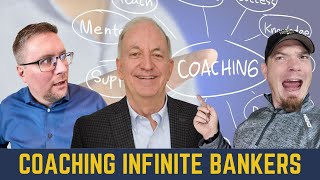
This is a recorded conversation (YouTube) featuring Mark Benson—former state high-school football coach turned financial coach—moderated by Richard Canfield and Jason. Benson recounts his coaching principles (fundamentals, discipline, playing all athletes), his transition from education into financial services, and how discovering Nelson Nash’s Becoming Your Own Banker (read July 2009) reshaped his practice. The transcript emphasizes the distinction between knowledge and wisdom, the Infinite Banking Concept (IBC) as an alternative monetary system housed in participating whole life insurance, and a "control option mindset" focused on cash flow, liquidity, and using properly designed life insurance policies to retain control of family wealth (including reference to page 48 — "expanding the system to encompass all income").
Chapters
You ever thought about how easy it is to get knowledge? I said, well, not really, but what are you talking about? He says, well, think about the Internet. He says, but it's not so easy to get wisdom. And he says, so there's a whole lot of people think they really understand something because they have knowledge, but they don't have much wisdom. And I think there's a whole lot of people out there that have read Nelson's book and now they're out trying to do what he was professing, but they're not even close. They don't use the right products. They don't. They don't have processes in place. They don't have systems, and they contaminate things. There's a potential for a lot of damage. And so anyway, this gentleman, Father Larry Hoover, he says, well, think about this. So he asked me the question, how do you get wisdom? And I said, well, I don't know. He says, well, sure you do. You got to have experiences. And he says, so by definition, older people would have to have more wisdom than younger people normally. So. Well, I guess that's right. He says, and how do you accelerate your wisdom? I said, I don't know, Larry, how you do. And he goes, well, sure you do. You gotta have mentors, but they have to be mentors with wisdom.
Well, we're joined today by an amazing individual, Mark Benson, who is the founder and president of Resource One and a Maritime, Inc. For 38 years, he's been focusing on educating individuals and families about their money. He's a coach. In fact, he was named the 2AMissouri State Football Coach of the Year two years in a row. The guy's pretty much amazing. He likes to think big, he likes to keep it simple, and he likes to think about how you can take whatever it is you're doing and put a 10 and then an X on the end of it. So we're going to have a lot of fun with Mark today, and we've been trying to get him on the podcast for a while. You know, busy people and schedules sometimes doesn't always fly. But we're super pumped about this conversation. And, Mark, thanks so much for being with us on Wealth Without Bay street today.
Thank you. I have a lot of respect for what you guys do, and I've even seen some of your podcasts, so I'm happy to be on here.
Let's dive right into one of my favorite topics, and that's coaching. And I really love the first time that we had met at a think tank. Event and you had done a talk there and you spoke a little bit about your coaching background and your coaching philosophy and how you brought that along with you, you know, in your career and serving other people. And, you know, we talk about on our team all the time where we distinguish and set ourselves apart by letting folks know that to be a good coach, you really have to love your players. And that means knowing when to hug and knowing when to kick. And so I'd love to just have our listeners get a glimpse into your philosophy as a coach.
Sure. I, I, since I was very young, I, every day I played baseball, basketball or football every day. I lived in a great community and lived next to, across from a park and there were houses all around the park. And so there might have been a hundred kids living around that park. And every day we played baseball, basketball or football. So I was probably an average athlete. And so at a relatively young age, I knew I probably wasn't going to be an NFL player or anything or major league baseball very young. So I, I knew, I think this is a little bit odd, but I knew when I was 11, 12 years old that I wanted to coach. And I really thought I would coach for the rest of my life. And then, so I did coach for 12 years. I wanted to be a head football coach. Thankfully, nobody hired me for a couple years, but I was applying at age 22 and then at age 24, I was hired as a head football coach. Probably wasn't that ready, but as you guys know, you, you jump in and, and you learn a lot and under fire and so having to land in a great community, I was surrounded by other really good coaches, really good players, really good parents, really good community. And we were fortunate to do some really good stuff because of all those reasons. I learned way back then if you, if you, what you do, you do it with enthusiasm and you work really hard and you surround yourself with good people, amazing things could happen. And so we, we were able to win a couple state championships. And the coach always gets way too much credit when they win, and we also get too much credit when we lose. And so that's why some of those things occur. Well, when I was about 31 years old, I guess I had a basketball coach come by our coaches. I was already showed game film to parents on Thursday nights during the season. And a basketball coach from a neighboring school was by to play basketball in our school. He had the wrong night. Cell phones didn't exist back then. He came in. A coach also had to use a phone and he just started asking me about if I'd ever wanted maybe think about. I was a math teacher. And he says, you know, I've been teaching a lot of my former players and other teachers about investments, insurance, tax strategies and wonder if you've ever thought about that. He made one statement. He says, you know, you don't get to pick your math students when you go to class each day. But, but in our, in this business you do. So that's how I got into the financial services business. Wow. I did a dual career situation. I'm still a head football coach and a math teacher, but I started working with a, with a life insurance company here in the Midwest called Franklin Life Insurance. They were notorious for, for recruiting teacher coaches. So at age about 31, 32, I guess I was doing both. After a couple years I was earning, I was working 10 hours a week part of the year earning what I was making, being a full time math teacher, football coach, 70 hours a week trying to figure out how to win football games. And so my wife and I had our fourth daughter coming at that time and I decided to transition. My wife and I both one Sunday afternoon decided we couldn't continue this way. She was a first grade teacher, but also had four very small girls on hand and we both quit our jobs one Sunday afternoon in January. I think that was like 85. So best thing I ever did. When I started doing this full time. I earned more than both of us had working full time in education and it's just kind of gone from there. So. So that's kind of how it started. I met or I read a book, the Great Crossover by Dan Sullivan and Jason. I know you attend Strategic Coach, but in that book I felt like he was basically describing me because I had kind of hit a ceiling of complexity. And so I started attending Strategic Coach. One of the best things I've ever done. I decided in Strategic Coach the idea for a maritime was hatched in that workshop in Chicago. And all that is, is we, we decided that, that my natural market. This isn't great, you know, this isn't really smart but I mean it wouldn't take a genius, but, but anyway, I decided that I, I would just see teachers and coaches. Dan Sullivan has to do a simple exercise. J.C. bry recalled the largest check. Yeah, I wrote down my 10 most profitable, most enjoyable relationships as clients. Nine of them were teachers. I'm not going to see anybody but teachers. So that's how all that happened. So that's kind of how things got.
Going for me and what, what do you, you know, what would you describe your philosophy to be as a coach?
Well, I don't know. I, I mean technically I had certain things I believed in in the game of football. Like we, we were real basic. We, we ran an isolation play that everything else came off of and we ran the football very effectively. We had very aggressive kids that, so defensively we were more of attacking type team. And then especially teams wise, we just thought about it. And back in those days that was something nobody ever thought about. So we really strategically coached there. But two things that happened as a coach for me, we had a 40th year celebration of our state championship teams just last October. That's really cruel because that group of kids from 83 to 80, excuse me, 81 to about 86, they're the ones that built that school's first state championships. And that school Today has won 15 or 16 state titles, but we won the first ones. And there were two things that I figured out recently that I hadn't thought about as much back then maybe. But one thing we did is we demanded that our players and our administration went along with this. You had to come into the weight room three times a week, year round. The first time you missed, you ran five miles and I generally ran with them. And the second time you missed, you were off the team. And I don't even think that was legal, but that was, that was what we established and our administration supported. So we had 90 to 115 kids showing up in the weight room year round. So we were by far the most physical. We just dominated. And, and then our strategy of running the football went really well with that. So that's one thing. But the second thing that we did, and our freshman coach did this, we didn't win the first two years. We were three and seven back to back and probably weren't great. Far from being fired. Well, the third year we had a really good group of freshmen come in and one of our assistant coaches who was the ninth grade coach, he decided there's 32 kids on the team. He says, we're going to start 11 of them on offense, 11 on defense, and the other 10 are going to play on every specialty team. And I, I didn't think that was a very good idea because I thought we needed to go win. And he says, well, I think we'll do okay, but, but I think we'll get kids to then come out the next year. So we, we basically played 32 of 32 kids a lot and we started doing that and we went from 65 players to 115 over a three year period. And that team did go undefeated by the way. And so you know, I just was blessed with really good coaches who really cared about the players and that, that wasn't talked about back then. That's, you know, this is, this is 40 years ago. They really cared about the players. So I don't know, it's, it's some of the things I just outlined. We expected a lot. We worked really hard at it. We could probably get as much, we could probably get more done today. We probably overdid it. We probably watched game film more than we needed to. I worked 80, 90, 100 hours a week. I already slept. But it was just a, it was a great learning experience. And if, if I would have left coaching and got into business and taken more of those traits with me immediately, I think we would have done a lot better. I didn't expect as much of people in the financial business as I expected of the players and the coaches. You know, people want structure, they want, we all want that. We want disco and, and boy, I mean our. Again, I don't know if it's appropriate even on this or. It needs to be said though. The last year we had 115 players and I was the athletic director and I knew we had too many players and not enough games. So we would actually, we double scheduled JV games on Mondays and the other schools didn't know we were doing it and we didn't have, the school didn't have a lot of money. We put 60 kids on a bus that was probably illegal. We dropped half of them off at one school, another half of another school. We win both games like six, eight touchdowns, pick everybody up and take them home. That last year our freshman went undefeated, our sophomore team went undefeated, our second JV team went undefeated and our varsity went 14 0, went undefeated and won the state title 37 nothing and could have been worse. So the, the discipline, the expectations, the hard work, the numbers, you know, all that together surrounded with good people, we really created something that was really special. And a lot of those kids from back then, they went on to become coaches at that same school. And, and then there's kids that are still coaching know today from that it's an amazing place. Lou Holtz used to say this about another day. No words will do it. Justice can explain it. If you're there, you don't need any words. You, if you experience it, you understand it. And so it was just a great experience. You're going to learn not to ask me a question, Jason, because I take too long to answer.
Oh, no, not at all. This is incredible because, you know, our viewers, our listeners, they're always wanting to, at least the vast majority of people rich that we've interacted with, they always want to become better versions of themselves. And so they're always seeking inspiration from people, especially like yourself, who have taken impressionable young athletes and led them to victory and experienced a lot of adversity along the way. And when you think about the experience that we have in coaching people on implementing the process of becoming your own banker, the infinite banking concept, it's not all sunshine and roses. Coaching is a process. And if you love the players that you're coaching and you have a process and you hold people accountable and they lean into that accountability and they embrace it, they become better and right.
And I, I think if we. Another thing that I feel like we did there and we're trying to do today is is we really taught the fundamentals. Yeah, we reinforced and did them over and over and over. And, you know, we'd play a game on a Friday night and our coaching staff would agree, well, we didn't tackle very well last night. So the next week, what are we going to do? We're going to, we're going to really work on that fundamental, and we're going to be a lot better by the next week. So a funny thing that I always thought about, we were nine and one in the 10 years that I coached on opening night and the one we lost, my wife was really pregnant with my last daughter, so I was a little distracted. But I really always thought, you give us three and a half weeks to get ready for a game with our coaches and our players. We'll drill the fundamentals, we'll be ahead of the game, we'll be ready to play. And so we dominate an opening night. And I think part of it's because of the people, the fundamentals, the work ethic, etc.
You know what? One of the, one of the coaches, I'm a NHL hockey fan and I love the Edmonton Oilers and just love, love coaching in general immensely. And one of the coaches that I admire a great deal, who's never played a shift in the NHL but has led his team to consecutive Stanley cup championships, he said, you know what, what the definition is of a great coach, in my humble opinion, he said, my definition of a great coach means that I could beat your team with mine and then I could take your roster and beat my team with yours.
Yeah, Right.
But so it just, it just really clicked. And Rich, I, I know we want to dive into, to Mark's, you know, experience with, with ibc. And there, there was a talk at Think Tank that Mark did, and there were some like, amazing golden nuggets that came out of that talk. Do you remember the look on our faces when we were capturing notes at that time? And we were like, oh my God, he explained it so brilliantly.
Well, the thing that I love for our listeners, I want you to understand is, you know, Mark, I think, belongs in front of a whiteboard. He likes to think with pictures and drawings on a whiteboard. And it really resonated with me. A lot of that works with my learning style as well. And recently, actually, I believe it was in maybe 2015, Mark, the session I'm talking about, you were up with Nelson. It was going through Nelson's book and you were Talking about page 48 and 49, expanding the system to encompass all income. And so recently, one of the things that we do, we actually do quarterly client coaching sessions with our clients. Every. All of our clients are invited to that. It's all done over zoom. And so we actually played that for people to be able to get some inspiration from your thinking. So we're always trying to help expand and extract more thinking out of people, but if we limit it to just Jason's brain and my brain and other members of our team, we're limiting the exposure to other thinking methods and processes there are. So we want to infuse other types of thinking with our clients so that they can be inspired by, by others as well. And so you provided some of that inspiration, whether you know it or not. Back in September, we had a client coaching event and we actually went through that session and it created a lot of great discussion with people. But what I really would like to maybe, you know, hear from your experience is as you've been working with people again, you know, coaches and teachers, and I know you've expanded that. You, your, your time with Dan Sullivan, Strategic Coach, has really elevated your personal thinking and, and how that relates to your practice and your ability to help more and more people. And. And what? Helping more people? What does helping more people really look like? How does. How are we impacting so many with Nelson's good work and good guidance?
Yeah, so I read Nelson's book in July of 09. So I had been in this business for 30. I do the math, right. 30 plus years. I guess that'd be right. No, 20 plus years. 24 years, I guess. And it was remarkable to me that this even existed. It was, this was even possible. And so I had a chance to talk to them just like you guys talked to Nelson a number of times. I had a. I have a good close friend, he's a Catholic priest today, but he called me one day and he, he asked me the question. He goes, mark, you ever thought about how easy it is to get knowledge? I said, well, not really, but what are you talking about? He says, well, think about the Internet. He says, but it's not so easy to get wisdom. And he says, so there's a whole lot of people think they really understand something because they have knowledge, but they don't have much wisdom. And I think there's a whole lot of people out there that have read Nelson's book and now they're out trying to do what he was professing, but they're not even close. They don't use the right products. They don't, they don't have processes in place, they don't have systems and they contaminate things. There's a potential for a lot of damage.
Yeah.
And so anyway, this gentleman, Father Larry Hoover, he says, well, think about this. So he asked me the question, how do you get wisdom? And I said, well, I don't know. He says, well, sure you do. You got to have experiences. And he says, so by definition, older people would have to have more wisdom than younger people normally. So, Well, I guess that's right. He says, and how do you accelerate your wisdom? I said, I don't know, Larry, how you. And he goes, well, sure you do. You got to have mentors, but they have to be mentors with wisdom, okay? And so that made a whole lot of sense. And so that motivated me to. My dad was 89 or so at the time. He lived two and a half hours from me and it motivated me to drive and see him every other week. And when I, because it was so far, I thought, when I go, I'm going to be there 5, 6, 7, 8 hours and then I'm going to come home. And Larry, Father Hoover says in Mark, do me favor, go ask your dad questions and shut up. Don't, don't talk. And he says, and I did. And I wrote some of them down. I recorded some of it. My dad died a couple years later at age 91. He and I visited one Super Bowl Sunday. I got up there about 9 o'. Clock. My mother died five years earlier. And in asking these questions, I learned things I had no clue about, and I have eight brothers and sisters, grew up on a farm. It was amazing exercise on that Super Bowl Sunday. We started talking about nine. We forgot about the game. And I'm an avid. We never turned the television on. I looked up, it's like nine hours later. One of the things that I, that I share with my dad is what Nelson taught is how money works. And to us, and I know you guys too, the government and the banks created a monetary system for all of us over 100 years ago when they created the Federal Reserve banks, okay? And it's a place where we can save money and we can borrow money. So if any of us save $100 in the bank at 1%, we make a dollar. They take our hundred dollars, loan it to somebody else at 4%, they make $4. Todd Lankford, who you guys know, talked this at a workshop one day and he asked the question, what's the bank making on their money? I said 3%, as did the person who answered the question. And everybody in the room, I think, said 3%. We discovered during lunch, Todd said that would be true if that $100 was the bank's money. That was the depositor's money. So the bank paid $1 to get that hundred. They made $4 on their one. So they made 300% return. So what Nelson helped me understand and Dan Sullivan taught me about thinking about my thinking and then thinking some more. And you guys both do that really well. And Nelson always asks us to think and to always talk about. It's all about how you think. And we're convinced. I'm sure as you. Most people aren't thinking, the herd does things that doesn't make any sense. And so we, to me and you guys again know this. But in the becoming your own banker book, the brilliance of Nelson is that he figured out there was a different monetary system available in the life insurance industry. Now, it had always been there. It's like gravity has always been there. Well, that had been there for 200 years, but I don't know of anybody else that ever figured that out. Since Nelson figured it out and read the book, there's a whole lot of what I would call imposters that act like they, you think they thought of it. Well, they're, they're trying to articulate using, you know, the idea from Nelson. So Nelson helped us understand, you know, you can use this monetary system that the banks and government created 100 years ago. You can use this monetary system with the life insurance companies. You save money over here. With the life insurance company, you can get uninterrupted compound tax free growth on the money. You can't do that in the bank. You save in a bank. If you have 100,000 in savings invested, whatever, you take half of it out, you're not going to keep receiving a return on 100 because there's only 50 there. You have 100 in the life insurance policy. You take 50 out by borrowing the insurance company's money. Not what Dave Ramsey says, but you borrow the insurance company's money, you still get paid the dividends on the 100,000. So you have the uninterrupted tax free compound growth. So which monetary system do you want to be in? Okay, so, so that's what, that's what Nelson has taught all of us. So when we were, when we were meeting to tie into what Carlos, Lara, I spent three hours on the phone, three nights before I did that talk in Alabama. I don't know if you guys know this, But I had 17 pages of notes. I never got to the second page. I went, if you're talking about the talk, I think you are. I just went to the whiteboard and I started talking about cash flow. That was a direct byproduct of my conversation with Carlos. Larry. I called Carlos a couple days after that and a day or two before the think tank, and I said, you know, Carlos, the most important thing for any of us to think about is cash flow. He goes, mark, that's what it's always been about. I said, well, nobody's talking about it. Yeah, no, but it's, cash flow is the most important thing. So when people call us and ask, will you help us with retirement? What they're really asking, we believe is, hey, my, my cash flow is okay while I'm working. Can you help me understand if it's going to be okay when I'm retired?
Yeah.
Well, unfortunately, we have an industry with a lot of flaws. And I don't think most of the people in the industry, the investment folks, etcetera, I, I don't think they really get that. And so I think they get off on all kinds of tangents. They, they create kind of a scarcity mindset. They're all about accumulating, accumulating, accumulating. But Nelson in his book, taught us, no, why don't you just save and utilize, save and utilize, and you won't have to invest in wealth as much and worry about accumulating. I'm not saying it's, there's anything wrong with investing. I'm not saying there's anything wrong with anything, but the foundational piece is completely overlooked by most in the industry and it's really kind of simple. So we coined the phrase the control option mindset. And to us all that means is we want people. And we like to teach this to as many as 30 million people in America if we can. That that mindset would go viral across the country. We would change the direction of the country. We would cause trillions of dollars to go tax free to the next generations to potentially make up for all the silliness that our politicians just constantly create. It might be the only hope that our next generations have. So when we talk about the control option mindset, all we're saying is can we help everybody understand each of us has the option to control more of our cash flow and wealth, but in reality, the government and the banks control it.
Right.
So when we're meeting with people, we have them bring a pay stub. Let's say we're talking to somebody who has a $6,000 a month gross income.
Yeah.
We say, well what's your net? And they go for. So that's 2,000. That went someplace. Where did it go? They give you the darnest looks. They'll say, well, I don't know. Well, let's just look. Looks like a whole bunch of it went to the government, taxes, IRS in our state, Missouri, Medicare, etc. And then over here it went to this 401k or this teacher's retirement. That was a, that's an account created by the government. So it's going to the government for taxes or to government created accounts. The problem with the government created accounts, we circle those red, red circle assets mean you can't get to it. Green circle assets mean you can. So these are red circle assets. You can get to them. So there's $4,000 left in this example. Now this person has $1,000 a month mortgage, a $500 a month car payment of $250 student loan and 252 credit card. So they work, they go to work, get six government takes to the banks, take to the government's getting a third of the gross, the bank's getting 50% of the net. And you wonder why you don't have any money. Then we help them understand. You've got this $300,000 home, you owe 100 on it because Dave Ramsey everybody says you got to get it paid off. So you have 200,000 of equity in the home. You're making zero technically on that equity we had a guy teach us that years ago. So you got 200 in the house, you're making nothing on. You've got X number of hundreds sitting in these 401ks and these pinches. And I see anything that's wrong, anything wrong with any of that, but it's all in red circles that you can't get to. Now, you got money in the bank that you can get to, but the government's making 3,000% return on your money while they loan it back to you. So because you can't really get to any money, you're now in their trap where you got to go do the car loan, you got to do the credit card loan, et cetera.
That's right.
So by thinking about our thinking, we just started being able to figure those things out. Nelson, Carlos, Lara. All we did was listen and then thought about it. And so in teaching the control option mindset, we teach five things. Number one is that teacher I mentioned makes 4,000amonth. 4,000amonth times 12 months is 48,000. They do that for 10 years, that's 480,000. They do that for 20 with no pay increases, that's 960. Do that for 30. That's one and a half million. That's probably the greatest asset they've got. They get paid, they pay the mortgage a thousand dollars. What do they make on that thousand? Kind of nothing. They get a little bit of principal in the walls of their house, making nothing. They make the car payment, 500amonth. What are they making on that 500? Nothing. They go to the grocery store, spend 300. What do they make on that 300? Nothing. They go to the gas station, put $100 of gas in the tank. What do they make on the 100? Nothing. We walk people through that. Buckminster Fuller has a quote. If you want to help people think different, quit trying to teach them. Give them the tools to figure it out for themselves. So we simply have these thinking tools. I'm walking through one right now. People understand, wow, that's a one and a half million I'm going to make. And the path I'm on right now, I'm making nothing. So I'm making nothing on all this income. I'm making nothing in the bank. I'm making nothing on the equity in my home. I can't get to these hundreds of thousands in this government created pension because they got all these regulations. And then people wonder why it's a challenge. But then does the industry teach any this? Well, I know guys like you teach it, but most people aren't teaching it. So the first step is they'll understand they're getting an opportunity loss on all their money, all their future income. The second thing is understand the monetary system that the banks offer isn't very good. The third thing is the equity in the home. If you get your home paid off, if somebody wants to do that, fine. But if you have a $300,000 home, you got $300,000 sitting in it. The equity makes nothing. Now you're saving a little bit of cost of interest, but I think you can put the money over in policies like Nelson talks about and make tax free more than it's costing you. And then we look at you got. The fourth thing is the government created accounts and that's just a profit sharing plan with the government. We talk to people all the time. Okay, you got 200,000 here. Let's say it makes 20 next year. Is that your 20? Wow. Yeah. Well, not really. It's part government, part yours. You don't even know what part yours until you take it out. And the way the country's going, our country is it's probably going to be taxed heavier. And then the fifth thing that we try to teach in our control option mindset is there's a difference between inefficient cash flow loans and efficient cash flow loans. If I have a $200,000 mortgage that I pay $1,000 a month on, that's pretty cash flow efficient. They only want $1,000 of my money for that, 200,000 of their money.
Right.
I've got a $20,000 car loan and I'm paying 500amonth. They want 500 for my 20. They only want 1,000 for their 200. I don't think I'm going to try to have too many of these car loans. I think I'm going to get rid of those, but I think I'm going to try to keep. I don't think I'm worried about paying off this home. So those are all the kinds of things. And again, I know you guys are teaching that, but that's just not being taught enough.
Well, that's a sharp example of Nelson who said many times over the years as, as the three of us heard him say, you just don't have to play their game anymore, boy. You just don't have to play their game anymore. And what a peaceful, stress free way of life it is when you get.
So when, when you guys Talked about page 48 of the book and I had this thought recently, it's kind of a corny phrase, but I'm 69 years old, just did that a few days ago, and I'm not going to be here forever. And she. I've got. We have really good people that can do what I do, and they're going to, if I'm gone tomorrow, this thing, our thing's going to continue to go on, you know, indefinitely. But it's just a challenge. On page 48, I had this thought, like I'm saying, my kids, my family are not going to be able to call me in my grave. I won't answer, right? So that's a, that's a thinking exercise, Jason. Kind of a Dan Sullivan type thinking exercise. And I wish I could call Nelson today and ask him further about page 48. I've heard people give talks about how all the income could go into the policies, but the people I've heard talking about it, I don't think they've gone deep enough because I hear them say, well, you can't put the car payment or you got to make the house payment or whatever. So we probably have about a dozen families and my wife and I are one of them. We send 100% of our income to our life insurance policies.
We do the same percent now and then we're.
We're using dollars from our life insurance policy to make the mortgage and everything. And very simply, what Nelson teaches is you save it first and then whatever it earns, you use that money to pay for stuff. It's so simple. But even when I've heard people give talks about it, they're still missing some things. They're not thinking deep enough. And really they need these thinking exercises, I believe so. I would love to talk further with Nelson today about that, but obviously I don't get to do that. But it's one of the most interesting pages in that unbelievably interesting book. You talk about nuggets, that thing is full of. And in fact, you can't. Well, let me tell you a funny story. Because of questions that clients today ask years ago, we started figuring out, wow, you could put all your money in here. And I thought maybe for a minute we thought of that and that's when somebody pointed out, no, read page 48. And I thought, oh, yeah, Nelson, I figured that out. So I thought I'd figured it out. But he had figured out before we figured it out. So it's an amazing book and we were having success in the financial industry without that, but we were doing the conventional stuff. That financial people do. When Nelson taught us that and then he and Dan Sullivan motivated us to think and then think about our thinking. If people just thought about, if they just thought about everything that you and I have been, we've been talking about, they'd say, well, I don't want to be in that monetary system. Yeah. I don't want all my money in that, in my house making nothing. If it can be over here. If I could, if I could buy life insurance property and get the profits from my life insurance property, make my real estate payment, yeah, that could make more sense. So it's just a, it's an amazing thing.
Well, I think something that's interesting as I recall too, you had identified, you know, prior to Nelson's book, coming into your life in 2009, which is the same time that it landed in, in my life, thanks to Jason over never forgive that guy, is you had already had a fair amount of sizable premiums that you were paying as a family, being that you'd been in the business for a while and your, you know, time frame, 24 years in the business prior to receiving the book. You know, I'll let you kind of answer, but my understanding, my takeaway is that the industry and the training and the, you know, the regular continuing education that you are required to do, none of that really taught you what was in Nelson's book. Even though you had the core components and the fundamentals, but you didn't have all the pieces of the puzzle necessarily together. So I'm just curious if you can expand on that. And then how did the existing policies, existing contracts you have, what were some of the thoughts that came to you once you went through Nelson's book?
So in 1985, I started with the Franklin Life Insurance Company. As I said, Franklin Life had whole life policies, they had term policies and they had fixed annuities. That was it. So I learned how dividend paying whole life policies really worked and I got a really good education and understanding. But the only policies that I was aware existed were what I would call base. Only the only place you could put money was in the base. There was not a level paid up addition rider. There wasn't. So I sold lots of. I, I sold 175, 200 contracts a year policies a year, $50 a month, a hundred dollars a month, you know, of whole like policies with term riders on them to people in their 20s. And I think that potentially makes a lot of sense. But then unfortunately that company got sold to American General. American General then got purchased by AIG American General and then AIG stopped manufacturing whole life. They sold us the fact that oh these uls are just as good. In fact no they're better. Boy was that, I mean I drank the Kool Aid and boy was that a nightmare. My dad died with a $395,000 universal life policy that the the cost of the Insurance was about $3,600 a month when he died. Had he lived another couple years it would have gone to 5,6000amonth. I'm the one that sold it. So when anybody tells me about oh ul's this or that, I'm sorry, I can't go that route because you're renting the life insurance what you're doing, you're putting money in a fixed account or a variable account. They're extracting money each month to pay the rent on the annual renewable term. The annual renewable term looks pretty good when you're 30. It doesn't look very good at 91. I had a friend of mine tell me one day it's like going up in a hot air balloon. Uls you get up off the ground, it catches on fire. My dad's policy had caught on fire. You're too high to jump and you can't stay on the balloon. And so he died soon enough. But you know we were watching that very closely and trying to determine how much longer can we go with this thing. So anyway that's kind of my history of really learning about whole lots of I mean really learning it and then being sold alive with the universal life which was basically created to fight Al Williams. In my mind we, we thought Al Williams was silliness instead of facts. Nelson would have thought that a lot better. And then one day and old night I read that book and as soon as I read it I thought wow, this thing. I didn't believe you could do such a thing existed. You could put money in a life insurance policy and you can get that much out. In the first year when I was selling the Franklin like policies we the first dividend was not paid till the end of the second year and there was not a PUA rider so you couldn't, you couldn't turn it into a statement utilize type thing like you can with what Nelson discovered right. So that's, that was basically my experience. So when I read the book I owned a lot of franken life whole life policy. Now I want you to know something though. Those policies became almost like non participating policies because of what AIG did. You know in the banking meltdown they were bailed out. Well, AIG got bailed out while all the agents bailed out and all the clients bailed out. So you can imagine what happens to a company when the premium dollars that they're expecting to come in get shut almost to nothing. Those policies I had started paying zero dividends. I don't know how many people know that, but they literally, in my mind, AIG literally turned participating whole life policies into whole life policies that didn't pay dividends. Is that not scary? Oh, no kidding. But the education I got was phenomenal. And then understanding the capabilities of a properly designed life insurance policy, there's just nothing like it. When we're in meetings, sometimes Jimmy, myself and others are in meetings after a meeting will say, is this not unbelievable? And in fact, sometimes clients will say, this is unbelievable. In fact, it's too good to be true. It is too good to be deceived. It's not, it's, it's not. It is true. It just seems too good to be true. But probably because that's contrasting all the other nonsense that happens in the industry. You know, all the other products and services were offered. And I'm so happy you guys are a lot younger than me and I'm hopeful that you guys, I mean, I know you guys will carry the torch, but we, we really have to, we can change the direction of countries by continue to do what you guys are doing. Well.
And I'll add to what you just said, Mark, like we. So we are introducing an IBC youth group and we have at our most recent family banking summit, one of my twin daughters, Charlotte. She's 10 years young and she can, she can educate a room on how.
To have 200 people of 200 people.
On how to keep the money in the family and the importance of it, because she hasn't been polluted with what Nelson referred to, all that noise that goes on out there. She hasn't been polluted with any of that.
And she doesn't have to use a, a life insurance illustration to talk about it.
Not at all. And so, and we're doing a big event in the Greater Toronto area up in Canada here in the month of April and Charlotte's accompanying me on that trip and she's going to be speaking to that crowd and there will be more than 300 plus people there and she's excited about it. Absolutely.
You can travel west.
Oh yeah, yeah, absolutely. And so serious.
Would she, would you, you and she come to St. Louis?
Of course.
We'll put 300 people in our room.
Absolutely. All day long. And here's something that'll, that'll blow your mind. This was just a week ago. I, we're in our family home in the kitchen having a conversation as a family. And I said, you know this, I was talking to my son Jackson, he's 14. And I said, you know what, Jackson? This reminds me a lot of Nelson Nash's fifth golden rule. Without skipping a beat, my twin daughter Charlotte says, rethink your thinking. I just, I couldn't believe my ears, Mark. I, I said, charlotte, could you, could you just say that one more time? And she's 10. And so we go.
We want her in St. Louis before she turns 11. Oh boy.
I'll tell you, she would love that. And, and I, I would be more, more than happy to take her.
Okay, we'll going to work on that. I presume you guys will be at the think tank.
Oh, you, you can believe it. Yeah, we'll be speaking there and actually leading, leading the whole group through a pretty amazing exercise.
It's going to be a thinking exercise.
That's great. We've had some challenges the last year or so getting there, but we, some of us will definitely be there. So I look forward to that. Jason, I'm going to hold you that. I want us to make that happen in St. Louis. That's, that's powerful having a 10 year old.
Yeah, she, she's, she's a natural. She's amazing. And, and I would say that, I would say that about her if she weren't my daughter. Just seeing her speak, she's a natural. And she picked up on this very, very fast. Like, very fast. Just like Nelson said.
You don't have to back flush their hands.
Totally, totally.
We've, over the years, over the years we've had certain financial people try to do what we do and it's, it's tough to backflash, you know. Yeah, there's too much vampires taking too much blood and it doesn't work. So we, we're adding, we're adding some really good young college kids and we're adding some people from education and we're adding some people not from the industry, but because we think that's a better approach.
It truly is.
It's a simpler way to get to the 10%.
That is how you're going to find your very best players on your team are players that haven't been polluted with all that noise because you spend more time trying to help them to undo a lot of what they've learned. Versus coaching new players on how to rethink their thinking. And they lean into it and embrace it because they're, they're just like giant sponges. They just want to learn.
Yeah.
And then when you set them out on this course and you give them a good game plan with a great process, a great team to support them and to nurture them and to help them grow, and a great head coach that can have. Assisting coaches that help them become better versions of themselves, you're going to have a championship team because every. It's like Nelson said, everything that we do financially is compared to what everyone else is doing. And so by by implementing this process, you're already at an immediate advantage, whether you're an advisor or whether you're a client who, who's just practicing this process personally or professionally. And so, yeah, your very best team members are going to come from sectors out there and experiences out there that don't include the financial services industry.
You know, Mark, you. You shared an awful lot of wisdom with us today, and you, you highlighted the difference between the knowledge and the wisdom. And so hearing about your personal experiences, your personal story, what you've been able to take in over 69 glorious years and what you'll be able to continue to take in with that enthusiasm and new wisdom over the next 69 years, should you be blessed to have it, is just really, really exciting. So we really appreciate you being here. One of the things we always like to know is obviously with what you do with your organization, what you've been doing as a coach for so long within your team organization and within the teachers, the coaches, and the body of people that you serve, what we're wanting to know is, although you didn't show up on the podcast today in your boardroom wearing a cape, you know, you, you may not realize this, but you're showing up as a hero because you leave an impact on the world with everything that you do teaching Nelson's message in the world. Our question for you really is who would you most want to be a hero to?
Well, that's a really good question. I mean, I hope I'm a hero to my immediate family. I hope I'm a hero to our business family. We just had a. I see a couple of the books behind you there, Jason. I've been reading Dr. Ben Hardy's Be your future self now. And so one of the things that. In that book. There you go. In that book, in part three, I was talking to some of our people just before this podcast about the fact that you know, if any of us ever said, I wish I'd known back then what I know now, well, to me, that's, you know, I'm, that's a future self sort of a thing. And so we're getting in tune with this, with this book, Dr. Hardy. And so of his seven steps, he suggests you try one of them, two of them. So I'm picking one and four. One is your contextual purpose. And I added that with Dan Sullivan. What's your 10 times purpose?
Yeah.
And so it'll keep you fascinated and inspired the rest of your life. And for us, and for me, we want to share the control option mindset, which is just a mindset that has Nelson Nash all over it with 30 million peoples. That's enough. Where it'll go viral across the country.
Absolutely.
So in one way, I guess I want our organization to be a hero to, to the country. Okay. But in that first step, three priorities. One is a business priority to attain a certain amount of production each month. But then we want to 10 times that over and over and over again. And I don't know if you've gotten Dan's and Ben's latest look, I got in yesterday's mail. Ten times is easier than two times. So that's something we're going to be really working on. And then the fourth step that we're going to really be working on is I'm going to get really direct and ask people what I want. And what I want is I want to know if you will help us share this mindset with the masses so they can, we can reach this goal. So I don't, I, I don't know if I'm answering the question, but I guess, I guess be a hero to, to all the people that are going to learn and utilize the control option mindset. And then that leads into one of our other thinking exercises, which is a generational conversation. So that's why I'm really interested, Jason, to talk to your daughter, because we're very much into that line of thinking about my wife and I as well. Not just money, but our values, our. All our experiences, our wisdom. History tells us that rags to rags in three generations, that all of that might dissipate by the third generation. We want to try and figure out ways to carry it on. And there's a guy, James Hughes, that says the only way to do that is to have generational conversations. And I've listened to you before, Jason. I know that's exactly what you guys are doing, is you're having generational conversations.
Better believe it.
So how's that for a long.
Hey, that's wonderful. And Mark, we're honored to have you as our guest today. Thank you. Sincerely, we're very grateful for you and for all that you and your teammates get accomplished and you're serving people and you're doing a great, a great job at it. And we'll definitely be with you in St. Louis. We'll make that work. And for all of our viewers on the YouTubes, you're going to see a playlist that just showed up. That's how amazing our video editing team is. And on that playlist, we want you to continue your journey of learning because there's no such thing as having arrived in knowledge. We want you to keep watching, keep tuning in, keep sharing your feedback, your insights, your, your thoughts, your questions that come up for you. But we appreciate you being a part of this journey with us and we want to wish everybody an outstanding rest of your week. And Mark, we are going to have you back if, if you're okay with that. We know that our listeners are going to love this episode and we may have a few collaborative ideas to discuss a little bit further at Think Tank with you as well, which will create more value for not only to serve your mission and purpose in the United States, but also to have a positive impact on Canadians coast to coast as well. So, Mark, thank you. Thank you sincerely for being with us.
Thank you.
More from Richard





How Do You Use a Policy Loan to Buy Dividend Stocks? #dividendstocks #infinitebanking #shorts


Can Compounding Dividends Pay Your Bills? #wealthbuilding #investment #financeeducation


Should a Corporate Policy Offset Your Personal Coverage? #shorts #insurancetips

What Is Human Life Value? #shorts #insurancetips #dividend #wholelifeinsurance