Don't Just Donate: Former Pastor's Secret to GIVING BIGGER!
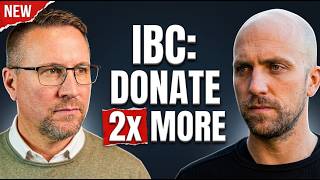
Paul, a former youth pastor, explains how cash-value life insurance lets you borrow against your policy to give bigger donations without depleting savings. He walks through using policy loans for lump-sum gifts to nonprofits and churches, and why boards resist the idea.
Chapters
Money's got to flow in and then money's got to flow out. It's almost come full circle.
Today's guest is someone that both Rich and I deeply respect. A former pastor, husband, father. He spent time shepherding families spiritually and now he's helping shepherd them financially.
What's the legacy you want to leave behind? This is what I've been doing. The mission didn't change. It just looks different. You guys always say it, and Nelson said it all the time, right? It all begins with how you think. When the conversations can happen, then a plan can be created. And relationship is key in having these conversations.
Welcome back to Wealth on Main Street. And today's guest is someone that both Rich and I deeply respect, a former pastor, husband, father, and now I would say one of the most mission-driven teammates that I've ever been blessed to work with. And what we really love about Paul is that he doesn't see the infinite banking concept just as a process. He is really looking at it through the lens of stewardship. We're going to have some great discussion today around nonprofits and charities and Paul's take and perspective on how we can look at both and donating differently. And he spent time shepherding families spiritually, and now he's helping shepherd them financially. And so that's what you're going to hear today and how a man like Paul transitions from preaching from the pulpit to teaching families how to implement this process and to protect legacy and to think long range. And so, if you've ever wondered whether money and meaning can actually go together, then this episode is definitely going to hit you right between the eyes, as Nelson would say. So, Paul, welcome to the show. Good to have you.
Awesome. Thanks, guys. It's awesome to be here. This is so much fun.
Let's rewind for a second. So, go back to that time where you're a pastor, you're leading people spiritually. What was happening in your heart that led you to the world of IBC?
Well, to be honest, I wasn't really looking for it, Jay. It— I'm pretty fortunate. Let's go back a little bit further. Okay. So a friend/mentor, you know, gave me a book way back before that and said, Paul, give me $30 and read this book, right? And, you know, that incredible person, his name starts with an R and ends with a D. And so I got introduced to the concept even before, you know, the pastoring and that kind of season of my life happened.
Okay.
And a little bit funny story is I was actually looking into getting licensed back then. You know, just having conversations with Richard and, and, you know, meeting Nelson and starting to practice the concept personally. I'm like this, like it's, it's starting to change my life in just those few short years. And I'm like, I was actually looking into um, getting qualified back then to, to start helping people. Um, but then the pastoring came up, and, uh, just not expected, not looking for it. Um, just, you know, a man, another mentor of mine, uh, saw something else in me and, and, uh, you know, called me out in that. And that's the season I felt that I should go for that time. And, um, After much, much, much saying I can't do this, finally God was like, no, go do that. And I'm like, okay. So I had to put, you know, the, the life license and, and IVC, like helping families, kind of on pause for that the last, you know, that was 11 years ago. Um, and, uh, kind of went a direction I wasn't expecting, um, into the, into the pastoring world and, and helping people that way and And then, you know, full circle, the opportunity, right, to join the Ascendant team came up a couple years ago and was like, this is the season and what do I need to do? Let's go, right? So shifting back. So it's kind of like it's almost come full circle where it's been kind of a crazy, weird, unexpected journey a little bit, right?
Wow.
Yeah, that's amazing.
And Rich, you would remember all that.
Yeah, I mean, I got to see various parts of it along the whole stretch and What's been really interesting, Paul, is, you know, especially working with a lot of youth, you know, I know you put a lot of your focus as a youth pastor and the things you were doing. You're so fully involved in, in your church and your church community. And in general, the idea of community building, um, encouraging people to be around and in fellowship in some way has been something that's always been very core to who you are. And, you know, you bring a lot of that, of course, to Ascendit, which is wonderful, and we appreciate that. And, you know, you spent so much time working in a nonprofit realm that you learned a lot about, you know, obviously they have needs and they're— they need donors, they need contributions in order to make everything run. None of that stuff, you know, a lot of it runs based on, of course, volunteer efforts. But then, you know, not all of it's volunteer. Like there's dollars and cents that need to move around. You got to pay the bills, you got to pay the light bill. You know, you need to get supplies for events and gatherings. There's a constant shift and change. And while it might not be a business looking to generate profit, it's still a business that's running through the flow of capital. And so as you are watching all that happen through the years that you spent time delving down that path of your life, I would imagine you were constantly wondering, I wonder if there's a better way. I wonder if there's a way we could do things differently. And that I I'm thinking is kind of what landed us on this interview today.
Yeah, 100%. It's, it's the thing with life, right, is, is we all have different perspective and we don't really know. We don't really know until we know, right? And, and so you kind of think about like, I never really thought like I grew up in, you know, in church and, and around the nonprofit world. Like I knew people that were leaders in other nonprofits and all that kind of stuff. But you really never know until you, you you're kind of in that world and you see the behind the scenes. And so, yeah, so like you're saying, Rich, I think being able to, you know, in that decade and in that season, I got to actually see a little bit more behind the scenes of what happens. And you're right, it's, you know, whether it's a, it's, you know, doesn't matter what religion it is, like every, whether it's church or you know, mosques or anything like that, or nonprofits that are helping care for, you know, different like sports organizations, all these different organizations, like we never really see the behind the scenes. And the truth is, is like you hit on is, you know, money's got to flow in, and then money's got to flow out. And, and so when you're part of the nonprofit, it's you still need money, right? You still need that coming in to help push the cause forward. Because, you know, in my context, working with teenagers, it's like, you know, youth camp is coming in the summer. You know, there's the fall break, and, you know, those things cost money. And a lot of the time, you're really dependent on either casting the vision and finding people that are willing to donate, or, you know, doing it with $0, which, you know, that was a lot of, a lot of things I worked with is we don't have money, so we're going to have fun anyways, right? But it's, I can tell you, looking back, the, the money helps it, you know, it makes it a little bit easier when, when, when there's the money there that you can, you know, buy snacks or do those different things that, that, or help send, you know, that, that youth to camp where they're gonna— something's gonna happen that's gonna change their life, right? Like, that's the— that's what it's really, really about when it comes to the nonprofit, is, you know, seeing the change in people. Um, it's, it's, uh, it does take money in some capacity.
And when we talked before the show and you said, you know, I really want to touch on charities and nonprofits and, um, the function of, of donating, so what, what inspired you to want to expand on that today? And, and what do you want to get across to viewers and listeners in terms of the lens that you're looking here?
Yeah, I think, I think we, we kind of come into— with everything, we, we come in with our perception, and until we see something that we didn't know before, we, we just don't know, right? Um, and so I was pretty blessed to be introduced to IBC. Oh man, Rich, it's been— I think 2012 I started my first small policy, right? And so I was, I was pretty blessed to be introduced. I don't know, I was mid-20s, when Rich first handed me that book. And so, you know, that kind of started that journey of learning and education. And so then when it came even to the nonprofit world, it's— I just, I saw a different way that I could support the cause I cared about. Right? So, you know, with my church, I was giving anyways, right? And so I was just, you know, I gave the money, I could give the money to help the youth program. And then, you know, the money gets spent and it's gone. But what I was able to do was, you know, I took the money I was going to give, put it into my family system, my, you know, build the infinite banking concept in my life and practice that process. And as I was doing that, it was, you know, still had access to that capital that I could now give to the church. Give to help the youth program. And even thinking longer term, because, you know, as Nelson always said, like, think long term, one of the golden rules. And so often we kind of were thinking about this coming weekend rather than, oh, what about, you know, a year from now, 10 years from now, 20 years from now? And just by doing it differently, you know, when I go, there's going to be organizations that get blessed more than if I was just giving, you know, what I could each and every single month. So because, you know, there's, there's the death benefit that's going to come when I pass away and my family will be taken care of and the causes that I care about will be taken care of as well. Because you just take a step back and thinking long term and just changing, not, not changing what I was giving, but I just changed how I did it.
Yeah, you know, Rich, uh, this brings up a memory for me when, uh, so we had spent some time with, um, Ray Potit, uh, who's no longer with us, um, who passed away. And but he, uh, shared an example once where he said, uh, it was a real example, and he said that he had approached the, the pastor of his church and said, I can "I can continue giving," the number was somewhere around $1,000 a month. "I can continue giving $1,000 a month or I can give you $12,000 today. Which one would be more useful?" And the pastor would say, "Well, yeah, the $12,000 today would be most useful." So, he would access a policy loan and provide that money in advance. And it was put to really good use and there was a lot of— a lot of greatness that was done with that. And then he was able to replenish his system in a way that he was accustomed to that aligned with Nelson's golden rule around don't steal the peas. And so it just brought that example up for me. I don't know if you remember him sharing that, Rich, but he shared it when we were down in Lawrence.
Yeah, I remember a few different conversations around that, and I think he provided a couple of examples of other clients that had done some similar things. And ultimately, you know, we've had a lot of people inquire about trying to do or set something like this up with their congregation. And the reality is it's a foreign concept. And so you have the whole education thing, but of course now you also might have to deal with elders or a board, and then you have to kind of convince everybody. And of course, if you're convincing people, it doesn't usually work out very well. So there's, there's challenges, I think, that are created You know, even though the intention is pure and the goal and the objective is to create more value, more help, more capacity for the, you know, the church organization or whatever the organization might be. But there's always going to be resistance there, and it can be hard to maybe break down those barriers, but also recognizing that there's a way of realizing how you can convey the ultimate value the end of the day, you're looking for a long-term support system. But when we're looking at a short-term cash flow crunch, which is probably every nonprofit organization is going through that on a month-to-month basis, you know, they're just like, where can the next donation come from so we can get this taken care of and this taken care of? They sure, they'll have a long-term vision, but the short-term constraints are always so impactful that it might be hard to recognize where do you strike the balance between creating that long-term outcome when you're dealing with these short-term challenges.
Okay, so you want to keep the wealth in the family. I get it. I hear you.
Me too.
That's why we wrote this book, Don't Spread the Wealth. Everyone tells you that you want to spread the money, spread the wealth around.
No, no, no.
You don't want to do that.
You want to keep the money in the family with the people you love and care about where it belongs. For as many generations as possible. That's what we talk about in this book. In this book, we have an incredible 15-page bonus you can download, which instructs you on how to start the conversation with your family on annual family banking meetings, how to host them, some sample exercises and a sample agenda, tons of amazing, great benefits. Go ahead, get a copy right now. Head on over to don'tspreadwealth.com. That's don'tspreadwealth.com. don'tspreadwealth.com. You're going to love it.
I think what Nelson said in his book, Becoming Your Own Banker, when he said this all begins with desire, he would share if he were with us today that he would also, I guess, correlate that with giving as well. Would you guys agree? And that it— when the desire is there, it comes from a place of, you know, wanting to, wanting to bless another person's life, another organization, like in the communities where, you know, we live and where we work. And it not only feels good to give, but it creates, like, Rich, like you would say, like a ripple effect. And that makes it even more special to do. And when you have the resources to be able to do that, you've got a policy or a system of policies and you've got readily accessible capital. When Nelson said that opportunities of high caliber will find you, he didn't just mean opportunities that multiply money like an investment-grade opportunity. He also meant opportunities to give. Isn't that good?
That's really good.
That's how I think about it as I'm hearing you guys and what you're sharing.
Well, in thinking about the average person, whether they're tithing or they're giving on a regular basis, whether they've got a monthly pad set up or whatever the structure is, you have to recognize, okay, that money's flowing through your hands and it has to flow through a bank account and it's got to exit that bank account. Is there a point in time where we can intercept some of that money flow and shift it through another machine before it goes to its ultimate destination or ultimate objective? And taking a policy loan to do the donation is no different than cutting the check directly out of your checkbook, out of your account, other than you're using your money versus using the insurance company's money.
Right.
That's the biggest difference. Right. And then, of course, you have to have a prudent relationship between making sure you manage that loan arrangement. So I think sometimes people might get disconnected, especially if they're learning this concept new and they'll say, oh, okay, so let's just say, you know, go back to the example. I'm doing $1,000 a month or $12,000 a year. Well, if I do the $1,000 a month, well, what if I did it as a policy loan and I did $12,000? Well, then I, I need to take the $1,000 a month and go back towards the policy loan. At which point in time am I able to pay premiums? Someone might have a curiosity there. Well, well, the original money had to start somewhere, so you have to capitalize the system first before you take the policy loan. That, that's what it boils down to. And even if you could just get one year's worth of your donation value or tithing component into the system, and maybe you're not funding— you have enough that you can fund the base premium out of your regular cash flow, and maybe you're not doing any excess, but now you're in a position where you're able to just cycle that loan opportunity through. Well, eventually you're going to have a windfall event. Eventually you're going to have maybe a pay raise. There's going to be a shift or a change in your cash flow that's going to create an opportunity where you can start putting more into that premium potential again. And so, you know, I think that people need to recognize that this isn't just about saying, oh, I'm going to take a dollar that's going to my budget and I'm going to run it into the system and then it's just going to always, you know, like, like I'm just going to pay the premium all the time and I'm going to borrow loans and never pay anything back. I think people sometimes have a disconnect on how they might go about doing that. And the reality is your life is adjustable and the way that you run this through your life might be adjustable also. And that's where having a conversation with a coach is going to be really impactful because you could try to customize a solution that makes sense. So again, first you have to have the desire. Hey, look, I want to continue the donation model that's working for me. I want to make sure that that's a big part of who I am as a, as a human being. But I would also be very interested or agreeable or open to discussing How could I optimize that dollar even further so that its impact goes beyond just the donation itself? And if you realize that that was possible, if, if it was a way that you could set that up in your life, would there be any disadvantage to exploring it?
Right? Yeah.
How would you like to see a 91-year case study that we put together to explain how this infinite banking thing can work for a family over 2 generations?
Well, you know what?
Real easy to do that. We have that right in our second book, Cash Follows the Leader. You can get a copy for free delivered right to your inbox. Head on over to CashFollows.com. That's CashFollows.com and pick up a copy right now.
And Paul, this is— and I don't want to speak on your behalf, but I see this as a big part of your bigger future.
Yeah.
And so having the gift of knowledge of IBC, you're already thinking about your thinking as it relates to charities, nonprofits, donating, and that's surfacing now in a way where you can connect the dots for people who may have that desire and may never have even thought of utilizing access to what they have available to them in the way of money. Because anytime that this has come up, I would say— and Rich, if, uh, if you've had a similar experience— it's like, oh, that's right, yeah, I can use policy loan proceeds for whatever I want. I don't just have to be on the lookout for an opportunity that grows capital. An opportunity that blesses someone else's life in a positive way is equally of high caliber. And so, when people are aware of this, they go, "Oh, gosh.
Yeah.
Okay. I didn't really look at it from that perspective," because we don't in our day-to-day financial lives. We set aside, we might earmark and say, "I tithe or I donate 15%," 15 cents of every dollar that flows into our family's hands, and we decide where that money gets donated to. Yes, that's very purposeful planning, but having readily accessible capital— when we open someone's eyes to it, really, true, is for anything that you, that you want to accomplish. I've seen more often than I can count people like, oh, I didn't even think of that. I could donate more money to the charity, more money to the church, more money to whatever individual or organization, and I could do it faster and have a bigger impact earlier.
Wow.
The possibilities now start to expand, right? It's, it's amazing.
Yeah, it's, um, and that's what, that's what I love. Like, I, I always tell people, like, you know, obviously I, I, you know, I stopped working with youth, um, when I, when I came on board Ascendant. But it's, it's, it's— I always tell people the, the mission didn't change. It just looks different, right? It's, you know, there's, there's kind of this concept that if you, you know, work for a nonprofit or work for the food bank or work for, you know, it's, there's kind of like, oh, I'm, you know, they're, they're doing a mission. But it's like the mission of your life is, is the— it's that every day, right? It's the, you how you show up for your kids, how you, you know, it's, it's who are you helping that's right in front of you at that moment, right? That's, that's what the mission is, right? And so, you know, previously it was my mission was, okay, I'd show up on a Friday night and I'm going to invest what I can in these youth and help them to, you know, but now the mission is, you know, I get to meet with families all the time and just like, and talk about, have these conversations. And so, um, the, the cool thing is seeing the nonprofit world open my eyes. And now my mission, a part of it, right? It's not— it's, it's just a piece of it is if I can open more people's eyes, you know, if I can help, you know, it's, you know, you guys always say it and Nelson said it all the time, right? It all begins with how you think.
Yeah.
And until the education piece happens, that's usually what takes us to make us— makes us take a step back and actually change how we think, right? Because for me, it wasn't— I didn't connect the two dots of, you know, IBC and nonprofits until I experienced it and had my eyes open. I'm like, oh, you know, you can do it this way. You know, you can change just how you're giving and making a bigger impact. And so now, you know, part of my mission now I like to see is how can what you're— and you hit on it really well there, Jason, of You know, how, right? How can we use the system differently? Where can we, you know, do things that we're currently already doing, right? So for me, it's, you know, how do I give to my church in a different way and make a bigger impact? And it's, that's what I love is, is, you know, when, when people have that aha moment of, oh, I can do that. Okay, let's go.
Right? So yeah, isn't it amazing to see it though?
Yeah, right?
Because people think in the lane of, okay, well, if I'm going to take a policy loan, maybe it's to accelerate the repayment of consumer debt, or maybe it's to acquire an income-producing asset. It's typically those sort of two lanes, right, that people are in. And I, um, when I think of— so one of the examples, Paul, Rich, like the three of us are obviously intimately familiar with, with, um, we do— we have one policy settled, one family fed, and then, uh, we have, um, and we're very blessed where other organizations step in and say we'll match that. So it becomes one policy settled, two families fed, and It was 1,398 families fed last year times 2. That's impact. And where does the money come from? Well, we have corporate-owned life insurance policies that we're able to utilize for lump sum early advance giving. that not only that, but for other great causes that we all love to support as well. And so this is not only applicable at the individual level, it's for all of our business owner clients, all of our business owner prospective clients who are watching and listening. It is a wonderful way to accelerate giving in addition to all the other great things that you can utilize capital for.
Yeah, you might have, you might be using a donor-advised fund or any number of these models that people use. I mean, the business community is always looking for opportunities to create charitable donations, write-offs, etc. And that's how a lot of really critically important things, a lot of research for medical requirements and things get funded because of large events that are put on, large dinners, and you pay for the plate to show up and all that gets pooled together and that works towards supporting this charity or that charity. And those types of things is the community coming together. A, we want to be in fellowship, we want to be in community. And number two, we want to support a cause that matters.
Yeah.
And, and we recognize that by coming together in smaller amounts, we can put a really big amount together. And there's a lot of other risks, I think, that nonprofits have that we don't always recognize or think about. Maybe they're not considering, Paul, and you talked about one before we started recording, is, you know, what were to happen if the directors or the primary people running the charity or the people who are the elders or running the pastor of a church as an example, Well, what happens when we lose that person or that individual and they're no longer with us? Well, that, that causes a huge disruption in everything. It causes a disruption. So as an example, in a church community, that could cause a disruption in maybe some of the people who are continuing to go to that congregation. Maybe they want to— they might shift on somewhere. They might have been going there for that person specifically. And so you might lose donations because you don't have as many people attending. Like, there's all kinds of catalyst-level events that can occur. And so having a higher degree of knowledge and awareness about the value of well-structured insurance and using a cash value accumulating model of insurance could create a real stopgap between these types of issues happening in, you know, a typical charity environment or certainly in a church environment.
Yeah, 100%. And that's, you know, that's another, like you said, it's another huge need. Is especially, you know, getting into the life insurance industry, right? You kind of see that and you have a lot of those conversations, right? Like I'm having conversations with business owners all the time of, hey, God forbid something happened to you, what would your business do? Okay, let's protect that. Let's, you know, make sure that that business is going to continue. Or even, and with a lot of families as well, right? Like in my family, if something happened to me, What would my family do, right? Like, those are really, really, really important questions that, you know, people don't like talking about that, but we need to have those conversations, right? Because they're so important. And that was just such a need that I saw in the nonprofit world and the charity world was a lot of those questions weren't happening or a lot of those conversations weren't necessarily happening where it's, hey, God forbid something happens to the pastor of that church or God forbid something happens to the CEO of, of the food bank or, or that other organization, um, is there something in place that could help protect that organization or help protect that church? And unfortunately, a lot of the, lot of that, the answers was, was no, right? When I saw, when I saw that happening, and, and even like you think about, um, like the CEO world and the business world, there's all this, all these, uh, statistics and facts of, you know, those CEOs are getting older, and so the succession plan is happening. And you're seeing all across too, and even in the nonprofit world, a lot of those CEOs, a lot of those people leading those organizations are, you know, getting to retirement age or getting up in years. And it's those succession conversations have to happen as well. And yeah, but going back to that, you know, if something happened, is there a plan? And that's what I love about, you know, infinite banking and, and the life insurance industry is, you know, when the conversations can happen, then a plan can be created and help protect that church or help protect that organization.
We want you to understand the 5 strategies that you can use to reduce taxes now and in the future. In fact, we wrote about them in our book, Keep Taxes Away from Your Wealth. You can get a copy of Keep Taxes Away from Your Wealth by going to keeptaxesaway.com. That's keeptaxesaway.com. Ease on over there, get a copy today.
[Speaker:RYAN] Well, I think it reminds us all too, like, to have those conversations and surface them when we're speaking with, like, when you get to a point where you've established a basis to work with somebody and you're now implementing the process and guiding them, That's a good reminder to surface the conversation around firstly, does the desire exist to give? That's not within everyone.
True, true story.
Albeit, it's important just to surface that because this feels good. This feels great to be able to bless someone else's life and another organization's life in a positive way. It feels good to feel good. I don't know how else to say it. That's just the truth. And so, yeah, it's good. And like I said, I really see that as a big part of your bigger future that you're shaping and working on each and every day. And the right prospective clients will definitely resonate. A lot with that for sure. And I'm curious, like, you know, for viewers and listeners that are just getting acquainted with you here through the show, like what brings you the most energy? What fascinates you the most when you're educating a family or a business owner about the process, the infinite banking concept? What brings you the most energy?
So it's shifted a little bit actually this last couple of months. The last couple of months, I, I was doing a lot of thinking. And, you know, that Nelson's rule, we kind of hinted on it before, of think long range. You know, we live in a culture where everyone's thinking for the weekend or next month or next paycheck. And, and so it's so important to take a step back and say, What about 10 years from now? What about 50 years from now? And so, Jay, I think you'll like this. In a lot of my conversations now with, with people I'm meeting with and chatting with, I actually take a step back and I say, okay, in 100 years we won't be here, right? What's, what's the legacy you want to leave behind? And it's just drawing out some incredibly rich conversations with people of, you know, what they want to see and what they want to be remembered for. And when I have those conversations and just see, see the eyes light up and have like, oh, you know, hey, my grandkids, like, this is what I want, man, Jay, that like, it's lighting me up of when people start to think bigger and start to think long term. Because, because we know like, that was something Nelson, he, he pounded that, right? Like, think long term. It's not just about you. right? And so, having those conversations, right? When I think about my grandkids, my kids are little still, but thinking my grandkids, what do I actually want to leave for them? Like, man, that lights me up.
Well, we've got an amazing innovation coming with Legacy Companion. We've got conversation, conversations that can be had right now that much like you're having, and I know Rich and I are definitely having as well, but it's addressing what comes up as truth for most people. Money is a taboo topic. And when you combine that with legacy and multi-generational thinking, It's very foggy for most people because they, they don't want to look through that fog because they're, they're in the here and now. They're thinking of, okay, you know, I've got kids, young kids, soon eventually they're going to maybe want to pursue college, or they may want to become an entrepreneur, they may want to go down this path or that path. What are we doing to make ends meet as a family today? What are we setting aside? Where is it residing? And what are our savings goals, financial goals versus what generational values do we want to transfer? And how can we make them very, very simple? When Rebecca and I started having kids and we were pregnant with our firstborn and we sat down together and I said, look, I don't have a blueprint. On how to be a present, responsible, good father. My dad was a workaholic, never home 6 days a week minimum, and if he was home Sunday, it was— most of the day was spent resting because he just worked, literally. And so I said, I don't have a blueprint. I'm just speaking my truth. I don't know what to do. 'Can we order a blueprint from Amazon?' It's just like, 'I don't think so. I don't know if it's on there.' So I said, 'Well, rather than have 1,000 rules that I certainly won't be able to compartmentalize or remember, why don't we distill it to 3?' And we discussed it and discussed it and discussed it. Be respectful. Be responsible. Be kind. Those are three values that survive generations. You can tie positive behavior and negative behavior to all three of them. So when just citing that example tends to break the ice in conversations that I have with people, because now they're thinking, "Oh, okay, good. He doesn't want me to tell him how much money I envision leaving behind for my kids who I don't even know if they're going to be financially responsible yet." I'm not even thinking about that. No, it's what generational values, ambitions, perseverance, a wealth mentality— never mind the money, but a wealth mentality. What do you want to transfer? Well, you should be transferring what you're embodying. And part of— I know, Paul, we had a conversation. We're going to pick this up, I think, the three of us. Is actually having and doing a live gathering of a handful of families and guiding them through this process. Isn't that good?
Got a pretty good sketch on what that is going to look like already.
There you go. And but that, that's how it opens up the pathway to dialogue versus what happens out there in the mainstream world. The financial planner who's there to, with all best intent, wants to serve the family, wants to provide good guidance. And the discussions are, what do you want to retire with? And how do we ensure that when you die, we minimize tax? And what do you want to leave behind? What do you want to bequeath to your children and your grandchildren? And it's always something material. Who's going to argue over the watch collection? Who's going to argue over the coin collection? Who's going to argue over who gets the, the, the dresser and the silverware? Like, how do we ensure we transfer intergenerational values? Because that's what's going to keep everything financially intact.
Oh, that was powerful.
I hope the editing team kind of cuts that out as a social media content clip or something. It's like I was getting quite serious there, guys, but it's just the truth, right? And the families that we're blessed to work with, they're asking for the how.
They're the who.
They want to know the how.
And that's what we're going to guide people to discover. It's good.
Amazing.
Awesome. Yeah, it's great.
Paul, anything that you want to add about our nonprofits listening in, people who maybe are existing clients or who are— who work closely with or volunteer with one? What would be a suggestion you might have on how to, I guess, introduce or approach the idea, try to create a conversation with someone who's in a leadership role and these organizations, what would you suggest, or how would you recommend they try to initiate that conversation?
Hey, I like free stuff. I hope you like free stuff. In fact, we got something for free you can download right now. It's a copy of our book, Cash Follows the Leader. This book is all about how you can develop uninterrupted daily growth with high cash value life insurance. We explain a ton in there. We even have some fun images so you can follow along, go ahead and go to CashFollows.com. That's CashFollows.com. And pick up a copy for yourself today.
That is the most difficult question in the world. You have, you have no idea, right? But what kind of comes up is— and I think it works with everything— is, is it all starts with relationship, right? So, you know, if I went to a leader and had no relationship and was like, you need to do this, like, you know, you guys know, you're leaders, you get bombarded with people telling you how you should do things constantly all the time. And, and, you know, someone comes in that, that fashion, it's, you know, it usually doesn't land well, right. And so, so when when talking with people about the concept and how they could actually use it to create a better future for the organization, it does really come down to relationship. But if you have built a relationship and you have that level of trust and you can go and say, hey, can we chat about something? I think that goes a really, really, really long way. Where it's not coming to try to get someone to change, but it's, hey, let's have a conversation, right? You know, we always talk about that at Ascendant is we always start with education because that's the key, right? So there's, unfortunately everybody's different. So there's not, you know, a cookie cutter way of like, oh, this step 1, step 2, step 3, and then they'll buy in into the concept and then they'll, you know, they'll implement it in the organization. So it's kind of a tricky question, but it does really have to do with that relationship first. And we always go back to it. If someone's willing to sit down and read Nelson's book and kind of look at it through the lens of how can this impact our church, our organization, our whatever it is, our nonprofit, whatever it may be, That's, that's key where, you know, it always comes down to education. So it's kind of a wraparound question and a wraparound answer where there's no way to land this plane. But it's, it's, you know, relationship is key in having these conversations. And then, well, before I'll add on, is your your model, you know, how you represent, right? I love helping other families learn about the concept of, of IBC because I've lived it out for the last 14 years.
There you go.
So that I feel is, is my biggest story, is I've seen it change my life and my, my kids' lives and my future grandkids' lives. And so now if someone is approaching, you know, a pastor or an organization leader and says, hey, this is what I've been doing, this is the result, can I share my story? I think that, you know, that will also have a huge, huge impact in having those conversations.
It really does, because it's genuine, right? And it's lived. And, and people, people are drawn to that. If you sit one person down and says, yeah, I just began my journey with this process a year ago, and then you look across the table and somebody says, I'm in my 14th year in this journey, well, you're paying very close attention to what that 14-year track record is sharing with you as, as a lived story. And it touches people. It genuinely does. Because we always go back to— Rich and I have said this countless times over the years— when people say to us, I wish I would have known this, you know, once they catch it, right? And they, they say, yeah, you know, this is something that I could really embrace. And I want to do this in my family. And then always, inevitably, it comes up. I wish I would have heard about this 5 years ago, 10 years ago, 15 years ago. It's like, well, you can't say that 5, 10, 15 years from now, and the time's going to go by anyway. And boy, does it ever go by fast. I remember Rich and I sitting together in an office. It was just the two of us. This was back in August of 2009, and we're having this discussion, and I was already a year and a month into my journey of discovering and researching. And I didn't know anything about Mike Colby back then, but I spent the better part of 6 months in ultra-high fact-finding mode. And I can see all that now that I understand Mike Colby. And Rich and I sat down together, and, and then the, the envisioning, educating, and talking to the general public— like, after he read that book, man, he was like, have you seen that? Have you ever seen the, the Tasmanian character on, uh, When was it?
Bugs Bunny?
And he'd come whipping in like a flurry. He's like, "Okay, we got to educate everybody about this." And we started down that path and look at what it's blossomed into. And then to have a colleague, a teammate like you, it's awesome.
Well, one more thing I would add to what you indicated, Paul, is for those of you listening in, again, if you're involved in a cause, if you're in a volunteer or leadership role of some kind, rather than trying to be the only voice bringing an idea to the group, you're probably going to have a lot more opportunity if you have a few other people who are involved in that same organization who are maybe going down the path with you. Because now you have 2, 3, 4 people who are presenting to the leadership or the congregation, you know, we're all doing this, this is all working for us, I really see how we could I just have a couple of ideas on how we could implement this in a larger structural way. And you're probably going to get a lot more momentum from that vantage point because I've had people reach out to me and say, you know, it doesn't matter what I do, I just can't seem to break into the church or break into this organization. And it's like, well, we're not trying to break anything first. You know, let's, let's, let's try to stop breaking stuff. And instead, how about we think about just engaging more individuals at the individual level. Because Nelson would say, look, this is about the individual seceding from the way that everyone else is doing things and thinking. And if we do that at the individual level and then we just get a couple of individuals together, well, now we can have a better conversation when it comes to an organization. Because one thing else that Nelson was fond of saying is if you ever want to get nothing accomplished, form a committee. Yeah.
Oh yeah, I remember that.
Awesome. Well, guys, this was fantastic. Paul, thanks again for being with us today and sharing something that's very important to you, but an important topic that we've been meaning to and definitely were well overdue at having a discussion about. Here on the podcast today. So I really appreciate that. And, you know, for those of you, of course, tuning in on our YouTube, where we love that you watch on YouTube, make sure if you haven't, you know, hit the little notification bell and the subscribe button, that's always very helpful. But you should see another video that just popped up. You should watch it. That's good stuff.
More from Richard





How Do You Use a Policy Loan to Buy Dividend Stocks? #dividendstocks #infinitebanking #shorts


Can Compounding Dividends Pay Your Bills? #wealthbuilding #investment #financeeducation


Should a Corporate Policy Offset Your Personal Coverage? #shorts #insurancetips

What Is Human Life Value? #shorts #insurancetips #dividend #wholelifeinsurance