Entrepreneur Sells Amazon Store and Creates Two New Online Businesses
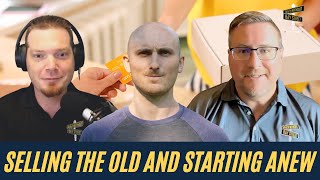
YouTube interview with Nathan Hirsch (CEO of Ecom Balance and Outsource School) describing his entrepreneurial journey from selling on Amazon and building FreeUp to selling that company (Nov 2019) and launching two new businesses. Focus areas: importance of bookkeeping and monthly financial reporting, a repeatable hiring/onboarding process (Outsource School), product-market testing (MVP/beta), and advice on timelines and hiring for entrepreneurs.
Questions this video answers
November 2019
About 25 clients (early 2022) who received two free months of bookkeeping
Over 70 clients and a team of 10 (Colorado and the Philippines)
Chapters
A lot of times it's doing the opposite of what everyone else is doing. Like I remember like we started on Amazon when no one was doing it. We had to be one of the first thousand sellers and drop shipping before I even knew it was called dropshipping. And once Amazon got more crowded and everyone's selling, this is how you sell on Amazon courses. We pivoted to building a marketplace and now there's a million agencies out there, so we're hopefully pivoting again. But that, yeah, it's running a hustle isn't all it's cracked up to be if you're kind of following other people's sequences. And yeah, I mean it can be done, but there's also kind of like that, that entrepreneur fallacy. Like sometimes as you get bigger, you're actually getting less profitable if you're not making the right decisions as you go.
Well, after an eight week sabbatical, it's great to be back here on Wealth Felt Bay street and incredibly excited to be joined by Nathan Hirsch, who is currently the CEO of Ecom Balance and Outsource School. And I was a privilege to be introduced to Nathan being part of the E Comm space as well and a few other different companies that I'm privileged to lead. And Nathan's got a really interesting story that I think is just going to be so beneficial for all of our wealth without Bay street listeners and viewers. And so, Nathan, I want to take an opportunity firstly to welcome you to the show and on behalf of Richard and I, and we're going to have a great conversation today about your journey and super excited to begin with what inspired you to become an entrepreneur and then start to lead us down that path. Because your journey is incredibly interesting. We're actually going to include in the show notes, we're going to include your talking points that you had in the bio that you sent to us because I think there's just so much greatness there in terms of where you started and began this journey in this space and where it's led you to now. So welcome to the show, Nathan. It's great to have you.
Yeah, thanks. Thanks for having me. And it's kind of funny. So my entrepreneur journey really came down to french fries at a ski resort. And I'll explain my. My parents were both teachers. I grew up middle class, not poor, like very fortunate, lucky, loving, loving, supporting parents, roof over my head, food at the table. But I went to high school at Long Meadow. I lived in East Lo. My dad was a teacher at Long Meadow High School and Long Meadow High School was a very upper class neighborhood. And all the parents were doctors, lawyers, dentists, business owners. So all my friends were very, very rich and had everything. And they had all the latest video games, bikes, like you name it. And I wasn't poor, but I was just middle class. And one of the things that I used to argue with over my parents all the time was eating at the ski resorts instead of bringing our own lunch. And I was lucky enough in hindsight to even be able to go skiing with my family. But I remember thinking when I was younger, like when I get older, I'm going to be able to buy french fries whenever I want. And that was like the first motivator of like money as a. I don't even know how old I was, somewhere between 7 and 10 or something. But then as I got older, my parents always made me get real job. So by the time I was 15, I was working full time every summer, winter breaks, after school, I worked at a, at like a meat store. I worked at Arnold's or I worked at Aaron's Sales and lease. It's kind of like a rent a center. I worked at Firestone, had got some internships there as well. And I remember like negotiating. Even back then I was negotiating 12 bucks an hour, which was a big deal back then, and feeling good about it. But I got a, a glimpse into what life was like after college. Like having a boss, working for someone else, going to work and, and I wanted absolutely no part of it. And so when I got to college, I started hustling and buying and selling textbooks and competing with my school bookstore. Before I knew it, I created a referral program and I had lines out the door of people selling me their textbooks to the point where I got a cease and desist letter from my college telling me to back it off and stop competing with their business.
You know, you're on the right track when that happens.
Yeah, when that happens, you know you're doing something right.
Exactly. And my parents were teachers, so I didn't want to get kicked out of school. That would have gone over too well. And so I, I pivoted and I sold some of these books on Amazon and I had an Amazon account and I started experimenting what other products I could find. And that's how I found baby products. And that's how the entire journey began.
Wow. And you know, I talked to, and I'm sure you do, especially now with your companies presently in the services that you're providing. And we're going to talk about that because it's awesome. But I speak with people all the time who reach out and say, hey, you know, I'm really interested in, you know, getting involved in Amazon resell. I want to put products up on this platform and sell a bunch of stuff and make a bunch of money. And then when you realize the workload that's involved, if you really want to do this right, if you want to build a business that is goes from startup to sustainable, from sustainable to durable. I talk to and hear resellers all the time. Hey, what are you most excited about in your business? Oh, you know, I'm doing 10,000amonth in gross sales or I'm doing 100,000amonth in gross sales Or 200, 300, 400,000amonth in gross sales. That's great. That's a vanity metric. But what are you doing in profit? Oh, you know, we're at about X percent in profit, whatever that percentage is. Yeah, but what's your profit target? Like people don't realize the gross revenue piece. Yeah, I get that. But if you don't have a profit target, look at pharma packs. They just filed for bankruptcy. This company doing a half a billion dollars, one of Amazon's top three top five resellers, they weren't profitable. So if you're doing a $500 million a year business on Amazon and you're not profitable, you don't have a business, you have an ulcer.
Right.
Like you know what I'm saying? And that's when I got involved in my journey with Amazon reselling. That's where the focus was. Because even in the Amazon circles and these communities of people who get together to talk about things, they're all talking about the big number, the top line and the conversation like what you're doing with your company now with E com balancing and you're helping people through bookkeeping and, and helping them. You know, my hope is to, to get focused on what's really going to make your business sustainable and durable in the e commerce space.
Yeah, and I mean the, you have to be able to make good decisions every single month based on what the numbers are telling you. And yeah, I mean with the Amazon business, I, I was young, I had no idea what I was doing bookkeeping wise. I would just dump it on my account at the end of every year and he would file the taxes and then repeat the next year. And when I started free up the the VA marketplace for e commerce sellers, one of the best decisions I made was hiring A bookkeeper from day one, even before we were profitable. And I'd get a report every single month. I knew where the expenses were going, I knew what services and revenue was coming in, I knew what my margins were. And, and my business partner and I would meet and every single month of the past six years in all of my businesses, outsource school, Econ, Balance, free up. Back in the day, we would have that monthly finance beating and people could actually grab our agenda on the Econ Balance website. But we would go through and we'd say, hey, what are the numbers telling us and what decisions do we have to make? Like, is our, is our expenses going up faster than our sales? Are we making more revenue like you said? But are profits going down? So a lot of people are making decisions every month by gut or by instinct or even by just looking at cash going into their bank account, but not based on what the actual numbers and the margins are telling them.
That's such a great point. And if you, if you want this type of business, or any business for that matter, if you want to, to develop it so that it's. What's some of the language that's being used out there, Richard? Hustle, side hustle, front hustle, back hustle, like whatever the word hustle is, what does that even mean? Like, do you want to build a sustainable business? If you want to create passive income and you think that you can do that on an Amazon platform, Walmart, ebay, whatever it is, there's, there's work involved. And it's not only work, there's management, there's, there's taking care of your opex, making sure that you're actually being intentional about achieving a very defined profit target. And when you get to the point where one of our companies is at right now in the E commerce space, we have a buying team and a warehouse team and they're in constant competition with each other, which is great because the buyer is responsible from the point of purchase to the point of sale. And you better be maintaining those margin hurdle rates that we've committed to. And the warehouse is going to take care of everything in terms of packing, prepping, shipping, getting it all done and getting it done efficiently. But if I had just woke up one morning and said, I want to generate an X extra X amount of dollars of income and I want it to be passive and I want this to be a hustle, I wouldn't be sharing those results with you today. They just wouldn't materialize. And so I think people just have to Have a, I guess a reality sense of what it actually takes to build a sustainable and durable business in this space.
Yeah. And a lot of times it's doing the opposite of what everyone else is doing. I remember like we started on Amazon when no one was doing it. We had to be one of the first a thousand sellers and dropshipping before I even knew it was called dropshipping. And once Amazon got more crowded and everyone's selling, this is how you sell on Amazon courses, we pivoted to building a marketplace and now there's a million agencies out there, so we're hopefully pivoting again. But that, yeah, it's running a hustle isn't all it's cracked up to be if you're kind of following other people's sequences. And yeah, I mean, it can be done, but there's also kind of like that entrepreneur fallacy. Like sometimes when as you get bigger, you're actually getting less profitable if you're not making the right decisions as you go.
Precisely.
And you're adding work to your plate as well in the process of doing.
That harder and making less money.
Yeah.
Talk to us about E Com balance.
Yeah, I mean, so this came about. We sold. We sold free up November 2019. So months before the pandemic. And the original plan was to take a year off travel. I didn't think I'd see my partner for a year and instead we were just stuck at home, which is a weird place to be after selling a company.
So.
So we did a lot of brainstorming and we ended up launching Outsource School, which is our membership teaching people our hiring process. Cause that's what we're really good at at our core is hiring and building systems. And we started consulting with these different e commerce companies. We realized pretty quickly we don't like being consultants. But the common theme was that before we could help people make decisions, we would have to revamp their bookkeeping process. So we were getting accurate numbers every single month so we could help them make actual decisions for their business. And we had built a really good process for free up for monthly bookkeeping eventually for our Amazon business. And it's one of the things that helped us pass due diligence. We had immaculate books going back four months. And even more importantly, when we talked to the buyers, we knew our numbers inside and out because we had been having those monthly meetings. So that gave us the idea of starting a monthly bookkeeping business for E commerce sellers. We're actually launching a second brand called Accounts Balance for Non E commerce sellers. And we started off with just market research. We interviewed a hundred plus e commerce sellers, learned the pain points at competition, what people like, what people don't like. We did a beta round with about 25 clients early in 2022 and put gave them two free months of bookkeeping to let us experiment processes and give us feedback. And now we're at a good point. We've got over 70 clients. We got a team of 10 here in Colorado and also in the Philippines. And we're right at that point where I feel like our team's in a good place where we can start scaling and launch the second brand. And our core service is monthly bookkeeping. We charge you on the 1st, by the 15th you get income statement, balance sheet cash flow can help with catch up and cleanup and a few add on services. But our core service is that monthly bookkeeping.
I love that. And you're probably already doing this or thinking about doing this is to, to be able to even create a service of, you know, how to make data driven decisions. Well, what does that even mean? Because when you, when you look at the numbers, the, the, the consolidated, those statements that you're providing to people, that's historical information, right? It's all, it's all history. There ain't a damn thing you can do about it. But if, if you can use that data to say how do we, how do we look ahead maybe out to the next quarter or even to the next operating period if that's a month. Well, what is the data telling us? How can we make some data driven decisions? And I promise you that would be an amazing service that, because people who are in this space or in any business, they're, they're just really focused on working in the business every single day, day in, day out. Sometimes it's great to have that outside perspective to say, have you been noticing what's happening with your net margins? Like keep telling me how great your gross margins are, but it ain't flowing to the bottom line and it's going in the wrong direction. And so this has come up. Our system is intuitive. It's, it's kind of raised a red flag that it's moving in the wrong direction. What are you doing about it? I don't know what to do about it. Okay, let me connect you with the right, who, who knows how to get the how done to help you do something about it. So it's just, I think where you are in this part of this new venture is incredible. Like you've got such an amazing opportunity to serve so many people. And I didn't know this before we started our podcast, that you're actually looking at creating that new brand that is going to serve people who are not in the e commerce space. So good for you. That's awesome.
Appreciate it. And yeah, I mean, that's one of many things we like about the industry. I mean, once we get everything down the way we want it from a monthly side, you can add tax, you can add CFO services, you can add a whole bunch of stuff there. And you talked a little bit about trends. This is something I looked at, I learned at Firestone back in the day when I was an intern, every day they would post like the same day last week sales numbers and the same day last year sales numbers. And we do the same thing with bookkeeping. It's, hey, we're comparing this month to last month, and we're comparing it to the same month last year. If you've been in business for over a year. And that's going to show you a lot of trends and it's going to show you what to expect. It's going to help you forecast, it's going to show you if your margins have gone down year after year or month over month or whatever it is. So being able to look at those trends and making sure everything lines up is a big part of making decisions.
One thing I think that's really powerful that you said is when you decided you and your business partner to go down this track to create this business model, you didn't just say, oh, cool, this is the business we're in and let's go hit the ground running. No, you did a market test. You said, talked to a hundred people who would use your services. You created the core components, you did the beta, you gave a couple months away for free so you could really prove out and get through the hard part of the system. That all had cost and some R and D and a lot of effort involved in it. But the end result is you were, you were starting from, you know, with sustainability in mind, right from day one. And I think that's an important lesson that our listeners need to take heed of.
Yeah, absolutely. I mean, my business partner and I, we're. We're system and process junkies, right? Like, we want everything to move perfect from the second the client enters our site, to when they get a quote, to when they agree, to when they get integrated, to when they have a kickoff call, to when they get their books. Like, we want everything to flow perfectly and and sometimes you can brainstorm a process, but the only way to figure out if it works or not is to put some people through it and give them an incentive to give you feedback and tell them what you like and what you hate. And we're, we're super lucky that. I mean, when we started Free up, no one knew who we were. Like, we were Amazon sellers, but we were private Amazon sellers. And now we have a good base of people who have trusted us throughout the years, and hopefully we have, we've earned their trust. So they were nice enough to, to give us a shot with Econ Balance and give us feedback and continue being clients after just thinking of our systems, of where they were to January to where they are today, our night and day, where people can actually get through very quickly, get a quote, do the bookkeeping. And we still have a little bit of work to do on the back end just to kind of help our team be more efficient with automation and trying to reduce the time them spend, they spend on manual tasks. But, I mean, we have a great team and we're confident we'll get there well.
And you made another good point earlier, Nathan, talking, you know, about how going through the process of selling that first business, going through the due diligence element, which is where a lot of deals go right off the rails because everything looks great at a surface level. And then when you start putting things under the microscope and you either can't locate the data you need or you quickly discover that, you know, the business isn't really all it's cracked up to be financially without any intention of raising your blood pressure. What was the sales process like for you?
Yeah, I mean, that's the funny thing is it was the most stressful six months of my life, but. And we had immaculate books, we had clean books. So I can't even imagine how stressful it would be without that. I mean, one of the things that I think earned us a lot of trust was from the initial phone call we had with them where they were asking us questions about our business, our margins, our number of clients, diversification, percentage of sales going to certain services, like, we knew our numbers inside and out. So once we got to due diligence, everything that told them on that initial phone call to everything that they saw in their books. And I know a lot of people that buy businesses where that is not the case, where they open the books up and they're like, man, this isn't at all what we talked about. And so, I mean, that, that process was long and it wasn't necessarily anyone's fault. I mean, they were doing due diligence on us. We were doing due diligence on them. We wanted to know who we were selling it to, what their plans were, what their past history of buying business businesses was, how they treat people like. We didn't want to end up in a lawsuit down the line. We wanted to send really good people who are going to take good care of our team and our clients and grow the business and honor their word. And we couldn't have sold it to better people. We, Mark Hargrove and David Martin, are great entrepreneurs that we look up to, and they've even helped us promote Econ Balance just to do something nice for us. So that was great. The part that took the longest, actually, like, due diligence was 30 days or whatever. But the next part, when the lawyers got involved, that's what kind of took forever. And that wasn't their fault or our fault. Like, their lawyers are protecting them. Our lawyers are protecting us. For. For us, it's the biggest moment of our life. For the lawyers, it's like another Tuesday. So we were. We're trying to, like, get everything to, like, cross the dot and cross the T's and dot the eyes and. Yeah, I mean, the other thing is, through that whole process, we tried to keep the mentality that this deal might fall through, and we want to have a good business to go back on. So we stayed very focused on growing the company. And the last full month we owned the company was the best month out of the four years that we had the company. So that was kind of a testament to staying focused, which was really hard. And my business partner and I were constantly reminding each other to kind of stay focused. But, I mean, yeah, numbers and financials was a big part of that. They went through the books over and over and over. They sent us questions about the books. We had to verify every single payment that was made to us and our team. And the last thing you want to do is wait until you're ready to sell your company before hiring a bookkeeping firm to do your books. You want to get. It's always cheaper to just get it started now or right when you start than it is to do it last minute down the line.
Agreed.
Agreed wholeheartedly. And if you think of, you know, our listeners and viewers, there will be several who are.
They're.
They have a dream, they have an ambition to want to start a business and to start their entrepreneurial journey. And so what advice would you have for those Folks at that stage.
What.
Advice would you share with them in.
Terms of bookkeeping or just overall?
No, just in terms of. We're three entrepreneurs speaking to each other here today and we've, we've all had our battle scars and we've all had our, our best and worst moments and.
Might still have bruises.
And so what do you, what advice do you have?
Yeah, I mean so I. Two things. One and we kind of talked about it kind of not. But I'm a big proponent of like minimum viable product like or service. I try to get that out there as quick as possible and see if it'll like with, with Amazon. If I had dropshipped 10 products and got a bunch of bad reviews, I probably would have shut it down and move to something else without source school. If we sold our first 50 courses and people hated it, I would have just refunded everyone and moved on to the next thing. With Econ Balance we had the beta clients and I think one of the more frustrating things and when I was in Florida, I remember going to entrepreneur events where people would be like, all right, give me $500,000 and then I'll start working on this business and then I'll go get clients and then I'll build the product and it's like no, like go prove that you can sell it and then you can like the money will always find you. Before we dumped hundreds of thousand dollars into the, the free up marketplace, the actual software and portal behind it, we made sure that we could actually sell VA services and have retention and we'd run everything out of a Google sheet until we actually proved the concept. And very similar with Econ Balance as we talked about. So big fan of that. And the second thing is hiring. I mean the two most unsexy parts of businesses is finances and hiring. And hiring is the key to success and failure. My goal with every hire is I want to be their favorite client. I'm hiring a va, an employee and that can look differently to different people. Some people care about work flexibility. Other people want certain roles or ownership of the company or whatever it is. I don't mean equity. I mean like feeling like they are part of the company. So that's always my goal. Because you can't compete on money. There's always someone out there that can pay your people more money than you could pay them. That's never going to change. So you have to find other ways to make it a win win. And obviously hiring a players with not just a skill but the attitude and the communication Skills as well.
That is great advice. Great advice. And just to refresh all of our listeners and viewers. So in the, the, if you're on the YouTubes, if you look in the description of the episode, there will be information there on how you can get connected, you know, with Nathan and how you can take a closer look at, you know, these, these great businesses that he's building and, and the great value that he's bringing to, to the marketplace. And when I think of, gosh, you know, all these years of being along this, this entrepreneurial journey, one thing that Dan Sullivan of Strategic Coach blessed beyond good fortune to be part of Dan Sullivan's 10x ambition program for so many years. And he always commented that the world thinks that we are strange. You know, the world looks at us as entrepreneurs, as strange people.
And we are.
And we are. We're. Yeah, we're just. We're just really, truly are different. And what our hope is and the feedback that we get from our viewers and listeners is that they receive inspiration. Because if you've been thinking about that great idea and you think that you have to have everything in place before launching it and that you have to have everything to perfection before launching it, you're only penalizing yourself the longer you wait to get going on seeing if the marketplace will value your idea. And Dan coined the phrase best. He said, test it with the check writers, and if they take out the checkbook and write you a check for it, you've got a viable product or service. But just get, just get it out there.
And on the surface, it's like, yeah, preup was great. Azure School is doing well. Econ balance is good. But outside of those three, there's a hundred bad business ideas that we tested and that didn't go well, and we shut them down quickly. And it's no harm, no foul. Like, that's just how entrepreneurship works.
That's the key.
It's really important. And I think that's helpful for people because, you know, we learn best. I know for me, I learned best from the mistakes that I make or from the mistakes I see someone else make. So there's learning from the hits that you take to the face or the hits that someone else took to the face. Like, if you're watching Mike Tyson, I mean, he gave out a lot of hits to people. You're like, oh, I definitely don't want to put my face in the middle of that. So what are some of the areas where, you know, you mentioned some of the businesses that didn't work how did you, by having that minimum viable product, that what's version one mentality. How quickly were you able to discover when things weren't going well and maybe walk us through some of the parts of the journey that haven't been so great as the exit of, you know, a business and starting some successful ones. Where are some of the points of like real introspection and value you're able to see on how to pivot and move to the next step?
Yeah, so we, for the Amazon business, like we sold a lot on Amazon throughout that time. We tried selling on a bunch of other marketplaces, we tried ebay, we tried Bonanza, which I'm not even sure is around anymore. Shopify, I don't think existed back then. There were a few others. We also built our own website from scratch and which each one of them we gave it like a good 60 to 90 day timeline to prove that it was going to be worth our team's time and it just wasn't. The sales weren't even close to Amazon and this was 2,000, I don't know, 11 or 12 or 13. So things have changed and like PPC and a lot of stuff didn't. It wasn't a big part of E commerce back then, but like that's pretty much what we did. And even now like we'll, we give businesses certain amount of time to, to be profitable. I remember being at this conference where this guy had been running this business selling dresses for like three years and never made money. And like in my mind I, I was thinking, I can never let this happen. Like me and my partner sit down and we're like, hey, here's an idea. This is the timeline, we'll give it. If you get to the timeline and maybe there's some good signs, some bad signs, maybe you extend the timeline a little, but you, you gotta be honest at some point when you, when you need to back out and try something else.
So true. However, in, in addition to what you just said, one of the, the, one of the expressions that we love to share not only among each other as teammates inside of a rapidly growing organization, but also to entrepreneurs, to people that we speak to, just in general, is that there's no such thing as an unrealistic goal, only unrealistic timelines. And so never, ever, ever set realistic goals. You just have to be very realistic about the timeline. And I was very similar to you, Nathan. When I first got going in my Amazon journey, I didn't know the first thing about how to sell on that platform. How the platform worked, how the whole process worked from A to Z. And in getting together with a couple of entrepreneurs who were very early in their resale journey and really kind of beaten themselves up that they weren't just oozing profit right from the get go. We set some unrealistic goals with realistic timelines and the business is booming now and it's remarkably profitable. But it took time. And when I sat with them, I said, listen, this is going to be in terms of where I'm thinking without having any real intelligence about what we're going to set out to do. This is going to be a minimum two year window before we're starting to see the results that we all have agreed and believe are actually possible. And took a few seconds for their brains to grasp that, oh, I thought he was going to say two weeks, two years. And that's what came to be. And the point that I'm trying to make is that so many people don't stick with it because they've set maybe an unrealistic goal with an unrealistic timeframe and when they don't get it done, they, they quit.
Yeah, right. I mean being an entrepreneur is, is not about like making a hundred percent decisions. It's a lot of educated guesses. Then you use the data and you use the information you have to kind of make those guesses. And there's also exceptions to every rule. Like there's people who have worked on a business for seven years that wasn't profitable and then all of a sudden it blew up. So there's times to, to listen to the, the common sense advice and there do your own thing. But I can only speak for kind of what's worked for me.
Here's the key. You just hit the nail right on the head. And when I was sitting down with those, Curt and John, great, amazing entrepreneurs now and wonderful people to be in business with. I asked them a question and they'll tell you this. This was in July of 2019. I said, just curious, how many years do you think it took Amazon to become profitable?
A lot.
They had no, they had no idea how profitable. They had no idea. Nine years. And throughout that period of nine years, there were people on Wall street and Bay street who just wanted Jeff Bezos to be put under the guillotine. Countless numbers of times where people had written him off and written off that company, they are not going to make it. They can't achieve profitability. And he continually kept saying, listen, we've got a plan, we're going to Continually focus on what's important to the customer. We're going to get there, have every confidence that we're going to make it. And then once they started to hit profitability, everyone at NASA scrambled and said, let's all build a rocket ship so we can all hop into this thing and ride this sucker to the moon. And so do you think that he, Jeff Bezos, do you think that he didn't have countless number of sleepless nights where he literally camped out in the office and said, I believe in my plan more than anybody, but man, I'm getting pressure from all sides and he could have quit. And so what do you want to do? You want to go through these next two years and get to a profit level that is actually going to help you achieve the goals and ambitions that you have? Or would you rather have the nine year journey? Take your pick.
Yeah. I mean, my counter that would be, even though they weren't profitable, there was probably good internal signs and data showing. Well, and that's way different than someone selling whatever for years and barely being able to sell it, but continuing on because they have a passion for whatever that that project is. I mean, Your point is 100, right? Like there, there, there's always exceptions and, and not every journey is exactly the same. And not every journey is just straight up either.
Agreed.
I think it's interesting too because, you know, we started off talking about, you know, Jason, you mentioned like the side hustle, which is a, you know, common things that people are talking about there. That's what they're, especially in the, in the younger crowd. But, you know, one thing I really like about Nathan, what you've identified is how in a lot of the business endeavors you've tried and some of you've tried and you said, okay, we gave it a shot, but we're ready to do something else. Part of that's because you had a partner, you had a team around you and you'd also been developing skills. So as you build up your skill, your toolbox of skills, you have an ability to start to see, okay, when does it make sense to make that adjustment or that pivot. And, and also the ability to, you know, there's certain industries where revenue has a way of coming maybe quicker than others, you know, and Amazon resellers have an ability that you can start to turn revenue, maybe not profit, but revenue in a pretty quick format if you understand some of the basics. And I think that that allows, you know, you know, you, you the ability to recognize, hey, we've already been Able to do this where we can. We could test the market and get revenue coming in right away. You know, how many times can we do that? Well, as many times as you basically have the energy to put in, or you have the who power, the individuals, the good hiring the people around you, the network to be able to go and amplify it. Talking about your new business with the bookkeeping method, because you had built up such a good network of trust, you mentioned the trust and the care of your clients. Those people were willing to give you a fair shake in the new deal, the new business. So that's not just skills. That's now network. And so you're building this stack. You're stacking the deck in your favor as you go through time, and you're creating value for other people. I think that's really powerful.
Yeah, I appreciate it. I mean, my whole mentality, and I learned this from Firestone too. It's like, I'm not interested in taking your money if you're not 100% happy. Like, there were plenty of times on free up where I maybe I disagreed with the client's assessment of something, but it's like, not worth it. It's not worth 500 bucks to get a bad review or have someone pissed off of you or whatever. Just fix it. Make it right. Do whatever it takes. Move on to the next customer, make money on someone else. And that's kind of always been my mentality in business. Like, I'm too busy to argue, even if it's thousands of dollars. Like, sure, it's a small gut punch temporarily, but it's not worth it to hurt your reputation or your business's name or anything like that. So. And hopefully you just learn over time as an entrepreneur, learn how to just avoid those situations to begin with. And that goes with setting the right expectations and identifying red flags with people early on so you don't work with them and all that. But, like, my whole thing is, like, I want people to be 100% happy with my service. I do set expectations, like, when we're a new company, but even now we're six months in. I'm like, hey, like, the reason we're giving you a free months of bookkeeping, it used to be two. Now it's one for any new client is to, like, bear with us during growing pains. Bear with us as we build systems. Like, I, we're way farther than we were six months ago, but we're definitely not perfect. I tend to move pretty quick, so we're not as fast as I want us to be at this point. But we're getting there and it's improving every single month. And so just setting those expectations and if clients are in a rush or want someone more established or whatever, it is just being honest that we're not at the right place.
What you're doing is you're, you know, you're solving, you're solving problems for entrepreneurs in areas that they really need the help in. Bookkeeping side, the hiring side with, you know, outsource, the, the, the other, you know, idea that blossomed into a business. And we'll talk a little bit about that, but it's, it's so important that you know when you recognize a problem. One of the things that we've learned and your companies are a sharp example of this is all about who, not how. Because the entrepreneur, the mindset, the thinking when there's a new idea or maybe when there's a problem or they recognize an area of the business that needs attention, like finance or hiring, and the entrepreneur's brain immediately goes to how am I going to solve this problem? How am I going to get this done? How, how, how. And what we've learned, again courtesy of Dan Sullivan and and strategic coach, is your brain should go to who. So who possesses the unique capabilities to help me get the how done? And with your companies, you're the who's. You're the who's that can help the entrepreneurs get the how's done. And you're going to save time, energy, money. You're freeing up those entrepreneurs to, to work on their businesses and to operate in their unique ability and bring their genius out versus having to go through the painstaking process of, oh my goodness, I gotta learn how to interpret financial statements and I gotta learn how to hire people. And I'm not good at that. I want to be great at helping my buying team find the best products to put up on the platform because that's part of my unique ability. And so it's all about who, not how. And your companies are just a really sharp example of that.
I appreciate it. Yeah, I mean, it's fun too, like being an entrepreneur, but growing businesses, like just brainstorming different ideas, like there'll be times on a afternoon or whatever. It's like, oh, what about this? And then you get to implement it right away. That's what, that's what's fun.
And you've got that autonomy to be able to do that and talk to us about outsource school. That was interesting when I read that. And because so many people, they may not even realize that you can outsource a lot of different things, a lot of different functions. I always, I'm a big fan of never delegating anything that's tied to the relationship with a customer. But talk to us about outsource school and that business and how it serves the marketplace.
Yeah, I mean, that's kind of my pandemic, baby. During the pandemic, Connor and I, we put together all of our hiring systems and outshare school is really the hiring process that Connor and I have been using for 10 years. We use it in all our businesses. We use it to hire VAs bookkeepers, you name it. And, and so it's our process for interviewing, onboarding, training and managing. It's a yearly membership where you get access to that stuff and there's a lot of other great content in there for specific roles like graphic designers or writers. So the whole key is to be able to take those processes and, and plug them into your business. So be able to make better hires. Because not only making better hires, but also be able to retain that talent. And we walk through the meetings we every week, how we handle bonuses, raises, firing people, like all that stuff is there. So instead of building it from scratch, you can use a proven process that we continue to use today.
There you go. Compressing timeframes and helping entrepreneurs solve problems. I love that. Rich.
Yeah, I think it's great. I mean it's needed because you mentioned like keeping talent and right now in the, you know, the aftermath of this pandemic world, you know, especially in Canada, we're finding, at least from what I'm hearing, and I'm hearing this from large organizations and insurance companies and things, is that they're having a difficult time attracting people or getting people to come back. People have, you know, left, they're working from home for a while and now there's a struggle in getting them to kind of reintegrate to some degree. And so I think now more than ever again, you took the opportunity that was presented by forced stay at home models in a pandemic world and you created something that the world needed and was going to need moving forward probably in a big way. And I mean, timing probably couldn't be more impeccable. But again, it's you recognizing that you have value to give. And how can you now distribute that value into the world of the marketplace with that buildup of skills over a 10 year entrepreneur journey?
Yeah, absolutely. And a lot of the stuff that I like to build is Stuff I wish I had. Like with Free up it was, I was looking for a pre vetted freelancer marketplace exist. So I built it and outsourced school. I spent years building our hiring process. I wish back in the day someone just gave me theirs and econ balance bookkeeping was a struggle and hiring a great bookkeeper was something we got very lucky doing early and Free up and it changed the whole business. We gave him a large bonus when we sold the company and it was a big part of it. So yeah, that's definitely a big part.
That's awesome. Rich, take us home, man.
Well, we appreciate you being with us, man. This is awesome. And sharing your story and your journey. And I think one question we like to ask people is you may not recognize that as you're going through your entrepreneur journey and you're creating, you're solving these problems and you're doing it for thousands of people now. You're doing it for so many more people other than just you. You're adding tremendous value to the world. And so you may not think of yourself as a superhero, but our question for you would be is who do you most want to be a hero to?
So one thing that like selling Free up and just being an entrepreneur has allowed me to do and my wife to do is we're foster parents. So I kind of mentioned my parents are great. I have a great relationship with them like that. We grew up middle class. They taught me how to save and spend money and all that. And sometimes you take that for granted. I know I did when I was little because I grew up next to all these rich people. But my parents were loving. They were supportive no matter what I did. They put food on the table. And as you get older, you appreciate it and you realize that there are kids out there that don't have that, that start off with some pretty bad luck, whether it's neglect or abuse or whatever it is. So fostering has been a great opportunity. We have a teenager staying with us. We like to foster teenagers. And I don't know if I need to be a hero, but hopefully they. They look up to me in some way or just are able to learn life skills that I was lucky enough to have parents that taught me back in the day.
That's. That's inspiration. And Nathan, we appreciate you very much and we will have you back on the show. We're going to check in, see, see how your ventures are growing and how things are going for you. And it was just such a pleasure to have you today and for all of our folks who are viewing on the YouTubes, you're going to see a playlist. It just showed up, thanks to our amazing editing team. They're really amazing people. And that playlist is recommended for you to continue your journey of learning. You know, we always talk about how our late mentor, R. Nelson Nash, taught us that there's no such thing as having arrived in knowledge. There's always something new to learn. And so this playlist is meant to inspire you on that journey of learning. And be sure to check out the show notes or connection to Nathan. If you want to explore a little bit more about any of his businesses and how they might be able to solve problems for you, we would wholeheartedly encourage you to do that. So, Nathan, thanks again for being with us. We appreciate you so much. And to all of our viewers and listeners, make the rest of your week great.
More from Richard





How Do You Use a Policy Loan to Buy Dividend Stocks? #dividendstocks #infinitebanking #shorts


Can Compounding Dividends Pay Your Bills? #wealthbuilding #investment #financeeducation


Should a Corporate Policy Offset Your Personal Coverage? #shorts #insurancetips

What Is Human Life Value? #shorts #insurancetips #dividend #wholelifeinsurance