Family Banking With Purpose
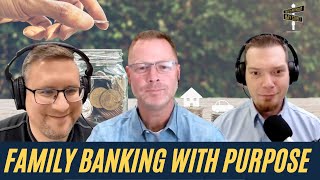
Chris Bay, Richard Canfield, and Jason discuss family banking, a practice inspired by Nelson Nash that lets families lend to each other instead of banks. The book uses stories to explain how it works across generations, including teaching kids through real loans like a $3,200 car purchase from the family pool.
Questions this video answers
July 2021
34.5%
Chapters
One of the things I was reminded of in talking with Winnie is back in the day when I was studying for my Infinite Banking Nelson Nash Institute Practitioners test, as I'm preparing for it, I created flashcards. Well, who do you think I had quiz me on those flashcards? My daughter. And so any way that we can have them, you know, just be exposed to that information. And it brings up questions and it's funny how they'll bring up a term or a question later on. You're like, oh, they really were paying attention when so many times we think our kids don't listen to us at all.
What exactly is Family Banking with Purpose? Well, we're going to find out. We're going to talk to the author of the book Family Banking with Purpose, a story about financial freedom through infinite banking. This is a fantastic book. It's a nice, quick, easy read. And it is a story all about the fundamental principles that Nelson Nash himself taught us. The concept of infinite banking. Becoming your own banker, told through a story by our very good friend. And we're excited to have him join us here today. Chris Bay with life, success, legacy. He's an authorized Infinite Banking practitioner, a wonderful human being, a guy that you just want to get to know. And anytime you see him, you want to give him a big hug. So we're happy to have you join us in a virtual hug today, Chris, as we talk about your new book released in July of 2021. It's fantastic. We'll provide some links and everything to that book. We encourage everyone to get a copy. And just so happy to have you here with us, sir. Welcome to Wealth Without Bay Street.
Thanks, Richard. Thanks, Jason. I. I'm thrilled to be a part of your show. You guys do a fantastic job with your podcast and other sources of information that you provide for people. We've learned a lot down here on the state side from what you guys are doing up there in Canada. So I think about how many of your fingerprints are all over the things that we've done, whether it's our bootcamps or podcasts or other things. So thank you. And I'm noticing Richard, back behind you, you've got this sign that's called Bay Street. No relation, by the way, on that.
Good, good point. I was wondering, were you trying to give us an indication we should wash our hands more often? Is my fingerprints really transferring that frequently? Man, in a Covid time. I guess I better get.
Get the old hand wash out.
Hygiene's important. Absolutely.
Well, Chris, lead us into what inspired you. What inspired you to write the book. And for our viewers and listeners, I mean, we've known each other, the three of us, being a part of such a wonderful community of authorized practitioners all across North America who converge once a year at the Authorized Infinite Banking Think Tank conference. And we've come to know each other over the years. And so we're, we're really interested to know what inspired you to, to write the book.
Yeah. Well, I was thinking back, I think it may have been 2012. Possibly was my very first think tank that I attended. And there was this group. I wasn't even a licensed practitioner at that point. I was.
You were still trying to get out of the education business, being a principal.
School principal at the time. And then Mike Everett, who was our coach, longtime practitioner, invited me to join him. He said, would you like to come listen and see what this whole thing is about? And I, and I'm a learner, right? I was like, absolutely. This, this whole Infinite Banking thing has my brain lit up. And, and if I get to go listen to these people and meet Nelson Nash and do all this, absolutely, I want to go. So when I showed up, there was a bunch of crazy people from Canada all wearing hockey jersey up in the front row. I was like, wow, there's some energy up there. I want to get to know these guys. Yeah. Yeah.
I'll never forget that. That was, that was an awesome think tank. Every year is amazing because we get to be together and to catch up and to transfer best practices, share ideas and help each other grow.
Yeah.
And it's, it's just so awesome.
It is, it's fantastic. I look forward to it every single year. It's not quite as fun when we're doing it virtually, I would say fractionally fun. But, but boy, when we get to all be there together, it's fantastic. Some of my, my close, close friends that I enjoy so much in the Infinite Banking world have been because of the think tank and the, and there's great stuff during the, the conference, but then it's outside, as we all know, you know, when it's at lunch or at night or whatever, it's man, the ideas that happen there. Shout out to Russ and Joey down there in Birmingham for all this hosting the night before. Some of the best things we do are because of that night before the conference even started.
And we want to put a quick plug in for Russ and for Joey wealth without Wall street and all the amazing education, the tools, the community that they've built online with their private Facebook group and Everything that they're doing. Two incredible guys. And yeah, they hosted every year. You know, it's something that we look forward to the evening before the commencement of, you know, the conference. And it's great. I can't wait. Can't wait to see you, man, in February next year. It's going to be awesome.
Okay, so the inspiration of the book, because I can take us down all kinds of rabbit trails, it's just like old home. We getting to see you guys. The inspiration of the book, I mean, first and foremost, Nelson. Yeah, right? I mean, Nelson. Nelson himself and the concept, his book, that's where it all goes back to. That's where it started. And my wife tells me that she remembers us walking down our old gravel road, which, if you read the book, the setting is our old farmhouse that we used to live in. And it was an old 1920 farmhouse. And we would walk up and down the gravel road in the evenings. And she remembers me talking about writing a book. And the format of the book comes from probably my education background because I know there's so many different learning styles. I think of Nelson's like, if you look at a dinner plate, I think of Nelson's book as it's the filet, right? It's the main course in the middle of the plate. But then you might have some beans or some corn or some bread or stuff on the side that is also good and adds to it to give a full flavor.
Maybe even cornbread, like, you know, Mary.
What's that, Richard?
Maybe even cornbread.
There you go.
So I think of, like, Farming without the Bank, Mary Jo Herman's book. And, gosh, how many of our farming and ranching clients have. We used her book. They'd read Nelson's book, but when they read her book, it just painted a picture for them and spoke their language. And so I knew that I wanted to write. I enjoy learning business concepts and things in a story format. You know, whether it's the Go Giver or whatever, those who Moved My Cheese, those kinds of books, parables, fables. And so I knew I wanted to write something about infinite banking in that context to touch on a different learning style. Because not every people will read. We make them read Nelson's book, Becoming a Banker. But there's some people come back and they're like, yeah, it just. I still don't get it. Or, you know, something didn't connect with them for some reason. And I'm just saying my book will. But it is a different format for people to learn who, like to understand a concept in a story format that's put in the context of a multi generational family. It's really just addressing the family banking purpose of it. So that's kind of the inspiration, really. The stories in it and the characters are a blend. There's no character that is a specific person. But I will tell you that the characters, our clients who read this story, they know that they are a part of that character. They know. I mean, I can tell you John Wade, he knows that he is Jorge, right? So kind of fun. He's a. John and his wife Jolene are a German Baptist family here in a little south of town in Lawrence, Kansas. And I was going to get them a book. They don't do a lot of technology and so I was going to hand deliver them a book. And I show and I showed up and Jolene turns to John, she says, hey, Jorge, look, it's the author of that book. They had already read it, so.
And what, what is, you know, one of the key messages that you want people to take away from reading it?
Couple things. One I would say is don't let go of your dreams. I so many times, I'm sure you guys experience this too. We have wonderful people that we get to work with and we do a process called the Dream Conversation. And they talk about their dreams, but it's tentative. It's like, I had these dreams, but I'm not sure it's really even doable. I'm not sure that it's reality. Right. I'm even a little hesitant to say it out loud, you know, because if you say it out loud, then it's real.
Right?
And what I want people to know is if you have dreams about the life that you want to create and you're finding that financial barriers are the reason that those dreams are not becoming reality, we need to go down this road and talk about what those dreams are and how we can use infinite banking to help you accomplish those dreams. That's the message. And the main character in the book, I mean, he's there, right? He's doing everything that the financial gurus are telling them to do, and they aren't getting any closer to their dreams. And so that's really the story is this gentleman who has dreams, but he's almost kind of forgotten what they were because he's in the middle of raising a family and he's working at the university and he's putting his money into his 401k and he's hoping to save for college. And, you know, he's even like almost giving up on retirement, you know, because he just doesn't see how it can actually become a reality. Right. Which we all know how we feel about retirement.
Yeah, it's a hope thing, you know, where people and, and, and that, that main character. It's really. You know, there's so many people that come to walk through our doors and they, they've experienced that because whatever, whether it's a market correction or a market crash or something that's kind of interrupted that flow of. Of their dreams a little bit. And, and they're just not willing anymore to have that. And so I think that' captures that essence. And then you're showing people that it's okay to have that, you know, be, be. Be step out there and, and make sure that you vocalize those things that are important to you and, and strive for them. Because it's through. You know, Jason, you know, one thing that you're really good at is helping people see and recognize that they should have bigger. Larger and bigger goals. The bigger they are, the more important they are. If that goal doesn't scare you, then it's not big enough. I think is one of the common sayings that you've got.
Yeah, it's. If you're establishing a goal and it doesn't have a healthy combination of fear and excitement, then you've already retired. You just don't know it yet.
Right. Hey, Jason, I think earlier we were having a conversation about Dan Sullivan and Strategic Coach. That may have been before we pushed record. I can't remember. It all blends together. But there's a couple of things that are making connections in my brain. And connections is something that my brain does. Two things. One, the Dream Convers conversation is actually a variation on Dan Sullivan's R question, the relationship question. That's what. Where we came up with the dream conversation. It's just a variation on that. So. And it has become an integral part of our process with our clients. So shout out to Dan Sullivan and Strategic Coach. And another shout out to Dan Sullivan and Strategic Coach is there's a company called Authors Bridge. Helen Chang is the CEO of the. And the founder of Authors Bridge. And I was actually on one of the articles that Strategic Coach had sent out and I came across her business. I thought, huh, that's interesting. And I clicked on. I went and researched their website and started reading about it. Well, Helen and her organization is who helped me write this book. I had a lot of the ideas in my head, but I've never written A book. Right. I don't know how to do all that stuff. And so thanks to Dan Sullivan and Helen Chang with authors Bridge, who helped get this thing actually out into print and audiobook and ebook and all those kinds of things.
Wow, There you have it. You know, Dan. Dan's reach is similar, you know, in many ways to, to Nelson. I mean, the three of us wouldn't be speaking to each other today had it not been for our Nelson Nash.
Right.
And so we, you know, we just, we think about them often and owe him a debt of gratitude. But yeah, Dan Sullivan and his strategic coach team are. They're just remarkable. Remarkable. And you know, one thing that resonates with me the, the title of the book, really. I'll share with you. We haven't talked about this yet. You know, one of the things that we, we do in our family is we host an annual family banking meeting. And all of the children are present for that meeting. And it doesn't take long. It's about a 90 minute, you know, process. And we record them so the kids can go back and they'll be able to, you know, watch them later in life. And now we have family members, so my nephews, for example, most recently, who have accessed the family money pool and who grasp this conceptually much faster than adults do. And they're using that language of we want to keep money in the family money pool and that creates affordability for things that we need throughout our life. And so they're really grasping it. And there is a, a really big hunger among our existing clients, communities, and just in the marketplace in general. People are speaking about educating children and helping them with financial literacy, but there aren't conversations going on about how to finance the things that you're going to need throughout your entire lifetime. And what better than to start teaching them at such a young age and to do that within the family? And so that's been something that's been working extremely well. And the moment I saw the title of your book, Rich Can Attest, I reached out to him and said, we gotta get Chris on the show, like, asap.
Family banking is so powerful if people can start to understand. I mentioned John Wade earlier. We did a little mini boot camp, thanks to you guys, the concept of a boot camp. But we did a private boot camp for John and his family. We had four generations in the room. Wow. And the older generation, when they figured out that they could actually take their capital, their assets and use them to buy up the debt of the younger generations, where they are now Turning those payments inwardly back up to them rather than letting it bleed out to banks, credit cards, et cetera. Their eyes opened up and we said, let us show you with numbers what this looks like. And the oldest generation, when they realized that their monthly income was going to.
Increase.
They got pretty excited about that.
Yeah, absolutely.
That, you know, you get to a certain age, it might happen for any of us at any age, but. But especially, I think, as we become grandparents, et cetera, you really start thinking about legacy and what you can do. And, you know, Nelson talks about that, number one principles, think long term. Right? You're not talking about your lifetime. You're not talking, maybe even your kids lifetime. You're talking about grandchildren and great grandchildren. When we get to have those conversations with people, it is so fun. We have so many of our clients, such a high percentage of our clients that are implementing family banking, you know, and. And I'll get an email from one of the clients, and they'll say, hey, can you send us over that contract language? We're getting ready to loan some money to a family member. We want to set up the contract with them.
There you go. That's the key. And, you know, I'll share, Chris, that how we. How we explain it to. To the younger generation is really through logic. Right? So we, we, at our most recent meeting that we had as a family, we said, look, if. If money continues to flow into someone else's bank, then we're increasing the cash flow of someone else's bank. If the money is coming back into the family money pool, we're increasing the cash flow for the family. So who would we rather increase cash flow for the family or someone else's bank? Well, the kids naturally take a moment and they go, well, of course the family makes sense. You grasp it. You got it.
They didn't have to ask a bunch of Mickey Mouse questions about interest rates.
No, they didn't.
Not at all.
My oldest nephew just bought a $3200 car using a loan from the family banking system. And he can tell you with confidence, he can explain to you why it's important to increase the cash flow of the family versus having money, as you referenced it, bleed out to another bank, another lender, credit card companies, all those things that we're all exposed to, all these financial companies that are out there that are just ready and willing to take money in the form of deposits, payments, combination of both. And that increases their cash flow and by proxy has to decrease someone else's, which would be you.
Right.
So whose cash flow do you want to increase?
And the beautiful thing is when, when you are the one in control of the terms of the loan, you can make it mutually beneficial. I mean, we have situations with parents or grandparents who are wanting to help out younger generation who are maybe just getting started out in life and cash flows tight for them. And, and they will actually set up the loan. If, say it's a car loan, they'll actually set it up for a 10 year payment just simply so they can lower their monthly payment to make it work within their, within their cash flow. Now they might bump up the interest rate a little bit. So it's beneficial for the older generation. Right. Everybody's got to win in this game, but it works out for everybody. We had a client recently where the older generation loaned them a chunk of money so that they could start their own IBC policy and turn the wind current all in one fell swoop. And we made it work for everybody involved. So, and for our listeners, that, that.
Wind current that Chris is referring to is the redirection of payments that were previously walking out the door to some other third party. And we're bringing those payments now back into the household and containing the flow of that money now in perpetuity. So that's the, that's the wind current that you're referencing just for our listeners are tracking with you.
Yeah, Nelson, Nelson in his book becoming your own banker, which I can't believe there's somebody listening your podcast that does not have a copy of this yet. But if they don't, they need to get themselves a copy of becoming your own banker.
Amen.
But Nelson talks about it in, in I've got mine and it is, oh, I like this spiral on the side, Richard. Mine is so beat up, I actually have pages in the back that are pulling out of it now. I need to, need to get that fit.
That's why we took our copies to a local printer and we said, look, these things are falling apart. We need them, we need them to be bound. And these are. I would say that between the three of us alone, the distance that these books have traveled, I do not get on an airplane, a train, anywhere without this book accompanying me. Because I'm always inspired to just pick it up and I'll say, gosh, you know, I want to revisit the grocery store example. I want to go through that again. And poof, your, your antenna is up, right? To, to learn something new. And it just strikes you and then it, it at the same time brings back a memory of Oh, I remember Nelson explaining that and I remember how he, you know, articulated it. And yeah, we, we agree with you completely. If, if anyone watching or listening, if this is your first interaction with wealth without Bay street, and first of all, welcome, thank you for tuning in. But get your hands on a copy of this book, it will change your life.
So I have a daughter who's 22, Lily, who is currently in New York City. She flew there herself to visit a friend back from high school and she spent a week on vacation up there and, and she's getting ready to fly back tomorrow. And when she flew out, it was a very, very windy time period. Okay. And so if we go back to Nelson's example of becoming, in becoming your own banker of the wind current, if the wind is blowing at the front of the airplane as she's headed east towards New York, it's going to take her longer to get there, right?
That's right.
Compared to if we turn that wind current around and it's blowing at the tail of the airplane, she's going to get there a whole heck of a lot faster, right?
That's right.
Also, as Richard was saying earlier, that's what we're doing with our finances is so many of us are sending. Nelson's research says 34.5% of our after tax dollars is going to interest on our debt. Right. 34.5%. Do you guys know of any investment, any 401k, any. Anything you guys have up there in Canada, Right. That is giving a 34 and a half percent return guaranteed.
No.
That you control?
No.
No.
Doesn't exist.
Doesn't it make sense, as Nelson teaches to try and get that wind current shifted first, Right?
Yeah.
Get that thing shifted and going your direction where you get to reuse those dollars. So that same daughter who's 22, just in the last couple of months, we signed over ownership of a policy that we started on her. It insures her. We started it back in 2011, our four original policies. We got one on each of our daughters and one on my wife and one on myself. And we just signed over Lilly's policy to her, where she now completely owns it. We've got all, you know, it's fully funded. We did borrow some money from it early on, but we got it all paid back with policy loan repayments. So she's getting a fully funded policy that is capitalized for 10 years that she now is the owner of. Wow. That's had a chance to. Where are your kids? Jason and Age?
My oldest, my firstborn my son Jackson, he is 13.
Okay. So have a little bit. I know Richard's got a while.
Yeah.
But I will say this though. So with, with all of our children. So each of our for children have five policies on their lives already. And what we're going to do is a little bit different in when they're ready to. To take on that stewardship in owning a policy or all of the policies on their lives, we're going to offer them the opportunity to purchase them. And if they don't have the total sum necessary to buy them, guess where they can get the money from. You got it. It's. So we're, we're creating this stewardship. We're giving them the opportunity to really take the reins as it relates to their own needs, which is what Nelson Nash taught us.
Right.
It's about how you go about financing the things that you need in your life and taking control of the banking function as it relates to your needs. But we want them to recognize as well that these five policies on each of their lives are really truly an asset that have value. And if we're treating the family banking system as a bona fide business, then there has to be consideration to take on ownership of that asset. You have to come up with some money. And so that's just one different approach. This is a different way of going about it.
But I love that because my wife and I always talk about having a little skin in the game. Right.
Yeah.
And that we are all about giving a hand up, but not a handout.
Yeah.
So there's more to the story with this policy is yes, we had taken loans from it, but then we required our daughter to contribute to her college education. Guess where we put that money back into the money she's getting inside the policy is her money.
Love it.
That's so good.
So it's just a little twist on how, you know, we can be so creative. Gosh. Infinitely creative. Right. And how do you.
Aptly named. Yep, aptly named.
Well, and being that my kids are on the younger side of. Of our discussion here, I, I used a little storybook that my daughter liked to start emphasizing and bringing the point across. It just kind of came to me one day as I was reading a story about a little girl named Fancy Nancy. Imagine that she likes fancy things. Love what they're teaching kids in these books. But anyhow, so I. So she has to go to her little piggy bank to get money to try and buy these fancy shoes. And. And when she goes to the piggy Bank. I would say to my daughter Nora, I say, nora, where do we go and get our money? She says, the Canfield family bank. And I give her a big high five. So it's all high five reinforcement. And so anytime we go to go out for dinner, we go to do something nice that the kids enjoy. Water slides, water park, something like that. It's like the reason we're able to do this, kids, is because of the family bank. When we take money out of the family bank, what do we have to do? And my daughter, she's like, we have to put it back in. Boom. High five. Why do we have to put it back in? So we can use it again later.
There you go.
High five. And like, it doesn't have to get any more complicated than that. Now at this point, you know, I started this when she was 2, she's now 4. And so I just reinforced these things and we just do it on a regular basis. And so even though my son wasn't reading that book, because I was just doing it around them frequently, now they're, they're both up to speed on that connection. And, you know, so I'm just trying to start at a very early age on making them understand the importance of the family bank and why we have to put the money back in because we get to use it again later as a family.
You know, we have a mutual friend in, in Winnie Lau.
Winnie the winner.
Yes. He was 100% about educating kids about infinite banking. I mean, she has a real passion for that. And we were having a conversation. We, we meet on a regular basis and have ongoing conversations. And one of the things I was reminded of in talking with Winnie is back in the day when I was studying for my infinite banking Nelson Nash Institute Practitioners test. Thank you, Dr. Bob Murphy, for that test. We, this is the teacher in me. So as I'm, as I'm preparing for it, I created flashcards. Well, who do you think I had quiz me on those flashcards? My doctor. And so any way that we can have them, you know, just be exposed to that information. And it brings up questions. And it's funny how they'll bring up a term or a question later on. You're like, oh, they really were paying attention. You know, when so many times we think our kids don't listen to us.
At all, they, they pay attention far more than we may give them credit for.
Absolutely.
Their antennas are powerful.
More than our words?
Yep, you bet. And you know, if you, if you were to, to think about all the, all the Times that, you know, you had occasion to spend with Nelson. What would be, what would be a fond memory that you'd like to share with, with listeners and, and viewers?
There's two that come to mind. One is I had opportunity to join a private dinner with Nelson and Mary. And you guys may remember some of these experiences, but we were in a private room that was in a, in a club that kind of looked at, it was raised up and it looked out over the, over the city. And I thought to myself, you know, someone has touched me with, with just good luck to be able to sit in this room. And I was brand new to this whole thing. I was really riding Mike Everett's coattails. And just the fact that I got to be in that room and listen to the conversations and be able to call Nelson a friend and a mentor and to know Mary and her sweet spirit. So that was really cool. That was early on in my knowing of Nelson. And then we had Nelson come, as you guys have done as well. We had Nelson come to Lawrence. And Lawrence, Kansas is one of two counties in the state of Kansas that would vote blue for Canadians and just Democratic, which would be more of the liberal variety. We are a university town and it's just an old. It's kind of like a coaster town in the middle of Kansas, right? And knowing Nelson and some of his jokes and different things and just where he was in life, I started sweating a little bit. I was like, oh my gosh, how is this going to go over? And I tell you what, we had a great turnout and Nelson was himself. He's not going to change for anybody. You know, he was himself. And afterwards we would talk to people and what'd you think? Was there, you know, anything concerning or anything like that? And nobody had anything. They adored him. They loved his stories, they loved the concept, everything about it. And I'll tell you what, I was proven wrong. I was so nervous about it. But Nelson just nailed it. And people saw his passion. They may not have agreed with him with everything he said, you know, on the side, but they got that he was well read, he had thought through his positions and he knew what he was talking about. And the concept stands on its own. So those are, those are good. I got one more. I'll give you a third one.
Yeah, yeah, please.
That evening we went to dinner as a group with our little small team and our families and everything. And I remember my daughters who were young at the time. Nelson pulled away from the group and he went over and he talked with my Girls, not at the girls. He talked with them. He was asking questions. What are they interested in? What are they doing? And one of my girls was in choir at the time. And Nelson, as you know, loves to sing, and they had a great conversation about choirs and music and things like that. And so I love the fact that he took the time to get to know my girls. You know, that was important to him to do that. And they still talk about that to this day.
He was always so considerate and recognized an opportunity to have an impact, but we miss him.
I love about what you're sharing, Chris, and thank you for, for blessing us with that, is that it just brings to mind the, you know, the incredible tribute that we put together for nelson on dayofnelson.com Anyone who's listening can go to dayof nelson.com and you know, it's 11 hours, but you can, you can clip through any one story, including we had yourself and Mike involved to, to, to share these wonderful stories. And people can go and get Nelson's seminar on DV. There's, there's many clips available of him on YouTube and stuff to, to listen to him kind of speak, but not being able to really capture the essence of what it was like to be with the man and, and, and, and break bread with him and be in, in his presence. And yet on dayofnelson.com where we interviewed so many wonderful people, we got to hear those stories and those, you know, those wonderful things that would come up, how we would invest in people's children and how he would invest in you by asking who you were and wanting to really pass on knowledge in a, In a really incredible fashion. So we were all blessed to know him, but more importantly, we're. We're blessed by the culmination of his work that brings us together. The thing that kind of binds us, it's like the one ring to bind us all is this, this bound book right here, Becoming your own banker. But it's opened up such doorways into, into relationships, and not just the relationships that we have here on this call, but the relationships that extend to our clients and then mutually, my clients and Jason's clients and Chris's clients, because we're all bound together by the premise of this, this private, this, this, this liberty give, independent feeling of becoming your own banker that we now share and understand. And it's all connected to the hub of Nelson and his work and his vision. So what an incredible thing where you have communities really across North America that people that may not know each Other. But if they, you know, if I'm wearing a becoming your own baker shirt and I walk down the street in Lawrence, Kansas, and I bump into one of Chris's clients, I better believe we're going to have a real good conversation.
Yeah, yeah, absolutely.
And some great barber barbecue, too.
Yeah, we do like our barbecue down here in the Midwest, that is for sure. I will share this. And this isn't necessarily to plug our podcast. It is to share how we all have been impacted by Nelson and what we are doing. And this has been for months now. We have been releasing podcasts every two weeks, and we are going through becoming your own banker, page by page. And the inspiration for that was that Mike Everett was one of the early trailblazers that was loading up and following Nelson around. And wherever Nelson was going to teach, Mike Everett would show up. Yeah, that's how he learned about becoming a banker. We all know Mike Everett. Like, for him to commit time and energy to really learn something at a deep level, I can't think of hardly anything in his life that that has happened outside of infinite banking. Right, right. And he. He loaded up and listened to Nelson over and over and over again and then got to know Nelson on a very personal level. I think in many cases, Mike thinks of Nelson as his father, you know, because Mike didn't. Mike's father wasn't in his life early on, and so I think he really feels like Nelson is a father figure to him. So we wanted to, while we have Mike with us. Right. Who had that experience with Nelson, we wanted to go through the book and through Mike's lens and his storytelling abilities, capture what this book is about. So it's for the practitioner, it's for the client, it's for anybody who goes, oh, I wonder, what is the background behind that? Why did Nelson write it that way? Why did he not show anybody taking loans for four years? Why did he use dividends and paid up insurance to pay the premiums in this case, you know, what was going on behind that? And so then Mike gets to share his stories and his experiences with Nelson. It's really a tribute to Nelson and the work that he did in becoming your own banker.
Well, we would wholeheartedly encourage people to tune into that. And we're gonna include the links in the show notes as well, to also get in touch with Chris and to connect with him. And we can't thank you enough for joining us today, Chris. It's been. It's been amazing and it's fun. Can't wait to See it.
Opportunity, you guys, it's so good to see you guys and hear your voices. Thanks for the invitation. I appreciate it. You bet.
Rich, you want to take us home?
Come up and actually walk down Bay street just for the kick.
Yeah, we'll take you. We'll take you. And we'll all be wearing our becoming your own banker T shirts as well. And have all the, the Bay street bankers looking at us like, what on earth are these three guys doing?
Right?
Well, Chris, so excited to be with you here. Now you, you know, as a former principal, I'm sure you were familiar with having to dress up for Halloween at school and that sort of thing. You're probably every year. And as a father, I'm sure you had to go through the odd Halloween experience. Now we're recording this at the time of Halloween. It'll be released a little bit later. And I don't know if you've got a costume, you know, maybe in a closet behind you there somewhere, but you may not think of yourself always as a hero, but when you show up and you add value, the way that you're doing with your book and the, the story that's here, when you show up for your clients and you teach them how to do multi generational, intergenerational wealth transfer and banking and to create freedom from the financial institutions that aren't there to really support us and to take control back over their own financial life, you're showing up as a hero and you're adding tremendous value to other people's lives. So our question for you, good sir, is who would you like to be a hero to?
You know, what really motivates and gives me just a great sense of joy and contribution is when someone has. It's typically a family member. You know, it's a, it's a father, it's a mom, it's a family. And they have kids and they want what's best for their family, for them and for future generations. But they just feel like they are hitting that wall and they're not sure that, that they're ever going to get there. And in some cases, they've kind of let go of some of those dreams that they have. Those are the people that, that we love to work with. You know, those are the people who, they're not going to be a qualified client for some financial people out there in the world, but those are the people that we love to work with and showing them. In fact, I've got a client who said, sweetheart, look, our, our, our lack of discipline in the financial world and the debt we've accumulated, when they turn our wind current, it's actually going to pay off for us. And said, that's right. We're going to turn your wind current and you're never going to have to go back there again. So those are the people that we love to be heroes to.
Oh, that's excellent. It's a real pleasure having you on the show and for all of our viewers and listeners. If, if you take a look at the playlist that's popped up on your screen, that is our encouraging you to continue your journey of learning a number of great additional videos and content and be sure to check the show notes. As we mentioned, we're going to include the links so that you can connect with Chris and Mike in their podcast. That review of Nelson Nash's book alone is going to open your eyes to a whole new financial world. And so, Chris, thanks again. Rich, always a pleasure. Of course. And guys, make the rest of your week great. And what an incredible episode.
Thank you both.
Thank you, gentlemen.
More from Richard





How Do You Use a Policy Loan to Buy Dividend Stocks? #dividendstocks #infinitebanking #shorts


Can Compounding Dividends Pay Your Bills? #wealthbuilding #investment #financeeducation


Should a Corporate Policy Offset Your Personal Coverage? #shorts #insurancetips

What Is Human Life Value? #shorts #insurancetips #dividend #wholelifeinsurance