Financial Freedom Begins With Personal Liberty and Austrian Economics
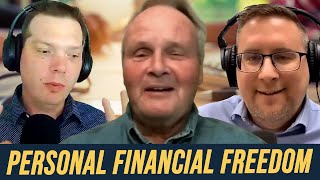
A recorded conversation (YouTube video, June 15, 2021) among Lawrence Reed, Richard Canfield and Jason about the moral case for liberty, entrepreneurship, and sound-money/Austrian-economics perspectives. Central claims: liberty requires high personal character (honesty, humility, responsibility, courage); entrepreneurs are heroes who revive industries and create widely distributed opportunity (example: Jim Thompson reviving Thai hand‑woven silk after WWII); sound money matters—recent rapid M2 expansion (Jan 2020–Mar 2021) likely presages higher price inflation and historical examples (Bolivia 1985, U.S. continental/ Civil War episodes). Also discusses Nelson Nash and the Infinite Banking community, FEE’s resurgence and global reach, and practical advice about principled living and personal financial independence.
Questions this video answers
June 15, 2021.
About January 2020 to March 2021 with an expansion of roughly 27–28% (M2).
About 2.5 million page views per month on fee.org (approximate).
He retired in May 2019 (became President Emeritus).
Noonan, Georgia; he has lived there about 11 years (as of the interview).
Chapters
Liberty is the one arrangement, social, political and economic, that requires that we live to high standards of character. You must be a person of character and so must be the great majority of people in your society if you're to have liberty. I don't know of any country, any civilization in all of history that lost its character and kept its liberties. I mean, that's how important this is. Of course people will ask, well, what do you mean by character? I mean you can have good character and you can have bad character and some people are characters even if they haven't got any. So there are a lot of different ways to look at this term, but I mean it in the positive sense that character is something that's good. And it's made up of such attributes as honesty, of commitment to the truth, of humility, understanding that, hey, you don't know everything and therefore true. Trying to plan other people's lives is not only a tall order, it's an impossible one. It's a full time job just to plan your own. Also, I think it means responsibility.
Okay, we are in for a special treat today. Joining us today is Lawrence Reed, the former president of the foundation for Economic Education, an incredible organization. Fee.org if you have not yet checked it out. Make sure to do that. This gentleman has. He's done over 2000 columns and articles in newspapers, magazines and journals. He's written a number of incredible books. He has an amazing essay about real heroes inspiring the true stories of courage, character and conviction. And he's delivered over 75 speeches annually basically between 1985 and 2019. That's a lot of speeches pretty much in every state in the U.S. he's been in countries all the way from Bulgaria to China and Bolivia. And one of his best known lectures includes seven Principles of Sound Money. Now, we are excited to have you here, Mr. Reed, because we've had a number of great conversations with you and every time we get a chance to speak, it's an absolute pleasure and you are always able to impart so much value to a listening audience. And so welcome and thank you for being with us today.
That's very kind of you, Richard. Thank you. And thanks to Jason as well for having me. I look forward to our conversation very much.
I want to dive into the connection between liberty and character. You planted the seed with me right before this episode. I think that would be a great starting point. Take us away, Larry.
Okay. Well, liberty means so much to all three of us and to, I'm sure, most, if not all of the listeners of your program. And there are different ways to argue on its behalf. You could take the route of arguing that it is the most productive of material things, that when people are free, they go to town, they invest and become entrepreneurs, they produce more stuff, they raise the standard of living far better and higher than any central planning socialist regime could ever imagine. And that's a powerful argument and it ought to be self evident. But some people might say, well, okay, I might concede that, but it's not fair because in such a system some people might earn more money than others do. And so we need my friends in charge so that they can redistribute wealth and centrally plan the economy. So the argument from a material standpoint is powerful but probably insufficient by itself, certainly among people who think they are moral and want to do the moral thing. So you can fall back on a second argument, which is that liberty is the one arrangement, social, political and economic, that requires that we live to high standards of character. That now gets to the point of your question, Jason, because I have long believed that this argument for liberty is not utilized sufficiently by people on our side. That too often we argue you should be for freedom, be for liberty, because it produces the most stuff and we leave it at that. I think we've got to come back and argue from the moral high ground. And one of the ways you can do that is to point out that you must be a person of character and so must be the great majority of people in your society if you're to have liberty. I don't know of any country, any civilization in all of history that lost its character and kept its liberties. I mean, that's how important this is. And of course people will ask, well, what do you mean by character? I mean you can have good character and you can have bad character and some people are characters even if they haven't got any. So there are a lot of different ways to look at this term, but I mean it in the positive sense that character is something that's good. And it's made up of such attributes as honesty, of commitment to the truth, of humility, understanding that hey, you don't know everything. And therefore trying to plan other people's lives is not only a tall order, it's an impossible one. It's a full time job just to plan your own. Also I think it means responsibility. People of character must be responsible. They cannot blame others for their own mistakes. They can't be out there demanding a living at other people's expense. They should step up to the plate and to the extent that their abilities allow them, they should produce and create and add value to society. And I think character also means courage. I don't see how in a dangerous world where there are lots of people who would be happy to take your liberty from you if you gave them a chance. I don't think that a timid people will long remain free. I think you have to be courageous. And sometimes that even means putting your life on the line for the values that you hold dear. So the connection between liberty and personal character, I think is so strong, they're really two sides of the same coin.
I would agree with you wholeheartedly. And when we try to understand what fundamentally is going wrong out there in our part of the world nowadays, as any society is leaned more toward let's let government solve all of our problems, then you minimalize and marginalize ambition, motivation, creativity, innovation, because everyone is wanting everything to be equal. And that's just not how a thriving society or an innovative society can operate. And Nelson, in his book Becoming youg Own Banker, he described just from the element of taxation or onerous taxation and how it was like a host parasite relationship that sooner or later both the host and the parasite die because the parasite just keeps sucking all the blood out of the host and doesn't know when to stop.
And.
And so I agree with everything that you've remarked on because what we find is that people are so divided. And I think what's amplifying that is a person maybe feeling like they don't have control over the situation. And so if you've ever been in a situation where you felt like you had an element of control but it was still bothering you, then you experience, maybe you experience sadness. If you can't control it and you're not sure what's going on, then you experience fear, you experience anger. And it manifests itself in if you don't agree with me or you don't share the same opinion as I do, then I'm going to attack that versus, hey, maybe there's an opportunity for me to rethink my thinking or to recognize that there's always something new to learn or to see things from a different vantage point. And so this really struck a chord with me. The connection between liberty and character was very well put. Thank you, Larry.
Oh, my pleasure, Jason. Yeah, I strongly believe that it's very much a personal assignment. It's a lifelong assignment. It's nothing that you can improve by mandates from some central authority. Government is not going to make us better people. People of stronger Character, it can at least stop punishing good character. I wish it would do that, and subsidizing bad behavior. But ultimately, this is a very personal thing. You have to decide one person at a time, that you're going to make your character a priority. And it isn't because or isn't just because it's the right thing to do, but it's also because you will then have the greatest influence for the good over the people you come into contact with. Your children will learn by your character. They will learn by your example, probably more than what you say, what you do actually counts for more than what you say, especially if they don't match up, if you're a hypocrite.
You know, I love, I love that you identify that. And what comes up for me as you're talking about that personal responsibility component of it is it brings back Nelson Nash. And Nelson, you know, taught me such a great deal, as we did Jason, and all of our listeners who have either been blessed to be exposed to his message about essentially a personal secession from different aspects of the world. The things that you don't feel support you or you're maybe at odds is that you can simply secede from that way of thinking. And his focus of his message was, of course, highlighted on the money system. The banking system, which was, generally speaking, across the board, I think, in most westernized nations, is not there to support us in the way that we think it is. And so the best way to, to remove yourself from that was to start creating your own piece of it, one slow piece at a time, month by month, year by year, accumulate your own warehouse of wealth inside of properly designed insurance policies, where money is not fractionalized, which is one of the leading issues with kind of the world we live. So from an economic standpoint, Larry, where do you think that the personal responsibility components and how we deal with our money as consumers, you know, in North America, how do you think that relates to personal responsibility and character? I'm curious your thoughts on that.
Oh, I think it's critical. It's. It's a hallmark of sound character to be as independent and in charge of yourself, your own life, your decisions, as you possibly can be. Nelson Nash was a living example of this. And, you know, because you guys know him too, maybe even better than me, that to know Nelson was to really appreciate and to love him, because we knew that when it came to character, he not only preached it, he practiced it, he lived it, he was an example of it. He was what the rest of us look up to in so many ways. He didn't just preach these things. He invented new ways to implement them and practiced them himself. So the connection between personal independence and character, if I am interpreting your question correctly, Richard, is look at it this way. If somebody else is telling you what to do, if somebody else is effectively in charge of your life, if you're dancing to their tune, well, you're not really living your life. They're living their life through you. So to be the responsible person you were meant to be, the unique individual that the Creator made you to be, you've got to be in charge. And so long as you do no harm to another person, you should have the freedom to map your course and be in charge of your life and be an influence over others through the voluntary interaction you have with them and the example that you set.
That is so, again, so well put. And what comes up for me, in addition to everything that we've shared, when I think of one element of our society and how we progress and how we grow, is born from the entrepreneur. And the entrepreneur is inherently unemployable because they want to create something. And by virtue of everything that gets created begins with one person who has this idea and wants to turn it in or take something from a lower level of productivity and increase it to a higher level of productivity, which I don't think anyone in any government will ever truly conceptually understand. But the entrepreneur has to be able to operate in their unique ability in order to bring that thing or that idea to life. And I can speak from firsthand experience. I am unemployable. I could not be employed in the truest sense of the word by any employer, because I believe in my ability to serve the marketplace without having to be dependent upon an employer for that opportunity. And when you try to limit that and you try to corral that and you try to paint a picture to the world that that type of thinking is bad and that successful entrepreneurs are evil and vile and should be punished through more onerous taxation or so many other measures that just you've heard and read and seen on so many social media news feeds. There are certain groups that can get inflamed very quickly if you use the words entrepreneur and success in the same sentence. And it's. Frankly, it's offensive.
Oh, it sure is. And it's also a shame that so many people don't understand the critical role that an entrepreneur plays in a free society. You know, you hear all the time these peons or praises to the common man or the common woman. And every time I hear that, I think, look, I know what you mean, and I don't mean to in any way denigrate the everyday ordinary man or woman. But let's keep in mind that it's not the ordinary. It's not the average that puts us on a path to ever higher levels of achievement. It's the uncommon. Those are the people that we really should be celebrating. And among them, of course, are the entrepreneurs. They're the ones that stand out from the crowd. They're willing to take the risks. They're willing to put their money where their mouth is, often suffering repeated failures before they get it right. These are heroes of a free society. And yet so many people kind of start off thinking of, oh, entrepreneurs. Oh, yeah, they're just in it for the money and they're greedy and they hurt people, and they only get ahead by doing something at the expense of other people. Well, that is such so sad misinformation. It's a terrible shame. So I like to spend a lot of time writing about great entrepreneurial heroes, people who in some cases have been forgotten. But we need to dust them off and tell their stories again. So if in this interview you have time to talk about one or two, just let me know.
I would love that.
I would love to do that. And before we look at one of those entrepreneurs, I'd be really curious, just echoing what Jason said. And as an example, you know, I'll use Ascended Financial as an example. We're in this. We're in this particular time. We're still in the midst of, you know, a year, year and a half, whatever it's been, of Pandemic world here and what's been generated out of that. Certainly there's a lot of people who have many issues. Many businesses have failed. Many have failed completely. But others have had the exact opposite impact where they've accelerated and they've created. It's. It's created an absolute spark of innovation in a way that I think is almost unprecedented. The circles of entrepreneurs I traveled in, the zoom technologies and the types of new ideas and innovation and apps and technologies that are being created to allow people to conduct business, to be able to and keep people employed. So the reason I mentioned Ascended is because here we are as a growing organization, and we're looking to grow and expand and increase the amount of people that we're employing. And so if we don't have an ability to go generate profits, we can't keep people employed and add new people to that. So the Ability to see a future where you can do that and you can provide quality jobs and you can provide an entire way for someone to go about running their own life because there's a job there for them. That is where the uncommon of heroes come in, I think, from the entrepreneur standpoint. So I think you identified it just in a different terminology. But I'm so grateful that we can be in this environment and that even through troubling times, often it's through turbulent and troubling times where the greatest possible innovations exist. So I think we've gone through this again. We can paint as many bleak pictures as we want about the pandemic. But what about all the good? Yeah, who's talking about all the good that's coming out of it? Because there's a lot of it out there.
Certainly not the media. The media avoids positives like the plague. I think they're vaccinated against it. That vaccine came out a long time ago.
They took the wrong vaccine. Yeah.
And I'll expand on that, Richard, and share that. What we look for. And I'm sure if you were to sit 100ambitious entrepreneurs in a room and ask them, when your enterprise grows and you need to grow, are you just growing to fill positions? Well, I would say the vast majority would say, not a chance. We're growing to put people in positions who have demonstrated that they have growth potential to grow into different roles in our organization. And so growth to the outside world. Looking into an entrepreneur growth really from a thought pattern is just limited to how. What's the, the, what's the dimensions of that entrepreneur's wallet or bank account? Yeah, but nobody sat down and spent time with the entrepreneur to take a look inside their organization and say, you're providing great growth opportunities for people to operate in their unique ability. You've got a great culture. People, although they rely on the business to be able to provide for themselves and for their families. They're trained well enough to leave, but taken care of well enough that they don't want to. And so it's, you know, it strikes a chord with me in particular, because again, when I see, you know, the view and the viewpoints that can be taken toward members of society who want to help others thrive and grow. And then you have a government who wants to create dependency. And then once that starts happening, all of the telltale signs are there. You start to see government overreach. That's justified by, we're doing this to help you. We're doing this to keep you safe. We're doing this too. And I'm not talking about COVID 19 here, so I'm not saying safe as it relates to not contracting a virus. I'm talking about we'll take great care of you. We'll keep you warm and cozy and comfy. And that's when you start to see one overreach over the other. And R. Nelson Nash used to say, don't ever deviate from your principles because the first deviation, once you do that, the next deviation gets easier and easier and easier, and look no further than government for that. As a sharp example, regardless of what your political leanings are.
Yeah. It's so important to have principles and to stick to them. In fact, if you have what you think are principles but you don't stick to them, I would question whether or not they really are your principles.
Agreed.
The comedian Groucho Marx, you remember him? No. Oh. Oh, my gosh, I guess I'm dating myself. He was comedian as well as three of his brothers. And in one of his films, he says to an audience, he plays the role of a politician, and he says, those are my principles. If you don't like them, I have others, which is really a way of saying, I really don't have any principles, or I'll have whichever ones you want me to have. And then if the next crowd wants them to be different, I'll switch them. Too many people are like that. But it's so important to stand for something. I mean, we're adults. Surely at some point you get to the juncture where you have to realize, I guess I have learned something. Not everything is just a blank slate. You know, 50 years into my life, there must be some things I can identify as truthful and worthwhile. Well, those are principles. And too many people don't know what they are, don't know if they've got any. And so they're all over the lot. They're inconsistent and doing a lot of harm in the process.
Now, you talked about some forgotten entrepreneurs, some of those uncommon people. I would love it if you blessed our audience with one of those stories, because I love hearing about lessons from the past, people who have forged ahead. And what are the lessons I can take away in my own life, my own business, as I move forward, related to that story that can allow me to have personal growth. So if you could share one with our audience, that'd be great.
Yeah, I'd be happy to. I'll tell you about one I just recently wrote an article about. Probably 50 years ago, I heard Dr. Israel Kirzner, still living, great Austrian economist, describe entrepreneurs this way. He said, imagine in a free society, you've got so many opportunities that are coming and going. Some people see them, some don't. He said, it's like, you know, everybody's standing around each other, thousands of people, and just over their heads is a blizzard of $10 bills. There's been so much inflation since then. Maybe we should talk about $50 bills, $10 bills flying just over overhead. Most people don't even notice them. Some people do notice. They look up and they see those $10 bills flying by, but they don't have the courage to take a chance and reach out and grab one. It's the entrepreneur who not only notices those $10 bills, he or she has the courage to reach up and grab one. Well, here's an example of a guy who did that. His name was Jim Thompson. He was written up. I first saw an article about him in Time magazine, not when it appeared, but literally decades later and not very long ago. Jim Thompson was serving in the US military during World War and in the summer of 1945, he was dispatched to Thailand just before the end of the war. And he expected to see some action. But by the time he arrived there, Japan has surrendered. So he never saw combat. But he took a liking to Thai culture. I mean, this was a guy from Delaware, he's halfway around the the world, but he decided, hey, I kind of like to make my fortune here in Thailand. And he got it in his head that the hand woven silk industry that had decades before been so important to Thailand, but it died out due to international competition from machinery and so forth. He decided that that's an old industry that ought to be revived because that silk is so beautiful. No machine can precisely duplicate the beauty of hand woven Thai silk. Well, first of all, you got to realize what a challenge for this guy. He gets this idea halfway around the world, he's got culture and language barriers to overcome and he's got 700 bucks in his pocket, that's it. And he's somehow going to revive a dead industry in Thailand. But he decides, I'm going to do it. And he had to go find old silk weavers who knew how to do it but hadn't done it in a while, had to find other employment or were retired. He found enough of them to start a company and within a decade it became a massive new industry. Actually it dusted off an old one, but a new business with several thousand employees. He found markets all over the world, most of that marketing he did himself and it was a thriving industry. And the headline in the, in Time magazine in the late 50s about him was, the man who single handedly revived the Thai hand woven silk industry. Well, you know, just an amazing thing. And who could do that? How many people would, would bother to take such a risk? And yet there are an awful lot of Thai silk weavers who were glad that he did. He didn't take from anybody, he didn't steal anything, he didn't exploit anybody. He had to pay the wages needed to attract the workers he required and he offered a product that nobody had to buy, but they loved it. And so he hurt no one. And he did the world, and Thailand in particular, a great deal of good. That in so many ways encapsulates what a truly good entrepreneur does.
Absolutely. How much of that industry is still thriving today because of his efforts? That was basically long dead. And now there's how many, you know, if we were to take stock and I mean, maybe today because of COVID there's not as many working, but if we were to look at the industry as a whole and how many people are producing and working in that. The people that are doing marketing for a company that does that, the people that are doing the weaving, the, the people that are going and getting the materials to create it, the, the people that are bringing the, you know, helping, you know, clean the factory and all the ancillary associated workforces and the contractors that they hire to come and work on the building that's there because the factory exists and all those other burgeoning things that surround that one job, that one business from that one decision. It's like an explosion of opportunity that's created decades later because of one man's drive.
Exactly. The industry's still around, still doing well. I don't know how its employment numbers today compare with the company when he passed away, but people can read the numbers that he accumulated in the 1950s in terms of employees in the article that I wrote about him on my blog on my website, which is lawrencewread.com and you can find it pretty easily there. Jim Thompson was his name.
Jim Thompson, what an interesting story. Thank you for sharing. And we'll include.
I understand his home is quite the tourist attraction to this day.
Very interesting.
I bet you they have some silk curtains in there.
And we'll include links to connect with Larry and to just be able to consume just a wealth of material and resources that he graciously makes available to the world. And Larry, maybe share with our listeners where you're hailing from and what's keeping you busy nowadays?
Okay, well, I live in Georgia now, a little town called Noonan, which I've grown to love, about an hour southwest of Atlanta. I've been here now 11 years. I moved here after 30 years in Michigan, which I also loved. But when we moved the foundation for Economic Education from its New York headquarters and I became president just before that to Atlanta, that's when I then started to look for a place to live and a house to buy, and I chose Noonan. I retired from that job as president of FEE after 11 years in May of 2019. But I didn't retire in the sense of heading for the rocking chair. I still work full time as President Emeritus fee, which means that I don't have the daily administrative duties I used to have. I don't have the fundraising responsibilities I used to have. A new president has those assignments. I now approaching my 70s, have the opportunity to do what I most enjoy, which is writing and speaking. Although Covid has put a temporary dent in public speaking. But that's what I spend most of my time now, speaking or writing and posting stuff on both social media and on my website.
That's terrific.
And if anyone's had a chance to read any of Larry's writing, you'll be pleasantly surprised at not only how easy it is to read, but also how much knowledge you can capture from any given paragraph. And you know, coming, you know, being so involved and ingrained in the culture of fee, the foundation for Economic Education, and, you know, thinking all the way back to its founders. Another a totally different read with Leonard E. Reed and how that organization has progressed over time. I think you would probably, I'd love to just hear from you that the organization, it's spread and its depth and the way it's being received and reaching the market of people getting into the hearts and souls and the minds of so many individuals, I think probably across the globe, has really expanded substantially. And when did you start to see that trend really pick up? I'm curious. You probably keep track on some of the statistics and where people are reading materials and articles from online, et cetera.
Yeah, you know, FEE was virtually alone in terms of what it did full time in its first 25 years of history began in 1946, and there just wasn't another full time, market friendly, Austrian economics focused think tank telling the world about liberty and free markets. And so for a time, we grew dramatically, but then later on, as maybe because we were victims of our own success, to Some degree. There were lots of other groups that grew up committed to the same ideas. And then our founder passed away in 1983. We kind of drifted for a time, but when I took it over in 2008, I decided that having a long history with fee as chairman of its board and writer and speaker going back to the 70s, that we really needed to ramp up our focus on that liberty character connection that we talked about earlier in this interview. And so that became very much a focus of the time I was president. And it turned out that that rang a bell with people. So we took off again in terms of our growth. And we have a following that's massive all over the world. I know that on Facebook, largely because of my work at Fee, I have about 93,000 fans just in Brazil. Can you imagine that Fee has had a lot of influence in Brazil? It's publications translated into Portuguese and published. That's also true in places like Poland. And my. My most recent book was Jesus the Socialist is about to be translated into Italian and published there, which is great because I hope they get a copy of it to the Pope. In any event, phi's influence really has grown dramatically in recent years. We get something like two to three million, maybe more, on the average of about two and a half million page views per month all over the world@feed.org wow.
Incredible.
That is really good.
And I was on the website the other day, actually because of a comment in one of our. In our group, in our private members that we have, and someone was. Was sharing another. An article that they had read. And. And I thought, you know, it sparked a memory mean, in fact, what we've talked about. And going back to Mr. Thompson and his. His success in Thailand really made me think of I pencil. And that's one of my favorites, the. The essay by Leonard Reed. And anyone can go to Fee and get that PDF. It's available there for free to download. As well as all of his works, I think thousands and thousands and pages of every book and essay he ever wrote is available there. And there's even a great video. There's a couple of that are out there, but there's one that I believe that was commissioned by Fee, which is basically the Eye Pencil movie. And I think it's about 10 minutes or so long. And it basically, you know, someone does the storytelling and there's visualizations of, you know, the. The entire world economic engine that is surrounded with the making of a single pencil and how many people around an entire globe are impacted by the single. Just so that one pencil can be created that you can use to draw or sketch or take notes at an. At an event, perhaps a speaking event of Larry's. And what an incredible way to relate information, a story told through the eyes of the pencil. And I think that that's one of the most. For me personally, that's been one of the greatest learning opportunities I've ever had to just recognize not only how entrepreneurship impacts people, how incentivization impacts people, but how connected we are as a global community, as an economy, in the things that all the little components that move about for something so simple as a pencil.
Yeah. That video you referred to, Richard, has become a classic, too, just as the essay has. And it was produced by our friends and partners at the Competitive Enterprise Institute CEI in Washington. And they did a marvelous job. I think Leonard Reed, who, the author who passed away in 1983, would have been very proud to see that video.
I have a question around the current economic environment that we're in and what's happening not only in the United States, but of course, that spills over into Canada and to obviously many countries around the world. But there's so much chatter and people talking about and using words, I think paying lip service to words like hyperinflation. And having been through. Having gone through a period like the early 1980s, are we headed there again?
Well, this comes up a lot these days, as I think it should, because we have just come off a period of the most rapid expansion in money and credit in American history, at least since the Second World War. From about January of 2020 until March of this year, 14 months, we've had an expansion of money and credit as measured by what's called M2, mostly cash plus demand deposits of about 27, 28%. I mean, that is remarkable in a single year period, at a time when the economy, except for the COVID suppression, has really shown signs of new life. It's growing. And on top of that, we've got all this cash and credit sloshing around in the system. I believe it's only a matter of time. And by that, I don't mean decades or even years, I think months, maybe sooner, before we'll start talking about price inflation as one of our big economic worries. There are already signs of a kind of inflationary bubble. I think the stock market is showing some of that certain commodity prices. Yeah, yeah. So that's the easy money that's finally showing up in producer and now consumer prices. I think we're going to see a lot More price inflation in the months to come as a direct result of all that funny money creation.
Funny money. That reminds me so much of what Nelson used to say all the time. I saw a graphic that was posted on the Facebooks the other day and it was a fellow who posted, oh, I finally got a chance to run across a millionaire. And it was a fellow towing a trailer full of lumber because the prices have just skyrocketed. And it just. Yeah, with all of the. Seems to be an endless stream of new money being printed and injected into the economy. Interest rates only have one direction to go eventually. And the Federal Reserve, the central banks, I mean they can only, it can only hold it back in my view for so long. But once that dam breaks.
Yeah. Too many Americans, I think, kind of instinctively, if not overtly think that, well, hyperinflation, that just happens in backward countries. It can't happen here in sophisticated America. Well, if you do the same thing that they did, you're going to suffer the same effects. But keep in mind that we've had hyperinflation in this country before. Depending upon your definition of it, some people say it has to be triple digit before it qualifies as hyper. Some people were using that term hyperinflation in the 1970s when we had price inflation well into double digits. But twice earlier in American history we had price inflation that was well into the triple and quadruple digits. And I'm thinking of the continental dollar inflation of the War for Independence. The Continental Congress even put Ben Franklin in charge of the printing press and he said, okay, I'm only going to print $6 million. That's it, we're not going to do anymore. Well, by the time they were done, they had printed hundreds of millions of paper dollars and they became completely worthless. And then during the Civil War, the South, partly because it lost and partly because it overprinted its currency, became completely worthless. And the paper notes of the north, the war's victor, were depreciated by some 2/3.
Weren't those the greenbacks?
Yeah, greenbacks, yeah, that's right.
In our country, just most recently, our central bank printed over the course of this past year or so during the pandemic, like $159 billion, 156, pardon me, and is buying back 159. So do you hear the rumble? That's inflation coming.
Yeah, yeah. The Fed thinks that in their infinite wisdom they can somehow nip it in the bud when it starts to show up. But I wouldn't count on it.
Well, I think that as they rotate Fed chairs out, they're just looking for. It's just things, the timing of an input and an exit of a Fed chairperson seems to be who's going to be the fall guy. They're just kind of rolling the dice on who gets nominated to take the fall for this. Meanwhile, Paul Volcker and everything is kind of back there chuckling away because.
We.
Keep doing this same thing in history over and over again, giving government complete power over our money, and then so many people are surprised when it abuses that power. Well, you just have to expect that that's what they'll do.
And I think people, for the most part, may not understand that capital is mobile and capital goes to where it's treated the best.
That's right.
And so when we think about what's going on, and again, the media does a great job of keeping people in a constant state of fear and anxiety and drumming up all these notions that to solve the current problems that are going on, that if we somehow, what they define as taxing the rich, that that is somehow going to put even a dent into what's going on. It's just, it really is just a maneuver to distract a person's thinking from focusing on the problem and what's really going on to vilifying the very people that pay the majority of taxes.
Yeah, I remember this discussion has prompted me to recall this. Going to Bolivia in South America in 1985 because they had the world's highest price inflation at that time, 50,000% per year and rising fast. It was only a few months before they printed that Bolivian peso into oblivion. And, well, just about five years ago, went back to Bolivia to do a video on inflation. And I had dinner with an economist who worked for their central bank back during that 50,000% inflation that I talked about. And I asked him point blank, I said, well, you're an economist. I mean, you were at the board of governors of the country's central bank. You knew the, that this was unsustainable. Why did you guys do it? And he just, as I just did, he kind of chuckled and he said we had no choice. He said the government had become so corrupt and fiscally irresponsible, it was running these massive deficits. Only 10% of what spent was covered by tax revenue and it couldn't borrow anymore, nobody would lend it anything. So they just told us, print the stuff and if we didn't, there'd be hell to pay. So we printed. So look at what we're doing. Here, I mean, even if you don't like the Fed, you have to be a little bit, which I don't, you have to be a little sympathetic at a time when Congress and this administration is spending trillions more than they have. And what choice does the Fed have sooner or later but to monetize a lot of that which then gives us price inflation.
Absolutely.
Well, and your story of Bolivia, I mean it's probably, I don't know about the timing of the fall of Rome, but in my small level studies, which I think would pale in comparison to yours, about some of the many things that led to the precipitous drop of the fall of the Roman Empire, the price inflation and the debasing of the currency was probably at the core, the many other things, but character being one of the other things at the core, which goes back to what you were talking about earlier, but those two things working in tandem with one another in a symbiotic relationship, debasing the currency, the inflationary trend created and then the character of those in power would be, I would suspect that we could just sum it up as that's what caused it. I don't know if you would agree with that, but it seems like a pretty fair assessment.
Yeah, there's a great book, it's not easy to find today, but it can be found on like you old used book book sites online by an economist named Max Shapiro. And it was entitled the Penniless Billionaires. And I still have my copy. I pull it out every now and then to read the four chapters that he has, each one about a particular episode of hyper inflation in history. And the very first chapter is on what he calls a cyclonic super inflation in the late Roman Empire of the three hundreds, the fourth century ad. And it proceeded because the Roman emperors would call in the coins of the realm. They didn't have paper money back then, yet they would melt down the metal coins and mix in cheaper junk metals so that the precious metal content steadily fell until by the three hundreds, the Roman coinage had just a speck of silver or gold in it. The rest was all tin, lead, you know, junk stuff so they could multiply the money supply.
Larry, it has been a pleasure yet again. Thank you sincerely for spending time with us and with our listeners. We'll have to get together in person once we get the green light on this. Covid19 and have you join us again at a infinite banking think tank symposium. I think it would just be wonderful to have you there. And Richard and I are just incredibly grateful for you. And thank you again for being so generous with your time and with your wisdom. And we will share links for our listeners to continue their learning and to consume a lot of the great content that Larry's made available to the world. And so, Larry, sincerely, thank you so much again. It was a great, great chat.
My pleasure. Thank you, Jason. Thank you, Richard. And would love to do one of your programs again. And meantime, thanks for all that you do for liberty and sound money and to further the great legacy of Nelson Nash. Thanks, Larry.
It's an honor and a duty and.
A labor of love.
Okay, gentlemen, thank.
More from Richard





How Do You Use a Policy Loan to Buy Dividend Stocks? #dividendstocks #infinitebanking #shorts


Can Compounding Dividends Pay Your Bills? #wealthbuilding #investment #financeeducation


Should a Corporate Policy Offset Your Personal Coverage? #shorts #insurancetips

What Is Human Life Value? #shorts #insurancetips #dividend #wholelifeinsurance