Five Years With The Infinite Banking Concept - Client Series | Wealth Without Bay Street Podcast
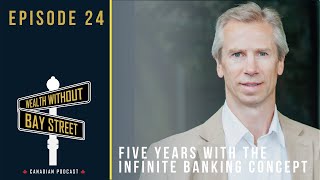
Curtis Arnold shares five years using the Infinite Banking Concept with whole life insurance. He's used policy loans to fund mortgages and replace lines of credit, built cash value for his kids' education, and watched his policies outperform other assets during COVID. He credits R. Nelson Nash's book for changing how he thinks about money and legacy.
Questions this video answers
August 18, 2020
Over 16 years
17 single-family homes
About 5–6 years (he says "probably five or six years" and later "I'm probably getting close to 6")
Three daughters; married 10 years (as of 2020)
Chapters
You are listening to the Wealth Without Bay street podcast, a Canadian guide to building dependable wealth. Join your hosts, Richard Canfield and Jason Lowe as they unlock the secrets to creating financial peace of mind in an uncertain world. Discover the strategies and mindsets to a financial future that you can bank on. Creating wealth, eliminating debt, and controlling the banking function as it relates to your needs takes practice, it takes education, it takes a little bit of time, but it's an incredibly liberal, liberating way of financial life. We would encourage you to learn more about it. A great way to do that is to head on over to wealthwithoutbaystreet.com forward/masterclass. Go ahead and check out the masterclass that's there. Sign up and register and we're even going to ship a copy of this incredible book, becoming your own banker, where it all started, right to your front door. We look forward to you joining us on the other side of masterclass. All right, everybody, welcome to another episode of wealth without Bay Street. We are joined today by a personal friend of mine, a wonderful individual, an infinite banker. The amazing and the incredible Mr. Curtis Arnold. Curtis has been a mortgage broker for over 16 years. He's, he is the family mortgage guy. He's a fantastic individual. He's been a real estate investor for longer than that. He's a father of three incredible daughters, married to an amazing wife for 10 years as of this year of our recording in 2020. And some of his most proud achievements are hiking the Inca Trail. Always wanted to do that. Owning 17 single family homes in Calgary at the same time and learning to walk on hot coals and broken glass without getting inj. This guy's done some cool, cool stuff. Now I met Curtis Arnold at a personal development event almost 20 years ago and we've been friends ever since. And he is a fantastic human being. So if you ever get a chance to get to know, get to meet, get to introduce yourself to Curtis Arnold, I would highly encourage anyone to do so.
Richard, that was awesome. What an introduction. Curtis, it's good to be with you. Thanks for joining us.
Yeah, great to be here. Thanks for that introduction, Richard.
One of the things I wanted to share.
Sure.
Is this is our first episode of existing clients who are practicing the process of becoming your own banker. The infinite banking concept.
Yes.
And so we're incredibly excited to have Curtis here. And Curtis, welcome to the inaugural client Sessions. Client sessions. Client sessions. That's what we're going to call it. Client sessions.
It's official. That's the new term.
And so we really appreciate you being with us and look forward to an amazing conversation. And for all of our listeners on the YouTubes, the Facebooks, the podcasts.
Well.
They can't smash a like button if they're just listening to it in their car. You wouldn't want them smashing something in their car.
No. Well, yeah.
So if you could like the podcast, rate it, review it, comment on it, let us know that you're getting value.
And there will be some show note links so you can figure out how to get a hold of Curtis Arnold and check out his, his website and that sort of thing as well. Right now, switching to Curtis. We've got this beautiful book here I'm holding, Becoming youg Own Banker. Tell everyone. Curtis, when abouts did this book enter your life? How did that come about and what made you decide to go down this infinite banking realm? And I love that you've got your copy in hand. Isn't that awesome?
That is awesome.
Wanted to have it handy just in case. When did I first come to have one of those infinite banking books? I'm sure it must have been at least five or six years ago. Richard sent me one, probably by express post, because he wanted me to get to know this process so bad. It took a while for Richard just convinced me to even look at it because I was like, it just sounded too good to be true. But probably five or six years ago, Richard sent one to me and like I said, it came through express post and I realized there was some urgency. If he wasn't going to send this thing snail mail, it was probably a little bit more important, a little more important to look at than just, you know, the average, the average, you know, piece of mail that shows up in your mailbox these days. So it's probably been six years since I started doing the research and this book was one of the things that Richard asked me to take a look at and do my own diligence on and kind of make up my own mind. So. Yeah.
And what inspired you to implement the process in your life and how's that journey been going for you?
Well, what inspired me to do the infinite banking process was the lack of a lot of other things just not working very well. So there was some pain that I was moving away from. I mean, I've had lots of different investments. I mean, Richard, you've known me for 20 years and through personal development we were exposed to a lot of different things. Some alternatives, some pretty standard. But a lot of the times that didn't either work or they were A scam or, you know, something like that. It just didn't work as good as I wanted it to. It worked good for a while and then it didn't work anymore.
It wasn't as described on the brochure.
Yeah, for sure. Yeah. They didn't, they didn't tell you about the downside very often.
That was some fine fine print.
The fine print under the fine print. So when I, when I finally took a look at infinite banking, infinite banking process, I realized that, okay, well, it is, it is what it says. It is the fine print. There is no fine print. It's just all right out there in black and white. And through my own due diligence, I realized that there wasn't anything strange or weird about it. It just is what it is. And it's just a tool, just like any other tool. And if you know how to use the tool, you know you can, you can build a house with the right tools. If you don't have the right tools, you can't build the house.
That's a really, really good analogy.
Yeah.
And throughout your journey, are there any examples of how you implement the process that you think would be valuable for other listeners to hear?
Yeah. Well, originally I started the infinite banking policies because the appeal was, well, I figured it would be a good way to build up a bucket of money somewhere for my kids to use to pay for their university education, if not part of it or all of it or something like that. And then after they're done using the policies, well, then maybe I can use them to enjoy myself after they're done university. And you know, it's part of a tax free access to capital retirement plan for the future, like way down the road whenever I get to that retirement thing, I don't know if I ever retire, but I think I'd get too bored. I just got to keep going.
Well said. I'm glad to hear you say that, by the way.
Yes, sorry, what was the question again?
So, like just some specific examples of how you've implemented the process and you.
Had that original intent, but you know, along the path you've already kind of made some decisions to try a few other things along the way.
Yeah, I have tried a few other things. So I mean, there's already been cash value built up in some of these policies. So I've used that cash value to invest in other ways because I also like the fact that, you know, the compound effect book where you can use your money in one place but also use it in another. So I've Used it to invest in real estate, specifically second mortgages. And what I like about that is second mortgages actually pay me every month. So when I get my, when I get my payment every month, I can use that to make a payment towards my policy loan. So it's just cash flow and it just builds up a snowball effect so that the policy is growing, my second mortgages are growing.
And it's paying you every month?
Yeah, I mean, I'm getting paid every.
Month and the policy is paying you every day?
Every day, yeah. And I check it often actually.
You know, we have many clients who do that and it's good for you. Good for you for doing that.
We had a chat. Jeez, that must be last 30 days, I think. Curtis, we had a chat and we were looking at some like, some growth numbers and it was like, wow, like this is like your daily growth on this thing's looking pretty good.
Yeah. And I like the exponential growth of it. It just keeps compounding. So yeah, I've used it to replace some lines of credit when I would rather not have that line of credit sitting there owing interest on that I'd rather be paying into something that I already own myself, not the bank.
And that's a key point, very key point that Curtis just touched on there. Because Curtis, like yourself, Richard, like me, like everyone else who's a participating policy owner, you are a part owner of the insurance company. And the reason why I just, you know, wanted to add to what Curtis shared here and why it is so impactful. The analogy that R. Nelson Nash used with us so many times over the years is so he would speak in Canada frequently. Curtis, you, you, you know this, you.
Had a chance to see Nelson, I.
Believe in, I never did see him live actually.
And he knew, you know, he just through conversation, right. So we, he'd say, hey, where do you buy your groceries here? And we'd say, oh, you know, we purchased them at Safeway. And he said, well, let me ask you this question. If you and I co owned a Safeway together, would you ever buy your food from Walmart? And the obvious answer was no. And so Curtis, you made an excellent point there where you said, I'd rather have the money going to a business that I own versus somewhere else. And so you really get it. You get the essence of the four characters in the financial play. The depositor, borrower, the banker, the bank owner. And this has nothing to do with interest rates. Never has, never will. It's all about the process of who's getting the Money and more importantly, who that money is being put to work for. So when Curtis is repaying his policy loans with interest, that interest component of that policy loan repayment is money that the insurance company is putting to work for Curtis's general benefit and for everyone else who participates in co owning the.
Business, which includes other members of Curtis's family.
There you go.
So it's, you know, that's the inner, there's another interlock that happens there. And, and that's, you know, so it's, there's also, you know, there's also a feeling that comes with that. So there's, there's, there's the impact of just doing it as is, but there's also, there's a, there's, there's a peace of mind. There's just a feeling that you get because you know that you're keeping the dollars rotating inside of this environment that the whole family is going to participate in over more than just your lifespan.
Mm, yeah. Multi generational.
And Curtis, what would you say to, you know, based on your experience with this process and all the things that you've been able to do, second mortgages, a big one, recapturing line of credit, you know, debt, another big one. What would you say to listeners who are, you know, going through our podcast episodes? They're researching this process. They're, they're not sitting on the fence, so to speak, they're they're just in full on research mode. What would you say to those people today?
Well, I'd say be open minded about it and be careful of the source of information that you're doing your research for or from. I mean you want to be getting this information from a credible source first of all, not just, I guess you could go to the Google animal and just check it out, but who knows what you're going to come across when there's, there's always pros and cons to everything. But I think you just have to be careful the source of the information. I think that's what I found out when I was doing my due diligence was I was definitely open minded because I'd known Richard for 15 years at that point in time. When I first started doing the research, then I started doing my research and I got such a wide range of opinions, um, that it just, you know, it wasn't making much sense. I was getting too wide a range of opinions from people who are actually in the industry and other advisors and I'm like, okay, well this isn't, this isn't really Helping. I need to really narrow down my focus to people who are not so attached to a particular belief or a way of doing things. So I had to find people who were a little less attached to their own way of thinking and people who were just more open minded. So actually one of the calls I made eventually that swayed me was it's funny, I've got an uncle who's in his 80s, he's retired now, but he was with life insurance advisor for almost all his life.
Wow.
And he's from Regina. And I called him and I just said, well, what about this dividend whole life policy, you know, life insurance policies. I asked him about it. I just asked him straight out and he's a pretty straight guy too. And he says, well, I've got a. I've got a bucket load of that stuff really, really. Well, why do you have so much? And he went on to explain it and I don't remember the conversation exactly because that was five years ago. But the one thing that stuck out in my mind was him saying how much of it he had. Right. What? Well, how come you never told me about this?
And what was his response?
Well, his response was he did, he did tell me. He had been telling me since I was 20 years old.
Right.
So I really didn't get it. I probably, I think I actually had a policy back then that my dad had purchased from me from his brother. My uncle put it in place for me for this purpose and I probably sold it to go buy a beer or something back in my 20s because I didn't know any better.
And how often have we heard something very similar to that come up? Yeah, very frequently we've heard that same kind of thing happen, Curtis. So I'm really happy that you identified that because there's someone who's going to be listening to this and they've probably had that experience or they're like, oh, wait a second, you know what? My parents told me about a policy they got for me and we've, we've encountered that numerous times. I remember there was a gentleman, I helped him, helped him acquire his first, first home slash rental properties suited house in Edmonton. In order to fill the balance of the down payment he needed to get this particular deal is a little bit higher price point than what he originally budgeted for. He was able to find and tap into capital on a policy that was on his life that his parents had still in their, in their name and they didn't know they could tap into it. So we were able to help him get access to that piece of property because of a policy that had been put in place 25 years before. So it's very surprising when we hear about that sort of thing, often those policies. There's another expression I think was Bob Shields would say to us, well, how much did you put in? Well, if you put in pennies, you get access to pennies. You put in dollars, you get access to dollars. Right. So a lot of the reasons that people don't realize that these are powerful machines is that they only are putting in pennies into the machine. And so it doesn't, it doesn't seem like it's got the same impact. And as you scale them up a little bit larger in size, you can go through, you know, some, some slight bits of efficiency in the growth of a policy. But I really appreciate you sharing that with us. I think that's such a powerful lesson for people to hear. And the end result is you did your research, you came across someone who'd been in the business a long time, you found out, even though you had heard it before, but to your recollection, you hadn't heard it. Because sometimes our brains, they're not open and they're open, but they don't, you know, they're not ready for the message yet. And then something happens. We, as we grow and we age over time, we get more, more exposure to things. And suddenly something that we maybe heard 20 years ago is now forefront of mine. It's like, wait a second, I, I feel like this is familiar, but I never, I didn't listen the last time, or I didn't, didn't, you know, didn't glue it, didn't latch down. And so that's really interesting for you to share that experience because I think that other people will have, have had and will have similar experiences to that.
Yeah, absolutely. I'm sure I'm not the only one.
Well, and if folks who are listening maybe tuning into wealth without Bay street for the first time, or have maybe been going through our catalog of growing number of episodes and you find yourself thinking, okay, this, this is really appealing. Something is drawing me toward this, this process. I want to continue investigating it and learning more about it. Then make sure that you get your hands on a copy of R. Nelson Nash's book. And so if you want to discover more about this process, then just ease on over to the link that's in the show notes. Just ease on over there, get yourself a copy of the book, you'll be glad you did.
And, or they can check out the master class. Okay.
Yeah.
Maybe share wealthwithoutbaystreet.com forward/masterclass. And the nice thing is if you do that, you're going to get some instantaneous access to information. There's a bunch of content right there. Right. And you, you automatically get a copy of the book if you, or if you order the master class. So it gets shipped right to your front door.
Even better.
So it seems like a nice, it's the one, two punch of knowledge right there. Yeah.
And that's, you know, people want to know.
Yeah. And you know, when you're interested in something, you want to kind of attack it right away. You know, sometimes you don't want to wait for whatever, five days or whatever for a book to show up at your door. But, you know, unless it's express post, you know. Right, Curtis. Because that makes a big difference. Sure. I like, I like, I didn't realize that the express would have such a big impact because I, I kind of do that a lot of times just because I just like the form is, it's easier to fill in the form because I always hate filling in the well.
And you had to wait 14 weeks for your book when you got it back in 09?
My book took forever. I was brutal. Couldn't even believe it. I had to like, yeah, it got like held up at customs or something. It was just a huge, huge pain in the butt. But it was worth waiting for, I will say that. Now, here's another thing, Curtis, that I, you know, we had a conversation recently and I really appreciated this because one thing I love about what you do is you're very proactive on looking at, and checking and watching your cash flow and looking at, you know, where things are going, what's working, what's working successfully, what can I optimize? And so you're, you're really digging into that. And you also, one other thing I really appreciate is that you, you have such good conversations with your wife about this process. She's involved in the, in the discussions. She knows what's going on. She, she also has a lot of value in life insurance. And, and, and one of the things we talked about recently was this, this crisis, this pandemic that's been going around that we've heard about in the news, and you were kind of assessing some of the other things that you'd done in the past and taking a look at how are things performing during this time frame. Can you walk our listeners through what some of the thought processes that came up for you in Some of the discussions we had around that.
Yeah, absolutely. Well, Richard, I was probably talking about the Excel spreadsheet that I track everything in. Like, I've got my budget in there and then the same spreadsheet, I've got assets versus liabilities, so it gives you your net worth. So this is a spreadsheet that I've had since way back when, when I first started investing in real estate and I customized it to track everything and just customize it for our life, our family's life. So what? Susan and I do have that conversation monthly because we plug everything into our budget, see how much we've spent and see how much we've made, make sure that we're on the positive, of course, and keeping track of it. So when the pandemic came along, we really had to. Well, we chose to scale back our spending. But what I did notice and what I did pay attention to was, well, since this pandemic is worldwide, I mean, I've got investments, I've got RSPs, I've got real estate, I've got second mortgages, I've got infinite life policies and a couple other things that I'm also invested in. So took a look at all of them over the last couple of months, and I just thought, okay, what has survived the pandemic the best? Like, what. What could possibly survive a pandemic? It's got to be good. And what came to the top of the list that didn't lose any value was the infinite banking policies that I've got through Richard. And it's. It's head and shoulders above everything else. So real estate survived. Okay, I don't have to sell it, but it has gone down in value. So it hasn't survived as good as my infinite banking policies. My policies have gone up in value. My second mortgages, well, they survived okay as long as the payments kept coming in. Fortunately, they did. So I didn't lose any value there, but the value didn't go up like my infinite banking policy. So I was, I was, I was, you know, comparing everything to my infinite banking policies. Like, I've got this over here and I've got this over here, and nothing stands up to the infinite banking policies like we're in a worldwide pandemic. So now I just want to. I want more of my infinite banking policies because that's the foundation. I'm going to build a house. I want that underneath, holding everything else up.
Well said. That's great.
It wasn't long after that I talked to Richard about getting another policy. He talked me out of it and just told me what to do with my existing policies better. So I got another education.
Doesn't mean there won't be a new policy on the road, but we're abide our time buy at our time. And here's the other great thing about that is. So first of all, thank you for sharing that. I think what, what a great, what a great thing to be sharing with our listeners as you're. One of the things that kind of come up in our conversations over a number of years has been, you know, again we're starting, we just talked about this on a live podcast is, you know, we're talking about the focus on the cash and the cash accumulation of these policies. But the reality is there's a huge need for the death benefit. And you've really recognized that. You've recognized thinking about your young children and, and what, how you want to see things when, when Curtis is no longer with us. What is the kind of impact that you want to leave behind? And that's become a, certainly started to become a little bit more of a deeper impact into some of our conversations. It seems to be something we spend a little bit more time on. And you know, when you think about, you know, before coming into this process and having this book in your, in your hands, you, you'd been engaged with a multitude of different insurance professionals over your lifetime. Is that a fair assessment?
Yeah, that's fair to say.
And along that line, you've had, you know, a, you know, very like most people, kind of a, a shopping bag full of different kinds of insurance products throughout time.
And yeah, it's kind of a mixed.
Match and they kind of transition and what have you. And so, you know, through all that work now, we've kind of been able to take and con and condense and, and transition things through appropriate timing to where now we're in a position that you can almost, almost at will augment your legacy benefit to your, your family and your children as you see fit with the types of programs that you have in place today. And anything that isn't, isn't going to be permanent, isn't going to have that continuity is gonna, can taper off, but it's not gonna impact any of the things that you want to actually accomplish. So it's just such an interesting thing because it's much deeper now than just the banking principle.
We, we call it cleaning up the financial junk drawer.
Yeah, yeah, yeah.
Everyone has the junk drawer and you, everyone's got dump it on the counter. And you clean it up every now and then.
And what is that a.
Is that a.
Is that a toonie?
What is it?
What's in there? $2 bill? Where did that come from? Yeah, so, but, but I think it's interesting just to get your perspective and maybe share with our listeners, you know, why is that important to you that, you know, we've, we've been able to have those kind of conversations. What does that kind of meant as far as you and your wife discussing what these will do for you guys from that side of the equation?
Well, I mean, in a nutshell, it's meant a lot better. Sleep at night for sure, because I can relax knowing that I'm on track to do what I want to do, not just a legacy, but still have. Still have some fun in life while I'm still here. And that was one of the biggest appeals of the policies in the first place, was I can use this while I'm alive. So it's like, that's pretty fabulous.
Yeah.
And then so, I mean, it's twofold. I can use it while I'm alive, build it up and still leave a legacy so that when I'm gone, even if it's tomorrow, my kids and my family are going to be okay. And if it's 20 years from now, my kids and family are going to be okay, or anytime in between, I now know that I've cleaned up my financial drawer, so to speak. That's a good analogy, too. And that I can actually sleep, and I sleep way better at night now because at least I'm on track. And all I got to do is just keep working. I don't have to. I don't have to kill myself or go out and win the lottery to know I'm going to be okay.
Right?
You're not.
Not. You don't have to chase the, that Holy Grail moment that so many people, especially in their youth, are looking for. Is that that lottery win deal of whatever that. You know what, that one real estate deal or that one thing that's gonna put us over the top. And that doesn't mean that it might not materialize, but you don't have to be married to that as the outcome anymore, right?
Yeah, I'm not attached to that. And I never did buy lottery tickets anyways, so I wasn't gonna be that guy.
Well, you know what, what else comes to mind is, you know, being that the three of us are, you know, fathers to, you know, young children, is that by having these participating, dividend paying, whole Life policies in place for our children. We did something for our children that they couldn't do for themselves today. And imagine for all of us if our parents had done that for us when we couldn't do it for ourselves and what that would represent. So when Nelson describes in one of his golden rules where he says, you know, we need to think long range, we need to think three generations past our own, well, he's not talking about just a blanket transfer of money tax free from one generation to the next. He's talking about the transfer of the knowledge of the message of the process and that the money, the money follows. Because if you imagine for a second, Curtis, if you've got, you know, if you have, and I don't know these, I'm just picking arbitrary numbers, you've got $2 million of death benefit coverage on your life in these participating policies. And the insurance company says, well, you know, our general rule of thumb is that we don't want the children having more than 50% of the total death benefit on the parents. Well, if you imagine what your children's policies, death benefits are going to look like when your children are our age and then they have children of their own, and if that same general rule of thumb applies, well, Nelson was also describing, think three generations past your own because the size and scope of your system grows and expands because now they're applying that general rule of thumb to a much higher death benefit. Because you started with the kids so early, it is so profound. When you look ahead, if you were to look at the illustrations of these policies, the death benefits decades from now are going to be enormous. And when they have their own children and they've been taught to think three generations past their own and they understand why, well, they're going to get death benefit coverage. They're going to get those PAR policies in place the moment that more children come along.
And what's interesting is when we were doing the recording for the Nelson Nash documentary, Nelson really kind of highlighted on, we got kind of some inside track information on this because it wasn't a problem that we'd ever really thought about. It hadn't been present in our, in our mind. And Nelson, because they had gone through that experience, they actually had some issues trying to get policies issued on some of the great grandchildren in the Nash family system. And they were frustrated because like, oh, we realize what we did wrong. We realized where we, we went, we sidetracked. We didn't level up the death benefit on this person when we, when we could ever should have that's creating this issue now, that, that cascade. And so if we, if we solve this here would have, you know, allowed us to continue this a little bit differently. And it's just, it's just such an incredible, if you think about the time frame over that, you know, you're, you're really, you're looking over like 100 year span of time now that your, your brain is thinking through. And that's, that can be a little bit of effort, but it's, it's a good effort. It's a, it challenges you in ways that you hadn't, you just had never been challenged before when you're thinking things through.
Well, Nelson would say the time's gonna go by anyway, so you might as well think.
That'S what he would do.
And so Curtis, when you, when you think of. So, for example, in your experience with utilizing your growing pool of financial value to take advantage of opportunities, second mortgages, things like that, being in a position of total control as it relates to your policy loans and the repayment schedule of your policy loans. Share with our listeners. How does that make you feel?
Well, it makes me feel like I'm in control and I don't have to ask anybody's permission. So it's kind of nice when I can just call up the life insurance company and take out the policy loan for as much as I want or as much as is available and I create my own schedule of repayment. So it's up to me. I can pay as much or as little as I want to pay back. If I have a good month, great. I'll pay more back perhaps to build up future cash value. And if I don't have such a great month, well, maybe I don't pay it off as quickly that month, but at least I'm in control.
So it also works really well because, you know, you're in business for yourself and anyone who's in business. Sometimes we have good months, sometimes we have bad months. They, there's ebbs and flows there. So it gives you an additional level of additional ability to kind of tweak and adjust as needed on a, on a month to month basis, basically.
And it's not only to take advantage of opportunity that tracks you down because clearly opportunity tracked Curtis down. Yeah, but it's also, I mean, we've heard countless stories through Covid of existing clients who have said these policies were our savior. We were able to have no interruption to our lifestyle, have no interruption financially to our business, so no added stress. And we know that these Policies are carrying us through. And when we get back to work or we get back in a position where our income is where it needs to be and all those great things, whether it's personally or in business, then we know that we can backfill our policies through policy loan repayment. And we're the ones that control that schedule and that process. And so nobody's calling saying, hey, you took out this policy loan. What are your plans to repay it? The insurance company doesn't do that because the insurance company itself is guaranteeing the collateral for the loan. That's why they're not asking Curtis for a repayment schedule or anyone else for that matter. And so it's so powerful to hear directly from someone like yourself, Curtis, who's actually in process practicing it. How many years into your journey? 5.
I'm probably getting close to 6.
Probably round in the corner. 6.
I would say congratulations. Nelson would say that. Show me someone who's depositing premium into their policies for seven years or more and I'll show you someone who's conquered Parkinson's law. And so you're, you're right, you're right there. Congratulations.
Now one of the things, you know, Jason brought up some great points about us being fathers and, and thinking about that generational aspect of our, of our children. And I know something that's something like in your household you're communicating about things so frequently communication is very big for, for you guys in the family. And so, you know, you've kind of been starting to try to broach subjects and have conversations about, around money and things with your kids. Is there anything that you want to speak to about conversations that have come up around infinite banking or that you've tried to institute with them?
Well, yeah, I mean, I've tried to involve my 11 year old. She's a little bit more astute than my almost 7 year old. And I've definitely tried to involve my 22 year old. She's come around and wants to know more about it now too. But my 11 year old is quite curious and, and she's good at math, so she understands what to do with her money. So we're always talking about a principle where, you know, the money jars, you know, you put, you have three money jars at her age. I just have three sometimes. You know, I've got more than that, but I give her her allowance and I just ask her almost every Friday. Okay, so what are you going to do with your money this Friday? And she, she tells me and we have conversations around that and I always mention, don't forget that you're going to make interest if you put money over here and, and so on and so forth. So there's always the education, like you mentioned earlier, Jason, I want to pass on not just the policies, but the education and the knowledge that's just as important. So even if the conversation or the answers that she gives me each Friday aren't the ones that I want to hear, that's okay because I'm going to talk to her again next Friday and next Friday and next Friday, we're going to have these conversations over and over and over and over again. And to make money. Not a taboo subject, for one thing, because that's the main thing, I think.
Well said.
Yeah, I think that human, humans, Canadians, North Americans, everybody needs to realize that this, this taboo subject of money, it shouldn't be taboo because that leaves the power in other people's hands rather than ours. And that's the whole premise of, of what you guys are up to. You're trying to empower people. So have more conversations about money.
We always share. Yeah, we share with folks a very, very similar message. Curtis, really powerful. And we would ask, you know, listeners right now, just, you know, imagine for a second just picture a day where financial control is in your hands, not in the hands of a banker, the government, or risky stock market. Picture a day when your spouse looks over at you and says, thank you for not making me wait 30 years for the lifestyle we dream about and want Now. Picture that day because this process, Curtis said it best. He said, you know, I took a look at everything that I'm doing and all of my assets, and I track everything. And my participating policies floated to the top of the list. As the assets of mine that continue to rise in value daily, they haven't gone down. They've survived a pandemic of all things. And the insurance carriers tell us, Curtis, just for your knowledge, you might be aware of this from previous episodes, but when COVID 19 got to the point where we said, look, we know this is really serious. We just don't know how serious, but we know it's really going to have an impact. The economy grinds practically to a standstill. We do a live Q and A webinar with clients. We contact one of the primary carriers that we work with, Canada's largest mutual life company, we said, hey, what message do you want us to bring to our existing participating policyholders? Chief financial officer of that company, without skipping a beat, says, tell them this is exactly what we're built for that's good. That's real good. Hey everyone, come see how good I look.
What I'd like to know, Curtis, you showed everyone you've got your copy of the book here handy. So first of all, I really appreciate that. I mean, that's awesome. And I mean, every time we have a conversation, we're often reflecting or we're going back to the book in some way. And so I want to, you know, for anyone listening in, I just want to make sure that it's clear and we identify. You know, here's Curtis. He's been doing this for a while. He's got his book, he knows where it is, he has it ready for our call. He's probably, he probably knows where it is most times. And you actually crack it open and you, you, you dip into sections of the book from time to time. And so is there, you know, for me, I find that as I'm going through the book, I find that I start to gravitate to a new page that becomes my favorite for that for a period of time. Is there a section of the book, of Nelson's book, Becoming a Real Banker that's currently resonating with you really well that you seem to be reflecting back on more frequently?
Yeah, there is actually. I couldn't point to it right now, but I can tell you exactly what it's about. It's about the car loan example, comparing whether or not you borrow the money from the bank or you borrow the money from your policy and just how that looks like as you follow down. And it's like, okay, that resonates with me completely because how many cars does a person own in a lifetime? And how many car loans do people have in a lifetime? And not only that, I'm a mortgage broker. I'm always telling people, don't buy that car first, buy the house first. Because as soon as you get that $600 car payment, you're not going to be able to afford as much house. Alright?
So the debt service ratio will ramp up and so it reduces your buying power substantially. Especially, you know, now we're just past July 1st and then some of the new rules that have come out recently.
Yeah, exactly. So the car loan thing resonates with me professionally and personally because of, you know, like I said, the side by side example that's in the book. And I've seen you guys mentioned on a podcast, I've seen it mentioned by other people from your group that do similar things to your podcast. I've seen it so many times and it's like, it just makes so much sense. I just wish I could explain it as good as you guys.
All right, well. And, you know, on that point, that's the other thing I really appreciate is that, you know, you're, you're the kind of person that's taken this idea and you've, you've kind of become an advocate for it and that you're sharing the message. It's kind of, you know, I always equate it to going to a steakhouse. And, man, I mean, I just, I had the best steak last night. It was unbelievable. And the service was great and, you know, everything was on point and it was cooked to perfection. The whole meal was wonderful. It was a great experience. Well, then you go and you tell a bunch of people about that experience. And so, you know, you've, you've kind of been doing that in relation to the process of becoming your own banker.
And I.
So I just want to say thank you for doing that because I think you're doing good work in the world by, by, by sharing Nelson's message. And, and you know, on that note, you know, you're meeting clients, you know, helping people get established mortgages and things. And so I think that it's really profound that you're also, you know, one of the things that comes up there, obviously, is that, hey, you got this new giant mortgage, you probably need some insurance. And so you're also recommending that people learn more, they dig more into this type of a process to see how that can be a fit for them. So I just want to thank you for doing that because I think it speaks volumes to the kind of individual that you are by trying to share the message with others.
Yeah, I'll second that. Thank you, Curtis.
Oh, absolutely. It's, it's important, really important.
Now we're with. Is there any final thoughts that you'd like to share with our message with our listeners about, you know, just you, you know, learning about the process of becoming your own banker, what its impact on you and your family has been, maybe something that, a conversation that you and Susan have had that, you know, resonates with you about just as a, as a, as a couple, as a household, knowing that you've embraced this process.
Well, the message, again, I would share with any of your listeners is just be open minded and do your research, do your due diligence and just make sure you're listening to credible sources who are people that are not necessarily attached to their own opinion, but more vested in your best interest. Anybody that has your best interest in mind instead of their own. I would say that's someone that you want to listen to.
Yeah. Because it's, you know, I know some of the other professionals you've reached out to in the past. I know you've talked about to many people, you know, if they're familiar with this process. And you, You. You kind of haven't been able to come across too many ultimately in some of your past research. Right. So I think that that's really what that speaks to. And, and that despite maybe asking someone to put a policy together, we all, We. We know you, you know, we all here know that that's happened where you're looking for something specific, but then you end up after it's all said and done, you don't have the thing that you actually want at the end of the day because it was built. Built appropriately. Right. So I think that's kind of partly what you're speaking to there because that. That's come up a number of times for many clients where, you know, they learn about this process and they. They seek to, you know, look at a different professional maybe that they may be already familiar with, but they've just never actually learned. They've never read Nelson's book. They don't really know the content there, and they don't know. Actually know how to implement that process and then teach and engage someone on how to fulfill using it.
You need a good coach. You just need a good coach.
Definitely.
Curtis, One of the things that we do in every episode when we interview a guest is at the end of the episode, we ask a really powerful question. And we give credit to Dan Sullivan, the co founder of Strategic Coach, for this. He wrote a book titled who do youo Want to Be a Hero To? And he mentions that, you know, not all heroes wear capes. And you might not think of yourself as a hero, Curtis, but every time you create value for other people, you're benefiting people and making life easier or better for them in some way. And so the question is, who do you want to be a hero to?
Well, that's easy. Just my kids, my three daughters.
Awesome.
Love it.
Just those three girls are my world.
Awesome. Sounds like you're a great dad, and that is awesome. Thank you so much for being with us, Curtis. To all of our listeners. We encourage you to. As Curtis, just reiterating his advice, do your due diligence, do your research, make sure you're connecting with people who are not, you know, attached to their own opinion about things. But you know, can actually, you know, give you really good guidance and help you understand this process. Work with someone who's credible. I found that to be just amazing advice. And be sure to check the show notes. There'll be some helpful links there. And if you have any questions for Curtis after listening to the episode, send them our way and we'll forward them on to Curtis and, you know, maybe point him to our YouTube channel. So for people on the YouTubes. Yep, he can make some comments on there.
Have some links to be able to get to Curtis's website there as well for everyone in the show notes. Perfect.
All right, Curtis, good to be with you.
Thank you, sir. Much appreciated. Have yourself an incredible rest of your day and an amazing 2020.
Thanks, guys. My pleasure. Cheers.
All right, thanks for listening to the.
Wealth Without Bay street podcast where your wealth matters. Be sure to check out our social media channels for more great content.
Hit subscribe on your favorite podcast player.
And be sure to rate the show. We definitely appreciate it. And don't forget to share this episode with someone you care about. Join us on the next episode where we continue to uncover the financial tools, strategies, and the mindsets that maximize your wealth.
More from Richard





How Do You Use a Policy Loan to Buy Dividend Stocks? #dividendstocks #infinitebanking #shorts


Can Compounding Dividends Pay Your Bills? #wealthbuilding #investment #financeeducation


Should a Corporate Policy Offset Your Personal Coverage? #shorts #insurancetips

What Is Human Life Value? #shorts #insurancetips #dividend #wholelifeinsurance