Get The Truth, Not Just Opinions On Dividend Whole Life Insurance | Wealth Without Bay Street
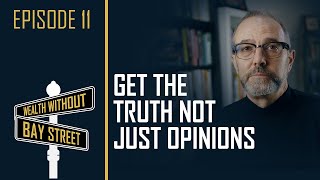
Episode of the Wealth Without Bay Street podcast (hosts Richard Canfield and Jason Lowe) with guest Todd Langford (founder/CEO of Truth Concepts). Recorded mid-March 2020 amid major market volatility (they reference "Black Thursday," March 12, 2020). The conversation argues the benefits of dividend-paying participating whole life insurance as a certainty asset—liquid, tax-advantaged death benefit, and an "opportunity fund"—and contrasts it with term insurance and universal life (which they caution can lapse if assumptions fail). They discuss client psychology (fear-driven rash decisions), the importance of clarifying a client's "why," time value of money, and practical strategies (liquidity, not "paying cash" without replenishing funds). Guest resources: Truth Concepts software, Truth Training, and educational videos (e.g., "Never Pay Cash").
Chapters
You are listening to the Wealth Without Bay Street Podcast, a Canadian guide to building dependable wealth. Join your host, Richard Canfield, and Jason Lowe as they unlock the secrets to creating financial peace of mind in an uncertain world. Discover the strategies and mindsets to a financial future that you can bank on.
Oh, gosh. The conversations we've been having with clients over the past three weeks now have all been resoundingly positive, because even folks that are succumbing to that, you know, that. That fear and that panic and they're reaching out and saying, okay, I recall you saying that, you know, my policy or my system of policies, the values are not subject to stock market manipulation or anything of that nature. But can you just make sure? It's like, well, thank goodness that, you know, the insurance company's administering the policies and they're doing a great job at it. And I hope you're okay with your net worth having gone up every single one of these days since this all occurred.
I got this message on Monday, a text message from one of my clients. Days like today make those insurance policies feel good. Real good.
Yeah. See, I mean, that's the thing is it sometimes it takes stuff like this for people to really realize what it is they have. And it's unfortunate you have to have a downside to see the upside. But it really, I think, helps to reinforce that for those people looking into the future when they have those doubts, as everybody does about anything, you know, did I make the right decision? Did I do the right thing? And when stuff like this happens and they know they've got something to lean on, all of a sudden, the value of that certainty has real value.
Agreed.
And it helps us to reinforce the why. Because we talk all the time, we share with people that the reason we take so much time to make a determination on whether or not you're going to do anything with this at all is we want you to remember why you're doing this. Not what you purchased from me or from another advisor or. Because that has staying power. The why has staying power. When you start, you know, people start talking to you about the product and all the things that we deal with all the time. If you don't have a very clear why, it's very easy to get pulled back into that old way of thinking and to start second guessing and doubting yourself and all of that.
But you're exactly right. And it's not the numbers, and that's the thing that everybody's gotten to. The computer should have helped the story, not replace the story.
Yes.
Fortunately, that's what's happened is rather than this being something to support and help you educate your client faster, the why has been taken out of the equation. It's become, well, two plus two equals this. So that's why you should do it. No, that doesn't solve your issues. What solves your issues is having something in place. But if I don't even know what your issues are, how can I solve them?
We are very excited, Jason and myself, to introduce a friend of ours, Todd Langford. Now, Todd is the founder, CEO and the lead developer of an incredible software platform called Truth Concepts. Now, if you're watching this on the video, you'll see we've got this rockin logo that Todd was telling me before the call. He actually made himself with a plasma table because he's a Colby fan. He's an 8 on the implementer category. Todd, amazing individual, very smart guy. He knows number, he's an industry expert. He's been, he's trained thousands of industry professionals on the use of financial software and how to use it effectively. And I've been to his training, Truth training, it's called. I've been a number of times. It's fantastic. It's a wonderful three day event to really dig deep and learn with our colleagues and our peers on how to really understand numbers in a really powerful way. And you've created a powerful suite of calculators. And so we're excited to have Todd here for a wide number of reasons and I think the timing is unique. Unique in our timing. Jason, would you say we've got a lot going on at the time of this recording? Mid March. There's a lot of fear and things happening in the marketplace right now.
Yes. And a real obsession with toilet paper.
Yeah. So if you're listening to this and toilet paper has been stocked on the shelves, again, just point in the comments like, hey guys, we got some toilet paper back. Now.
There'S no room on the couch because the toilet paper piled up there.
You know, Todd, it's so good to be with you. And our listeners are really, really in for a special treat because I think that maybe a good place for us to begin would be just to address some of the things that are happening presently, especially as it relates to, you know, people with qualified plans like registered retirement savings plans, rifts locked in retirement accounts. People are panicking and there's a lot of Facebook, news feed and social media perpetuating that fear and that panic fear.
In the social media space. Yeah.
So it's gone from people saying, okay, I'm really concerned about what's happening in the market to I'm starting to see Facebook posts now on, I'm looking for a new financial advisor and I'm watching my retirement account literally get vaporized before my eyes. And I think that another advisor can help me. And so it just speaks to the absence of control. And so, Todd, what are your thoughts right now? What is your outlook as it relates to what's happening out there? But more importantly, could you just expand for our listeners, why dividend paying, participating, whole life is a very safe and secure warehouse for capital.
Sure, it's boring, right? It does what it's supposed to do day in and day out. And sometimes boring is good, sometimes boring is boring. Which is why we want to do other things. A lot of times. One of the things in the prosperity economic movement, one of the, one of the interesting principles that we have is the principle of uncertainty. And it's like, wait a second, that's the opposite of certainty. No, there's a principle of uncertainty. And what it has to do with, as human beings, we like a little bit of risk. We don't like boring as boring, right? But if we have those certain assets, like the life insurance policy now, it makes the uncertain asset asset assets or the uncertain things that we want to do, they're covered and they become, rather than gambling, they become opportunities, right? But it's because of that certain asset that makes the uncertain. Okay. It's kind of like, you know, we get on a roller coaster, we want to be scared or whatever else happens, but we put the seatbelt on, right? We don't want to be quite that scared. And that's that certainty aspect that makes the uncertain fun, okay? Because things can happen, but we want something there to, to make sure. And I would even stay away a little bit from the safety words because to me, what safety says is more, it's more defensive than it is offensive. And that's to me, where certainty comes in. Because that's what's so cool about a life insurance policy, a dividend paying whole life insurance policy is that it provides that certainty without it being a cost. And I think a lot of times we look at safety as a cost. Like, okay, we have to put money away that we're never going to see again and in order to insure our car or whatever else. Whereas if we have a certainty asset, it allows for the certainty, but it also does these other things so that it's not a cost. It becomes an opportunity fund or all these Other things that it can be definitely.
I like that opportunity fund and I like your, your roller coaster analogy. We've used that numerous times. But your description of it was interesting because it's like, yeah, that's right. They put the seatbelt on. It's like. But also when you're going in there, you're going to the theme park, the amusement park, you know that that thing has already been overbuilt. It's been built to accept some pretty good stress on the system. Yeah. So you already have like, oh, well, it's safe. People do this all the time. You know, you're going to get your thrill. Well, people are doing that and trying to get their thrills and, and they're on a, they're on an unprotected market roller coaster. That's really what's pointed out. And interesting enough as we're recording this today, we've seen a map, this massive panic in the drop. And effectively I just, I just looked this up before a call. Black Thursday was yesterday, March 12, 2020. Wikipedia already has a page dedicated to this global stock market crash called Black Thursday. They're updating it live, get this, and it was the single greatest crash day in the stock market since 1987. Stock Market Crash yesterday, Black Thursday.
Wow, that's interesting.
Yeah. So we're put the Wikipedia in the show notes on this thing and see what caused that.
This is the crazy thing about what people look at in the marketplace and it comes down to the idea of numbers and how the numbers. That's maybe an outside guide, but that is not the answer because the numbers say, hey, these businesses are making the same amount today as they were yesterday. Why does the market go down and the market goes down? Because it's not based on numbers, it's based on emotion.
Right.
A case in point. We share with folks that we serve and guide through their financial journey. And we haven't had, including these past few weeks, we haven't had a single person call us and say, we're really frustrated that our cash values keep rising every day. And we feel for, we really, truly feel for people who are exposed and who are combined with the health scare now having to lay awake at night saying, I need to log in and take a look at my registered retirement savings plan account value again. And my hope is that it's not less than what it was this morning.
Because when you're trying to fight off a global virus, you want to be really stressed out because that's going to help your health.
Right.
And so There's a better way and it's been proven time and time again. Rich and I were talking about this before. Getting on with yourself, Todd. As we were saying that recession after recession, crisis after crisis, problem after problem, this particular tool is just that resilient. The proof's in the pudding yet again.
Well, the thing about it is you still have access to it and that's why these people are panicked. It's because, wow, what if my business that I, that's paying me shuts down for two weeks because of a mandatory, which we're seeing in the U.S. i'm sure you guys are seeing some of that in Canada. Some of these places, different places, they're, they're putting mandatory or suggesting heavily that these businesses shut down for a period of time. And all of a sudden, wow, I've been sucking all my money into my home equity prepay my mortgage and into my qualified plan. And I need a way to eat the next two weeks because I'm not going to be working what happens under that scenario. I mean they've got to be panicked. That's why they're calling in to find out what the values are and all those other things. Whereas if they, and as Richard said, you know, what kind of stress is that versus knowing we've got X amount of cash in my life insurance policy and I can call the insurance company and get, get it shipped to me right away?
Definitely.
Yeah, yeah. It's a, it's an, what you said about, you know, the, the boredom aspect and, and, but it's like it's a liber, it's liberating. Sometimes having something like that, it just creates a feeling of. I don't, I don't need a better term than liberation. I mean you're, you're just empowered to like, hey look, I'm, when, whenever the, whenever things hit the fan, I'm in a position where I can make command decisions about my financial life that no one can, no one can stop me. I've got total and complete control over the use and liquidity of my own capital. And I've got capital because I've been stockpiling it properly in an ever growing environment. I have constant equity that I couldn't stop if I tried unless I die. And if I die, well then my family gets more tax free than I put in anyway.
Yeah, that's a two edged sword and I think it's an important one. And that is from the standpoint of yes, I'm free to dictate my future, but I also have some responsibility in that. Right?
Yeah.
So we need to pay attention. We need to know what's going on. We need to understand how money works. We need all those, all those pieces. And what that means is not taking the media's opinion of the way money works or not taken even advisors opinion of that way that works. But actually tell me, show me how that really works so that I'm empowered as a, as an, as a client to be able to make these decisions on my own.
Definitely when you mentioned Opportunity Fund and we're now with all this activity that's going on in the global marketplace like you can better believe, you know, there's going to be some opportunities that are going to arise and people who are well capitalized are going to and can recognize and see those things because probability is you'll recognize them more because you have a stockpile of capital. You're going to be able to pounce on those things when the moment is right. And I bet you there's people doing it already.
I've heard cruise ships are cheap right now.
Yeah, we stalled co op on one. Well, Todd, so that leads me to what was your inspiration for the creation of Truth Concepts and maybe provide listeners with a good context of what Truth Concepts is and what inspired you to create it.
Really it's a financial tool that puts all of the different options on the same level playing field. You know, so many times what we see, there's so much misinformation in the financial industry and, and that's really what it came about so that we could relate to our clients. But even our bigger pictures, we have a passion for this industry. We really want to get the general public empowered to be able to make their own decisions and to see through the garbage that's out there so that we can fix the financial stress that's going on in so many people's lives. And so that's the big picture why we've done it. But when we look at the software directly it's like, okay, wait a second. The financial industry is math based. How could you have misinformation and something that's math based? And the truth of the matter is there are a lot of quote proofs out there that use mathematical proofs. It's just the analogy is wrong on way it works. Yes, it's mathematically two plus two is four. But the way you got there was maybe not exactly right. And so, so that's what we've tried to do with the Truth Concepts is bring everything to a level playing field. What Happens many times is an example somebody talks about, well, you know, the S and p has done 12% for the last however long. So I'm just gonna, you know, I'm gonna invest in the market. Yeah, but you're not investing in the S and P or whatever the Canadian alternative to that is as well. Instead of what happens is you're actually making 2 or 3% gross because you buy high and sell low, because you work off a panic instead of understanding how it works and when to hold and other things. And so the result is, once those costs are in there and we really boil all that down, we start to see how maybe things like life insurance has a terrible rate of return was not exactly right because it was based on two different things. They were trying to compare a net rate from the life insurance to a gross rate in the market if somebody really did that. And so that's really what the software is designed to do, is just pull all that together, let's look at it in a real place. Let's see if it fits in your life. And the truth is, just because the math works out still doesn't mean it's the right thing. And that's where the advisors come in. And when we try to just sell something, it's kind of like what we talked about earlier about, you know, software. Computers should help get the client to understand and get to the place that they want to get to, not. Not be the story. And if we don't go back to the way all of this was supposed to be done from the very beginning, before we got off track, and that is, let's find out what the client's objectives are, and let's solve those.
Right.
There's a novel idea instead of some gimmick that, you know, we like. You know, it needs to fit the client, and sometimes that's outside the numbers. It's. It's stuff that you can't. Can't put a dollar amount on. It's stuff like what we're seeing right now in the marketplace. What is the value of certainty on your stress and everything else look like for you?
Yeah, there are some things that are.
Incalculable and they're intangible, and they often have a. You can't equate an ROI to it, but if you were putting an emotional ROI in, it probably trumps a lot of the other. Excuse the trump word, but probably trumps a lot of the other numbers. Like, it makes. You know what I mean?
So, I mean, what if you never asked your client what that was what was important to them.
Yeah.
Then there's really just. There's no. There's no relationship there. In my view. A transaction happened.
There you go. Maybe.
But there's a big difference between transactional and relationship. Big, big difference. Especially if you, you know, if you're purporting to really care about the clients that you're serving and you need to understand. And we had a great chat about this earlier. Is that the why has to be very clear. Why are you considering doing this? There's also a cost to not taking action. So what do you think the outcome would look like if you didn't do anything different? And really just kind of exploring, because it also helps the advisor to establish a basis of whether or not they can work with that person. I think I can speak for us both. I mean, we don't work with everyone that we meet. There has to be. Basically, there has to be a fit there. But you also have to possess the optimum mindsets of people that we most love to serve.
I also don't work with some of the people I don't meet.
There you go.
Things that make you go.
Hmm.
So, Todd, what are some of the most common misconceptions out there as it relates to this whole thing about comparing. You should put money into a policy, or you should put money into the stock market. You should put money into a policy, or you should purchase that mutual fund.
Buy investment real estate. Yeah.
So what are the things that you see, Todd, most often, and what advice would you share with our listeners?
Well, I think the big piece of that is, why are you doing that? And it comes back to what you were saying a minute ago. If it's just to have more nickels in the pot, that's a different conversation than. My goal in the future is to have a place where the family will come to and it'll be there for the rest of my life. Okay. So that they can continue that after I'm gone. And I have a legacy. I have other things. If we don't find out what that is. And that is the mistake that happens so often in the financial industry. It's all about this dollar being $0.50 more than that dollar instead of what does that mean in your life?
Yeah.
And I think it takes. People aren't used to those kind of questions. And so the initial answer that a lot of times people give you is not really the answer you have to say, okay, then why? Okay, then why? Until you get down to the root of it and they actually let you know what's going on. And that may completely change the way what needs to be laid out for that client based on what that real desire is. And so many financial advisors miss it because they never ask the question, they never push the client. And, you know, you got to care for your client. And it goes kind of back to what Richard said earlier. Or actually, Jason, what you said about you don't work with all of the clients that you meet, and you can't care more than your client does about their own outcome.
Right.
You got a client that cares. And that, to me, is one of those lines that says whether we're going to work together is how much you care. But. But yeah, that's a big one. And I think as far as the math part that's left out of the equation, and it's the time value of money, that is the biggest mistake that I see in our industry of people leaving the time value of money out on the equation. And you can't take time out of anything, I don't think. I mean, it's not just money that you can't take time out of. You can't take time out of all kinds of things. You know, it's something that I've saw recently. And they were talking about how terrible the factories were. Terrible early on in the. In the factories when people were going there to work. Well, wait a second. Why were people going there to work if it was so terrible? The reason they were going to their work is because you died on the farm. It was way worse there than it was in the factory. So. So while it didn't fit into what we see today because we've taken out a time, we have to look at it for what it was at the time that was savior for families. They could go to a place, earn a consistent living without the huge risk they had with the tractor or whatever else out on the farm. So, yes, we want to always improve, but we can't take things out of time, and we certainly can't take money out of time. And that's what we see a lot of times is people want to compare something against something else over time, and they just add up all the numbers, and then the time value of money is not in the equation. So that's a little outside, I think, of what you were looking for. But those are some of the big pieces of misinformation that I see. But really, the number. Spencer Shaw asked me a question, and it was funny. He said, how important are the numbers? And I said, the numbers are critical and the Numbers don't matter at all. And he looked at me kind of funny. He said, somehow that's not contradictory, is it? I said, no, it's really not. And. And the point is, as advisors, we need to know the numbers inside and out. We need to absolutely know them, and they need to be right. But if the numbers are right, then the numbers don't matter. The client, what matters to the client is their why it matters, what their objectives are and whether that's solved or not, and whether those are solved in all scenarios, not just the optimal scenario. Because what we know is life doesn't work optimally. Right? So how do we. How do we. How do we make that happen?
Yeah, that is such a good point.
It's a piggyback off of what Nelson would say, is that if you don't understand the details or. So if you.
If you don't understand the problem, the solution just doesn't matter.
Yeah, yeah, exactly. Yeah.
And you know, just to add to that statement, so Dan Sullivan, he comes up on each one of our podcasts being part of his 10x ambition program, and he's amazing. He says, you know, the problem isn't the problem. The problem is how you're thinking about the problem.
Ah, there you go.
Very insightful. So, Todd, you know what, what advice would you. Would you share with folks you know, just based on. Because you, obviously, you interact with so many advisors, you've seen so many things with your experience and exposure to this industry. What would you say to people out there right now who are panicked and fearful, and what would your advice be to them?
Don't make rash decisions. And that's a big one. Because what happens is, you know, we were wired for whatever reasons through life, the whole fight or flight instinct that's in us, and it served us well in earlier times, it does not serve us well now. And what I mean by that is when we make decisions out of fear, it is almost always the wrong decision. Yeah, almost always. And so find somebody that you can relate to, and if you're afraid, figure it out and let somebody with some reason enter into that conversation. Because the fear blocks your ability. And that's what. What Dan Sullivan was talking about. It blocks your ability to think clearly. If you're afraid, you can't see the possibilities are there, because all you can see is the problem. And so you need to be able to look outside of that. A great example is when we had the crash that happened in 08, and all these people had. And we had clients that had all sudden Their houses were upside down. They owed twice as much as their houses work. And they would call in and say, oh, my life's over with. What do you mean? Well, I owe more on my house than my house is worth. Well, were you going to sell your house? No. Then what difference does it make?
Right?
But that's what the media did to them. They were, all of a sudden, life was over. But wait, you're still making the same payment you were yesterday.
And if you were at that time, what's that? The payment was comfortable at that time. You wouldn't have got the. Wouldn't have got the payment, wouldn't have got the house if you weren't able to make the payment.
Right. And the only way you get hurt in that deal is if you sell your house. So if you weren't going to do that anyway, it doesn't matter. Just relax. You don't need a truckload of toilet paper.
Unless you have another problem, in which case you might, maybe you get a pass. That's for a different podcast.
Probably should have seen your doctor long before this crisis started happening if you're in that need of that much toilet paper.
Now, one thing that I always like in, you know, especially at Truth Training, you talk a lot. You do some quotes, of course, from Norm Baker. He was a powerful mentor in your life. And you mentioned a quote where he always talks about that there's no deals in the insurance industry. And I believe it comes from him. And I've heard you talk about that several times. I always like how you frame that up. Can you maybe expand on that for listeners? What does that really mean?
Yeah, and that is something that's so key. You know, the first time that Norman said that to me, I was kind of like, oh, yeah, okay. And what I've learned throughout life is, man, if you keep that at the forefront, it makes everything else insurance industry does make sense and also other places. But what he said was just to rephrase, he said there are no deals in the life insurance industry or in the insurance industry as a whole. It's the same thing. And the point there is everything in the insurance industry is about cost and risk. It's all a trade off one to the other, and there's no way around it. So often when we look at the term actuary, just because I think people usually equate that to chances of death. But actuaries work in. It's the chance of. It's a risk assessment of loss. So we have actuaries for not just life insurance, but for Property and casualty insurance, Right. Actuaries determine what is the chance how many houses are going to burn down in a year. So what do we need to charge so that there's enough money to pay those off and still make a profit of some kind for the insurance company so we can stay in business to be able to pay claims. Alright, and so actuaries calculate that just like they do on life and everything else. And the reason for that is it's all about the risk. That's why we have mortality tables and other things. So if we understand that and we look at it from the extremes just for a minute, why is term insurance so I'll put this in quotes, cheap. Well, there's a very small likelihood that the insurance company is going to have to pay off on a term insurance policy for somebody who can qualify for the insurance. And it's only over the time of their life when they're the most healthy. Okay. So yes, there is a risk there. And it's not to say we don't need term insurance, we absolutely do. Just like, you know, I'm a good driver, does that mean I don't need car insurance? Well, yeah, something might happen, right? Okay, so I buy car insurance, I need to have life insurance as well. But, but from the insurance company standpoint because they work in large numbers, they know exactly how many people are going to die every year and as such they're better equipped to ensure that than I am personally if I choose to have no insurance, which is ultimately self insurance. Right, but that's why term insurance is so cheap because it's very, very small chance somebody will die that can qualify for the insurance. On the other hand, we look at the extreme and we look at whole life insurance, everybody talks about how expensive it is and how high the premiums are. Why are the premiums higher for a whole life insurance policy? Well, because it's guaranteed to pay out. Okay, the insurance company is on the hook. That one they will pay a claim on and whether we're alive or not, they'll pay a claim on it. If we live to 121 guess what insurance company is going to pay that claim. Okay, so they're on the hook for the far end. So again there are no deals because it's all a trade off between risk and cost and anything in between there is because it's the risk has been adjusted. That's the only way around it. And it's true whether again it's in the life insurance industry, in the property and casualty industry, wherever it is, it's all a trade off.
And I don't believe it's a. I don't know if this stat has been updated or not, but the statistic I understood is that less than 3% of all term insurance, term life insurance policies will ever pay a death claim.
Yeah, I think it's lower than that. There were some old numbers back in the old days when first got into the industry and everything was called yearly renewable term insurance. It went up a little bit each year. That was the insurance that was available on the term side. And the curve got steeper as you got older because your chance of dying was higher. But then they came out with level term insurance and it was all level across the whole time frame. And it actually started cheaper. Now wait a second. So it stays the same price and it's cheaper than the first premium of the stuff that was increasing. Why is that? It's got to be a trade off in risk. Right. So what it did was because now it's a guaranteed cutoff in that 20 year time frame or 30 year time frame. It shifted the curve of the insurance company and it increased the profitability because it decreased their risk dramatically.
Put the risk back on the insured individual.
Right.
And the risk, the risk is, I'm gonna bet over the next 20 years I think I'm gonna go, I think I'm gonna, I'm gonna, I'm gonna, I'm gonna go skydiving or something and I'm outta here. I'm gonna cut out early. And the insurance company is like, let's see what happens.
Right.
Because at the end of that 20 year time frame, the lease is up and all of a sudden the landlord jacks the rent. Right.
I think that's a great way to put it. You're betting you're going to die.
Yeah. And that's really the only way to win in that scenario.
Otherwise the insurance company wins. Now if you are part owner of the insurance company, which we are, then you get the advantage of that profitable line item of business because it goes back to the general pool that, that anyone in a mutual insurance company shares in the profitability of.
Right?
Yeah.
And one of our late mentors, Bob Shiels, who wrote the book you don't have to die to win, he mentioned rightfully so. I mean, term insurance does serve a purpose, it is a tool. However, you can't solve a permanent problem with a temporary solution.
Right.
And that, that is such a key piece because term insurance is, if it's used correctly, it's a great tool. You Know the old deal is term insurance. Good or bad, it's term insurance. It's whatever it is, it's strategy. Right, right, but exactly what you said. If it's used for a term of time to get over a hump or whatever else because it's very cheap, then it's, it's ideal for that. Which is what it was designed for when it got switched to this long term planning tool of buy term and invest the difference. And this is gonna be what you're gonna do. Now we've got a strategy that's flawed.
Not big time, because the cost of the term insurance becomes so prohibitive, there's less and less money to invest in the difference. And.
If you're on Black Thursday of March 12, 2020, and your RSP funds and your mutual fund accounts have taken a nosedive by 50%, you're no longer self insured to the way that you should have been for the replacement value. And you've put most of that replacement value into now a taxable environment as opposed to a non tax environment. With the, with the, with the insurance. It's a, it's. Yeah, it's a very. And a lot of people, even, even to this day I meet with people and they're just surprised when they learn. They read Nelson Nash's book Become youm Own Banker or they learn about the possibility of what you can do with the tool that's been around for hundreds of years. And they're just like, why didn't anyone tell me? Why has no one told me this before?
It's like, well, Wall street and Bay street can't make money on it.
That's why the insurance company's not so good at marketing. You know, they're getting better.
And I think the insurance companies, they made some mistakes. I think they earned their reputation. And here's the thing, one of the things that we call what we do is traditional planning rather than typical advising. And the reason is life insurance used to be a very respected industry. Right. They made some adjustments which pushed some of the risk to the clients. And on paper, just like we were talking about the numbers earlier, everything worked out on the numbers. The problem is the insured didn't realize that they were taking a piece of that risk in order to have the product be cheaper. And when it didn't pay out and they couldn't afford to keep it going, they blamed the insurance companies for what happened. And so the insurance company lost their position of being a respected industry. And so the unfortunate side is people lumped all insurance into that. And that fabulous tool that's been around for 200 plus years in whole life insurance got lumped into that. And there's so many people as a result that have no idea what a fabulous tool it is put in the right spot.
And they're living by cognitive bias because they're stuck in a paradigm around that and they haven't had a chance to see on the other side of it. And that's why we talk about the backwards bike video and everything. It's about, you know, you don't know what you don't know.
Yeah.
And then you go find out something new. Well, once you learn some new piece of information, a new nugget of information, it's really difficult to unlearn that now. Well, it's in your head. Yeah.
And also in addition to that, when we hear the expression again from our late mentor R. Nelson Nash, when he indicates that everything begins with the way that we think, he didn't say everything begins with the way that everyone else tells you to think.
You'Re right.
And so you have to be very careful because he would also say that people can reach absurd conclusions with limited information. And we run into that all the time. I heard that dividend paying, participating, whole life is not as good as pick anything. Okay, can you maybe expand on that? Can you maybe share with me what specifically did you hear and who did you hear it from? And did you go out and trust but verify what you heard? And do you want to know the truth or would you like an opinion?
And did you ask Todd's favorite question? Compared to what?
Yeah, that's Daniel Bing.
Yeah.
This is not.
Sorry, go ahead.
It's not an either or, right? It's not an either or. It's an as well as. So let's, rather than start there, let's get clear on what specific financial objectives do you have? How much capital is going to be required to achieve them? What time frame are we talking about? And what are the best tools available to achieve those objectives? And provide you with all of the characteristics that we uncovered are really important to you. Certainty, that's a great one. Guarantees control, no loss of value due to stock market manipulation, government intervention, bad economic cycles, et cetera, et cetera.
Liquidity.
Liquidity, that's probably pretty important.
Legacy.
When you start to check off all the boxes, it becomes pretty clear that this is a pretty good tool. And it's been working pretty well longer than the three of us have been alive combined.
Which is interesting because that leads me to one of the other questions I had on the docket for, for Todd, which is, you know, because now unintentionally we went down the track of blowing up term insurance to, to some degree or what have you. You've got a lot of really good articles and you've actually been publishing some, some books and some works I believe is in Nelson. There's a chapter in Nelson Nash's book Building your warehouse of wealth where he's cited some of your insights into the universal life products that are out there. And there's a. There's a wide variety of them, index uls, and you. Universal Life and variable universe. You know, there's many different variations and there's different variations in Canada as in the United States. But you've identified several reasons why the chassis of that product and how it's kind of designed could leave the owner in a very dangerous kind of situation, financial situation, kind of left holding the bag, I guess, later on in life. Could you. Could you maybe share a little bit with our listeners who maybe aren't totally familiar with that, expanding into the product itself. But what are some of the reasons that maybe you don't recommend those contracts or don't see them as being the most financially viable contracts?
Sure. The thing about it is, and it goes back to what we were talking about about the. There's no deals in the insurance industry. So we've got term insurance on this extreme end at the bottom end. We've got whole life insurance on the other end. And somewhere in between is universal life insurance. Okay. So what that means is the reason it's cheaper is because there's less risk for the insurance company. And I think if somebody buys universal life and they understand that risk they're taking on, I think that's one thing, but I don't think that's what's happened. And that's where the insurance industry got its bad reputation was. And many of you may even know people that have been through this. We did without vacations and we socked money into this universal life contract or this life insurance. They didn't know what kind it was because they didn't get that kind of education from their advisor. Right. And so we socked it in all these years. And then my husband got sick and the insurance premiums went so high we couldn't afford to pay them. And so it didn't pay out. Insurance companies don't pay claims, right? No, that's not what happened. What happened was, unfortunately there was an advisor that said this is the same thing. His whole Life for half the price.
But what it really is is term insurance with a slot machine attached to it.
And it's so sad. I tell you, I've never sold any of it. But when you get one of those, as an advisor, when you get a phone call from somebody who says, my husband's on his deathbed, I can't afford this premium on this insurance policy we've been paying for 30 years. What am I supposed to do? And you don't have an answer for that. That's awful. I feel for those people because they're going to, you tell, terrible, terrible spot. And it's all because they weren't told what the risk was that everything has to work out perfect for this to go the whole, the whole distance. And it's. If not, it's going to be somewhere in between. And again, statistics were right on it for the insurance company, the profitability. The only way for them to be able to pay claims on universal life is for some of those to go away, just like on term insurance. How can they play some of the unusual term insurance claims that actually happened because of an accident somewhere and somebody dies with a term insurance policy? It's because all of those that didn't.
Pay the lapses that happen?
It's the same thing with universal life because it's undercharged for, it's not guaranteed to go the whole distance. Whole life insurance is not a cost to the insurance company because they charge properly for it. That's why they can pay it out at the end. And a lot of times people look at whole life and they say, well, whole life insurance got to cost the company if death occurs or somebody lives all the way out or. No, it doesn't because they charge properly for it. It's all within the actuarial specs. And as you said earlier with a mutual life insurance company, if they do charge a little bit more than they have to, it all gets paid back out to the policyholders and dividends. So it really doesn't matter in the end anyway. It's all made to be there the whole time. Rather than with universal life. Everything has to work out perfect for it to make it the whole way. So the whole life insurance is really the other way around. It's if everything goes wrong, what do we have to charge to make this work out? And if stuff goes right along the way, guess what? We're going to pay that out in the form of dividends. Universal life is kind of the other extreme. It's like, let's calculate what would be Perfect on mortality charges, what would be perfect on the market or whatever it's invested in. If that doesn't work out well, then we're going to have to lapse the policy.
And if you're dealing with a demutualized, publicly traded life insurance company, the stockholders are in favor of that because they say, listen, the more risk you can transfer away and the more capital we can earn, we're okay with that. What are you doing focusing on this dividend paying, participating whole life insurance stuff because we have very limited access to our share of the divisible surplus that gets generated from that participating account. So please sell more of these universal life insurance policies. That's where your focus needs to be. And so it should be no surprise to you, Todd, that in the Canadian marketplace we saw demutualization. One of the primary carriers, without doing a commercial on any one particular life insurance company, one of the largest mutual life carriers in the country, stayed the course and said, listen, we have no plans to demutualize. We see no need to do it. And then these demutualized carriers exiting the participating marketplace and then watching what's happening to sales in the marketplace since the crisis of 2008, Universal Life Sales going down, dividend paying, participating whole life sales going up. And then these carriers say, hey, we need to be back in that playing field. We got to get back out there and start selling this stuff. And the mutual life carrier. I'll just share this real quick. I attended a leaders conference for a life company and there was a young fellow who had approached a group of us that were talking. And I was speaking to a gentleman who's been in the business for six decades. And this young fellow came up in the group and he leaned over to this older gentleman and he said, hey, did you hear? Dividend paying whole life is making a huge comeback. And this older gentleman leaned into him and he said, son, it's never gone anywhere.
That's right. And so, yeah, I mean, how many doors get opened by that? We talked about, you know, some of the ability, the death benefit. So I want to ask you guys something. This is maybe a little off of where you were going, but I think it's an important piece since we're talking about this. And that is, does term insurance. Does the term insurance and the death benefit it provides have a need?
Yes.
Is there a need for that? Yeah. Right. Because as one of the bread work, one of the bread earners of a family, if that gets cut off for some reason, that family is going to Suffer if there's not something to replace that human economic value. Right, Absolutely.
And there's a, there's an additional need is that you're, you're locking yourself in from an insurability health perspective. So that should your health change in the future, you have the ability to lock in permanent coverage with the same insurance company if they offer a product like that so that you can further protect your family down the road in the event that you are no longer insurable.
Right. But as if we get to that and we look at the pure need for just a minute and focus on that piece once we hit whatever that age is that we had planned on retiring, which is kind of a dirty word for me, but we'll just leave it alone for a minute. But once we reach that place and we stop earning an income, is there a pure need that needs to be covered at that point in time? And I would say no, it has solved its purpose. There's not a need. However, there may be a want for the insurance.
Yeah.
If we understand what that death benefit does and what it unlocks for our ability to spend money over the next, however long, it's not necessarily a need at that point, but it shifts to a want. Because now all of a sudden it's like, if you knew you were going to win the lottery sometime in your future, would that tell, would that change how you spent money today? Of course, yeah. Okay, so we've got two guaranteed events that we're going to leverage against each other. We're going to guarantee we're going to leverage the guarantee that I'm going to die and the guarantee that the insurance company is on the hook guaranteed to have to pay X amount of money into my estate when that happens. Well, if I know that's going to happen, then I can leverage assets and spend them today because I know that events happen in the future. Okay. So term insurance doesn't allow me to do that because it's going to go away. It solved the pure need during the accumulation phase, but it doesn't really have any value beyond that. And so here's my question to you. If I had term insurance that went a little past that, would it do any good?
No.
Only if you thought you were going to die for that period of time that you recovered.
Right.
Going back to rolling the dice, what.
Happens with Universal Life is it's extended term insurance, but I don't see what the value is for paying all that extra money to, to extend it longer than your time. You're going to work, but not as long as you're going to live. To me, that middle ground doesn't have any value.
Todd, I think that's such a powerful, powerful description because we did a live event here a few weeks ago and in front of the group of people we talked about parents who they approach that period in their lives where they retire and they have these registered retirement savings plans. And rather than think about spending their life living and enjoying their lifestyle, what they're worried and concerned about is, well, you know, maybe we should spend a little less and maybe we should do a little less because we, you know, God forbid if something happened to me, I want to make sure that the most amount rolls over to you. And then presuming that occurs, one spouse dies before the other surviving spouse says, well, you know, I really don't want to spend my life living and I don't want to really take that extra vacation or see the world or do the things that I'm passionate about because I want to leave behind something to the children. Whereas if you have this permanent participating, dividend paying whole life coverage in place, you know that it's an ever increasing death benefit. You can spend these registered retirement savings plans accounts with confidence, knowing that you're not leaving behind a taxable inheritance and you can really truly enjoy your life. You don't have to worry about that anymore because it speaks to your analogy perfectly. If you knew that you were going to win the lottery down the road, would you spend a little bit more today? Of course.
Does having money safe and available when you need it take away any of your options?
In addition to that, if you are spending some of this registered money, it's in a forever taxed environment. The less money that there is in there, the less money that there is exposed to tax. But by the same token, it's not about the numbers, it's about the fact that you get to enjoy your life and don't worry about it. There's going to be more than enough permanent death benefit to take care of, first of all, replenishing the asset, bringing money back to the family and it gets to transfer to the next generation without triggering a taxable event.
Wow.
Which is also essentially solving a social good, which is one of the basis of which life insurance is created. And why you get those tax, you know, tax. The death benefits are tax free is because we're solving a social problem that otherwise would have to come, at least in Canada, from some kind of a government oriented problem that the taxpayers fund. Yeah, well this is taxpayer funded, but it's self funded. It's something that you voluntarily choose to go into contract with with no one holding a gun to you about doing it. It doesn't come off your paycheck. You make a voluntary choice to make it happen and you're in the control position along the entire timeframe.
Yeah. And it's interesting, you know, a lot of what we hear in the U.S. i'm sure you hear the same thing in Canada, and that is life insurance has the special tax law and what if they take it away? It's not special tax law on the death benefit because it's the same thing. If my house burns down and I get a check from my homeowners insurance company, I don't have to pay income tax on that. Why? Because it's replacing a loss.
That's right.
Death benefit doing. It's replacing a loss. That's, it's, it's, it's, it's, that's normal tax law. That's not special.
That's right. It's making you whole again.
It'll feel special to the people, it'll feel special to the people who receive the check. But.
Well, you know, Todd, I really enjoyed the truth training that I attended in Houston several years ago. And I still have all my notes because I'm a bit of a, a note taker. And one of the things that I recollect that was really powerful was your description around a person really not fully understanding when they get to that point in their life when they're looking for passive income, what some people refer to as retirement, they grossly underestimate what they need and how long they need it for. Could you maybe just expand on that a little bit for our listeners?
There is, it's the retirement aspect. And you know, people, people have gotten in this idea. Oh, you know, my, my parents, they weren't very smart. They worked all the way till 65. There's no way I'm gonna do that. You're gonna live to be 120. Time magazine, I think it was April of 2015. I think that's the right date of somewhere, maybe in February. They have a picture of a baby on the front and it says this child could live to be 142 years old. Okay. The technological advancements that are going on in the medical field right now, they say currently every year you live, you're gonna live another half a year and that's gonna change to a full year for year pretty soon just because of the way they're able to adjust that. So that's continuing out. So you've got somebody saying, today I'm not gonna work past 55. That means they're gonna be retired twice as long as they've had a real job. Explain that one to me. You couldn't print enough money to make that happen. People are just unrealistic. Right, right. In that area, you've got to find something that you like to do. You've got to find something that's part of you and then you're going to shine in that place. You're not going to want to leave it. That's what you need to do to get to there. So again, this is outside of the numbers because the numbers can't do that kind of stuff. They're really designed to enhance what you're doing, not replace what you're doing. Let's open it up. Let's make life more enjoyable. But let's start with getting rid of this retirement word and this idea that that's in there. You can't do it unless you're saving everything you're making.
Right?
Wow.
Yeah.
Even then that's a stretch.
Yeah.
But if you find something that you love or something that you, you're passionate about and you can figure out a way how to monetize that or monetize things along the way that are creating residuals and that sort of thing, then you can put yourself in a different environment to go and do more of the things that you love.
It is funny when you have this conversation, which is not a fun conversation with people, you know that they've been set on this path and you just, you have to ask, why do you want to quit? Because I hate my job. Okay, well then go find something you like. Well, I couldn't make money doing what I like. This is a Dan Sullivan thing about unique ability, right? Yeah. People think, and that's one of the downsides of unique ability is the idea that you think everybody else can do that because it's natural to you. Go try to find something that's natural to what you do and you're going to be surprised. You mean other people can't do this? I can make money doing this. Cool. I can do this from now on.
Definitely. And in addition to that, again giving credit to Dan Sullivan who's in incredible entrepreneurial coach. He spoke recently about the power of gravity. And gravity is continually pulling you and wants you back in the ground. So if you're focused on this whole retirement idea and you stop moving, you become low hanging fruit for gravity. So you got to keep Going.
Jason, what are you up to, Dan? Just fighting gravity.
Fighting gravity, saying about ground doing.
We weren't designed to go sit in the lazy Boy in front of the television for the rest of our life. That's the thing. It's not just physic, it's not fiscally possible, but it's not physically possible either.
Precisely.
It was something that was put on us back in the Roosevelt days that just is not realistic. And when they did it back then, it was for the oddballs that might actually live beyond 65, that handful of people every year. Okay, not for everybody, because life expectancy was way shorter than that. Okay. Now we've got people that life expectancy is tripled and they still want to retire at 65 or even earlier. It's just not realistic.
Well, you know, just a point of trivia where the life companies adjusted, you know, their mortality tables and moved to this, you know, past age 100, age 121, I believe it is, where the contract is fully endowed. And in Canada, we keep hearing from in particular the largest mutual life carrier. We have no plans to adjust that. Presently they're still at age 100. And so it's just interesting to see that difference because I think it's.
Because it's colder up here.
Well.
It could be part of it, but advancements in healthcare, really, I don't think know any borders. I think that, you know, the advancements are what they are. And so it's just a point and trivia. I mean, it's just, it's interesting.
Well, we were forced to here, I think, is the difference. It wasn't an option for the insurance companies.
Oh, okay, okay, I see.
Yeah, they had to. And so that's the difference. In fact, a lot of them kind of on this last one waited until the very end. They didn't make their adjustments. They were scrambling at the end to get it before the change in the year. But I think for you guys, it's an option that the insurance company can choose to do here. They. They have to do it. So it's part of what happened. And it's not a change in that. And it is interesting. That's such a cool point because I've heard people say, oh, well, you know, life expectancy has gone down. Actually it went up a little bit this year, but for the last three years. What I would say is though, for a majority of the public, for the affluent people, the people that are wanting to take control of their lives there, even when that downturn happened in mortality, it didn't downturn on, on the people that want to take charge of their life. It's just that the unhealthy people are so much more unhealthy that they're weighting down the average. I mean, that's the unfortunate side, the bell curve, right?
Very true. Yeah. Now, Todd, before we look to wrap up here, I wanted to quickly have you talk a little bit about one of the videos I have, the, the Whole Truth videos, which is an option that people can, can, can access and advisors can get. And there was one that I was referencing recently, as I was thinking about it, you go through a, I think the title of it's called Never Pay Cash. And you kind of walk through an example using one of the Truth concepts calculators about the example of purchasing cars using a shoebox and then doing it through a couple other means. And one of those means being utilizing a par dividend paying whole life contracts. And then you kind of step through the different kind of aspects using collateral that way versus kind of a shoebox method. And it's one that always really stuck with me. It's one of the best presentations I've seen you do. I really, really like the way that you lead people through the discussion and the thinking process that goes with it. Ultimately it identifies though, the real cost of paying cash. And so when you think about the real cost of paying cash, I don't think it's something that's really talked about enough in the financial environment. So someone's, you know, a cash payer today and they're doing that all the time and they're accustomed to doing that. What are some things that you would share with that individual to maybe just be aware of that they hadn't thought of necessarily before?
Sure. The thing about it is, you know, it's just the old deal. Hey, my great grandfather told me the only way to buy anything was 100% down, nothing a month. Okay, well that's great. So that's, that's, that's your cash guy. And most of them think, I don't have a, I don't have a financing problem because I pay cash for everything. One of the things you mentioned, R. Nelson Nash earlier, the late R. Nelson Nash and what he says, which is just a key piece and that is we finance everything we buy. Not some of the things, not these things and not others. Everything we buy. I have a friend in Louisiana and he says it like this. You either pay up and pay up interest or you pass up interest. Okay. It's one or the other. And what we're not tuned to think about because most of us don't have good economics training, right. Is the idea of cost of cash. And so that gets left out. It's very easy to see the cost of interest when we're paying it to a financial institution. It's very hard to see that when we pay cash that we've lost a stream of interest. It's the same thing. It doesn't matter. It's the same thing in reverse. The difference, though, devastating. When we finance something directly with a financial institution, we can see it when we pay cash, we're literally financing our future retirement assets. And that is impossible to see until we get there and say, wow, I didn't have any interest costs and I have no money. Okay. And it's unfortunate.
I got all this stuff and someone else got all this stuff money.
Yeah.
Why am I not feeling good about that?
And that is the problem. It's the same thing either way, but we just can't see it. And so that's really what it comes down to. It comes down to a discipline. It comes down to understanding. And if we can take that idea on, that everything we buy is just like as if we finance it. And if I choose that I don't want to finance and I want to pay cash, then I need to pay back the asset that I took it out of, whatever it is. If it's the shoebox, as you mentioned earlier, if I will apply the banking strategy, that shoebox, I'll be ahead in that. Hey, if I went to my banker, it was Gonna cost me 10% to do this, but I'm gonna take some of my cash and do it. Then I need to pay that account back, the principal plus 10%, and then I will see a difference in the future, and then I won't lose that interest. That's the only way to make that work. Or I could continue to finance it with the financial institution and not touch the other asset and let it grow. Either one. But most of the time, the problem with that is financing with a financial institution is probably going to cost me more than what I can earn on the account. So it would be better to pay it with the cash, potentially depending on where it's coming from. And everything is something that has to depend on the situation, on the economic environment, on the desires of the individual. All those things need to play into that decision. But the main thing is being an honest banker, as Nelson Nash used to say, and that is, let's pay back at least what the market rate Is do you something that I talk about in the class sometimes. And I would never talk to a client this way, but it is kind of funny. And that is, do you think more highly of your banker than you do of your own family? Well, of course not. What do you mean? Well, you're willing to Pay your banker 8%, but you're not willing to pay that back to your family's account.
Wow.
To me, your actions show that you think more highly your banker than you of your own family. Now, we know that's not true. It's an education issue. It's. People don't know how that works. And they think because the media and other things they've been told that they pay cash all of a sudden that eliminates an interest cost. Well, it eliminates an interest cost, but it also eliminates an interest gain on the other side, which is the same thing in reverse.
And that. And that loss is permanent not only for your generation, but every future generation after everyone.
Well, we're going to put a link to that video in the show notes.
That's a great.
People can access it because having Todd walk through that ex and being able to see it is going to be really. So anyone listening in to make sure you check that out in the show notes because it's going to be. It's a really phenomenal example.
Todd, it was such a pleasure to have you with us today. We sincerely thank you. We're grateful. Always a pleasure. We'd love to have you back again if you be kind enough to join us.
Absolutely. This is fun. I love talking to you guys and your thinking and everything else and the impact that you're having on other people's lives.
Thank you. Thank you so much. It's an honor. And one of the things that we like to do when we end a show is encourage listeners to please rate and comment on the show. Let us know. Maybe something that really resonated with you that you took away from the show.
A Toddism that came up.
Yeah, we'll call it a Todd Truthism.
That could be trouble.
And please, we wholeheartedly recommend to you that you do really pay close attention to the content that Todd puts out there in the world for people to view, to read, to listen to. You'll find all of it to be incredibly valuable.
We're going to post Todd's website, truthconcepts.com and a variety of links as well to some of his tutorials, all in the show notes.
If you're an advisor and your head is about to spontaneously burst into flames because you're beginning to think a little bit differently, then we would absolutely recommend to you that you take a look at the Truth Concepts training. It is held periodically and it is a trip that is well worth your time, your investment of time and money, because you really will be exposed to truths that perhaps you weren't aware of or that you didn't fully understand.
Plus, you'll have some laughs and you'll meet some great people when you're there.
It does seem kind of funny that you can laugh in a financial computer software class.
I almost had to leave the room a couple times, times because I was disturbing everybody with how much I was laughing.
And one of the things we like to end with, Todd, is, and you're very familiar, of course, with Dan Sullivan and the Strategic Coach team. And one of the books that Dan wrote recently describes who do you want to be a hero to? And we always end with, you know, not all heroes wear capes. And I mean, you may not think of yourself as a hero, but certainly every time that you're creating value for other people, you're benefiting people and making their lives easier or better for them in some way, whether it's an advisor or by proxy, the clients that they're serving. And so our question to you, as it is to every one of our guests, who do you want to be a hero to?
You know, every person out there that's trying to find the truth in money and what is going to make their life as stressed as possible on that end and to fulfill those goals and desires that they have. I mean, that's really the big piece. And it's one of those things. It's interesting that you said that, that Kim and I have talked about. And it's our passion for the prosperity economics movement. Everything else, it's a pit that we pour money into and time and everything else. But it's a passion that we have because what we know is we can only, if we directly talk with clients as Kim does as well, we can impact that one family. But if we can get advisors on the same page and we can change the media's message, all of a sudden, that could spread and we could actually fix the financial woes that we see in both our countries. And that is the passion.
Wow.
Thank you so much, Todd.
Love it.
All right, well, to all our listeners, thank you for tuning in to another episode of Wealth Without Bay Street. We want you to rate, comment, share, binge listen, binge watch, send us your feedback. Talk to us, pick up the phone.
Like, binge is such a cool word.
And, you know, because we do have people. We had a guest at a live event recently who said, I've been stalking you since last October.
She's like, I listen to every podcast at least twice. I checked out your YouTube channel.
You know, that's the positive stalking.
Yeah, yeah, totally. Yeah, yeah. It's like, thank you, I think. Yeah, that was good.
Okay, Todd, thanks again. We wish you a fantastic rest of your week. And to all of our listeners, be safe and don't worry about toilet paper.
Yeah. And yes, stay inside for a little bit longer until this all blows over.
All right, thanks, everybody.
Thanks for listening to the Wealth Without Bay Street Podcast, where your wealth matters. Be sure to check out our social media channels for more great video content. Hit subscribe on your favorite podcast player and be sure to rate the show. We definitely appreciate it. And don't forget to share this episode with someone you care about. Join us on the next episode where we continue to uncover the financial tools, strategies, and the mindsets that maximize your wealth.
More from Richard





How Do You Use a Policy Loan to Buy Dividend Stocks? #dividendstocks #infinitebanking #shorts


Can Compounding Dividends Pay Your Bills? #wealthbuilding #investment #financeeducation


Should a Corporate Policy Offset Your Personal Coverage? #shorts #insurancetips

What Is Human Life Value? #shorts #insurancetips #dividend #wholelifeinsurance