How a Mindset Coach Used IBC to Build Family Wealth
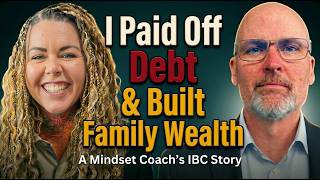
Mindset coach Tara discovered the Infinite Banking Concept while looking for family insurance and now uses it to build wealth and manage debt. She credits education, trust in her practitioner Les, and community support through wealth clubs as key to adopting IBC successfully.
Chapters
Today's episode is actually a really special one. We always, always, always love to share great conversation with existing clients who have been implementing the process, whether they've been doing it for a month or they've been doing it for 20 years. It's going to be a really special episode because we're joined not only by our teammate, uh, Les Corbett. People genuinely want to know, like, what happens when an actual person, an actual family, an actual entrepreneur implements this concept for themselves in real life. And so this is going to be a real conversation, whether you're brand new to the infinite banking concept, whether you're curious about working with a practitioner like Les on our team, or simply just someone trying to become more intentional and abundant financially. This episode is going to give you an honest inside look into that journey. All right. Well, welcome back to Wealth on Main Street. And today's episode is actually a really special one. We always, always, always love to share great conversation with existing clients who have been implementing the process, whether they've been doing it for a month or they've been doing it for 20 years. It's, it's going to be a really special episode because we're joined not only by our teammate, Les Corbett, but also by Tara, a client of Les's, one of the clients that Les has had the privilege of working with. And Tara is an entrepreneur. We're super excited to dive into a conversation But really the feedback that we get from you as viewers and listeners is that these are conversations that really matter the most to you because they're with real people in process implementing this concept and experiencing it the way that they desire. And so people genuinely want to know like what happens when an actual person, an actual family, an actual entrepreneur implements this concept for themselves in, in real life. And so, this is going to be a real conversation, whether you're brand new to the infinite banking concept, whether you're curious about working with a practitioner like Les on our team, or simply just someone trying to become more intentional and abundant financially. This episode is going to give you an honest inside look into that journey. And so, Tara, welcome to the show.
Thank you so much for having me.
And so, what was your overall mindset, you know, around money and financial planning as an entrepreneur? And had you heard about the infinite banking concept before meeting Les?
Well, I had met Les just because we're locally kind of shared a zone. But the conversation wasn't about IBC and it wasn't about finances. But I feel like I should mention I'm a mindset coach. So, this will make a little bit more sense. I don't think like normal people. I'm very much outside the box. And before I talked IBC with Les, my husband and I were looking into, you know, some more financial options, specifically insurance and whatnot for our kids. We've got two young boys. And I had heard kind of like some snippets on TikTok that something like this existed, but I didn't know what it was.
Mm-hmm.
So I kind of started searching for, Well, I want some sort of insurance to protect our family, but what about this extra? You know, I was hearing about this extra. And so I started reaching out to people to try and find the extra and they would understand, but I'm like, but no, there's more to it and I don't understand. But like my money can do 6 different things. I'm not going to pay money here that can serve these other purposes. So I wouldn't commit to working with any of them. Then I don't remember, Les and I had already known each other. So I reached out to him and I was like, is this what you do? He's like, yeah. I'm like, hey, this is what I've been looking for. Let's talk. Fuck, you know? So then he started to teach me about IBC and I'm like, yes, that's what I was looking for. But I didn't know what to call it. But I just, I think very differently now about money than I used to. But I was searching for something and if I'm going to spend a dollar on anything, my mindset now is I want it efficient and well spent and consciously chosen. Mm-hmm. And IBC was that for me in so many different ways, especially as an entrepreneur.
I love that. Conscious choice. I like that. That's really well stated. And, you know, mentioning that you're mindset-driven and that you, you're a coach, you help people and you help people realign their own thinking. Uh, what's so interesting about that is how many opportunities we have in our own world, our own circumstances to do that for ourselves. And we're not always presented necessarily with the way of doing it. It just kind of shows up, it materializes. And so here you are seeking to solve a problem, find out that the, you know, a guy who's got a solution to that problem's in the backyard to some degree.
Exactly.
Granted, I've, I've seen what it looks like outside of Les's backyard and I know it's, there's a bit of an expanse out there on a snowy day. But it's, it's really interesting that that's kind of how this occurred for you, Tara. So I love the story and not only that, just the importance of you, you had an issue of just needing better or more quality, more insight into insurance for your family needs.
Right.
And then there's this other idea of creating additional efficiency that just made a lot of sense. So I, I really think that's cool because a lot of people come in because they've heard about the concept and they're like, well, but I don't need insurance, or they're, or they're not even recognizing the value of that. And for you, it was almost the opposite occurrence, which is very interesting.
Well, because again, with the mindset stuff, I, I try different perspectives out because what we're taught in the masses in society, whatever you wanna call that, and not positive, negative, just is. But what most people are taught, myself included, isn't necessarily a good thing. And the beautiful parts of life is usually rewiring, choosing something different, thinking outside the box, right? So, what's familiar isn't always the best.
Right.
And the more that you do that in the different categories of your life, it's easier to get there. But that's one part of discussions I've had with Les over the years because like we're friends too, is the fascination where I'm like, IBC is such a mindset shift for people. And it's only because it's out of their comfort zone, it's out of familiar. It doesn't mean that it's not incredible. Usually, what's outside the normal is incredible. We just— our systems fight it because it's not familiar. Like, "Well, I've never heard of that," or, "I don't know anybody else doing that." It's like, that doesn't mean it's bad. That could mean, like, it's amazing. You just have to look into it.
That's such a great perspective and so true. I mean, that's how, you know, Richard Canfield and I were first introduced to the process as well. It was a completely different shift in thinking. And It raised a lot of good clarifying questions, but it was compelling. It was like, wait a second, there's something fundamentally wrong financially in the world out there. We just couldn't quite put our finger on it. And this was definitely the way forward. And putting Les on the hot seat here for a minute, Tara, I'm genuinely curious. So what made you comfortable moving forward and what stood out to you most about working with Les?
Well, I already knew Les, so that was easy.
Yeah.
You know, I was just like, we, we already had the relationship of trust. So it was just like, you've got the answer.
Okay.
Like, teach me and like, let's go. Because I also like taking action because like no one's gonna do it for you for anything. Right? So if it feels right, trust your gut, go do it. But then he had to teach me how the heck it worked. Right? So that was, that was awesome. But we already had that trust. So Les was an easy yes because he's such a, He's such a good person, an ethical person. Like, he wouldn't steer you wrong. He wouldn't sell you something that he doesn't totally believe in. He wants to help people with absolutely incredible intention. And I always felt that way about him as a person. And I don't think you have to spend a long time with Les to feel that way. So, it wasn't— Les wasn't a hard sell. It was just like, teach me.
And how important was that element of education and understanding in your decision-making process?
I didn't be— because of my history with changing my own mind on things, it didn't take a lot for me to buy into the concept, to open my mind to learn it, 'cause I wasn't fighting it like I assume most people do. So it wasn't a lot for me to shift my thinking because it's not that I have to stop believing all the things that I've been taught, just open your mind to maybe there's another perspective, maybe it's both, maybe it's a combination, maybe, maybe, maybe. So it wasn't hard for me to, open my mind to learn about the concept, and I sure as heck don't know all of it, but enough that I can use it.
That's awesome. What, and what, what would you say has been one of the most surprising or interesting things? Because you seem like an extremely curious person, Tara, about, about the, the process since you've gotten going. Like, was there anything that you maybe had an expectation of that you thought, do you realize, wow, it's, it's even more than that, or there's you've been opened even additional things that you hadn't considered at the early stages compared to where you are right now today?
I guess the freedom of it and the responsibility because you want to use it, but you want to be smart about how you use it, right? Because you have so much freedom. You know, I don't have to go to the bank and check these boxes to get financing. I've created my own opportunity so I can use it for whatever I want. But if I'm not conscious about it, I can also shoot myself in the foot. So I wasn't expecting that much freedom and opportunity with it. But also, I wanted to make sure and be cautious that I was learning enough so that I wasn't— I don't know the terms, but like, not paying myself the interest to make sure that we're always growing and moving forward. Probably that.
I love what you said about that because, Rich, you can attest to this, you and I, Literally just recorded an episode yesterday on this very topic around when you have control and you have ready access to capital, you can access policy loans that are unstructured. You control the repayment schedule. That can be both good and not good, dependent upon the policy owner. It's the policy owner's behavior that's far more critical. And so Tara, I'm so happy that you touched on that because you're absolutely right. It comes with responsibility, much like anything, right? That's worth something and that's meaningful. Totally. It comes with responsibility. And I'm curious, like what would you say to someone who is looking at this concept? They're very curious. What would you share with that person if that person is hesitant or maybe just not yet clear? What would you say to them?
Look, if you run a business, you know how critical it is to control your cash flow. Leave a comment with the financial hurdle that you're facing right now. Your insights, your questions, they inspire us to create episodes that give you real strategies to grow your business on your terms.
I don't know, the, the, the biggest is like, yeah, if it feels unfamiliar, go learn to the point that you understand it enough, because if you're not at the understanding level, you're not really making an educated decision. So, dig into it until you feel confident that it's a no, not a default because it's uncomfortable and unknown. Dig in and learn enough so that you can consciously choose what you want to do. And I'm obsessed with conscious choice in all parts of my life, so I'll probably say it 60 times. But also, like, when we had kids and we needed insurance, you know, I don't like insurance.
Mm-hmm.
It's just like, maybe it's a waste of money in some ways, maybe it's not, but this way isn't because it's got all these multiple purposes. And then always, always to anybody who's an entrepreneur, you know what your options are. They're very limited, and you're going to pay extra here and extra here. And like, it's so hard to get your own capital for the things that you find important for yourself as an entrepreneur. The banks don't like you, you know. The, the system of the bank, it's, um, it's built for the masses and what works for them. They don't like entrepreneurs. So especially if you're an entrepreneur, um, Look into this because you'll have more options than you realize. But yeah, you, you have to understand it enough to make an educated choice, not a default. No, it's uncomfortable, it's new, I don't like it. You're, you're hurting yourself by dismissing it too soon.
Mm-hmm.
That's great advice.
Les, what, what surprised you about some of the questions that Tara brought up and, and when she was in the discovery process? And you know, now you've been, you've been working together for a period of time. You obviously had a, prior relationship, but you have a bit of a different structure in that relationship and how you help in this environment. What are some interesting things that have made it more, I guess, fun and engaging for yourself even to tackle and learn about different questions because she does think differently than maybe some other people that you've bumped into so far?
Yeah, that's a great question, Richard. It was— oh, and I'll circle back to when we kind of first started talking about this. I was looking for a mindset coach at the time, at the same time. That Tara was diving into this, or thought about the IBC a little bit. And I'd reached out to her because I wanted to work with somebody local and somebody in my backyard, as you had mentioned. And so I reached out to her at the same time, and then we just kind of started talking about mindset, and then we went from there. So a lot of the questions I want to say that she had were very similar to the ones that I had. But more in the way of the way we think and changing the way we think, because I knew that if I didn't change the way I thought, my behaviors wouldn't change. And I had a huge desire to change my existing behavior to where I was at. And then so we met, and a lot of those questions that came up, because Tara had the same thing, she had that same burning desire to make a change in her life financially. And then we were talking mindset. She goes, so you said, you said IBC. I just mentioned it real brief and that came aboard. So it was like, okay, tell me more about this. And she already had a really good, I'll say, understanding of there's more out there, but she couldn't put a finger on the specifics of it. So it was more about the aspect of control. And then we kind of went into how the banking function works and how we could apply that in our lives and kind of, you know, mimicking that banking function for ourselves. So then the conversation kind of steered to that. And it was absolute pleasure because Tara is open-minded and open to other thoughts and other ideas and willing to change the mindset. So it was just, it was so natural and so easy to form that working relationship with Tara.
Yeah, I love that. That's really cool. And also just coincidentally inspiring that those two things happen at the same time. And that's definitely not a conversation we've had on the podcast before, right, Jay?
No kidding.
That's how the universe works. It's all— there's a dance going on. I just don't have to understand all the steps.
Well, you know, we look through the very same lens, Tara, as entrepreneurs. You know, that's— That's the world that we've been in since being on this journey. And nobody's really talking about the pressure that entrepreneurs carry financially. I think at any stage, if you're in a business that's in startup mode or you're in a business that's in sustainable or durable or even scalable, as the entrepreneur, you're always carrying some degree of pressure financially. Yeah. Our experience in implementing this process ourselves with our families as well and our companies is that it is an incredible relief valve as it relates to that pressure. And it just keeps getting more and more and more relieving. But I'm curious in terms of this early in your journey, what your experience has been as it relates to that.
I mean, it just helped us play a lot of catch-up because of backlog because of what you're talking about. You know, I was a realtor for 9 years. I've— now I'm a full-time mindset coach. But in the real estate years, you're not taught a lot about finances or how to run a business. It's kind of like, here's your ticket, go. And there was a lot of pressure and a lot of ups and downs. And when we first started using IBC, it was to kind of clean it up and get things in a different position. But it Yeah, it's, I don't wanna say the struggle is real because your words are spells. I wanna watch my words, but the reality of my past is the struggle was real. You know, there was a lot of debt, there was a lot of bills, there was a lot of decisions, there was a lot of wrong decisions and not a lot of guidance, and that's fine. But we got to a place and it was just like, okay, we've gotta catch up, we've gotta clean things up, we need to do things smarter. Nobody's gonna come teach it to you, especially as an entrepreneur, unless you hire somebody to teach you. But without that, you're just kind of lost figuring it out, trying to make it up as you go. So IBC helped us really clean up the debt and organize it so that we were paying ourselves back instead of the credit card and the whatnot. And that made a big difference even in the monthly spend while we were in cleanup mode. That's kind of the big purpose that we used it for in the beginning.
Mm-hmm.
Not yet to, oh, here's cash value to invest in this for the business and whatnot. And I did a little bit of that too, but initially it was a lot of cleanup. And I wish I would've found that years ago because there have been so many times in my life where I had to do cleanup and you're either paying the bank through your credit card or you're paying the bank through a credit line or you're consolidating through the bank to like, like all options mean you're paying somebody else except this. But I didn't know it was an option. Mm-hmm. I mean, we don't, I don't believe anymore that we should force behavior change. We make the behavior change really, really easy when we change the belief. So if you can find what you believe about money and if you can see that, I'll get a little mindset coachy, but when you wanna change your belief, you can either use repetition on purpose or you can just see that it's not true, then it's just gone, right? Yeah. So if you can see what your money beliefs are, is specific to IBC, and see that it's false, you just start operating with a different system in your mind, and then your behavior follows. And it's super, super easy and use it for everything. But like, I don't know, I always think of our conversations that Les and I have had about IBC, and I'm like, dude, you need to scream this from the rooftops. And I know the challenge because the norm is, is it's hurting us, not helping us. Yeah. So like, you gotta get out there, you gotta talk about it like, like you have the cure for cancer. That's how important this needs to be in your mind. Scream it from the rooftops because they only know what they know. And you're like, I mean, it's, I guess the same for all of us. Like nobody is for everybody. If you're trying to be for everybody, you're diluting yourself and you're gonna miss the opportunity with your, your real people. But like, man, you got something special here. I love things that are out of the norm that are powerful like this. Like it's so good. You could like, Tell everybody, you know.
Well, Rich and I will be in the parking lot selling cigarettes and we're going to let Tara take care of the rest of the episode. Tara, that was outstanding.
I mean that.
Entrepreneurs that are watching and listening, they're saying, she's talking to me.
Well, it's just like to me, it's just like, well, yeah, but I had to get myself there, right? I wasn't taught this stuff. You know, like the best-case scenario before was like, okay, let's get a 9-to-5 job. That pays some bills so that I can maybe afford to get a loan for a vehicle. And it's like, I think so much past that now, but it's like you have to get out of the norm. Just because this is what your family did doesn't mean that you're limited to that, you know, in all aspects of your life. Play with it a little bit, you know.
And playing with it is, is fun because, you know, if you turn it into a game and it actually becomes fun and engaging, it's more interesting to be a part of too. Most people look at their finances and they would, you know, what does Nelson Mandela say? Only some people think and everyone else would rather die than think. And so people—
He's talking about real thinking.
Real thinking. People with their finances, you know, they just kind of want to be the ostrich and stick their head in the sand often because it can be stressful or it can be painful, or they have a past experience and then they're dragging that along like a boat anchor into their future, their bigger future, and they're not able to see how they can turn it into something that is fun and engaging or how there's, there's, there's an element of prosperity and impact and longevity and stuff to it. And, and I think it's really interesting, Tara, all the things you've identified that are all, all super powerful. There's also this amazing element around the, you know, the cleanup and the reset and the, and the things you're moving forward with. But you've also created this structure of protection for your family, which is what you originally were seeking. So like, you were able to check that box off at the same time. And I think that's really, really powerful.
Well, that's the multipurpose, right? Like, like if, um, I mean, in IBC you hear about like generational wealth, right? Okay, that's not normal in my family. We don't talk about that. Who the hell do I think I am thinking about generational wealth? Says who? You know, I, I have phrases replay in my head a lot, but a lot of them like says who, says who, says who, says who, who's making these rules? Who's they? You're actually the boss. You get to pick whatever you want. Just because everybody in your family thinks this doesn't mean you have to. Just because everybody else, oh, that's a waste of money. It's your— it's your choice. It's your life, you know. You don't have to be put in these boxes. Says who?
100%.
Did you ever read The Far Side comics from Gary Larson?
Oh, probably. Which part? Yeah, yeah.
There's this one of my favorites where there's a guy in a dark room and he's hovered over all these telephones and he's got one phone in here and he's got another one in his hand and the door creaks open and there's a lady there kind of with the big kind of beehive hair Howard Johnson, you're the they, and that's what they say. And all these phones are labeled they.
Yeah.
So your commentary brings that like popping right into focus in my mind. And I think what, because it's like, right, who are these? Who are the people that say that? Who are these they that we keep talking about? I think that's really interesting. It's a great way to look at the experience of how we receive and are taught information where we don't even remember where the original source of the information came from.
Right. So why is it one of your rules?
100%.
Doesn't have to be.
Okay. Do you want a clear and focused way to decide if the Infinite Banking Concept is even right for your family? It's simple. Download our free 7-Step Guide at 7steps.ca. It's a very smart, time-saving roadmap that'll help you evaluate this process fast so you can move forward with total confidence. In fact, once you complete step 4, you will know if this is even the right fit for you. Find out now. Get it at 7steps.ca.
You know, Tara, so what would you say to the entrepreneur that's listening right now who's successful outwardly, right, but internally feels maybe financially scattered or uncertain?
Call me and call somebody from IBC because it's all the torture is here. All of it, all of the pain, all of the torture. I know there's also physical pain and like literal torture, but like 90% of our lives It's just what's happening in your head. And it's like, even if you have a shit ton of debt, sorry for swearing.
All right.
Still call because you're probably thinking of your limited options. There's probably more out there. You know, we didn't necessarily think we had the money for a policy, but once you start spinning it around and looking at the different perspectives, we actually did. You know, the financial position you think that you're in might not be exactly what you think that it is, as limited as you think that it is.
It's very true. And Nelson shared that brilliantly in his book, Becoming Your Own Banker, where he said that you're already presently allocating 100% of your financial resources to what you've deemed to be and prioritized to be important. And so, it requires a period of introspection. It requires the desire, obviously, to build that bigger future financially, to get out of financial prison, as Nelson would say. And then it requires a reorganization of priorities. And you just spoke to that perfectly.
Yeah, and we had to do that too. You know, what our families typically did, I mean, I've called them about IBC and they're, "Oh no, no, no, no, no." I'm like, "I tried. It is not my job to convince you. I suggested. That's all that's my job." But it just kind of solidifies the fact it's like to each their own. But if you want to change your entire life, one that I love is like, nobody's coming to save you, but nobody's coming to stop you either. So what do you want to do with that?
Love that. Put the snowball down the mountain and let it grow. That's how I look at it. Isn't it that easy? Put the snowball down the mountain.
Right? People assume different is going to be hard. A lot of the time it's like it's hard in the beginning and then it's so much easier looking back. You always know how easy it is. But there's this fear that a different way is going to be the hard way. Says who? Not necessarily. And looking back, it's not. So many times it's not. It's easier.
Very true.
Now, as part of the process, I would imagine, you know, Les may have put a few learning resources in front of you.
Oh, yeah.
Obviously, he would have done a lot of that, you know, on some of those one-to-one conversations, getting into the nitty-gritty, you know, getting the clarifying questions that you had. And I suspect that your husband had as well. But what, what would, what did you find in your process as you were in the early stages around what you were able to access for your learning? You know, Nelson's book, you know, we have a couple of books, we have podcasts, we have videos. Was there any of those things that really helped, I guess, improve the, the, the, the quality of the meetings you were able to have less because you had already gone through some of that content? What, what did you find in their discovery process as you were going through the learning? Once you got off the TikToks, you know, the TikTok stuff, and you got, you know, you knew what some resources were that you could dig into properly.
Yeah, well, I read Nelson's book. Is it the book Becoming Your Own Banker?
That's right.
Yes. So I read that. I asked Les a ton. Yeah, that one. It's back here somewhere. I asked a ton of questions, but a lot of it was the— Les gave me a lot of one-on-one support for asking questions. He would dig into it and explain because I really wanted to understand the concept. Because in the beginning it's like, okay, let's set this up and now what do I do? What to do with it. I felt kind of lost, but he, he answered a lot of questions or he would, you know, show where I can find it in the book and whatnot. Um, and then one of the most recent ones, Les actually gave me a copy of the, what's the beaver book?
Oh, the Beaver Bankers.
Yeah. Yes. Yes. So he gave me a copy. Um, my boys are 5 and 7. I'm also very obsessed with the beliefs that I instill in them, what's modeled for them, what's normal for them, because I have to change my mind, but they don't. Right? Let's make it easy for them. So recently, Les gave me that book and I wrote it with, or wrote it, read it with Leo, who's 7. And I was like, it's about money. And so we read it and he knows how to read now. He read it again and read it again. And then after that, he decided to write his own book. So he's decided he's an author now, which is cool, but he keeps reading the book and wanting to learn about it. And I'm like, wow, I don't even have to push this on you.
Mm-hmm.
Or rewire your thoughts about this. You've already got an open mind for this. How awesome. You know, so it's not just about me. It's also about my kids, other kids, generation. I'm obsessed with the ripple effect. So I'm like, the more that I can get things out there as they're normal, we can flip the switch. So then it's going to get easier over time because like for IBC, the more people that are raised with IBC or familiar with IBC, it becomes the normal way of thinking. Yeah. Good. That's the idea.
Yeah, I love that. A huge shout out to Becca Wilhite, who wrote that book, and it is incredible. My, my daughter is 8. We've also been reading that book for now about a year and a half. She loves it. She brings it up frequently. And in fact, we were walking in Fish Creek Park the other day in Calgary and saw some beavers, and of course it struck up a conversation right at that time. So you never know when the physical environment or something that is that's in your ecosystem that people can see and relate to can create a powerful lesson that can be relatable to an individual. And I think that's really the key element of that book is it relates a really unique and interesting experience about the physical world, about the hard work involved and that beavers do. And, you know, we walking around and we're seeing these giant trees where these beavers have not, you know, taken them down and you're like, you know, they're like, they're a chainsaw fundamentally. And it's unbelievable what they can do and create. And they're, they're, they're not impeded by anything. No one, no beaver walks up to the tree that's this big and says, oh, I can't do that. No, it's just like, let's get to work.
Well, and I love that it puts importance on that this is what we do in our family too, you know, within the story where it's like, well, we have these family meetings and well, what's that? And now I'm getting involved in it. And I thought that was cool too because it's like for the child in the book, that is his normal, you know, he's always been around it. He's not gonna question it. It just makes sense. And then he's excited to start learning and participate in it. It's like, yeah, That's, that's beautiful.
So good. Most families lose their wealth in one or maybe two generations. This book changes that. Don't Spread the Wealth gives you a proven process to keep your money in your family forever. Finance life on your terms and pass on real control. Get your free digital copy plus a ton of incredible bonuses. Go to dontspreadwealth.com. That's dontspreadwealth.com.
Absolutely. So good.
Les, I got a question for you.
Whoa.
So I'm just, you know, and Rich and I were always curious when we talk to teammates because we literally have, literally, hundreds of conversations a week with people from across Canada and the United States. We operate sea to shining sea, coast to coast, and from these hundreds of conversations, we're curious, you know, what, what patterns, Les, do you see consistently among people before they discover the solution to the problem?
I guess to answer that question. Yeah, that's a great question. Like to answer it, I'll answer it broadly first. And I guess one pattern that we're seeing or that I'm seeing is that a lot of people don't really understand I'm going to say the problem first and foremost. And they don't really come in saying, you know, with the problem of banking, or they don't see the leaks that might be in their financial system. They're all kind of— everybody seems to be hyperfocused on the tool. All these, I'll call it the noise, rates of return. They're into trust, seems to be a big thing now. Right. And they're all, everybody's kind of hyperfocused on the tool and they just don't see the broader picture of how the tool fits into what we're doing on a day-to-day basis. And it's almost like walking past dollars to pick up dimes kind of scenario. So it, and that, it's kind of a broad answer to your question, Jason, but that's kind of generally what I'm seeing anyway.
What comes up for me, Les, when I hear that is— and, and, you know, Tara, I'd love your perspective on this too— is that, so a few things, like, as a society, so we live in, um, a world where people want success on a microwave time frame, and people think that if you look at it from this vantage point, if I walked into a gym and I said, "Yeah, I'm here to buy physical fitness. I'm here to buy this. I just want to be physically fit. I'm just here to buy it." I keep seeing it on TikTok. Right? Somebody's going to say, "Well, there's a process. There's a method. There's tools that you need to use like dumbbells, free weights, all sorts of treadmills, ellipticals." They might start you off with an assessment, Jay. And so, yeah. It's just interesting to me that when people hear about the process and the conversation is guided primarily by the tool that's used to implement it, but a person doesn't have a clear understanding of what they're solving for, the tool might sound exciting and captivating, but unless you understand the problem, the solution just won't matter to you. And Tara, I'm curious, what lens do you see that through?
Well, I think they don't think that the current— so the banking system as it is without IBC, they think it's okay.
Right.
They don't— they're not looking for a solution to a problem. They think it's fine because this is all that there is. There's— that's the only options I've got to play with. But if you back up a little bit, that's the problem. It's not built to help us. It's built to help them. And it's a profitable business. For them. So do you want to be the profitable business or do you want them to continue being the profitable business? Both are fine. But I kind of wonder, like, are they looking for the solution like I was, or are they not seeing that the bank system is a problem? And then there is a solution because they, they, it seems like, or at least the people that I talked to, the friends that I was trying to introduce to Les, they're like, they don't have a problem. It's fine. It's like, but you do, you just can't see it through that lens.
Exactly.
Oh, well, and in, you know, working with people in mindset in the way that you do, there's patterns that develop over time, and those patterns, uh, they, they start somewhere and then they often get reaffirmed, or, uh, they get a repetitive habit built in because, you know, if you keep smashing your head against the same wall, eventually you're going to develop a thick skin around where you keep smashing your head against that wall. And I think that that happens to us over time in life in different areas. And we often to the point where we can't even see it, we don't know, we just know that we've now got this shield that's been created to protect our noggin every time that we bump up against that same thing. And that often leads to what Nelson talks about was the arrival syndrome. Sometimes it's not just based on what we know, it's based on maybe the pain of the past and a previous experience. And then we just kind of lump things that are sort of in a similar environment into one area. And what I find happens— and Jason, we talked about this yesterday— I don't know if this is true or not. It's maybe it's just my, my connection experience. The word insurance brings up emotional connotation in the human brain. People seem to have had an experience one way or another with just the general broad term of insurance. And it brings up this immediate feeling of, you know, a premium, a cost, or what are my rates going to be? And like all of these thoughts start flooding your brain immediately. And then, you know, a buddy or a friend or an uncle who went on an airplane one time and paid for baggage insurance or travel insurance and the trip got canceled and ABC, you know, airline made it really difficult and they couldn't make their claim and it was a huge pain in the butt and therefore, travel insurance or luggage insurance was a scam, or it was a this. And so like, it, like, it takes the label around this whole ginormous industry that literally exists in all kinds of things around the planet. And it, and it, and it skews the behavior and the mindset around it because of one experience or a friend's experience. And then it, and it causes like a, like a freeze position where, you know, you're just trying to break through the ice. Because you know, on the other side of that ice, maybe you can go fishing and you could, you could fill your table full of food, but you gotta, you gotta crack through that ice and it's very difficult to get through it. It gets really thick over time. That's what I've experienced with people. And I think like a lot of our teammates, our advisors run into that. And with all this marketing that's there, that's very tool-focused. It almost seems to amplify that degree. I'm really curious from a mindset perspective, does that resonate with you? What, what, What do you see in that from a perspective of what you see with people just in the coaching that you do?
I think the word insurance triggers the sales stuff to them. Because what do they believe sales is? And even as a salesperson, what do I believe sales are, right? But everybody, if you think sales, the easiest is people go to the used car salesman where it's going to be a rip-off and the sales process is them winning and you losing. If that's your mindset, that's what's guaranteed to happen. But then also, I always think of environment, like you're the average of the 5 people you spend time around. So let's say I'm a person just learning about IBC for the first time, but my current environment matches who I am right now. So those people around me, they don't know anything about IBC. So I start looking into it and I mention it to them and they all go, that's stupid, don't do that. So then what am I going to do? Because I'm the, the average of my 5, right?
Yeah.
So if you change your environment, you think a different way, you start hearing different things, you automatically become that by changing the environment. But I think the word insurance triggers the sales stuff for people. But on the salesperson side, the person who's doing the selling, if you know that, like, the transfer is win-win for both people, like, you know it in your soul that, like, the value exchange is there, it's easy to sell. And then that comes across and can kind of untrigger them a little bit because it can come from both sides, I think, or it does come from both sides. But insurance, I think, just goes sales to them and thinks of like that skeezy used car dealer. And it's like, no, it's actually win-win. Like to me, sales is win-win for both people with fair value exchange and then some. But if you don't feel good about what you're selling, that can come across. But they all have this hesitation generally until they consciously choose different, but the default Why are you not on our team? Because I need to teach this to people.
It's just that was coming up in my brain the whole time that you were— I was like, yeah, okay. Yeah, I could see her coaching. Yeah, I could see— yeah, clients would love her. Yeah. Okay. Sorry. Okay. I digress.
All good.
All good.
Well, maybe we should just talk more. We'll see what happens.
100%.
Yeah.
One of the things you mentioned, I think I really appreciate, goes directly to page 65, which Jason had mentioned earlier in Nelson's book. And at the bottom it says, uh, organize or join one already in existence, a wealth club that meets periodically. Here you have the support of others working their way out of darkness. Be sure to include members already with a good track record in practicing the principles IBC. This is important because you need to surround yourself with others of like-minded understanding.
Yes.
You don't want to be a victim of feeling that you are the Lone Ranger. We all need the nourishment of a favorable environment. No one elevates himself or herself much above the environment in which they operate. So everything you identified is boom, right here in black and white in Nelson, what Nelson's identified. And that's a lot of why we like to have these episodes where we have folks like you on, Tara, to share your experience. You're doing this as an advisor now, but how many years was it that you and I worked together just doing this for yourself? I mean, 6, 7 years, maybe something like that.
Mm-hmm.
And I mean, it's been a good chunk of time. So And I got some great smoked bee honey out of that from Saskatchewan, by the way, which was still the best honey I've ever had to this point in time. I used to call Les the Bee Man. And what's really cool about that is, you know, we have our quarterly group coaching sessions, we have our online membership, we have these kinds of things. That's all in support of that. And then these conversations, while maybe we didn't have other people, other clients joining us in, when this gets produced and it goes out on the YouTube channel or you're driving in your car, on those long roads in Saskatchewan and you get an opportunity to listen to Tara and Les and what they're sharing, you're vicariously being a part of that environment at the same time.
And further to that, Richard, appreciate you bringing that up because Dan, another wonderful teammate of ours, has started the Wealth Builders Club Saturday mornings where we meet every Saturday morning in an open forum, like-minded people, people who are practicing and a few that are curious, but just to be in that environment. And kudos to Dan for starting that and starting that little wealth club. So, we have that opportunity to be around like-minded people and ask those questions and just bounce ideas off each other. And I haven't missed one since I found out about it. It's fantastic.
Okay, entrepreneurs, this content is built for you. Comment below, tell us what money topic you want to hear more about. Your insights and questions inspire us to create the content that coaches you to build lasting control and growth on your terms.
Well, community is— I mean, everything works the same way. You know, it doesn't matter if it's relationships or mindset or IPC, like it's just how things work. But yeah, the value of community, especially like the beliefs that I've been changing for myself on purpose. I actually just recorded a podcast that I was trying to get online before this call. I'll see if I figure it out today. But we talked a lot about the importance of community because when you're changing your thinking, if you're alone, you feel crazy. If you're part of a community that everybody goes, "Yeah, I was there. Yeah, I remember. This is what helped me," and you're doing it as part of like a tribe, you don't feel crazy. And you're not, you know, you're not at all. But that community of to learn from each other, to feel supported, to be a part of something, it's huge. It's very important.
I agree.
Completely. And two things that have come up for me in the conversation that I think deserve to be surfaced. So you mentioned earlier, Tara, around this common phrase that we've all heard that you become the five people that you hang around with the most. And we like to share and expand on it and say that you become the 5 people that influence you the most. And so, when you're among community, if you think about that influence and if you understand that transformation is habits-based, that's where it all happens. And so, if you are accustomed to the habit of, like you shared, you're dealing with conventional banks, you were taught to do things a certain way financially, whether that influence came from family, from— Family. Friends, from acquaintances, or all the above, if you want to achieve your desired outcome financially, whatever that desired outcome is, then you should be influenced by people who are already achieving that. And good things will happen because you'll be in motion and you'll be developing habits that transform.
Well, it reminds me of like, if you want to go to the gym, And the people you spend— I always think of like the, who do I spend the most time talking to? So, it's like the more you want to do something, be conscientious, like what do I want to do and who am I hanging out with and what's there in that one piece where it's like, if I want to hit the gym and all of a sudden I'm going to be in a bikini competition, cool. Who do I spend time with right now? What are my average 5? Does anybody go to the gym currently? Nope. So, what are the chances of me forcing my behavior to change to go to the gym and do this? But if I get a partner, I get a coach, I whatever, now my average has changed. And without forcing myself to, I'm going to want to, I'm going to believe different things. And it doesn't have to be so hard to reach the same result. But I don't know. I'm like, I wonder if it's my 5 loudest opinions or my time spent. I'm going to have to think about that now. Interesting.
Always an opportunity to ruminate, which I appreciate. Now, Uh, you have a book yet to be released. I love the title, Let That Shit Go, which is phenomenal. Yeah.
Oh yeah. That is, yes.
I love that.
I absolutely love that.
We'll probably have to have you back on when the book is released so we could talk a little bit about that. Sure. But, you know, in, in the spirit of, of that, um, one of the things I'm, I'm hoping you'll let go for our listeners is the understanding that we can share with you around who you most wanna be a hero to, Tara. Based on all the work that you do in mindset, helping people find more ways to let that shit go, how would you like to most be remembered and who would you like to be a hero to?
I— that's a big question. I want to change the normal for the world. But so Let That Shit Go is, is using my mindset stuff to help people physically declutter their space. So I think what I've figured out and the superpower that I want to utilize is my function within the topic. So that one helps people literally declutter their house, but I want people to consciously choose every single belief that they operate by, you know, not what society throws on us, not what the normal is. Show them how to see the beliefs they have so they see that they have choices and they can consciously choose differently. So I wanna show people how to do that. But the whole purpose is to help the next generation, but I don't wanna teach the next generation. I wanna teach us. Mm-hmm. Which, yes, it's harder to teach ourselves while we're teaching our kids, but if we do it, it becomes their normal. And anything that's hurting us, I wanna shift to helping us in whatever way, but all of it is just with changing our beliefs at the core. So I'm obsessed. I hope that I can help people in some category, but that has to be my mission.
Well, at least it's just a small vision, so.
Totally, like Friday, an hour a week.
Well, it's kind of global, so.
It's baby steps.
Yeah, today, no.
Well, Rich, I want to do something that we do. So whenever we— Tara, whenever we share just an incredible conversation with an existing client and especially a fellow entrepreneur, we like to do our top 10 this or that. Now, fair warning to everybody who's watching or listening, if you're an entrepreneur like Tara and Rich and I and Les are, there's about a 97% chance you're gonna feel these questions landing with you, at least 3 of them, I think. But let's—
Awareness and seeing things.
Let's do it. Okay, here we go. So, Tara, you ready?
Yeah.
Okay.
Number 10. Would you rather have unlimited leads or unlimited focus and attention span?
Focus and attention span.
Okay.
Number 9, would you rather lose $50,000 on a bad investment or spend 6 straight hours trying to fix your CRM all by yourself?
$50,000 or 6 hours on a CRM? I'd rather invest $50,000.
Okay. Number 8, what's more stressful? No new leads this week or, "Hey, do you have a minute?" from your accountant?
I don't buy into stress anymore, so I don't know how to answer that one.
Oh, okay. Very interesting. Very interesting. Okay. Um, would you rather take a cold plunge every morning for a year or read every terms and conditions agreement before clicking accept?
Uh, if I didn't, I don't have any interest in cold plunge, so I think I'd make myself read it.
Okay.
Okay.
These are, uh, thank you for the honest answers. Um, all right, here we go. Would you rather have a coffee addiction or check your bank account, Stripe, and sales dashboard 400 times a day?
I have a coffee addiction. So that's an easy one.
Ah, yes, you and me alike.
Okay. Take my coffee away, we got a problem.
Okay. Would you rather have a competitor copy your business or have your entire team see your actual screen time report?
Ooh, have my team see what I'm doing.
Ah, okay. All right. What's the bigger desire? Inbox at zero or a vacation where you don't check your phone every 11 seconds?
Oh, second one, because I was a realtor for 9 years. That is valuable.
Okay, here we go. Um, I don't know if you have pets, but this one's going to be funny anyway. Would you rather pitch investors in your pajamas or accidentally have a cat filter on during an important client Zoom?
Who's to say I don't have pajama pants on right now? But sometimes I do.
Now, what do you think? We've got 2 more to go. So, what do you think would be more emotionally exhausting, hiring people or realizing that you now have to manage them?
Man, is that the story of my life right now. Realizing that I have to hire people or managing them. That's a category I'm really learning about.
Okay.
It doesn't stress me out anymore to hire because I've changed my thinking on all parts of that. So, I'm better at hiring and better at making the decisions within it. So, I don't need to manage them the same way if I do the right hiring.
Ah, and you know, given that you're a coach, something that my coach Dan Sullivan shared with me very early in my journey with him. For those listening and watching, if you don't know who Dan Sullivan is, you have an opportunity. And he said to every entrepreneur that was in the room, there were 40-plus of us in the room, and he said, always remember that your team members want to be coached. They don't want to be managed. Isn't that good?
It's so good. And if you're like, if you hire the right person and you're still managing them, that's a you thing. Like, you need to let go. You need to do it differently. And sometimes it's the wrong person. And, but like, look at it from both sides, right? If you have the right person doing the job, you don't need to manage them. They don't want to be managed. Like, it— yeah, it doesn't have to be so hard. But I mean, I had to learn that. I used to micromanage everything because I needed the control.
Amen. Okay, here's number 1 from the top 10 This or That. Would you rather have guaranteed business growth or guaranteed uninterrupted sleep every night for the next 12 months?
You know I have young kids, right? Oh, I'll go into Uninterrupted Business Group because I can sneak in a nap and I'll be all right.
Well, congratulations, you're officially an entrepreneur.
Those are great.
Thank you for being a good sport. We love to do that with every client conversation that we have. And we always get a good laugh out of it because people are like, oh, those are pretty good. Thank you.
Very good.
Yeah, today was just a real pleasure and a joy. Rich, take us home.
Well, absolutely loved having you on, Tara. It was so good to connect with you, to hear about your journey, to hear about what you're up to, hear about your new book, and exciting for what the future holds, not just for what you're doing in your business, the big vision you have, but for your family and your kids at a young age embracing and learning about this process right now. I mean, it's only upwards from here and it's really exciting and for you to have such a great coach in Les. So thanks everyone for joining us here today. Of course, those of you watching on YouTube, you'll see poof, magical just recommendations showing up all over the place. That's an indication you should click one of those and keep going because there's lots more to learn.
If I can add a little piece. Oh, did it stop already?
No, no, go ahead.
Oh, good.
Yeah.
I was gonna say, I always wanna say to people like if there's the tiniest little inkling in you to reach out, that's already like, do it. That's your intuition saying just do it. It doesn't guarantee anything. Just get the info, reach out, take that one step. You won't regret it.
Well said.
Thank you, Tara. Thank you, Les.
Yeah, thanks guys. Appreciate it. That was awesome.
More from Richard





How Do You Use a Policy Loan to Buy Dividend Stocks? #dividendstocks #infinitebanking #shorts


Can Compounding Dividends Pay Your Bills? #wealthbuilding #investment #financeeducation


Should a Corporate Policy Offset Your Personal Coverage? #shorts #insurancetips

What Is Human Life Value? #shorts #insurancetips #dividend #wholelifeinsurance