How Legacy Planning Protects Your Family’s Generational Wealth with Shane Stirling
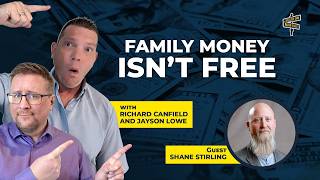
This is a YouTube video titled "How Legacy Planning Protects Your Family’s Generational Wealth with Shane Stirling" created in July 2025. The content is an in-depth interview or discussion featuring Shane Sterling, an entrepreneur and co-owner of a second-generation contracting business in British Columbia. The conversation focuses on the importance of estate and legacy planning, family business transitions, insurance, and generational wealth preservation. Multiple speakers participate, including the host and Shane Sterling, discussing personal experiences, business strategies, and the significance of storytelling and family values in maintaining wealth across generations. The tone is informative and reflective, aimed at educating viewers about the practical and emotional aspects of legacy planning.
A true loss is a wasted mistake. That's a failure. If you do something wrong, you don't learn, there's the failure. It's good to make mistakes because you learn from them. Do something that's actually going to go down through the generations and explain like why like five generations down the road if you're actually successful in doing waterfalling and you've got this generation going well, why did great, great grandpa Sterling do this? Here you go. This is why. And if it's still working, why would you mess with it? Or maybe you tweak it but don't break it. Don't sit. Yeah, don't throw it out.
We are excited today because we want to find out just what is the real impact that happens when insurance kicks in, when it's needed the most. We are joined today by a friend of mine, Shane Sterling. He's an entrepreneur living and working in Fort St. John in B.C. and he co owns multiple businesses with his brother. Their main business is called Epscan. It's a second generation contracting company. They focus on electrical and instrumentation. Now being I have a background as a recovering electrician. Shane and I met each other through the Strategic Coach group. We always have amazing conversations every quarter when we get a chance to see one another. And what I've come to learn about Shane, not only has he got great stories to tell but also he's got a lot of wonderful life experience and he's here to share some of that with us today because you know, amongst all the things that he's done in business there's also been a transition in business and he was just sharing with us before we hit the record button how how the topic of estate planning has actually become a passion for him. Now that may not be normal but Shane is the kind of guy that's going to make it so that you're going to want to make that estate planning happen and I think he's going to give you a lot of tools and, and ideas on how he's been incorporating that into regular conversations in his own life. So Shane, so happy to have you with us on the program today.
It's great to be here and thanks for talking really. I've been listening to the program for, for quite a while and really enjoy it. The, the suite of topics that you guys talk about are awesome and you know, being a Canadian it's great to very kind of drive towards the Canadian side of things because they're very, very relevant for myself. But you know, everything you guys talk about is awesome. I truly Enjoy the podcast.
We appreciate having you and let's. Okay, so let's. A question that I genuinely have is running a business with your brother. So is it, is it more like Shark Tank or wwe? Monday Night Raw?
You know, we, again, I'm pretty sure we're not normal. All right, so it's, it's. I didn't know it was like Shark Tank. Honestly.
Is it.
We are yin and yang. I'm, I'm definitely, you know, we talk about strategic coach a bit on the Kobe side. I'm, I'm a, I'm a quick start implementer. He's a fact finder, follow through. Like we clash everywhere but, but we understand that we clash and so we have those conversations. Like, he's also like one of the people I spend the most time with. He's my next door neighbor.
Right.
Like, our kids don't even talk to themselves as cousins. They're. They're neighbors.
Right.
So we, we get along very oddly well. I spend more time with no other single person in this world, so that's great.
It's impressive to have that kind of relationship and, and, and to be able to make it work in business. And I think there's something, a lesson just in there alone is, you know, even though there's vast differences in the way you guys approach things and you know, I've, you know, I've had some discussions about that. The, the common elements is where you guys align and that you really focus on that alignment to move things forward and, and really keep the ball moving. And you kind of learn how to maybe not so much stay in each other's individual lane, but that you're able to make sure that you're not, you know, constantly changing lanes into one another's in a particular zone. So, you know, there's no major crashes taking place as you're trying to steer a business forward.
Well, and it's interesting because, you know, we obviously the conversations leading towards estate planning and, and insurance and that when we were in business when our father was alive and we were, when we were in business together, it was a bit of a, the majority rules kind of a three musketeers almost all or none. But it was, there was two, two rules. So depending who was on the side of, you know, hey, I have an idea. And you may, you took it to one or the other two and if you got, you got some ground, you, you knew you were moving forward because the other one was, was outvoted. You had, you had two against one.
Right.
So it was Always that, there's always that. And then the other one didn't really have a choice. The, the model was that you, you, when we all move, we move together. And for, for, for good or for bad, if it was a bad decision, well then we all learn together. If it's a good decision, we all, we all reap the rewards together, right? Since, since our father passed and you know, now it's a one for one thing, so it's a little tougher deal. So now it's, now it's truly an all for none, all for one or any happening. So if it's, if there's an idea and one of us doesn't agree, it doesn't matter how good the idea is, we're not, we're not moving forward. Right. So it's an interesting model, but it works.
So when I appreciate it, at the beginning, before we started recording, like you mentioned, like you were, you came across just so genuine when you said how important legacy planning is to you and, and how enthusiastic you are, you know, about that subject. And I'm curious like what sparked that interest? What was that sort of domino that tipped over for you where you said, wow, this is a path that I'm just going to learn about and embrace and like what does it mean to you personally?
Like it, it's funny how things happen. Like just, just this morning I was at work and one of our first year apprentices was in my office and they saw the books I had in the back of my office. This is my home office, this is my work office that I'm in right now. And he asked me about the books and I have one book there, it's called True wealth by Thane Steiner. And I have another book that's Leaving Legacy by David Ventel and just came across these books, I don't know where I just read them, they're 10 plus 15 plus year old books now, but just started reading them. These are high net worth individual families, like you know, ultra high net worth. Honestly, I think they're in a different realm altogether. But just reading their stories about managing generational transition and how they reference folks like the Rothschilds.
Right.
Shirt sleeves, a shirt sleeves and four generations and how that can happen. And, and then if you don't do the work up front, there's no reason to be upset about things failing down the line.
Right.
And it just got that, you know, and then so that sort of drove my passion. I started reading and learning more and more and more and you know, started reasoning the fact that yeah, yes. These books are written by ultra high net worth individuals and for their families now. But you get down and it's like actually it starts somewhere. It always starts somewhere. It always starts with a, a story of, of, of, of. Of someone saying, hey, this is the way it is. I don't like this, I want to change this. And you know, you've got that matriarch or patriarch of the family who made a decision and they changed their lives. And then you get the next generation who takes that and builds it up, which is a pretty common story, second generation, and that's myself and my brother. And you get up to what. Then you start reading the stories of the third generation sort of falling into that entitlement and quotations trust fund world. And then the fourth generation kind of getting some, losing the word here, but they get sort of a waterfall down, but it's not a lot. And then by the end of that it's gone. There's nothing there. That's right. So you got to do something. If you're not going to do something up front, you can't be upset that it doesn't exist down the line.
Right.
When you, you're identifying that you're, you and your brother are in that second generation category. And I think that's interesting because we talk about these things all the time on the show. In fact, we just had a conversation before you hopped on, on a previous episode around this mindset. And you know, it's not all that often we're speaking to someone who's actually in one of those generational capacities and they're speaking at it from both vantage point of where they're at, what they saw to take place and where they, where they're planning to go. And so you're bringing a really unique perspective. Now you mentioned that your father had passed away. You, you and your brother and him were able to operate in business together. You had that opportunity to do so what was it, what was the transition like? Because some planning had been done for you and, and you're continuing that torch now because you already have experienced a degree of what happens when, when some planning works out really well, etc. So you, you've got a unique perspective that a lot of our listeners maybe don't have the ability to, to perceive. So I'd love to hear a little bit about how did the transition happen for you and your brother and how have you been able to kind of keep things going, moving forward without seeing the business come tearing down around you?
Yeah, we don't have enough time but like, so I guess, you know, business wise it's really started. And I'm going to go back to in our case, 2008. My brother and I are both tradespeople. We worked our way up in the business, in the business and, and in 2008 we were still tradespeople in the field and you know, my father was actually looking to sell. We'd actually want the business. We didn't want to want second generation. It looked, watch our father and his headache and it was just, oh that's absolutely silly. We don't, we don't want to do that. And he actually, we actually, we. There's actually a pending sale. And it was like, well, hey, well wait a second. We're not part of the business, we're just employees. Like this isn't going to work. So what do we got to do to kind of be part of the business? And so we kind of did a, we did an estate freeze and put some trust in place and we got in on Dustin. I, Dustin's my brother and we got in as one third of the business. The first learning lesson we had, my father didn't want to be part of a business growing a business that he wasn't getting a part of the equity growth from. So he still wanted a third of the new co which I even at that time knew that this is not a good idea and tried to advise him against and he did, he wouldn't listen to that. So father, son conversations, you know, so we were one, we were each of third partners in this new co in 2008. And that was the start, that was our start of ownership.
Right?
It was a little bit forced because this company's been biased. That deal fell through which now thankfully, thankfully that fell through. And so we moved on with this new structure where you know, again myself, my brother and our father were all one third owners. My father had a bunch of pref shares to himself personally and that was our first introduction to trust. That was our first introduction to, you know, what I call semi advanced business planning. And from there and then there was questions like, well what's going on with these trusts? How do they work? And you start looking at dividends and stuff like that. And we realized fairly quickly that it doesn't work if we all have the same share class and we do each other out and our father has to pull it out personally because he didn't start a trust because he didn't think he needed one and two of us had trust and we could roll those dividends out. To the, the beneficiaries taxed in a tax efficient manner. So then we had another estate freeze in 2013 and then we started trust for my father and it just rolls on like that. Right. And again you said earlier a lot of you said in the podcast or before we came online, but the school of hard knocks, right, you know, you learn from your mistakes.
Right.
And I'm a true believer that there's no such thing as a, you know, a true loss is, is a wasted mistake. That's a failure. If you do something wrong and you don't learn, there's the failure.
Right.
If you do it right the first.
Time, there's actually nothing to learn there. Which is actually even possibly worse because you keep doing things right and then eventually that cliff you climb gets higher and higher and when you do fall off, it's a lot longer fall. So it's like it's a little bit of a. Is it Zuckerberg, you know, you know, fail fast and fail often kind of conversation.
Right.
Like it's good to make mistakes because you learn from them.
Right.
So yeah. Anyways, rambling on. So true.
And with you and your brother co leading the business. So how, how do you resolve conflict when the business is on the line but family dinner is still ahead?
Well so right now in business again, you know, he's got, you know, he's got that, that fact finder follow through. He's also very high in command on his strength finder. So I mean he's the operations like his, his, his. He's got the CEO, COO roles in the company. Right. He, he is operations way better than I could ever be. I am, I have zero follow through. So you want something to get done, I can start it really good. But you better have someone mopping up behind me because I'm onto something else on day two. Right. So he's a CEO. CEO. I'm more on the, I've kind of recognizing my shortcomings. I move myself. I'm more on the strategy. So business development, alternative investments, alternative growth, other company, you know, mentioned other companies, other companies involvement. That's kind of my world.
Right.
So we don't really get involved in arguments from an operational standpoint. Usually what'll happen is there'll be something that's going on that Dust will want either support or another set of eyes on. If he'll bring me in and say, hey, we're doing this, what do you think about this? I'm still involved in any of our key client meetings. I bring obviously A wealth of knowledge. I have multiple red seal trades tickets that can bring to the table from a technical standpoint. And I'm very involved in trades training as well. So I'm still involved in that stuff within the company. So I do, I am definitely brought in on those levels.
Right.
But again, operationally I try to stay out as much as possible just because it's, you are right. Within our business, there's mom and dad and Dustin is Dad and I am Mom. So when, when, when one of our people gets on the wrong side of dad, they come to mom, and I have to make sure that I don't shelter them because now I'm messing with, with what's going on in the operations.
Right.
So, and it's, it's, yeah. So I, I, I've tried to, you know, remove myself from that situation because it does. Earlier on we learned that that was, that was, you know, they start playing and it's like children, they start playing parents against each other and oh, 100%. Yeah, it's ridiculous, but it's hate to say it, we sometimes call it adult kindergarten. So.
Yeah, well, and there's a degree of that just in the trades world on its own. And of course, I mean, you've overcome a number of challenges from a perspective of just, you know, the trade economy. Being in a northern provincial location, you're one step away from being on the Alberta border, basically. So you, you're, you're, you're as close to being Albertan as you could be without actually being in the province, I think relatively speaking.
I, I would like to know who was paying that guy making the map. And he must have got, either they stopped paying him or it became winter and he just gave up and drew that line straight north because he could have followed those mountains just a little bit further and we would have been in Alberta. But now here we are.
But you know, there's so much capacity in, in, in your story and again, having multiple business options that you guys were. But this focus and this shift of really putting more effort on your generational planning, things like family governance and stuff, I think is important to you and leaving a legacy, leaving something behind so that there's something that maintains, that outlives you fundamentally. And it seems to me from our conversations that we've had in the past, a degree of that is really reflective of the experience that you've went through, you and your brother. Because when your dad passed away, you, you did have insurance that was involved in the business. So you did multiple estate freezes. And structurally adjustments along the way. But there was also the impact of having some of that planning, really well done planning that allowed you guys to be able to transition and move on with the business effectively after the circumstance of your father passing away.
Well, and it's interesting because right around that, the time that first estate freezes obviously start paying attention to what the, to the health of the estate in general.
Right.
And my father didn't have much for insurance like he had. He had a. My parents separated years before that and so he had, he had a term policy that he was, that he maintained as part of the separation agreement. But really he had no other corporate policies in play. And when I approached him about it, you know, he had some, he has some bad experiences in the past with, with, with life insurance and I think with, you know, that generation, I wouldn't say that generation, but you know, especially folks in, in northeastern, probably all of Canada in the 80s, there's a lot going on and when things got bad, you know, you've got these term policies and, and no, you know, whole life and universal life really weren't even big push things at that time. You couldn't pay these, you couldn't pay these premiums and, and you lost your policies and that was, it was basically, it was a. Money down the toilet. You're done. Right. And so I think a lot of folks had bad experiences with just insurance products in those years anyway. So he had nothing that really that was substantial in the business. And about that same time, there's two books that I definitely also prop up from the estate planning side and their books written by Tom Deans.
Right.
And one is Every family's business and the other one is Willing Wisdom. And those are, those are definitely books that I read that absolutely phenomenal books.
I coincidentally have the 12 common sense questions to protect your wealth. With every family's business right here on.
My desk, I actually bought, I usually keep about 10 copies in my library. Probably pull up four or five of them right now that I give to people. I just give them to people. It depends if they're on the business side or just on the, on the willing, the wisdom, the will side. But I mean again, just won't get down to those books. But you know what the things I realized in the, in the, in with reading those books on the business side is the fact that, you know, if you're not prepared for unexpected departure of one of your shareholders, you're going to be in trouble.
Right.
And on the willing wisdom side, the really big takeaway That I got from that is the fact is, why is this document that we create to make sure that the things that we want to happen in our lives once we are past and not able to communicate anymore, why is this document so secretive that we don't talk about it while we're alive? Right, right. Like, it's like, you know, okay, here I've got this manuscript on how the world is going to be when I leave. But it's secret. You can't read it till I. Oh, and by the way, I'm also a little dyslexic, and I can't actually read or write. So here you go. The lawyers wrote this, right? You know what I mean? Like, it's like, it's like, it's basically setting you up for failure in the end. And so after reading those books, I really started to push. I'm like, we need to talk about this stuff. Like, we need to talk about this stuff now, not later. And it was a. It was an optical push with my father and my mother to a lesser degree, but that was my father because he was of that generation of, you know, we don't talk and we don't talk about that stuff. It's like, well, so I did break them down eventually. And then we started having these. These wholesome conversations about, well, okay, well, how are we going to. You know, a good example. Hey, you still own one third of this company, which is still a growing concern, which, when you pass, have shares that have value, which someone's going to have to pay taxes for because we're going to have to bring them back into the company somehow. And there's about.
There's a.
There's a. There's a transaction of wealth there. Nothing for free in this world.
Right.
Like, so what are we going to do? Well, what do you mean? You just pay for the company. What if the company's having a bad year? Like, how are you. So that's when that started. And so shortly after that, we got together with one of our. Well, at the time, our life insurance representative. And so we started Whole Life policy of my father.
Right.
And at that time, we were just complaining that the premiums, like, oh, man, these premiums are ridiculous. And they were, they were basically fully in place to cover the cost of his prep shares. Yeah, that was, that was the big thing to cover the cost of the tax burden when those prep shares rolled over. And. All right, Hunky Dory, you know, and that was in late 2009, 2010ish. We got that set up and we start peeling along and life's great and, and just fast forward to when he passed because we were also redeeming his prep shares throughout the course of his, his lifetime. And you were slowly buying him out.
Little bits at a time.
Yeah. Again, he never, you know, when he was bootstrapping the business and making things happen in the 80s and early 90s now, when things weren't awesome, you know, he wasn't, you know, he wasn't putting his, putting a pile of money into, into his, his savings, into his retirement savings.
Right.
And, and you know, when him and my mother separated, I mean, he did, he did right by her and right by what was supposed to. And he made sure that she got everything she deserved. And, and, and you know, everything was, everything was. They split everything properly. And then he also, he continued to make sure that going on throughout, basically until he passes. She was, she was taken care of.
Right.
So no, his, his retirement savings didn't really exist. Right. So we made sure that as he was in kind of transitioned out of the operations of the business that, you know, he always had these prep shares that he could pull from and support his lifestyle. And every single time he would absolutely complain about how much he was paying taxes. Like, it was just ridiculous. There's got to be a different way of doing this. Like, we got. Can't you just pay the money? It's like there's a big difference in between, you know, tax efficiency and tax avoidance, man. Like, is it. Was it avoidance, innovation? We can, we can do, we can do some things on avoidance. We really don't want to do tax evasion. That sounds like a bad idea. Especially if you die and we're stuck with your problem.
Right?
So.
Right.
You know, these are again, conversations you have with a, with a, with a, with a fellow that grew up in the 60s 70s on the prairies of Saskatchewan. Right? Farmers, you know, farmers. But anyways, yeah, so, you know, we had these conversations. We started talking about this stuff and it was great. And as we started and we were all learning together, which was, which was awesome.
Right?
And then kind of, because we really only had three policies on my father. And one was the. One was the, the term policy which, you know, he, he did actually carry till his death that my mother got on, on his death. And you know, it was actually the, we were to the next level of the, the premium bumping up and it was. This is like the. Hey, this is the, this is the last time, like when he just, when he's turning 70, he's like, after this, we can't convert this. Like, we, we will not be able to convert this policy from a term to a whole life. Like, you know, and this premium bump is atrocious. Ah, like holy. Like, you know, next year we're not, you know, we're going to have to cancel this policy. And the, the, the, the three musketeers thing, I got outvoted, so we didn't convert it. And I was like, we're going to lose that policy. And then he got, he got sick. It's like, you know what? Well, we, we better pay that, that, that premium next year. And then he, he passed within a year of that.
Right.
So that one again in the quotations worked out, right? And then we had, and then we had the whole life policy. But then we also. I can't remember the year, but different, different insurance advisor, but we. Or different advisor, I should say we did an IFA with my father. And again, I'm not going to get into the details, but basically the IFA is that we pulled out a fairly large policy with a fairly large premium, and then we took a loan out that paid the premiums. This is within the business, right? It paid the premiums. The business was still responsible for paying the interest on the loan, but every time the premiums came due, the business had to cover that premium for about a month. And then the loan would kick in and pay back the business, and the business always covered the interest. And so you have access to this fairly substantial policy.
Right.
My father wasn't exactly insurable at the time, so we actually had to do a last die with his new. You know, he got remarried, which was fine. You know, we were good. We were happy with that. And then actually right into Covid, his Mary, his, his second wife, she, she wasn't feeling so good coming back from Arizona, and they, they stopped in the hospital across the board in Lloyd, and she's diagnosed with stage four cancer. So she actually, she predeceased him, which none of us thought was going to happen. Like, we figured, we figured dawn would pass and we would be, you know, we'd be, you know, paying these premiums on basically on Mary and for another 10, 20 years, whatever, and, and she would pass and then things would roll in place. But yeah, totally flipped. Flipped the script. She passed. He didn't. He didn't. He was, you know, again, he was never, he was never designed to be alone. And so, you know, he only made it a couple years past her. And then he passed away.
Right.
Whether, Whether we like to say he died of a broken heart, which basically, yeah, he, he, he didn't conscribe without her. So. But from this, the planning side, I mean, it was. No, again, pulling the emotion out of and everything, it was, it's just like. It was perfect. We couldn't have planned it better. Yeah, so that is so good.
There's so many unknowns and certainly unexpected elements, but many of them occurred for you in a way that no one really could have predicted. And the result is large influxes of capital came in to capitalize the business, take care of the tax problem. Because I would imagine when it was time to redeem those preferred shares, you know, I don't know if you recall what the size of the tax problem was, but I'm guessing it wasn't a small problem.
Oh, yeah, no, it was definitely a huge problem. I mean, and quite honestly, we were lucky. It's interesting when we started that first original whole life policy and it had a pay. I mean, it was a death benefit of 2.1 million, right. Which we figured was enough to cover the taxes on those pref shares. But through the mechanisms of the estate planning, it turns out that we actually owed a lot more into preference than we thought we did. And we're just lucky we were redeeming preference for as long as we were. It worked out in the end. Again, it's amazing how the world turns sometimes because the timing wise, we redeemed enough prep shares that, yeah, that policy did cover what was what we needed to cover within that realm.
Right.
So it worked out exactly as planned. If he had passed 10 years earlier, no, we would not have been right. There would have been a portion owing still.
Right.
Which again, it's all this is. All this is all within the company. Right. There's always a hard part with these conversations, breaking out the buckets of what's business, what's personal. When you get down to that level you're dealing with. And again, going down the will side, primary wills, secondary wills and personal wills, corporate wills, however you want to label them, making sure you have those in place. As a business owner, you need those if you have. If your business is a going concern, you definitely need to make sure you break your personal life out from your business life. Like, you cannot just think that it's all going to go through on its own together. It's not. It's not going to work.
Right.
So I'm curious too, Shane, that you know what, what does your son not yet understand about the life that you're building and but that you hope he will someday.
Well, on the sun's side, I mean we talk a lot. I, I, I, I have a single, I have one, one, one, one son. He's six. He just turned 16. So you know, he's knows more than I do. Obviously. He's 16, right. My great kid. Awesome kid. And we're not like I'm, I, you know, obviously in my, in my heart I'm concerned.
Right.
I mean obviously as a parent, no parent wants to raise a child that's entitled. No parent wants to raise, you know, a trust fund baby.
Right.
Does he have, you know, does his future bright? Yeah, it's pretty, pretty bright.
Right.
But at the same time, like, you know, we don't, we don't, we definitely don't hold it secret, but we're right now in our world, we're not, we definitely don't use figures, right? No, it's just, it's just, it's just, yeah, I don't believe some of the projections that I get told by our wealth advisors is that's impossible. But you know, at the same time, you know, if the facts are the facts, the facts are the facts, right? So you know, I think we, right now we're have, we have the conversations on the, on the, on the fundamentals and the basics and things like hey, like going down that the estate planning, we have conversations along the lines of well, you know, there's, and again, another spoiled off a whole pile of different offer authors here. So I hope this is all right. But there's a, there's a, there's a book out there called A Defensive wealth by Derek Bullen. And basically he's got this concept that I just think is amazing about buckets.
Right.
There's my money, the money I need to live on as an individual. There's my, the children's money, which is basically the money that I'm going to give to them whether it's while I'm live or when I, when, when, when the estate planning rolls in. But then there's the family money or in this case the business money.
Right?
And, and those are, those are different conversations, right. You can have. And so we talk with our son right now about the, my money and his money. Like what, you know, you know, how it would work, you know, the mechanisms of why I do certain things, why I pay for life insurance, right? I have life insurance on him. Why do I pay for life insurance on him? Yes, it's not. So I can, earlier on he's like, well, so you can replace me. Well, that boat sailed, man. There's no replacing you. I'm sorry. We closed that door. I closed that door quite a while ago. So, yeah, that's going to be a tough one. It's not. To replace you, honestly, in the near term is to deal with the fact that tough having that conversation with your child, but also to say, like, hey, like, down the road, this is going to help you leapfrog ahead of the situation, because you're not going to have to deal with this initial situation. You're going to have a policy that if you continue to fund, that I'm going to continue to fund. If you continue to fund throughout your life, you know, theoretically, you don't need another policy. Not saying you shouldn't get another policy or policies or. Or system of policies, but this one is going to be the backbone of everything that goes forward.
Right.
So important that you're having those discussions with him because Richard may have told you this in the many conversations that you both shared. So we are running into scenarios where parents, they started policies on their children when they were minor and their children are now young adults, and they're gifting these policies, and the kids have no idea what they're receiving. They see a cash value line item and they say, surrender the policy. Just give me the money. And the parents would have never wanted that to happen. It's an unintended consequence of handing over an asset without the supporting mentality. And just. It's heartbreaking anytime that we see that and we're communicating, we're shouting from the rooftops to our entire database, like, please do not do that.
Like, you're.
You have no idea how frequently the. The recipient of that gift just says, surrender it. Just give me the money. Because they don't understand what they were gifted.
Well, but, you know, it's the same thing of. It's the same thing as receiving Xbox with no instructions and no access to the Internet to find the instructions. Like, what are you going to do with that thing? We don't even know what it's worth. You don't even know what to do with it. You don't even know what it does. You know, you might as well sell it because you can't operate it.
Right.
Right.
You.
That goes back to. And we're still working on this within our family, but this goes back to creating a family code and family values. And why did we do this? Well, and this also goes back to talking about the wills openly before you die, but do something that's actually going to go down through the generations and explain five generations down the road. If you're actually successful in doing waterfalling and you've got this generation going, well, why did great, great grandpa Sterling do this? Here you go. This is why. And if it's still working, why would you mess with it? Or maybe you tweak it, but don't break it, don't sell it, don't throw it out, right? But if you have no. If you have no reference, what's it worth, right? Even heirlooms. Heirlooms, like family heirlooms. I look at it, it's very interesting. With my father passing, and then as I'm getting more wise in this world, I won't say older, but wise. You know, these family heirloom things come down and it's like, hey, this is. What's this? And then, you know, whatever Aunt Mary will say, well, that came from your great aunt, blah, blah, cool. If you weren't here, how would I know that?
Right?
And is it worth anything? Who knows? But if you don't tell the story, if you don't record a story, you'll never know, right? And then. And that goes, right, that's right down through all of estate planning. Like you plan till you're blue in the face. If you don't have a backstory to support it, there's no point in doing it.
Human history exists because of generational storytelling. People remembered what happened from the past through stories that were crafted to convey them. And I think that's the right way. You know, you go to Egypt or somewhere, you see, you know, hieroglyphics and things carved into stone. Well, those are the way that they remembered how to tell the story. So you could look at it and then tell the story. Someone was nominated as that storyteller. So the question we have for our listening audience is who's going to be the storyteller of your family story so that it can maintain. And if you're not taking up the charge, someone must.
Yeah, it's interesting. Like, yeah, one of my, one of my advisors, we were working with him and we created a family crest. Don was still alive, so he was part of it. And, and we made a decision to build this family crest. And we have our name and we have a. It's got a shield and a couple quadrants that how things are important to us. And we have a family motto now. And this ties your family together.
Right?
We have an interesting backstory with the Sterling name because like my father, real birth last name is Alexa. And Then his dad died when he was 8. And then my grandma remarried when he was 10. And everybody. So we made my grandpa Sterling and everybody on the Sterling, on my grandma Sterling side, they never. None of them had kids due to some genetic disease. But then also the war and some deaths and stuff. Nobody on that line had kids. He was the only one to marry. And my grandma, my nanny, we called her, she had three kids, two boys and a girl. And the one boy kept the Alexa name. The girl, obviously, my aunt obviously remarried and became a different name. And my father was the only one to take the Sterling name. And so we are like, my father is the beginning of the new line of the Sterlings.
Right.
And so creating this, Having him part of creating this crest. And we've got the symbol now and we've got again, the quadrant, and we have, you know, we represent what started our company, HEF Scan, you mentioned it. So the original logo that he had is in there because that's. That's what created the opportunity that we are now able to move forward.
Right.
Like, nothing that we're doing now would have been. Would have been possible without him creating opportunities. We provide reference back to that homage to the company, the original company, and we've. Philanthropy's big, right? Learning's big. Yeah.
Yeah. I was going to ask if. So if your family.
Speaking of that.
So, like, if your family was sitting around. Sitting around the fire, you know, 50 years from now, talking about you, what are they saying?
Well, I'm hoping that was there to start with. I want to be there in 50 years. I got a bit of a longevity goal, and I'm not there in 50 years. I. I guess I don't care, but I didn't make the mark by a long shot. But if I happen to just, you know, be somewhere else cooler than by the campfire, but then they're probably saying, like, hey, like, we sure are. Look at what. Look at what's been created, like, and look at. Look at what, you know, hey. The first one is like, wow, we're happy we have this information available. And thank, you know, thanks.
Thanks.
Thanks to him for having this. And then, you know, maybe a little bit of Kuda is like, wow, that guy was really thinking ahead. That'd be super cool if they said that about me, you know, but. Yeah, but mostly, hopefully, I hope that. I would hope there was. There was appreciation and gratitude and then after that, some sincere conversation about how to continue it forward. That would be. If I was to sit there and say what would warm my Heart. Are those some gratitude? Sure. I need to be appreciated. That's definitely one of my core drivers in my life, is to be appreciated, needed and appreciated. And, but after that, like, yeah, like some serious, hey, like, let's not wreck this. Let's like, basically, let's not, let's not squander this. And so the next generation doesn't have anything. Let's build this up. Let's make it, you know, the pie conversation, right? Everyone fights over pieces of the pie. Well, you don't have to fight over pieces of the pie if the pie keeps getting bigger. Let's just make sure the pie keeps getting bigger. As long as the pie keeps growing, who cares how much you own of it, right?
Especially if you have the recipe to bake that pie again and again and again.
Absolutely right. And again. Going on, going back to the dirt, the woolen model and saying that, hey, well, here's family money or company money over here. Growing and growing and growing. Outside of the conversation of your personal money, this is the thing your personal wealth can be doing, whatever it's doing, but you've got this family money here to support your family endeavors. And ideally, nobody gets this big family money pot because it's just there to support the families. And you want to, you want to buy a house? Well, I will buy your house and we'll mortgage your house back. No, it's not free. Nothing's free. You still have to pay it back and you still have to pay with interest, just like everyone else has to do. Except for your interest goes back into the family money.
Right?
Like, and, and, and, and that, you know, that's, that's how these multi generational families operate. You support yourselves, but you make sure no one gets it for free and no one pulls out without putting back in. You don't agree, yeah, you want to go to university, we'll pay for the university. If you don't graduate, mortgage your house back. You know, it's not free. Nothing's free. You still have to pay it back and you still have to pay with interest just like everyone else has to do. Except for your interest goes back into the family money.
Right?
Like and, and, and that, you know, that's, that's how these multi generational families operate. You support yourselves, but you make sure no one gets it for free and no one pulls out without putting back in. Yeah, you want to go to university, we'll pay for the university. If you don't graduate, you're paying it back. If you don't graduate and start A business, you still have to get half of it back. You know what I mean? If you start a business now, okay, you're good now. You're supporting your family outside of the family money, you're good. We'll, we'll forgive your, your university, that kind of stuff, right? So awesome. I haven't written these rules yet, so I'm working on them.
Okay, well, I'm excited to see what those rules turn into and the kind of framework that you build. And Shane, I just appreciate, you know, having you on to share your story, but more importantly to, to share what's true for you in both the history and, and the direction that you're moving that history forward into. You're. You're pulling history kicking and screaming into the future with you so that it's always there, a part of the family story and the family journey. I think that's really impressive. And so what we'd love to know. Shane, while you have a trade background, you used to probably wear coveralls. You don't have to anymore. They don't have capes on them for safety reasons. And, but you may recognize that when you're showing up for your family the way you are for your team, for your employees, and you're still building and growing an organization, not supporting many other families, you are being a hero. So who would you most want to be a hero to?
My great, great, great, great, great grandkids. I want to be a hero to those, those people. And that generated that. How many generations of that, whatever, seven or whatever, 100 people, families in this world. I want to be a hero to those folks. That's what I want to be a hero to. Which means I did it right the rest of the way.
So fantastic. Shane, we appreciate you again. Thanks for being on the program today. For those of you watching on YouTube, of course, you'll see a magical little pop up that said, I'm amazing content. Click here. So go ahead. We encourage you to do that and check out the next episode that's being recommended for those of you on audio. We appreciate you on your drive today and we will check you out next week when we come back with more incredible content with wealth on Main Street.
More from Richard





How Do You Use a Policy Loan to Buy Dividend Stocks? #dividendstocks #infinitebanking #shorts


Can Compounding Dividends Pay Your Bills? #wealthbuilding #investment #financeeducation


Should a Corporate Policy Offset Your Personal Coverage? #shorts #insurancetips

What Is Human Life Value? #shorts #insurancetips #dividend #wholelifeinsurance