How The Nelson Nash Institute Creates Real Results
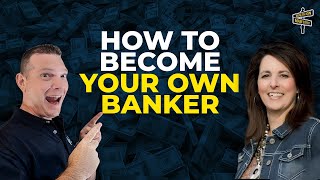
Conversation between Richard Canfield and Mary Jo (Coaching Academy leaders) about spreading Nelson Nash's Infinite Banking message through direct outreach and book challenges. They emphasize selling books (30-in-30, 72-in-4 months) as a measurable, repeatable practice to create transformation, generate appointments and sales, and build durable practices. They discuss a forthcoming farming-focused book by Dan Allen ('Grow Your Own Capital...keep the farm in the family'), niche marketing to farmers, and concerns about public confusion (misleading social-media commentary, misplaced focus on rates of return, premium finance and IUL being conflated with Infinite Banking).
Chapters
Foreign. That doesn't know if you're tuning in for the first time. We're talking about the book Becoming your own banker by R. Nelson Nash. And it is, the coaching academy is heavily, heavily focused on that. I mean, we're not replacing Nelson's message. We're, we're expanding on and educating to Nelson's message with the core elements of the book. And you know, I think, and we did this a number of times, especially on the, the connection zone day of our think tank, really expressing the importance to any of the advisors what the value of the book is. And so we, you know, talk about the 30 book challenge, selling 30 books in 30 days. It's not that you're selling a book. What you're actually selling is you're selling the transformation that this book has in your thinking and in your financial life over generations. And you, the way that you do that is you quite simply communicate what impact it had on your own life. I mean, it's that easy. So we're, we're talking about the impact of the book book, not saying here's everything you're going to learn in the book. Here's how this book changed and impacted my life in a dramatic way that I don't even know how to convey in words to you. And for $30 or 20, $25American, you can get this book in your hands and you could experience that transformation for yourself. And so it's really, really powerful. And I think there was a lady, a wonderful lady named Susan. She attended a coaching academy. She took on the book challenge, and I think she sold 30 books in like 30 days, roughly speaking. She immediately booked 15 appointments. And I think she immediately got about five of those people moving forward with some applications into underwriting. And, and as I recall, one of those individuals she brought with her to the think tank, you know, I mean, that's incredible. So that all happened in the span of less than six, you know, six months. And so she's gone from having just getting started, not really having a business yet, to now beginning to build a durable and sustainable business practice because she knows exactly what to do and she's teaching you the core message, which is really, really phenomenal. So I love. To success stories.
The crazy thing, the crazy thing about that, Richard, is who's her mentor? I don't know who her mentor is. I've never asked her. We've spent a lot, I've spent a lot of time talking to her, but I've never asked her who her mentor is. So by coming to Coaching academy. It was a whole different type of mentoring that got her there. Right. Because Nelson said It was a 10 book challenge. And then I'm like, 10 books isn't gonna do anything. You're gonna starve at with 10 books. So you should be doing 30. And then think tank, you always have to one up me. So then you said 72.
72 books in four months. That's the new challenge. Yeah, because that's what a case of books is.
There's 72 books because Richard has to one up me. So I'm going to say, well, why can't you do, what'd you say? 72 books in four months. Well, what's that? It's only 18 books a month, but.
You can do it.
I'm gonna stick with the 30. We need to stick with the 30. You're making it too easy on them, Richard.
The end result is that there was something they could commit to that was actionable and people could take on a challenge, something that they could rally around and they could directly see immediate success.
In their business and impact if you're not selling books. People want to measure their success by how many, how many life insurance policies can I write in a year? How much money can I make in a year? I don't care. I don't care how many lives I write in a year. And I don't care how much insurance I write in a year. I measure mine by how many books can I sell in a week. I just got out of our marketing meeting. We sold 59 books last week. So we're anywhere between 40 to 100 books a week that continually like. And the, the ratio of how many people are actually going to understand it. Make an appointment. It's pretty low on the totem pole.
Right.
So we have to, if we want to spread a message, we can't do 18amonth. In my opinion, you should be doing more than that. And we should be. We should be doing 30 books in 30 days because how are you going to spread a message? And how are we going to change the banking system in our own personal finances if we don't hit enough people?
Yeah, that's right. We have to be able to see the people and do it in a way that makes sense. And so speaking of books, of course we have another book coming out co authored by the amazing Dan Allen. And I know that a manuscript is going to land on your desk at some point in time, very soon here, because you've graciously agreed to provide a forward for the book, assuming that you like the content, which I think you will. So thanks for that, Mary Jo. For those of you listening in that book is grow your own capital, control how you finance the operation, create the ultimate line of credit and keep the farm in the family. That is the objective. So not trying to steal any of Mary Joe's great content, but anything, we're just trying to add to and expand on what she's already done and provide some additional insight and clarity for people in the farming community. And there's a lot of fun there, of course, with Dan Allen having a good farming background, used to train horses and everything. He's a really neat guy. And it's interesting, we talked about people of different ages. You know, Dan's a couple of years older than I am. You know, he's, he's in a, in a senior capacity relative to me in the age group. I love that guy. Amazing guy. And he's fired up about this. You know, it's a second career for him, having a really long standing oil and gas career. And he is fired up about teaching this message of infinite banking. And it's really, really fun to see.
Yeah, I'm excited, I'm excited for his book because here's the thing I wrote, obviously Farming without the bank and Life without the Bank. Right. It's just, it's not to replace Nelson's book. It's just to make it simple for those of us that maybe aren't that smart. And so it, Dan's book is just going to be a different language for different, for people that maybe don't get my book and they can have his book, it really doesn't matter as long as they're good and they all carry the same message. Fantastic. Like that the, the farming industry needs help, a lot of help. And so it's, I'm excited for him.
Well, and we talked about the niche of farming and you do a great presentation that you created for the coaching academy about the power of creating a niche to work in. And you and I worked on some math on your, you know, how, how the numbers are of total farmers and the amount of farms. And you said, well, cut 50% of those out because only 50% of the farmers give a damn about their money. You know, and so we worked on some of those numbers and I think if I remember correctly, you're serving something to the effect of 0.1% of the 1% of the 1% of farmers or something like that.
Yeah. So if the farming population is about 1% of the population and only about 1% of farmers actually care about their money. Right. So even if we look at just regular people, like don't non farmers. Right. Just the population as a whole, only about 3% of those people even care about money. And so if you've got. And farmers are 1%, so of those, only 1% even think that there's an opportunity or a problem with financing the farm. And so I'm serving a very, very small amount of people because those are about the only ones that care. So there's a whole bunch of people that I could be serving. So it does not matter if it's my book, it doesn't matter if it's Dan's book, it doesn't matter if it's Nelson's book. I, I don't care. Get the book into their hands that they're willing to read and they're willing to follow through on does not matter. Even if, even if somebody reads Farming without the bank and then they read Dan's book and they're like, whoa, two people are saying the exact same thing. Well, I'm going to take action now. Right. And that is huge. I think that is key. It's no different than your, you and Jason, your books coinciding with Nelson's books. The more we can hear the message and we can create some of that noise Nelson talks about, the less odd we will be.
Well, I'm glad you brought up the noise because Nelson did say that we need to develop financial noise canceling headsets. And now there's what the general public needs to do. And then there's also maybe what some advisors need to do. Maybe some advisors need some noise canceling headsets about what's going on in the rest of the marketplace. Now every now and again, of course we get a great comment or a share, you know, as the practitioner counsel or perhaps you'll send a message to myself or Jason. We had a recent comical string of some that you forwarded over on commentary that happens, you know, on certain like groups that are, whether it's a Facebook group or just, just comments that come across your feed that just don't make any sense at all. And you know, there is a degree of people who are saying a lot of confusing things which is leading the consumer and the general public astray and it's making them think things that just aren't accurate about the process. What are some of the examples that show up when you think about that, Mary Jo, or some of the common elements that you find.
Well, Richard, now I forgot them. I didn't know I was going to have to come prepared. I mean I can go into a group and find any given comment at any given time. That's dumb. And a lot of them, a lot of these comments go back to rates of return and what are we investing in for crypto? What is your rate of return in the policy? Oh, look at so and so company released X amount of dividend. What this percentage of dividend.
Right.
Who cares? Like a, they have a dividend but the dividend is a formula. There's so we're so stuck on the numbers. And Nelson never talked about rates of return. He never. That is not part of infinite banking in any way, shape or form. And so in order like why don't, why are we even having that conversation? I don't even remember what it was that I sent to you guys that I was just like. Really?
Well, there's some, there's some ones around premium finance and of course groups that are talking about, you know, investment options in index Universal life contracts but yet they're claiming to be talking about infinite banking when clearly the moment you talk about premium finance and, and index Universal Life, you're immediately are outside of the realm of infinite banking, which is a trademarked term, registered a trademark term by the way, from the Nelson Nash Institute. So I mean those are some immediate red flags. And so that, that is already confusing to the general public if they're seeing that kind of commentary and they're, they're automatically outside of the realm of what Nelson had intended with his message.
Yeah, I mean index two, if you just read the book, it just says in there, this is not universal life. Right. It's in the book. And so, and Nelson brags about the fact that he never sold one of those policies. There was this little girl on TikTok and I'm sure she's lovely person but she was talking about how her Tik Tok said, and this was a while ago and I, but I remember her Tik Tok said becoming your own banker is universal life. And using that to borrow against the infinite banking concept is taking your whole life policy to the bank and using it as collateral, becoming your own banker. The infinite banking concept, it's the same thing. It's not two different things.
More from Richard





How Do You Use a Policy Loan to Buy Dividend Stocks? #dividendstocks #infinitebanking #shorts


Can Compounding Dividends Pay Your Bills? #wealthbuilding #investment #financeeducation


Should a Corporate Policy Offset Your Personal Coverage? #shorts #insurancetips

What Is Human Life Value? #shorts #insurancetips #dividend #wholelifeinsurance