How to Create Profit First By Using The Infinite Banking Concept | Wealth Without Bay Street Podcast
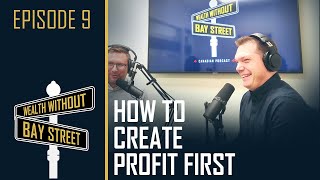
Richard Canfield and Jason Lowe explain how to combine Profit First cash management with Infinite Banking to build wealth. They split each revenue dollar into five accounts: profit, capital surplus, taxes, operating, and owner pay. Involving staff in profit decisions and controlling your own capital access gives you a competitive edge.
Questions this video answers
5% (five pennies of every dollar)
Quarterly (four times per year)
50% to team members and 50% allocated by the team to external giving
20% (twenty cents of every dollar)
40% (forty cents of every dollar)
Chapters
You are listening to the Wealth Without Bay street podcast, a Canadian guide to building dependable wealth. Join your host, Richard Canfield and Jason Lowe as they unlock the secrets to creating financial peace of mind in an uncertain world. Discover the strategies and mindsets to a financial future that you can bank on. All right, so we are here again, ready to rock and roll live with another podcast episode, Wealth Without Bay Street. I've got my man Jason Lowe over here, my amazing co.
Thank you. Yes, it's good to be with you and with all of our listeners.
Yes, all three of you. We appreciate you guys.
Hopefully, yeah, hopefully it'll. Hopefully it'll ramp up to four by. By the end of this episode.
Yeah, Steve, we talked about this. Make sure to share this episode at least one person.
At least one. If we can get. Well, okay, if we have three, they all share it with one. By the end of the weekend, we have six, then they all share it with one, then we have 12, then you get. We should know that this episode we were going to talk about how to turn your business into a money making mach. How to turn your podcast into a subscription machine.
Subscription machine. And with that note, everyone is now on task for assisting in this procedure because it's now just became a test. Right, Right.
We have to. And we have to show the count somewhere in this video, like right about there. If you can show the total count of subscribers that we have, and then on the next episode or some episode when we actually remember to go back and, and review it, then we can show right about there what the updated count is.
And for those of you listening online, Jason's like, pointing to sections on the screen.
Oh, that's right.
Yeah.
Not everybody's watching.
Everybody's.
Okay, well, welcome. Welcome to another episode. And we chose the topic for the episode about three minutes ago.
Yeah, it's good.
And we find that, you know, we get inspired, we receive inspiration. Four episodes. Sorry, I was just pausing for a photo. We have paparazzi in the room with us and we want to talk about how to turn your business into a money making machine. Now that either sounds really interesting or you're thinking to yourself, what are these guys going to try and sell me? You remember the, the Tommy Vu seminars we were talking about earlier? Hey, you want big book, pretty girl, come to my seminar.
What were those recorded, like in like, like early 90s?
Oh, yeah. And so this guy would be. He, he was doing these real estate investment seminars. So you, you give him the money and you end up with all the experience and none of your money and seminars go, actually. Right. And so he was promoting, you know, he'd be on a nice boat and he had these beautiful girls and they're, they're all sipping champagne and he's literally like right in the camera talking about selling the dream. Totally selling the dream. Now, let's just agree, I think Richard, you and I could agree. It's, it's difficult enough running a business with money.
Yeah.
And one of the most common, because we deal with business owner clients all the time.
Yeah.
And I.
Cash flow. Cash flow.
Right. And so business owners are, they're really good at whatever it is that they do in their business. You know, if you, if you run a construction company, you've got great skills at construction. If you operate a. Whatever your business may be, whatever size it may be, you need cash flow. And if your business isn't structured properly to manage that money that's coming in, then you could end up in a situation where even if you're busy, you're really not running a profitable business.
And well, you're always, you're always chasing after receivables in a lot of instances. Right? Yeah. Depending on the type of business you have. I mean, you've got staff.
Yeah.
You've got employees or you got wages. And that stuff has to happen regularly. Recurring. You've got remittances to cra. Yep. And these are things that are, you know, little miniature alligators that are eating at that cash flow at all times. Not to, not to say you mean your employees are your best, some of your best assets. They're amazing. But nevertheless, there's always.
Don't, don't hire alligators.
Yeah. Please don't do it. There's always these demands that are on the business and they're, that those bills are coming due repeatedly and regularly, all the time. Right. And sometimes you're waiting on big jobs or big projects and the receivables may not be coming in. You know, some people are like these 90 day wait periods on holds for like, you know, if you're an oil field business, a lot of times you've got these, these huge long receivable periods. Well, all sudden you make, you have this large chunk of capital that lands.
Yeah.
But meanwhile you've been operating off of some kind of business line of credit and it's been racking up and racking up and racking up. And so as you're paying out for all these different things, it's materials, it's supplies, it's, you know, inventory, equipment, needs Sometimes. And now you get, you get this big influx. Well, you get to compress that line of credit down, but now you're just right back at it again. So you're kind of chasing that cash flow machine. That's what happens for a lot of businesses as you're growing and you're scaling, it seems, you know, sometimes it's like, wow, I seem to be getting bigger, but I'm still always chasing that same, that next cash flow component.
Yeah, I agree with everything you shared. What I want to impress upon people who are listening is that there's a way that we go about managing cash in the business and we want to share with you our inspiration for how we created that and how that's been going. And there's a book that really created that inspiration and it's titled Profit first transform your business from a cash eating monster or alligator. They should have used the word alligator to a money making machine. Now this is revised and expanded by Mike Malkowitz. And Mike, if you ever listen to this podcast, you wrote an amazing book and we'd love to have you as a guest to have you expand on these topics. But you think of the general accounting principle inside of a business is sales minus expenses equals profit. So when you're planning for your business, if that is your accounting formula, if that's your methodology, then you're going to be focused on containment.
Right.
We need to manage to that so that at the end of the day, the bottom line, profit.
Right.
Okay, we changed that. We changed it to.
Largely because of.
Oh, the book was the inspiration. This book was totally the inspiration. And what Mike does such a great job talking about in the book is he said, listen, you've got to prioritize profit first. Now, to people who just hear that and maybe don't have some context around it, they may think, oh well, that kind of sounds like maybe it's a bad thing because, you know, profit is bad. Or if you're, if your only motive is profit, then you know, you must be greedy or like we've all heard those different trains of thought. Right.
Any kind of word can have a connotation to someone depending on where they're coming at for the experience.
Yeah.
The end result is, you know, if you're, if your business doesn't creating profit or generating it, well, then you're probably not going to be in business for very long. Which means if you're in a business where you're helping people, which most businesses do. Yeah. They provide employment. They are usually solving problems that require Require business to solve. And so you're, you're doing wonderful work. And generally speaking. And so you need to focus on having profit because that's what's going to allow you to outpace those alligators. Keep, keep keeping business for the long haul.
Precisely.
You have to be focusing on making sure that profit is first.
Precisely. And so our formula that we embraced in, in the business is sales minus profit equals expenses. And so let me give you an example. The way that we have it structured is that you have a dollar that comes in in the form of revenue and immediately $0.05 of that dollar 5% is allocated to a profit pool. And that profit pool is distributed on a quarterly basis. So four times per year. 50%. Now this is something that isn't in the book. But, but 50% of that profit pool is allocated to all of our team members here at headquarters. And then the remaining 50% of the pool, our team decides how to allocate the pool to bless someone else's life in a positive way.
Which is just being fun.
Which. Yes. Now, oh my. I'll tell you how that makes a person feel when. Cause you've heard the expression, and you and I have had this conversation recently where you hear someone say, well, you know, we really want to give back to the community. We really want to give back to the, to, to, you know, a cause or to something. And one of, one of my business coaches said, it's not about giving back. You didn't take anything. So be a giver, but it's not about giving back. You didn't take anything from anybody. So going back to the breakdown of the $5%, so five pennies of every dollar goes toward the profit pool. Then we have what we call continuing capital surplus reserve, which is kind of.
A term that's really close to our industry, which is something that essentially insurance companies en masse do as part of the preservation of their capital pool so they can be in business for 100 plus year spans of time.
Right.
Have to have these surplus capital reserves in place to, to make sure they can guarantee their benefits and everything. So it's a sustainability decision on how you want to operate your business.
Agreed. Thank you. That's a really, really great clarification of what that is. And so we take 20 cents of that dollar and it is set aside as minimum continuing capital surplus. So when there's variability in cash flow, the continuing capital surplus reserve smooths that out. Now from that we have 75 cents left to work with. We take 40 cents and we allocate it to operating expenses and then we take 15 cents and we allocate it for tax and then the remainder is allocated for owner remuneration. And so let's break down those accounts. So we have the profit pool account, we have the minimum continuing capital surplus requirement. We have taxes, owner's remuneration and operating expenses. There hasn't been a single business owner that I've had a conversation with since we embraced this in our organization who has said to me, oh gosh, we've been doing that for many years in our company.
Right.
Every single one said that sounds so incredibly interesting. How do we discover how to do it?
There's a great book written on it actually called Profit First. But what, what's really cool about that is, and I agree that I, I also haven't encountered any, any business owner who's, you know, mirrored a similar example. What I, what I find is very interesting, what I love about it is that as you're looking at projections for the upcoming year or making, you're looking, you're always looking. Most business owners are forward thinking. They're looking at what's coming down the pipeline. What decisions do they need to make based on how, how they see economic trends shifting, how they see maybe the local environment, political environment, whatever that is, what's shifting. So they can be earmarked to make decisions that will make sure they have profit left over. Right.
And so do you believe that that's easier to do if you have cash confidence?
Oh, absolutely, yeah. 100. If you have and you have. But if you know that you're allocating, I think you said 40%, you know, towards, you know, like payroll expenses and that sort of thing. The operational expenses of, of the business. Yeah. Well, if you, those are usually fairly fixed line items. So you can identify based on that how, how your decisions are going to go with the things you're looking to invest in. Like, you know, one of the common things that I find a lot of business owners will do is they, they often tend to overestimate maybe some of the things they can accomplish in a given day or month or year. I know I, I personally have had that issue come about in the. And so it's something I'm working on personally and with good help and good coaching, it's, it gets a lot easier to do when you have good people on the bus.
Yeah.
But ultimately it's, you know, we, we tend to think we can accomplish everything and many people can. Right. It's just a matter of what's the timeline that you're able to accomplish it in Right. By which it's a reasonable means. And so if you're thinking about your numbers in your business and you've been looking at it as a profits, what's left over model versus a profits first. What I've already budgeted into my, to my decision making process, you get to have fun too. Yeah. And all of the decisions that you make are shifted around that. And so it changes the, you know, the slight variance in how you navigate the year. It'll adjust relevant to that new accounting measure.
True. And Mike the, the author of the book, he, he spoke to that and he said it really challenges you to innovate and to serve your customers better and you get to have a business that you know, as Joe Polish would say. So I'm part of Joe Polish's genius network and he's a brilliant man and all credit to him for saying this is that, you know, you, you want to be engaged in a business that's easy, lucrative and fun. And if you manage the money element of it really well, then it frees you up to make it easy, lucrative and fun versus a lot of the business owners that we talk to when tax time comes around, you know, they either suffer, you know, really high pressure and a lot of stress and anxiety around that, or it's really just a blip on the radar. Hey, tax time is just another, you know, process that we have to get through at a certain point of the year. And I'll tell you the one thing that really helps enhance this whole account methodology that we're describing to you here and the whole profit first formula is by adding the process that you've heard us talk about by including the process of becoming your own banker, the infinite banking concept. This is just a perfect formula to not only keep more cash available to the business, but to also enable you to create more dependable wealth and, and to expand your, your company. Start a new one, fix an existing.
One when the economy shifts and the market changes, to have more capital available to buy up your competition.
Thank you.
Take over, you know, because those opportunities will arise. And, and so the business that is more capitalized, in other words, it has more access to immediate utilization of, of capital. And capital takes many forms. It can be the equipment in your business, it can, it can be variety forms, but when you have a liquid immediate access to it, when markets shift, and they always do, there's someone else that's got a business maybe similar to yours. Yeah, maybe they didn't have enough capital or they weren't at the same stage of growth. And it's like boom. You can swoop in and, and take advantage of those opportunities because they do present themselves in it and they happen in cycles because we operate in a cyclical economic fashion and depending on what your industry is, it's going to change. Those variables will change depending on the political environment and you name it.
And think back to the financial crisis that we experienced back in 08. We were having a conversation about this earlier. You know, many businesses and people were in a position where they wanted to sell assets and banks weren't lending money to ready buyers who wanted to go and acquire those assets because there was credit freeze. Banks simply were not lending money. And so if you have a guaranteed loan provision available to you, by implementing this process of becoming your own banker, the infinite banking concept, you immediately create an advantage in your business that no other competitor has.
Right.
And you put yourself in a position to take advantage of opportunity that will surely appear. And it doesn't have to be as a result of a credit freeze. It's a result of having ready access capital when the opportunity arises and not.
Having to ask permission for anyone.
Thank you. You don't have to go through any of the lengthy nosy credit applications. You don't have to explain to some fat cat banker why you need the.
Money or some, no offense to any younger people out there, but snot knows young banker who just got his job, you know, yeah. Three months ago. Who's the new loans officer? Because the person that used to be your gal or your guy has moved up the chain and isn't there anymore.
Right.
So you're always having to build a new relationship with that banking institution's interview. And they go in there, hey, oh hey, hey Bob, good to see you again. It was like, have we met before? Like I don't actually have ever met you. And they always do that same song and dance every time you go in.
And you know, you've got to, you have to provide personal guarantees. You have to, you know, really jump through a lot of hoops to demonstrate your qualification to access someone else's pile of money. If you can control that function. And then as you produce more money as a result of controlling that function and you've embraced this profit first philosophy and you've put the right process in place to implement and execute to that philosophy, everything, everything speeds up in your business.
Well, and you know, we've, we're obviously focusing very much on a business oriented conversation here, but I don't want to Leave any of our other amazing listeners out who maybe don't have a business.
And if you're feeling left out, we apologize.
That's not the case. But this is a perfect integration because many people have heard that expression, you got to pay yourself first. Right. And really profit first is just the business owner's version of that. Pay yourself first. And so if you're an individual, that's.
A really interesting perspective on that. Yeah.
And you know, it's, it's, it's a, it's a common thing that we hear. It's all the financial gurus say that. They've been saying it for years and years and years. Pay yourself for us. You know, what was that? The. Well, not the, the book about Babylon. What is it again?
The richest man in Babylon.
Richest man in Babylon. So that's a very core premise.
I know we've never met that man.
Yeah, but, but it's a core premise.
We'd like to interview him on the podcast.
To pay yourself first. And so people give lip service to that without actually necessarily knowing the application of. How do you do that? Like, what does that really mean? Well, I think that Nelson's work, becoming your own banker and implementing that process is, is the perfect measure of how we actually create that in our life. Because one of the ways that's most efficient for you to pay yourself first is, in other words, people, we build up money in account and things are always coming up. The bills are always coming up for whatever reason, you know, the transmission goes, whatever it is. And so we're always looking to find access to where the capital is or.
You got to feed the alligator.
You can feed the alligator. The more, the more that you build up a reserve of capital and then you're, you're moving that money kind of away from, let's say, your regular banking account where you see it. Yeah. Then it, it goes and it builds up in a separate location. So the idea, for a lot of people, it becomes a forced savings model. It's a way to get the money out of your day to day budget.
Okay.
Where it's not now, it's not now becoming part of your regular expenses. As things come up, the account isn't just disappearing money all the time. You're setting the money aside on a very methodical, recurring, all the time basis. When money comes in from your work, your job, whatever that is, your employment, your business, you're taking some of that, a portion of that money and you're immediately moving it away into a wealth account someplace, profit, where that Money is going to grow and build for you for the rest of your natural life. And if you, hopefully, if you structured it well, it actually can leave a cascading effect that moves beyond your life as well.
Oh, wow, that is so good. And I would say that, you know, there's a gentleman who is no longer with us. His name was John Savage. And John Savage used to say there are two types of people. There are people who save first and then spend what's left over. So sales minus profit equals expenses. Then there are people who spend first and save what's left over. Sales minus expenses equals profit. He said the second type always end up working for the first type. Think about that. And whether you're a household or your business owner, you're going to need to use some money. And I would say that you may be inspired, you know, if you. And you know, we're not receiving any money or anything at all, really, for promoting Mike Mackowitz's book titled Profit First. We're just sharing with you a firsthand experience that this book inspired us to take action. We took action. We're seeing the net effect of what Mike does such a great job describing in the book. And so we would just encourage you. Maybe, maybe that'll inspire you, too. And maybe you might want to have some additional dialogue with, with us about, you know, this philosophy and this approach.
And, you know, we comment on whether you implemented this strategy.
Yeah.
You know, a business or someone who's done that and, and what that impact has been. Because here's the thing going kind of towards one of our themes, which is about dependable wealth. Well, who can you depend on more than yourself? I mean, a lot of that hinges on your implementation of the idea and the strategy. And so if you're focused on saving more of your capital in a way that you have more control over it, by default, the probability is you'll have more than the next guy.
True.
Or the next gal.
Yeah.
And so it's. It's the implementation of those things. You say that knowledge is knowledge is power. Well, I'm not a big fan of knowledge is power. I think it's the application of knowledge in your own internal life is what becomes powerful. And so that's deep. If you're not applying any principles that you're taking away from a great book or something that you. Maybe it was a course or a seminar that you went to that had a real impact. But then, you know, like many, many people I know in the past, I spent a great deal of my capital on lots of real estate courses and all these wonderful things, and they were great and I would learn some wonderful lessons. But some of those binders just ended up on a shelf. And every once in a while, when I moved to a new property, they landed in a tote and they never came out of that tote again. So you have to really pick and, you know, you got to hone in on something, grab onto it, and then actually start the implementation of that in your life to actually see the impact of it. Otherwise you won't get any of the results that you're looking to achieve.
Oh, you know, I agree. One of my coaches, Dan Sullivan, strategic coach, we've given him and his organization so much credit and kudos, richly deserved, of course, on our program. And from a gentleman who's been coaching entrepreneurs for decades, one of the things that Dan Sullivan says that is so powerful is he said that everyone is 100% disciplined in their own set of habits. And so is the habit creating abundance? And is it a positive result or is the habit not? And is it creating a negative result? And so if you examine your household finances or your business finances, are you seeing a positive result or a negative result? And it's, it's in part to. Due to you being disciplined in your own set of habits. And so I would just say to everyone, to all of our listeners, you can develop new habits. We're living proof of that. You know, prior to 2008, we were utilizing banks in a much different way and we were transferring money away from our family, transferring money away from our business. And fast forward to today, we've developed an entirely new set of habits around money that are creating very, very positive outcomes. And that's it completely due to the process that R. Nelson Nash, the leader, R. Nelson Nash, founded and developed and pioneered of becoming your own banker. The infinite banking concept, now enhanced with a profit first formula. Oh, my goodness. You know, it's so exciting to be able to share that with our listeners. And so that was kind of our impromptu kind of, you know, hey, let's sit down and record a podcast today. And, and this was the topic that we chose.
Well, one of the things I want to just, I want to give kudos to as well, Jason, is that you identified one of the things you mentioned about how you break that dollar down throughout the organization. You also made sure to mention how you involve members of the organization. Oh yeah, the staff and the, and, and you know, being someone who's witnessed in sitting, sitting in on some of those meetings where you Kind of share that, the vision of how they get to be involved in the choice on how you can give back and support charitable organizations and that sort of thing. It's, it's very interesting to watch and to see how embracing all the staff members are of that. And they really get, they really get connected to that environment. And so I would encourage any business out there, if you're having discussions with your staff members or your management teams or whatever that is, consider ways where you can, I don't want to use the word like create an incentive, but, but really create involvement on some of the larger objectives you have where they get to have a stake, they get to have a saying and, and, and be able to really get integrated into that. Because when I get to see, you know, watching Jason's organization and how that's developing, there is some real, real core involvement. There's, there's, I guess, quote, unquote, buy in that's taking place from those staff members that is, I mean, it's palpable. There's something that's really there. And I think that any business who's looking to really bring on core staff members, core employees, really get them connected and tied to the mission and the values of the organization. The description that you gave, following this profit first model.
Yeah.
But incorporating some of the aspects as to how you delineated it up is, is. Is really, it's really something viable. It's something that's really powerful. And I would encourage any business who's thinking about looking at new ways or other ways that you can enhance and grow your organization and your team, your team aspect that what, what, you know, what Jason's been doing has been really powerful. And I think it's going to. Yeah, I just, I feel like it's going to make a dramatic difference as time progresses even more than it does right now.
Oh, thank you. I'm very grateful to hear you say that. Thank you so much. You know, one of the things that we do and Richard is continually becoming a bigger part of what's being built here. That's just bigger than the both of us and everyone else who's here is, you know, when, when you, when you transfer some of the decision making and you do that by trusting people implicitly. And, you know, we, we've been so ingrained in how we describe, you know, people in a business. Right. Like, like Richard, you know, we use. And I'm not, not calling any, not calling you out or anything like that. You know what you talking about, Willis? Yeah, what you talking about man. You know, one of the things that Dan Sullivan ingrained in me many quarters ago is he said, you know, I would just encourage. And he was talking to a group of entrepreneurs in his 10x ambition program and he said, I would encourage you to remove the word staff, replace it with the word team members. And it just, it was like, it just struck me that because I thought to myself, wow, that I never really, I never really recognized the significance that a word can have. And we were talking about that earlier too. And so at ascendant and with Richard's. Richard is, you know, really being humble here because he's, he's added so much value to, to what's being built here. And I'll tell you, all of our team members are from a, from a reference point of buy in. They're demonstrating it through their, through their actions. Right? And, and they're not being directed to, to demonstrate that. When we decided to, to build core values for our business, the one thing that we completely agreed on from the onset is that we did not want it to just be a bunch of platitudes. We wanted to identify the qualities that we want to embody and then actually take the time to observe inside of this growing company to make sure that we're actually embodying them right. So that if we really say that it's a core value, we've placed enough value and importance on it to call it out if it isn't happening and to basically recognize it when it is. And when it becomes just natural where you see it, you observe it, it's happening all the time without any direction, then, you know, it's way beyond a platitude. It's really, truly is core value. We empower our teammates here. We truly do. And, but you know, we create a lot of chaos too, because we're entrepreneurs and to the rest of the world, we're very strange people. Would you agree?
That's.
I, you know, that's why we love co hosting the podcast, because we're two strange people that get together and we're not strange to each other. We've known each other for years and you know, we're back together and I just.
We have in independent methods of delivering our own chaos.
Right.
And I'm sure both of our wives would go on for several hours about that.
We should actually have them come on and co host the podcast. And the whole podcast can be about how she strange we are. That would probably boost the subscribers up.
Heather, if you're listening to this, I really would love it if you did that, but I, I suspect that it'll be a hard sell to get that done. But I appreciate you putting up with my chaos beyond all measure and reason. So thank you so much. I love you dearly.
So, on that note, we also want to, you know, close this episode by saying that everything that we just described earlier helps you to create wealth without a street.
Oh, and it also helps you get really good at defending alligators.
Yes.
And we make sure to keep the.
Alligator or starve them if you, if you don't feed them. So on that note, thank you again to all of our listeners. Co host Jason Lowe, super glad you're with us, and co host Richard Canfield. Thank you all for tuning in to another episode. And go ahead and click the button that takes you to the next episode. But we don't have a next episode recorded yet. But we will when this one goes.
But by the time you're listening, there'll.
Be another one in there or go backward. You can go back and cons and, you know, binge listen to and binge watch all of the previous episodes. You'll be glad you did. This is Wealth Without Bay Street. We'll see you on the next one.
Cheers. Thanks for listening to the Wealth Without Bay street podcast where your wealth matters. Be sure to check out our social media channels for more great content. Hit subscribe on your favorite podcast player and be sure to rate the show. We definitely appreciate it. And don't forget to share this episode with someone you care about. Join us on the next episode where we continue to uncover the financial tools, strategies and the mindsets that maximize your wealth.
More from Richard





How Do You Use a Policy Loan to Buy Dividend Stocks? #dividendstocks #infinitebanking #shorts


Can Compounding Dividends Pay Your Bills? #wealthbuilding #investment #financeeducation


Should a Corporate Policy Offset Your Personal Coverage? #shorts #insurancetips

What Is Human Life Value? #shorts #insurancetips #dividend #wholelifeinsurance