How to live an EPIC Life and create an EPIC Business
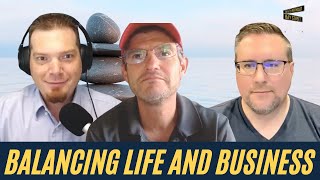
Richard Canfield and Justin Breen discuss building a business without sacrificing family. Breen's book 'Epic Life' argues that entrepreneurs can create collaborative global companies while keeping loved ones as the priority, not an afterthought.
Chapters
When we were going home north of San Francisco, past Alcatraz, it was dusk. We were the only ones on the water. And I took a photo of Alcatraz, which was kind of lit up, but there was no one on there. And that's the type of loneliness feeling entrepreneur World is if you're not surrounded by the right people. I took that picture. I'm like, oh, man, this is entrepreneur life if you're in the wrong situation. Because again, people like us are usually aliens within our own family, community and verticals. Only people that understand us are top entrepreneurs on the planet. Okay, so you don't want, you don't want to be the Alcatraz island photo. That's, that's for sure. Because it's a lonely world. And I spent most of my life in that world because nobody understood what I was talking about. And then, you know, became an entrepreneur.
How to build collaborative global companies while putting your loved ones first. That's what we would call an epic life. In fact, we didn't even need to call it that because there's a book about it. It's a bestseller. And joined with us today is our good friend Justin Breen, who wrote that book. And he's just kicking butt and taking names, all in an epic fashion. And we're going to learn all about some of these incredible chapters that he's used to formulate this book and the design of how this book came about. And it's, of course, his second best selling book. And he is, although not living in Canada, an avid supporter of Canadians. And he's showing that today here on the YouTube channel with his Canada hat. So we appreciate that. Welcome. Thanks for coming back to the show with us today, Justin. It's a pleasure to have you.
Oh, this is gonna be, this is gonna be a legendary, legendary conversation.
And it's so good to see you again. We had a chance to chat a little bit before the beginning of the show, and we've got some great things going on within the Strategic Coach world, the Free Zone Frontier program, and so many amazing collaborations that are born from that. And innovators, people who are really passionate about bringing more value to the world and creating great technology, great businesses, great opportunities, great services, and the list goes on and on and on. And what I love about you, Justin, is that from the day that we met, you have never wavered from your passion for spending time prioritizing family and the significance of that. And that was literally communicated in the very first conversation that, that we had. And so this book, Epic Life and, and what you've wanted to encapsulate in that. What inspired you to write the book?
Well, I appreciate you saying that. And you know, you're in the book because you inspired one of the chapters. I'll just, you know, so this is Jason, thank you for this. So there you go. The more you see who not how, the more you'll see you didn't see that's an idea from you. And then of course, Dan Sullivan, you know, you said that during a strategic coach session. I'm like, oh, that's a good idea. I'll do. You know, that's a Activate Maximize Achieve chapter right there into the book. So most of my day is talking to, you know, top entrepreneurs in the world, like you guys. And so not like business owners or consultants, just top entrepreneurs. And then, you know, maybe once a month I'll get a, a great idea like what you said. And then I'm like, oh, that's good. My top three strength finders are Activator, Maximizer, Achiever. So I'll activate Maximize Achieve that into my life. And then one to two times a week, one to two times a week, I talk to folks like us that have let entrepreneur life destroy their family life or prevented them from having a family. And I'm like, that's a bad idea. I'm going to activate Maximize Achieve. Not doing that. So the books about how to build collaborative global companies with people like you while putting your loved ones first. So not destroying your family or not, you know, not having a family, that's, that's not a good idea.
Entrepreneurs are different. They're viewed by the world as being strange, a little bit quirky, a little. And I think that if you, yeah. If you've ever experienced, you know, dealing with or talking to an entrepreneur whose family life has suffered tremendously, but yet, you know, they, they've, they've got this, this thriving business or, or it is. And you know, we've all heard this and it's the truth. Like myself personally, I know a lot of successful people that are miserable.
Most. The most miserable people I know. The most. Yeah, the very most. And. Cause they have all this stuff, but they don't have anything. And so I'm a hundred percent simple, 100% simplifier. And so entrepreneurs, most of my day, again, talking to entre, not business owners, not consultants, not employees. There's a fundamental difference. So entrepreneurs are the very most damaged people with the best coping skills. So what does that mean? What? I haven't met one person like us that hasn't overcome at least one of the following four things most or two or three, you know, and the very high levels of strategic coach and in abundance 360. You're in genius network. So you'll see a lot of the all forest in there. So. So here are the four things. Bankruptcy or potential bankruptcy. Two, depression. Three, the highest level of anxiety that you can imagine. And four, likely and. Or possible traumatic experiences as a child, young adult. So entrepreneurs, you know, regular humans, business owners, whatever that they use those as excuses. Okay, so top entrepreneur. Okay. You know, figure it out. However, certainly not always, but many times they. They use those coping skills to create the businesses and companies you're talking about. And many times at the expense of having a family or just having anything meaningful in their lives. And that's why they're the most miserable. The most miserable because they have everything's based on material as opposed to meaningful measurements in life. And that's just what I've learned is that doesn't make me any happier. It makes me feel worse. So I just spend time with my family.
So good.
And having a family that you know, really understands, really understands the demands put on an entrepreneur's time and energy and talent, which are three areas that I've been speaking a lot about today. It's for myself, like in my own. My own personal situation with, you know, my wife Rebecca and her children, they've always communicated that it's. It's how. It's. It's the most important to them is how present I am with.
When.
When I'm there with them 100%. And because the business or businesses never leave you, it. It never escapes you entirely.
The.
It's. And it's not a method of coping. It's a method of prioritizing. If, if your brain is prioritizing, always thinking about the business or. Or the companies, you've made that choice. Yes, you have made that choice. And if you. If you're present with your family in those moments of quality time and you're able to prioritize being present with family while you've made that choice and your brain, as Dan. Credit to Dan Sullivan for teaching us this. The human brain is incapable of achieving or doing anything extraordinary. So you gotta be really careful what you feed your brain because eventually your brain's gonna buy what you're feeding it.
Yes.
And so having that quality time, I'll never forget my wife Rebecca telling me when we were expecting our firstborn. We have four children now. And she said, I need you to know Because I know this is going to bother you. You're going to want to be around and be involved and be engaged in everything that parenting requires. What I need you to do is stay focused and understand that I'll support you 3,000%. But when you're with the family, you've got to be present. That's what I need from you. And it's. It's not about quantity. In that moment of our lives, it wasn't about, I need you to be present 35 hours a week or whatever the timeframe was. She just said, whenever you are, I need you to be present. And I made that commitment to her. And I said, got my word. And it. Am I fallible? Have I made mistakes? Have I tripped up? Have I course, like, of course I have. But it just. That's what. Those are the times that I found that made our family even stronger because we were able to work through it, and I was able to be vulnerable enough to say, I'm not really present right now. I've got something on my mind, and I shouldn't. I should be prioritizing my time with my family, and that's on me. I'm accountable for that. Well, the moment you realize it, you can change it. And all progress begins with telling the truth.
The other thing is that not only can you change it, you can get, by having an accountability mechanism, by having the discussion, you can get help with changing it. It's. It's. It's. Everyone's looking for this. They all want the same thing. And so you have that. The discussion that leads to potentially something even much, much better. And, you know, Justin, you talked about these four things, those four items that you identified that is, you know, that's kind of one of your superpowers, is seeing and meeting and talking to enough people that you're able to, you know, recognize and develop, okay, certain trends, because you're looking, okay, how can I get. How can I beeline and I guess to some degree shortcut the success path that I'm building in my own life so I can have more epic life and really, my personal takeaway from reading the book, and you can correct me if I'm wrong, but ultimately, you've got 30 chapters in here, and these are 30 chapters on how to shortcut your life in such a way that you can cut through a lot of the crap that's out there and you can get straight down to the core of what, what. Creating an epic life or how you can go about creating an epic life for you now. Someone might read that and they might be happy with any one of those chapters, but they might zone in on one. It's like, you know what? This is the area that I. This is what I really needed right now. This is the one that's going to help me level up to the next area of my life to become that much more epic.
Well, thank you. Thank you for saying all that. My wife, who's a pediatrician, taught me how to say thank you, so thank you. I'm giving her credit for that. But the. So there's a couple. There's a lot from what you both said, Jason, I really appreciate all that background. I have found, again, I'm a hundred percent simplifier into patterns. I have found that people. Visionary wackadoos like us, usually. Not always. Usually, but not always. Mary. Stabilizing humans. Usually.
Yeah.
And it does happen. Strategic coach is an exception. It's an example of an exception where a very high quick start married a very high quick start. And one of two things happens when that happens. From what I've seen, one, something like Strategic coaches created great, amazing. Thank God for that. Every day. Thank God for that. More often than not, complete dumpster fire. Because there's no stability. No stability. Multiple divorces, complete disaster. And so if you think of the opposite personality as me, it would be my wife, who's a pediatrician. So she's warmth, empathy, rules, lists, calendar items, what. I don't even know what any of that stuff is. And. And I'm endlessly grateful for that. Meaning the first thing I do every single day, every day is a grateful journal to her. What I'm grateful for, for her, the previous 24 hours. Because without her bad situation and that grounding effect, which your wife did before first child. My wife does that for me every day, which I'm endlessly grateful for. Just an example. I'm only mentioning this because it's funny. So my book just hit Wall Street Journal and USA Today bestseller and was number one on Amazon Kindle overall. Okay, that's great, right? And Peter diamond writes forward. That's great. So while that was all happening, my wife comes up and she's like, you got to go outside. Go outside. Go outside. There's a major problem. I go, what is going on? She's like, the dog. One of our dogs. We have two dogs. He. She's eating a. She's eating a dead squirrel. Get out. I'm like, okay, good, Great. So that, for her, that's a big deal. Like, really, really was panicking. So I got out there and got the, you know, got the dog away from the dead squirrel. But like I'm so grateful for that. And then our, then our kids are. They're both nine quick starts 2296 and a 3297 they're nine and eight year old both full maniac entrepreneurs. And so I'm just so grateful for my wife. For my wife. And then, you know, Richard, I, I think, you know, one of the chapters in the book is the process is the shortcut. So literally all the book is just shortcut, shortcut, shortcut, shortcut, shortcut, shortcut, shortcut, short. And it's 119 pages. Really, really, you know, to shortcut the shortcut of shortcuts. If you read chapter one and two, chapters one and two, then you'll really need to know all you need to know. I mean certainly about me. And then top entrepreneurs on planet for sure.
That is so awesome. And the auto. The audio version is out. So I saw your post on that today.
So people, you want to hear something funny?
Yeah.
Literally just did a podcast with the person who did the audio for the book.
I know.
That's the post that I saw.
Yeah. Isn't that crazy?
Yeah, that's awesome. And so for people who, you know, love to learn and to consume content through audiobooks, you've got an opportunity now for epic life. And you need to get your hands on this book, whether it's the hard copy or the audio version. Get your hands on it as promptly as you're able. Because the one thing too Justin, that, and I know that it's not the premise or the, or the topic of the book, it's just the value in connection. Right when if you're recognizing where someone can be. Can be better or where someone may be able to pair up with someone and they can both be better like you, you've got that amazing ability to. And you don't waste any time with it either. The moment that you spot a good connection, like you are initiating that immediately like without hesitation. And that is value in and of itself because not many people are as good at it as the likes of you. As the likes of Joe Polish people who, where. Where that's really part of their unique ability.
Joe amazes me. Thanks 1. Thanks for saying that too. Joe amazes me because he, he does it in a. A feeling capacity meaning his print is his unconscious motivators. He's a 4:2 so he's a. That's a feeler. Feeler. And then you and I are you're 8:3, right? You're an 8:3. Richard, have you ever done your print?
Yeah, I'm. I think I'm 8:2.
Okay, so that's interesting. You're a doer, thinker. And then Jason and I are. Execute, execute, execute. Don't over feel it, overthink it. We just execute. Most of the folks in Free zone are eight threes, by the way. Geez. That's according to Shannon Waller, who's, who's an in strategic coach. So which makes sense. Like you just don't over feel it or overthink it. You just execute and. Right, so that makes sense. The, the thing with audible, I was just talking to a very high level entrepreneur who does assessments, a lot of assessments. And we were talking about. I had posted this pattern that I had seen with top entrepreneurs. Four things I had seen from them besides the overcoming the four things. But the four things were adhd, which is not a disorder. It's a sign of genius. It's just mislabeled by, you know, humans or whatever that is. Minor Asperger's, which my wife is a pediatrician is unofficially, officially Diagn helps me with that. Which I would, I would probably agree with that. Three is dyslexia. Dyslexia. And then four is a tremendously high iq. So not necessarily great in school, but like off the charts intelligence. And so I was talking to her about the dyslexia aspect and she's like. And she has the data. 30% of true visionary high level entrepreneurs. She said 30% have dyslexia, which I was very. I mean, I thought it would be a big number, but not 30%. That is a really high number.
It is.
I mean that's a, that's a. And then, and then the other one, which was interesting. So that's why audible's so great. You know, they literally can't read. So and then the other thing she said. Entrepreneurs five times more likely to suffer from depression than an average human. 5. Yep. That didn't surprise me. Not at all. Yeah.
And when you find yourself going there, if you don't have a network, if you don't have a network, then boy, you're in trouble. And I share one of the things that I'm continually working on and have been working on much closer these past two years, thank goodness, is downtime is very dangerous for me.
Me. Oh man, me too, man.
Incredibly dangerous.
Right. And yet you took a sabbatical.
Yeah, but when I took the sabbatical, it wasn't to have downtime it was to replace my batteries and focus my, my time, talent and energy in other areas of my life.
Interesting.
And, and so it, if you think of, and what I mean by that when I say downtime is very dangerous for me. Like if, if I have absolutely nothing to do, which would be near impossible, but if I'm intentional about saying, listen, I've got nothing to do, and that goes on for a day, two days, three days, et cetera, then it's going to be binge watching Netflix. It's going to be, hey, like those potato chips are right within arm's length. It's going to be, let's crack open the suds and you know, have way too many drinks. And like it's, that's not good. That's dangerous for me.
Yep.
And whereas, you know, keeping myself occupied and doing things that fascinate me and bring me energy.
Yes.
Keep, keep me feeling fulfilled. And because that going back to the downtime being dangerous, tho, those things are all mile markers as you're headed toward depression, right?
Yep.
And, and that's not where I want to be. I, nobody wants to be there. But it's, you know, you could just, you could see it and you're like, oh boy, okay, geez, I gotta, I gotta get myself occupied here because, yep, I've just crossed over another mile marker on my way toward feeling depressed. And who wants to feel that way?
No, no, but you mentioned, mentioned the network, Jay, and that's where it's really important. And, and you know, we were talking about Strategic Coach. We mentioned Strategic pretty frequently on the podcast. And yeah, of course that's a, that's a huge connection about this. That's how our relationship began was through Strategic Coach. But the, the reality of that environment is it's, you're creating an, you're, you're putting yourself in an environment of success because you're, you're designing your life around spending one day every quarter of the year at minimum, where you're surrounded by top level people who are thinking about abundance, thinking about growth, thinking about how they can be better, make things better, help more people, make the world a better place, improve lives and on and on and on, employ more people, create more jobs. And there's just like this laundry list of things that everyone in that room is trying to do. They're all there to be better, make better, become better, raise up, lift the world around them. And so when you, you, you focus your energy and your effort being in an environment like that, it's hard to have those you know, you talk about, you know, five times more likely to be depressed or whatever. Those types of things that could take a person down that road is. Is a lot to do with the people that's around them. So surround yourself with the right kind of people. And if you. You don't have that in your life now, you got to change how you put yourself in a position to be surrounded by the right kind of people. For sure, that's totally within your control. And another thing that helps you do that, by the way, isn't just being in the physical environment. It's also listening to good podcasts, reading good books. These are all things that help bring you that space. You're going to get inspired by an idea, a place, a person, a course, a coach. It is that's going to help take you one step down a positive track of life.
There's a couple things. Excellent, excellent content there from both of you. My wife and I, her name's Sarah, we visited Mark Fujawara, partner for second company, and his wife Amy. They live in San Francisco. So we just. That was the second time Mark and I have ever met in person more than a year. And so we were staying just north of San Francisco, and so we took a ferry into San Francisco because you don't want to drive that. Driving there is not fun fun. So the ferry takes you right past Alcatraz. And when we were going home north of San Francisco past Alcatraz, it was. It was dusk. We were the only ones on the water. And I took a photo of Alcatraz, which was kind of lit up, but there was no one on there. And that's the type of loneliness feeling entrepreneur world is if you're not surrounded by the right people. I was. Yeah. And I was, I was. I took that picture. I'm like, oh, man, this is entrepreneur life if you're in the wrong, in the wrong situation. Because again, people like us are usually aliens within our own family, community, and verticals. Only people that understand us are top entrepreneurs on the planet. Okay, so very true. You don't want. You don't want to be the Alcatraz island photo. That's, that's for sure. Because it's a lonely world. And I spent most of my life in that world because nobody understood what I was talking about. And then, you know, became an entrepreneur. And even the first couple of years was talking to business owners. They didn't understand what I was talking about. And then finally joined right rooms. And then like, oh, I can actually have a real conversation, like this, like most of my days having conversations like this, whether it's recorded or not. This one's recorded. But okay, so then there's that. And then again, simplify into patterns, right? So it's the same formula. So I just keep making bigger investments into smaller rooms, but the people in those rooms are making bigger impacts. So bigger investments, right? Bigger checks to be in smaller rooms. Things like free zone, abundance, 360summit, people in those rooms are making bigger impact. True entrepreneurs like you guys. That allows me to spend biggest investment in smallest room, which is my family, where I can make the most impact. Same formula, but again, you just want to be a litmus test for yourself, for the people you serve. So love that. Yeah, yeah.
And it's so true within the family, you know, you have, you have family that, you know, especially if you haven't seen them for a while. You know, I had some family come visit from California and, and you know, my, my cousin being one of them. And, and she, she said, what exactly is it that you do again? Like what, like what is, what is being a business owner again, like what, like, what on earth is that? And, you know, and it's like, you just think to yourself, you know, because I haven't seen her in years and, you know, we grew up.
What's your answer to that? What did you say?
I just said, you know, I, I, I can appreciate that you probably think, like, I'm a little strange now because we haven't seen each other for a long time, and I really just have complete and total control over my time and what I do and who I spend it with.
And answer.
We, we have, you know, we have a number of different companies in our, in our group of, of businesses. And so we do, we do a variety of things, but it kind of led into a conversation of, oh, that's interesting. Yeah, that's interesting. And, but no, nothing else.
Nothing.
Yeah. And, and my family's wonderful. I love my family.
It's just a different thinking, but it's.
Yeah, it's a completely different way. Completely different way of thinking. And then when I get around folks in the coach community, the genius network community, I just go, oh, okay, I'm among my people now. I'm among my peeps, you know?
Yeah, you're not on your Alcatraz island.
Exactly.
Well, the thing is that again, I'm only saying this because so people understand. So, like, people like you and all these, the, the community, entrepreneurial communities, they're like, ah, this book, it's awesome. So thankful I'M so glad you wrote it because like, this is a message. I really think people like us actually want. I think they do want to put their loved ones first. They just don't know how to do it. Many of them, I think they really do want that. They're just so damaged, they can't, you know, so. But I'm hoping, you know, that that's what strongly. And then in, within my neighborhood, great community. It's a great community. Good, hard working people, really nice people. One person said congratulations on the book. One of the top selling books in the United States. One person. And it's just a different, it's just a, you know, it just, they just don't understand. And it's okay. It's okay. And then now here's the other interesting thing is that, you know, the greatest part of this life by far is that our kids get to see this world exists. Most people don't even know this world exists. And then our kids know. My sons are nine and eight, both nine, quick starts, full competing maniacs in a good way. And so I'm just very grateful for that, that they can see this exists. It does get them into trouble sometimes because they want to win. They want to, you know, they want to collaborate. They kind of get bored with school. So I'm like, oh, you know, school's fine, do that. But then here's how the real world and when. I mean real world, how our world works and take the positives from both of those while understanding. Sometimes you're going to get into trouble in the, in the first world because of how we are. But that's a blessing. Getting into trouble now a little bit. As opposed to like waiting your whole life, like, what's wrong with me? What is wrong with me? Why don't I fit in? So knowing that there is that other world out there.
Absolutely. And you know, going to, going back to spending quality time with family, it's, it's, it's knowing how. Right. Because this is, this is one area where who, not how. It doesn't apply in the sense that if I have responsibilities as.
No, you're the who. No, no, you exactly. It's you.
And so if, if I'm unsure about the how.
That's a good point. Because they don't know how to. When I say they, it's. They don't know how to be that person. Right.
And so I, I share. Expressed completely open and vulnerable with my children. When, you know, as, as soon as my kids were conceptual enough to really understand.
Yeah.
Like I'll never forget having conversations that kind of broke the ice with my kids to say, I don't know how to be a good dad.
Same thing. I literally said, like, I'm, like, I don't know what I'm doing.
I don't know how. And, and it's, it's, it's not that because my, My own father, who's, you know, he passed away in my early 20s. He, he didn't know how either. And he was always away from the home. And, and a workahol. I suffer from workaholism. It's just a publicly accepted form of addiction. And, you know, I'm, I, I, I'm working on it and getting coached on it, but I sat down with my kids and I said, I just don't know how to be a good father. And, you know, Rebecca shares with me all the time, like, you're a great dad. Like, you're doing a great job. But I have nothing to compare it to in the sense of, oh, yeah, this is how my dad would have handled this situation. I look to other people who I believe are really great fathers based on what my preconceived notion is of what I would have wanted from my dad. And so I try to bring that to my kids, and, like, I screw it up.
Like, sometimes people like us, very stabilizing humans usually, thank God, the. Okay, so this is worth, like, the same person. So my father was 61 when I was born. An amazing dad. Like, the great. Like most. I mean, I think a lot of sons have great relationships with their dad. Mine, it was, Mine was. It was different because he was shot down multiple times in combat. World War II hero, got back in the plane. Right? And, you know, that's the first chapter of the book, the Cream Rises to the Top. But, like, but, you know, his, his best friend, which I also talk about, his best friend was killed in a famous mob hit. I mean, so that was when I was five. So that's one of my first memories saying, hey, our. Our friend's been shot. We need to hide you. Because my dad thought he was going to be, you know, might have been next on the list. And so my dad, he had survived so much in his life. I got him with all that wisdom, and I essentially retired. And so he was around all the time. It was the opposite of. He was not, you know, he was the opposite. He was home all the time. He basically raised us well. My mom was ultimate hustler in a good way. She was out. My mom was 27. When I was born, my dad was 61. 34. 34 years. And so that said my dad had no idea what he was doing. One, because he was 61 when I was born. You know, he was like a child in a, In a good way, like a little kid. And that's how I, Like, I have no. I tell. This is what I tell my kids. I go misdemeanor, okay? Felony bad. My wife's like, you can't do that. But, like, so. But, you know, you do. You do the best you can. And my sons and I have the greatest time. I just took them around the Midwest of the United States. Five days, five games, five baseball games, and five days around the Midwest. It was just us. We were watching family guys stand up, which is completely inappropriate for children. You know, stayed out 11:30 midnight every single night, ate horrible food for you with, I think you. With the chips. That was us with the chips. Oh, God. But it was the greatest time. And that's how I was raised. I mean. And so then my wife's like, you know, get them to school, make sure they do their homework. They're. Make sure they. You put their soccer bags in the car. Because otherwise, I mean, people ask, like, I wonder if they ask you this, actually. I bet you they, I bet they do. Like, what really concerns you? What really worries you about your company? And maybe it is different for you, but I go, nothing concerns me with my company. And they're like, well, what actually scares you? I go, anything happening to my wife? If anything happened to me?
Oh, yeah, yeah.
Oh, that's what, that's the only thing that truly scares me.
Yeah.
I think I could probably, I could probably last 40, 42. No, 40 seconds without.
I was going to say 42 minutes, but you. I just imagine that.
Oh, my goodness. And so, yeah, it's very similar. Like, I, I, I've always said with my daughter, I have three daughters, and boy. And so with my daughters, I've always told them, like, I'm never going to refer to you as my princesses, all that. You're my warriors, right? Like, I am going to teach you how to be strong, independent women don't take shit from anybody, right? And that's how they're kind of growing up in their time with me. And, you know, hey, some boy pushed me down in the school playground today. And my wife would be, oh, okay, well, let's sit down. Let's have a conversation.
Oh, what happened?
And I'm like, did you scissor kick him in the back? Of the head.
Like, take a hockey skate and skate and stab him. Yeah.
Don't take any shit from anybody. And I'm not, you know, I. I'm not encouraging violence. That's not what I'm saying. I'm saying you, You. You've got to stand up for yourself. And. And if you get pushed down, you had better get yourself back up, because nobody's going to lift you up. Unless, like, have you ever tried to rescue someone who doesn't want to participate in the process?
No. Right.
So you've gotta. You've gotta. Look, there's. You're gonna be exposed to many different things in your life where you. You're gonna have to build resilience and strength. And so that's how I've kind of always approached things with my daughters and with my son. It's very difficult because he's so close to his mom, understandably so. And the conversations that him and I have are very, very different than the conversations I have with my daughters.
He's like 6 foot 7.
He is. Yeah. Like, he.
He's a giant.
He'd be protecting me on the school playground. And he's 14. Like, it's just a much.
David Enforce is a Dion Fanou. Just give him some skates, he'll be 7ft. Or Zadeno Charlie.
Oh, God. He's been playing hockey since he was a fetus. Like, he. He throws his. His body around now and he gets ejected from hockey games, and so. And he gets ID'd at the rink. Like, people like, hey, who you don't play for team, like, you should be in a men's league. And. But for myself, I try to approach things a little bit different with him, like, through his hockey. You know, I've never given him feedback on his. On his game. And I've always told him since inception, if you ever want feedback, ask for it, otherwise, I'm not going to volunteer it. And the only thing I would ever ask you to do, because he just asked for advice, like, what advice would you give me? And I said, well, the only thing I'm ever going to say to you is that whenever you go to the rink, just try to focus on working on getting better at one thing. Just pick one thing. That's the only advice I can give you. And if you want feedback on your game, ask for it. Otherwise I'm never gonna provide it. And so I want him to realize that he's going to be, you know, learning how to be a teammate and being coachable and working through things without Having to worry about what his dad thinks. It's not about what I think. What I think about how you're playing doesn't mean.
Nope.
It's just an insight. It's just an observation. How do you feel about your game? And if your coach is telling you something that you need to go work on, how soon do you want to get after it?
Yeah, actually.
You want to go in the gym and work out together, It'd be more than happy to do that with you.
Right.
But I don't want you to be worried about what I think. I just want to support you. I just want to. I just want to be your dad. I just want to be your dad, man. I just want to. I want to hug you and support you. Like, that's all I want to do, because I don't know how to be a good dad.
Well, and Justin, you know, Justin's asking if you've ever done Colby, and it's something that you just did again for your kids recently to double up and, and for, for the folks, listeners. We've talked about Colby on the show before. It's a, it's a, it's the Colby Index that helps you understand your natural way of doing things. So there is a way to learn about that for your kids at an earlier age. That's something I, I'm looking forward to doing for my kids. I think they're at an age where I can, I can actually now. Yeah. My son will be 7 in, in December, so I'm gonna do it. And, you know, and, and, you know, I've got. Our kids are in karate, which they just really started that up again. So I'm super pumped because my daughter's like, they're learning, like, take down moves. Like, they took my wife down the other day in the like, and like, she couldn't get up. It was fantastic to watch. So, so, so they're, they're, they're learning some really good stuff that way. And it's gonna, those are gonna be skills. They're also learning a little bit about some discipline to how to work with other people in a constructive environment where you're, you're learning how to potentially hurt someone but, or defend yourself, but you're doing it in a way where you're not actively, you know, beating the crap out of somebody. But they're actually signed up for their first, like, tournament, even though they, they barely just started going back to this karate type school. And so they're going to start to learn about what is a competition. Like, that like, and they haven't really experienced those things at their age degree yet. So, you know, it's going to be exciting to learn what kind of things come out of that and the experience and, and it's not about necessarily, you know, yeah, you want to strive to win in your competition, but even if you don't win, you still win because what did you learn? And so that's the stuff that we're working on a lot right now is what did you, what do you were, what are you learning in that environment? When, when you go to that competition? What did you learn? What did the other guy do? What did you do? What, what, what made you do differently? What could you do better? What's another, you know, what would help you next? The next competition? More training, like these kind of questions that I'm excited to be able to, to ask. And you know, it's, it's, it's fun to be a part of. You know, now that my kids are at an age where they're getting more involved in sport and like dance and that sort of thing, my daughter's in like four different kinds of dance to see what, what they're learning on a regular basis because now they're getting exposed to other people teaching them other than just what they're getting from the house. And of course, the last two years, because of the, the old, you know, glorious, the, the COVID their activity, that, that put a damper on a lot of people, on their ability to have their kids engage with other types of activities outside of the home. Yeah, it, you know, but in the same respect, it also created a huge opportunity for families to get much closer together than maybe they've ever had, you know, up to that point in time. So with everything that, you know, with every, you know, negative, there's a positive. We just got to figure out where it is and choose to activate towards it.
So much, so much good stuff, actionable tips. Because Talk to me is meaningless without, you know, doing something about it. So my sons are nine and eight. They've done Colby Dynamind D Y N A M Y N D is Colby for kids. And then they've also done so Strength Explorers, which is strength finders for kids. And then Jake, my nine year old, is competing one, achieving two, confidence three. And Chase, the eight year old is achieving one, competing two, relating. So there's full, full competition, winning. And then they're got, I mean, Jake is run. He's won or run. He just did 2112, 5K, which is, that's world Class time for. That's world class time for a 10 year old. He's nine and he finished fourth out of fourth overall out of 196 runners.
Oh my God. If you can run. If you can run 5k under 25 minutes, you're in good shape.
We. So this is the best again, best part of entrepreneur life is spending time with family. I mean, before COVID I spent more time with my children than any dad I've ever met. Now I just spend more time with them because. Because I'm a dad who happens to be an entrepreneur, not an entrepreneur who happens to be a dad. There's a fundamental difference. So we just did the 5K as a family. That's. That's what, that's our family activities besides travel, soccer travel, baseball travel or not travel. Flag football, park district flag football. That's a lot of fun too. But so Jake, Chase and I all won our age groups in the 5K. I did 2239.
That's. That's awesome.
Well, for 45, that's not bad.
That is awesome.
Jake was 2112. His PR is 2110, which is, that's insane. I mean that's not normal human. And then little guy chase, he did 2537, which was his PR. I was, I was really proud of him because he has very tiny little legs and he is powering. He's a really good soccer player. But to run that type of distance in 25, 30, 30, 37, 39 for an eight year old, that was really good. He just turned eight. Yeah. So really proud of him. And so there's a photo of us all holding our first place medals. I'm like, oh man, this.
I saw that.
Yeah.
That's so cool.
Yeah. So it's. And then, you know, when they don't win because they don't win everything, it's always like, what did you. What. How can you be better? And then just as importantly, if it's not an individual sport, how can you help the team get better? I think. And that's what you two are. So you guys are much better at that than I am. You're much better.
Yeah, I'm, I am. The, the latter part of what you just said is where, where it, where it all begins. Like the, the contributions that you make that make your teammates better.
Talk.
Talk about fulfillment. My God. And that. That would be. And I, I've expressed this, you know, I've, I've shared this with, with my teammates. Like if, if the worst team in the NHL, the worst team.
Let's say they're the Blackhawks. Let's just say that.
Let's just use the Chicago Blackhawks, which is accurate. And. And they said, you know what? We want to try something that has never been done before, and we want to create a big stir in the hockey world. And we're going to call this guy, Jason Lowe, who hasn't spent four seconds in the NHL, and we're going to give him a contract, and he's only asked to be paid a dollar, and he's going to help turn this, this, this team around, and he's got three years to do it. That would be the only opportunity that would ever pull me away from what I do day in and day out. I wouldn't even hesitate to do it for nothing. And that would be the only dream opportunity that would pull me away from what I'm doing now.
You know, and I.
Pro. And I can promise you. And I can absolutely promise you, I can stamp a guarantee on it if you want me to.
Yes.
That the Blackhawks are going to be a much, much better, much better team than what I found when I get there.
I believe it. I've seen them play the last couple of years. And the.
Because here's the deal. You know who Daymond John is?
Oh, yeah, of course.
Okay. So Daymond John said, show me someone who's achieved a high degree of success in one business, one, and I'll show you someone who's lucky. Show me someone who's achieved a high degree of success in two businesses, and I'll show you someone who's pretty good. Show me someone who's achieved a high degree of success in three or more companies, and I'll show you someone who's a winner and who's got a proven process.
You have the process.
And when you're dealing with people, whether they're skating on a sheet of ice, whether they're dunking a basketball or whether they're building a business or whether they're skipping the rope or swimming the laps, whatever. Whatever that may be. If, if you really, truly love your players and you've got a process of developing people, the game, the game of hockey is not really that difficult in, in. In the sense of you can talk about systems and team, different techniques of how you, you know, play each position and all of that.
But I.
You can put the most skilled players on the ice together. If they don't know how to become a team, they're not going to do anything. Remarkable.
I think of what you said with. Is you know John Cooper, who's arguably the best coach in the NHL right now?
I love that guy.
Now, he'd never play. I mean, he played hockey, but, you know, he played club hockey in college. Yeah.
And he spent a little bit time. A little bit of time down in. In the minors and then gets this opportunity. And everybody was like, who is this guy? And look at what he's been able to achieve.
There's. There's.
He coaches the Tampa Bay Lightning.
Yeah.
Oh, right. Yeah, yeah. Oh, wait, wait, wait. Richard, you don't know that. John Cooper. Come on, You're. You're Canadian.
If it. If it's not an Oilers game, I'm probably not.
Wait, whoa, whoa, wait. Come on. Hold on. Are you serious? You're.
He's.
You're Canadian and he's Western Canada. He's from Western Canada.
And so if there's any. But any GMS out there, there's Canadians.
From Western Canada with every. With every hockey club, so.
Oh, okay. All right. I'm. My eight fact finder is going crazy. He's from. He's from Prince George. BC's up, like, the biggest city in Northern British. Okay. So anyway, man, I'm going to be. I'm like, I'm in shock right now.
Okay.
I'm really. I'm going to focus. I'm going to focus now. So John Cooper, when they lost to the Blackhawks in the 2015. This is why I think he's such a great coach, okay. Because my brain remembers things like this. And then, you know, here's the answer. He. They lost to the Blackhawks in the Stanley cup finals in 2015, and they interviewed him. You know, they always interviewed the losing coach in that weird, like, uncomfortable interview. And he opened the interview. I'm not looking this up. I just remember he goes, I never pictured myself doing this interview. I never pictured myself like. I never even thought of it. And his mindset is off the charts. Off the charts. So that's 1, 2. He solved the problem, meaning he knew the process. He. Every level he was at, win, win, win, win, win. So each one of the clubs that he was at, you can call that a business. He won in the minor league business, he won in the junior hockey business, he won in the higher level minor league. You know, just win, win, win, win, win, win. So you won with one business, same process, win. The second business, one with third process, win. So there's no reason to believe you. And again, there's multiple times where coaches. Tom Thibodeau, he's, you Know, he's one of the best coaches, not the best in the NBA. He didn't play in the NBA. I mean, so it's like Brad Stevens, you know, with. Was with the Boston Celtics. He was an okay basketball player. He just. Okay, win, win at Butler, win as a coach in Boston, win as an executive in. But. So it's the same thing. It's the same thing.
Absolutely. And boy, to be able to bring someone on and pay them nothing, even if you just had to sign a contract for a dollar. I know me in coach.
There's like, there's a guy in. In eastern Canada. He does a lot of the training. He's an eo. Goody good EO connection. He does like a lot of the training for the top NHL players. I can introduce you to him if you. If you want.
So maybe knows who knows where that can lead to.
You want me to introduce you?
Yeah, of course.
Okay. Yeah.
And I think it's funny that you're asking if Jason wants an introduction because typically the way that, you know, my LinkedIn inbox fills up is because I get a. I get a joint private message from Justin saying, hey, Richard, you got to meet Richard. Jason, you got to meet so and so. In fact, earlier today, we were recording a podcast episode with Genity, who has the Lily Pad AI tech.
Oh, yeah, yeah.
We had a fun chat with him, and that's a connection that we received from you. And I think next week we're actually doing a recording with another person that you introduced to us. So, you know, we, we, We're. We're helping. We're getting opportunities to discuss crazy and amazing entrepreneurial ideas and fundamentals. And at the end of the day, all of this conversation, and I think ultimately all of your. Your book comes down to getting a laser beam set on your mindset and, and understanding some, you know, some key things that you can be running through, and you can reflect back on that. If your mindset starts to shift or it goes off track, boom. You could read this title of this chapter in Epic Life, and you're going to get yourself back on the track. You know, you're going to take this tip trick idea that Justin learned from one of his business partners or some entrepreneur that he met, and you're going to be able to apply that into your own life immediately. And all you got to do is just basically read the heading of the chapter. You've already read the chapter and read the book. The heading alone will bring you right back. The chapter title will bring you right back. To that content and it'll put you right back on track.
Yeah. And the book, the book is entitled go build an epic life all on your own. It's all about.
I just introduced you, by the way, Jeremy Choi is he trains like Soupan or you know, PK Soup on.
Love it.
Richard, you know, please tell me you know PK Subhan is. Please.
I. I do not.
I do know. If you were all for. If we were all for. I'm never going to wear this hat again. I can go get my Patrick Watt Canadiens 93 All Star Game jersey. I can go get that. Am I more Canadian than you, Rich? Oh, by the way, here's an interesting thing. So there's a fundamental difference between the US And Canada. So US is life, liberty and the pursuit of happiness. And Canada is peace, order and good government. So that's the slogans. So. But you two are actually both American. Life, liberty and the pursuit of happiness, even though you're Canadian and then most Americans are actually Canadian. Peace, order and good government.
Isn't that.
That is a fascinating observation.
Yeah. We're Americans. There's a lot of Americans all over the world and then most people are Canadian. Peace, order and good government.
Justin, it is always, always, always, always a pleasure to have you on the show. And to know you is an honor. And you know, we just, we're so grateful for you. And our listeners and viewers are undoubtedly going to gobble up this episode as one of one of our fan favorites. And we'll include links, of course, in the show notes to access a hard copy and audio copy of Epic life for all of our viewers and listeners. Get your hands on that as soon as you can. You'll be glad you did, we promise you. And if you're on the YouTubes, you'll see the playlist that's just shown up and we would encourage you click through to the next video. Continue your journey of learning, continue your journey of taking in all these amazing guests like Justin that we bring onto the show. Justin, you're awesome. Thanks for being you.
Yeah, next time. 1. This was amazing too. Next time. Well, we'll get some Timbits and then I'll get a double double and then you and I can have like a. We can all have a donut Timbits easy contest and we'll see where our, you know, compulsive dopamine nation addiction things where it goes when you're about 15 Timbits and three double doubles into an interview. That'll be tremendous.
It'll be interesting to see all of our faces, our cheeks looking like chipmunks as we shove how many Timbits we can shove in.
Oh, come on. Are you impressed that I know Timbits and a double? When I go into a Tim Horton, the closest Tim Hortons to me is in Toledo, Ohio. That's four hours from here. But I do go there sometimes, and I will order a double duffel.
Wow.
Yeah, I'll do. Really?
You'll go all that distance for.
Well, yeah, because our we have in laws in Cleveland, so it's. But no, no, I won't try. That'd be funny if I did that. But I really appreciate the time. This is a tremendous interview.
Thanks, Justin.
Thanks, Justin.
Stay awesome.
Thanks.
More from Richard





How Do You Use a Policy Loan to Buy Dividend Stocks? #dividendstocks #infinitebanking #shorts


Can Compounding Dividends Pay Your Bills? #wealthbuilding #investment #financeeducation


Should a Corporate Policy Offset Your Personal Coverage? #shorts #insurancetips

What Is Human Life Value? #shorts #insurancetips #dividend #wholelifeinsurance