How To Outrank On Google With Damon Burton
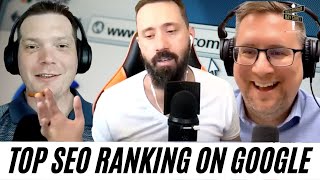
Damon Burton, founder of SEO National, explains why SEO still beats paid ads and how he scaled his agency to 30+ employees without paid advertising. He uses LinkedIn posts that reach 3-10k views to build trust, then converts readers into clients on Facebook. SEO takes 4-6 weeks to plan and months to pay off, but the traffic lasts.
Questions this video answers
2007
Utah
3,000–10,000 views (average post reach reported)
Between 6:30 and 7:30 a.m. (his local time)
Four to six weeks to complete research before execution
Chapters
So I found I get a noticeably larger reach if I post between 6:30 and 7:30am I have data to prove it, but I don't have data to prove why. And so my assumption, I mean, for example, if I post at 7 something, you know, 7, 10 or whatever, I'll get that 3 to 10,000 views within 24 hours. If I post at 6 or 8, it's going to be about a third of that. And my only guess is what? And I'm not saying that's a magic time for everybody. I think it's a magic time for me, A, based on my location, which is Utah, and B, based on my industry. And so the followers are doing whatever they're doing. And so my guess on what they're doing and why timing matters is that 7 o' clock is late enough that the people on the east coast have already grabbed their coffee and now they're sitting at their desk and they're ready to waste 20 minutes. And then on the west coast, the people got out of the shower, they're eating breakfast, they're sitting on the toilet. That's their 20 minute window right there. And if it's earlier than that, then I eliminate the west coast people. Then if it's later than that, I eliminate the east coast people because they're already in the grind of the day.
Beating a billion dollar company by outranking their website on Google. And we know that in today's world that we live in, especially since the onset of COVID that working remotely is a reality, an ever increasing reality. And that showing up where people are paying attention on social media, being accessible on Google, being served up as an option on Google is obviously important and will continue to be even more important in the days, months and years and decades ahead. And so we are super pleased to be joined by Damon Burton, who you're going to thoroughly enjoy today's show because we're going to talk about Damon's book titled Outrank. We're going to talk about how to manage remote work teams. Interesting to note that Damon runs a global team and he's never met any of them kneecap to kneecap. And so would love to hear his insights on that and how he approaches that aspect of his business and discussing several more things including what gave birth to the company that he founded, SEO national in 2007. So he's been doing this for a while and he's pretty good at it. So, Damon, welcome to Wealth Without Bay Street.
Welcome to our show, my beard and I thank you, Jason.
Well, let's begin with what. What inspired you to write the book Outrank?
Well, in digital marketing especially, the people in digital marketing will know that there's a lot of smoke and mirrors. And I built this agency without spending any money on paid ads or anything like that. And so that's largely been through transparency. I think that really resonates with people these days. I mean, it's always had its place, but more so than ever, people are wanting to make sure that they're dollar goes to the right person that's going to protect that investment for them and drive them a return. And so kind of, kind of that same thought process of transparency is where I really wanted to start writing the book because, excuse me, you know, a. I wanted to help on the larger side of businesses. I wanted to help businesses go, okay, we know SEO is the right thing, but where do we start? Who do we hire? So there's a bunch of chapters on like corporate questions that qualify a good or bad SEO company questions that ask them what to look out for. But then likewise on the other side, when I first started, it was largely helping the small guys. So I still have the soft spot for the small guys. And so then in the same respect, it was like, okay, well how can I write this book to give the little guys a fighting chance against the big guys that are paying me to do it on the other side? Right. So really it was just an opportunity to kind of, I don't want to say like give back as a. But it's kind of true in the sense where I wanted to give everybody a level playing field to approach SEO.
That's awesome. And when you so with the clients that you work with now, what have you seen in terms of evolution of this whole SEO thing and presence on Google being a platform where people, of course they're going there, they're making, making decisions, they're making buying decisions based on, you know, Google reviews and how you, how you show up there. And so what have you seen evolve since 2007? I mean, it's been such a rapid, especially in these past couple years, such rapid growth in that space. What insights can you share with our viewers and listeners?
Must be hard to keep up on. Cap up with the changes, I would imagine.
Well, that's the surprising part is that it's such a unique. The answer is going to be like all of the above. It's going to be everything's changed and nothing has changed. And so let me kind of COVID cover that ground. So as far as, you know, from a technical Technical perspective, the algorithms, sure, the algorithms change. But one thing that I, that I talk about, like in the book or that I frequently publish about is, is you, you. If you just make Google look good and do things the right way, sure, it takes time, which is the only disadvantage of SEO, and we can talk about why in a minute. But if you put in the effort to do things right, you don't really have to be worried about these algorithm changes. I mean, out of the 15 years we've been doing this, I've never had a client get a penalty. So when all these algorithms changes roll out and everyone starts freaking out, most of our clients are either neutral or positive from the fallout of whatever the algorithmic change was. And the reason why is because, here's why I say nothing has changed. And I don't literally mean nothing, but the concepts of SEO are still the same. It's still the same core pillars of SEO. So, so for listeners that might not be familiar with what SEO is, it stands for Search Engine Optimization. The goal is to show up higher on search engines for words that you can monetize, but without paying for ads. So you're increasing the credibility of your website. And as the discussion evolves, maybe we'll talk about why or how it works, but at the end of the day, it's still the same concepts. And what I mean by concepts are, I'll give you an example. So in 2016, it was mobile. Get in. All hell is breaking loose on websites if they're not mobile friendly. Well, all that really meant was have a quick loading website that was user friendly, just on a different device. So it's the same concept of have a quick loading website that's user friendly. It's just now on a different device. And then when you look back at like two of the biggest algorithm changes that, that anybody that's followed algorithms are going to be from 2011 to 2012, which were the Panda algorithm and the Penguin algorithm. So the Panda algorithm was, hey, don't rip off content, actually write something unique that's value added, weird, good user experience. The other one is Penguin. Don't go get a bunch of shady websites to link back. So, so one of the strategies for the listeners is to get hyperlinks for one website to yours, and that's called a backlink. And each of those backlinks count as a vote in the search engine popularity contest. So prior to 2012, it was, it was quantity over quality. And then immediately overnight when, when Google rolled that out after, you know, catching on, obviously that People are manipulating things. It instantly changed things from quality to quality over quantity. And so when you look at that, it's just, it's just the same core concepts. It's have, you know, a good efficient, loading website with good unique content, with good external credibility. Any algorithm change you could ever mention to date is just one or a combination of those same things. So as long as you stick to the basics and maybe make small pivots and apply the same concepts to the new platforms, it's still the same thing. At the end of the day, you.
Don'T need to be looking to hit home runs. You just need to try to get on base. You just want to get on base all the time with your SEO process and understand what those basics are and focus on the fundamentals, like what you would learn in training camp and any sporting activity.
Yeah, well, and you know, you have to be like you mentioned, you have to be a credible, you know, option for Google to serve up when somebody's, you know, out there searching. And we, we can attest firsthand. You know, we have people who reach out to us and say the reason we chose your organization was because of how favorably ranked and how favorably reviewed your business is on Google. And that's a reality of the world that we live in. That's where people are going. And I know I and you gentlemen can both probably attest to this too. If I'm making a decision about a restaurant that I want to go to, someplace in a community, a city town that I've never been to before, I'm hopping on Google's right away. And that's, I make the decision based on that. And so do you find that these larger brands or organizations that they're buying into this whole thing Even more so, because when I think of other platforms like the Facebooks and other areas where these big billion dollar brands just really aren't showing up in the way that maybe small to medium sized businesses are.
Yeah, it's been kind of an interesting evolution because when I first got into SEO, Facebook was still relatively new and definitely their paid advertising model was. And even Google's paid advertising model, it wasn't new, but it was in its infancy. And so as those two platforms and other platforms obviously, but as that paid concept grew, I never left SEO. I've always stayed in my lane. I always wanted to, I never wanted to be an agency that did it all and was mediocre at all of it. So we just stayed in SEO. So nothing's changed for us. But it's interesting Looking outside and seeing where the attention has changed. And so, like, if we look at the 15 years that I've been involved, it was in the beginning SEO was the sexy thing. And so there was a lot of attention around it. And then comes Google Ads and Facebook ads, and then the public interest went towards that more. So. But. But SEO never died or, you know, I think people just kind of got distracted by shiny objects. And that's. That's where the attention went because everybody. I mean, we still have a dozen clients from 15 years ago, from year one that are still with us. They're just cranking along. I mean, they've gone from. You know, one example that always sticks out is a client that when. When they first started, they were doing like 80 grand a year, and now they're doing 1.2 million a month. But they've rode that wave and that evolution over the last decade. So now that. What's interesting is that we're coming full circle now, because now the pendulum's coming the other way, and people are going, holy crap. Ads are not cost effective. They don't have a reliable return on investment. I mean, they can, but it's always varying. You always have your different cost per click based on how competitive the market is. And then I think where people are really getting burned out is they're sick of their ad account randomly getting shut down and there's no support whatsoever. It's just you log into Facebook and your accounts gone, and you're like, holy crap.
And you can't.
You can't talk to anybody. You can't get any reasoning. There's. I just. They. They must have thriving sales prevention departments in those. In those companies.
It's so weird. Yeah, I mean, it's so weird that. I mean, I know a lot of people that are kind of the opposite of me, that they. They stayed in their lane and they only do Facebook ads. And they. The. What's interesting is people are always like, man, you. There's so much you have to follow with SEO, and it's ever changing. So we kind of touched on that where. No, not necessarily, but in my mind, I'm thinking the other way around. I'm like, you are having to check your paid ads every freaking day. You're having to check your budget if it's going up or down. You're having to look at your cost per conversion to make sure it's still economical. You got to have 12 fake accounts in your back pocket because you never know when one's going to get shut down. Like that is exhaust to me to think about. So I think people are getting burned out and they're coming back around and going, okay, yeah, no, it makes sense now to do the long term play for better return on investment with less volatility.
And why does it take longer in SEO? So for people, again, who may not be familiar with the level of patience and time that's required, could you maybe expand on that a little bit for us?
Yeah. So with, with paid ads compared to SEO, it's almost exact opposite pros and cons. So with paid ads, the nice thing is you can get them up and running pretty quickly. The main disadvantage to SEO is the exact opposite. It takes time. And the reason why is based on logistics. So when your SEO says you want to kind of commit to at least a year, there's some truth to that. And the reason why is because what you're doing is increasing the credibility of the website. Now, there's a bunch that goes into SEO, but everything primarily falls into two categories. So the first category is what do you do on your website? The other category is what do you do externally to your website? And then in between there sits content, because you can have internal and external content. So here's where time comes into play. So like when we launch a new account, we're four to six weeks into it just to finish research. I mean, we'll go in there and we'll dig into the competitive analysis, we'll see what the other guys are doing good, what they're doing bad. Then we'll look at what the keyword targets are. And we go, okay, this one has high volume, but it's also high competition or low volume, low competition. And if it's one or the other doesn't disqualify the target. We don't go, yeah, we only want the high volume ones because they might not be as relevant. So sometimes there's a reason to disqualify the high volume ones. And then conversely, we don't want to turn away all the ones that have, you know, low volume because they might imply really good buyer intent because it's a really specific search query. Right? So we go through all of this metrics to go, okay, what are we even targeting then? Once we figure that out, then we go, okay, how do we create a content strategy to support those targets so we have a very clear path of writing content that actually solves a problem or answers a question and isn't just SEO fluff pieces. So here we are, we're like a month, almost two Months into this, just to even know what direction we're taking after that, then you have to start creating the content. So you spend hours or days researching and writing the content. Then, you know, in our case, we'll send it to the client. We do all the heavy lifting, but we're like, hey, do we have your blessing? Does this, is this content good? Does it represent you properly? So then you're waiting for the feedback on that and then you publish it. You wait for Google to find it, and then once Google finds it, you wait for it to, you know, decide how it's going to shuffle around the rankings. So it's, it's really just logistics of how much time it takes to research, create and distribute all the assets that you need to play with.
But once it's done, it's done in the sense that SEO is never done, so to speak. But that content is there, it's permanent.
It's a piece of Internet real estate that's always producing something for you. A viewer's eyeballs, essentially.
Yeah. And it just builds upon itself. And so as SEO starts to pay for itself, then it just becomes a gravy train. I mean, with paid ads, as soon as you turn it off, you just disappeared entirely. So with SEO, it's really like, okay, do I want to spend, just making up random numbers here, Do I want to spend $5,000 a month in paid ads to get immediate traction but have a pretty small margin? Or do I want to pay 3 to $4,000 in SEO, get nothing for 9 months, 12 months, 18 months, and then just a windfall of cash after that? That's consistent with a higher profit margin. So really your decision on if SEO makes sense is a, do I have the cash flow to support it while I bring it to life, and B, do I have the patience and understanding to fund this while I wait for everything to kick in?
What's really interesting, what you're sharing with us, Damon, is very similar to the work that Jason and I do. And our focus is on our podcast is teaching people about the primary resource of becoming their own banker. And, and it's a long term strategy that requires what we refer to as a capitalization period. So really you're just talking about a long term. You're talking about your business. You want to grow, but you need to basically create a business within the business. It takes a little bit of seed capital, a little bit of time in order for you to be able to turn that profit. But that profit ideal is expected beyond that forever because you've put the hard work and the effort in and a lot of people just aren't willing to do that work or effort yet because they need that quick result. But, but you know, probably a lot of people, I would imagine you would see, you know, maybe not earlier on in your work, but maybe you see more of that today and I suspect you wouldn't need to because you know of your, your branding that you already have and people seek you out for your expertise.
Exactly.
But a lot of no newer businesses are coming along and they're probably trying to do a bit of a multi pronged strategy. They're putting some of the work into the SEO to get it going, but they're also looking for that, a little bit of that immediate, you know, let's get some, you know, generation of, you know, resources, leads, prospects, et cetera, coming in to our funnel so that we can, you know, create the cash flow necessary to do our long term project, which is this SEO. Is that what you find happen?
Exactly. Yeah. I mean we're pretty fortunate where we're not dying for business and we've built out, you know, some credibility where I mean, like I said, we, I don't do any advertising for the company itself and we can probably talk about, you know, how you scale a business without doing any advertising. But yeah, I mean, usually by the time people are referred to us, they've been exposed to the types of results that we drive. So we're fortunate that way to not have to do the little sales dance. But years ago it was that there was more conversation in, in the lead discussion of, you know, how do I protect my dollar with you guys and having to explain why it's a slow process and things like that. And so I still take the same approach where it's just transparency first and then I have no problem. Just this week I turn down a lead because it just didn't make sense. They needed cash flow more urgently and I don't want the client that I'm going to take food off the table because that's just a recipe for disaster for them and me. And so I have no problem going, hey, do paid ads first and communicating exactly what we talked about. Your profit margin won't be as substantial, but it will be cash flow. So yeah, I don't get that too much just because the nature of what we built as an organization, but it certainly is a consideration in general for people getting into marketing and then how.
Do you go about scaling a business without ads?
So my company, SEO national is scaled primarily for two reasons. And I kind of laugh because it's a lot of these things in how I built the company. Everything's been very strategic. But I don't realize how fortunate I am on a lot of these things until retrospect. So, like an example is, prior to maybe two years ago, the biggest source of leads is referrals. And it's still probably 50 50, but. But it's no longer, you know, 9010. And what's consumed, that other percentage difference is social proof. And all I do is, you know, my platform of choice is LinkedIn because it's where my audience is. And so Monday through Thursday, Monday through Friday, I get on, I make a post, and if you want, we can talk about the strategy of timing and this and that, but the short answer is I get on there and I give away the farm. I. I don't do, I don't have a funnel. I don't send anybody to an opt in or an email list or anything. What I do is I go, here's a problem, here's the answer, the end. And then what happens is you build up trust with your audience, especially by being consistent. So subconsciously, Damon is always the authority with SEO. They trust Damon because I've never asked them for anything. And then I sprinkle in some personal stories on there. So like on LinkedIn, it's like, you know, 80% business, 20% family, and on Facebook, it's 50, 50. And the reason why I mentioned Facebook is because it's interesting, my audience is there's some reasonable traction on Facebook, but substantially more on LinkedIn for me. I mean, my average post on LinkedIn will get 3 to 10,000 views. 3,000. 10,000 views. My average engagement rate on on Facebook is like five to 10 comments. It's like not even the same. I mean, on LinkedIn it'll be hundreds of comments. But what's interesting is people will follow Damon and SEO national through LinkedIn because that's where my reach is. And then at some point they go, I want to either consider a sell or I want to find out more about Damon or the company. And then they go to Google. And so here's what people have to understand is your SEO is great because even if it's not your primary source of leads, it may not attract a lead, but it can convert a lead.
Yeah.
So then these guys go and look, they look up Damon Burton, they look up SEO national, and they see all the positive stuff, they feel comforted, and then they'll find my Facebook or they'll Find my personal website that then mentions Facebook and then they'll follow me on Facebook and then they see the personal stories. And so what's interesting is it goes From Business on LinkedIn to Proof of trust on search engines to a private message on Facebook. So what happens is on Facebook, they go, hey, I know you do SEO. I want to talk about that. But, man, that thing you said about how you love your wife, that was cool. That's where they convert is just that personal. Something personal where it resonated with them and then it eliminates all the sales pitches. It brings down the sales walls. And then after that, it's like, hey, what's, what's the next move?
So much. And it makes it a lot more easy, lucrative and fun for you too?
For sure. Yeah. I mean, you know, I got three dozen employees, and the part that I enjoy the most is relationships. So I've built out all the processes and documentation where they can still deploy everything in a well structured, in a way that I don't have to worry about quality control at scale. And then that allows me to do the parts that I want to do, which is largely just the engagement.
Love it. And knowing that you manage your, you know, your team remotely, and this is the reality, this is the world that we live in. So what, what insights would you give as it relates to your journey with remote work?
Well, that's a good example of. Everything was strategic, but I didn't realize how fortunate I was, you know, because when Covid hit, we didn't have to change a single thing. Literally nothing. And so, you know, we're, we're super fortunate in that respect as far as, like, managing a remote team. I mean, there's, there's, there's a couple very strategic approaches I take throughout the evolution of a relationship, of bringing on a remote team member. So where it starts is by proactively screening the candidates. And so when I do a job posting, I'll, I'll hide an Easter egg in the middle. And so I kind of stack the job posting where at the beginning it's, hey, here's the opportunity. You know, you're, we're an awesome company and so are you. We should, we should connect and then kind of skip into the bottom. It's like, here's your pay, here's your compensation, whatever. But then in the middle, I put don't message me on this job listing website. I'm not going to check it. Instead, Skype me. And when you Skype me, you must say, T. Rex is bodacious like just something bizarre that nobody would ever send me otherwise. Because what I'm looking for is A, somebody that thoroughly reads documentation and B, somebody that follows the instructions.
Right.
And when I first started doing that, the. I would get distracted by the resumes and I'd log in and I'd say, oh, do I got any candidates? And. And I'd go read the private messages and I'd engage with them and it would just never work out. You know, even the people that would take the first right step and not message me on the platform and send me the Skype, they wouldn't tell me how audacious T. Rex was. And it just never worked out. And so now I just don't even reply, acknowledge, accept any messages that don't specifically come through the platform. I told them to message me on and use the message that they were supposed to copy and paste. And so that's going to eliminate 90% of the headache just right there. And then after that, you know, you go through the obvious qualification of their skill sets, but I don't. My final decision on who I hire is not based on skillset, it's based on compatibility. And so I'll ask them, a, what are you good at? And B, what do you like to do? And those can be two significantly different answers. And so what I'm trying to do is place them based on what they like to do. I don't care what they've done forever, because if they hate it, they're going to hate doing it with me too.
That's right. Yeah, we love that. We love that because inside of our organization as well, it's all about what fascinates you and brings you energy. And so what are those things that you like to do? We went through an exercise which speaks directly to what you were just describing. And we do this once a year. So we examine all of the tasks, the workflow, everything that happens inside the business. Our team gets together, takes a look at that and says, look. And it's open reign. To be able to say that drains my energy. That does not fascinate me and bring me energy. But someone else in the room raises their hand and goes, I really like to do that. We're not sticking to this task. Must fall under this title or position inside the company. That's just dumb. Get it in the lap of someone who actually enjoys doing it, because that's how they're going to show up best, is in the things that they enjoy doing. So it's awesome to hear that that's the approach that you take inside of your organization as well.
Yeah. I mean, I can even give you a recent example. So we kind of did something similar where I said, hey, what part of your current responsibilities do you not want to spend your time on that you feel like you're not, you are not the best at, like, that's not where you want to spend your time. And one of them was our, was one of our video editors. And she hated doing captions. She just, she, she was spending, I don't know, 80% of her time on this little 20% kind of thing. You know, the 80, 20 rule. And so we brought in somebody that just loves English and likes to do captions. So there they go. And then. That's awesome. One of our, one of our copywriters is a technical copywriter. So we have a bunch of copywriters that are in house. We try and align the clients with the personalities and their, their knowledge of that industry. And one of our writers is, is an amazing technical writer. We give them all the rocket science stuff and the, our other clients that are marketing agencies and you know, that might do PPC and social media. But he likes, we can't get this one client away from him. I want to take one away from him and he always fights me for it. And it's a staffing company. Like, why do you like writing about staffing? And I still don't know the answer, but he likes it, so whatever. That's great.
And going back to LinkedIn for a second because you mentioned something that was interesting. You said, you know, I'll expand a little bit more on timing. And what did you mean by that?
So I found I get a noticeably larger reach if I post between 6:30 and 7:30am I have data to prove it, but I don't have data to prove why. And so my assumption, I mean, for example, if I post at 7 something, you know, 710 or whatever, I'll get that 3 to 10,000 views within 24 hours. If I post at 6 or 8, it's going to be about a third of that. And my only guess is what? And I'm not saying that's a magical time for everybody. I think it's a magical time for me. A, based on my location, which is Utah, and B, based on my industry. And so the followers are doing whatever they're doing. And so my guess on what they're doing and why timing matters is that, you know, 7 o' clock is late enough that the people on the east coast have already grabbed their Coffee. And now they're sitting at their desk and they're ready to waste 20 minutes. And then on the west coast, the people got out of the shower, they're eating breakfast, they're sitting on the toilet. That's their 20 minute window right there. And if it's earlier than that, then I eliminate the west coast people. And then if it's later than that, I eliminate the east coast people because they're already in the grind of the day.
Makes total sense. And only that it's a morning post versus an evening post where in the evening probably a lot of people are shifting away from work based, entrepreneurial type thinking activities and they're trying to get more into the family style, catch up with my grand, you know, the grandkids and the neighbors and what they're up to. Facebook maybe? Type oriented activities?
Yeah, yeah, exactly. Really, really good.
And you know, I think it's important because it's something that we cared deeply about as well, is your involvement in community. And our belief is that inside of our organization on a quarterly basis, we profit share and we take 50% of our profit pool and we use that money to bless other people's lives in a positive way. And it is our team that makes the decision on how to allocate that money and where it goes. And it just creates such an incredible sense of wanting to ease the burden of other organizations that need financial resources and support to do that. And so would you mind sharing some of your views on your commitment to community?
Yeah, I mean, I'm all over the place. So I do a lot of charitable donations, but I don't have like a go to. But it's very intentional because a lot of charities are great. And it's not to say that a charity isn't right for other people, but for me, I found it more personally impactful to know where my dollar is going and to better understand the direct impact that it has. So like an example for me is, you know, a couple years ago I really wanted to make like a donation in the immediately local vicinity, but I didn't know what in aware, I didn't know how much. But that's one thing that I've been okay with, which I think has supported success in my career is kind of being okay with the unknown and not forcing myself to prematurely make a decision. And so I took that same approach with whatever the charity I was going to do was. And so it took a couple months to weed itself out of what I was going to do and what I ultimately decided on. Was, you know, I grew up lower middle class, and so I was the beneficiary of free lunches at school and elementary and high school and things like that. So that personally resonated with me. And so then I got thinking, okay, well, maybe I can reach out to the local community that way, because I know exactly where my dollar's going. And so I had an assistant call around all the local Title 1 school. So Title 1 is low income schools. So she called and tallied up and she said, hey, what's the past due lunch debt at your school? And so she just tallied all those on a spreadsheet of a dozen or so schools and up being like 2000 bucks. So then I called the county, the school county, and I said, hey, these 12 schools are past due. In this total amount, here's 2,000 bucks. So then I applied it that way. So that's one example. But then there's other examples. So for me, I don't, like I said I don't have a go to. It's like a little bit more emotional for me where I kind of want to be really intentful behind it. And there's nothing wrong with throwing money at charities and this and that, but that's just what makes me tick. And there's a lot of other random ones where there's this lady that's in the Philippines because half my team's in the states and half's in the Philippines. And I often talk about my remote team and my appreciation for their work ethic and things like that. And a couple years ago, there was a lady that asked if I could help donate for a kid's Christmas thing for underprivileged people over in the Philippines. And So I threw 100 bucks and, and then. Which is a significant amount for that type of charity over in Philippines. And then every year she comes back now. So now I guess I do have one go to. I always throw about 100 bucks to this Christmas thing in the Philippines. But she just hit me up the other day too, for. To help with students because of COVID and supplies and things like that. And so I threw her some money for that. So it really just, it's more emotional for me if, like, it feels right, if I can resonate with the type of impact that it's going to have.
And, you know, if it's any, I guess, value to you, I mean, for us enabling our teammates to make those decisions creates. Creates that emotional connection for them too. And because we didn't want it driven by, okay, Somebody is. One person in the organization is going to decide that this is the most important charity we've got such a wide variety where money is sprinkling on to these organizations and our team members feel connected emotionally and it feels good to be able to give. And I've shared this on a few shows here this week. It's not about giving back. We didn't take anything. It's about helping to ease the burden that these organizations, they need support financially. And it feels really good to be an entrepreneur and to have that freedom of time and purpose and relationship and money. And then you just, you amp up that volume of connection by being engaged in community. And, you know, successful entrepreneurs are not villains or bad people who only care about stuffing money into a mattress for their own benefit. They're some of the most caring, generous people that I've ever come to know.
I was just engaging with somebody on the post the other day about this topic about wealthy people being assholes. Can I swear? Because I just swore. So you're good.
No filters here.
Real conversations happen at Wealth Without Bay Street.
Totally the topic was the guy, he was joking, but serious. And he said, you know the type of people that the quote, unquote, rich people. He goes, I don't know anybody that's making millions of dollars a year in my personal circle that acts rich. Quote, acts rich. He goes, the people you got to look out for, people making 50 to $150,000 a year and think they need to go get their Beamer now. He goes, those are the guys that act like they got a flex on everybody. And so we started engaging. And I generally agree with at least that. At least the concept of what he was trying to talk about. And what one of my replies back was is that just like you were saying, Jason, all the wealthy people that I know are some of the nicest, most humble people, they're only going to be assholes if you come at them for something. If you treat them like just a human. Like they were probably the people that I give to the most are people that don't ask me. Like, I just know they need it. I know they need to help. Like, there was a really good example was last Christmas. It was Christmas Eve. And so me and my wife were just sitting around and we just kind of got this little itch to help somebody out. And this all unfolded within 30 minutes. And so we're like, let's. I go, let's order doordash. Not because I'm really hungry, but whoever the hell is working On Christmas Eve, Doordash needs something. You know, they're doing it for a reason. So we ordered DoorDash and this lady showed up, and this was like peak Covid where nobody's saying hi or touching anybody. And so I put the message on DoorDash, like, please knock. I want to give you something or something. I made it sound not creepy. So she didn't knock. But my doorbell. No, the doorbell didn't go off. The sensor didn't go off. Because I remember thinking it would have been great to capture this on camera, and I didn't. Something made me realize she was there. And so I went out and she was getting ready to hop in her car, and I was like, hey, wait, wait, wait.
Come back.
And so she comes back, and I said, here's a hundred bucks. And she just. Just about dropped. She started crying. And it was like. It was so much. It was. It was more than crying, though. It was like her emotions were past that. She was frozen, that she couldn't even really do anything. And so she just was kind of like, thanks, and got in her car. But she had my. My number by proxy through the app. And so she texts me and said, thanks, you know, what's your number? And so then we continue the conversation through text at that point, and she's like, you just made my day. I have two kids at home. I need the money right now. And because of you, I'm going home. I don't have to drive now. That's incredible. And so we've stayed in touch over the months, and I said, let me know how you're doing, what's going on. And I've helped her out here and there a little bit, but that's what you want to see is you want to help the people that are trying to, you know, not asking for a handout, so important.
And money, we talk about this, you know, money amplifies more of who you are. And so if you're. If you're an asshole, the more money you have, the bigger asshole you're going to be. If you're humble and you're grateful and you're generous, the more money you have, the more humble, grateful, and generous you're going to be.
Yeah, totally.
I'm curious about that, too, Jason, because you talk about the money and the application of that and that sort of thing. And now, Damon, we haven't really mentioned, but you're a contributor, a big contributor as Forbes and being a member of the Forbes Council. So I'm curious the types of things and articles that you write there. And I would imagine a lot of them are, some of them are in your direct field, but there's probably things that trickle into other areas. So maybe was that something you can speak to a little bit for our listeners and if they wanted to dig into some of your Forbes articles, what are some things that you would recommend that they, you know, what are some of your most popular ones that you found people have really grabbed that maybe have a personal connection for you that, you know, that caused you to reach out and create those articles?
Yeah, they've all become very intentional lately and not just, not just braggy pieces on Forbes. So it's kind of evolved. What's interesting is I probably have, I don't know, maybe 20 articles on there now, something like that. And probably 17 out of those 20 are about SEO. But the one that I break out and send people to on a consistent basis is the first one I wrote and it has nothing to do with SEO. And so the first one I wrote was titled something like constant connectivity does not equal productivity. Two sure fire ways get your life back. Something like that. And so part of what part of how I manage my company is I don't care what hours or days my team works, I don't want to micromanage. And that comes from, you know, I'm going to kind of jump around a little bit here.
Sure.
Just a moment ago, you talking about how if you're already an asshole and you fall into more money, you're going to be a bigger asshole. So one of the last employers I ever worked for before I started my own thing, super successful gentleman, totally toxic. And what I learned from him was all the things not to do in business. And so one of those things was.
I can relate to that too.
Yeah. One of the things was from a very specific night I was out on a date with my wife. It was before we had kids. We were married, but we didn't have kids yet. And we're sitting at a restaurant, it was like Friday, 7 o'. Clock. So it's the weekend, it's after hours. And I don't remember what sequence it was between phone, text and email, but my boss at the time contacted me through one of them and I just didn't answer because it's after hours on the weekend. I'm hanging out with my wife. And so then a couple minutes goes by and then the next one in the sequence he hits me up with and then the next one. And so at the time, this was before smartphones, it was kind of like, as we were leaning into smartphones and if you remember, There was a T9.
T9 text messaging in this format was what you were talking about?
No, no, no. I had, I had the T mobile Sidekick. I had a. I had the little flip toggle screen with the actual QWERTY keyboard. So I was hot stuff. So I get an email and just. And right then and to this day I took off email and I've never had it on my phone since. So that's been 17 years, something like that. Wow. And so that's what I was writing about in this article was how to set healthy boundaries. And so I don't have messenger on my phone, I don't have email on my phone, I don't give clients my cell phone. Our office lines shut off at 5. I don't check emails on the weekends. And so usually the next question that falls after that is, well, how do you know you're not losing business? I don't want the people that are going to care in those situations. I don't want the people that want me available on the weekends. I don't want the people that want my cell phone. So I don't think I've lost business because I'm very transparent about the process. So even in like the lead call, we talk about availability in the contract. That literally the biggest phrase in the contract, the biggest sentence, which is like a font 40, says, we made this really big for a reason. Read it. And first paragraph after it is, hey, we love doing business with you, but we also love our family. Here's our rules of engagement. Not available on the weekend. Primary source of contact is email. And so it's not weird unless you make it weird and by being proactive about it. I've never had any complaints. There's been a couple times where I had to reinforce it and be like, this will bring us full circle. Why I say I've used this article and break it out the most is when I have to reinforce it. I'm like, oh, hey, yeah, I'm not available. I just got your email from Friday at 9:00pm that's why I'm replying now at noon on Monday, because I don't check my phone, I don't have email on my phone. I don't check it on the weekend. I wrote about it over here. And so I'll send people to that. And so that's probably the one that I use the most. But you know, maybe beyond that, back to Richard's question is most of the other stuff I write about on Forbes. I've kind of turned into my SEO faq, so that that makes it convenient for me to be able to send people to it to explain common questions that I get, like, why does SEO take so long? How do you do this part of SEO? What red flags should I look out for? So a lot of stuff we talked about that I wrote in the book and things like that, I've now kind of turned it into my knowledge base so then I can just point people to it.
Love it. And so what are some quick tips that you would provide for people to be able to distinguish, I guess, an organization that can help with this sort of thing, whether they're proficient, amateur, somewhere in between, like what. What insights would you give that the layman would understand?
The easiest one is super lame. And it's just transparency. Ask them what the hell they're going to do.
That's probably pretty important.
Yeah. Because what you're looking for is you don't necessarily need to get caught up in the details of their technical explanation, but they should have an explanation. So, you know, if you're talking to the sales guy and he's just like, I don't know, we're awesome and we're going to get you on page one, I guarantee it. Like, that's a red flag to run for. If they're vague. If they're vague, run. If they say they got anything proprietary, usually run. Because, like, proprietary, when I hear that, it makes me want to vomit because we all use the same freaking tools. It's just who knows how to use them most efficiently in which combination?
Right.
And then if they can't communicate, like, really, it's just transparency. Like, are they going to give you an answer? Anytime they start being vague, then they probably just are looking at you more of a number than can they actually deliver a return for you? And are they honestly paying enough attention to your potential campaign to speak accordingly or are they just like, yeah, yeah, yeah, you know, so transparency is a huge one.
That's very good. Thank you. Rich. Any. Any other questions for Damon before we take this home?
Well, you know, I just want to say that we appreciate you being here, Damon. I think that you're going to. You've given a lot of value add to our viewers. And we have a lot of business owners, entrepreneurs, or people who are looking to get into or start business or whether it's even that side hustle maybe type situation that they're looking for. And the fundamentals as you've identified here and the importance of Getting back to the fundamentals is the key. It's like, look, what is the concept that we're trying to do? This SEO idea, it runs under these pillars of activity and if we recognize those pillars, we just follow through on them. You know, we're going to be successful, but it's going to take time. It's that long term commitment. So everything you've identified with us here today is synonymous with what we teach people in the financial category about helping make their life more efficient financially around how they, how they operate with their day to day cash flow. So there's a lot of, you know, synergies right there and I think it's important for people to identify that. So I would encourage everyone who's listening to take that away and definitely check out Damon's book and his Forbes articles as resources. I think there's a ton of value there. The last question I would have for you, I guess is if there's, if there's a, you know, we talked a little bit about the Colby Index briefly before we get on our call and just things that you've done, I guess maybe from a personal standpoint to help you, help you grow into the entrepreneur you are today. You didn't in 2007 when you started your business. You weren't the Damon that we're talking to today. What are some of the core things that transpired along that journey to turn you into the business professional you are now so you can be a giving individual. Not that you weren't already, but so that you, you can speak to these things, to the level that you've done with us today.
A big part. So a technical answer would be documentation. Right? You always hear about SOPs and standard operating Procedures, we all know about that, but until you actually embrace it, you don't realize the impact of it. That was single handedly the best thing that I've ever done to scale this business. So about seven or eight years ago, about halfway through the journey, I said, well, why don't I kind of tell you the journey, right? So when I first started the business, I was 24, 25 and it was freaking cool to just like have a beer at nine o' clock in the morning and with my three clients, you know. And so I think what's important is to give yourself the flexibility and the freedom to experience those phases. Because if I went from, From SoloPreneur to three dozen employees, we would be bankrupt. I would have train wrecked this thing. Because there's so many little things that you learn along the way. So for me it was, you know, the first year was, was just gratitude, just the, the ability to have my own thing. And then years two through four, I started adding a handful of virtual team members. And so it was like, okay, this is cool. You know, then you got to figure out the dance of having people under your umbrella. And so then when I got to the documentation process, that was probably years, I don't know, five or six or seven. And that sucked. I mean, it took, it took, it took two to three hours a day, every other day for a year because I never wanted to do it again. I didn't want to half ass it. I wanted it to be perfect documentation to the extent that I'd only have to revise it as things changed. I didn't want to have to go back and go, I kind of really skipped that part and now I need to go make it better. So I really spent a ton of time documenting processes and that was amazing because that was when we had our first 5 figure per month retained. Like $10,000 plus for one client per month is right after I was finishing documentation. And I mentioned that because there is no way I would have been confident in bidding on that contract because I was going to have to bring in three or four new employees to fulfill that. And even if you are the type of person, so if I didn't feel comfortable, I would have just declined the opportunity. But I know there's other people that would have still took it and tried to figure it out later. But then here's what happens is you just destroy your reputation. And as I've communicated in this, my reputation, my business reputation is everything. I mean, I will decline any amount of dollar if I don't think I can fulfill on it. So it's important to learn like those processes. And so then we document those and then we go to 10 employees. So at the beginning of 2021, I had 1314 employees. I remember very specifically March. By March, I went from up till March I got to 20 employees. So I had hired a few more in the first quarter of 2021. In March alone, I hired 10 employees. And then since then I've added three or four more. There is no way I could have A, have these team members be productive and B, had not jumped off a bridge. If I didn't have all those learning experiences from before and the documentation and learning how to manage team members and really just even the gratitude to be like, okay, these people largely depend on me and their families depend on them. Like those are things that would have never crossed my mind in years one through five. So I think I don't even remember what the original question was. But, you know, give yourself the freedom to like, not rush yourself and don't feel like you need to catch up and be the next unicorn. You certainly learn your place in the world. And maybe I'll end this comment with an example is in my early days as an entrepreneur, I wanted all the money in the world, right? We all do. But then as things evolved, I only want as much as little as possible to maintain my lifestyle and the rest. I want to spend time with my family. And those are things that you don't put into perspective unless you go through all of those phases.
It's still, it's all the experience that shapes you. It shapes your decision making, it shapes your approach, it shapes your philosophy, it shapes your ambitions. And I think what you shared is incredibly powerful. Thank you, Damon. Thank you sincerely for being generous with your time and spending it with us today. And we know that our viewers and our listeners are going to get an enormous amount of value from the conversation. And we'll include in the show notes access to Damon's resources. And we encourage you to follow him on LinkedIn and get connected. You'll be glad you did, Damon. Thank you.
You bet. Thanks, Jason. Thanks for asking.
For all of our viewers who are on the YouTubes, if you just look right up here, you're going to see the recommended playlist of additional content. We always encourage folks to continue their journey of learning and growing. No such thing as having arrived in knowledge. There's always something new to learn. And so make the rest of your week great. And gentlemen, thanks again. Have an awesome rest of your day.
More from Richard





How Do You Use a Policy Loan to Buy Dividend Stocks? #dividendstocks #infinitebanking #shorts


Can Compounding Dividends Pay Your Bills? #wealthbuilding #investment #financeeducation


Should a Corporate Policy Offset Your Personal Coverage? #shorts #insurancetips

What Is Human Life Value? #shorts #insurancetips #dividend #wholelifeinsurance