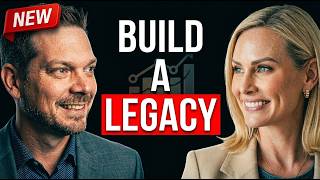
Erin Krueger built a $2.5 billion real estate business by hiring for attitude over skill and treating culture as a strategic asset. Her mantra: hire people with hustle and positivity, delegate aggressively to make a 12-person team operate like 35-40 people, and use tools like anonymous culture audits to diagnose team health.
Chapters
We've got Erin Krueger with us. You lead an incredible team, ran basically real estate brokerage in Nashville, kicking butt in the real estate there for a number of years. So you got a lot, a ton of success stories to share with us.
If you make my life easier, I'll make yours so good. I can't teach you to hustle. You got to be born with some hustle. We kept a positive attitude even though all the noise outside was negative, because people are only going to work with people that they know, like, and trust. One of the things that is it kind of at the foundation of everything that I do is kind of the culture that I bring to the table. Um, I was in corporate advertising and marketing out of college, and I had a lot of bad bosses.
Did you notice how even when you said that, there was like a little bit of like you were still trying to get the sleaze off a little bit when you said it out loud?
Totally. Like, I had some bad bosses, right? And I think that Good bosses and bad bosses, they're both great things to have because they prepare you for what to be or what not to be. Right. And so I use that to say, if I was ever a boss, this is how I would do things differently, or I would take and try to amplify this. Right. So there's just different things that I've learned along the way. And one thing that I learned is that if you have a really great foundation and culture is your number one asset, and you keep positivity at the top of the framework of the people that you're hiring— not necessarily— I don't hire on skill. I can teach you real estate, but I can't teach you to have a positive attitude. I can't teach you how to show up on time. I can't teach you to care, right? So if I can find those people— and I can't teach you to hustle, you got to be born with some hustle. I love it. Um, you know, if I can find those people, I can teach you everything you need to know about real estate and your dreams can come true. I always tell my team members, if you make my life easier, I'll make yours so good. I'll make yours so good, you know. I'll give you so many opportunities because I'm looking to simplify my life, right? I don't need to have all these listings and all of these buyers. I want to give this business to my team members so they can hit their goals and reach their goals. And so that's kind of where I am now. So this book really gives the team leader in real estate, the person who's building team. But honestly, it can help any organization. I've had a vice president of a pharmaceutical company message me. I didn't know them. They said, hey, I read your book, I'm buying it for my entire sales team. You know, it's touching other people beyond real estate, which I never thought would ever happen, right? That's a beautiful thing about putting yourself out there. And if you want to, you would. And I did.
Well, I love that because each business has its own language and lingo and, you know, terminology, the, the products, the services, the tools, the things that you use, the other, the other people you interact with, suppliers and that sort of thing. But the fundamentals of things that are common are always common in business environments, and that's the teamwork, the people, and how that does. And so what I love that you said is that you mentioned culture as an asset. And when people are looking at their assets and liabilities, especially when they're trying to get financing for that next real estate deal or real estate purchase or investment piece of real estate, and they're putting all that paperwork together to get, get the mortgage broker to go fight and defend to try to place that loan. They don't put culture on the asset column because no one really looks at it that way. So your perspective is both fresh and intriguing, but it's also rational. It makes sense that you would need that. The thing that I think is difficult for a business owner to determine is how would you quantify that? You know, you can look at the tractor that you've got on the farm and you can say that's how much it's worth and we can put it on the balance sheet. You can look at the piece of real estate and you can get a value on it from the real estate team and you can put that on the balance sheet. But it's hard to put the, the aspect of what that culture is worth in. But if you were to really unpack it and think about how your business is growing or you want it to grow and what has happened when you've been a part of maybe negative or a bad culture, you can quickly see that the degree to which that lever can go up and down almost to an exponential degree as you think about placing culture on your balance sheet. How would you like to see a 91-year case study that we put together to explain how this infinite banking thing can work for a family over 2 generations? Well, you know what, real easy to do that. We have that right in our second book, Cash Follows the Leader. You can get a copy for free delivered right to your inbox. Head on over to cashfollows.com. That's cashfollows.com. And pick up a copy right now.
You're absolutely right. And I, and I always say that like people can feel a positive environment. So even my clients. So if we come to them and, you know, Nashville, I'm in Nashville, Tennessee. We are a little bit of a softer market now, right? For real estate. Great for investors. Gobble it up. But, you know, we are a softer market. So to, you know, bring some positivity and say, listen, this is our strategy, this is how we're going to handle this. Be exact in our standards and bring that confidence and that passion to the table, that's where the culture is. Like, they feel our team culture. You know, I always say, I don't want any negative Nellies on my team, you know, or negative Nathans. It's positive people. People look for us to be that expert and they're really kind of putting their biggest asset out there for us to go and sell. And so, we take it extremely personal and we wanna knock it out of the park for them. But it starts with like meeting them and like them trusting us because people are only going to work with people that they know, like, and trust, right? At the end of the day. So for me, I really tell my team members, I mean, they have to be happy because if they're happy and they love what they're doing, they're going to 10x their performance. We have a small but mighty team. We have 12 people. We do production and output of a team of 35 or 40. Now, I'm not one of those bosses that makes you work 24/7. That's not me. But what we are is we are exacting our standards. We are a true team. So we actually— if somebody is sick, I don't worry about it. I gotcha. I'll be there for your client. We collaborate together. We lift each other up. We talk about our wins. We talk about how we miss some things and how we're going to be better. And we're constantly changing those checklists and we're learning by example. I am somebody who sold $2.5 billion in real estate. I've sold over 3,500 transactions. Actions. I do not know everything. I know a lot, but I don't know everything. And so I always try to teach— every day is an opportunity to learn more things and new things. And that's why I think I love real estate so much, is that for the entrepreneur, there's no day that's the same, right? Everything is changing, and you have to learn how to pivot, and you have to keep motivated, especially in soft markets when the rates shot up years ago And I mean, people were like canceling contracts left and right. The market just went quiet. How do you keep motivation, you know, with your team members when the check is going to be zero at the end of the month, right? You've got to, you got to know where you are. And I'm giving a lot of tips and I have on my website that follows the book Capture the Culture.com. There are free quizzes on there. That kind of have you take a little test about where you currently are on the culture spectrum, right? Do you need some work? Maybe you think your culture's great. Maybe your team members don't think it's so hot. There's also anonymous surveys on there that you can send them and do a culture check, a little culture audit. It's really important to know where you are because just like a foundation of a house, if your culture isn't right, it can crumble and it can crumble during hard times. And that's what the true mark of a team is, is that you rise above and you really knock it out of the park and you gain market share during these difficult times. And time and time again, 2024 was a really bad year, our best year ever. 2025, even harder year, and it will be even better than 2024, right? It's, it's not because we added a ton of people to our roster. That's not what we did. We buckled down. We were consistent in what we did. We kept a positive attitude even though all the noise outside was negative, and we ended up doing what we said we were going to do for our clients.
Go ahead, take a look at the next episode down below and make sure you get a copy of our book, Cash Follows the Leader. Go to CashFollows.com and get a free copy right to your inbox.