If You Die Without A Will In Canada, A Proper Will Can Save You Money
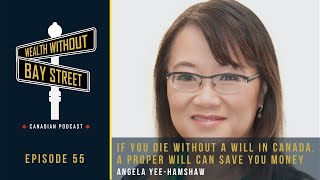
Angela Yee Hampshaw, a Calgary wills and estates lawyer, explains what happens when you die without a will in Canada. If you die intestate, the province decides who gets your money, your executor has no say, and probate fees eat into your estate. A proper will costs far less than the chaos and taxes that follow.
Chapters
Dealing with the bigger assets sometimes is easier because we're just dividing them by percentages or amounts. But sometimes it's those more personal items that create some more thought and sometimes more fighting, actually. So we get down to that level of detail. And I've shared the story with you, Jason, is that I think I told you the story how my husband and I went on a trip to Chicago and we were gone maybe four or five days and we wrote a 10 page document to outline how our kids had to be at which dance lesson, at where, at what time and what they were to be fed. And then I come across wills that are two pages. And I thought, you know, it took me 10 pages to write about five days of my life. But the will which encapsulates your whole entire wealth and your family and the distribution on your death was two pages. So I guess wills are not all created equal.
What happens if you die without a will? You're joined today by a very special guest, Angela Yee Hampshaw, born and raised in Calgary, Alberta, a wills and estates lawyer. And we are super excited to have Angela on the show with us today. Angela, welcome to Wealth Without Bay Street.
Thank you. Thank you. So I'm Angela. Before I jump into your questions, I'll let you know that I've been in practice 21 years. I'm dating myself. I'm sorry, I've been in practice barely any time at all 21 years. And I've been mostly in the Wells and Estates area, so have done estate planning for high net worth clients with two major financial institutions. I worked with the Alberta government for a short stint, had my own practice, and now here I am at the firm of Mizouk Law, so doing all things wills and estates. So fire away.
So let's tackle that first question. Rich, what do you think what happens if you die without a will?
Well, I know it's something that comes up in conversation a lot with clients and I think that this is a topic that is of critical importance because in Canada, I'm sure you're going to enlighten everybody that there are some really important things to be aware of because it could go sideways really fast and preparation goes an awful long way. So, yeah, share with us a little bit about what are some of the key things that that happen to people right away and then we'll talk a little bit about what people can do about it.
Well, I think probably the first thing that happens is a lot of confusion for the family. So not even from a legal perspective, but even from A practical standpoint, there's going to be a lot of confusion because no one knows who's in charge. And so that's one of the nice things that when you've got the ability to create a will, you get to dictate who that executor is. And so the executor, of course, is the person who's going to carry out your wishes that are written in the will, and they're going to follow the law and your wishes and they have the authority. And so without a will, no one knows who's got the reins right now. And so if bank assets or investments are frozen, no one has access to those. No one knows who's in charge. None of those banks know who to listen to. So that's part of the confusion is no one knows who's in charge. And then without a will, you don't get to say who you're going to give your hard earned investments. Two, the laws of the province are going to dictate who gets everything. And it might end up with people you didn't really like all that much. So hopefully you're in agreement with what the province has put together for you. And at the end of the day, if you've got young children, it's just so important to name a guardian because maybe you don't want your brother looking after your kids because he's joined a cult. And maybe you don't want your brother looking after your minor children. So maybe it's better that you and your spouse dictate who's going to look after your children. So there's just so little control when you don't, when you don't have that will.
You know, the other thing that we see as well, Angela, and thank you so much for sharing that, because as Richard said, this is such a critical topic that needs to be addressed by everyone. You know, death will come, that will come. We just don't know what everyone's best before date is. And we know from firsthand experience that even when there is a will in place and when there's been some element of estate planning, that there are still contingencies that come up, there are still discrepancies or disagreements that need to be addressed. But thank goodness there are guiding documents that for the most part contain provisions that are legally binding. And so it really takes away, you know, a lot of that stress and a lot of that anxiety when the surviving family should be taking the time to grieve and to go on living. And so one of the things that I really love about Angela and her process is how meticulous that she is. You know, she communicated to me the very first time that we met that part of her process is to be very meticulous with clients to make sure that she goes deep into every element of what that person's final wishes are and also addressing the things that they're simply not aware of. And so, Angela, could you take a moment and just walk our listeners through what is so important about, first of all, meeting with a wills and estates attorney and maybe enlighten us a little bit more about your process?
Sure. So I am. I do tend to be meticulous, which serves my clients very well. My husband likes it less, less so. He finds me a little particular. Go figure. But I think, I mean, these are your final wishes, right? So, I mean, I go down into great detail. I'm asking about whether there are any pets, you know, your pet turtle. Are we doing anything special with your pet turtle? Are we dealing with any of the items, the war medals that your grandfather gave you? Are there any pieces of jewelry, may, your Rolex watch that you got as an anniversary gift? Maybe you want that to go somewhere special. So dealing with the bigger assets sometimes is easier because we're just dividing them by percentages or amounts. But sometimes it's those more personal items that create some more thought and sometimes more fighting, actually. So we get down to that level of detail. And I've shared the story with you, Jason, is that I think I told you the story how my husband and I went on a trip to Chicago and we were gone maybe four or five days. And we wrote a 10 page document to outline how our kids had to be at which dance lesson, at where, at what time and what they were to be fed. And then I come across wills that are two pages. And I thought, you know, it took me 10 pages to write about five days of my life. But the will which encapsulates your whole entire wealth and your family and the distribution on your death was two pages. So I guess wills are not all created equal. And you know, you have some people who do their own will, and there's so many rules that they're not aware of when they create those wills. And that can actually change the distribution of your will if you're not aware of those rules. And also, I mean, I hate to say it, all lawyers are not created equal. I mean, I think most people think we're devoid of personality, but.
Well, you are a sharp example of a clear contrast to that, I would.
Say Our listeners who are like, we're going to learn about wills today, like, wait a second, this lawyer is actually quite entertaining. Let's tune in quickly.
So, well, I think that's the, you know, when you, when you do wills in the States for a living, you tend to have a very, very dark, dark sense of humor. And of course I do. I am professional. I have to be professional with my clients and be sensitive. But, but where it makes the process easier for you, I do try to instill a little bit of humor in the process. So, so that's basically my process. I do a lot of drawings. I do a lot of stick figures and everything. A lot of legal concepts are drilled down to boxes and little X's and O's and almost like a play by play diagram. And most clients end up saying, you know, Angela, could I have those drawings? They're actually really, they explain things really, really well. So there's a lot of my artwork out there. I don't put my name to it because it's horrible. It's horrible, my artwork.
But I mean, by the same token, though, you're addressing the different way that people learn or receive information best. You know, some people are audio, some people are visual, some people prefer to read. And so it's great that you're able to help a person visualize, just to affirm that, okay, this is what I'm understanding you're wanting. And I've drawn this out, I've sketched this out. Is there anything that we're missing? And that's just another element of how meticulous you are. So for all of our listeners, if you do not have a will in place, you have an opportunity and meeting with a wills and estates lawyer. Now, of course, Angela, could you share with our listeners the areas where you're able to serve in Canada where you focus in your specialty?
The state practice is governed provincially, so I work within Alberta, so I can help anybody within the borders of Alberta. I can give advice to other provinces as well, but they have their own laws. And though I know enough to be dangerous, it's probably best when you're in a different province to have to have someone who practices in that jurisdiction. And, you know, and we did, we did talk a little bit about, you know, the type of lawyer you should go to. And I think it should be someone who specializes in wills and estates, because a lot of lawyers will say that they can do wills, but. But I guess I've seen so many wills that are such. That are poorly prepared and they're more done dictation style. And what I mean by dictation style is that, you know, the client is coming in and telling the lawyer that they want A, B, C and D put into the will, and the lawyer actually doesn't gather any information in terms of the finances to make sure that they understand what is part of the estate and what the will can actually control versus what the will can't control. And they go ahead and just write up this document. But when it comes into play, it might turn out that some of those assets will not flow through the will at all. But meanwhile, meanwhile, you've got this document that is more, more or less a piece of fiction because you've written something that has no bearing on the reality of the assets. So. So that's so important is that you find someone who's qualified to do the work.
That's interesting that you mentioned that, because what it brings up for me is an analogy. And if I could draw it out, I would. But you have. You have the doctor who's a general practitioner. They can help you in all, you know, you go see your regular doctor, you go to the medical clinic, etc. Versus if you need open heart surgery, well, you probably want to go to the heart surgeon. So the connection point there to a legal professional that is honed in tailored niche specific to this one area of the law, because I've seen some of those books that encompass the Canadian law, and they're like, you know, you could, like, you could really take somebody out if you threw one of those books at somebody, and you could also hurt your arm. So you want someone who's really dialed in on that one segment of the law to be able to provide appropriate, not only advice, but context questioning to get your brain thinking as you identified in the right path, the right way about what's going on in your own life and how you want to see that progress when you're gone. Right?
I mean, a lot of people, there's a lot of misconceptions out there around. Around wills and a lot of myths. And so, I mean, I'd love to develop a Mythbusters around wills. It might be the most boring show ever, but anyway, I think there's a lot of myths out there to bust. And one of them is a lot of do it yourselfers where they're talking about, you know, what they have a sense of. You know, they know what they own and they know who they want to leave it to. Why can't I write it out on a piece of paper. But like I said, if you don't know all the rules, all the stuff that you put on paper might have no bearing on how the distribution goes. And there's all these laws that might apply against those assets. So it's important to have someone who can sort of know the rules. And the nice thing is also providing an education to you, because nothing is worse than setting up an estate plan for a client. And you have assets separate. So, for instance, a blended marriage, where you've got spouses who have children from a previous relationship and they've segregated their assets so that they can make sure that they provide for their spouse as well as their own children on their passing. But if they don't have the education behind it, as they acquire new assets, they could potentially make those assets joint when they didn't mean to make them joint. They might designate some of those assets to the wrong people. And it actually sabotages the whole plan that's been put into place because you didn't remember that we had done certain things a certain way to ensure that your wishes were followed. And so that's the beauty of getting an education, rather than just having a document prepared, but learning and knowing so that going forward, you actually don't accidentally sabotage your own plans.
That is such good advice. And do you recommend that a will, an existing will, be reviewed on a periodic basis? And if so, how often would you recommend that to be done?
Yeah, so I would say review it more regularly as you get older. But three to five years is probably a good earmark or anytime there's any substantial changes. So maybe you've named someone in your document to perform a role, like the executor role, and maybe that person's moved out of Alberta, or maybe they're now a little bit older, or maybe they're in poor health, so maybe they're not a good choice anymore. So you should review it for those things. Perhaps you have mentioned an item in the will and you have since already sold that item or you disposed of it in some way. Maybe there's people that have been divorced and maybe you don't want to include them in the will. Maybe there's been some births, so some new grandchildren, maybe an adoption. So those people should be included. So there's always changes. And I guess to show you how human I am, I mean, Cobbler's Children, right. I have a will in which should be updated, and I've still got my sister on it, and she's passed away about five years ago, but we're always Looking after other people first. But so you can see in that particular instance, seven years has elapsed and my sister is named as an alternate, a second alternate. So she's quite far down in the pecking order.
Okay.
But I still need to update that. So, yeah, circumstances change and it's time to update those documents.
I think what's really important for any of our listeners to take away is there was a whole host of different moving components there that you identified that could all cause requirement for you to make that update. So again, someone's passed away. Someone else maybe that is included somehow in the will is now divorced. So there may be an adjustment there, an asset gets disposed of or an asset gets acquired. I'm sure that would be similar in the case of an insurance contract. You have a new insurance policy of some kind. Maybe you've. The big one that I thought was really important was like moving. So if you've moved out of province or something like that, that could be a really advantage. Or more importantly, someone else that's included in the will is maybe moved out. Maybe there's something there that needs to be addressed. So there's a lot of moving components that we all have in our day to day live. And because life is going at a blisteringly fast speed, sometimes it's hard to keep cognizant of that. So I really appreciate you sharing that.
Unless you're in the middle of a pandemic.
Exactly, exactly. And so, Angela, what are some things that you. That you most commonly see where maybe a will, maybe a will's been prepared. But what are some things that you see that are most often missed?
Oh, gosh. How long do you guys have?
We're good. You got plenty of time.
Yeah. So one of the big things is I'm seeing people not identifying where the residence of their executor is. So in Alberta, when it comes time to probate a will, it's a requirement of our Alberta courts, and I don't think that's a requirement of any other province. But when it comes time to probate, after someone's passed away and they have to enter the will in for probate, our Alberta courts want to know if the executor is resident in Alberta, and if they are not, then there's a requirement to post a bond. So you have to go to a bonding company, you have to fill out an application as the executor. You have to disclose all of your financial risk, like in terms of your. What you have, and then they might approve the bond, which then you can go ahead with probate, but then now you've got a premium to pay. And worse yet, if you don't get approved, then you actually can't act as the executor. So now it kind of thwarts the will. So there's this little. So that's one of the hidden things that people don't know. And so I've seen people just name randomly a relative they trust, which is a good starting point, but we should really find out if they're Alberta resident. Right. And we can get around some of those things.
Well, and they should also make sure that the executor has a clear understanding of what that responsibility actually entails, because we encounter almost on a daily basis in our interactions with clients when we're asking that question to say, do you have a will in place? When was it last reviewed? Or have there been any recent amendments? Or just to try and get some clarity on it. And when we talk about, I see that you've named your best friend Bill as your executor. How familiar is Bill with his responsibilities as an executor? And if we were to talk to Bill and ask him to walk us through what his responsibilities are, what would he say? And all too often it's, well, you know, I was sitting down one evening around the fire with my best friend Bill, and I asked him, hey, listen, you know, God forbid, if anything happened to me, would you be kind enough to be the executor? Oh, yeah, for sure.
Right.
And clink of the glasses and cheers and, you know, Bill, feeling, of course, understandably honored to have been asked.
But.
But could you just share with us maybe what some of the most common responsibilities are of an executor? So that for listeners who are thinking and considering who they're going to ask to take on that responsibility, that they have an understanding that it is. It's a pretty wide scope of responsibility.
It can be. And so each estate is different. And what I wanted to say about the honor of being an executor is it's such a contrast when I say, when I meet with an executor just after a loved one has passed away and they're coming to my office to ask me what the next steps are. One of the things I talk to them about is executors compensation. And so they are allowed compensation after they've, you know, carried out the settling of the estate. And I always say to them, track your time. So you met with me today. You're Going to have a journal of some kind, whether you like paper or whether you want to do it on your phone. But track the time that you spent on the estate, because at the end of it, we're going to ask you whether or not you want to take compensation. And I can't tell you how many times in the beginning people will say, you know what, I'm not going to take any compensation. I said, well, humor me. Just track it anyway, because if you need those entries a year later, you're not going to remember what you did today. But if you do it and then you don't need it, that's great. It was a little time spent that you didn't need to spend, but at least you've got a record and you know how much time you spent. And I can't tell you how many times at the end of the administration, an executor will say to me about that compensation that you were talking about, you know, and so you can see that their tune changed because there was so much effort that they had to expend to look after that estate. And so every estate is different. It depends on the complexity of the assets, it depends on the complexity of the relationships. You know, I have one executor who. He's taken quite some time to look after his dad's estate. It's. It's wrapping up after about three years. And I'm surprised that his brothers have not once complained about the length of time they're all getting along. They said, you know what, you have this burden, you do what you need to do. Then I have other estates where everyone is warring no matter what. Even us issuing a bill, they're fighting over an entry on our bill in terms of what we stated on the bill. And so just the smallest of things. And so the duties are really dependent on all those factors and how they combine together. So what are those duties? So to answer your question, the first and foremost is if there's not any other family members to look after the funeral arrangements, then you, as the executor, are responsible. Responsible for the funeral arrangements of the deceased. You're also supposed to safeguard the assets. So if you've got a house, you want to make sure the insurance is still in place. If that insurance is lapsed and there's a loss in that house, you're responsible for the loss in value of that estate because you haven't done what you need to protect it. If there's keys floating around and anyone can come in and start dissipating Some of those assets, you'll want to make sure you change the lock. So there's a duty on you to protect those assets on behalf of the beneficiary. Okay. Then you'll have to go through the probate process, which is filing a lot of forms and paperwork with the court. And then once the court issues what they call the grant, which is a fancy title for a court order that you can now take to the bank and show the world that you are the rightful executor, then you can now start dealing with the assets. So you can sell the assets, convert them into cash. You can't distribute anything yet because the idea here is that you're trying to sometimes cash in and consolidate, and then you're paying off all the debts. So you're filing the tax returns, paying off the debts, getting that clearance certificate from the government so that you're in the all clear. And once you've got the all clear, you can do the distribution. Now, I've made it sound very simple, but each step takes a very long time. Sometimes you're waiting on each step. You're waiting for the feds.
Well, especially in situations where assets need to be valued.
That's right.
And you're not given an infinite amount of time to do that. The government requires that terminal tax return to be filed and that all of the deemed disposition and capital property that all of that has been taken into account. And I think just that step in the process alone can be overwhelming to someone who has no experience in that area.
Exactly. And as you know, state accountants, they can file more than one tax return to try to spread the income out over different returns. And so getting that expertise. And if you don't have that expertise, you could actually, there's some savings to be had using people who have the expertise to do some of these things. And then if you miss some of those filing deadlines, then you're either going to potentially miss. You're going to have some penalties as well. So you're right. There's so many moving parts and deadlines. And so you want to make sure that you're on top of all those deadlines and those moving parts.
And when there's money owed to Revenue Canada, Revenue Canada does not accept any substitute for money.
So for any of our real estate investors listening in, which is a fair number of our listener base, they won't accept shingles and doors and drywall and no chickens. Yeah, no chickens. There's no substitute, as we're told, for Canadian currency. Now, what you're really describing here. I think Angela's really important for people to understand this is how I describe it. I'd love to just see if you, if this makes sense to you. But basically anyone who's taking on an executor role is basically agreeing to take on a full time second job at a moment's notice.
Yes, they can. So you're right. And that's what delays like. If you, if you've picked an executor who has their own family to raise, a business to run, they're fitting in those duties of the executor on their off time. And so there's a number of steps you have to go through to move through the process. And they're delaying on each step because of other things that are, that are distraction to them. So yes, I mean it, it takes time. There's a lot of time involved.
So where is this off time you speak of? Is that a. Does anyone else know?
It's elusive, Richard. It's elusive. But Rich. Yeah, go ahead, Angela.
I was going to say lockdown. Maybe we've got some more time during lockdown.
I don't know, possibly. But Rich, you bring it. You raised a very good point because I think the key to what you said there is that, that it can occur at a moment's notice. And the.
I think it, I think it usually does.
Well, you know, a lot of people.
Don'T have, you know, preparation, a lot of great preparation in advance and things, things come suddenly and you know, we're left, you know, the people are left behind in a position and they need to do, they just need to deal with things. It's now too late.
Nobody ever dies at the perfect time. Hey, did you hear that Bill passed away? Oh yeah, he passed away right at the perfect time. Everything was in place and you know, the executor had nothing better to do with their time and wow, he couldn't have passed away at a better moment. I mean, you're right, Rich. It always occurs unexpectedly. And so having. If you're in a position where you're equipped with an understanding of what that responsibility actually is versus having to step in at a moment's notice and say, where do I begin? What do I do? How do I go about doing it? There's going to be two completely different outcomes there.
And now one of our mentors. That brings up a key point. One of our mentors, the late Bob Shields, he would say that everyone should die for, for a week just to see all the problems they leave behind.
Yeah, you're right. If we can come back and see. Yes.
You know, if you imagine you're a fly on the wall or even, you know, if you're listening to this and you, you, you know, someone who's been an executor or gone through that experience, well, reach out to them, ask a couple of questions, get a feeling for what, what had to go on not to drum up anything, but as a learning opportunity, as a learning experience. Because if you've never done, the only other way to do that is to learn vicariously through the experience of others. So you know, and reach out to a good professional. Now, when we're talking about this, one thing you said earlier that really caught me was if you don't have your will in place and it's not set up appropriately so it will actually be dealt with in the provincial jurisdiction that you're in is that you're basically automatically agreeing. So anyone who doesn't have a will, it's in place or updated or is inaccurate, is automatically voluntarily agreeing to have the provincial government step in and just take care of it the way that they see fit.
And I know people love their government getting involved in their affairs. I mean.
So if you're a listener and that really excites you, you might want to tune into a different program. No, we need to really be mindful about this because you don't want anyone else taking control over your financial life or affairs and certainly not the things that matter most to you, which is your family life and affairs. So we're talking about people with their children and their grandchildren and so forth, and how someone else in a bureaucratic position, well intentioned, is going to step into a role of now the management of all of those aspects of life.
Yes, and I should clarify, we hear those commercials that say if you don't do a will, all the money is going to the government. And those are scare tactics. The money doesn't go to the government. There is a pecking order in terms of which family members get everything. But what it does is it might not be the family members that you are wanting to benefit and it might not be the amounts that you want. And there's no charities that you can actually benefit, there's no friends that you can benefit and you don't have the ability to tax plan. Whatever does get distributed might not be on the most tax efficient way. And you're in that sense, then you're paying more to the government through taxes because you didn't have the ability to plan or defer some of that tax. And so that's probably an apt way of saying, yeah, some of it does go to the government, but in terms of a beneficiary, no, the government is not necessarily the beneficiary.
Well, and we haven't seen a single will yet where the government was named as a beneficiary. But we have seen countless instances, you know, as professionals who work with, you know, clients each day, and as a chartered life underwriter, you know, we get contacted by attorneys like yourself, wills and estate attorneys, we get contacted by trust and estate planners where they're now dealing with a circumstance where there's a disagreement over distribution or there's a complete misunderstanding about the taxable events that got triggered based on deemed disposition of capital property and beneficiaries who were expecting something. Hey, dad had that registered retirement savings plan. He was 68 years young. Mom passed away three years earlier. He named all four kids as beneficiaries of that plan. He passed away. The plan was worth a million. Nobody told us that a half a million dollars was due. And not to mention, when the executor completed the terminal tax return, the market had come down and the account value dropped to 800,000. But we're still paying tax on fair market value of a million.
Yes, because it's.
Why didn't anybody tell us that it's.
Steam disposition at the fair market value at the date of death.
That's right.
I mean, you could be caught in a set of circumstances that you never intended. Right?
That's right.
You're right. So planning is key. It's like anything else. I always, you know, using simple examples, it's like having, you know, house insurance. If there's a fire, the insurance takes care of rebuilding your house. But if you never had insurance in place and you have to rebuild that house, it's going to be a lot more painful and more out of pocket. So it's the same thing. If you're doing anything on a proactive basis, it's going to be. There's more preparation. You're preempting a lot of the issues and it's going to be less costly. But when you're doing it on a reactive basis, it always costs more. On a reactive basis.
Absolutely. Very good point. Proactive versus reactive. One is far more expensive than the other.
There's another piece that ties into, I think, that is important to identify based on the conversation we're having. And that's the unknown factor of time. And so time is. We only have so much of it in a given day. So there's the time it takes to be the executor and all those associated things. But then there's timelines of the tax reporting and the disposition of the others. There's all these are market risks that could be happening from the official day of passing to when we're actually able to deal with these investments in market and so forth. But then we also have the impact of the probate times and some of the delays that can happen through court proceedings and so forth. And so there might be needed influx of injection of capital that needs to come in to deal with things on a short term, fairly immediate basis. But if we don't have a liquidity availability because it's not possible, because we have all these other associated uncontrollable factors in the way, it can create a real problem and it can take the stress load. And I'm sure you've seen this where, hey, it was already high and we basically just kicked it up into the atmosphere with turbo boosters because we have a liquidity problem. And we all know how financial situations can put stress on top of pretty much anybody. Well, now you're also dealing with someone else's financial bag of goods, their financial junk drawer, trying to sort through it through all those times. So what would you say is the value that you've seen in your time, in your practice of someone having insurance, life insurance, that actually shows up when needed to help solve some of those problems? I'm curious.
You've described a situation where we had an estate where the executor didn't have enough money, money to float the estate. So the mortgage payments still kept coming out for the deceased's house. And we got to the point where the executor couldn't sell it yet because we didn't have probate. We were still in the, in the midst of getting probate. And you can't sell the house until you have that. And so they couldn't, they couldn't, they couldn't push off those mortgage payments. And it got to be a negotiation between the lender and the executor on trying to stave off foreclosure. And so had they had insurance in place, they would have been able to use some of the, those funds to float some of the expenses of the estate in particular, especially if the executor, I mean, it's one thing if your executor has the ability to lend to the estate until such time as they have access to your, to your bank accounts and your Investments, but that might be a long delay before that can happen. So if the executor just doesn't have the ability to do that, then, yes, you, as the executor, are dealing with creditors that want their payments now. And you're right, it's very stressful. So not only are you dealing with grief, and now you're dealing with creditors as well. So planning with insurance is. Insurance is a great equalizer. Right? Injects money into the estate. It injects money into the executor's hands. If that's the way you want to do it, you can direct where the proceeds go. Mortgage life insurance is a little bit more limiting, of course, you know, so that's not the topic of today's podcast, but so you have to be careful in the type of insurance that you get.
Oh, that's a very good point. And understanding that, you know, working with. Working with a designated professional would be our recommendation. You know, we wouldn't suggest somebody go see their dentist if they want to talk about putting a will in place. We want the person to be with a wills and estates lawyer. And I think that if you're in the province of Alberta, you would be incredibly well served by connecting with Angela. And, of course, what we're talking about today is the topic of wills and estates. And Angela's fantastic. You know, every interaction that I've had with her, she's a consummate professional and will provide, you know, contact information. Now, that being said, Angela does have, you know, requirements in terms of who she chooses to work with. In other words, she's the buyer, not the seller. She prefers to work with people who possess certain optimum mindsets that she most loves to work with. And so there's only one way to find out if you have a basis to work together, and that's to connect with Angela and to see if that can be put together. But we'll provide all of the contact details and share that with our listening audience as well. And, Rich, did you have any additional comments or questions that you wanted to share with Angela as well?
Yeah, one additional thing, if you can just take a moment maybe to expand on. I think it's good to provide context to the listeners. And so we have people who are listening who maybe they don't have a business or they don't have a lot of real estate or something like that. So, you know, they're kind of, hey, we've got our primary residence, and, you know, we've got our kids or our kids are out of the out of the door now. So maybe they have less requirements than the, than someone who they're running a business. They have 10 real estate properties, they've got three corporations, they got Holdco Professional Corp, a management corp, and you know, a bunch of property. And then, you know, then, then they also have like the blended family. So we have like the ultimate of complexity versus, you know, someone who's got a little bit more, you know, less moving parts to their financial life. Can you just maybe share some context on the timing of trying to deal with these things? It's all up in the air. But I'm guessing in your experience you've seen estates and probates and things extend a substantial amount. You mentioned a three year one earlier, but, you know, has there been complicated cases that have really expanded beyond that? And what do you find?
Yeah, litigation and fighting and the beneficiaries not getting along. That causes a lot of it. Right now I have one right now where dad named all three kids as executors and they can't even get on board which lawyer they want to use for the estate. And it was the classic example of where mom and dad divorced and the daughter sided with mom and the son sided with dad. And so mom has long passed and dad has just passed away now. And I don't know why he named all three because they did not get along the three kids, during the lifetime of the dad. And now they're divided amongst gender lines in the family and they can't even agree on which lawyers that they can't even get the process started. So some of it is not necessarily the complexity of the estates as much as it's the complexity of their relationships. But you're right, I mean, that's a good point, Richard, in terms of if you have complex estates, that extends the lifetime of it. But I always say that my hardest wills to prepare are the ones where my clients are US Citizens, they are in a blended family, meaning they have children from previous relationships and they have children who are receiving government benefits because of a disability. Those are the most challenging wills for me to produce. And so that's like a law school exam. And so if you even have one of those factors, it creates complexity. So it's not always the assets that create the complexity, though they can. Sometimes it's your family structure that creates the complexity. Sometimes it's the personalities, sometimes it's the beneficiaries and their needs in terms of making sure they don't lose their government benefits because of your lack of planning in your will as well. So all those factors come into play to determine this recipe of how well or how quickly this process is going to move through.
That was very powerful. And so I just want to recap those to make sure everyone heard that. So it's someone who is a US citizen, you know, living and dying in Canada. Families that are, you know, blended families in some nature and. Or families that have perhaps a child or a dependent of some kind who is on some form of government assistance or disability type format. And was there another one that you'd mentioned that is kind of the hits the. The top categories there?
Not to offend engineers, but if you're an engineer. No.
Why does the engineer topic.
They love complicated wheels with complicated instruction. I'm just generalizing and I can make. Because my son, my son is an engineer. So I'm gonna poke fun at engineers. But.
And we have colleagues on our team who are engineers too, so we poke good fun at them all the time.
I know, I'm just. But yeah, if you have complicated instructions, then of course, that, that adds complexity to it as well. People who like. People who like formulas in their wills. That's always a fun one.
Hey, Rich, you know what I'm thinking about?
Is there one that you guys have in mind?
Oh, goodness. Angela, it was such a pleasure, such a pleasure to have you on our show. And our listeners undoubtedly got a lot of value from this. And Rich, do you mind taking us across the finish line in our program today?
I would love to do that. And so one of the things we like to check in and the wonderful guests that we have on our program, Angela, we love like to ask this particular question. And now, you know, I don't know if you watch any superhero movies, but there's a lot of heroes out there who don't wear capes. And you may not think of yourself as a hero when you're putting together someone's final wishes and plan so that everything goes smooth the way it's supposed to. But the reality is, when you're sharing the education you share with our listeners today, you're giving people these tips and tricks and tools to allow them to save monstrous amounts of money, to make sure things go smoothly for everyone they leave behind. You're saving time, effort, energy, emotional stress for people. You're really benefiting, making their life easier in some way. So our question for you would be, is who would you like to be a hero to?
Oh, that's a really hard question. Who would I like to be a hero to? You know, what? I guess that population that feels not heard. I am a big proponent of making sure that you have a witness. And so from time to time, I will help out people who can't afford a lawyer. So could I be a hero to someone who's very deserving and could use the help? That's who I want to be a hero to. As someone who normally wouldn't be able to access legal services, maybe we'll pick one special person that can benefit from that.
Angela, you are wonderful. Thank you again so much for being a guest on our show.
Thank you.
And for all of our viewers, if you're on the YouTubes or the Facebooks, and if you take a look over here, you're going to see a recommended playlist for you to continue your journey of learning. And we hope that you enjoyed this episode as much as we did. And thank you all for tuning into Wealth Without Bay Street. Angela, we'd love to have you back. And thank you so much again for being so generous with your time and your knowledge today.
More from Richard





How Do You Use a Policy Loan to Buy Dividend Stocks? #dividendstocks #infinitebanking #shorts


Can Compounding Dividends Pay Your Bills? #wealthbuilding #investment #financeeducation


Should a Corporate Policy Offset Your Personal Coverage? #shorts #insurancetips

What Is Human Life Value? #shorts #insurancetips #dividend #wholelifeinsurance