Infinite Banking And The Cashflow Ninja | Wealth Without Bay Street Podcast
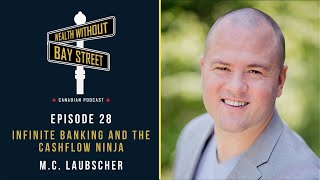
MC Lobster explains the Infinite Banking Concept, a strategy where entrepreneurs act like banks by building cash reserves and paying themselves first. The approach uses private banking systems to smooth volatility and seize opportunities, drawing on ideas from Rich Dad Poor Dad and Nelson Nash's work on becoming your own banker.
Chapters
You are listening to the wealth without Bay Street Podcast, a Canadian guide to building dependable wealth. Join your hosts, Richard Canfield and Jason Lowe as they unlock the secrets to creating financial peace of mind in an uncertain world. Discover the strategies and mindsets to a financial future that you can bank on. You know, you may not need a financial plan, you may need a whole shift in financial lifestyle. Now implementing the process of becoming your own banker can do just that. And it's been doing that for thousands of Canadian families. We would highly encourage you to learn all about how that works by heading over and checking out our Masterclass. Go to www.wealthwithoutbaystreet.comMasterclass. sign up for the masterclass. You're going to get access to exclusive content and you're going to get a copy of this incredible book, the bestselling book, becoming your own banker. It's going to be shipped right to your front door. So go ahead and grab the master class right now. We are absolutely excited to have our guest today, MC Lobster, the creator and host of one of the most successful podcasts on planet Earth, the Cash Flow Ninja podcast. He is going to razzle dazzle us with all kinds of ninja moves today. I believe they're going to make you think and they might even hurt a little mentally. He is currently ramped up over 600 epic podcast episodes. You can go download them all. We'd encourage you to do that. It's being listened to in over 180 countries. Outstanding. Absolutely phenomenal. That means you're providing value all over the globe. Mc, we love that you're a member of the Forbes Finance Council and you've shared strategies on Forbes magazine, Entrepreneur magazine, Grant Cardone TV and bigger Pocket Pockets. We are so over the moon, pumped to have you with us today because we love you, we think you're fantastic and what you're doing, how you're helping people with producers, wealth. Everybody give it up for mc.
Mc, welcome.
Awesome, awesome. Really excited to be here. I've been looking forward to this.
That was my contribution to the intro. Mc, welcome.
Deep welcome.
He was doing Rock Macho Man Randy Savage the other day.
I was, Yes, I was imitating Macho Man Randy Sav. Mc, it's so good to be with you. Welcome.
Yeah, thanks for having me, guys. Always enjoy our conversations. And yeah, can't wait to dig into this one now.
Right before.
Right into this one. How do you get into this one?
Right. Right before we got started, what I loved is you were talking about the last time you were in Toronto, and you were actually walking down Bay Street. Now, a lot of our listeners probably don't even. Because most Canadians don't even know where, like, what Bay street is. And so it's basically the financial center of the country because we always think about Wall street, but it's the Canadian alternative to Wall Street. And so it's interesting that you've actually kind of trucked your truck, your shoes down that sidewalk. So I thought that was kind of interesting.
Yeah, I figured I wanted to see, you know, wanted to see a little bit of the big city and wanted to walk around a couple of places. And I always find it fascinating walking downtown in different cities. So I was definitely gonna go check it out when I was there, so. And unlike, you know. Well, there was. There was a little. A little sucking sound there too. The same sound that I hear when I'm on Wal.
That's the money coming out of everyone's back pocket. Right? Right.
That's right. Money, hopes, dreams.
Did your roundhouse kick the Bay street street sign?
I, you know, I tried, but I had a very, you know, the hamstring just wasn't as flexible that day as it normally is.
It was. Some of that crisp Canadian cold weather got to you and it got a little tight. Didn't have time to warm up.
Mc, talk to us about the genesis of Cash Flow Ninja. Walk us through what inspired you to create Cash Flow Ninja.
Yeah, when I looked at the alternative investment space and alternative strategies that was out there, I mean, once you see one. And I cut my teeth with real estate about 20 years ago when I bought my first rental property.
And.
It was kind of crazy. After I paid all of my bills and mortgages and everything, guess what? There was some money left. And I'm like, this is amazing. How many times can I do this? This is great. And that's kind of where the journey started. And as you learn and grow, you get to see different asset classes. And it really fascinated me all the many different ways that people actually could generate cash flow in many different niches. And I would always get a lot of questions from folks in my network and clients of, hey, do you know any cash flow strategies besides real estate investing? Besides this? And I said, well, you know, I'm not an expert in them, but what I could do is I could potentially create a platform and bring on expert in those niches to share more about the niches that they invest in and the different ways that they create cash flow. So that's kind of how the idea started. And the Ninja you have to make it fun, too. The financial education piece. So I spent a lot of time on branding and figuring out how I can make this attractive and make learning about money fun, because it's one thing that I found that if you just see just some of the way that education has been presented out there, it's not. It doesn't seem like a lot of fun. You're not dying to get into the room and learn about money. And that's what I love about what you guys do as well, is you make it fun and very educational and you empower people. And that was kind of the goal with Cashflow Ninja and the ninja itself. Folks ask, how did you come up with the name? So the cash flow, obviously, was the moment where I paid all of the bills that was associated with that first rental property, had cash flow available at the end of the month, positive cash flow. And that took me into the world of cash flow, and I realized how important that is, especially with the way that money is. And there's actually a real ninja in our family, which is my dad, so he's actually a martial artist. He travels about seven to eight countries per year and teaches karate, and he travels to Okinawa every year. And one thing that I learned from my dad is with martial arts, and he's been a practitioner now for over 50 years. Well over 50 years. Wow. And the mindset of martial arts is the pursuit of mastery in your craft daily. You know, that's what I love about one of Nelson's quotes about arriving in knowledge. You know, there's a lot of similarities there. We just don't arrive in knowledge. We don't go to school, you know, university, get a certificate, and we're like, all right, we're good. We know everything we need to know now. It's kind of the same thing where we learn and grow every single day. So I kind of looked at it from a perspective of, you know, how do I pursue mastery in my craft daily in this, and be a good student, be a student every single day and learn something? So that's kind of where the cash flow and the ninja came from. And the origin story of the podcast, which has turned into a global community, which, four and a half years ago, when I started this, it just. I didn't realize that this had the potential of becoming and growing into something like this. And it's just been. We've been very, very fortunate.
Well, you can be super proud of the work that. That you've done and where you're headed. And we always. We Love to. When we have guests like you on our show, we just love to highlight and showcase you and, and what you're doing. And so we would encourage all of our listeners, you would be very, very pleased to head on over to the cash flow Ninja. Check out the website, check out the podcast. MC and his team have done an incredible job at providing so much value, so much value. It really, truly is incredible. And we, we applaud you, mc. I mean, we, we just think that you're an amazing colleague in our, in our business and the work that you've done, you really deserve to be commended for it. Great job.
If there's, if there's a financial topic that you want to learn more about probability, there's an episode in the, in the 600 episodes available that you can dig into. You know, there's, there's about what, 3,900 different ways of doing real estate investment, whether it's in mobile home parks or it's in, you know, it's in land deals or flipping land or in flipping notes or flipping mortgages. You have like all of that stuff in a diary, really, of different categories. And so it's really impressive what's available for people to start to go and digest through.
Yeah, it's quite incredible the different ways that folks do it. And it's. What's interesting too is a lot of the principles of investing and strategies and cash flow stay consistent, but the different niches and the game in which, you know, the niche in which folks operate in are different. So it's fascinating to see some of the ways and some of the opportunity, the ways that people create cash flow and some of the opportunities that are out there. It's, you know, every show I just go, wow, I didn't know you could do that.
How did the process of becoming your own banker, the infinite banking concept, dramatically improve what you were already doing financially?
So the becoming your own banker journey. What's interesting is everyone knows Robert Kiyosaki's rich dad, poor dad book and it's changed a lot of lives and so forth. And I've read that book every single year since I read it the first time, which I think was around 99, maybe. I think it came out in 97. 99. Around 99. 2000 is the first time I read it every year I read that book. And what's interesting, it's fascinating how just the journey that's everyone on, because every year you learn something new by reading the same book, if it's a good book and becoming your Own Banker is sort of the same book in that sense where every single time you read it, there's something else that you pick up and learn the more you read it. And the reason why I'm sharing the Rich Dad, Poor dad book is one of the lessons that I picked up from that book, the one here, and I think this was around maybe 2005 ish, is I was looking at it and everyone knows the cash flow, the lessons. The rich don't work for money. They create assets that generate money. Money is simply an idea, the difference between an asset and a liability. There's a lot of different lessons, but the one thing that I picked up on that book is I kept looking at the financial statements and I'm like, wow, there's something here. There's something that I didn't pick up on the first couple of times I read it. And the core idea there was, wow, I got to figure out how to become a bank. Because on these financial statements, every single liability on my book was set up the bank. Then I was starting to look at the cash flow. So right there and then I said, I got to figure out how to become my own banker. And I started looking into and exploring strategies and of course, when the student is ready, the teacher will appear in some way, shape or form and found becoming your own banker. And it's changed the philosophy of just my overall approach to wealth. I think that if you think in terms of generations instead of just thinking like I think the majority of folks, 1 year, 5 years, 10 years, but now you're starting to think of generations. Yeah, Tomorrow. Right. I think it changes the decisions that you make on your journey and really changes how you look at how you look at everything and how you evaluate everything. So it's been a significant, significant foundational building block into everything that I do. So the big first moment, aha moment for the young ninja 20 years ago was cash flow. And then the second kind of thing piece was that was, wow, you have to become your own bank, you've got to become your own banker. And then you get to taxes and debt was the other aha's after that. But the first two of cash flow and becoming your own banker and managing cash flow properly through being your own banker. I think that was. It's still today. It's the foundational of everything that I do and we teach and that we talk about. Because it's a concept that if you start to view the world and your own financial life through the lens as a bank would look at it, it Starts to look a lot differently, right?
Oh, yeah. You said something so powerful. When I looked at the balance sheet, my own balance sheet, and I see the assets on there, those assets were the banks and that I wanted to be the banker. Wow, that is so powerful. And the other key thing that I took away that was. I was kind of scribbling it here, is that the rich don't work for money. They acquire assets that generate money. Yep, very good point. And Nelson said in the, you know, in the book, and he shared with us many times, there are two types of businesses that you should be in. What are they?
Well, the one that you earn your living and the other one is the business of banking. And of the two, banking is the most important, right?
Yep.
And you touched mc, which really emphasizes, you know, for people who have read R. Nelson Nash's book Becoming youg Own Banker would understand this. If you haven't, be sure to get yourself a copy. You'll be glad you did. Just add it to your library. You can purchase that book. The links are in the show Notes, but Nelson talked about understanding the four characters in the financial play. The depositor, the borrower, the banker, and the bank owner. And understanding which one of those characters makes the most money. And it's the bank owner. And so you. What you just described just highlights that. So amazing. Like it's. It's a.
Well, another thing that I really picked up on what you said is that, you know, you had the aha moment with that first rental property, and then you had this the second. You know, I'm sure there was aha's long way, but the one that really resonated, really stuck out for you is when you learned about the importance of becoming your own banker. But you said, now it formulates the foundation of everything that you do. Everything is built upon that. And so if we just go back to that first rental property. Well, when you thought about buying that rental property, you probably got a home inspection. And you're probably one of the most biggest concerns you had was like, I wonder what kind of foundation this thing is sitting on. Because nobody wants to buy a rental property on a weak foundation or any property ultimately. Because then the whole thing can come crumbling down, right? But people are happy to go out and try to build these, you know, massive nest eggs based on, you know, fictional, you know, a lie that the stock market or whatever is telling them. They never bothered to actually look at. How do I set up the right foundation first? And so I really appreciate you identified that literally becoming your own Banker that. That component of your financial life sets the foundation on solid ground for everything that you want to build afterwards. And Nelson shared that with us a number of times. But remember, we were at a think tank.
Yeah.
There was somebody was a speaker up on stage, and he came over to us, and he kind of gave a little elbow nudge, as he would do kind of bump into you and be like, everybody up there, you see how they're talking about how to, you know, what color the drapes are going to be and what color the kitchen cabinets are going to be and all that stuff. He says, can you. Can you build a skyscraper on a weak foundation? All right. And he just walked. He just walked away.
Yeah, because, yeah, it was all the conversation about all the fancy approaches or the different tools or calculators or all these different things that you can use. And he asked that question. He said, are you listening to what's going on here? And yeah, yeah. He says, all right. Yes.
How.
How long. How long do you think a skyscraper would stand on a weak foundation? And we said, well, not very long. And he said, think about it. All right. You know, because he really obviously appreciated innovation and he appreciated people thinking differently. He appreciated different points of view so that it was validation to him that you were thinking differently. But he always brought us back to the foundation because if you don't have a thorough and clear understanding of the problem, the solution just doesn't matter anyway. And so when you think mc of your journey with this process, what has been, first of all, what is your fondest memory of Nelson? We've been asking that a lot lately. And what has been your biggest aha moment in your journey with this process?
Yeah, one of my favorite memories is at a think tank. I think I was going to speak the following morning, and I saw him first thing in the morning down there, and he looked at me, he goes, and he said, ninja, are you ready? And what was so funny is they released the book the case for IBC then. And so I. I grabbed a copy of the book, wanted to, of course, dive into it right away, and I had Nelson sign it for me. And he grabs the copy, he looks at me, he smirks, and then starts writing inside of the book. And then I grab it, we take a picture, I thank him, and as I'm walking away, I open up the book to see basically where he signed and his signature. And it says, to the cash flow Ninja.
That sounds like something Nelson would do.
That's just classic.
And so what was your biggest aha in Your journey with IBC so far.
One of the biggest things, and you just touched on it, the foundational piece, right. And we are loving it. It's one of my biggest aha moments. But we're loving it this year in the sense of how important it is to have certain things in place that are not flashy or exciting or great cocktail party conversation. But it's the things that really matter, the foundational building blocks. I think one of the biggest takeaways so far this year, and maybe this was probably the same thing during 2008 and 2009, the loss recession, is how unprepared people were for the inevitable.
Oh, yeah, good point.
Whether it's in their own personal economies or whether it's in their business economies or their investment business economy, it's sort of like, I think it was a Mark Twain. History doesn't necessarily repeat itself, but it sure rhymes. Right? And it's very, very similar because it's the same thing where a lot is focused on other areas, right? The how do I take this money and make more money on it? How do I get. Increase the rate of return? How do I save 10% of my entire income and just focus on the 10% and trying to make more money on that 10% where it's taking a step back and looking at the holistic view or picture and seeing all the many different things in place. IBC has definitely helped me look at everything and see where are the things that matter and do I have them in place. So, for example, cash reserves is one of the most powerful things to have for many different reasons. You know, having six to 12 months of savings, you know, even more, even more than that for your personal economy, for your business economy, for investment economy, it does a number of things. You know, we all know the term Dan Sullivan of cash confidence.
That's right.
There's a lot to cash confidence and positioning. You have to put your money somewhere, that cash, right? So where do you put it? Where do you position it so that it can be as effective as possible as part of your overall strategy? So having building blocks, like having reserves in place, having your future earnings protected, basically the ability to quote, unquote, buy your net worth upfront, protecting what you have, and then having all of the other inefficiencies figured out within your own economy, and then having protective strategies in place, like a proper tax strategy, a proper asset protection strategy, a proper estate planning strategy, having all those different things in place. That's the stuff that's underneath the water. It's not the little iceberg at the top, which everyone focuses on, but that's the most important parts to have in place. IBC has really helped me realize it because I ran into issues with, as an investor where, let's just say I would have a property, something, guess what, guys, real estate, when you have it, stuff breaks.
That's right.
And you have bad tenants.
I have a new fridge arriving today, actually in a couple hours based on that very thing.
There you go. Yeah. And having sufficient capital then on hand in your own banking system to then utilize four situations when the inevitable happens is something that really, really almost acts as a volatility buffer where a lot of folks go into cycles, where they spend a lot of money, they have to go into credit, they have to get lines of credit. Guess what? You've got your own banking system, you're now your own banker, and you've positioned capital effectively and efficiently to utilize and utilize in many different ways. Right. And not just in emergencies, but also opportunities. Because the same thing now, folks that were prepared and did position themselves accordingly are now positioned to capitalize on a sea of opportunities that are out there in the marketplace in this economy that we're currently in.
That's so true, because back in the previous financial crisis, there was an abundance, a tsunami of opportunity, but banks weren't lending. And so there was all that opportunity available where if a person would have otherwise qualified and had access to capital, that's one thing. But again, it reminds me of what Nelson says, those who have the gold make the rules. And so when you have a ready access pool that's growing of financial value, you can pounce on opportunity that will absolutely track you down. And we've had so many clients, in fact precipitated us to do what we call the client series on our podcast now, because we've had so many clients come forward and say during this COVID 19 pandemic, the one, the two things, one, the asset, the only asset that we have that has survived this thing without losing a penny of value has been our policy or our system of policies. And two, we slept easier knowing that we were okay, that if we needed access to that capital reserve, we had it. And we didn't have to go through any toll takers, any gatekeepers, we didn't have to jump through any hoops to access it. And people, people, when they first get exposed to this process, and even when they first begin their journey with it, they don't yet realize the significant change in one's thinking and how it's going to impact every aspect of their life because they believe that it has something to do with life insurance. Like, this is all about the way that we think and a process. It's all about taking control of the function. And you do such a great job explaining that. Like, we had a conversation, the three of us, we were talking together on a zoom call a couple weeks back, and you were sharing with us a discussion you were having with a business owner and how that business owner was talking to you about, you know, I'm going to take some capital, I'm going to, you know, go and invest it. I've got some surplus capital in my business, I'm going to go invest it in something. And you took a step back and you were like, can you take a second and run that by me again? And then could you take it from there, mc and share what you said to that business owner?
Absolutely. So I shared the story of where most entrepreneurs and business owners start. Right. And it all starts from different places. But let's just say you started basically, like a lot of entrepreneurs, almost sleeping on someone else's couch that may or may not have some pee stains on it too. That's right, the peace coach. Exactly. The peacetank couch. And that's where you start. So you start there, you start building your business. Nobody wants to talk to you. You are Persona non grata. You are just, you're really, you know, you're building your business, you're working hard, and then you get some traction, you get some success, you start to build it and scale your business.
You get a new couch.
And you get a new couch. Yes. And you're not no longer sleeping on that couch anymore. And you start to grow and scale the business. And then what happens is, guess what, you might even get a phone call from bankers that want to lend you money. Things start to happen. Funny how that happens, right? They wouldn't lend you the money when you started your business, but now they would. And now, for example, a financial advisor would come in too. And because now they you're doing well, you've got a business, you've got some extra money. Let us take some of that money and diversify it for you and put it in stocks, bonds, and mutual funds, basically. And then that'll be a little separate bucket for you. And then what happens? At that point in time, there's something very important that happened. The business owner, which started on the peacetank couch, built a magnificent business and grew his business up until that point was taking his or her own capital and putting it back into their own business. And that's why the business kept growing. And then all of a sudden now their business kind of reaches a point where they take money out of the business and now invest it in someone else's business through equities which they have zero control over. You know, Apple computers are great, but I don't think you know, if you have any control over what happens in Apple's boardroom. And by the way, your business needs some money more than Apple computers. I think they're okay with liquidity. And what happened at that stage was you took the money that you invested in your own business to keep growing your own business, hiring employees, investing in infrastructure, technology, and now you're investing in someone else's business. And the business owners at that stage basically had a hockey stick growth curve. And all of a sudden it stalls and it just stays right there flat. Most of them start to wonder why did this happen? How is this happening? We were cash flow ninjas up until a point and now it's kind of just stalling. Well, because the money now left your business and is investing in someone else's business, that they continue to invest the business back or the money back into their own business, they would continue to enjoy that growth. And it's funny that I shared the story and what was the one part that client remembers from the story? The P.E.
Sting coach.
I remember that P.E. stane couch story.
You know, MC, what's so great about that is it reminds me of what comes up for me is financial energy. And so why would you take financial energy out of your business and transfer that financial energy to someone else's business? Why would a person do that? Because it's this mainstream financial advice from mainstream financial entertainers. And it's just the way that everyone does it. And I haven't met personally a successful established business owner who has said I created my, my wealth by taking financial energy out of my business or businesses and transferring it away to someone else's. That's how I went about doing it.
Well, it's not just the transferring it. When you're at that stage, you want to go and invest in other things, but it's also every time that you do have to make that payment to the bank on that business line of credit of that business loan, that's another energy transfer. And it's, you're just turning the wheels of the banking business, just not the component of it that you control.
Well, totally. And you know, Nelson, God rest his soul, you know, we've really Been thinking about him a lot lately. And you know, he used to, he used to joke when, you know, this financial energy discussion would come up and something similar to what we were just describing with your client scenario and a person would say, well, but you know, you know, you need to be diversified. And Nelson said, look man, I'm diversified and lives insured. That's my diversification. You know, when you've got, we all have clients that have multiple policies in their system and there are multiple lives that are insured. That's your diversification. And the windfall is certain. And so we know that death is going to happen. But if death is accompanied by a windfall, is there any downside to having all that money come back to your business or have all that money come back to your family? And it all happens on a tax free basis. The only loser in that scenario in your country is the IRS and in our country is Revenue Canada.
Uncle Trudeau doesn't need it.
And where else can you buy or sell anything where you put in pennies into a contract that promises and guarantees dollars and you share none of the gain with the government. Where else can you do that?
We like to buy, we like to buy dollars for pennies a piece around here. Totally.
And you know, mc, what would you share thinking of business owners being on that track for a moment? And we're talking to business owners not only who are making money, who are, they're in their stride, so to speak, but we're talking to business owners who are just getting started on that pee stain coach. What advice would you share to them as it relates to what they should do in relation to ibc?
I would say that one of the most powerful things that one can do in their personal economy is paying themselves first and making that a priority and putting money towards a bigger and better future for yourself. Most folks read the Richest man of Babylon. They read the book, they see the concept, they go, this is amazing. The same thing should apply to your business. So where folks do it in their personal economy, they say, of course I have to pay myself first. I write the book, this is great. I have to build a bigger and better future. Your business has to be seen in the same light where money needs to be positioned and your business needs to be paid first and positioned so that you can build a better and bigger business tomorrow. And this, you know, as you mentioned, even if you're starting out just that habit, I think can really accelerate the growth of your company because it's going to again, change the thinking of how you see things by making it a priority for the business to pay itself first before anything else happens. And that's going to also have you in a position where you're going to have access to capital much, much quicker. So I think that's one of the lessons that I would share and it's a really powerful lesson when you start to realize it. Because I think the first time I realized that, I'm like, yeah, that was right there in front of me. Why have I not seen this? Why haven't I thought about it in the same manner or in the same way that I do in my own personal economy? It's a complete game changer for how you change your thinking and how you view business and in the marketplace and.
The simplicity of the message of pay yourself first. It is that it's so simple that I think some people glaze over. How do, how should I be doing that?
Right?
So what we've kind of come to realize and, and I've certainly shared with many people is that if, if you really want to incorporate that principle, you have to set aside the money in such a place where you know it's going to be going there all the time and you gotta, you gotta, you gotta get the money out of your hands because if it stays in your hands, you're gonna do something with it. You're gonna money spend, spend it. So a lot of people just need to get it exited as quickly as possible. One of the best ways to do that is through an appropriate for savings mechanism which allows you to grow capital in an environment that you could get it back if you needed to, which is exactly what a, what a properly designed policy will do for people. So IBC really fits the perfect dynamic to be the match for pay yourself first.
Oh, for sure, yeah.
And the other thing I would also add is another concept that folks talk about quite a lot is intentionally intentional living. Like designing your life and living intentionally. And then, you know, maybe they start doing this in other areas of their life, but they haven't, they haven't done it with money in their personal economy. And maybe they've done it in their personal economy, but it hasn't translated over to the business that it has to be intentional that every dollar that comes into the personal economy, there's a system and a process of where it goes and the same thing with the business on a business standpoint. So just to be, to be intentional and know and having a plan for it and having a strategy in place I think is really going to put some rocket Fuel on what you're doing instead of just doing it, you know, kind of as you move, as you go along, as money comes in. Hey, what do we do with this? We have no plan. Guess what? If you don't have a plan, someone else has a plan for it.
That's right.
Now, one thing I really like about the name of your company, Producers wealth, is that it's. It's focused on just that, on the idea of being a producer. And I think a lot of that stems from another one of the books that you read. And because we had a conversation with this for, I think some of that is. Is tied back to Atlas Shrugged. Can you maybe speak to how you. What made you decide to go with producers wealth and how was that developed up here?
Yeah, so. So Atlas Shrugged was just a. A game changer reading that book. There's a segment in the book part in the book, the money speech, by one of the characters which describe what money is and what it's not. Extremely powerful listeners and viewers can find it on the Internet. But essentially it's a representation of value and a medium of exchange. And the representation of value is value that was created by producers and creators. So in the marketplace, there are going to be producers and creators and there's going to be consumers. And, you know, one of the lessons in the book is that an honest man or woman will never consume more than he or she produces. So because now you're now, you're now. That's not the way the world is supposed to work, right? We're supposed to contribute to it, build it better and leave it better when we depart from this little spinning ball of dirt that we all operate on. But I think one of the things in the book that's just so powerful is the idea of who are these producers? And we see them out in the marketplace, right, and the challenges that they have, but the challenges provides more opportunities and bigger ones. And, you know, the concept of strategic coach of who do you want to be a hero to? Is I wanted to be a hero to producers and creators and help them and contribute to their production and creation. And what we have to offer through the IBC strategy, for example, is providing clarity for producers, providing certainty, which provides confidence, which enables them to focus on production and creation and positioning them to live in abundance. Right? Because you live in abundance when you have clarity, when you have confidence. It's a complete game changer as a business owner, as a producer or a creator to have cash, confidence to have that in place. Now you can live in Abundance, because you've taken care of the foundational things.
That's right.
Now you get to work on the fun things. But, yeah, it had a profound impact on me and the book itself and the concept of this. And you see that producers and creators will always produce and create because that's what they do. And these are the folks that really, really create an amazing world for all of us daily through their unique ability and their talents and their passions. So those are the folks that I wanted to help them be a Euro to. So that's kind of where it came up with producers. Wealth is identifying who do we serve? We serve the producers and creators out there.
Wow, that's great.
That is so good.
And I love the connection between how IBC plays a fundamental role in how you serve so that others may serve greater. It's a really interesting kind of stepping stone. It's a ripple effect. It's a. It's a rock thrown in the water. Right.
Well, and being fellow.
Producers.
Yes.
And creators and being fellow Strategic Coach, you know, attendees, alumni, whatever we want to do. You know, we really also want to give credit and a big shout out to Dan Sullivan and to Babs and, you know, the whole Strategic Coach team for the incalculable impact that they have on entrepreneurs. Because, like Dan always says, you know, the world views you as strange. Like, to the majority of the world, you're all really strange people. And so, you know, it's great to bring a group of strange people, these entrepreneurs together. And, you know, Dan has impacted all of us. And so, Dan, if you ever have occasion to listen to this, we appreciate you, I think, more than you know. And we're very grateful to you and Babs and your team for. For everything that you do. And for listeners who are entrepreneurs tuning into this being, being established, make sure you check out Strategic Coach and check out the programs there. They've really pivoted. They've done a great job during COVID in shifting to virtual. You know, Dan often says, I'm more productive during this COVID pandemic than I've ever been in my lifetime. And so be sure to check out Strategic Coach as well. And while we're on that vein, we, again, we want to encourage listeners. Do yourself a favor. Get immersed in Cash Flow Ninja, the podcast episodes, all of the resources that MC and his team make available to the world. You'll be glad you did.
Make sure that you download the Cash Flow Ninja manifesto, because it's fantastic. And I was flipping through the manifesto here earlier today, but before our chat and one of the ones I really wanted to highlight here is cash flow ninjas are motivated knowing that they are one idea, one relationship and deal away. We are cash flow ninjas. We live our freedom. We live our legacy and on our own terms.
That's beautiful, mc.
Thank you.
And you beat us to our hero question. You already answered it.
And you're the first person to do that.
Yeah. You're the very first podcast guest to ever do that. We always ask the hero question at the end of each of our podcasts and we just want to thank you sincerely for being with us here on today's episode. We'd love to have you back again. Would you be open to joining us again at some point in the future?
I would love to. Thank you so much. This is a lot of, lot of fun. So as, as always, I have a lot of fun speaking with you guys. We'd love to. We'd be honored to.
Oh, great. And we'll be sure to have you back, we promise you. And to our listeners, be sure to to karate chop the like button if you're on the, if you're on the Facebooks or the youtubes or the Instagrams or the whatever other platform. Smash karate chop the like button.
Roundhouse kick.
The roundhouse kick your computer or laptop, whatever it is you're watching and you'll you.
If you're looking to download the master class and you go to wealth without Bay Street.com forward/masterclass, you can, you can make like a karate chop noise as you're typing the forward slash.
Right? Or you can do like we like to do.
Right?
We go. I'll just look out, man. But thank you to all our listeners. If you're new to wealth, though Pastry subscribe comment give us five star reviews. We love five star reviews a lot.
Those are pretty sweet.
They're very good. We, we appreciate them. Mc, you're awesome.
They're one star. Better than four, just so you know.
All right, thanks everybody. Thanks for tuning in to wealth without Bay Street.
Thanks for listening to the wealth without Bay street podcast where your wealth matters. Be sure to check out our social media channels for more great content.
Hit subscribe on your favorite podcast player.
And be sure to rate the show. We definitely appreciate it. And don't forget to share this episode with someone you care about. Join us on the next episode where we continue to uncover the financial tools, strategies and the mindsets that maximize your wealth.
More from Richard





How Do You Use a Policy Loan to Buy Dividend Stocks? #dividendstocks #infinitebanking #shorts


Can Compounding Dividends Pay Your Bills? #wealthbuilding #investment #financeeducation


Should a Corporate Policy Offset Your Personal Coverage? #shorts #insurancetips

What Is Human Life Value? #shorts #insurancetips #dividend #wholelifeinsurance