Infinite Banking Is A Way Of Life | David Stearns
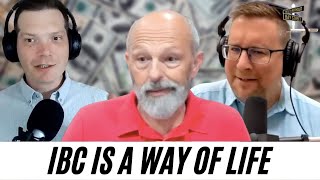
This is a long-form YouTube conversation (thunderside/fireside-chat) featuring David Stearns (president of Infinite Banking Concepts) with hosts Richard Canfield and another co-host. Core themes: IBC (Infinite Banking Concept) presented as a lifestyle rather than a mere financial plan; the Nelson Nash documentary (released end of June 2019) has reached ~138,555 views and continues to expand IBC's reach; the Nelson Nash Institute is undergoing a media/branding review and plans to resume a weekly podcast and release a weekly video series (starting this fall). The discussion emphasizes the critical role of mentors for practitioners, the institute's practitioner/sponsorship model, and practical family-banking examples. Notable factual claims in the transcript: Stearns first met Nelson Nash in 1979, personally had a conceptual revelation about whole-life policies as "capital" in 1992, Nelson's capitalization example (~13 years to capitalize a policy), and an assertion that roughly 10% of life insurance agents succeed in the career while ~90% fail.
Questions this video answers
138,555 views
End of June 2019
1979
1992
About 13 years
Chapters
For me personally, when the light came on and I saw this entity, this whole life policy, this contract, as not a bank account, but as capital, which is uninterrupted growth that you can access as collateral for anything you need. And it's just a different way of thinking about things. It's not money, it's capital. And so I guess my journey now is to help educate people on what that means. What's the difference between capital and what's the difference between money? Okay, why is this so important? And it's, you know, Nelson was a champion of that and nobody really picked up on it, really. I guess you guys were like real early adapters. But it's just, you know, IBC is a way of life.
Oh, boy, are we in for a special treat today. And we are referring to this as a thunder side chat because our special guest, David Stearns, who is the president of Infinite Banking Concepts, who is a on the board of the Nelson Nash Institute, who's been just a dear friend and an amazing, amazing mentor in this process of becoming your own banker, the infinite banking concept again. We're so pleased to have you back, David. Welcome back. We understand that in Birmingham there is a thunderstorm brewing literally right over top of you right now. So that is why we're referring to today as a thunderside chat. So welcome back, David. And of course, joined by amazing co host, dear friend, amazing colleague, Richard Canfield, hailing from Chilliwack, Alberta, otherwise known as the wac. David Stern's hailing from Birmingham, Alabama, and yours truly hailing from Edmonton, Alberta. David, welcome back. It's so awesome to have you back with us.
Thank you for inviting me, I appreciate it. Always enjoy catching up with Jason and Richard and just having a thunderside chat whenever I can.
Well, Rich, you were sharing too, that you had updated the number of views on the film. This is Nelson Nash, which of course is a film available on YouTube courtesy of the Nelson Nash Institute to give people across the world a deeper glimpse into the essence of just how incredible the developer, the pioneer of this process, the late R. Nelson Nash, was. And so where are the stats on that video, Rich?
Well, I brought it up here on another screen and it looks like we're at 138,555 views that was initially released at the very end of June of 2019. So we're literally rolling across the two year, effectively anniversary of the release of the film. And to be at 138,000 views, meaning 138,000 people have caught a glimpse at least to some level through watching that documentary. I know, Jason, we talk about the documentary quite regularly. Having been down to Birmingham to tear apart David's house for collecting some of the interviews for said film and having a blast doing it, while David and his wife Kim, I think they for the most part, hid in David's office to not consider how bad their living room looked with everything being torn apart. But super good experience, wonderful experience. And the film itself and the feedback that we get. I know for me, every client I talk to, everyone that comes into our sphere, ascended financial. We mention it regularly on the podcast, in fact, in our podcast and show notes on every episode of our show notes, whether you're listening, you know, on a podcast player, Spotify or itunes, or if you're on YouTube and you're watching us on the Wealth Without Bay Street YouTube channel, it's in the comments you can click directly to get to that. That film there. It's only one hour long. It's very inspiring. It's a truly inspiring film and it really gives you a true glimpse into the heart and the soul of an incredible man who we're all here together again based on. My entire life is really built around Nelson's work at this point. And there's not a single point in my life I don't think that hasn't been positively impacted by my getting to know Nelson. So the film is a way to honor his memory, carry forward what it was important to him, for him was all about the message, not the man, as Nelson would say. I'm sure you can echo to that, David. And to see the film getting those many views is really, really amazing. And I just, I can't wait till we're having this conversation another year from now to see that number increase dramatically.
Well, I guess I could do more promoting to get it out there further, but you guys know that that's not my wheelhouse. But you know, you talked about, you know, filming in the house here. You know, Bob, Carlos and I are doing his foundation's YVC video series here. And the last one, you know, we're only about six months behind schedule. But anyway, the last one that we're doing is I have the lead on IBC as a way of life. And so.
That's awesome.
Yeah, and these are 15 minute snippets and they're supposed to be an introductory to IBC and non marketing, non sales related, anyway. And you know, Bob does his thing. You know, Bob Murphy is just Mr. You know, online personality, great communicator. Carlos is more cerebral, more, you know, socially minded. Who am I? You know, just kind of a goofy guy that got thrown in the middle of this stuff. And so I'm trying to bring the humanistic piece to the three of us. So as a way of life I thought would be a good way to culminate the series. And so I'm thinking, I'm starting to write my script out and whatever. I just kept thinking about the filming of the video. This is Nelson Nash. And where were we? We're at Nelson's house. Sitting in his den. Yep. And I'm on the couch with Nelson when you guys are there. And the conversation that we had in that 20 minute period, I'm thinking that's exactly kind of what I want to promote on this last module 12 video for the foundations of IBC. Yes. So instead of reinventing the wheel, I said, jason, let's go over that 20 minute vignette there and see if we can come up with some footage. I love it. So my hope is, and of course today's the deadline for him to give me the first cut. But my hope is then that will get back some of that great gold that we put together back then in I guess, November of 2018 or 17 when we shot the thing.
I think for our listeners, it's important to know that the other Jason you're speaking of, of course, is the film director and Jason Rink. And so I was so good to hear this, Dave, because when you watch the film that we're speaking about, there's so much that didn't make the film. The cutting room floor is just filled with tremendous gold mines that are, they're literally unbelievable. They're so good. And it's just a matter of there's only so much time you can put together into a film. And so to hear that you're going to revive some of that additional stuff, that commentary. That was one of the most engaging sessions that we did, I think, was the conversation. The, you know, it wasn't a Thunderside chat, it was more of a fireside chat and in Nelson's den. And the two of you guys together, just sharing a really special moment and talking through your relationship and how, how IBC developed for you over time just by the virtue of marrying into the family. Really. You married into IBC ultimately?
Well, you know, you know, I was, you know, I was so blessed and I still am. You know, I just, it just, I just kept getting knocked in the head. It's like, you fool, you know, you've, you've Got everything you need right here, you know, you know, enjoy it and make the most of it. And it's true. It's what we do. So. Yeah, when I met Nelson in 79, you know, he was just a life insurance guy back then because this is before he had his quad bypass, before he was bankrupt and had the revelation at three o' clock in the morning and things like that. So he was just a life insurance guy, but he was a Austrian, practicing Austrian economist and he thought that way and he, he thought he loved whole life insurance as a, you know, as a commodity and, but, you know, our journey started with life insurance. It was straight, just straight life insurance. Yeah. And I share, I share. It wasn't until like 1992, for me personally when I, when the light came on and I saw it, saw this, this, this entity, this whole life policy, this contract as not, you know, not a bank account but, but as capital, okay, that which is uninterrupted growth, you know, that you can access as collateral, okay, for anything you need. And it's just a different way of thinking about things. It's not money, it's, it's capital. And yeah, and so I guess my journey now is to, is to help educate people on what that means. What, what's the difference between capital and what's the difference between money?
Okay.
Why is it so important? And it's, you know, and Nelson, Nelson was a champion of that and, and, and nobody, you know, nobody really picked up on it really. I guess you guys were like real early adapters. But it's just, you know, it's, IBC is a way of life, if you understand what it is, okay. And you know, I'm a strong Christian and so that's, that's number one with family. But this is, this is a very, very close number two because it sets the stage for everything you do. It really does IBC simplify things so much for everybody, you know, I appreciate.
You sharing that, David, because, you know, we, we've been sharing with you too that, you know, the world needs to see more of David Stearns because the way that you show up in talking about the message really captures what it truly is. And because you mentioned something that formed a part of the documentary where you said, you know, this is meant to be a lifestyle, it's not a financial plan. And that, that was such a, a light bulb moment and it is for people who watch the film and they remark regularly, you know, when he made that comment about this is meant to be a lifestyle, not a financial plan that really clicked. And so the way that you show up in talking about this message, I think is so beneficial and you need to do more of it. And so one of the things that's part of our painted picture vision, you know, at Ascendant, is we talk about how we continually promote the Nelson Nash Institute. That's part of our painted picture vision as a growing team. And so maybe bring our viewers and listeners up to speed on how are things going with the Institute and what's been happening down there?
Well, Carlos, Laura and Robert Murphy and I are still actively engaged, even though we're in three different cities. It seems like we spend our whole life on Zoom together. And we're, you know, we're reviewing our media presence now. And that was at the insistence of you guys initially. Okay.
We do have a way of getting insistent upon things over time.
So, you know. Yeah, so we're doing this. We decided to go ahead and invest in that. And so we're right in the middle of that analysis and, and things. And we've had several meetings and we're hearing some painful things from this group that we retained to tell us how are we at defining ourselves in the marketplace, in the media sphere out there, is our message clearly understood and accepted? And the answer is no. Okay, so that's. Right now we're kind of in the middle of that. We're sorting through all that and then once we have, we'll probably get a final analysis probably next month.
Okay.
And then it's going to be in probably realigning how we do business, how we, how we promote the message, how we, you know, promote ourselves and how we, you know, we move forward. And, you know, first and foremost, you know, the Nelson Nash Institute is supposed to be a non threatening, high moral ground entity that's not into throwing mud at anybody or trying to market ourselves over the top with different clickfunnels, whatnot. We're trying to provide the public with a comfortable place they can go to find out what the truth is about ibc, about, you know, Austrian economics in action. Okay. Not some cerebral academic thing, but something that you and I can do in our daily lives to, you know, free ourselves from, you know, Wall Street, Bay street, name it, and live there. So our emphasis right now is to sort through that and get ourselves out in a better position on YouTube. Okay. And some of these other social platforms so folks that have greater access to us can find us more easily and understand where we're coming from. Okay. So that's essentially where we're at now. And so what we're going to do is we're going to start getting back on probably a weekly podcast. Okay. You know, Carlos has some medical problems in the past, so we're at the point now we're going to start that again. And we're probably going to release a weekly video series, too, again, starting this fall.
That'll be amazing.
And we've had people asking about the podcast. I had a number of people asking, you know, when and when, when are we going to get another Larry Murphy Report episode out? And so to hear you say that is really amazing because, you know, I often send people back to some of the older episodes. Of course, one of my favorites is when Bob and Carlos interviewed Nelson and some good stories that Nelson told there, as well as the one that Nelson shared about flying, crashing his first airplane on Bob Murphy's podcast. Bob Murphy show. Also very engaging. And so, you know, I'm really glad to hear that. And it's the fact that there's going to be more of that content coming out and people will be able to learn from source material because the institute is there to help carry Nelson's message forward. And, you know, you guys are not in the. You're surrounding the financial industry. You're kind of attached to it by the sidelines, but you're not in it. You're an educational institute. You're an educational organization. And what I'm really curious to. I think, Jason, this is something we talked about earlier is, you know, over the course of this pandemic year and that sort of thing, I would love to hear maybe how are you seeing advisors, you know, being attracted to the institute, the amount of people that are reaching out to. To participate or get involved in becoming a member of the institute, taking the training program, writing the exam, and being connected with a mentor so that they can become an authorized practitioner. Can you speak to that a little bit?
Well, there's good and bad. Okay. Like, I guess with everything, you know, with the pandemic and the lockdowns and stuff like that, a lot of folks found themselves, you know, at home with nothing to do, getting. Getting paid to do nothing. And so they. So they started, you know, researching different things. A lot of folks stumbled upon IBC and they. They watched every YouTube video they could find about it. And then they. They convinced themselves they wanted to become practitioners, basically a great career change for them. And of course, they didn't really know what they're going to get involved in because, you know, the Nelson National Institute, I keep saying it's the biggest paradox out there, because how do you be an educational entity when your soldiers are licensed life insurance agents and financial planners that are kind of monetizing the message, which is good. But if you want to be involved in infinite banking in a professional way, then there's a lot more to it than just loving the message. There's the licensing piece, there's a training piece, there's the sales piece. Know you guys know as well as anybody else, you gotta have somebody to talk to.
Definitely.
And that's probably the hardest thing to do, is get a qualified candidate to talk to. Okay. And so the good part is a ton of people want to be involved in what we're doing. Okay. The bad part is that a lot of them don't really know what it takes to get involved. You know, by the way, I guess this, you know, I don't know if I should say this or not, but maybe 10% of life agents succeed as a career. 90% fail.
Yeah.
And there's a lot of, lot of factors involved, so it's kind of painful. And also, you mentioned the mentors we have seen because of the change, the demographic of the folks who want to get involved with us. Not super, you know, not agents who have been in the business for years, but individuals that want to become life agents and practitioners. The need for mentors is ginormous, man. I mean, they, they, they have got to be trained by a practicing practitioner. Okay. You can't just, you know, take a course, sit for the examination and go out there and knock it down. Somebody's got to be holding your hand. They have to, they have to back you up. And unfortunately, you know, I've just about run out of mentors because I keep abusing the same people over and over and over again. So we're also reevaluating that. Okay. And one of the things that we, that we are doing, and you can't find this on the website, but, but there is a practitioner page on the site that tells you what the program is like and how to apply for it, whatever. What we haven't done yet is we haven't told folks that, listen, if you're not an experienced agent in the industry already and you want to be involved in what we're doing, we want you to find a sponsor, an existing practitioner, and have them sponsor you. And so that means you develop a relationship with that individual. Hopefully they're your agent of record when they set you up in an IBC policy. And so you can learn firsthand like I learned what it means to own this stuff, what it means to use this stuff. And then when you want to become a professional practitioner, they, they're your sponsor, which means they're the ones that are going to mentor you after you sit for the examination. That's kind of where we're going with it. Okay. Love it. And so is it. I've always personally thought that what makes IVC different than any other financial device out there is that the policy owner or the client has total control. Okay. And so if you're not totally committed, number one, totally understand what that means. Number two, then you can be in trouble. Okay. If you're a practitioning agent, it makes it even worse. Okay. So it's critically important we know what we're doing. And also, I've also been a huge proponent of having practitioner agents help each other. Okay. You know, as an organization, confederation of like minded individuals, that's always been one of my goals.
Those are all excellent updates and definitely, definitely going in the right direction because this message is continuing to expand in its reach. And you know, we, the conversations that we're having now with people who are connecting with us are much different than the conversations that we were having a year ago. And we were just having this discussion among teammates yesterday and last year compared to this year, where people are reaching out to us now and saying, we've been consuming the podcasts, we've been watching the YouTube content, we've read Nelson's book, we've been through just an abundance of resources and we truly believe that we're ready to go, that we're ready to proceed. And so by creating this platform and leveraging social media, we're showing up where people are paying attention, where people are going to learn. And it has been just a momentum creator. It's been amazing how it's expanded that reach. And the focus on the mentoring aspect of it is just so important. And we would share with advisors because we regularly have advisors who tune into our podcast, which we appreciate. We welcome the advisor community to tune into how we're communicating the message across in the marketplace. And we can't express enough that there's no escaping the time, the study and the simulation that's required in order to become proficient at implementing this process in your own life personally and to help other people in your marketplace to do it properly as well, the way that Nelson intended it. And this for us is a one year minimum, full time crazy, glued to a mentor's hip, one year commitment of a wide variety of interactions, a wide Variety of meetings, a wide variety of exposure to frequently asked questions that come up from people in the marketplace. And it just helps that person really, truly embrace and understand the essence of this message. Because Nelson said repeatedly, one fatal error among a few primary fatal errors is that people believe that this has something to do with life insurance. It's all about how you go about financing the things that you need in your lifetime. It's a process. And like, you're expanding and carrying this message forward, David, and talking about the importance of making it a lifestyle. It's not a financial plan, for heaven's sakes, it's a lifestyle.
I mean, if you do it right, you don't need a financial plan. That's the biggest thing about it, you know, So, I mean, the mentor thing is critically important, okay? Just like every client needs a coach, every, you know, agent needs a mentor and a coach too, as always to it. And I'm not talking about just, you know, for the first year, which is critically important, like you suggested, but basically for, you know, forever. Well, backstop, you know, Right.
And it ties directly to Nelson's fifth golden rule, which is to rethink your thinking. So when, and again, this is for the benefit of any advisor or potential advisor who's tuning in, you've got to rethink your thinking in the sense that, okay, when you're in that mentor, mentee relationship, much like the impact that Nelson's had on you, David, on Richard, on myself, on an incalculable number of people, he would encourage you and he would push you to rethink your thinking because a mentor is responsible to you, not for you. You have to be able to develop the ability to rethink your thinking so that when you grasp this and when you catch it, you'll know exactly what to do. And that is the approach that, you know, that we love to take when working through it. And not everybody works out. Like, we're very transparent about that. Like, you may or may not successfully complete this process. And it's going to be based entirely upon your ability to not only rethink your thinking, but to truly be able to, to teach and to articulate this message. Because there's no better way to demonstrate your knowledge of it than to teach others. And not everybody makes it. That's just. That's the same with anything.
It's the same thing as to what makes a policy owner successful with their policy is how much effort and work they're putting into their own education, their own coaching, their practice of doing things, practice Means you have to do something. You can't practice something if you're just sitting on the sidelines. You're just on the gate, you're just watching the game, you're not in the game. And I think tying into mentor mentoring and mentorship, and there's something that I would. That kind of comes up for me, David, and maybe this will resonate with you. I'd love to just check in, but, you know, if you want to develop a workout and you're going to go and to the gym and you're going to go lift some, do some bicep curls or something. Well, if you're not going to the gym regularly and you only go to the gym, let's say once every month, you're not going to get any result. And every time you go to lift that weight, you're going to have the same pain you had the last time because you got to that muscles atrophied, you got to go back and work on it again. Well, the correlation to mentorship would be like meetings. How many meetings are you sitting in, hearing those questions that are coming from different vantage points and different angles from clients, sitting in on meetings with the life carriers and understanding more about their, their product and design, and then how you can go about building and constructing a plan relative to the specific needs and circumstances of a unique individual. Because everyone's financial life is kind of like a fingerprint. We've all got a financial junk drawer that's totally different. And so being able to sit in a lot of meetings on high volume, regularly lifting bicep curls, going into the gym to work out every day is the difference between someone who's in a mentorship role that's actually going to get traction, I think, really quickly versus someone who's going to stumble and fall a little bit. Because again, if you don't have a person to talk to, Nelson would say, he would talk about the gentleman who founded Piper Airplanes. He says, look, if you might have the best message in the world, the best delivery system in the world, but if you don't have a person on the other end of that phone, you don't have someone to talk to, you don't have a thing. So you need to be able to actually communicate with someone. And if you don't have the ability, often a mentor will already bring that to the table or will be able to help coach you on how to activate your own network or some marketing ideas to get people in front of you so that you can actually have that conversation.
Yeah, no Exactly. Yep.
Well, and we, we will. Much like, you know, we've done previously in having David as a special guest and including links to all of the Nelson Nash Institute resources that we would wholeheartedly encourage. Whether you're a professional in financial services, in accounting, in estate planning, or in any area and you feel attracted to this message and you want to discover more, we'll include the links to the institute and those resources that you can tap into. And we have to say, David, that in our quarterly client coaching sessions that we do, so we bring our client community in the spirit of when Nelson would often say, you don't have to feel like you're a lone ranger. You should surround yourself with like minded people. And so once every 90 days, invite our clients to be a part of a group quarterly client coaching session. And in the last session that we did, we stepped through the most recent video and the message that you delivered at Think Tank and it was a honest to goodness, it was a smash hit with everyone who was in attendance because you were describing this growing tree of policies and how you truly established this system and honored Nelson's golden rules and thinking long range and thinking three generations past your own in not stealing the peas, not doing business with banks, and not being afraid to capitalize your system. And that was an incredible hit. And so, you know, absolutely encourage you to, you know, create more of that type of content and show the world, you know, how you are, you know, modeling this, you know, in your, in your own life and your extended family. It was, it was awesome, right, Rich? The feedback that we got, like real time was amazing.
Good. Appreciate it.
Light bulb moments, David. And you know, I had them. When you did that same presentation. I learned a ton. It was so refreshing and eye opening for me personally to see that and in such a great way. You delivered it in such incredible fashion. But all you really did is you just told, you just spoke your truth, you just said what happened and you can't be any more real about it. I don't know many people that are as real as David Stearns is. And what's really refreshing as well is that when you're sharing stuff with people, you're saying, and here's also where we got something wrong. Here's something that we lived this experience because we made a decision 10 years ago that boy, if we could rewind the tape and get a time machine, we would go back and change it. But you know what, it still worked out. Would have done things a little bit differently, but boy, we still did okay. And that's such a real thing for people. It's okay that if you know what's the best policy, Nelson would say, the one that you started with.
Yeah, that's why I get so irritated with some of these YouTube videos. And it's all about policy design and maximizing your first year cash surrender value and this and that, this and that, this and that. And all that makes the public do is chase that rabbit around and around and around and they, they get frustrated and a lot of people never, never get the first base because they're focusing on the wrong thing.
That's right.
You know, I mean, it's. You're right. Like I got an email today from an individual and he thanked me, I sent my banknotes today. You know, usually I usually send them out the first day of the month. Today is what, the ninth? Anyway, they went out today and somebody emailed me, thank me for them. And he goes, and he said, and it was a nice email, but he said that. He goes, you know, one thing I've never seen is any kind of charts that talk about agent compensation or when, how long it takes to recoup that compensation within the policy. I'm going to. Oh, no, I said, I was nice about it. I said, listen, you know, Nelson talks about capitalization periods, okay. He's talking about, you know, becoming your own banker in 2000. Took about 13 years to capitalize the policy, which means you absorb all your mortality costs and all that stuff like that. Now you're starting to really grow. I said, think of it as a 13 year period to recoup that. You know, go, you know, go back to the book and so don't. I was trying to be nice and tell them not to focus on things that were totally unimportant, okay. And didn't make a hill of beans to what we're talking about. You know, so you get that all the time and still, it's still a problem.
It's noise. Yeah, it's just noise. And Nelson would always say, don't major in the minors. Focus on the process, not the product.
Yeah.
And I think, you know, a couple examples that speak to that very point, David, is I always go Back to page 85 point number two. If you knew a passive income time, you'd be getting back every single dollar you put into a system potentially tax free, would you ever object to putting any more money into it? The obviously it's a rhetorical question. The answer is no. Well, what was these costs that you're recovering if you got all your Money back and then a whole bunch more. What did it cost you? It cost you nothing. The insurance company pays you?
No. It's like you're getting double back. Yeah, triple, you know.
Yeah.
And it's, you know, it's a no brainer. You know, we've gone through it, you know, we've gone through the lifestyle thing. When Nelson, I told the story when Nelson passed, he had everything laid out, locked up and it was very easy for the family to handle all the, you know, the finances and this and that, this and that. And then, you know, I can, I can look at my dad who's a traditionalist and he's still alive. I'm sharing with you guys earlier that he's 95 and he's, we just recently moved him to an assisted living facility. But you know, just to get him out of the house and get him into this thing, go and work through all that. It's just been a ton of work. And trying to unroll all that financial, traditional financial planning he's been up to his eyes in for those years is really.
Painful.
I guess the only way I can say it, you know. So, you know, here I am touting ibc. I love my dad to death, but I couldn't get him to go anywhere near it, you know, So I said, no, dad, don't buy that variable annuity. Buy a policy on, on me or on one of my kids. Come on now. And so, so, you know, here you go. But anyway, I digress.
But you know, that's again, it's exactly those stories and those lessons, David, you're, you're as close to IBC as any human being on the planet could possibly be. And it's important for people understand if you're listening this, you, you know, we get clients all the time and, and I was this guy who got so excited about the idea of it and I'm trying to tell, you know, it's like verbal diarrhea on every human being with two feet in a heartbeat walking by me about how. Read this book. This is awesome. You wouldn't believe what I just learned. And I'm trying to explain everything that I know, which is at that point absolutely nothing. And you know, you kind of scare people away. And so when we get excited about things, we can often do that. And sometimes the best thing you can do is just take a step back. And the reality is when you have people as close to you as, you know, like family members and some of your best friends, they will be often the hardest people to communicate the message to, because they have a preconceived notion and a wall about certain things that we want to, we want to share with them that are of importance. And so, you know, give them time to try to figure out their own path. And the reality is you can lead a horse to water, but you can't make a drink.
Exactly, man, you know, the human condition.
That's very true. I can, I can share. And Richie, you know this, I've shared this story many years ago because we in our family, we have Sunday family dinner. We've been doing that Since April of 2008 when we moved back to Edmonton from Tampa, Florida from Riverview, Florida. And so we've been hosting family dinner every single Sunday possible. And there's kids running around everywhere and extended family and everybody's together and you get to recharge and you get to talk about the upcoming week ahead and you know, catch up with everybody. And when I was about, approximately, I would say, six years or so into my journey with this process and I had not been speaking to any extended family about the message about anything related to it and people in the family were saying, you know, you speak of this gentleman, Nelson Nash, and you give thanks to him and we've never met him and what exactly is it that you're doing? And it came to the point where I said, okay, what I'm going to do is start this from a different perspective. So when we were giving thanks and just talking as a family before diving into our meal and I said, you know what, I want everybody to know that when you need a vehicle, when you need to consolidate debt, when you need to finance something, I want you to come and talk to me and we're going to figure out a way to take care of that and to help you to become your own banker. Now, you don't really fully understand what that means yet, but I'm only going to help you on two conditions. One, you have to let me show you how to do this for you. And secondly, we're going to get together and meet as a family and we're going to have an annual family banking meeting. And so it began with my sister in law and then my cousin and then another cousin and then my late father in law. And it just started to expand in the family because it wasn't coming from a place of argument. It was coming from a place of there's a different way of going about financing the things that you need in your life. And you asked me what exactly it is I'm doing. And that's what I'm doing. I'm going about financing the things that we need in life much differently than you are. One way keeps the money in the family and the other way transfers it away. And so it's grown in the family since then. And people, when we're sharing with the general public, rich can attest to this. And we talk about the importance of the family banking system, the method of thinking about that, and it just creates a lot of interest. Wow, that's really interesting. And I would never even dream at night of lending money to a family member. It scares me. I think it'll just create rift and create argument. And it's like, nah, not if you go about it this way. And that's what worked well for us in how we got it out there. However, not everybody bought into the message. Even my late father in law, when his mom passed away, he said, hey, I went out and bought this new Honda Civic suv and I paid cash for it. And I literally spit out my water at the dinner table. And I was like, papa, you did what? Do you realize what you've done? And everybody's looking at me like, oh my God, he's really upset about this. And so I talked to Papa afterward and I said, papa, did you miss the message? You just transferred all this money away from the family permanently. Why would you do that, you know? Well, I didn't want to burden anybody. I didn't want to be, I didn't want to. It's about keeping the money in the family.
Yeah. Anyway, my wife is, she's a banker in the family. She's the one that does that. She, she has segregated bank account and she, she's one that deals out all the loans and whatnot and use that as a cash flow tracker.
Yeah, someone's got to be the gatekeeper. Especially when there's so many policies that end up forming a part of the family banking system. And so having a method to track that and stay on top of it is definitely important. And I'll never forget it. The think tank presentation. And I came off the stage and I was talking about our family banking system. And I'll never forget this ever. So David, because David being gracious host and he would invite people to come up and then when they were done, he would greet them at the side of the stage and David leans into me and he goes, we got more cash value than you do, buddy. Well, you're right, you're right. But you know, it takes time, right? It takes time for the system to Grow and. But that's just one of many great.
Memories that I think an interesting thing that ties into that, Jason, is, you know, David, you share about how your family system has grown. And it's really a lot of policies, but it's a lot of, you know, smaller incremental policies built up over a long period of time. And it was the consistency, it was that plotting method of, you know, being a good steward of the, of, of. And listening into your coach, who is Nelson, the mentorship being, being coachable and just getting another one and getting another one. And, you know, whereas everyone's trying to go and hit a home run, like, oh, well, can I put all of my money in there tomorrow? Like, okay, well, can you just maybe start with a little. Like, why don't you just get started? Why don't you get some practice? The key, the key is to get started, not try to build, you know, the best machine, you know, on planet Earth. Like, you know, the first Model T that rolled off the assembly line probably didn't last on the road the longest period of time, but after a time, they got better and better at building those machines, didn't they?
Yeah. Yeah. Well, you said I was coachable. That's not true. I was, I was, I was fearful. So. But yeah, I mean, you mentioned, like, you know, trying to get that, that one policy right, you know, and just like, you know, you know, waiting, waiting until you can get the one that you could afford. And what you need is like, what do you. No, you get what you, you get what you can afford now. Okay, you start off now. You start. And, and you know, I've said this before many times. The first presentation you mentioned before with your clients, it's like I said, this is a system, a system of policies. You have to expand it because the future value of money, the size of your family, the size of your business, your cash flow expansion needs a mechanism that can handle all that. So you keep building it up and up and up. And if you. I'm at a point now where I'm behind on policy, purchasing policies. And so I did something kind of stupid, I guess is most people say, hey, listen, most people who are IPC practitioners know what they're talking about is when you have cash flow expansion, you get another policy. But I was in a hurry, so I just dumped this one time dump into an existing policy that had a ton of room in it, which I guess is good, right?
Yeah.
You know, but I would probably better off just starting a new policy on maybe another grand shot or something. But you know, like Nelson said, two things. You know, if you have money in the bank, you're going to blow it like your father in law did. Jason. Yeah, or you'll. I can't remember what the second point was. You have the money in the bank, you blow it. And if you don't have a large enough policy portfolio, then you won't be able to handle the windfalls when they come your way, and they always will. So those are two key things that I got from Nelson in his later years.
You mentioned that he would come into your office early in the morning for coffee and kind of bang and clang things until you woke up. And he was kind of peppering you with questions. If I remember, he would pepper you with questions about the size of your loan portfolio. What was the reason why he was doing that?
Because he wanted to make sure that if my wife received a windfall, then we'd have some place to put that money and not just let it sit in the bank and go out and buy a Honda SUV or something, you know, and so I thought it was like, oh no, he's going to get me for not servicing my loans in a timely fashion. But no, what he was really asking was, okay, do you have a place to put this money? You know, so I love that.
I think one of the teaching points that comes up for me in that too, David, because you've told that story to me a number of times. And what my brain goes into, because I'm trying to rethink my thinking is, is there something beyond that message? And is it, hey, if you have a known event taking place, there's a property you're going to be selling in the next three to five years, there's an exit on a joint venture, there's a this, there's a that, there's a inheritance or something that you're pretty reasonably certain that's going to be there. Like as an example, permanent whole life insurance is pretty clear that there's going to be some kind of an end event. Then with the knowledge that that's there, what else could your brain conceive of being able to do with your capital resources today under the auspices of that.
I guess, you know, real estate is like that is the, you know, the hottest commodity nowadays. And unfortunately everybody's running to that, you know, and they're trying to drag IBC along with them.
So.
Which can be problematic, obviously.
In one of our episodes, David, we talk about the three rules of real estate. Nelson would have said, location, location, location, But Jason says, well, the rules for IBC or the thing that matters for IBC is location of the equity. Location of the equity. Location of the equity. Where do you want your equity to reside?
That's right. And I'd rather have it inside of my own grocery store than someone else's. And David, you'd be very proud to know that my late father in law, the one thing that I'm eternally grateful to him for is that he was agreeable to me and to my beautiful wife Rebecca, with Larry's daughter to take out a policy on his life long before he passed with the understanding that when that time came and he graduated, that Nona, his spouse, would never have a bad financial day for the rest of her lifetime. That we would take a portion of the death benefit proceeds and put a policy in place on all nine of the grandchildren as a gift from Papa's legacy. And the only thing that I expected in return was just to be reimbursed for the premium that I paid. And all of that came to fruition last September, sadly when he passed and. But we've honored that legacy and that was the one piece that he had no hesitation on. I don't think I'm life insurable because I'm type 2 diabetic. Well, there's only one way for us to find out. Let's find out. And when we applied and got him approved, I said, papa, you don't have to worry about anything. I'll take care of the premium. I'll look after the policy. We've already mapped out the legacy. We talked to Nona about it. The grandkids are going to be fully aware of what you have been agreeable to doing here and the significant impact that that's going to have on the legacy for future generations. Thinking long range and all of that came to pass. And so it, that was the one, I think one element of him embracing in his own way, you know what we were doing.
Well, yes, that's a good story. Yeah, it's beautiful.
David, it's always a pleasure and our hope is we can have you back. Always enjoy chatting with you.
Enjoyed it too. I'm here. Maybe one of these days I'll make it up to Canada.
Well, if you're agreeable to making the trip, we'll take care of everything. All that you have to do is block out the time on your calendar and we'll cover the rest. And I think, Rich, I think that actually would be a pretty amazing looking ahead, something to plan where we can actually Invite David and host a client event and host an event for the general public and have David be there. And I think it would be remarkable. And so, David, thanks for triggering an idea, because the one thing that we do when an idea gets triggered, we get down to planning to execute it.
You got great ideas. I know Richard executes most of them so.
Well, I get them started the first 10 to 25%, and then some of those ideas fall to idea graveyard for a little while and every once in a while they get revived. But.
Yeah, well, I enjoy it. I appreciate you guys. Have a great rest of the summer and look forward to hanging out with you again.
We appreciate you too, Rich. You want to take us across?
Well, David, first of all, say hi to your lovely wife if you can, for us. And if you wouldn't mind, just to share quickly. When you think about, um, not all heroes wear capes, but every time that you add value to people, you share what's going on in your life, the way that you've done it, the things that Nelson's taught you, how you've implemented them, the good, the bad, the ugly, and everything in between. You know, you're. You're a hero to people. You're. You're making a difference in their lives. What you do at the institute, you know, your meetings regularly with Carlos and Bob and the new content you're doing, all of these things make a difference for others. Who would you like to be a hero to?
No, come on. That's a question I've never even thought about before. Who would like to be a hero to? I don't know. I guess my family. If I could control my emotions. Family, children and grandchildren. So I'd love to have one of my children actually take over my position here. That would be. I would definitely be their hero if they would do something like that. You know.
David, from the bottom of our hearts, we are so grateful to you. We appreciate you so much and give our best, very best personal regards, please, to your family. And we will plan and we'll look forward to seeing you in person. And for all of our viewers and listeners, if you take a look right over here on the YouTubes, you're going to see a recommended playlist of additional valuable content that we would encourage you to continue your journey of learning. There's going to be some great links in the show notes that will aim you at the Nelson Nash Institute and abundance of great resources. And so, gentlemen, thank you so much. And to all our viewers and listeners, make the rest of your day great. And we look forward to seeing you all back real soon.
More from Richard





How Do You Use a Policy Loan to Buy Dividend Stocks? #dividendstocks #infinitebanking #shorts


Can Compounding Dividends Pay Your Bills? #wealthbuilding #investment #financeeducation


Should a Corporate Policy Offset Your Personal Coverage? #shorts #insurancetips

What Is Human Life Value? #shorts #insurancetips #dividend #wholelifeinsurance