Life Without The Bank | Mary Jo Irmen
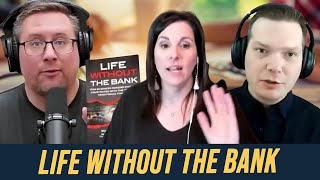
A recorded conversation (Wealth Without Bay Street) with Mary Jo Ermen about her book Life Without The Bank. Mary Jo criticizes traditional bank lending (lengthy documentation, poor understanding of small businesses), explains why she retitled the book to focus on business owners and trades, and emphasizes alternatives to banks such as life-insurance-based strategies (infinite banking), employer bonus options instead of 401(k)/RRSP matches, and the importance of key-man and spouse insurance for succession and family protection.
Chapters
As a business owner, do you plan to be in business with your partner's wife, your partner's family, or do you go in business with your partner because when your partner dies, you're now in business with his spouse or her spouse?
Right.
And is that what you plan for? Because you probably not always are going to like the spouse as much as you like the business owner. And now you have a new partner and you probably don't have the money to buy him out. You. And so why do you not have key man insurance on them? Why are you not protecting your business? So there's the whole, I'm going to get away from the bank and I'm going to have life without the bank. Right. But there's also that whole aspect of can I do I need to take this business over. What happens when it's not what happens if is what happens when somebody dies.
Business owners are frustrated with the BS associated with traditional finance. And we couldn't be any more excited to be joined again by a very special guest, Mary Jo Erman, who has just recently released the book titled Life without the Bank. And we're going to talk to Mary Jo about what life is like without the bank. And so without further ado, Mary Jo, welcome back to Wealth Without Bay Street.
Well, thank you for having me again.
We always love having you.
Yeah, we'll see what kind of trouble you two get into this.
So talk to us about why business owners are just incredibly frustrated with the BS that's associated with traditional finance because.
We have to answer months of I'll say silly questions as soon as you need a loan. Right? It's not. And it's. They don't understand. Banks don't understand business if you can't check the box. Now they're confused. How do you make your money? Why should we give you a loan? How do we give you a loan? Where did you get your money from? Can you make the payment? So it's very frustrating. And so I didn't actually have the title, in case you didn't know that. Jlo. I actually did not have the title for the book until we bought our property.
What?
Well, I had the title. I'm sorry, let me rephrase it. I didn't have the subtitle. I had the title of the book, but I could not decide on the subtitle until I had two months of silly questions and 11 months of bank statements for every entity that I own had to be sent to the bank to justify why they should give me a loan. And I had 80% of the cash I needed to purchase the property.
Like, oh, my goodness.
To be kidding me.
No kidding.
And so everything that Nelson talks about in his book. Yep. You know, Nelson has a whole chapter. I forget what the name of the chapter is, the title of the chapter is, but he has a whole chapter on the cost of acquisition.
Right.
And the fact that my two and a half percent bank loan didn't really cost me two and a half percent. After answering tons of questions. And then I emailed the banker and said, and she's lovely. She was very lovely and she's very nice. And I said, this is why I have a job, because of these questions.
Did you send her a copy of your book?
I did not.
Let me tell you a story about a business owner who was frustrated with the bs.
Keep asking your silly questions because it just keeps making people want to read the book. Right.
Well, I think, you know, every time.
You send something in and then they ask you for another one and you're like, I'm pretty sure I already sent that. And then you send it in again, like, wait a second, didn't you. Didn't I already send that in? And then like you said, 11 months, like, that's. That's an extensive time frame for a loan application of.
No, the loan took three months, but they needed 11 months of bank statements. And they did exactly that, Richard. They were like, well, we need X, Y and Z. I said, I already sent it. Are you going to pay me to do your job on top of it all? Because I'm a little bit ornery.
I'm guessing they didn't laugh the same way you did at that joke.
I'm sure not. I'm like, you know, I hire assistants to do this for me, and now I am being your assistant. That is not how.
Good point. And so, Mary Jo, what inspired you to. Because this, now this is a. I guess a revision or in addition to the previously titled book, wealth without the Bank. The Bank. And so this has evolved into Life without the Bank. And so what inspired you to. To revise it and to come out to the marketplace with this message and with a focus on helping and serving business owners who are going through the experience that you just described. Any of our listeners, whether you're new to Wealth Without Bay street or you're already a subscriber, if you're a business owner, you can relate to what Mary Jo was just describing. When you need access to capital. And so, Mary Jo, what inspired you to revise the. The title to come out to the marketplace with something different.
First of all, the title on the other one just wasn't very good. And so you just admit when something you do is not good, right? And so it wasn't good, it was too long. Because I don't mind reading, but I don't need a whole lot of words, right? It had too many words. I read it and I was like, whoa, I already said that, why am I saying it again? And so I shortened it up short and sweet. And then the title was just because I want to. For me, it's about business owners. I mean, I obviously love everybody, right? And we are, we're all here to help everybody. But I really, I already work with farmers and so I really love that blue collar mentality. I love the electricians, the plumbers, the contractors, the, you know, the small, like if you're getting all greasy, the mechanics, like I'm your person most likely. And so if you're an attorney and a lawyer or attorney, a doctor and you want to go play golf, I'm just not your girl. Like, I'm just like, let's go shoot guns or something. And so I really wanted to, I wanted those people to know that there's something for them because our just the world in general kind of ignores those trade industries, but yet they are the ones out there working and they are going against the grain all the time anyway. And they don't believe that the market is really the place to go. It's just not their nature. And so for me it was just focusing on the individuals that I really, really want to help and the industries that I want to help instead of just the general population.
I think it's really important too because those individuals, those trade type related individuals, they have equipment needs, hey, they need a service van or you need a truck, you need ladders, you need all these types of things for that type of an environment and that's a blanket on the trades and they have to replace those things. So it goes right to the vehicle examples in Nelson's book. And it was a common theme what we talked about. So they have capital requirements and the moment they go from being working for someone else and they want to fly, forge ahead and do their own thing because a, they could probably make a little bit more, they can have more control over their time and autonomy and granted, then they find out that they spend way more time working than they did before. They need access to be able to go and get those things. And they're often self funding it. Well, if you're self Funding it means you're just draining down cash resources. And your book and what you're teaching people is going to show them another way.
And in this book is contradictory to farming in life without the bank is a lot of illustrations just on what are we gonna. What, what happens if there's a 2% fee on your 401k? What happens if there's a 3%, a 4%? What does it mean? Because a lot of, and, and it's funny because a lot of farmers have off the farm jobs and their linemen, their electrician, they're plumbers, they're contractors, they're excavators and they don't want to put their money in a 401K.
Right.
And they, they're just not comfortable with it. And so as a business owner, why, why should we put it there? What do those numbers look like? And in life without the bank, those numbers, I've laid those out so that we can see does it pay to put that money there? Should we as a business owner be offering a 401k? Are we asking our employees, why aren't you contributing? Right. Do you want the 401k? Can we give you another option? Can we just bonus you the match rather than actually putting it in a 401k for you?
Very interesting.
Have you guys ever heard of an employer actually asking their employees why aren't you contributing? I would love to know. I would love for big business to say all you employees who are not contributing, why? And I'm going to guess that the answer is because I need the money today to pay my bills and to live or I don't believe in the risk of the market.
Both likely the most common responses that, that you would get if you were to ask that question and what Mary Jo, the book that she's describing to you is titled Life without the Bank. We are going to include a link be to get your copy and while you're at it, get a copy of Farming without the Bank. This was Mary Jo's first book that was released into the marketplace. And Mary Jo has literally transformed the farming industry and how she helps farming families understand that there are of course there's a better way. There's a better way to go about financing your business where you're in a position of total and absolute control and you're not laying awake at night wondering when the next disturbance in cash flow or absence of money. These are things that you no longer.
Have to worry about.
And so having both of those books in your library is a Great opportunity for you. And when Mary Jo was using the words 401K. So here in Canada, the equivalent to that is the registered retirement savings plan. And your employer, if you're listening and your employer may have that type of plan where there's some form of match or there's some incentive for you to be contributing to that plan, we can share with you. Mary Jo, you can relate to this. Of course, so many people are telling us so much more often that they've really developed a distrust for the financial system in general. I was speaking with a person just before this podcast who said verbatim, I really hate the banks. I hate the banks. I know that there's something wrong and I get frustrated anytime I have to even think of dealing with a banker. And so that may be the experience that you're seeing too in your neck of the woods.
It's everywhere. It doesn't matter if it's Canada or the U.S. right? It is everywhere. And we have, if we want to start a business. Here's the other challenge that I, I talk to my farmers about and my business owners and you guys see this as well. And Richard, you just talked to it. Okay, I'm gonna go, I'm gonna, I'm gonna be an electrician and then I'm gonna go out on my own. So I've contributed to this 401k or this retirement savings. What is it our, what is it?
Registered retirement savings plan.
Rrst.
Rrsp.
P. Oh, plan, yes, plan. Of course, the P plan. Who needs to know how to spell?
Especially when you're writing books. I mean, that's what editors are for, right?
Absolutely. So if you've got, so now we've contributed to this retirement account and we can't even access it without penalty to start our business. Right. So why, if we are entrepreneurial, why do we even start to contribute when we have the solution? They can go see you guys that says, hey, you know what, we can have access to our money to pay our bills today. We can create a retirement account. We can start a business with that money. These employers need to start looking and saying, can we bonus them that match? It's still going to be an expense to the employer because it's a bonus. Right. It's still a tax write off to them. The employee now gets to put it into a life insurance policy and practice infinite banking.
So good employer can provide coaching along that line. They can provide, you know, some incentives to do that. And of course it actually would reduce the administration, administrative burden to just basically Just pay an extra bonus as a wage amount out rather than having to the management costs associated with dealing with the group benefit provider to sort out all these other mechanics. And it's interesting what comes up for me is Willie Sutton's law in Nelson's book and he says when government creates a problem, parentheses onerous taxation. Nelson would always use the air quotes and then they grant you a solution to the problem that they've already created. Air quotes, the a tax qualified plan, you know, 401k RRSP. Aren't you just a little bit suspicious you're being manipulated and it's the equivalent of appointing the fox to guard the henhouse. He says well when they need the money, where are they going to go get it? They're going to go get it in the plan that they've created basically.
Yep. And we fall for it. Right. And I have, I have lots of clients who have actually gone to their employer and said can I just have the bonus instead of having the match, can you just bonus it to me? And if it's not a big corporation a lot of times the employer will just bonus it or they will say that's fine but we need to send a check directly to the insurance company. And so they do, they just send the check directly to the insurance company. But why are we putting money into a. Like I had money in my 401k yet I was constantly starting businesses. I was constantly wanting to buy property. It was just in my nature and so. But yet that's all I knew. Right. Put your money there. Well good job. Then I lost 50% of it and in the market crash and then I had a 10% penalty. Well that was fantastic. That worked real well.
Yeah. So many people can relate to that happening at some point because they're not in a position of control. Someone else has the money and what you know, Nelson used to say rich all the time. What a peaceful stress free way of life it is when you get the banks out of your life. And so true.
Sorry, I'm sorry. Your situation when you had your market drop and that was one of the impetuses of you getting into this industry, getting into infinite banking was looking for a solution. Well the thing that is also important to identify is that in that plan and that structure with the circumstance that happened to you, there's also the multi generational impact which most people just don't think about. They don't consider they're thinking about the retirement account. Okay. So it's there, it's for my retirement. But what about what who lives beyond me? What happens afterwards? We're always looking at money passing beyond our own lifespan. When you start to understand Nelson's principles, dollars work non stop. And the moment that we no longer have them to work for us, we're cutting off the ability for them to work for everyone that follows us too.
Yep, very true, very true. And what in the book, Life without the Bank. So what is one of the key messages that you would like the reader to take away from the book?
That you don't need the bank.
All right, the book. Come on, Jason, the book is only one page long and it's free. Richard's like, great, I can put it on my credit card.
Yeah.
Well that's a pretty important message because if you want life without the bank, then you probably don't need.
There it is. The solution is all right there in 99 pages or less. Yeah, it is. It really is that as an employer, as an employee, you have to think long term. Right. Are you going to be at that job forever? What are your taxes going to be that we've been lied to. I can't tell you how many. And you guys are the same way. I'm sure you have 65 year old clients coming in saying, help me, I'm in tax trouble because I was a really good saver and now I'm being punished because I'm in a higher tax bracket.
Yeah.
So it still addresses if you're an employee, what do we do? But it's more geared towards that business owner that says, why are you doing that to your employees? Open your eyes and look at what you're doing to yourself. Because first of all, your business is putting money into a 401k for you. Why? When your business could be putting money into a life insurance policy. If you have a partner in your business that, why don't you have key man insurance on them? Are you saving your business and your partnership? Do you know your numbers? You can't run a business without knowing your numbers. So know your numbers, know your employees and just, it's really just opening their eyes that it is a possibility. Right. How many people do you guys even run into that you say wealth without Bay street not possible. Right. Like we have this automatic response from people that says you can't do that. Oh, but you can.
You sure can. And it works wonderful. And you know, a few things that you said when we talk to business owners and we, we share the example of the, the hog farmer who, you know, was delivering hogs to, to market and got t Boned at the intersection and all the hogs were destroyed. The truck was right off, and the hog farmer was tragically killed in the accident. And when the family got together, they confirmed that the truck was insured, the hogs were insured, but the most important person on the balance sheet wasn't, and that was the farmer. And so when, as a business owner tuning into this episode, take a look at your balance sheet and make sure that the most important assets are showing up there. And that's you and the key people in your business. And so when you hear key man insurance, for most business owners, they. It's a term that they're unable to relate to. But when they hear the story, they immediately catch what's going on. Like, yeah, that's right. Why wouldn't the hog farmer have insured his own life? It's not that anybody hadn't spoken to him about it. Business owners have been there, done that, got the T shirt. When it comes to advice from financial professionals, it's just whether or not they decide to take action. And like Nelson describes in his book, he talks about there has to be a desire to change and there has to be a change in priorities. Business owners are busy being busy, but they do prioritize what they find important. And so once they see the importance in this, they take the right action.
I don't think anybody's talked to them.
Go ahead, Mary Jones.
Sorry, Richard. I don't think anybody's talked to them about what happens when they die. Yeah, and, and I, I kind of call them out in the book on that. I was a little bit nicer than I probably normally am. But it, when you die, your spouse does not go, oh, well, Richard's dead. You know, I'm just gonna go take care of the kids tomorrow. And, you know, I suppose I'm gonna have to figure out what to do. That is not what happens. Like, we do not think, as a business owner, we are not thinking about, huh, what happens when my partner, my business partner dies? I mean, we. I have a client that has a business partner that is 60 some years old and uninsurable. Now his term insurance ran out and he's uninsurable and he needs to buy out the wife. Oh. So it probably be important to have the right kind of insurance on him. And we don't think about if our spouse is important and should she be insured. Oh, this one drives me crazy. Right. Because. Oh, well, like, let's just use. Richard, does your wife. Your wife takes care of the kiddos, right?
She does an amazing job at that.
Yeah.
And it is a full time job. So time.
She works longer than I do.
So most people would say. And you guys see this all the time as well. Well, I don't. She doesn't need to have insurance. I'm the breadwinner. Oh really? Because you ain't making any bread. If you gotta bathe the kids and feed the kids and take the kids to school and take them to all their sporting events. And Jason, you can relate to this one. Emotionally take care of them upon the loss of eight parent.
Definitely. Yep.
That is. And emotionally take care of yourself. Sorry, but mom is probably should be insured for more than you because you're gonna have lost income. Right. And when you start when like that's how I describe what the death benefit is for. Because to me the death benefit is not to replace. The death benefit is not to cover expenses. It is to make sure that we can mourn and take care of our loved ones in the time necessary to mourn. Somebody might mourn three months, right. Somebody might mourn 10, 15, 20 years. We don't know what that's going to be like.
And it provides critical resources that are needed to allow everything else to continue on, you know, life. Life doesn't stop because that event happens. It continues and it actually just gets a lot more complicated. And we're not accustomed to dealing with that complication. So we need capital resources to be able to deal with what comes up, the unexpected. And I mean insurance is just such a beautiful thing. It is free. People in free contract with one another voluntarily. No one makes you do it. To be able to solve a financial problem that is much bigger than what you're putting in to solve it. I mean, for pennies on the dollar, you can underwrite time. You just have. You can have peace of mind because you have set things in motion so that the family will be looked after. You yourself or your spouse will be looked after when the event happens. Because it's going to happen. We all know it's going to happen. The only thing, two things, death and taxes. We all know that those are the consistent things. And we can't. Most people don't insure the most important one, which is your own death. It's insane to me.
I don't get it. Well, and the only thing that doesn't get worse every time politicians meet is death. Isn't that good?
Well, we don't. Let me just add too. As a business owner, do you plan to be in business with your partner's Wife, your partner's family, or do you go in business with your partner because when your partner dies, you're now in business with his spouse or her spouse, Right? And is that what you plan for? Because you probably not always are going to like the spouse as much as you like the business owner. And now you have a new partner and you probably don't have the money to buy him out. And so why do you not have key man insurance on them? Why are you not protecting your business? So there's the whole I'm going to get away from the bank and I'm going to have life without the bank. Right? But there's also that whole aspect of can I do I need to take this business over. What happens when it's not what happens if is what happens when somebody dies. Because we just said it, it's guaranteed to happen.
And in that situation, if you didn't have the capital and you needed to buy out the spouse, well, now you've got to go beg, borrow and steal from the bank. And then you have to because you're the business owner because of what's just happened. There's an impact on the business probably in revenue, etc. Because we've lost that key individual. So they're less likely to lend you the money. You got to fight tooth and nail to get it. Fill out all the Mickey Mouse forms just to be able to be in a position to go into debt in the business that was probably debt free to buy out the spouse's part, you know, so that you can continue on with the business. Because there's employees or staff, there's people that need, that need the business to continue running. People's lives are dependent on that business being in operation.
Or you can read Mary Jo's book titled Life without the bank and put yourself in the driver's seat and create, create your life without the bank. This is a must have and we've included a link in the show notes to get your copy. And as I mentioned earlier, while you're picking up a copy of Life without the bank, be sure to get your hands on a copy of Farming without the Bank. Now you may not be a farmer, but you may know someone who is and someone who can benefit from the gift of that knowledge and the process. And you know, we, Mary Jo, it's always a treat to have you on the show and congratulations, congratulations on the launch of your new book and we're really looking forward to sharing it with our Wealth Without Bay street listeners and of course with our, our Growing community of clients. And we just appreciate you probably more than you know.
Thank you. Thank you. Appreciate it.
And we're going to ask you. Because we've asked you the hero question, so we're going to ask you something different. And that different question is, when can we have you back? Mary Jo's waiting, you know, in suspense.
Like, well, you always.
What's he gonna ask me?
Questions? You're like Mr. Deep Thinker, and I'm very shallow over here.
Well, we'd love to have you back.
Yeah, anytime.
I think another great question would be, when are we writing the Canadian edition of your book?
I was just. I was just gonna say JLo said create life without the bank, so that could just be the Canada version. Mm.
Well, then let's get some comments from listeners. Go ahead and comment if you would like to see the Canadian version of Mary Jo's books. And I'm sure between the three of us, we can make that. We can make that a reality. Mary Jo, you're awesome.
Thanks.
And for everyone, for everyone's on the YouTubes, just look there. You're going to see a playlist, and that playlist is going to provide you with ongoing resources. We encourage you to continue viewing, continue watching on the YouTubes, and if you're subscribing via your favorite podcast medium, then please get in touch with us with any thoughts, questions, comments, and we'd love to hear from you. So thank you so much for tuning in to Wealth Without Bay Street. Richard, any parting remarks for today's listening audience?
Just excited for our audience to hear. Hear Mary Jo, because she always brings a ton of value, and she has a perspective that I think people will always appreciate because she just tells it like it is, and she shoots from the hip. And that's one of the things that I appreciate and love about you, Mary Jo. Thank you. You continue being.
You just do you without the bank, possibly without a contractor. She gets in touch with them later without a contractor.
More from Richard





How Do You Use a Policy Loan to Buy Dividend Stocks? #dividendstocks #infinitebanking #shorts


Can Compounding Dividends Pay Your Bills? #wealthbuilding #investment #financeeducation


Should a Corporate Policy Offset Your Personal Coverage? #shorts #insurancetips

What Is Human Life Value? #shorts #insurancetips #dividend #wholelifeinsurance