Maximizing Marketing Through Effective Copywriting
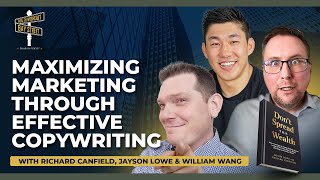
Will Wang, founder of Growth Labs, explains how to write copy that converts. Start by researching what your customer actually wants through interviews and Reddit, then test your offer on a small list before scaling. Split-test headlines, use AI to speed up research, and hire the right people instead of trying to do everything yourself.
Questions this video answers
About 5,000 people.
$20,000 per month.
$22,000 in a single month.
$80,000 in three months.
A team of 10.
Chapters
I think a lot of my thinking around business recently has come back to the idea of, well, why don't we just slow down our growth? And obviously growth is great, but why don't we do it with the right people, right? Why don't we focus on team instead of just this idea of let's go and grow hack something, let's go and scale it to the moon. It's more about how can I be doing the same thing I'm doing in 10 years or 20 years and actually still enjoying it.
So what exactly is the value of good copy? How can you create, create growth with your business by getting 80% plus open rates on your email and drastically increasing your replies. We're going to talk about that plus a lot more with Will Wang now. Will is the founder and CEO of Growth Labs. It's a result focused marketing agency that specializes in B2B companies getting qualified leads and turning them into dream clients. Will, we're grateful to have you with us on the program here today.
Thanks for joining us guys.
You know, very appreciated. Thank you so much for having me on here. I can't wait to get into the conversation now.
I understood before we hit the record button. So you're joining us from Australia, is that right?
Pretty much the other side of the world. So as you go into summer, I go into winter and as you go into nighttime, I'm, I'm starting my day. So literally the opposite side of the world.
Well, we really appreciate you, you know, being generous with your time and joining us on the show and because as we were sort of just chit chatting a little bit before recording, a large segment of our audience are at different stages of their entrepreneurial journey. Whether they're, you know, sort of initiating from startup and they want to move their business to sustainable or they're in sustainable mode, they want to move the business to durable or they want to move it from durable to scalable. And there's likely different approaches that, that the business owner can take to develop and nurture, you know, prospective clients to sort of filter out the ones that maybe just aren't a good fit. Not necessarily never, but maybe just not yet. But walk us through sort of what excites you the most about your business and how it helps entrepreneurs.
Well, that's a really, really great question actually. What is what excites me about the business? I think one of the things that really gets me, you know, going and excited is actually the results. And I know it sounds cliche and other people might have seen it, but to See the transformation from, you know, struggling with marketing or struggling with business and then going and having this, this ability to just get more leads and to grow and have that peace of mind, knowing that they're going to be taken care of, I think that's such a powerful thing. Um, so for me, when I see that transformation, whether it's, you know, obviously this is more on the sides of smaller to medium sized businesses where you go in and do a good job. And now it's like this is the piece of the puzzle that they've been missing. And that relief that, that people feel is, it's, you know, it's a, it's a, it's a very warming feeling. It's a great feeling. So that I think is the main one. And just the fact that I get to sit here every single day and just play and be creative and throw things at the wall. I've always been, been a tinkerer, always been creative. So just being able to think and write and just try, try things at work and be okay with failure, I think is, is quite fun for me.
The one thing I would share, in addition to what you described, is that we speak to entrepreneurs all the time who have dismissed email as a method of connecting, nurturing, developing. It's one thing to generate a lead, but it's a whole other thing to develop it. And if you have a list, you have an opportunity like that that's probably more prevalent now than it has been for a very long time, but would love to hear your thoughts on that.
Yeah, it's one of those things. I mean, I see the email from two sides of the equation. I see it from the cold email side which we, we do a lot of. And then I see it from the list nurturing side as well. So I'll give you a couple of ins examples that I've come across recently. So we work with this fit this business recently which is in the online space, you know, a, a coaching kind of business. And they were struggling with, with leads, but they've been in business for a while. They had this email list of about 5,000 people and when we first spoke, they're like, I don't know why I'm talking to you. I think my email is dead. You know, it's just, I, I don't think this is going anywhere. So we went back and looked at his list and it was actually pretty good list. So people who had heard of him before, previous customers, he, he just never reached out to them. And so in the first month we're working together, his business was doing about $20,000 a month. And we went back to his email list and launched an offer and we did 22,000 in a single month into his list. So he doubled his revenue for that month going back to his email list. So that's just one story where it's like, oh, okay, maybe email isn't dead. Maybe it's just that we haven't tried it or we haven't done it in the right way or it's just something else hasn't been working. So, so we think it doesn't work, but, but it absolutely can if it. I had another client who is also based in Canada actually, and he is a consultant. And you know, for him he thought the email, the cold outreach wouldn't work, but turns out he didn't have the right offer or value for the cold outreach. But once we switched that, I think we generated an extra 80,000 in three months. And he's a consultant that works with big, big manufacturing companies, you know, just, just, just large multinationals. And, and so the results were just kind of mind blowing. But a lot of them started from the place of look, I don't think this works. And you know, I've been around in marketing for long enough to know that it's not does it work or not, it's how do I make this work for me?
I really like that distinction. It clarifies things a lot because, you know, everyone's chasing after that next big shiny, you know, glowing object. You know, what's the next big best thing, the next best thing in marketing or the next tactic or what have you. But there are solid and consistent things that seem to work no matter what. You know, I, I never watched the show Mad Men, but I understand it had to do with, you know, marketing agencies and that sort of thing. And so there's, there's some, there's some consistent aspects about marketing that seem to be evergreen. They, they never seem to go away. Now, from your perspective, will being kind of an expert around email and sales copy that something that really kind of gets you juiced up? From what I understand. Walk us through a little bit. And for our listeners, you know, what, what is the importance of making sure that whatever the language and the copy that you're using is on, on point with matching the business and the business owner's intent? Maybe. Can you expand on that?
Yeah. So the process that I kind of think for right when I, when I write copy for myself and my clients is I start with what is the transformation that we're selling because ultimately regardless of technology and we can talk about that and touch on how technology is going to change. But regardless of all of that, it comes back to us as humans. We've got the same psychological needs. We still think in a very similar way to how we did 100 years ago. We've still got similar wants, things like that. For me as a copywriter, part of my job is to be almost a psychologist and know what people are thinking and feeling and if you can tap into that, I start with the idea of what is the transformation that we're selling because all businesses and all you know, people in business do is take, take the customers from one point that they are now and take them to a hopefully better point. And if we can articulate that properly, that's kind of the, you know, the very start of, of, of copy, right? How can, what can we do to improve your life? And it really is about the customer. So one of the things that, you know, I see a lot in copy is people talking about their, you know, we've been around for 150 years, great, but what does that mean to the customer? It doesn't actually mean a lot. So I start with the idea of, you know, what is the transformation that we're selling or trying to sell and what's going on in our customers minds at the moment? What are the objections? What are they unsure about in going ahead of our services? Right. What are they thinking? There's a, there's a very famous line, I forget who, which marketer said this, but if we can get into the conversation that's going on in our customers minds, your job is done right? You can close the deal.
This September 12th is don't spread the wealth day. Get a copy of our new book Don't Spread the Wealth. How to leverage the Family Banking System to own all the gold, make all the rules and enjoy Generational riches. This book is jam packed full of incredible bonuses that we've put together including our 15 page guide to hosting your own family banking meetings. Pre order your copy today using the link down in the description or Visit don't spread wealth.com that's don't spread wealth.com. learn how to keep the money in the family so you can prosper together for generations to come.
I agree with that wholeheartedly. First time I heard that was at a Joe Polish Genius Network annual event. The very first one that I attended and I can't recall the gentleman's name who was presenting at the time but he, he was the one that literally shared the same thing verbatim. And it just resonated with me so clearly in that, in that moment, I just thought, wow, I had never heard somebody articulated that way before. Get inside the conversation that's already happening inside of your prospect's mind. And that was one thing even for us too. Like recently in looking at some of our, you know, online assets and reevaluating and looking at. And saying, wow, okay, this is a lot. Contains a lot about us, but not a whole lot in response to the conversation that's going on in our prospect's mind. And so we're literally actively in the process of, you know, putting a complete. Doing a complete brand over of all of that, because it, it's time. And the conversation in your prospect's mind shifts too, right? It's. It's not something that's etched in granite. I mean, it's dependent upon what's really happening in their world and the problem that they're trying to solve. And so, yeah, I agree with that statement completely. And so what's that process like when it, When a prospective client engages with you, what is your method of sort of getting to what's going on in the prospect's mind?
Yeah, that's. That's a great. That's actually 90. Copywriting is, is how. How do we answer that question? So I would say I, I like interviewing a lot, so I interview my clients. I interview their clients and customers. I look at different websites. For example, I'll go and look at Amazon and look at books that are published within the, you know, just within the industry, and look at what are the questions people are actually asking? What are the comments people are leaving when they do reviews. I would go down a rabbit, rap Reddit loophole, loophole, and just really dive deep into their area and just really look at what people are saying, because it really is about, you know, people. There's so much information on the Internet that you can find where it's people asking questions. So I would go into where the audience already are and just talk to them, actually get from. From their mouths, what are they saying, what are they feeling? And then from that, you can kind of extrapolate. Well, what do I think is. Is the emotion or reason behind this? Why do I think they're asking this question? What is the meaning behind all of this? And if you start reading between the lines, you kind of get a feel of where, Where. Where people's emotions are.
Wow, that's really interesting. I like that approach. And it's A lot of legwork.
It almost like being a detective, but for the, the marketing aspect of, of a business's needs, I really think that's very interesting. And so as you delve deeper into that and you get some more clarity, you get concise about what is happening. What, what is the, I don't want to say hot buttons, but the, the, the levers that are available to really help provide a solution. And, and, and, and ultimately you're trying to figure out how do I place the solution that's going to solve this dilemma, this problem that this individual has right in front of them. And being an expert at email, that's one of the delivery methods. But that delivery method needs to capture them right away. So obviously subject lines in the first, you know, part of the body text. So I'm curious, you know, you, you define and get clear on what that emotional connection is, and then you, you get clear on what the business owner's solution is. Now, do you get into the copy zone? I'm sure as you're doing this, you're coming up with all kinds of ideas on the fly, but where does the rubber hit the road? How do you begin? Is it, is it a testing process? Do you say, hey, let's put a couple feelers out there and see what connects right away is a lot of split testing. What do you find works really well for making sure you're getting the right message to the right individual?
Yeah, that's, I approach it a little bit differently as well, because I think in the research phase that I go through, I get such a good understanding of the customer. Sometimes I look at it and go, well, actually, I, I don't think your. So I'll say to my clients, I don't think your solution at the present state actually meets your customers where, where they want to be met. So if that's the case, we start and we, we redo offers with them because ultimately the offer has to carry most of the weight. It's really hard. You know, the copy is great. It can get you to the final step of the process, but it has to start with the offer. Because no matter how good your copy is, if the offer isn't what your customers are looking for, it's, you know, not the right price point. For example, price isn't as much of a, you know, but if it's just not addressing the right needs or wants or how they want to buy, then it's just, just not going to work. So an example of that is I had a client who sells leadership Coaching and, you know, when, when the economy is great, it's a great product, right? Businesses have big budgets. I want to put into, you know, they want to invest in their stuff. But when the economy turns, one of the first things that gets cut is spend like that people getting laid off, they're not going to spend and actually, you know, bring on this external person because it doesn't look great to staff who have been let go. So then it's like, okay, if that happens, we've got to switch, we've got to switch the offer. What are we pivoting to? Because then, then we write the copy. Because if we keep talking about the same, same offer and, you know, same way of doing things, even if the copy is great, right. Even if it worked previously, it might not work going forward. So we typically start with looking at the offer, looking at, you know, have the needs changed. And only after we do that, then it's like, okay, we know it's a good offer. We know people want this. Sometimes we'll even soft launch the offer into, into a warm list, for example. That works really well. And once we do that, once, you know, the office validated, then we go into massive split testing. So we'll split test, you know, the approach, the angle, the headline. And, you know, sometimes we'll even do 10 headline split tests just to figure out like, what is the actual languaging that gets the attention of our market.
Wow. And where do most entrepreneurs in your experience get it wrong?
I think they get it wrong in selling to themselves. So the amount of times that I've heard, I don't think that's going to work for my market. I don't think that's going to work for our customers. We launch something and it just takes off. It's very easy to say, oh, I wouldn't buy them myself. But then you're so close to the product, of course you wouldn't buy it because you've got your, your, your own, you know, you have your own perspective, but your customers aren't you, Right. Your customers are customers. They've got different needs and wants, they've got different dreams and fears. So you've really got to put things out to market. And it comes back to Henry Ford, quote, I believe was where he says, if I asked my customers what they want, they would have said faster horses. So it's the whole idea of like, don't get inside your own head, Throw things at the market, see what works and, and then scale the things that are working best.
That's that's great. And when you are, you know, evaluating a potential, you know, client, I guess. What are the, what are the optimum mindsets of clients that you most love to work with?
That's a really good question. I mean, we work with so many different types of clients, but I think the ones that are most successful.
Just.
Open to, to, to testing.
Right.
They're open to just saying, look, you're, you're here for a reason. You know, we've hired you because we, we, we think you're an expert at what you do. So rather than hire buying a dog and then barking for it, even if I don't think what you're doing is going to work, you just go and do it and just prove to me one way or another if this is going to work or not. Yeah, they're just being open to, you know, having enough humility to know that they don't know everything about the customers or they don't know every single thing about market and just being open to new ideas. I think that's essential, especially during times of change.
Go ahead, Rich.
Speaking of times of change, I mean, we're living in a world of, I would say almost exponential change to a varying degree, certainly in the technology sector. I had the privilege to go and attend a traffic and conversion summit at the beginning of January in 2024 and, you know, learned, learned a ton there. It was my first time attending that event and what one of the themes was a little bit was around AI or AI adjacent to some degree. And there was a lot of discussion and talk amongst the many speakers that were there about changes happening in the marketing industry. And it wasn't that, you know, AI was going to, you know, to use the term disrupt, which is not really my favorite term, but it wasn't going to change things drastically. However, it was going to create great opportunities for marketers to then almost carve out a deeper or better niche in what they do. For many people who are just doing the same thing and they're wholly reliant on tools, it was probably going to make a larger, probably negative impact for them. But for the people that were actually focused on, like you say, good copy, getting really clear on that customer need, the customer journey, and then being able to identify and bring that, it would actually elevate them to a larger degree. So I'm curious where you see the, the, the change in the innovation happening in the marketing industry and then what has you excited about that?
Oh, that's a really big question. Okay, so what changed? I mean, for me, anyway, I, you know, just to be quite open with you, I use AI every single day. Like I've really got into it. I love the idea of having this robot or machine that can kind of help me things. So I've been playing with every single day. And at the moment, you're right, it's not, there's not anywhere near enough or good enough to replace marketers, right, Mark, there's still a place of marketing, there's still a place for, for psychology. Because I think until the robots are understanding how the human mind works in terms of, you know, our, our emotions, our fears and wants and dreams, which doesn't always. It's not very obvious on the first layer of copyright. It's almost. Sometimes that's implied kind of between the lines. And at the moment, I think AI still hasn't got enough data to read, to read that kind of sentiment. So until it does that, I'm not worried about, you know, copywriters being replaced by AI. What I, what I do see is that it's a massive opportunity for, for research. So whereas research used to take me days or even weeks sometimes, research can be really condensed into just a few hours at the moment because it's got this whole massive amount of data and it can collate it and, you know, just look for it and filter it for me. So now instead of having to go through on Reddit and just spend hours and hours on that, I can just ask AI, hey, what do you think about this market? What have people been saying about this? And it just goes and gets information patches up really nicely and actually just, just, just, you know, just spits it out and then you can really go deep into each one of the different areas that it comes back to you with. So I think the main thing is that opportunity is around a lot of the grunt work around the research. Obviously sometimes it's false. It pulls in wrong information. In the very early days, it was easy to actually manipulate data, so that wasn't, wasn't very helpful. But I think the research piece is kind of where I see most, you know, most of use at the moment. But that being said, it's also. I think it will get better. And I think as you give it more data, obviously it has more, you know, more power behind it. So as an example, I've kind of built Willbot within, in ChatGPT and I fed it a whole bunch of transcripts and podcasts. I fed a whole bunch of email sequences and just in my entire mind. And sometimes I'll talk to it and go, hey, I'm running this campaign, struggling to come up with angles. What would you think? And it comes up with some really interesting things. It's about 50, 50. Sometimes I'm like, oh, that's actually kind of interesting. Like, why didn't I think of that? But sometimes it's like, this is rubbish. So it's still very, very hit in this.
The nice thing is you're able to have that conversation and ask it so it can generate. So in the time it takes you to generate the rubbish ideas and the good ideas, you can have immediate feedback and you can automatically select the good ideas instantaneously. So what I. What I think I'm hearing and maybe correct if I'm wrong, will. But the ability to create more speed of implementation in the way that you help and serve your clientele is really the key advantage that you see presently. Is that right?
Yeah, yeah. I, I think speed and creativity in the sense of just having someone else to bounce ideas off. So, like, for example, within my business, we're 100% remote, so sometimes it's a bit hard to sit down and actually brainstorm with people. But sometimes that's where the magic happens, right? Where you're actually in the room and it's the seemingly brand my d. If you can draw. Draw the line back to, you know, just between two dots that don't look like they can fit, that's where the magic happens. And having AI is kind of like having someone in the room you can brainstorm with. And sometimes, I mean, my best copy comes from actually briefing my team on how to execute the copy. And as I'm talking through the process, my mind's working. Oh, actually, why don't we do this? So I think that's kind of one advantage is having this other entity there, which you can actually bounce ideas around with.
And how can someone spot a good copywriter? Like, what would your. Would your advice be? Like, hey, here are some traits of a really good copywriter.
Oh, that's.
That's a really good one, actually, because. Oh, I think that's a really hard question to answer. So answer a different question. I would just make up a question for myself With, With. With the.
There's a sign of a good copywriter.
How do you spot a bad copywriter? Because a good copywriter. And it's also different because some copywriters specialize in certain n. You know, some don't. But if we flip the script and say, what makes a bad copywriter? Well, I think what makes a bad copywriter is someone who doesn't do their research, someone who isn't learning or isn't really developing, someone who doesn't understand business at micro and macro level. So what, what I mean by that is they might be really good at putting words on the page, but do they understand what the economy is doing? Do they understand the sentiment that people are feeling? Right? Are people in the street struggling? Are they worri worried or are they hopeful? Is there a lot of cash flowing into people going out and spending more money? Are they holding onto cash? That kind of thing is very important in the grand scheme of things. And copy can't work in isolation to markets. So I think someone who isn't a good copywriter doesn't understand that. They just think, how can I trick people into actually clicking on buying? And I think the last one I would say is signs that you. People who aren't a good copywriter, people who are not willing to be wrong or, you know, they're very protective of, of, of copy. So I always say when I work with my clients, I want to test what we've got or what I'm writing against your controls. If I can beat it, great. If not, then I'll go back to the drawing board, I'll take my lessons, look at why we couldn't beat your control. Now come back and try and do it again and again.
Wow, that's great. And who do you, who do you look up to in the copywriting space?
There's so, so many people. I think the, the original ogs has to be Gary Halpert. Yeah, you know, he, he was, he's, his books have been instrumental. Neville Medora is, is someone that, he used to work with Appsumo. He, he has a very conversational, fun style of copy. So I took his course very early on in my copy career and it just gave me the idea that I don't have to be, you know, I can put jokes in there, I can make it funny. So that was quite influential. Someone recently is Alan. So, so, so he runs a group on Facebook. Could never held back. He is, you know, great at thinking about business in general, but also great at copy and just so, so many other people. I mean I'm, I, I am the product of, you know, the copywriters have come before me. You know, five or ten copywriters that I just really geek out about. But you've kind of put me on the spot. I'm like, I know there's five that I always get back to, but you know who. And I'VE got the books on my bookshelves, but it's like, oh, I just don't remember them now. So there's a lot.
There's a lot.
Oh, it's great to be. That reminds. That'll remind Richard and I of our late mentor, R. Nelson Nash, who often said that there's no such thing as having arrived in knowledge. There's always something new to learn. And it sounds much like yourself. I mean, you're the sum parts of everyone who's mentored you along the way. And so your clients, you know, benefit from your insatiable appetite to learn and to, to always refine your craft. And that's a signal of a good copywriter.
Well, I think it's interesting we're talking about, you know, the, the people that inspire you. And of course anyone watching us on YouTube will see, of course they can always see. Jason's got his entire library behind him and Will's got an equally giant sized library behind him. And right on his top shelf I can see $100 million offers by Alex Rosi. It's up there. He's got a whack of obviously very interesting books. And before we hit the record button, he popped up who, not how, of course, which is one of our favorites here. Something that we talk about frequently. And I'm curious, maybe William, what, what would be a point where you know, who, not how, or maybe some of the other works that you may have read from, like Dan Sullivan. I know you're very into coaching and you recognize the value of having great coaching and inspiration. What, what's something that's maybe shifted or changed for you after having gone through the book? Who, not how and how, how would you say that that's connected to you and your business currently?
Yeah, I mean, I'm, I'm actually only just making my way through it now because I actually read 10x is easier than 2x first. And so from that I've, I've just, you know, so the reason why I, I had on hand is because I only got the book a couple days ago. So sitting on read it. But I think from Dan Sullivan, just the concept that, and not just Dan Sullivan. You know, I've got, I've got other people who've got similar messages. So next to $100 million offers is my, my business coach, James Schramko, and his book is Work Less, Make More. And so just the idea of we don't have to be the one who is, you know, doing, doing the hammering. We don't have to be the one grinding for 12 hours a day to drive this business forward. It really is about the right people around us. It really is about leverage. And you know, this idea that business is meant to exist to make our lives better and we're not meant to exist to just, you know, build this business or just give everything to it and, and drop everything else in our lives. Right? It should be our lives first and then the business. Whereas I've made the mistake of trying to grow too fast, too quickly, you know, trying to grow too big, too fast, I should say, and just going through the whole process of just throwing everything at the business and still not getting it to, to, to kind of where it needs to be. So I think a lot of my thinking around business recently has come back to the idea of, well, why don't we just slow down our growth? And obviously growth is great, but why don't we do it with the right people, right? Why don't we focus on team instead of just this idea of let's go and grow hack something, let's, let's go and scale it to the moon. It's more about, you know, how can I be doing the same thing I've been doing in 10 years or 20 years and actually still enjoying it?
That's well, the, the one thing among many that you'll pick up in who not how in particular is continuing to rethink your thinking around wherever you want that business of yours to go. Your brain immediately goes to how, how am I going, how am I going to make that business objective an achievable reality? How am I going to take this project and scale it? How am I going to. Whereas Dan is helping you to think about your thinking and to shift it to who can help me get the house done? So who possesses the unique capabilities to help me get the house done? So you end up spending your time being a who finder and then you unleash the right who's on the getting those how's done so that you can continue to be freed up in your own unique ability, which is research and creating the copy and arranging the split tests and all those wonderful things that are involved in your profession versus being bogged down by all this other stuff. And, and the more you grow, the, the more people that you're interacting with and working with, you've also have. You have to develop the ability to. We talk about nurturing leads, we got to nurture teammates too. That that's a whole different, completely different skill set so that your, your business can can move forward with people who are really fascinated by the work that they're doing. And it. You're constantly fertilizing and watering and nurturing your team too. So that's part and parcel of the responsibility of leadership.
I'm.
I'm. I. I mean, that's. That's, you know, I'm. I'm so excited to actually read it now that you've said that. But, you know, just going back to the concept, I think this was about three or four years ago and just, you know, a story to kind of. I don't think I was mature enough as an entrepreneur to. To internalize a lesson at that point, but it would have. Or five years ago, where I was on a mastermind, floating in the middle of the ocean in Maldives, and there was a guy there that, you know, his business was doing phenomenally, and he was doing 50 million a year or, you know, if. If. If not potentially a bit more. And he had this. Our necklace, right?
It was.
It was this. This owl, like the bird owl. And so I asked him about that. Hey, that's such a cool necklace.
What.
What does it mean? Like, why did you get that? And his friend made it for him because he's. His catchphrase was actually who, not how. So he used to go around to everybody and go, who, who, who? Like, who can help me solve these problems? To the point where his friends made a joke out of it and said, you're an absolute owl. You just flow around. Instead of saying, how, you said, who, who, who? Like, you make the L sounds. So you got this necklace made for him, and this is, like this, you know, massively successful entrepreneur, $50 million a year, completely bootstrapped, super profitable. And at that point, I was like, oh, that's really cool. But I don't think I internalize it, because I then went back to the how, right? How do I write copy for him? And all of this. But now that it's been a few years and I've gone down the team route and we've built this. This team of 10, now my mind's like, okay, I think it was right all along. Let me go into the who mode as well. So very excited to actually dive into it. You know, I was very excited by. By 10x and. And how it's like going into this book. I think I'm in the right stage for it.
Yeah, that's. I'm sure you are, just by the sound of what you're sharing, no doubt. And.
Well, I know. I know Dan will be Very happy to have people all over the world reading that work. And I had the pleasure of attending Dan's 80th birthday about two weeks ago in Nashville, which was absolutely phenomenal. So really good. And of course, a lot of people in the conversations I had, there were many individuals who've been impacted by Dan Sullivan and his, his amazing organization strategic coach, but impacted by the books 10x and who not how, among others. And just the way that it, it raises the level of thinking and then when you're in an environment of people who have that similar mindset. So if you're talking to someone who's read 10x is easier and 2x versus talking to someone who hasn't already, you have a way that you can have discussions that are slightly different than you could prior to reading that book. And the same, I suspect. And I'm happy to maybe get an email from you. Reach out, let me know. But after you're done reading who not how, you're going to see a similar thing take place when you're connecting with other entrepreneurs in your community, in your circle, and even maybe some of the business owners that you serve. And I would even go so far as to say that, you know, Will, it may be a fun and interesting experiment to see how many of your clients that you currently serve either have a copy or you can get a copy of that book in their hands. It might be really something that creates a very interesting, unique experience for your relationship with your existing clients.
Yeah. And it cements it, too, because they're like, oh, my goodness, Will is the perfect who to help me get the houzz done. And you can even put a bit of copy in the book and make a joke about that and say, like, look, I'm doing this to subliminally program you to make sure, make sure you keep retaining me.
That's amazing. I love that. That's awesome.
Amazing.
Yeah.
Go ahead, Rich.
Well, well, we absolutely love not only that you woke up very early in your time zone to be with us here today, but sharing a little bit about your journey and how you are actively going out and supporting entrepreneurs by being who for them in the marketing category and even just some of the quick stories you share with us about some of the recent successes you have with clients and, and how they've been able to take an existing list and translate that into instant revenue in a very short time frame by making subtle tweaks and changes. I think it's really important for our listeners to recognize sometimes all it takes is one slight Adjustment, one slight change that can have a really large ripple effect. I know it's something that we talk about and we preach in relation to your day to day finances and your cash flow with respect to the infinite banking concept. And so really in the marketing category, you're doing that as well. One of the things that we like to do when we seek to close our show is we want to check in and say, you know, if, if you are thinking about how you go and serve people today and you could share with our audience, who is it will that you would most like to be a hero to?
Wow, that's really powerful question and actually the first time I've been asked that. So yeah, that's an absolute amazing question, I would say. I think as I was coming up through my journey as an entrepreneur, I started being this gig who worked in it, who sat behind screens, didn't really understand how to talk to people. And so that part of the journey was really hard for me. Going from introvert to actually selling and asking people about numbers. I think for me, the small business owner who is going through that journey of just trying to make things happen, make things work, or even someone who is, they've got a side hustle but they want to turn into main hustle, just being able to help them kind of live life in their terms. I think if that's the person that I can help or even if I can even just help one of them, I would be very happy with that.
That's incredible. And we really appreciated you sharing your insights and it sounds like you're also well on your way in your own entrepreneurial journey. But read who, not how and share, share those insights with us. We can even do a follow up episode and just have a more broad discussion about it. Those are always fun and this was a great conversation. And to all of our viewers on the YouTubes, you just saw another video pop up courtesy of our incredible editing team. Because we want you to continue your journey of learning and so we have recommended that specific video for you to learn. So continue your journey of learning. Thanks for tuning in guys. This was a lot of fun. Make the rest of your week outstanding and we'll include some coordinates on how you can follow William and what he's up to. That'll be in the show notes in the YouTube's description area. So keep a close eye on him. He's going places. Thanks guys. This was a lot of fun.
Thanks guys.
More from Richard





How Do You Use a Policy Loan to Buy Dividend Stocks? #dividendstocks #infinitebanking #shorts


Can Compounding Dividends Pay Your Bills? #wealthbuilding #investment #financeeducation


Should a Corporate Policy Offset Your Personal Coverage? #shorts #insurancetips

What Is Human Life Value? #shorts #insurancetips #dividend #wholelifeinsurance