Money School: Life Before and After Infinite Banking | Chris Naugle
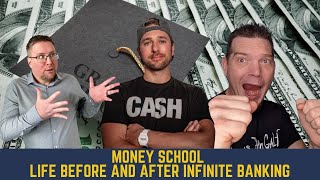
Chris Naugle went from pro snowboarder to financial advisor after discovering the Infinite Banking Concept, a method using whole-life insurance policies as a private banking system to pay debt and finance purchases. He launched a Private Money Club for peer lending and emphasizes the approach is a process, not just a product, focused on legacy and family education.
Questions this video answers
February 22, 2023
Chapters
This is that one thing that will probably never be taught by the financial institutions. It will never be taught by the big insurance companies. Matter of fact, some of the biggest insurance companies hate this. They don't want this for that exact reason. They make less money. And because of that, I feel we have something so sacred that people need to know about. And the only people that can go out and teach people about this are people that have one common core belief or core ethical behavior. And that is they are not afraid to give. Because to do this, we have to give so that our clients get.
Today we're going to money school. How do you go from a professional snowboarder to a money mogul? Well, we are joined today by Chris Naugle, who dedicated his life to being America's number one money mentor. And his going to take us to money school today. So we're going to have a ton of fun. We're going to learn how the infinite banking concept entered his life and how he went on this incredible journey from doing all kinds of badass snowboard moves to now doing badass money moves. Chris, thanks for being with us on the show today.
It's a pleasure, gentlemen. Thanks for having me on.
That was a super intro, Rich, that we literally didn't rehearse and just talked about what the theme of the show was going to be like four seconds before we hit the record button. And Chris, it's. It's a real pleasure to have you here. And Chris and Rich have. Are meeting really for the first time on today's show. And so we're all going to get more acquainted with one another. And I had the privilege of being alongside Chris and some of his teammates in Daytona at an event that, uh, Chris and his teammates hosted for existing clients and prospective clients who are fully immersed in the process of becoming your own banker. The infinite banking concept as well as at that time, the group was right on the cusp of launching a money club. And basically, I think you refer to it as a, like a dating.
Dating. The dating site for money. Yeah, the dating site for money. Cmc.
Yeah.
Which is so cool. And people in, in the, you know, the audience were saying, hey, you know, like, this is something that we're really anticipating. And so we're looking forward to some really exciting conversation today and just chatting with you. And so, Chris, maybe for the benefit of our listeners and viewers, take us through. You know, what inspired you? What inspired. How were you first introduced to this process and then what inspired you to create all this content and write these books and really just go full speed ahead. Which, what was that domino that tipped over for you?
Yeah. So it's a series of events, to be quite honest. I mean, I grew up like so many others, I grew up in a family that didn't have money. I knew nothing about money. My family said, don't talk about money. Don't ask your uncle how much he makes. I'm like, oh, okay, we're not going to talk about money. And you know, we're not heating the outside. That's my favorite one every time you open the door for too long. But how it really started is I was a pro snowboarder. And you know, I started when I was in my teens. I went pro at, I can't remember if I was 18 or 19 years old. And it was a dream come true. And during the process of when I was a pro, I had started a company in my mom's basement at 16 years old. It was just a clothing line. I sold it in my backpack at school, printed shirts with my art teacher. And that was my first business. And I just used the money from that to fund fuel and lift tickets and if I needed a snowboard. And that's all my life revolved around until I turned 17. And when I turned 17, I had been traveling around snowboarding and I saw shop owners who owned these stores that I was selling my clothes to. And what I realized that these guys had freedom that I'd never seen before. They literally would just close their shop and go snowboarding. And I'm like, okay, okay, I gotta have one of these shops. So I, I kind of mapped it all out, wrote the business plans for my first store which was going to be called Fat Man Board Shops. And lots of turndowns, almost gave up. You know, they wanted. It was 70 grand and I had no money. But my mother put the house that we lived in, it was a two bedroom, one bath house. And she put that on the line and put it up for collateral so that I could get that loan at 7. I was 18 years old when I got the loan. So Fat Man Board shops opened November of 1994. It was a monumental period of time. Fast forward a little bit. I was 23 years old. It was early 2000s and right before the, or actually it was, it would have been 2000. Right before the dot com crash happened. I had just landed and I remember driving to my newest store and on the radio I hear of a plane hitting a tower. Now we all know this was 9 11. Now at that time, living it you know, we all remember where we were and probably what we were doing. I was driving to that store, and that's when everything flipped for me. Because up to that point, I was kind of in a fairy tale. I mean, I was living my dream, truly, like, to the freaking best of my ability. And that was the first recession I'd ever seen in my life. Like so many people right now, they're going to, you know, here in the United States, I will tell you. I mean, technically, we're in a recession, but we will be in a deep recession by the end of this year. And it will be the first time that a lot of folks my age, like when I was that age, have ever seen a recession or felt what the impact is if you're 36 or younger. It's crazy.
Yeah.
So what happened is my business tanked. I had just opened a new store. It's highly leveraged, and I just. I needed a little break. I needed a job. And I vowed to never work for anybody. But, well, I needed a job, and I put my resume out. I actually applied at Little Caesar's Pizza, but they weren't hiring. And the only people that called me back were Wall street firms. Now you guys are seeing me. If you're not. I got a hoodie on. I got a baseball hat. You know, that was my life back then. Hoodies and beanies. Well, or tu. In Canada. And basically, you guys know I'm almost your neighbors, right? I'm in Buffalo. Like, I can. Oh, yeah, I can. I can jump over the Niagara river and be on. Be in Canada land. Yeah.
Go Bills. Go Bills.
We need to get that on film. That wouldn't be good, man. That sucker would go viral. So. So what ended up happening is, you know, I couldn't understand what they wanted with a punk snowboard kid. But I ended up going on the interview, and that's when I entered the financial world. And. And I remember I was like a fish out of water. I didn't feel right. But what I did is I saw a huge opportunity because I saw the other advisors, you know, that sat on the outside, big cubicles in the big offices. Sorry, we were in the cubicles. They were in the big offices. And I remember they got there late. They left for two hours for lunch, and they were gone by 4:35 when the bell rang. Gone. And I'm just like, okay, I want one of those offices. I want to make what they make. I'm going to get here early. I'm going to. I'm going to Work through lunch and I'm going to go see people at their kitchen tables. At 4:30. When these guys leave, I'm in my car driving. And that's how I did it. I became one of the top three advisors. I still maintained my snowboarding career. I sold my shops right after the Great Recession hit. But how I got into IBC is a unique one. Now as an advisor, I knew all about whole life. Matter of fact, one of the firms I started with was New York Life. And we all know that to be. Yeah, that's one of the largest, you know, insurance companies and one of the most prestigious. I very quickly moved to their RIA division. So I was like, you know, like any young, you know, 20 year old, I just wanted to, I wanted to play in stock. So I went to the investment management side. But I knew what whole life was and I knew how it worked. I even had heard people talk about this thing called bully, but we weren't allowed to talk about it. So when I was in Wall Street, I started losing faith in Wall Street. After Great Recession, I still was doing it, but I pivoted a little. I went into real estate and I built myself up in real estate. I lost it all again. I lost it all in 2008, lost it all again in 2014. And then in 2014, my wife and I, we went to this event and they were teaching us how to flip houses. And I'll never forget, I met two guys. Greg and I met this Mike guy. Now this Mike guy, he was, they were both super wealthy guys. And this Mike guy was ultra wealthy because he had a TV show, his family was in real estate. Like this was like the wealthiest person I've ever met. Even as an advisor, he was, he was light years ahead, I mean tens of millions. And he started lending me and my wife money for the flips we were doing. I remember being in Salt Lake City one day at a Cheesecake Factory and I'm sitting there talking to Mike and Mike's just rattling back and forth and I just, I said to Mike, that was a money guy. I said, Mike, so how do you lend all this money? Like how does that work? And he said, well, I lend for my banking system. I, I'm sitting there like, you gotta remember, I know nothing about ibc. I know nothing about like how this works. I sit back in my chair and I'm like, dude, you got yourself a bank. I'm like, mike, why are we a Cheesecake Factory? Let's go to your bank and get some dum. Dum suckers. It's the only suckers they serve at the banks here in the. In the States. You guys probably got the same darn suckers up there.
Oh, yeah.
But. So I ask him, and you know what he tells me? He says, well, I don't own a bank. I. I treat my money the same as a bank treats its money. And, And I have a banking system. I operate just like a bank. And I said, how, how do you do that, Mike? I'm in Wall street, like, I've never heard of this before. And then he drops the bomb on me. And I'm sure you've all had this happen. He tells me what the machine is that he's putting his money in. Yeah, here's how it went. And I just heard. It was literally like white noise to me. But he said, I put my money in a whole life insurance policy and I lend it to you. Now, to me. I honestly. And I don't remember exactly what I said, but I think I thought to myself, oh, no, they got you too. They got you too, buddy. Because, you know, I was a buy term, best of difference, because I made money on investing money. So let's get you that term. And then you just give all your investment money to me and that, yeah, you don't need any. Any of that life insurance stuff. And I said, mike, Mike, Mike, listen, dude, like, I'm an advisor. Like, whole life doesn't work the way you just described. You can't just put money in a whole life and then take money out. And he says, yeah, you can. I do it all the time. I, as a matter of fact, I just made a deposit and I just lent the money out. I'm like, okay, okay, what is it that I don't know? Then here's the thing. I asked. I said, mike, you gotta teach me this. You've gotta show me how this works.
This is.
This is huge, dude. If it works that way, and it really clearly does, because you're doing it, like, I gotta know this. And he says, well, I don't know. I can't tell you how to set it up. I just. This guy Brent helped me out. I'm like, give me Brent's number. I probably slid the pen across the table. She gives me Brent's number. I just wanted to get out of the meeting. I'm like, thanks, Mike. I'll. I'll cut. Catch the bill. I ran out, got in the car. I dialed Brent up and I. You could ask Brent this, but I bet you I sounded like a Crazy lunatic. Because I'm just probably like a blender with its top off going nutty about this thing. And I needed to know this, and I needed to be taught this. And Brent says in common fashion, he says, okay, great. That's. That's fantastic. Now, may I ask you, have you watched the 90 minute video? And I'm like, 90 minute video? Mike didn't mention that. No, but. But I get, I get what you're doing. Like, I'm in the business, so. Well, you have to watch the 90 minute video in order for me to talk to you. So how about this? I'll send you the 90 minute video in an email after you're done watching it. Shoot me. Give me a call. Back, back, back then, we weren't texting quite as much as we do now. I don't even think Brent was texting back then. And, you know, and then we can do a call. That Sunday, I got the biggest cup I could full of coffee. Now, this is just a big Dixie cup, but just imagine a big coffee cup. And I waltz myself down into my basement, being like, this is gonna suck. And I sit down, pad and paper, and I hit play. 90 minutes went by, like, five minutes. I had four pages of notes. And I, I, I'm a very religious man, but I. That was probably the closest at that moment I'd ever come to, like, finding the source. Like, I felt like I just struck the fountain of gold, or you or whatever you want to call it, because I saw something that had been around me for all the years. And at that point, 14 years, I was an advisor, and I never knew how to harness the power of it. And at that very moment, I realized it, and that was it. I remember, I. Me and my wife was like, in a week's notice, we flew to see Brent in Mexico. I sat in the front row, and I just absorbed. And I just absorbed. And I went up to his hotel room and I did my first IBC policy with them. It was with a company called Security Mutual. And I was off to the races, man. I studied. I read Nelson's back book over and over and over again, and I took notes and I. I just said, all right, I got a lot of debt because I was in real estate. I had tons of debt, credit cards. And that's the first thing I did. I applied it to paying off debt. But I didn't just use the policy to pay the debt off. I was, man, you can't steal the, you know, don't steal the piece. Don't steal from your bank. And I was like, okay, I paid this credit card off. I just freed up 50 bucks. I was so meticulous. Let me. And we'll get into this, folks. But this is where I'm going to wrap the story. If I'd pay a credit card down because I couldn't pay it all off at that time. I didn't have enough money. So I'd pay it down, like a thousand bucks, you know, per quarter or whatever I had in cash value. And that policy was only 1,000 bucks a month. And I would wait for the next statement to come, and I would add the difference that the payment went down. Like, maybe it was 100 bucks a month. Now it's 80. I took that $20 a month. And I would then set up an online transfer, and I would put that into my segregated bank account. Now, I know Brent doesn't do this, and maybe you don't either, but I'm meticulous. I sent that money back to the policy every month. I went from my segregated account, which is just a separate bank account, and I would set up a loan repayment. I got. Just for nostalgia. I got a whole stack of loan repayment forms sitting in, like, a thing in my office. And I would just. Every time I do a recapture, I change the amount of the recapture, and it just builds and builds and awesome and builds. That's how I found ibc. Sorry for the long story, but no.
Man, this is fantastic. This is really good. And people that we interview who are practicing this process in their own lives, we always ask them to share that part of their journey. And you'll never, obviously never forget that domino that tipped over for you, that conversation with Mike that has completely transformed your life. And you. Fast forward to today. We were chatting earlier before the show, and coming purely from a place of generosity, you said, hey, you know what? I'm going to gift all three of my books to your viewers. No strings attached, you know, no sales funnel. Here's the link. Make sure that your viewers get it. Like, that's amazing. That's generous.
And I fully believe in that. I mean, what is it?
You don't know the impact yet that you're going to have on people who view this episode? They read, they learn, they decide that they want to take some form of action, and then they're sharing a story similar to yours someday on someone else's podcast. And that's. That's the ripple effect that we want to create. And whether it's the United States or whether it's Canada, you know, we, we share with folks all the time that the process itself doesn't recognize any borders. You know, there, there may be some nuances in the way of tax treatment of the tool or the, the actual process of how you're, you know, gaining access to money and how you're repaying it and how you're served as a policy owner by the life insurance company. But there's so many more similarities than there are nuances. And we get, as I shared with you prior to the program, we get Americans who connect with us and say, hey, we're, we're from America. We recognize that Wealth Without Bay street is a Canadian podcast. Can you point us to someone who might be able to help us, you know, implement this, this process? And we created a unique URL for this show only. And we're going to dive into a great conversation about the money school and, and that whole platform, and it's going to be an incredible discussion. But before we do that, you like what you see and what you're hearing, Just ease on over to moneyschoolxl.com that's moneyschoolxl dot com and when you get there, you're going to get a ton of great resources. And if you like what you see and you like what you hear, you can schedule a time, you can talk to somebody on the Money Multiplier team. You can create a call, have a great conversation. It'll be awesome.
And so, Rich, I'm excited about everything that, that Chris has shared with us and also his own excitement. And I think that's something that people will really resonate with and understand is that when you see this or you catch it, you know, you can't unsee it. It's kind of that, that moment in the Matrix where, you know, neo, it.
Is that moment in the Matrix. Make no two ways about it. It's that moment with the two pills. There's no better way to describe that moment.
You can't unsee something. And you have to, you know, you'd have to make a choice to say, oh, well, I, I'm going to now know about this and then voluntarily try to suppress or hide this information in my life. And I remember my own, my own moment with that and that decision of, I will not be in integrity in my own life and I won't be able to move throughout my life if I don't share this with other people. Like, it's. I will feel dead inside if I don't share this with other people. That's basically what happened for me. So I, I recognize that, that, that quality of excitement and, and what resonated with you. I think what's really powerful, what you shared is, you know, all your history and business. I mean, you've. You've built and own over 16 companies. You've been doing a ton of amazing things, three books. But your time as an advisor in the industry, and we talk every once in a while with other colleagues from the industry and, and we have a lot of clients that come on and share their stories, where they, they were in the traditional mindset of what everyone's being told, what the media tells them, what all the financial advice is to go do a, B and C, a B and C, use government product, go do this, go do that. They're taking all the risk. Someone else is getting all their money. They're never in control. They're abdicating responsibility. And 10, 20, 30, 40 years goes by, and they wonder where all the money is. And so your own experience, even working for a monstrous life carrier, to be in on the, on the side of the equation where think the information is almost compartmentalized. There's things that have always been there, that were easily available to see and discover, but yet it's like it's shrouded in some cloud or like a murky swamp where you can't see the details. And then it takes one conversation, one book, one podcast that you listen to, where all of a sudden it's like, boom, that light bulb moment happens, and you're able to see now what you couldn't see before.
Well, Richard, I gotta tell a story on that. So I'm kind of, you know, I'm from New York, so I kind of have an excuse to be a jerk sometimes. And. But I'm very forward. Like, I just get right into it. So when I learned about this, you know, I had. I had left New York life by that point. I was at a. Just a small boutique, raa and. But I was still really close with my old managing partner because I was one of the top guys at the firm. And I called him up. His name's John. And I called John up and I said, john, you know, how you doing? Blah, blah, the small talk. I said, hey, can I take you out to lunch? And he said, sure. You know, what do you want to talk about? I said, it's nothing important, but something that could help, you know, your agents. I'll tell you about it when we, when we meet. Where do you want to go? Let's go to the Brew Pub. So. So we go there, and I literally had one sole question. So, John, I spent 14 years at this company, one of your top reps, and did awesome things. Enjoyed a lot of my time here. I said, but I just learned about something, and I gotta know if you knew about this. And I just said, have you ever heard of the infinite banking concept? And he said, I think so. And I kind of explained it. He's like, oh, yeah, yeah, I've heard of that. And I said, you know, where you design an engineer, the whole life completely different, so that it works, you know, for higher early cash value. So I explained this whole thing to him, and he's like, yeah, okay. Yeah, it's kind of like bully. I said, no, it's just like bully. Just not a bank, you know, And. And I said, john, I said, I got one question. I said, you and New York Life. I said, if you knew about this, every week I would be in that training room and Walt or you would be training us on all these awesome concepts, Slurp and this, you know, all these things. And I'm like, why would you not teach this? And, you know, he. He said something that I will never forget as long as I live. He said, you know, Chris, I see he starts this. He said, you remember your first year? He said, how many people were in that new Org room with you? I said, oh, I had been 20, you know, and he said, all right, year two, how many were there? I said, 10, nine. I said. He said, year three, how many were there? And I kind of did one of these. I said, me. He said, okay, so out of a room of 20 or so, you were the only one that made it three years and you were selling a product that paid you a full commission. You weren't putting, you know, the majority of the money in the Paid Up Edition rider that pays you, you know, next to nothing. So you want me to teach all these agents, these young whippersnappers that you know who they are, and you want me to tell them about this amazing thing that would just. Just blow their mind, and they'd want to go run out and talk to all their clients about it, but then they got to reduce their commission between 60 and 90%. He said, you just told me you were the only one after three years. He said, if I do that and these guys are making 60 to 90% less commissions, how many are going to be left after 30 days? Six months, one year? I said, holy crap, John. I never thought about that. Right there. Summed it all up. To me, this is that one thing that will probably never be taught by the financial institutions. It will never be taught by the big insurance companies. Matter of fact, some of the biggest insurance companies hate this. They don't want this for that exact reason. They make less money. And because of that, I feel we have something so sacred that people need to know about. And the only people that can go out and teach people about this are people that have one common core belief or core ethical behavior. And that is they are not afraid to give. Because to do this, we have to give so that our clients get. And I'll tell you something, I know that seems so simple and Zig Ziglar said it best. If you help enough people get what they want, you're going to get what you want. Yeah, of course, I know. But that process of doing it isn't quite that simple. And that is why most people don't know about that. And the other thing is, is that is why most people we talk about are so hung up on a product, they just want to buy a product. When I tell people, I just had a guy on Instagram, I had a video just hit 4.3 million on Instagram, not going to go there. But I had a guy on there say, you know, I want to buy that product. I want that whole. I think I said, we don't sell the product. I said, we teach a process. And when you learn the process, the product is just a component. It's just the machine that runs the money. But we don't sell it. You're going to ask me to buy it, you're going to ask me to set it up for you if you learn the process. People want a product, they don't want to learn something new. And that's a. That right there. Everything that I just got excited about when I was telling my journey. Until they understand that there's a process that they have to learn of taking back the banking functions like there is no product on earth that will, that will solve all your problems. There's not one, there's not one product that will just make you independently wealthy, but the act of the process will make every one of you wealthy. And I can guarantee it if you follow it and you're consistent and persistent at doing the infinite banking concept, there is no other path than true wealth. But you gotta learn the process.
Couldn't agree more. And it's a reminder that comes up for us, you know, often where, you know, Nelson, Nelson used to say, he used to tell us all the time that if you recognize that infinite banking concepts, plural has absolutely nothing to do with life insurance.
Nope, nothing.
Life insurance is the tool. And he would say verbatim, if you bet, put the best tool for the job in the hands of an incompetent, not only will that person not turn out any good work with the tool, there's they're likely going to break the damn tool. And so you, you can, you can put the very best tool for the job in. I was sharing this with Richard before our show. I spoke to a group of American attendees at an event in Lake Tahoe two weeks ago. And I'm standing up on stage at this event and I ask in the room, I was invited to speak specifically about ibc. I'm on the stage, I said, show of hands. How many of you own a participating whole life insurance policy? A lot of hands in the room went up. How many of you have heard the term infinite banking? Infinite banking concepts, becoming your own banker, some variation thereof? A lot of hands went up in the room and I said, how many of you are familiar with, know, heard of, were acquainted with one of the most amazing human beings I've ever known personally, and that's R. Nelson Nash. Two hands in the room went up.
Wow.
And so it, I, I'm not suggesting that every human being on the planet should know R. Nelson Nash. What I'm suggesting is, it would be nice, is that there are so many people, you hit the nail right on the head. There are so many people who are being educated, being marketed to about the attributes of the tool, the best tool to get the job done, but nobody's talking to them about how to get the job done.
You're right.
And so, you know, people are like, after the talk, people are like, I've owned a policy. I, I thought I was practicing this process and nobody's explained it to me this way before. And that is not only concerning to the degree that people are of the belief authentically that they feel like they're practicing this process and, and they're just not being supported or coached or mentored. And that's something that you're super passionate about, is really driving that message to say, you've got to understand that this is a process and, and there's, there's work involved. And that work doesn't begin until you possess the desire to solve the very problem that you have clarity on. Now if you just want to buy a life insurance policy and you don't understand the problem, the solution just won't matter to you and we won't we.
Won'T even take them on as a client. We're very, very specific about that.
Yeah, and, and that's, that's something.
Thank you.
I was just going to point that out to say you won't establish a basis to work together with someone who just wants to buy a product. And you know, we here in Canada, I mean, we, we do have a duty of care. If we interact with someone and they, they, they're now in our ecosystem, we have a duty of care to discuss a need. It's, it's regulatory, a very heavily regulated requirement. Hey, if you've interacted with somebody and you're life licensed, we understand you're describing a process, but if you haven't had a conversation with somebody about their need for life insurance, you could be setting yourself up for a big pot of hot water. And so we have, you know, we've got a whole process for that. But the track of becoming your own banker, the infinite banking concept. Unless you understand the problem, the solution just won't matter and neither will the tool because you don't know what job to go and get done. You just bought a tool.
Yep. And it will hang just like go out in your garage. How many of you have a shovel in your garage that you've never probably touched? Yeah, you just bought the shovel because you're like, we should probably have a shovel in the garage. And most people don't even touch it. There's always a tool in the garage that you've never touched and never used. And you know what? For way too many people, that tool is the whole life. They bought it thinking that, like, they're going to need it, but they don't know how to use the darn tool.
Chris, this will blow your mind. And Rich, you remember Jesse, the gentleman that was referred, and Jesse through Roman. And so Jesse gets on the line, we're talking to him, and this guy's been funding a policy for quite a few years and all he did was buy a tool. And he said, same thing. Nobody's ever explained it to me this way before. And we said, oh, that's, hey, congratulations, you've been a participating policy owner for many years. He says, yeah, oh, I've got just north of a million bucks piled up in cash value inside of my policy. Hasn't done a thing with it.
Yeah, I stopped putting premium on it. It just keeps going up.
And so, And Jesse was a good. Jesse was he, you know, kudos to him. He was a good sport when we, you know, had a good laugh at his expense at, in that moment of the conversation. But he said, I really want to learn how to implement this process. And, but he already had amassed an aquarium of capital and he had no idea that he could execute this process and really multiply his money. Right. Hence the term of the organization that, you know, you're such a big part of the money multiplier so you can multiply your money. And he really had no idea. And he does really, really well for himself financially and he's going to do exceptionally well by implementing this process now and expanding his program. And so I'm sure you run into that kind of stuff all the time too, especially in the United States. Such a big marketplace and you know, so many people to serve. You and I were chatting before the show and you said, man, we're, we're swamped like much like we are here in Canada. Like we're busier than we've ever been.
Yeah.
And I've got, I've got two policy loan forms right here in front of me that I'm about to scan in today so that I can take a couple.
Yes. I'm not the only one for, for.
An opportunity that' across my desk that I'm pretty excited about. And you know, it's a, it's a business venture that, you know, I know something about. So Nelson said that investment should only be in something, you know a great deal about everything.
No like and understand everything else speculation.
So you know, when, when you fine tune your radar to determine what those opportunities are, you can make a decision when you're well capitalized. Turns out I've been accumulating some capital.
Boom.
I've got an opportunity policy loans are going in and you know, we can proceed. So it is, it's exciting but it's also, it's also calming. The investment of the opportunity is what has excitement. The banking part of it's actually reasonably boring. It's exciting from a perspective of I just simply know that it works and it's always working. But I don't need to go and get all my excitement by the policy. I just know that the policy is just, just doing its job all the time. I can go and create value in other areas by accessing the reservoir and the resource and then I get to control the repayment terms. It turns out that the opportunity is what's going to be making the repayments for me with, with cash flow returns over time. So I'm pretty excited about that. And overall I think a lot of our clients are and I Suspect a lot of yours are as well.
Yeah, the interesting thing, and right on what you just said. You know, once somebody starts practicing this and I tell people, like, everything we do is very boring, but, you know, and they're like, oh, well, that, you know. But I say, but, you know, here's what's not boring. Every vehicle I buy and I drive, drive really nice vehicles. I get all the money back for every one of them. And I didn't have to work harder. I didn't work overtime. It's not like I went to my boss and said, hey, can I, can I have the weekend shift? I don't do anything. My money is working for me and I follow a process. So I get all the money back when I buy real estate. Same thing. Like, doesn't matter what real estate I buy. I get all the money back and then I lend money out and then those checks come back. But the funniest thing is it's kind of like what you just said. Another thing that never gets old is that every dollar I put into this stupid, boring, whole life insurance policy that I then move out through the infinite banking concept, every dollar that comes back is always more than the dollar I put in. You know, it might take me a couple of years to get to that point, but, you know, every dollar I put into my policies at this point, because most of them are mature, I'm getting more than a dollar back. Like, I don't know, you can't take, you know, a hundred bucks, go down to your local bank and give that 100 bucks to the banker and then come back the year later and take out 110 bucks. You know, you think you died and went to heaven. You know, if they did that, and that's just every day for us, that's just like the normal, like that. Like we actually laugh and like, oh, yeah, 100 for 10. Like a man. I'm getting 200 for every 100 I put in. That's what you guys are thinking. But people can't resonate with that. They, they don't understand that. I had a financial advisor meet with one of my clients, and she's, she's awesome. She calls me up and she says, hey, I don't know what to do. My advisor is a fiduciary, really well known. And I looked him up and he is, you know, he, he said, you know, that we should cancel this whole life, that it's not serving us. I, I, I, I got upset at first, but then I just stopped and I just said, all right, hold on a second, let me pull your enforce up. So I look at the policy and I'm just looking at the product now, and I, and I did the math and I said, okay, so you guys put in, I don't remember a premium, but let's just call it 20 grand. You put in 20 grand this year. At the end of this year, you're going to be able to take $25,000 out. So can you. And by the way, most of that's guaranteed. Can you just call that advisor and just say, hey, listen, since I'm canceling this policy, because that's your suggestion, I just want to make sure that you got something that can replace this and I want to make sure we're clear. So you have somewhere for me to put $20,000 and you're going to pretty much guarantee that this year I'm going to be able to take 25,000 out. Oh, and by the way, next year it's 27 and then 30 and on and on and up. The advisor would look at her like she's lost her mind, but like that's what he just told her to cancel because he has no idea how it works. But she's not just keeping the money in the policy. That would be just the product, which we already said, that's boring. She's moving that money out, paying off loans. She's doing all sorts of stuff. Yeah. And this guy told her to cancel this whole life insurance policy. And guess what he told her to do. Now she. It's her husband's policy, 62 years old by term. That's what he told him to do. And then he went on to say, but then, you know, when you retire and, you know, and we, if we need some insurance, we can just convert this. I said, so you're gonna let me just get this straight. And I did it all in email because I wanted it public, like, whatever. And I said, so you're going to convert this, huh? So you're going to convert it when, when he's 70? Good luck. Like, look at the term prices at 7. You're not going to have any insurance. So when Jim dies, you're getting nothing based on this suggestion. You know, in this, this brings me to another thing, and this is something that I've gotten very passionate. Now, remember, I might be different than some of the other IBC people because I've been in the industry so long. So in my early years at New York Life, I delivered a lot of death claims. But, you know, the only death claim you Ever remember is the first one. And the guy's name was Bob. He was the one older gentleman that gave me a shot. He was an engineer. I spent so much time learning from this man, but he gave me a shot early on. And I remember fast forward many, many years after, probably 15 years, 16 years after I met Bob. During the process, we'd set up a lot of planning, a lot of life insurance. And I sat with him one day, super frail, you know, he was, he was definitely didn't have much longer. And he just looks at me and he grabs my hand, he says, chris, I want you to tell Betty, and that was his wife's name, she'll never have to worry about money again in her life. I need you to make sure she knows X. I know she's not going to believe that we've struggled and she's not going to understand that. And I said, of course she's going to be okay. And he said, yeah, yeah, we understand that, but she doesn't. Well, you know, Bob passed away and I came, saw Betty and I had an envelope in my hand, you guys know what was in the envelope? And I took it out and we had a long talk with her and I said, listen, I just want you to know something. Before Bob died and I was teared up and I said, he wanted me to tell you something. He wanted to say that, you know, he loves you, but he also wanted me to tell you that you're never going to have to worry about money again in your life ever. And you, you can't ever, you know, spend this money. And she didn't understand it and I took the check out and, and this is, this is life insurance, folks. So we're not even talking about IBC here. I'm talking about the one core thing that life insurance will do no matter what. But we, we, I, I even me, I tend to be guilty and say, oh, it's not about the death benefit, but when you deliver that death benefit, if I slid that check across the table to her and she looked at the number on the check and she just burst out in tears. And at the end of it, she was laughing. You know how Bob always, you know, told me he was going to take care of me and thank you so much. But like literally that one piece of paper, that one promise that an insurance company made to Bob made it so that this woman for the rest of her life never had to worry about money again. And not just her, probably her grandkids and grandchildren. I mean, that's the thing That I think sometimes we don't talk about is with what we do. It's the process, it's everything else. But at the core thing, like when it all ends and we get to go on to a much better place when we graduate, yeah, we can, we can literally lay there or sit there like Bob was and know our affairs are taken care of, our family is taken care of, our kids aren't gonna have to worry anymore. And I didn't even do this for that reason. I did this to do all that fun banking stuff and buy those fancy cars and lend money out in those fancy loans to private money club and all that stuff. But at the end, everything is taken care of because you made a promise and an insurance company made a promise to you. I don't know. That's something we don't. I never really talked about that in podcasts ever.
I think needs to be talked about more. And Rich, you know, you're, you're familiar with this. You know, in, in on our team, Chris, we have what we refer to as a 911 moment. And rich and I were recording a podcast one afternoon and one of our teammates, her name's Michelle, shout out to Michelle if she catches this episode, stay awesome. You're amazing. And she came into the podcast room and put a post it note down right in front of me that read 91 1. So in that moment, we know there, there's been a death of a life insured. And so I reached out and spoke to a father of a 13 year old who had passed away. It was a farming accident and he was trying to access something at. There was another property away from the family's homestead. There was another property on the land and he had entered that property. He was trying to access something. He climbed up a ladder, he fell off that ladder and went into cardiac arrest. And there was nobody there to, to help him. And it was his father who found him. And so he contacted me and said, you know, obviously he was just devastated and I, I was just there to, to be a shoulder to lean on and in here to bend. And he was crushed, understandably so. And he said to me, we've had a difficult time on the farm. You know, it's been a tough couple of years with weather conditions and not being able to get, you know, crops away and not making the money that we had anticipated, but we kept our family banking system fully funded. And this death benefit not only eliminated all of our financial stress that we had endured the past couple years, we were able to really put Together, an amazing celebration of life for our son. And this is going to continue to help us well into the future. And while we had. Would never have thought that our son would pass away before, before us, it happened. And he had been. His son had been insured for several years prior to this tragic accident. And when I speak to his dad and we try to connect around the anniversary of his son's passing, he's just so incredibly grateful. And he. He's able to carry on and, and go through that horrible readjustment phase of his life where the grief will never subside, but he has to carry on and be strong for his family. And so you're right, we talk about and de. Emphasize the death benefit, but we've had to fulfill that duty of care on several occasions. And not a single family has ever said, I wish the check was for less. Yeah, not one. And. And while our clients are alive, not one client has ever called us. In 15 years, soon to be approaching our 16th year in our journey, not one client has ever called us and said, I'm really frustrated that my cash values keep rising every day and that my death benefit keeps increasing. With every premium deposit that I make and every dividend that's declared and paid, I'm. It's really bothering me. Like, that's never happened. But we've heard countless stories from people that were introduced to, of instances where they've lost money at the worst possible moment. And it's. Exactly. And it's because they've handed control of that money over to someone else who thinks they can do better with it than you can.
That's what.
That's. That's the stark contrast. That's the stark contrast, Chris, of what we do.
I believe me, every message I do. I mean, someone asks me, what do you guys do? Well, we help put people back in control of their money. How do you do that? Well, we teach them how to be their own bank. And then, sorry, this is my floor. That's my elevator pitch. But I'm so passionate about that because I've seen it firsthand from the Wall street side, and we've all seen it from the bank side. We just are so conditioned to think that that's the only way. We have literally been taught and trained. Like, like almost training. It's like a dog to give up control of our assets and give up control of our money, and we don't even think we're doing it. Well, put money in a retirement plan, you're giving up control. Give money to the bank. You Gave up control. No, I didn't. Sure, yes you did. Because the bank takes your money and makes it go to work for them the same way you could do. But you just don't do that because you haven't learned one additional thing. I'm so passionate about that whole thing. Like, I've studied the book the Richest man in Babylon. I mean, you probably have read it. I've read it too many times to count. And I've not just read it, but I've literally rewritten it and brought it to modern day times and come up with six laws of wealth. And just recently I did one of the probably hardest things I've ever done in my life. You know, and I got a TedX talk and I was thinking about what do I talk about? Oh, I'll talk about infinite banking. I'll talk about this. And you know, I just had a daughter. So my daughter's two and a half and she's my only daughter. So she is obviously the center of my world. She's my why. And it just all of a sudden it hit me one day when I was struggling, trying to figure out what I'm going to do this TEDx talk with. And I'm like, you know what? I'm going to write a letter to my daughter teaching her the six laws of wealth. And I'm going to teach her how to, you know, save 10% of her money. I'm going to teach her how to make her money, go to work for her so she doesn't have to trade hours for dollars, the most precious thing she has. I'm going to teach her how to only invest in things she knows, likes and understands. Like you mentioned, that's protect your wealth. I'm going to teach her to never get greedy and never seek unrealistic returns. I'm going to teach her the most important thing in life and that is to give, give, give, and solve other people's problems. And I'm going to teach her what a legacy is. And a legacy isn't just about the money you leave, it's about the smiles that you leave behind. You just mentioned that about that guy. And I did this TEDx talk and it's called Rethink A Letter to My Daughter. And it is one of the hardest things I've ever done in my life. Not because I'm. It was hard doing the speech. It was hard because this one talk, 16.31 minutes long, is going to outlive me. And it is the baseline, like lessons for my daughter to live A much better life than any of us have been able to live. And I think if we can just get people to understand that changing it might be too late for some of us. Right. You, you might be in your 60s. Ah, it's too late for me. It's never too late. But that legacy piece, sometimes we need to think that legacy doesn't have to be the money in the bank, the car, the house. The kids don't want the house. Sorry, bad news. The legacy is you teaching them something that they then can teach their children and then their children can teach their children and that that continues on just. And love or hate the Rockefellers. Look at what the Rockefellers have done. Their family banking. Like every generation, the Rockefeller family gets wealthy. And it isn't because they pump more oil, it isn't because they do more banking. Is it because they do more crappy things or whatever you want to call it. It's because of the same thing we teach every single day. They understood some simple things. They applied six laws to their money every day. And they taught their children this and their children taught their children. And that family will never ever not be one of the wealthiest families in history, no matter what happens in the economy. And you'll never know how much money they have because all of their money is in their private banking system. And you know what that is? This stupid product called a whole life insurance product, which is private and they do not have to report it to anyone. So keep guessing how much the Rockefellers and the Rothschilds have and you'll never get it right. It's way more. And it's not because they're hiding it, it's because you can't ever find it. And you can do the same darn thing by changing just one thing. And that is what I teach. And I am passionate to teach families this so that they can teach their children more than anything. And you know, that'll be my passion project. I got a foundation. My foundation will spend as much of its money teaching these things so that people can live a better life. And it doesn't mean live a better life because somebody handed them a check. I hate that. Live a better life by literally just learning simple things on how money can work for you instead of you working for it. And that's what I do every day, man. That's why I get here at like 6 in the morning and I usually put in 12 hour days. And for me it's like people like, how do you do that? It's because I love what I do. It's not hard, it's easy.
Yeah.
And that's so commendable. And, and we're, we're going to include a link in the show notes to your TEDx talk and we'll share it with, with our list as well. And, and that's awesome.
Thank you.
Encourage. Yeah, encourage people to go and, and listen to it and hopefully be served with some inspiration to do something similar as part of the legacy that they want to create of knowledge for their own families as well. So good. And I want to make sure that we get a chance to chat a bit about. So the, now that we've, we've talked a bit about your journey and your passion for this process. So tell us about the private money club deal. Like the like talk to us about what inspired you to create that and the reason. So here's what's interesting, right? It's like serendipity because we're chatting here in Canada and saying look, we have a lot of clients who they're, they're telling us are like hey, we've implemented the process, we, we've recaptured interest, we have very little to no debt and, but we've got accumulating cash value and we want to become a magnet for high caliber opportunity. And so where can I go to do that? And so it's like, well, we need to create a community, right, of like minded people to be able to do that which is underway. We're, we're creating that but in the US So with your, how you put this together, lead us through what inspired you to do.
Yeah, it was simple. I mean, remember I said I was a real estate investor and being a real estate investor, me and my wife had a TV show on HG. We, we were flipping 20 houses a month that required a lot of money. Mike lent us a lot of money. So I was always on the receiver side. I was always borrowing money from people and paying interest to them. But eventually, when you do that long enough, you eventually start having some of your own money. And I started building up my own money. My banking system, you know, started making interest in all the recaptured money and all of a sudden I had all this money and I'm like, oh my gosh, now I've got money. And you know, when you have money and you just framed it up with all your clients there, when you start having money, it's like at first, you know, you just have this euphoria thing but then all of a sudden you're like, well that's not cool. It's Just sitting there. I need to make it go to work, all right? I want to be the bank. And you're like, all right, well, I don't have any more debts. My cars are bought and paid for. Like, I don't really need anything. All right, now what? And I got to that point. And listen, I'm not bragging, but like everybody that does what we do here, the hardest thing you'll eventually have doing this long enough is you won't be able to find a place for all your money to go. It is literally a very difficult thing to do to. The money's coming back in so fast and the compound interest is compounding at just such levels that you have a hard time moving it. So I sat there one day and I'm thinking about this and I started lending money. And I would put posts out and people would send me their deal and I, I'd be like, really? This is how you send me a deal? Just an address and say you need 200,000. So I'm like, all right, I got to train people on how to be good borrowers. So I wrote a book and all of you are going to get this book. But it's my very first book, Private Money Guide, Teaching borrowers how to be good Borrowers. Like, hey, here's the manual. Like, this is how you become a good borrower. And by the way, if you follow this book, send me your deals and I'll lend to you. And people start doing that. Well, while I started doing that, I started having some of my friends and my clients through the infinite banking stuff we do, call me up and be like, hey, Chris, I know you were just talking about all the money you're lending, like, where you finding these people? I said, well, I kind of created them. I, I taught them. And they said, well, do you think we can lend to some of those people? I said, sure. And I swear to God, I could take a picture on my desk. I still have them. They're post it notes with people's names, phone numbers, and the amount of money they want to lend. And these are just the original people. So we started doing this and then I needed a place where every one of us could talk. So we started using Slack and we created like the original foundation of Private Money Club on Slack. It was like, you know, people, there was people that had money and there was people that needed money and they would post stuff on there. Well, we outgrew Slack. And one day I'm sitting there and I'm like, you know, there's Something here. And I thought back to my younger years when I was single. I use dating sites, and no harm, no foul, like, that was just an easy way for me when I was traveling as a snowboarder to, to find a date. So I knew how a dating site worked. It's like, there's men, there's women, and each of them can chat in the middle. And then you go out and you have a date, maybe get married and have kids, whatever. But it was simple. It was like two people profiles, each one saying what they're looking for. Wait a second here. I got two people. I got people that have money and they got a problem, they want to make more money. I'm one of them. And I got people that need money and they got a problem. They, they need money to make more money. I'm like, all right, I'm going to create the dating site for money. So literally, I began the process of developing this two and a half years ago, and now we've literally created something. And I didn't think I was creating anything that nobody had done. Like how stupid like this has to have been done before. Well, we hired law firm after law firm and they couldn't figure the regulatory behind it and illegal because it had never been done. So now we finally figured the legal out and now we've got it, We've got the app. And most people know Tinder. Swipe left, swipe right. Well, this is the same. You swipe left through deals, you swipe right when you find, when you like, it notifies the borrower. And then you guys are chatting. And if you're a borrower, swipe right.
So cool.
You swipe left through the lenders, you find when you like, you swipe right. And it's just getting better and we just keep building it. So, like, that's how it started. And folks, like, the best ideas start because you have a problem that you need solved.
That's right.
And if you have a business that solves a problem, and a big problem at that, that business is worth a lot of money. And. And I just happened to stumble upon an idea that solves a really big problem because it puts a lot of people back in control of their money. And it is a place where each party solves the each the other person's problem. So it's a win win, a true win win. And I don't get in the middle of it, so I don't get in and try to take some of your money. It's just like, it's just go at it, guys. It's a membership site, so that's how I did it. And now we're doing some really fun stuff. And pretty soon. Well, I'm not going to say it, but pretty soon there's something really wild coming to it, but you guys all have to stay tuned for that.
Oh, so cool. That is so cool, Rich.
I like Swipe for When We Wish. We need to title this episode Swipe for Deals.
Swipe for Deals. Yeah.
That is so good.
So I. I made a mistake at the launch. We did a big launch for it, and I'm like, all right, so you're driving down the road 60 miles an hour, and you just grab your phone and you're swiping left through deals. You know, careful when you're doing this. And then when you find one you like, you swipe right and boom, there we go. You disconnect. I'm like, don't do that when you're driving. But, like, literally, we. And then later, my attorney's like, don't you ever say that again.
Yeah, ever.
But that's. That's how it works. Like, you know, you just. It's just like that. You know, you just. There's deals. Like, you swipe left room, and when I see one I like, I swipe right, and then it tells me, oh, contact borrower.
Awesome.
Now I'm talking to the borrower. I know you can't probably see it because, oh, wow. But that's all there is to it. Like, listen, like, the biggest problems that you solve sometimes are solved the simplest way. Like, there is nothing hard about that. It's just human relationships.
That is so cool. Rich, take us home, man.
The power of connection and technology meeting in the middle with a little bit of IBC sandwiched in there. Chris, this was fantastic. We appreciate everything you're up to. We love that you are solving big problems now. You know, when you. When you first came in here, you. You were wearing the hoodie. You even mentioned the hoodie. It definitely has a snowboard vibe going on there with it. Now, when you used to be on your board and you were doing all kinds of crazy tricks and everything you were up to, you probably didn't wear a cape because it might create some drag and some aerodynamic problems, I would imagine, if you were doing it. And you certainly didn't show up with a cape today. But when you're creating crazy apps and you're teaching people epic money school ideas, and you're helping them have a much better handle on the control aspect of the Money flows that once through their hands for every day of their life. You're showing up as a hero. Sorry to break it to you, but our real question for you is who do you most want to be a hero to?
Well, I mean, selfishly, my daughter. You know, that's the first person I want to be a hero to. But I want to be a hero to all the other parents out there that don't know the way. And I just want to point them the way. But I want them to make a commitment that if they learn how to do this, they will teach their children how to do this. And that's what I want to do. It starts with one person, and that one person is my little two and a half year old. So if I can teach a two and a half year old how to do this and how to be the bank, I can teach anyone.
That's outstanding.
Chris.
It was a real pleasure to have you. We're definitely going to have you back, and I know that we're planning to hop onto your show as well at some point. And collaboration is just so fulfilling. And so it really was truly amazing to have you here with us today. And for all of the folks who are on the YouTubes, if you're. If you're viewing this, a playlist just showed up. That's how incredible. Like, our editing team are like editing team, shout out to you. You're awesome. Continue your journey of learning and keep scrolling through the videos that we're recommending to you because it's really going to amplify your knowledge. It's going to improve or expand anything that you're already doing financially in your life and so much more. And so thank you so much for viewing us on the YouTubes. For people who are on your favorite podcast platform, thanks for tuning in. Make the rest of your week outstanding. Gentlemen, this was a lot of fun. Thank you.
Thank you.
More from Richard





How Do You Use a Policy Loan to Buy Dividend Stocks? #dividendstocks #infinitebanking #shorts


Can Compounding Dividends Pay Your Bills? #wealthbuilding #investment #financeeducation


Should a Corporate Policy Offset Your Personal Coverage? #shorts #insurancetips

What Is Human Life Value? #shorts #insurancetips #dividend #wholelifeinsurance