Nelson Nash's Final Message For Infinite Bankers | Wealth Without Bay Street Podcast
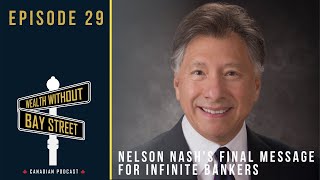
Carlos Lara, CEO of United Services and Trust Corporation, explains the Infinite Banking Concept and why it matters during financial crises. Nelson Nash developed IBC around Austrian economics and privatized banking. Lara says reaching a 10% tipping point of trained professionals could spread the strategy to business owners focused on cash flow.
Chapters
You are listening to the wealth without Bay Street Podcast, a Canadian guide to building dependable wealth. Join your hosts, Richard Canfield and Jason Lowe as they unlock the secrets to creating financial peace of mind in an uncertain world. Discover the strategies and mindsets to a financial future that you can bank on. We love to provide education here. That's the purpose of our podcast. We even put together an incredible masterclass that you can access where you can learn all about how to implement this process of becoming your own banker in your household and in your business. There's a bunch of great content there. Head over to wealthwithoutbaystreet.com masterclass. Part of the package you're going to get is going to include the best selling book, becoming your own banker. This book is a game changer. You got to have it. It's one of the best books on the planet and I'm so happy for you for taking action to make sure you get a copy in your hands. Okay, everybody, welcome back to another fantastic episode of wealth without Bay Street. Joined here today with my amazing colleague Jason Lowe. And of course we have a special guest, someone Jason and I have been trying to get on the podcast for a while. We're super pumped and excited to have him here, including his incredible Mises images. In the background, we've got with us Carlos Lara, who is the CEO of United Services and Trust Corporation. It's a management consulting firm been in business since 1976. Based out of Nashville, Tennessee. They do capital formation, corporate trusts, debtor and creditor relations, business crisis counseling. He's a turnaround specialist for businesses that are in trouble and he helps them restructure and get back into business. He's really a ninja at that. He's also the editor of the Lara Murphy Report, which is a special online publication dealing with Austrian economics. And of course, Nelson Nash's infinite banking concept. What we like to talk about here, he co authored with Robert Murphy how privatized banking really works back in 2010, which is a fantastic book we encourage everyone to get. And he also co authored with Nelson Nash, David Stearns and Bob Murphy the case for ibc. Jason is holding that up for anyone watching us on YouTube. And of course he is one of the co directors and founding members of the Nelson Nash Institute. He actively sits on the board, he's involved in all the interviews with any advisors looking to join the program. He's an all around unbelievable guy. He's one of the smartest guys I know. And we're honored and excited to have Carlos with US today. Welcome, Carlos.
Well, so, so much to say to you two guys. Thank you very much for having me. I'm glad to be here, Carlos.
We're beyond excited and we really appreciate you committing some time from your busy schedule. Thank you so much. And one of the things that we, we have been discussing with our listeners is that, you know, dealing with all of the uncertainty that's in, in the world right now and being that it's, you know, we like to say it's day 649,222 of the COVID 19 pandemic, you know, many people, understandably so when they're first exposed to doing something different, that they're asking questions like, well, you know, with the current state of affairs out there, why is IBC still the solution to the problem? And so, Carlos, could you maybe just share some of your wisdom and your insight on your viewpoints of the current state of things and why IBC remains the solution to the problem?
Well, I can approach it this way two ways, actually. On the one end, there is no question that we have been inundated by immense surprises since this crisis developed. I don't mean to say the wrong things about it, because I know a lot of people are still very fearful and they're still wearing masks. They're doing all these things that they're being told to do. And so there's definitely that side of it. And I want everybody to know that if you're an individual that is at least old enough like I am, you know, you're probably one of the types of people that is more susceptible to get something like this. All right?
Right.
But you might want to ask, why aren't you afraid? And the answer is I'm not. I'm not afraid. And I don't know what it is exactly. I can tell you this, that Robert Murphy and I, we began telling people back in 2008 when we had our tremendous crisis. Then we began at that point warning people that the Federal Reserve had only set us up for an even bigger crash the next time around. And so we began to write articles and in all of our publications, and anytime we made presentations, we would remind people that the next crisis was going to be worst than ever. We kept saying this probably going to be the biggest financial crisis this world's ever had before. And so we started in with that so long ago, guys, that honestly, I guess people got tired of hearing us keep repeating that same song and dance, you know. But we wouldn't budge. We would budge from it. We kept Warning people. And obviously we had our ways to help people get ready for that crash. And we laid out some important things that people could do, and we spoke about those in particular, too. So I just don't mind saying that when we started things really getting out of control with the financial markets, things were actually getting sort of crazy. Bob and I saw the window and we began saying, this is it. We're just about there.
Right?
And then we even went as far as to tell people, okay, get ready, it's going to be this year. We basically said, it'll be this year. And sure enough, it was. It happened this year. Now what? You know, anytime you have a financial crash, it gets triggered by something. It never fails. I mean, something triggers a crash, some sort of incident or something.
Right.
But we had no idea that what was going to trigger this thing was this pandemic thing.
Right. It didn't really come up conversation in February when we sat with one another at the think tank, it was. People were talking about it, but we hadn't hit that epic catalyst event yet. It was still early in February before a lot of these shutdowns took place. And so even at that event, it was. People were talking about it, but not to the level that they're talking about it today.
Well, Bob was saying, he was commenting about, you know, in and around August, we were going to start seeing some telltale signs of, you know, not only are the storm clouds on the horizon, but they're now right on your back porch. And so, you know, things are about to get pretty, pretty bad.
So anyway, it was, you know, so when it happened, it happened, and it happened basically the way we thought it would happen because it was major. And we're not over with that part of the crisis. I mean, there's still all kinds of problems going on there. But we had no idea that a pandemic would set this off. We kept seeing that. It just wasn't a localized thing. It was worldwide. How does something like that happen? And because it just seems so eerie and strange that, you know, for the reasons that we're always wanting to inform our listeners and people that listen to us and read our books and talk to our authorized IBC practitioners, that our role is to try to get to the bottom line of things. And we've been doing more and more research and we're beginning to notice a change now. It's not in everybody, but a lot of people are starting to realize that, yeah, there's something strange going on here. And truly there is. So hopefully you'll have a chance to read the next article in the Laura Murphy Report, which will be out probably next week. Both Bob and I actually yesterday when we were sharing what we were writing, Bob would say I can't believe we're almost mirroring each other in what we're going to say in our next article which are long term articles too. I mean they're in several parts. So look for that one in particular because there's new information that has come out that a lot of people are just not aware of yet and they need to be aware of it. Now to answer the question is that why are we still feeling good about IBC and that that's still the solution? Well, it's because it still is a solution. It absolutely is a solution. And we've known that IBC was a solution for a whole lot of what the Federal Reserves central banks do to us. And the only way out of it is to practice privatized banking. That's the way you break that spell because they have a monopoly on our money and the only way you can break that spell is privatized banking.
It reminds me so much of what Nelson shared with all of us so often that the process of banking goes on no matter what is happening and that your money must reside somewhere. So what better place to have it reside than here? And for all of our listeners, Carlos mentioned the Laura Murphy Report. We will in the show notes we will have link directly to the Lara Murphy Report. You will thoroughly enjoy subscribing to that. It is every time a great read. And so we, we definitely want to share that with our listeners. And also there will be a link directly to the Nelson Nash Institute which we would highly encourage listeners to visit the website and get a glimpse into the essence of the institute and its, its mission and all the great work that this community of authorized infinite banking practitioners are doing to what Carlos, you know, says is creating the 10%. Could you expand on that Carlos? Could you talk about the vision around creating the 10%? It's just so powerful one and I.
Think it's important before you jump into that Carlos like to just share with our listeners that you know in my conversations with Nelson really he, he isolated that your role, your specific role in the recognition and understanding of that we can do this, that, that this 10%, this tipping point idea that you're going to speak to us on stemmed from you. You're the one that was able to really quantify and isolate that in discussions with him. And he was so it was something that was very Important to him. So I know you and I have talked about it in the past one on one, but I really want our listeners to understand that the impetus of that really stems from you and your conversations with Nelson and Bob and how we might go about affecting change. So with that, I'll turn it back over to you to talk about the 10%. All right.
Well, gosh, I know that this book. You can see this, right?
Yeah.
For our listeners online, he's holding up how privatized banking really works there. I'll get you to read the subtext for us as well.
It's a great read.
Integrating Austrian economics with the infinite banking concept.
If I remember correctly, that's exactly what it says. And if you'll notice, at the very top, it has this little thing and it says privatized. Privatized banking. So this book became a favorite for Nelson in particular, because Nelson, he knew a lot of the things that were discussed in this book that he himself never had an opportunity to write. But he knew about these things because Nelson was an Austrian going way back, long time ago. His mentor was Leonard Reed, which was also a great Austrian. And so Nelson, when this book came out, Nelson just really loved it because he felt like finally, you know, we can really address this thing where it needs to be addressed. And, you know, the Austrian school of economics, I would say, are the individuals, all of them, the different people in that organization go back many years. They begin thinking and calling this thing the sound money solution is the way that they would describe it in their own words. And they referred to it in three planks. And the first plank of the sound money solution was that we should link the dollar to gold. But that's one of the first things that needed to happen was link the dollar to. To gold. And then if you did that, that immediately would take away inflation. If you just did that. And then the third plank. I'll stick, or I'll skip over from the second to the third plank. The third plank that the Austrians would talk about was to get rid of the central bank, basically with the idea you don't need the central bank, they basically wind up costing the government more money. And so if you just got rid of the central bank, in our case in the United States is called the Federal Reserve. Well, you would decrease the expense that we're expending now to have them on board. And it takes you into more savings, which is very important. And with more savings, you have more investments. And so it all goes up in the right direction. So the idea was to get rid of the central bank, remove it, because they have a monopoly on our money.
And we know from Nelson's teachings that the life insurance carriers cannot inflate the money supply.
Exactly. Exactly. So the second plank, as the way the Austrians describe it, was privatized banking. That term. Exactly. And privatized banking was a way to.
Break.
That spell that they had over our money.
Right.
And so I hit on that idea of the privatized banking aspect of it back when I first met Bob, because Bob, he was very involved with the Mises Institute, and he's an economist on top of that. But what he was doing is that he was going around the country trying to sell a solution to the problems we were having with us not having any real true liberty and money. The way he was trying to convince people is the same way. Like, for example, the Mises Institute continues to promote it, which is we just need to keep spreading this message and that eventually, you know, people will get it.
Yep.
And I. I was, on the other hand, was going to commercial banks, and I was trying to have conversation with command commercial bankers to show them exactly what they were doing. And I found out that they didn't even know what they were.
I'm shocked.
They've been doing what they've been doing for, what, over a hundred years.
Yeah.
So these people are the way it was. Yeah. They're just going through the motions of being bankers, you know, that's all. So for me to have discussions with commercial banks. No, this is what you're doing. And I would show them, you know, exactly what they were doing. They themselves couldn't believe that that's what they were doing. It's almost like they're saying, well, that's terrible that we're doing that. I said, yeah, it is terrible. So this is what I was doing. And so what happened is several. Several bankers got together and they put me on a speaking circuit. So now they've got me going around the country talking to other commercial banking bankers about this. This situation that I'm letting them know that they're doing.
The Funny Money system. Yeah.
And so that's about the time that I got together with Bob, because Bob was. Had written a book by a famous Austrian, and I was wanting to learn more on that piece. And so I found out in reading the book that Bob lived here in Tennessee, where I was. And I didn't know it, and he didn't know who I was at that point. So we got together and I began to talk to Bob. Well, first of all, I Showed him a copy of Nelson's book. That was one of the first things I did. I said, hey, look at this. Tell me what you think of this. And so I'd gotten to know Bob pretty well, and he was reading it. But the truth of the matter is he didn't like it. He couldn't relate to what it said. But he kept coming back to the book because I kept insisting. I said, have you read enough of it to tell me what you really think about it? And eventually, Bob did convince himself that, no, there's something here. That my problem, he said, is that I didn't know how life insurance worked. And that was the truth. He didn't. Well, when we got done with that piece, IBC to him became, okay, I can understand how this can work. But he wasn't, like, overwhelmed over it and sold on it. He wasn't seeing how it really related to him. And so. He was over at my house one day and I said, bob, I said, look what you're doing and what the Mises Institute is doing. I mean, they're great people. I love them all, but you'll never get to where you're trying to get. And he was just sitting there listening. And I said, if you look at the sound money solution, Bob, and look at those planks, and, I mean, can you not see that the key is privatized banking? And I don't know what happened, guys. I wrote about it in this book. I don't know what happened to Bob, but Bob says that it hit him like a sledgehammer. All of a sudden, the whole thing just. It just hit and he got it.
Yeah.
Not only did he get what the Austrians have been talking about, the sound money solution and especially privatized banking, but he also got the connection that Nelson was trying to make with ibc. So that is what really got us going on, what really needed to be happened. I said, bob, what we really need to do is use financial professionals to do this. Not academics and not, you know, I mean, we need. We need financial professionals. These are the people that deal with people about their money. The problem we have is that most financial professionals don't understand how money works. Yeah, they don't understand how money works. And so what we need is to get. Not all of them, Bob, just 10% of them, of those financial professionals and make sure that not only understand IBC, but they understand Austrian economics. We get 10% of those guys, which is the cream of the crop. And these people get trained. They will spread this message where it needs to be. And so that's moved us a little further down the line. And Nelson, the whole time is listening to all this, and so is David, of course. And so we started putting in more pieces together to all of that. And obviously every time you take out a loan for a commercial bank, you're just adding to the problem. You need to quit doing that. You need to use IBC for that. We would just make that known to people. Bit by bit, the pieces came together. And then of course, that led us to the, the program that we created for financial professionals so they could learn how to do this. And from there we moved from just having a distant relationship with Nelson and David to one more formalized. And then eventually we moved from where we were calling it. You know, one thing, we moved it over, just called it the Nelson Nash Institute. You know, he was actually the founder of ibc. And so we need to reduce it down to where the bottom line is. And so that story of the 10% is a very powerful story. There is, there's an institute in New York and they did a study, this is several years ago, and they realized in doing that study that if just 10% of the people hold an unshakable belief and they're not moved from it, they just have that belief that it eventually will convince everybody of that belief.
Oh, that is so powerful.
It is very powerful. And of course, there's several examples of that in history. And of course, the most powerful one, of course, is Christianity.
Absolutely.
This is a little group of people that were just talking to each other and everybody thought they were nuts, but they, they change the world.
Well, and that's where it all started for Jesus was in the marketplace.
That's right.
That's the truth.
So the 10% is, is, is a powerful motor layer that everybody needs to, you know, get to understand that. We've written several articles on it. I'm probably not going to pull out everything all at one time, but there's a lot that we have developed on the 10%.
Oh, yeah.
So. But it's powerful and it's going to win. There is no question on mine. It will.
Here, here. What's wonderful about that, with the Nelson Ash Institute and the formalization of the practitioner program, the training that you've created between yourself and Bob and David and Nelson. That foundational material is focused on the Austrian economics, of course, but really it's, it's interlayed throughout the idea of building the 10%. It's, it's subtle, but it's inclusive within all of that material. And as you are interviewing people, because you're getting approached regularly, people are booking meetings with you guys to try and look to join the institute. They want to become practitioner. And I would imagine you're getting an increased level of responses on that. And as you're interviewing folks, I'm assuming you're having conversations about that with them. Is this a foreign concept to those folks, do you find? Or are they really gravitating it to it right away? When you start Talking about the 10%, you know what?
They love it. I mean, it seems like they. I don't know how quickly they. They're catching on, but I never tire of hearing people say, hey, we listened to your podcast. We listened to this. We read your book. We did this. And he said, I. I'm for the 10%, you know, and so they. They. They. They go to it. They love it. They love the concept and it. And because it's a powerful concept. It really is.
I want to share a funny story with you, Carlos. I got a message late last night about a gentleman on Facebook who's an advisor who had actually met with Jason, I believe, earlier yesterday or the day before. And he reached out to me to connect, and I kind of didn't know the individual. So I sent him a private message, and he. He just indicated, yeah, I spoke to Jason. He told me about the institute. I've got a meeting book with the board of directors. He was really excited, and he identified just how it felt like it felt like home to him. This was the missing piece. This was the thing he had been looking for in his life. And he didn't feel. He felt like something was out of. You know, as Nelson used to say to us, do you have the gut feeling there's something fundamentally wrong in the financial world that we live in? Yeah. If the answer is yes, you need to read this book. You need to check out this website. Right. And so this. This advisor out in eastern Canada, he. He reached out and he just. We just struck up a little chat conversation on Facebook, and it was very refreshing. And I said, yeah, you got to make sure, you know, we're talking to Carlos today. We're having an interview with him in our podcast. We're so excited. And so just seeing that circle tighten and people gravitate to it is. It warms my heart, and it's just such a wonderful thing as we look to foster growth and development with the advisor community and help them discover Nelson's message.
Yeah. And I don't know if I should Share this part, but I guess I'll go ahead and, you know, there for a while, Nelson was worried about what we were doing with the practitioner program because we were complaining. Bob and I and David were saying, you know, I don't know, some of these people are trying to come on. I'm not sure they're, they're with us. You know, I'm not sure they really are doing this for the right purpose. And it's almost like they're just, they're just trying to be salesmen. You know, of course, this is not about sales. It really isn't. I mean, it's all involved in there, but this is not what it's about.
Right.
And it was actually Nelson's idea that when he came up with the idea, well, we need to, we need to interview these people and we don't want to take their money until they go through the interview.
Right.
And so once we made that changeover, things started to change in the right way. And very seldom do we get people that we, you know, we just want to turn down. A lot of these people are already very familiar with what we do. And over and over again they will say, yes, I know I could go over here, this guy, and I heard him on this show or I saw this on this YouTube video, and he seems to know how to do IBC and everything. And, but they, they say, but why would I want to go there? I would want to go to the source. And, and we see, we hear that now a lot, they want to go to the source. They don't want some, someone that is not even mentioning Nelson Nash, you know, or anything like that. So these, these changes have, have come about in, in recent years and they're getting stronger.
I'll share with you, Carlos, that, you know, even with our own journey in learning and growing and remembering Nelson and him always saying that the more that you see this process, the more you'll see you didn't see. And he was so accurate. Because when Richard, and you can relate to this, when we first started attending the annual Infinite Banking think tank symposium, we were attending prior to the creation of the Institute, prior to the creation of the Practitioner program, and those meetings were very heavily focused on how do you position, how do you best position life insurance contracts with prospective clients in the marketplace? It was all primarily sales tactic focused. And that was really the, you know, the primary thing that people were, were going there and excited about to learn how can I, how can I sell more life insurance? And for myself in, in my own journey, learning More about Austrian economics, learning more about the process. What really started to have an impact on me, Carlos, was hearing more and more advisors focusing more and more on the product and not the process. And that really began to impact me because, and Richard, you can attest to this. We had, you know, you'll remember this conversation that we had where I said I am really feeling like we need to do something about this, that we need to change the way that we're messaging. We need to really make sure that people understand the problem before we start discussing the solution. That we make sure that we're in every advisor interaction that we have, that we're encouraging that advisor to move away from being product focused, move away from comparing an insurance product to some other financial instrument out there and really emphasize learning about the process. Because once you do that, your thinking changes. I'm living proof of it. We can sell life insurance contracts all day long, but we don't want to work with people who do not have an understanding of this process and why IBC is the solution. And so Carlos, like you and Bob have had, I think more of an impact than you may realize because there was a lot of resistance because it was changed and we all know the human condition as it relates to change. And once people started to break down those, those resistance barriers and just opened up their, their minds to learning something new and to looking at this from a completely different vantage point, everything began to change. Honest to goodness. And it's, it's just been incredible. And I've been consuming books that Bob has, has authored and we, we've been talking about how can we learn more about the, the Austrian economics and what additional education can we immerse ourselves in? Because the more we see it, the more we see we didn't see. And so thank you Carlos. Thank you for being an inspiration to us. We appreciate you very much.
I agree. And I want to expand on that one little bit. And something you said really spoke to me, Jason. So thinking back to the last time I spent with Nelson at his house in his den and you'll remember this Carlos, he has that table, that low table, thick, kind of like wood table and that, that big circle table was just stacked full of books and every book was at least an inch thick, if not two. Yeah. And every book had post its and stickies and bookmarks in it. And you, there wasn't a square inch on the table that you could barely set a coffee cup down. And here, here's this fella at 88 year, 88 revolutions around the sun, as he would say. And he's consuming this information, this content. His voracious appetite to learn had never waned in any format. And, and a lot of that was around history and economics. It was something he was very passionate about, but the reality is he was passionate about it because it had to do with how we frame and educate people about, about insurance, about IBC, and everything at the foundational levels. And so it took me a while to recognize that importance. And I didn't know what Austrian economic was until I read Nelson's book. I certainly didn't know about infinite banking until I read it. And, and so that cracked open a door wide open for a learning process for me that I didn't even know I would be interested in. And I've become so interested in it. So the exposure to these ideas, I think is so powerful. And as people begin to delve further down, we have people already interested in Austrian economics. Now they're learning about a solution that was presented to them. We have people who are learning about the solution, and now they're opening a gateway into Austrian economics. That marriage of meeting people at these two different locations I think is really going to help grow and build the 10% up in a unique way. And I think that the work that you and Bob are doing and working with David in continuity, carrying on with Nelson and from his messaging is. It's so core to what needs to happen for what we're up to.
Yeah, and you're right. Nelson was reading all the time and he was saying he would send me books. And just like you said, there were these gigantic. And you know, I would tell him, I said, oh, I don't even know where I'm going to get to this one, you know, but he said, well, you just put it in there and get it. He said, you need to read that book. So that's how he was. And. But he himself loved reading and he liked reading the right kind of material too, not just junk. So he was just.
Well, and he, he would, he would quiz you about it too. So, Richard, we've experienced that too. We've gotten those care packages from Nelson and it would be a book, and inside the book there'd be a little handwritten note that would read, I thought you might get some value from this. Let's talk about it once you've read it. And then, you know when you'd hop.
On the phone, right.
And just connect with him and he would say, hey, how's the, how's the book coming along that I sent to you. And, and if you, if you have, you know, dived into it, he would say, let me expand a little bit on that. And then he, gosh, he'd be on the phone with him for two hours and he'd be sharing all of his insights from the book and why he felt it was important for you to read it. And it stayed true to. There's no such thing as having arrived in knowledge. There's always something new to learn. And if you feel like you've arrived, it's all downhill from there. And I wanted to ask you, Carlos, this, this is a perfect timing for the question. Could you share with our listeners your fondest memory of Nelson?
Oh, wow. Well, I tell you one, one thing, he, he, he was an individual, that he was a kind individual, but he was very forceful. And if you ever spoke to some of his family members, they would tell you just how forceful he was and he was. And I've got sort of a bent myself to be that way. And I was closest to Nelson than Bob and David. Not close, as I'm telling, in terms of age. And I'm not afraid to say that Nelson and I sometimes would get into some pretty heated debates and he would not be budged and I would not be budged. But you know, what I really liked about Nelson is that if we had a. I wouldn't call it a quarrel, but if we disagreed very strongly on something, it wouldn't last more than a day that he would be calling back and apologizing and I would wind up doing the same thing. I would call him and I'd apologize and he did that to me where I would apologize and he would apologize to me. So I grew to love him tremendously because he was like that. And he remained that way all the way up until the end. He was just a very special individual in many, many kind of ways. But he was definitely a very strong believer. And, you know, he knew exactly where he was going and he wasn't afraid to go there. And. Obviously when he called me just a few days before he actually passed away, I still remember. I can't forget it. I still remember just how strong his voice was. When I finally picked up the phone, see, I thought it was David that was calling me to let. To tell me that Nelson had passed away because he had gotten very ill after the think tank, you know, that, that last one, he got very ill and he was having all kinds of issues. He couldn't walk sometimes and he was taking some very strong, powerful medicine just to keep him Awake and alert. And so we knew that the end was coming and that one day when he called. You know how sometimes you hear that people just before they're ready to die, that they somehow, they kind of wake up and come around, looks like they're getting better, you know, it was that kind of a feeling when he called, because I couldn't believe how strong his voice was. And. But, you know, he had called basically to tell me that he was leaving. That's very strong language that he put there. Yeah, that's what he said, Carlos, I'm. I'm leaving. And I mean, what can you say? Somebody tells you that, you know, I tried to joke with him, so I said, nelson, you've been trying to tell me you died for years. You haven't done. You died yet. But he said, no, Carlos, this is it. He said, I am leaving. And he even went as far as to say, it'll either be today or tomorrow. And sure enough, it happened two days later. But as I've shared with all of our practitioners at the think tank, and I'll share it with your audience if it's okay.
Absolutely.
He gave us all a message in that when he said. He said, whatever you do, you have to keep this thing going.
Amen.
He kept saying, you have a job.
To do, so get to work.
He's not all of us just talking to me. He's talking to all of us. You got a job to do now finish it, is what he said. Finish it. So it's a very fond memory I have of that and what it. What it means and what it's done. And as we've been talking, how well and strong things are going, I mean. I mean, truly, our business is booming right now. Everybody wants ibc.
That's very true.
Wonderful thing.
It's very true. And, you know, we. We always, of course, you know, give. Give credit to Nelson and our listeners. We. We receive feedback all the time to say, you know, we. We feel. We feel as though we know him. Like, we've watched the documentary, we've listened to these podcasts, we've read all this material, and we feel like we've got a glimpse into the essence of him. And, you know, we, all three of us included, I mean, we think about them and we miss him every day. And, you know, I just, again, I really, truly feel that the emphasis on the process, the emphasis on understanding the problem is so important for our listeners, because as Nelson again would always say, that if you don't understand the problem, the solution just won't matter anyway. And, and so for our listeners, we would encourage you to do a few things. We would encourage you to be sure to get your hands on a copy of both books, How Privatized Banking really Works and the Case for ibc. This is a wonderful read. And speaking of this particular book, Carlos, what would you, what key message would you want readers to take away from the Case for ibc?
Oh, well, it's all about cash flow. That's primarily the main thrust of what I was trying to say in that book, that this is cash flow. It's a cash flow system. And the reason I picked that one, Jason, is because cash flow is what resonates with business owners.
It's the lifeblood of a business.
Sure is.
Now the employee doesn't as much, but if you mentioned cash flow to business owners, they know what that is and they relate to it. And so the problem with business owners is that they've always got their cash tied up somewhere else in the wrong places. But that was the main thrust of the Case for IBC in my way of looking at it. And that's probably why we led off with that discussion in the first chapter. We were talking about the business owner and of course we expanded on that and took it all the way up to some of the problems that we have to deal with in order to solve, you know, the solution, but get to the solution. But I would say that's, that's what I would say is the main problem for that particular book is that it most resonates with businessmen, business owners.
Awesome.
Awesome. Richard, any, any parting, any parting remarks, anything that you would like to share based on our amazing conversation with Carlos today?
Well, you know, just to reiterate and encourage our listeners and for having them recognizing that the board of directors in the Nelson Nash Institute is a, is a powerful organization and it's here to stay. And together as practitioners who are authorized, you know, from that, that institution, we are looking to create an effect, impactful change in the world in the way that Carlos identified. And so we would encourage you to check out their website, get familiar with what the 10% is all about, have a clear understanding of that, read these works that are recommended there, Nelson's recommended reading list etc and make sure you tune in to the Lara Murphy podcast because the types of content and conversation that Carlos and Bob have on that is, is fantastic. And it's focused on the marriage between Austrian economics and infinite banking. And so as an infinite banker, as a practitioner in your own life and your own business, you really need to be learning from these sources and, and bringing them into your world. And then as Nelson would say, you'd have to ruminate on it. You know, think, think upon it, because it's through that thinking that you kind of come up with new ideas about how we can move forward to the next step and integrate more into your own life. So, Carlos, really appreciate you being here. I know Jason and I would love to have you back again in a future episode. I think our listeners will get a ton of value out of it and I just want to also thank you for your messaging as well on everything.
Well, thank you guys. I really appreciate both of you a lot. You're very special people to me, both of you.
Thank you, Carlos. Likewise. And to all of our listeners, thank you for tuning in again to another episode of Wealth Without Bay Street. Please be sure if you're on the YouTubes, if you're on the the Facebooks, the social media platforms, take a moment to smash the like button. Leave us a comment, let us know if you've got some value out of this episode and check the show notes. All the links to all the great reading material, the podcast, the Lara Murphy report, et cetera, will all be included in the show notes and you can absolutely expect us to have Carlos back again. We're going to do a bit of a deeper dive into Carlos's contribution to the case for IBC because there's some incredible material there, especially as it relates to our business owner listeners, and it's going to be amazing. So thank you so much again and we wish you and yours an amazing rest of your day.
Thanks for listening to the Wealth Without Bay street podcast where your wealth matters. Be sure to check out our social media channels for more great content.
Hit subscribe on your favorite podcast player.
And be sure to rate the show. We definitely appreciate it. And don't forget to share this episode with someone you care about. Join us on the next episode where we continue to uncover the financial tools, strategies and the mindsets that maximize your wealth.
More from Richard





How Do You Use a Policy Loan to Buy Dividend Stocks? #dividendstocks #infinitebanking #shorts


Can Compounding Dividends Pay Your Bills? #wealthbuilding #investment #financeeducation


Should a Corporate Policy Offset Your Personal Coverage? #shorts #insurancetips

What Is Human Life Value? #shorts #insurancetips #dividend #wholelifeinsurance