Real Estate Cash Flow Integrates With Infinite Banking | Harper Jones
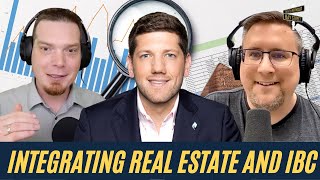
A recorded panel interview (YouTube) featuring Harper Jones, Jason, and Richard Canfield about integrating Nelson Nash's Infinite Banking Concept with real-estate investing. Harper shares his path from wholesaling to buy-and-hold, discovering IBC through Nelson Nash's book, and working with Create Tailwind. The transcript centers on a case study: a successful real-estate owner redirected recurring escrow cash flows (taxes, insurance, vacancy/repairs) into a whole-life IBC policy to 'recapture' capital (example cited ~ $50,000/month), using policy loans and paid-up additions strategically. Key guidance: prioritize education (read Nelson Nash), implement the Nelson Nash way (avoid exotic structures like aggressive 90/10 paid-up-additions, variable/universal life or trust gimmicks), and build the system in phases for volume over time.
Chapters
It's been awesome talking with people and showing them the concept and you know, like you said, caught, not taught. So I can sit there and talk all day, but I'm like, you know, you really need to read this book and go through with an open mind. And then afterwards you follow up and talk about it. And I'm always like, I'm just going to present this to you. I think it would make a lot of sense in your scenario. Right. Most of the time I'm talking to real estate business owners, people of that nature. Right. And I never try to be salesy because really I don't care if I'm write the policy or not. What I want them is to discover it and see for themselves that it makes sense. I want them to come to the conclusion make sense for themselves. So it's like we educate and tell. They say, hey, this is for me or not for me. And nine times out of 10 or more it's going to be for them or the timing is just maybe not proper.
Using the infinite banking concept to invest in real estate and businesses we are absolutely blessed and honored sincerely to be joined today by Harper Jones, who is an amazing advocate for the infinite banking concept, the process of becoming your own banker, and is a wealth strategist at Create Tailwind, an organization that we are very grateful to be associated with. We receive a number of referrals from your teammates as well, Harper, and we're very grateful for that. We know Jim, really well, known him for years. And the one thing that Harper is great at is coaching people on how to implement this process. And we were at the annual Infinite Banking think tank conference and Harper was kind enough to share and to. That's what we do when we're at these events. You know, we congregate. There are a number of practitioners from across North America who get together to share with one another. And Harper had a great real example. And we thought, what better way to help our community and to educate the general public even more on this concept. We're getting contacted by real estate investors literally every single day. In fact, we just recorded an episode with a real estate investment coach, an active property investor who wants us now to speak to their group and help coach their group. And so that's how this happens. And so without further ado, I want to take a moment to just welcome Harper. Welcome to the show, Harper. It's great to have you.
Yeah, thanks for having me, Jason and Richard. And I'm. I'm really excited to talk and see what type of value we can add to the listeners today specifically regarding infinite Banking and real estate.
Where should we begin, Rich?
Well, I think what I would love to kick us off here for Harper to just share a little bit about how, how infinite banking showed up for him. And you also identified kind of before we went live that you yourself are an active real estate investor. And it's because of that intersection of these two things that you're doing in your life that you know, you have a way of communicating how that, that bridge happens for people embracing the infinite banking concept and a real estate journey. So I'd love for you to maybe speak to that, starting with how you, how you embraced IBC for yourself.
Yeah, sure. And the podcast here is not about me, but I want to dive a little bit into my story to show you how I discovered infinite banking and how I got into it. So about six years ago, I started investing in real estate various different ways. At that point, didn't have a lot of capital, you know, a little bit younger. And so there's something called wholesaling or flipping houses where you could find a property needs some work, it could be a good rental. You have already existing buyers who are looking, but they don't have, or they have capital, but not a lot of time. And you kind of middleman the transaction and you want to make sure you do it in a proper manner and have the buyers already lined up. So you're doing it in a legal fashion. And I'm in Tennessee in the states, so maybe different, say for Canada, but there are similar models I'm sure you could do there, but essentially you'd be able to make the spread and the difference. So we did that for a couple of years, and I'll still do that at times if it makes sense. But that helps you to stack up capital, a lot of not a lot of capital upfront. So get more creative. Right. With money, use that capital. I partnered up with a couple of people and we started buying different properties to hold more long term. Right. So apartment complexes, portfolios, things of that nature. You know, a couple years in, started learning more about real estate and the great benefits of it and building wealth and how it's truly a vehicle. Do I love real estate? Yes, in some ways. But what I really love is the financial freedom it provides. Right. And it's a vehicle, just like infinite banking is a vehicle to, you know, help you with your financial freedom journey. Right. And pairing those together is very powerful. But a couple of years in, as we're buying some of these complexes, we spoke On a real estate panel here in Knoxville, Tennessee. Just a smaller group talking about one deal we had just bought. And a gentleman afterwards came and talked about becoming your own banker. And he had referenced Nelson's book, becoming your own banker. So I'm, I'm glad that he didn't try to put his own spin on it and say his book and all this other stuff, which can be great to elaborate on it, but we want to stick to the Nelson Nash way, you know, that's the proper way. And once he talked about it, I bought the book. I heard about it prior to that, over the past like 18 months. This about three years in, I guess, two and a half, three years into my real estate journey, I finally had enough of an open mind to buy the book and look at it without being closed minded. Because before people always say, become your own banker, going to have a policy, borrow against it. And I'm oh, that sounds like a scam. That sounds too good to be true. And I would just cut it off, right? So same thing. I didn't want to hold some of these great properties we had earlier on because I didn't want to fix toilets. And it's like, okay, that's a total wrong mindset. You can utilize other people and property managers and build a team out, but I'm like, I don't want to fix the toilet. And there are some properties that, oh man, it's just crazy what would happen if we just bought it. And I had the right mindset at the time. So it's kind of led me to have more of an open mind. And like, like we, you know, like we say, it's like when the student's ready, that teacher will appear, right? And I read the book and I'm like, okay, this Nelson guy is onto something. This makes a lot of sense. I want to learn more. So of course I started trying to buy more books on the topic and research it, but there was a lot of stuff out there. And just like with real estate, there's a lot of noise out there. And I'm like, okay, what's the proper way? Improper way? I didn't have a ton of guidance, but I knew Nelson was a good foundation. So that's where I discovered, you know, Nelson nash institute and infinitebanking.org and they had some different materials and then they referred and referenced different books. So I started with those books to kind of dive deeper. And as I did that, I also posted on Facebook trying to learn, hey, who's involved in this? And a gentleman tagged Jim Oliver with great tailwind and I got, you know, on a zoom and after I kind of been trying to educate myself some, he was kind of putting me in place and in line of what how to do it the proper way. And I thought I knew a few things a little bit better. I want to put a spin on it like a little bit higher paid up additions and things of this nature. And he's like no, you don't do that. He's you know, kind of keeping me in line but essentially, you know, being a client of Creed Tailwind and had zero intention of getting into it to be a practitioner and coach and teach others. But as I was just passionate about it, I decided to get my license cause people were asking me to do policies for em and I said well at this point maybe makes sense. And I started building a relationship with Jim at that time where the opportunity presented itself to join that team. So one other thing is I got, I was so intrigued about it. I was on a zoom for with Bob Murphy to talk further with some questions I had about ibc and he referenced they're going to be in Nashville, Tennessee which is like two and a half hours west of where I am in Knoxville, Tennessee for the IBC for Business Owners event. They put on or seminar and David Stearns is there and Carlos and Bob and he's like well you should come. And I said well that's, that's when I'm graduating college, that's the same day I'm graduating and walking. So I decided to skip that to go to this IBC seminar because I wanted to learn about it, meet these people and you know, Stephen first. Right. So that's commitment.
Yeah, no kidding.
Wow.
And you know that obviously, you know, you've been helping, helping others to, to catch this process and helping to educate them and so far so great.
Yeah, yeah, it's been awesome talking with people and, and showing them the concept and you know, like you said caught not Todd. So I can sit there and talk all day but I'm like, you know, you really need to read this book and go through with an open mind and then afterwards you follow up and talk about it. And I'm always like I'm just going to present this to you. I think it would make a lot of sense in your scenario. Right. Most of the time I'm talking to real estate business owners, people of that nature. Right. And I never try to be salesy because I really, I don't care if I'm write the policy or not. What I Want them is to discover it and see for themselves that it makes sense. I want them to come to the conclusion, make sense for themselves. So it's like we educate and tell. They say, hey, this is for me or not for me. And nine times out of 10 or more is going to be for them or the timing is just maybe not proper. It just comes back down to education. And I'm sure you guys are the same way.
Very same.
Educate, educate, never illustration and try to sell. Right? That's like very, very last thing.
Really good point. And you know that that leads us to this most recent think tank and you delivered a great talk and you emphasize some of the key things that you just shared about. You're utilizing resources that are there, that are available, that really share the most, the only accurate essence of the concept. And you know, as designed and pioneered by Nelson and this story, this example that you shared was really, really powerful. And I'd love. And our listeners are in for a really special treat for you to walk us through that amazing, amazing client story that you were able to serve somebody in a really, really advantageous way.
Yeah, sure, happy to. So one thing I will say on the forefront is with an infinite banking, you know, it's, it's infinite, right? And it's up to your imagination. So a lot of times, like in Nelson's book or maybe some other books like the Case for IBC or How Privatized Banking really Works, is there'll be some different use cases and some scenarios, and if you hear about it, you're like, okay, great. Like, that's cool. But maybe it doesn't fit me. Exactly. It's like, no, just go into it conceptually speaking. And that equipment financing in the book, replace that with real estate materials or a down payment on real estate, or financing the whole real estate yourself or whatever that may be, you know, just you make sure you use your imagination and stay conceptual. Because I hear time and again people start to understand that concept and they're like, well, could I take a policy loan for this? And I'm like, well, yes, you can. But also, is it a wise thing to do that? Like, right. Depending on what you're trying to finance. But like, yeah, I mean, you're your own banker. You can do whatever you want to do. No one's going to tell you no or yes. Like you got to tell yourself, you know, yes to whatever the opportunity is or whatever flow of money you want to start taking over and recapture. Right. So in this scenario, when typically I'm working on Real estate people, it depends. Some people look at it specifically as a great way to save up capital and then borrow from it to invest in their properties. Right. Or their real estate specifically. Right. And then, you know, pay it back, pay themselves back with interest, replenish the money pool and then, you know, rebound from it and do it again. Right. Then as I walk people through how to do that and we're on the call, we are showing them that and we're like, okay, we have an outstanding policy loan. Right. And you go buy this real estate, that real estate is going to flow money back to you. It's fantastic vehicle. But you're going to have other money flowing that's going to sit in someone else's bank and it's going to be called, you know, in the state's escrow, which would be property taxes, insurance bills. And Richard, what'd you say you guys call it in Canada?
Yeah, it's usually like a, like a property tax account, basically. I mean, you know, a lot of people pay that annually or whatever and it accumulates essentially in an account that you set up or you're setting it aside for the intention of paying that bill because it still has to be paid. You know, the, the municipal government has no sense of humor at all. They, they really want that tax bill.
Coming in and the investor's storing money in there for other things. Yeah, the property insurance, the, you know, repairs and maintenance fund, the vacancy fund, the, all of that. And it's just dead money. It's just sitting in someone else's bank.
Yep. Well, it's, it's dead to us. But the bank's going to be lending it out and making interest. Right. Because money's got to flow. But that money that's sitting there that you're accruing monthly. Right. Well, keep in mind we have an open line of credit or our policy loan that's outstanding. Why don't we just go shove that capital in the policy for now and place it there. Whereas we're going to regain interest and lost opportunity costs or maybe we have an opportunity to buy more paid up additions in there. Right. Then whenever that bill comes due later in the year, we borrow against it and then pay it, pay it back with the new escrows that come in. And you know, as you keep buying real estate and keep building up your assets, will that escrow and is going to keep growing and you're going to need to keep recapturing it. So as you're building your system out, you could use it, you know, Specifically just for escrow. But you're going to find as it grows, you're going to be able to use it for multiple things. But I like getting the capital in there. You can borrow it to go put it in a deal and now you have room to keep flowing it through. But the thing is, it's up to your imagination. And so when we're thinking about imagination and we have money going into our own banking system, our own policy, and you're going to put that to work to buy more assets, you know, finance equipment, whatever that may be, you're going to have other accounts that we're talking about, like property account or escrow account. It's going to be dead money that you can't go lend out or you can't go invest at least for a longer period of time because you need to have that money to pay that bill that's coming up. Right. You can't really negotiate with, with the government or the city or county taxes, right. About when to pay that. So we can do is we can divert that into our system in the form of paying back that policy loan for a temporary period of time or buying more paid up additions. Right. To keep increasing our money pool and regaining loss, opportunity, cost or interest. We're going to pay. Right?
Yeah.
So what we're doing in this specific case I talked about, I think tank is we had a very successful real estate business owner, right. And he had a lot of escrow that's flowing, hundreds of thousands a year that's flowing. And as we were talking to him, he started to really understand infinite banking. He read Nelson's book, I gave him a case for IBC and how Privatean's banking really works. And the only reason I gave him three books at one time is because I knew he was an action taker and a doer. They called me too, two and a half weeks later, read them all. And at that point, how productive is the conversation when someone's educated? It's great if you get educated and listen to people like Jason and Richard on what to do and watch their content and then have a meeting. It's just going to be productive all the way around on how you can start implementing this right in your life. So at that point we started to keep talking further. We would go over different examples and use cases, but we're never going to specifically tell someone, hey, here's exactly how you use your system. We want to show them some different ideas on how to do it and then let them discover and come to the conclusion Themselves. So like in this scenario we got the Laura Murphy report. You know, Laura Murphy has all those articles which are fantastic. And specifically one was like a tax strategy and so, or like the case for IBC book talks about, you know, the tax strategy and building a system with your tax bills. Right? The same concept we're talking about. And as we kept providing that information and just having conversations, it made perfect sense for him to start building a system out with the escrow model in mind. So that's what we started doing and we started recapturing about 50,000amonth right into his system. And we're going to keep expanding that till we recapture all the escrow. But something tells me once he gets a couple of years into this, he's going to be like, well, why don't I keep funding bigger and bigger and bigger for other things, Right? But it's just getting started and really discovering for yourself, right? And using Jason and Richard or someone like me or create Tailwind as a guide, right. To kind of show you the right direction. But really you find your direction exact, use cases yourself with the right education.
I love that approach. And you know, in your interaction as you were going through that process with your prospective client, being that, you know, he's obviously a very successful real estate investor, what was his aha moment? How did, what do you recall when he caught it and said, okay, this makes perfect sense to me because his thinking is in that, that real estate ecosystem, that, that's his thought pattern. So what was his aha moment? When did he catch it?
Yeah, I would say when he read the first three books. He'd heard me on a podcast and talk about it. He said, you explained it. You know, I thought very well. He says, I would like to take you up on your offer. I personally will offer anyone a copy of Nelson's book who reaches out to me, right? And that then I had those two bucks on top of it. But I think he got it and understood it and wanted to talk further. So there's something I want to do. But he wasn't sure his specific use cases to start. But I think his aha moment for his use cases was he's like, well, I have all this escrow stacking up. I don't, I can't go invest it long term. He will. He would take short like 3 month loans for people that would flip houses and fund them. Hard money, loan it, which is great, but he's like, money's gotta flow. I worked hard for that money. I want the money to work as hard as I worked for it, right? And basically he said, well why don't I start funneling that in my own banking system. I could still hard money loan in the interim if I want to. But I'm also making all this money tax free. And someone might say, well you're going to have a little bit of cash drag on the front end and where'd my money go? And it's like he understands being a business owner and being in real estate, it's delayed gratification and anything good in life takes time. So he wasn't questioning, hey we need higher paid up additions in the first year. He went questioning, hey let's go the 90, 10 round. He's like, this makes sense because I make the investment, I've started up a business, right? Because a policy is essentially starting up a business going to take a couple of years to get going. But it's quite incredible how efficient it can get. Marginally efficient, you know, in just a few years. And then after handful more years after that, you wait patiently and guess what, you're going to start exceeding your cost basis at all, tax free within that contract and still have all of these other benefits right on top of it. And then you look at that and you're 10, you're like, well if I pay a premium a dollar and my cash value increases A$50, do I want to make that bigger or smaller? I want volume, right? It's like say that you put a dollar in, it goes up a dollar 55 or a dollar 60.
Great.
So your rate of return may be a little bit higher, but it's like what if you can only put five grand in there instead of a hundred grand, right? It's like I don't care. That would get slightly higher. I want volume, I want to flow more and more and more through there. Even if the IRR is just slightly smaller. It goes back to Nelson. It's not about interest rates, right? It's about volume of flowing volume of interest. Just like you get a car loan or something is amortized. It's like, well my loan was 3%. If you look at the first couple of years, it's like 50% or like 30% or whatever is going to go to interest versus principal, you know, so it's like you got to understand that and then, you know, apply yourself. So the aha moment though I went a little long here, but the aha moment to recap was I have dead money sitting here in this account. Why don't I start building up my own system, invest in my own business that I have, my own bank that I'm not just a customer of, but also the owner.
That very good point and I love.
The connection of, you know, you put a dollar in, you get a dollar 150 cents back out. Well, you know, if you can only put 5,000 in to create that outcome versus okay, you put a dollar in, you get a dollar four out, you know, a dollar 40 cents. But you could put a hundred grand in, which one would you rather have? And I mean, I would rather have the one I could put a hundred in and get a dollar, you know, a $4 back for the hundred. Because that's an awful lot more capacity to go do the next deal versus the limited thinking of only being able to put say five in. And that's the thing that you also identified, Harper, I think is really important is this gentleman understood that he recognized that it's a business, it's starting a business, it's like a long term buy and hold piece of real estate. But he also recognized that he wouldn't maybe be able to get all of that escrow in right away. So you're looking at building this in phases over time so that he can accomplish the eventual objective of being able to do what he really wants.
Exactly. Building the foundation, making sure it's strong and proper, and then building upon all day long.
And for any real estate investor who's viewing this episode or listening to this episode, if you're structured in such a way where you, you're setting money aside to pay for these things, the property tax, the property insurance, you've got a vacancy fund, repairs and maintenance, et cetera, then by implementing this process.
The way.
That Harper described how his client is going about implementing this process is that he's not only building wealth through creating his system of properties and continuing to grow that, but he's also taking control of the motion of that capital and not letting it sit stagnant because the commercial bank is not letting that money sit still. The commercial bank has to keep that money in constant motion. And when he, your client, became a policy owner, he became a part owner of the life insurance company which lends capital. So he's the part owner of a lender. So do you want to capitalize that lender or do you want to keep the financial energy away from it? And that's the thing that we talked about earlier, Rich, is that it's this compartmentalization. And, and Harper, this may have been part of your experience with, with this gentleman that you're working with. It's compartmentalization. The policy.
Okay.
That's in this compartment. My escrow is in this compartment. My, this, that like it's just compartmentalizing. It's like, well, no, no, no. You need to wrap it all up into one system and, and use that as a cash flow management tool and make sure that the cash is flowing through the business that you co own, not the business that you're not an owner of. That, that you recall from, from Nelson's book, Harper. Like, I mean we, we don't have public grocery stores here in Canada, but it just happens to be one of my favorite grocers. They have some of the best fried chicken I've ever eaten in my life.
And we had a great sandwich actually after Think Tank.
We sure did. Yeah. In Birmingham.
Yeah.
So great grocery store. So guys, if, if the three of us co owned a public grocery store, would we ever personally or ever encourage our family to go and buy their groceries from Walmart? Not a chance. We want all of that financial energy flowing back into our grocery store so that we're more profitable and we can buy more products to sell to more captive customers and so on and so on. So this episode is so timely because the, the frequency, the increase in frequency of real estate investors who are reaching out to us through the wealth without Bay street platform has been just an X factor. Like it just keeps growing because real estate investors are, they're catching this, this process. It's remarkably powerful. I don't know, in your time, Harper, in your journey, as, as a practitioner, if you've ever had a client reach out to you to say, you know, I'm really upset that my cash values keep rising every day. It's really bothering. We, we do something about that or.
I was talking to someone yesterday who's a client and we're out for St. Patrick Patrick's Day. I don't know if you guys celebrate that up there, but we're having a couple drinks and we're talking about, you know, he's got his, his premium coming up so he can capitalize the system more and tell him about the flexibility and how we can go about it. And he goes, I said, yeah, is he gonna pay a premium this year? I said, your cash value is going to go up more than what you put in. It's like his third year or whatever. And he goes, yeah, I was actually really surprised last year I put in this and it went up this amount. It's like, huh, like it's starting to. He's Starting to see the mechanics and visuals couple you're in. I'm like, I was like, just wait till like year 5, 6, 7, 8, 9, 10. And you're going to be like, oh, it's like, why don't I put more here? You know, it's like, okay, you know, right.
You know, it's, it's, yeah, it's quite powerful how that happened.
He was trying to figure out how he could, how he could, you know, basically go and leave the, leave the restaurant that you guys are in the bar. So he could go and take the amount for each one of those St. Patty's Day beers and try to run it through a premium first.
Yeah.
Harper, this was awesome. Are there any, you know, words of guidance that you would share? You know, if people are tuning into this episode? There, there may be. This might be their first exposure to this process, the infinite banking concept, the process of becoming your own banker. What guidance would you share with folks who are first exposed to this? What should they do next?
Yeah, there are two things I want to say. Let me write down the second one before I forget it.
First policy.
Okay, so the first thing is education first. Before anything, don't even think about an illustration. Don't even ask for them. Don't really. Don't even research insurance carriers or companies in general. Just get around someone who is a practitioner of it, practices it themselves and has been doing it for a while or is involved directly with people who have done it a long time. Okay. Make sure they're doing it the Nelson Nash way, not just saying or using the term and you know, slam the keyboard saying IBC in order. Just because they say that or say infinite banking doesn't mean they know what it is. Right. Make sure they truly understand it, know it the Nelson Nash way. And a great way to do that is if they're recommending becoming your own banker. If they, you know, refer to Nelson and refer to his work and work around him and not saying so you don't have their own book or resources and great, but just focus on concepts and not the details as infinite banking concept, not infinite banking detail. Right. So focus on, on the concepts and then when you understand that, the details really don't, don't matter. Right. So focus on the education first and go from there second. There's different things that have popped up and it's always like this over the years, but there'll be exotic ways of doing things like a 9010. And when we say 9010, we mean top heavy paid up additions and very low base premium. Which do you want to start first or do you want to finish first? With the high paid up additions, you start first but you're not going to finish first. And when you put a dollar in later on you're going to be able to get maybe A$50, 60 back, but it's going to be a very small amount. You can flow through there and you've trapped yourself with volume. Not to mention other issues that are unseen that aren't on the illustration. Stay away from exotic approaches. Like for example, some people are saying, at least in the States, not sure about Canada, there's trust. And they're like, well, let's throw things in trust and try to avoid taxes or intentionally make a contract and move it into a trust and defer the capital gains. Anything like that may sound great in theory and some ways may actually be possible and make sense, but 99 out of 100, it's not. And anything exotic like that will come and go for the most part. And you need to focus on the Nelson Nash way. Same thing, Universal Life, Variable, Universal Life, those products, there's a reason Nelson, I think page 39 dedicated one page to it because he didn't want to put focus there because it doesn't work.
Very good point.
Focus on the education the proper way.
Love it. Take us home, Rich.
Well, Harper, we appreciate you being here with us today and so generous with your time and your knowledge and your experience in how people are utilizing contracts and their thinking about how they're going to go about utilizing it. So the focus being on the thinking. I'm so glad that you put the focus on that today. So glad that you shared, of course, the importance of recognizing Nelson's message as we do here as well. And so knowing that you started this journey for yourself and you didn't think you would ever be in the position where you would be insurance licensed, much like I didn't think I would be here. But you're now, you're now able to share Nelson's message with the world. Every time that you show someone how to maximize the power of an escrow account and then some, you're a hero. You're showing up as a hero for people. You're keeping more money out of the traditional banking system, more money in private contract and voluntary free contract with other people and you're helping liberate people financially. And so our question for you is who do you most want to be a hero to?
I would, I would answer it this way. I, I don't see myself as a hero. I don't want any of the credit. I merely am trying to just flow knowledge that I've learned and education I've learned through me to that person. And whether that's come through me or people like you to get this message out, that's really what matters. So I guess that would be my. My answer there. All right.
Oh, there you have it. And, Harper, thank you again, sincerely. And we just, we're so grateful that you're here and we will have you back. And to all our viewers and listeners, we appreciate you tuning in. And if you're on the youtubes and you just saw a playlist show up, it just showed up. It just happens, Richard, every single time. Like, our editing team are phenomenal. And on that playlist, that's a recommended list of videos for you to continue your education. And you can do that 24, 7, 365 from any device that's got you connected to the Internet. So continue educating yourself and make the rest of your week great. And recognize that once you catch this, once you catch this, the longer you wait, the more you penalize yourself. And so once you feel like you've caught it, get in touch. Let us, let us meet with one another and see if we can establish a basis to work together.
And.
But I'll tell you, once you catch this, it's remarkably powerful. So make the rest of your week great. Gentlemen, this was awesome.
Thank you both.
Have an awesome rest of your day.
More from Richard





How Do You Use a Policy Loan to Buy Dividend Stocks? #dividendstocks #infinitebanking #shorts


Can Compounding Dividends Pay Your Bills? #wealthbuilding #investment #financeeducation


Should a Corporate Policy Offset Your Personal Coverage? #shorts #insurancetips

What Is Human Life Value? #shorts #insurancetips #dividend #wholelifeinsurance