Real Estate Investor for 30 years turns Life Coach
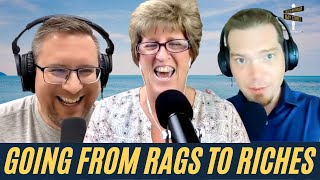
This is a YouTube interview with Gina Jarish, a former long-time real estate investor and broker who became a life coach and author of the bestselling book 'Harness Your Purpose, Power and Peace.' The conversation covers her journey from being orphaned as an infant to building real estate wealth, health and stress lessons that led her to coaching, her use of equine-assisted (horse) coaching methods, and practical real estate and sales insights for entrepreneurs.
Chapters
Even going a little step further, when I think about stress and money. Money creates stress. Stress creates money, whatever. But I think it's more than that, right? If we ask ourselves, why is it money is a problem and why is it that we have stress? And it goes back to one's inability to communicate. Either we're frustrated and we're being extroverted and we're venting it outward or we're shutting down and then it's building up inside of us. So people's lack of communication, people's lack of clarity, all of those things, those are like the root of money or stress, right? You're not taking action. If you're not taking action on the things or executing on the things that you really want and you're hiding because of fear, well then yeah, that's going to cause stress and it's going to cause money issues either or. So it all goes back to the internal part of thinking of if there's a problem and you're not generating money, then what is it within you that has to change so that the situation changes?
Going from rags to riches by harnessing your purpose, power and peace. We are super excited today to be joined by Gina Jarish. And Gina, did I pronounce your last name properly?
I was just going to say that's a first.
Welcome to the show. I want to share with our viewers and our listeners that outside of being the author of this number one best selling book titled Harness your purpose, power and peace, that you also have extensive, extensive experience in real estate and that you are also an accelerator coach, which we're going to talk about. That's going to be amazing. And you're a serial entrepreneur. So you're in great company with Rich and I and many of our viewers.
And just before we went live, we also know that you've been involved, involved in the Genius network, which is something that Jason's involved, which is a great organization. So a lot of great conversation topics here. We're excited to have you, Gina. And you know, as we, we mentioned, we do have a lot of our clients and people who listen to the show that are, you know, either very interested or very knowledgeable about real estate. Real estate investment. And with 30 years in real estate, 28 of those as a broker, you will have a lot of good insights there. I'm sure it will bridge the gap a little bit between what you've seen in your years in business and how it translates to helping people harness that purpose, power and peace. So exciting.
Yeah, thanks for having me. Jason. And Richard, it's great to be here.
We are excited and I love to begin by, because you mentioned that having gone from rags to riches and once orphaned as an infant to a multimillionaire, today take us through that journey. Give our viewers and our listeners a sense of firstly, what inspired you to write this bestselling book?
You know, life is a journey in the beginning, being orphaned as an infant. I was born down in Florida. I was very fortunate to be adopted into a family out of New Jersey, a very large Italian family. My mother had 13 brothers and sisters. So I was very well loved, I can say that much. But I still suffered internally with a lot of different mental things about who I was and identity and what I was supposed supposed to do and you know, things like that. The mental thoughts that I had were more of my father that raised me, had a real estate and insurance office. So at a very young age I started working there doing like accounts receivables and filing and things like that. I was still in high school when I started writing insurance policies. And I thought, okay, well, I can do this. But then I thought, no, I can't be tied to a desk. This isn't fun. And so I got more into the real estate side of things and started writing contracts before I was even licensed. So the journey has been quite an interesting journey. You know, what I started to realize as I was selling residential real estate was I started selling like multi, like mixed use pieces of property. And I had bought my first mixed use piece of property when I was 21 years old. And I was really successful with the tenants that I had, the buildings that I had, you know, my, you know, my net income coming out of them. That people started buying more and more, you know, mixed use properties to me for, from me. And then they would ask me to manage it because they would come back to me and say, hey, I have a problem with my tenant. What do I do? And things just kept spiraling in that direction, which was not. Because, you know, it wasn't really planned. It just happened. Right, right. And, you know, one thing led to another and I started to realize like, wow, I was making a lot of money for other people. Like, why don't I start doing this for myself? You know, I was good at protecting other people's assets, but, you know, it was like, hello, you can do this yourself. And. And so I started to learn how to just actually play the live game of Monopoly. I don't know, you know, I mean.
That'S a great analogy.
I could literally like There could be, like, four people playing with me, but I swear I could play for all of them. You know, nobody. Nobody really got in the game. And I just realized I was playing live Monopoly with real estate. One thing led to another, and before long, though, the interesting thing, mentally, I felt as if I was shackled to this career now, right? Like I. I owed this family something. And so now I was going to forever be in this position, never giving the opportunity, really, to explore myself. Unfortunately, things went a little sour at some point, got a little challenging. I stood my ground, and I stepped out of the real estate industry. I became an absent broker for about 12 years, and I had a manager that managed my office. And I was more the insurance my dad had sold off years ago, and so I was more real estate and property management, okay? And I had a heart catheterization by the time I was 35.
Oh, my.
So the amount of stress being in the real estate industry, thinking of, you know, what we're originally taught is be available for anyone and everyone seven days a week, 24 hours a day, because if you want to make a sale, you've got to be ready, right? But what I came to realize was that I didn't have to be that person. If people wanted me, I could make my hours. But all of these different beliefs that I had and the way I was operating, I had four kids. I had a husband that was a sheriff's officer that worked midnights. You know, it was a crazy schedule. And so my beliefs, my habits, my way of thinking had put me in the hospital having the heart catheterization. And I'll never forget the day the doctor came in the room. And, you know, there's always this, all right, I've got good news and I've got bad news. I'm like, give it to me. The good news was there was nothing wrong with me. The bad news was the doctor said to me was in my head. Now, I want you just to envision for a moment, this is a young 35, sassy Jersey girl, because that's where I was raised. I was like 20 minutes outside of Manhattan. I had just come out from being under the table, so I had a little too much anesthesia still left in me. Had I not had that anesthesia, I probably would have gotten off the table and decked them, because I didn't understand what he was like. I thought he was telling me that there was something mentally wrong with me, right? And that wasn't the case at all. But I didn't know that I loved it.
He was trying to indicate that it was self manifesting.
Yeah, yeah, yeah, exactly. So we, my husband and I had bought 160 acre parcel in northeast Pennsylvania to retire to. Now we used to come up here, we had a big 35 foot travel trailer at the time. And in the winters we would come up here and all of my kids are hunters and so forth, but the kid, two of our kids were still home and said, I don't get it. Why can't we just move to Pennsylvania? And so we took the opportunity going, okay, we can make this work. Not knowing the how. Right? We're going to make this work. My husband was eligible for retirement from the sheriff's department. We built her home. We relocated here. I commuted back and forth to New Jersey for 12 years.
Wow.
Crazy. The craziest.
No kidding.
No idea. It was when I think back to that time when I finally said, I'm done and I sold it to the manager that I had, it was like a shackles that had been around my legs and think of like thousands of boxes attached to it, like chain after chain after chain after chain after chain that had just been dragging me down that I couldn't let go. And as soon as I said, I'm finished, it was the most uplifting, freeing thing that I had ever done. And now I can just be me.
Wow.
Wow, that is such an interesting story.
I think that a lot of our listeners will resonate with that because I'm sure, you know, as you're listening into this, you've probably experienced that feeling of being shackled by something. And whether it's a negative energy of a person or a job or something that you've been forced into doing that you just thought was your path, but you never really felt like you fit in. I know, I've experienced that. And so to hear that story, Gina, is, I think it's so powerful because there's so much to take away and learn from that through self reflection, to recognize, okay, what else could I be doing, what could be? And it ties into something we talk a lot about, which is opportunity cost. And so what was the opportunity cost on that 12 years of life energy which you could have been using it for? You know?
Absolutely, yeah. I mean, you don't know. I mean, it's kind of every one of those things that, you know, when you finish, one door closes, another door opens. But so often we're afraid to close that door because of comfort, you know, because of patterns, because of what's expected of us. I mean, there's a thousand reasons why, but, gosh, as soon as we close the door, it's like, bam. Like, things just start popping up and you're like, oh, my God, like the butterflies are flying, the heart is, like palpitating. You know, your face is turning red and you're going, oh, my God, what do I do first?
And so what key message do you want readers to take away from your book?
I think the big thing is that it's so important to take the time and stop and think about what's most important to you in life, what you want to be able to create while you're here, as well as leave behind. Right. Yeah.
That is awesome. And the good thing about, you know, starting fresh or like you said, you know, you really felt just the whole weight of the world lifted off your shoulders and that you could be you is that, you know, when you look ahead to what's next and how that, you know, evolves for you, you get to decide what to bring with you from your past and if you want to. Yeah. And what to leave behind. And so talk to us a bit about the coaching that you're doing now. You know, I found in when you and I were introduced to one another and you were sharing with me, you know, what the nature of your business is and how you're impacting people's lives and how you're coaching, I just found it really interesting. And so maybe share a bit of that.
Well, it's kind of one of those things where, you know, the first part of my life and my career, I was doing what I was expected to do. The second part of my life, it was something that just kind of happened. And it was. And I would sit there in the field and I'd look up at the sky and I'd be like, really like me. Like, I don't have any experience, like, why would I be doing this? But every step of the way, it was so easy for me to keep doing what I was doing. Now I just want to say, like, let's put our readers, let's put our listeners on edge a little bit. So I help entrepreneurs, small business owners, salespeople, those that struggle with things like reluctancy to make a call, fear of selling, or having those closing conversations self sabotage themselves. I was really good at that, you know, so if you're in the sales industry and that's something that you do, I use a 1200 pound package that gives you a simple solution to sales. So could you guess what that 1200 pound package is? I Mean, can you imagine me, like, delivering it or putting it in the mail?
I just pictured an elephant showing up at my door, you know?
You know, wow, this is interesting.
Close, but when I moved to northeast Pennsylvania, I always wanted to have a horse, and so not to. I didn't only have one horse. We got three horses to start with, and I had to find someone to help me. I needed to learn. Like, I had a horse earlier on, but, you know, I was kicked to go pull the stop. You know, kind of traditional stuff. I really wanted to learn about horses. So I started studying natural horsemanship through a gentleman out of Colorado, Pat Prelly. Well, about six months into playing with the horses and learning about these seven games that Pat talks about, I realized I wasn't teaching the horse right. The horse was teaching me. And then one thing led to another, and I was fascinated because the medicine that I had been on when I left New Jersey, I hadn't been taking in weeks, and I hadn't even thought of it. I didn't even realize that I wasn't taking the medicine. My checkup came due, and I went to a doctor here in Pennsylvania. Thank God my husband was with me, because I think if I was by myself, no one would have believed me. But the doctor said after they did the. What do they call the. I can't even remember anymore. Not a sonogram.
Like an ekg, like.
An echocardiogram or something. The doctor said, why are you here? And I thought, I don't know. The cardiologist from New Jersey said that I have to continue to go to the doctor. He said, there's nothing wrong with you. There's nothing wrong with you. How does that happen? What changed now?
Are we sure it's because he wasn't under the threat of getting punched and decked out like the other guy was?
No, no, no, no, no. I. Even so I had what they called, like, a mitral valve prolapse. And I called my family doctor back in Jersey and said, is this possible? Like, could I possibly put it, like, literally, go away? And he said, it's slim cases, but, yeah. I mean, it's not something that's impossible. So what I realized was my thinking patterns were changing by what the horses were teaching me, that I was getting healthier and. And how is it that I can help other people? It was just absolutely fascinating way to learn from. I went in and I studied psychotherapy with horses, equine assistant learning with horses, life coaching with horses. And people just started to come to me for different reasons. Of the different reasons that they came to me, I realized the pattern. And so we put together this pattern of 12 different reasons why they came to me. And we put them in like a chronological psychological order. In psychology, they talk about norm, storm and perform. So we got them to know clients would come, and they get to know themselves in the beginning. Then we create the tension. We want them to be comfortable. We want them to be uncomfortable with the new comfort. So challenge them to be more comfortable in a different area and then bring it all back together again. And then all of a sudden, the book came about and someone said to me, when I was doing my life coaching certification, it was like, well, what would you want if you could have anything? Now you have to see the expression on my face when I'm like, all right, fine. If I just think off the cusp and I write down five things. The first thing I wrote down was, I was going to write a bestseller. And then my head went in the trash and went, are you frigging crazy? You, like, almost failed English in school. What makes you think you can write a book? Well, go back to Dan Sullivan and Benjamin Hardy. Right. Who, not how.
That's right.
So I had to connect with the house. And this was, I mean, this was years ago, not that many years ago, but that book had just come out. So, I mean, that's a perfect example of I connected, I wrote the book, I connected with a ghostwriter that cleaned it up for me, connected with a publisher, connected with someone that can do the art. And it all came together and got published. Had I, you know, I didn't know that earlier on, but that's how the book really came about was just people that had come to me for different reasons, and I just saw the patterns and everything started because of working with horses. I know it's a hard vision to like. Okay, so how do horses help me? Right. If you think about, say you have a problem and you go to a family member, your family member is going to give their opinion, they're going to tell you what you think you should do. You know, whether it, whether it's a personal or a professional issue. Right. When you bring it to a horse, say for instance, someone say you have a team and the team's not doing what they're supposed to do or what you want them to do. Well, now put a horse on a 22 foot line and ask the horse to do what you want it to. Does the horse do what you want? Most of the time it doesn't. It has nothing to do with the horse? The horse. The metaphor is the horse is a human. So what is it that you're not clear about? What is it that you're not asking? How is it that you're not asking? What's your belief system behind what it is? Like, are you not confident enough to be asking? You know, are you communicating in a way that people are understanding? I had a group of bankers here one day, all right, we're in the arena. We've got two barrels. On top of each barrel is a saddle. We got the. We got the boss man sitting in a chair facing a barrel and a saddle. Behind him is his team. You can't see them. There's a barrel, a saddle and a horse. The big guy, all he has to do is tell his team how to put the saddle on. The very first thing he said was pick up the saddle and put it over the horse. They picked up the saddle. Thump. I put it over the horse. It fell onto the other side and he looked at me and he goes, did they just put the saddle over the horse? So how is it that your team is not communicating, like, not understanding what it is that you're communicating? It's amazing. When you ask humans to communicate with a horse through those non verbal communications, you have to figure it out. It forces you to begin to have thinking patterns. Because otherwise, I mean, let's be honest, don't we often just think outside? Everything is outside of us?
Yeah, I would say so.
Right. If something's wrong, well, how do I fix it out there? You know, what's something new that I need? Or who do I have to get? Or, you know, what is it that I have to do? Instead of thinking that it first has to come internally from the mind. So when you force the human to quiet their mind or quiet their mouth, they have to think.
I like how you clarified that. Quiet the mouth versus quiet the mind. Because a lot of other things we hear is about quieting the mind. Not that there's not value that there is, but it's like, actually, no, you just really kind of need to zip it.
Yeah. Just be quiet and think.
Nelson reminds me rich of something that Nelson used to say where he would talk about, you know, most people, generally speaking, would rather die than think.
What did. Because I forget the quote. Albert Einstein said something like the hardest thing for humans to do is think in the direction of what they want. Right? Yeah.
And you, you create these patterns and in order to improve or to, you know, become a better version of yourself or become a better leader, Become a better father, better husband, better, you know, contributor to your community. You have to think differently. And that's something that many people just have no concept of.
I don't know if they don't have a concept of or they don't have the time to. They don't make the time.
Yeah, that's the key. That's the key, right? We hear that expression from people in our daily lives, and we even say it ourselves, I haven't made the time to do that. I'm guilty, or I don't have the time to do that, rather than thinking differently and saying it's not a priority. And so until I make it a priority, then I'm not going to give it my time or attention, or if.
I really want it done, who's someone else that can do it on my behalf, or what is another way it might get done without requiring the same investment of my time and energy. So in changing the thinking process around the thing that you want, you either want it. So it's like Jason said, is it a priority? Do you want it bad enough? But then also, what is another mechanism or method by which you can accomplish that objective, which I think is kind of goes along with your horse analogy. One thing I think is really interesting, Gina, you know, you talking about your. Your situation with your heart and the stress. So one thing that our mentor, Nelson Nash, used to say, he would go to a session, he would ask people, you know, what's the leading cause of strife in the household? And people would say, say, money. Okay. What's the leading cause of. Of. Of health problems? Well, it's stress. Okay, well. And what causes the stress? It's usually money. So it's these kind of the. And similarly, Nelson had quadruple bypass surgery roughly around 1988. And it was through that recovery where he came back on the table. Not only did he use the lesson of his surgery to teach important financial concepts to people, but he had that awakening type moment where he realized you're here to do something more with your life. And so it goes to the title of your book about harnessing that purpose and the power and the peace that comes with it. Because when you're. When you get focused on what that purpose is, once it's clear to you, you're. You get to be moving in that direction. I think that's where the power comes from, if I can, you know, focus it. And because you now have that, like, clarity, it produces a level of peace within you because you know what you're doing. You know, you get up every day and it's like, this is what needs to happen. I'm, I'm going this direction. You know, damn the torpedoes, let's get it done.
For sure. You know, even going a little step further, when I think about stress and money. Money creates stress, Stress creates money, whatever. But I think it's more than that, right? If we ask ourselves, why is it money is a problem and why is it that we have stress and it goes back to one's inability to communicate. Either we're frustrated and we're being extroverted and we're venting it outward, or we're shutting down and then it's building up inside of us. So people's lack of communication, people's lack of clarity, all of those things, those are like the root of money or stress, right? You're not taking action. If you're not taking action on the things or executing on the things that you really want and you're hiding because of fear, well then yeah, that's going to cause stress and it's going to cause money issues either or. So it all goes back to the internal part of thinking of if there's a problem and you're not generating money, then what is it within you that has to change so that the situation changes?
That's the key. And we're talking about Gina's number one best selling book titled Harness yous Purpose, Power and Peace, available on the Amazons. And we're going to include a link in the show. Notes would wholeheartedly encourage you to get a copy. And Gina, if we can go to real estate now back to real estate for a moment.
Now you've.
Your experience there is vast and you've built a large portfolio. You talked about a foundation earlier prior to us starting the episode. And so what would you like to share with? Because we have a lot of viewers and listeners who are very active real estate investors, whether it's through the financing aspect, the acquisition, building their own real estate portfolios for positive passive income.
Private lending.
Yeah, private lending. That's a big one. And so what are your overall insights on real estate as a whole?
For me, real estate started. My first purchase was a VA loan. My husband was a veteran, so we had 100% financing. When the market started to change and we started to grow a lot of equity in our house, I decided to take a big leak and take some equity out of it and buy an investment. One thing led to another. I think the biggest thing with real estate is, you know, as long as you understand Your market that you're in and what you're capable of doing. And the numbers make sense. They don't necessarily have to make sense in the economy that you're in, but make sense looking at it from the trend as to where we are. Because the real estate market in the states, three to five years, it's content. It was constantly on this roller coaster. So if it was down, then, you know, within three to five, it was going to be up. When I looked at properties to buy, I looked at the potential that I could always create. So I would often pay more for a property, knowing that I could create more revenue from it. So I bought a building back in the 80s, yeah, probably late 8, no, mid-90s, that had only $1,600 a month in revenue coming in from it. And I paid at the time like $220,000, which was a lot of money. I mean, just knowing those numbers go, that, that can't possibly work. Right. You don't even have to sit down and figure it out. But I knew how I could divide the spaces up and we ended up generating about $6,500 a month out of that building that nobody else could see.
Wow. The one thing you identified right at the beginning was know what your own capability is. So that goes directly to you understand, you know, highest and best use or seeing opportunity or potential in something. But it's not just seeing it. A lot of people, maybe they can see something, you know, like I've heard people like, yeah, one day I want to buy an island. Okay, great, but what are you going to do with that island? So, so there's being able to maybe see an opportunity. Then there's another thing, to actually be able to transition what it is that you see into the end result of that, that profitable outcome. So understanding your capability, I think is so critical. I'm really, really glad that you identified that.
Yeah. Looking at the bigger picture, you know, like even when we did the 160 acre property up in northeast Pennsylvania, I looked at it from the bigger globe as to, okay, it's rural, but what's gonna happen 20 or 30 years from now? Well, we're only 30 minutes outside of Scranton, which was like, you know, the sub hub of New York City. And we're only 30 minutes out of Binghamton, New York, which is again, you know, a busy town up there as well. So over the next 20 to 30 years, it's inevitable that the land would have to continue to grow in value. So it may not be worth something today. Where you'd like it to be. But if you look at the bigger picture of what the potentials are, you know, and you can do, that's really, that's where the return comes from. That's the way I never, I did some flipping, but that was never my, you know, my big gig. I'll give you an example. Right now we're looking at a piece of property and it's a 65 acre parcel and has gas royalties on it right now. So it's producing about $4,000 a month in revenue. They're asking $700,000. I went to the owner and said I made it. I made an offer based on showing her the potential of holding a note, how much more money she could get if she held the mortgage, a first note and versus just getting all your money up front and what the capital gains would be and how much you'd get at the end. And so if the deal works out, I'm putting like the minimal amount of money down that I have to. That I wouldn't, I would have to put down 25 to 30% on raw land here in PA. Okay, that's not the case at all. So now I'm sitting there thinking, all right, what's the highest and best use of this land? You know what? We really need a store here. Someone I know that's looking for stores. Dollar General has been moving into the area and they have no spot within probably a 30 mile radius of this location. So not only will I have royalty, mineral rights coming in, but if I can get a ground lease with something like a Dollar General or Dollar True or whatever it is now I'm like, I've got a triple whammy there.
Yeah, and you got low capital tied up. And the seller gets a win because they're going to earn more by earning interest on the loan payment. Plus they're probably scaling a tax bill, gain, gain bill out over a longer period of time. So it's a real win, win situation again. Now it's knowledge, action and capability kind of coming together as a trifecta to make this deal happen.
Yeah, I mean, just step outside your box, you know, think about what I always think about. How can I create more passive income with as little of my own investment? And I've done that a bunch of times. When I bought, when we bought this land 20 years ago, we put probably like $5,000 down. We got the owner to finance the land. I think at that time we paid like 150,000 for the land, 160 acres. So that's less than $1,000 an acre and held like a five year balloon. We knew eventually we were going to start building on it so we'd get a construction loan. So it wasn't a big deal. So five years was okay. I mean most people are like, no, I need 30 year loans, any 15 year loans. Like so much happens in five years.
That's so true.
Hey, it's okay to get, you know, a five or seven year arm. Make it work for you.
Yeah, absolutely.
So. Well, it also starts a time clock and then we talk about Parkinson's law here and you know, things like expenses rise to equal income or what's that deadline? When's something going to get done? Well, if you change the deadline, it's amazing what you accomplish as a human being because a lot can happen once you have a hard deadline on something.
Work expense to meet the time envelope allowed.
Yeah, there you go. Over the years too, I think in the real estate industry, what I've noticed, mortgage companies are good to work with. Depends on the trend on where you're at as far as rates and things like that. On a commercial side of things, it's always been very positive to me to work with community banks. Even today, the best loans that I have, even though the interest is a little bit higher, have been they've, you know, I could pick up the phone and say, I need $100,000 credit line. Can you make it work for me? And like 48 hours later it's done. Because you've built that relationship with the banks, right? You can go in and negotiate. You know, I remember when I did my first million dollar loan. I'm not the kind of like, put me in a little box, Fannie Mae, you know, approval check off everything. Not at all. And I said, look, this is what I can do. I can collateralize this, I could do this, I could do this. But this is what I want. I was calling the shot, you want my million dollar loan, this is the way it's got to be. And they took it, right? I gave them enough security, but they were willing to work with me and be creative on making the financing happen. And it was funny because I said to them when I got that loan, and this was only a couple years ago, I said, I'm going to pay it off in three years. And I remember the business banker looking at me going, okay, sure, in three years. And it was funny because as I was paying down the loan, I mean I was making 30, $50,000 a month payments. I would every now and then send this particular business banker a little note going, My loan is 622. My loan is 450.
I'm right on track.
So it sounds like you gave, you gamified the experience a little bit. Your inner competitive nature. That's that Jersey girl coming out a little bit there.
They have no problem giving me loans today.
Well, you know, I was thinking when I read that, you know, of course you're doing live training every Thursday on how to create a pitch that attracts leads and referrals and what I was thinking about this when you were talking about New Jersey. This is totally, totally off topic, but you know, the. Oh, God, that, that TV series that.
Was on Office comes out of Scranton.
No, the Jersey Shore.
Yeah.
And so I was thinking, because this is going to sound really silly, but it's the honest to goodness truth. So on this would air on Thursdays, at least in this part of Canada, and people would call it, they would say Thursday is Jersey. So that maybe it's, you know, your Thursdays are Tuesdays. But so talk to us about what you're sharing in that live training. And because again, a number of viewers, number of listeners, we get a lot of value. I'm sure, you know, tuning into that. So what, what can a person expect when they participate?
The big thing that I noticed in the industry, no matter what our career is, I can go out and say, hey, my name is Jeannie Garrison. I'm a realtor. Woo, woo. You know, like it's more of. It was an identity of who I was, but that didn't mean that I was going to get buyers and, you know, referrals just because I had the title of being a realtor. What we noticed over the years was when we talked about different problems and challenges that people had. So for instance, if you're struggling to find an investment because you haven't worked with the right realtor and you don't have a lot of assets, but I could show you how to buy your first piece of property. Would you be interested? So we started to tweak how we talked and it was more of, all right, what are the problems that the industries are having based on me as an authentic person? So my experience in making money, I could talk to that space. If you think about like say, for instance, insurance, insurance agents, there's 100 different products that you could sell. So you're basically just saying you're an insurance agent. Right. But what if you had an experience? So I'll give you an example. One of my clients had A really empowered, not empowered, but difficult situation with her parents when they were older. And so she completely understood long term care. She knew it inside and out. And we focused her pitch based on, do you want your kids to make a decision for you when you're no longer capable of taking care of yourself? Would you like a simple solution to elderly care? I forget how we put our pitch together, but every pitch is designed with a problem and a solution. I don't necessarily use my title at all. I may just say I work with small business owners, entrepreneurs that want to be able to double and triple their revenue, have a simple solution to sales. But oh my God, they struggle with self sabotage, you know, reluctancies and fears of selling. Do you know anybody that needs that help? And people go, oh, me, right. Instead of, I'm an accelerator coach.
Right, yeah.
So we, we help them dial in based on their own authentic experience as an individual. What are you really good at? I'll give you another example. A PNC guy, property and casualty guy came to us. We crafted his pitch. Now, he loved the trucking industry. He made over a thousand calls a month trying to get homeowners and auto policies. In order to reach his like $20,000 a month goal, he only needed to write about six policies. 1,000 calls a month to maybe talking to 10 or 12 people. That's why we say accelerate, go further, faster with less effort.
That's like a call every three minutes or whatever, two minutes. That's a lot of calls.
But we had to think through the process, think about what you're passionate about, what you would love. And he loved the trucking industry, so he served that so well that those people came back and said, hey, why don't you look at my homeowners? You know what, let me just give you my auto while you're at it too.
Just take care of it all.
Everything just started ticks. But instead, people take all of these products that they have to offer. It doesn't matter what industry you're in, and they try to sell all of them. And that's like pushing a frigging rope up the hill. I don't know about you.
Yeah, it's the difference between the general practitioner and the surgeon.
Yeah, yeah.
Be the surgeon. Be the surgeon all day long.
So we do about a 30 minute presentation on that call and then I take the next 30 minutes and whoever comes on that call and wants just like this, we ask a lot of questions and there's something that just triggers for me and it rolls off and They've got a new pitch. Go out and start using it and get cash flow going. Right. It's not just about the pitch. We also have to get the deliverables and the mindset and everything else behind it. But let's at least start getting the cash flow flowing now. And we start with that pitch.
That is awesome. And we will include the link so that people can hop on to that. And again, we're discussing the book, the number one best selling book, Harness your purpose, power and peace and definitely encourage you to get your hands on a copy. You'll be glad you did. So, Gina, are there any parting words that you'd like to share? Rich is awesome at taking us across the finish line with each episode. But before that, I'd love to invite you to share any parting remarks with our audience.
Being orphaned as an infant, there was a lot of limiting thoughts that I had about who I was, what I could do. I would highly encourage you to take the time to sit and think about the values that you as an individual person that you want and get the heck out of your own way and just take one step. Right. When I, when I wrote down I was going to write a best seller, I just took one step. And as soon as you take one step, the other steps begin to show up. But we procrastinate because we try to figure it all out, but beforehand. So just make a decision, be decisive. Decide on one thing you want to do and take one step. And I promise the other steps will start to show up. If not, just call Jason or Richard.
That's great advice.
Thank you. Love it. That's great, Gina. Now, you know, Gina, the way that we like to kind of close out our show is we always want to ask a question to get our audience a chance to get to know you a little bit better at a deeper core level. And so you may not necessarily think of yourself as a superhero, but every time that you're doing these Thursday sessions, you're helping people create that pitch. You're actually accelerating their ability to generate cash flow, enhance their business, get out of their own way. You're showing up in such a way where it's like you have a cape on. It may have horses on the cape, we're not sure yet in the insignia. But you're really making a difference in people's lives. And so our question to you would be, who do you want to be a superhero to?
Interesting. I think if I had to put it in the simplest terms, people that feel alone, not necessarily often, you know, not necessarily orphaned, but people that feel alone in the world and they don't know who to talk to.
Wow. Awesome.
Gina, thank you sincerely for being generous with your time and joining us on this episode. We just loved having you and we will have you back. And we would encourage our viewers and listeners to do two things. Get your hands on a copy of Gina's book and also tune in to how to create a pitch that attracts leads and referrals. It's live training every Thursday. There's also a group on the Facebooks, how to close clients quickly and make a million. And so take advantage of these resources. You'll be glad you did. We're going to include that in the show notes. And if you look right over here, you're going to see a recommended playlist of additional content, additional videos that we would love for you to consume to continue your journey of learning. So, Gina, thank you so much again. And to all our viewers and listeners, make the rest of your week great. And we'll see you again on an upcoming episode of Wealth Without Bay Street. Thanks so much.
Thanks, guys.
More from Richard





How Do You Use a Policy Loan to Buy Dividend Stocks? #dividendstocks #infinitebanking #shorts


Can Compounding Dividends Pay Your Bills? #wealthbuilding #investment #financeeducation


Should a Corporate Policy Offset Your Personal Coverage? #shorts #insurancetips

What Is Human Life Value? #shorts #insurancetips #dividend #wholelifeinsurance