Redefining Wealth: A Holistic Approach to Success | Dave Wolcott
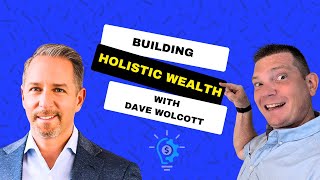
Dave Wolcott went from Marine Corps leadership to founding a tech consulting business that hit Inc. 5000 before nearly collapsing under seven figures of debt. He now defines wealth beyond money: financial, physical, emotional, spiritual, and social capital, with proceeds from his book going to a veteran charity.
Chapters
We're brought up in corporate America to think and act certain ways. It's all about quarterly results. It's all about me, me, me. And that is really the mentality.
Our guest today is a wealth building visionary whose journey began with a passion for uncovering the financial strategies that propel the ultra wealthy. He spent most of his life accumulating insights, knowledge and experience in alternative wealth building from the best investors in the world with a goal to provide a blueprint to become ultra wealthy like the 1%. He's the founder of Pantheon Investments and a former Marine. Please welcome Dave Walcott to the show. Thanks for being here, Dave. Excited to have this conversation with you today.
Thank you, Richard. Really grateful to be here.
Now, before we were able to hit the go button on the cameras, we were talking a little bit about the early part of your journey and the world of kind of corporate America as you entered that world in your youth. And then some pivotal moments that changed for you on the personal side and then even really from the work front that almost propelled you into the sole proprietor world of life and starting your own business. So for anyone who's gone through that journey, they, they know some of the challenges that are there, but there was some other unique challenges with it, including having triplets. So let's, let's rewind the tape a little bit. Take us back to that point in time in your life as a young man. Finding out now that you've got three amazing bundles of joy joining you on the road of life. And, and what were some of the amazing things that started to change for you right at that time frame in life?
Yeah, so interesting times, Richard. And you know, just when I thought the Marine Corps was one of the most challenging things that I could do, being shot at and being combat tested, you know, serving our country, envision this. I had an 18 month old toddler and my wife and I actually welcomed triplets into the world, quadrupling the size of our family. Now, after the Marines, I had just transitioned into corporate America and I was working the corporate grind and had been with a company for just about five years at the time. And I had an opportunity to actually transition into the tech industry from where I was, which was around global supply chain. And I knew that this was a massive opportunity. I loved the innovation around technology. I just really saw the opportunity that would be exciting and really the potential to provide for my family and learn and continue to grow. And I got an offer. And when I told my existing employer that I was going to leave, I was really Shocked Richard, when they told me that I owed them a $72,000 bill if I were to leave. And this was for the contract, breaking the contract early because they had relocated us from New York out to Colorado and they had paid all of our moving expenses and getting everything set up. So having four young kids, a $72,000 bill, starting a brand new job, right, the odds were stacked against me for sure, but I knew in my heart that the opportun was just massive and I had to take advantage of that opportunity. And basically I was thinking through that I could break even within two to three years, but the upside potential was that much higher. So I continued to take the job and move forward with that. And what's amazing is I was able to actually turn the entire challenge into an opportunity for me, Richard, which was that I started the job, started earning money, commissions, things were going well, but at the same time I negotiated really hard with the old company and got them. I started making payments to them for six months and then renegotiated the terms to where they dropped 35,000 off of the contract because they didn't want to set a precedent with the HR community and things like that. But I just really stayed hard to negotiate that. So I basically dropped that bill in half. And then subsequently what I did was I actually went to their company and some of the relationships that I had, I kind of explained some of the situation and I actually created a consulting agreement for myself and making 150 an hour. And I started working on the side during the weekends to earn back that money. And so after about six months of doing that, I actually ended up coming out ahead, paid off the entire invoice, boys made some money through the entire transaction. And, you know, my family continued to grow. My new career was taking off as well. But when I really look back at that, you know, it was such a massive challenge, again, just being, you know, early on in my career and then raising a young family.
Now when this was going on, I'm curious, you know, reflecting back on that, you're, you know, finding out that you have triplets, of course, coming, and, and the timing of this was, was the leaving the position right after they were born was within a couple months, or was it like, right, maybe right before they were born? Just give me an idea where it.
Was within a couple of months of them being born.
Right, so you're. So you're in the process of rapidly changing, you know, infants again, 18 month old, getting a little bit older, moving around, causing havoc in the house. If Anything was like my kids when they were that age. And. And meanwhile, you know, you're. You've. You've quadrupled the level of diapers and stuff that you're dealing with. There's. There's a lot going on there. And so I can imagine the pressures that. That put not just on you, but also your. Your wife and. And. And the family and that whole component. What was it that you would say helped you overcome or make that decision, that moving forward with the new career was the right path in spite of this, you know, this roadblock of $72,000 that was sitting there on the sidelines?
Yeah. I think, you know, in Brendon Bouchard's book, you know, Habits of the Top Performers, the top six habits, one of those is necessity. And I feel that I just have this necessity that's in me to basically overcome any obstacle and exceed at all costs, whatever it takes. It's really just. It's so deep, ingrained in really who I am that I know no other way but to exceed, you know, regardless of the challenges that come my way.
Now, has it always been like that for you, or is it. Is there something like maybe through your military career and training that prepared you for that type of decision, do you think? What would you. What would you put the onus on for helping you be able to make that confident decision to move forward? Because, as we know through our time with Strategic Coach, confidence creates clarity.
Yeah, I, you know, and I think part of that is really a nature nurture discussion. Right. And. And I believe it's a bit of both. Right. So, you know, nature instinctually. Right. Or, you know, from everything from my Colby score to really how I'm wired, I really believe that I just. I just have that necessity to, you know, basically outperform and just, you know, take on these big challenges. But then in addition to that, in terms of just learning and growing, you know, where I am today versus where I am, then it's amazing. I'll still take on the big challenges, but the resources that. That I have at my fingertips are amazing. The community that I have, the mentors that I have, the thinking ability to go through and decide whether is this the right challenge to really take on or not? You know, I've really, you know, come a long way in terms of that, you know, looking back. So I think there's a lot of development that can be done with what you're already built with.
So that's really interesting because, you know, at the time, this was transpiring for you, you were probably in your mid, mid, late 20s kind of timeframe, roughly speaking. And there's, there's only so much life experience that you have at that stage of the game. You know, there's, there's things you can learn, we can have knowledge, but experience only comes from the doing. It's, it's an after effect and then you can reflect back on it. And so you've got that time to look back on it now. But at that stage of the game, maybe there wasn't as much of that available. So I'm curious, was there any mentors or people in your life at that time that you could rely on to kind of spitball some ideas through and kind of help you achieve that level of clarity you were looking for to be able to forge ahead?
Yeah, honestly Richard, I wish I really had learned about the power of mentors right early on transitioning out of the military. I really didn't know anything about mentorship, but what I did have was my experience going through officer candidate school and becoming a captain in the Marine Corps. I mean, I worked with some of the most amazing people I have ever seen and in so many different ways. And leadership, teamwork, integrity, rising above in so many different ways, being combat tested, you know, when really lives matter. And at 22 years old, I was responsible for 45 people's lives. I was in charge of 45 people, their lives and millions of dollars of equipment as soon as I graduated college. Not many people can say that or had that type of responsibility. And then going into a combat situation where you have to make decisions immediately and it's life or death type decisions, those are some super valuable experiences that yes, give you the confidence then to go on and be confident with your decision making capabilities, what you can achie, how you can, you know, inspire others and again, teamwork as well.
So all of those skills that you identified, you know, although they were very military based, they, they, they all transitioned quite effectively into running a business. The same types of skill sets, you know, to, to manage and run, run a business, make decisions quickly, are all applicable. Granted the scenarios, very different though it may seem from some days, as economics change and the world changes around us, that maybe there is a bit of a battlefield in the entrepreneurial space. I, I'm curious, what, what, what would you say to someone who, you know, as an example, maybe they're watching our program and they, they too have gone through some of the military experiences or, you know, something of that nature and maybe they're looking for a direction and the next path. What advice would you give them about being able to take the skill sets that they were able to learn and then applying them to something productive in their future?
Yeah. So one of the biggest things I've learned, Richard, around studying the ultra wealthy and what they do. I had Charlie Garcia had interviewed him on our show and he runs a community called R360, which is a community of centimillionaires. Average net worth is over 400 million. And he talked about one of the most important traits to people is actually self awareness. Right. So I think the advice that I would give to people and this really isn't taught to us in schools. Right. We might, we might have heard of the Myers Briggs test or something. Right. And, and I know you're familiar with the Colby test, but you know, we kind of do these things because we have to early on in our careers to get some kind of job or something. But, but it's that really deep self assessment and self awareness of yourself, who you are really, because there's only one Richard Canfield in the world and what type of impact are you going to make in the world? So truly understanding who you are at your absolute core and what type of difference do you want to make is so powerful because you're only going to win at the game that you're playing. You'll never win when you're playing someone else's game.
I love that. And with that in mind, we're going to talk about winning the game and the skills necessary to do so when we come back after these important messages. What is this incredible thing called the Colby A Index I keep hearing about? I'm a certified Colby consultant and I can't to wait wait for you to discover what your natural instincts are. It works incredible for teams, for business owners, in families with our kids. The more you can develop and understand your knowledge of how you go and get things done in the world and how that happens with the people around you, everything can get so much better. Take the initiative. Learn more about how this might show up in your life. As a certified coach, I'm happy to sit with you and help you understand the depth of your own superpowers. Get the process started by downloading my free guide@coachcanfield.com we're back here with Dave and we are exploring his incredible journey now venturing into entrepreneurial ship, starting in the tech industry and building a company. There's some amazing things that happen in that environment when you're building a company. There's also A lot of challenges and some of them are very unexpected. And you could be on top of the world and then very quickly you can move yourself back to the bottom. Now, Dave, your experience of growing this business was a lot of major milestones over the first five years until something changed and happened. So walk us through the next major challenge that you had to overcome in order to keep that business moving forward.
Yeah, probably one of the most transformational books I ever read. Richard was Rich Dad, Boredad, and also Cashflow Quadrant Right by Robert Kiyosaki, which I'm sure your audience is familiar with. But it was at that point in time that I knew I had to become a business owner and an investor. So entrepreneurship really excited me because I always felt that I could do things faster, better, cheaper than other people when I was in the corporate world. So I finally did make that transition after, you know, moving into the tech industry and after that. So I created a tech consulting business and, you know, things just took off. We leveraged different relationships, expertise, technology, and the business. You know, the business was growing really strong, super exciting times. We started building a team and we had double triple digit growth over the first five years. So high that in actually, in the fifth year, we actually won the Inc. 5000 award. And we're having kind of our banner year, just growth after growth after growth. And then all of a sudden we literally went through our year end planning, had really big plans for the next year. Richard. And this confluence of events just really took us by surprise. One of our top employees who is running our consulting division got hired by another company. So he ended up leaving with that. We lost one of our biggest clients because he was no longer there. So he brought that client with him. And then we also went through something called government sequestration, which was when there's a freeze on all of this spending by the government to do different projects. And we had been really building up a pipeline for two years of projects that were supposed to start happening on the public sector side of things. And everything was just frozen. So no work could continue, no new work could happen. It was all just frozen and no end in sight. So all of these things just really added up that were outside of our control. And after five years having our biggest banner year. Within 90 days, we were almost underwater by seven figures, Richard. And trying to keep up payroll, trying to keep, you know, our teams in place, and it was, it was extremely challenging.
So how, how did the, you know, again you, you talked about doing your year end planning and you've got again Two years worth of a pipeline built. There's a big expectation to be able to move things forward. Like you said, a confluence of events. What was the discussion around, you know, you and your management team and you know, the key leaders in the business about how you would kind of write the ship? I mean, you hadn't done anything really wrong with the ship, but a writing of the ship was necessary. So how did you push through that? Because I think for a lot of people that those could be crushing circumstances and that's certainly broken a lot of businesses in the past. Somehow you were able to come through on the other side. So what steps did you take to be able to kind of move yourself into the, into a positive zone with that change in the business?
Yeah, it was not an easy time. Our CFO was highly recommending that we should actually declare bankruptcy, we should close everything and basically just shut down right then. But I didn't accept that answer. That was not going to work for me. And we had to let him go. We had to let some key employees go at the time. We also started to work, work for, with our, you know, our best clients and try to figure out how we could actually serve them better and find some additional work. So we scrambled really hard to get that additional work and again, like, you know, just, just really driving some ingenuity around, you know, managing our existing cost load. And then of course, you know, I had a young family, right, that I was trying to provide for. So not only was I having no income now coming in from the business, the business had become this massive liability which I had no way of really funding. Right. How many years was it going to take to actually dig out from this? In the meantime, I had to deplete some of my own assets to be able to figure that out and still provide for my family. And it put me in complete scarcity mode. You know, as I look back on it, I wish I had had something like an infinite banking policy, right. Or something to lean on that was really safe. And also when I look at it too, it's just, I think the biggest lesson here is that I put all of my eggs in one basket. And I think this is what really happens to entrepreneurs is we believe in our businesses so much and we'll do anything for our business. It's like our child, right? But when you invest everything in that, you really just don't give yourself any wiggle room for anything to possibly go wrong. And again, you gotta think we had a five year track record of a success. We were doing really well. And then with circumstances outside of our control, we were just so quickly upside down. So it was a super challenging time. And again, I think the biggest lesson learned is just that, you know, just really trying to have some diversification, you know, not only with your business, but also with, you know, your personal financial, you know, portfolio and where your assets lie.
Well, that's interesting because you talked about, you know, having to sell off some assets in order to kind of fill the gap as much as possible. And you know, I would imagine that there's some, some of those assets weren't as easily liquidated as others. So you kind of mentioned the, the importance or the advantage of if, if looking back, you had started infinite banking in, in your world and you had a little bit more liquidity and that was probably part of the issue. So. So did you have a struggle or an issue trying to pivot assets in such a way where you could access cash and capital? What were some of the challenges you had to run into in order to do that?
Well, it's interesting, right? So we basically had stocks and public securities that we sold. And you know what I find interesting nowadays is that percent of financial planners that will say one of the greatest things about having stocks, bonds, mutual funds is their liquidity and that you can sell them. Well, the market wasn't exactly doing that great during that time period. So I actually sold some of them at a loss. Right. Which wasn't great. And then conversely, the ones that were doing well now, I created a tax situation for myself which I also had no ability to handle at the time to pay for additional taxes come tax year in April. Right. So that was kind of looming on me. So I find that that's kind of interesting. Right. They always kind of talk about that, that it's great to have paper assets because of liquidity, but in reality I don't think it's the smartest move. Right. So having something that's in your control, Right. Having something that's tax efficient and then having that, you know, liquidity to use or a collateral to use can be really powerful.
Well, I'm glad you mentioned that and I'm also glad that you, you still had a measure of liquidity, whereas many others might have that capital all tied up into, you know, perhaps a government sponsored program like a 401k or something where there's actual, you know, restrictions and complications and additional challenges in place to be able to create some kind of a liquidity event. And, and that, that's what's caught a lot of People I believe in, in traps as the economics of their life shift and change. You know, things like a job layoff, a business challenge like you went through, literally pivoting in over a 90 day period to a whole different outlook on your business. And so you mentioned that you'd made changes to, you know, the cost base of where capital was flowing from the business expense load a little bit. You were able to renegotiate and actively focus on your best clients to see what you were doing well, increase some revenues from that vantage point. How long did it take you, Dave and the team to be able to pull yourself back out of the hole you found yourself in with the business from going from almost bankruptcy to a revival of sorts?
It was over two years, Richard. It was a long time and we had to actually make some decisions that were very short sighted in nature and not very strategic for the business. So for instance, taking on lower margin work or maybe clients that were not as right fit for us in the business, but we had to do what we could at that time just to survive. And so now, again, looking back, it's just I lost time, you know, the assets, the money, you can, you can get the money back, we can always make money. But I lost a crucial amount of time at a big period where we were growing and scaling, you know, not only personally, but with the business as well. And so really just kind of shifted us into that scarcity mindset and really just doing what we could just to just to survive and dig out of that hole.
Well, I'm glad that you're able to do it and we're going to find out just how you were able to do it and what started to materialize next. After we come back from these incredible messages. In the year 2009, my life completely and totally changed. Something momentous and incredible happened to me. That thing was this incredible book, become becoming your own banker. It was written by my mentor, an amazing friend of mine, R. Nelson Nash. It completely revolutionized and changed my entire life. You can learn all about it by registering for a free on Demand webinar@learnibc.com Take the initiative, you won't regret it. With Dave's business, he's now made of revival. The business is back on track. And part of what's going to help that business even get more traction is the impact of good coaching. And so, Dave, we talked a little bit about Strategic Coach earlier. We're both members of Strategic Coach. Actually one of the ways that we got connected, I think originally what I'd Love to hear is as you were moving through these dark periods, you talked about the scarcity that was going on around what had happened in this business period and taking on maybe work that wasn't the right work, but anything you said to survive. At what point did the idea that you could reinvent the business to some degree come up and how did you find the path of coaching through strategic coach?
Yeah, we were always innovating, Richard. Right. I think in some ways maybe too much, right. My business partner at the time was, he was the technologist. I was super bright individual. And so we were always trying to bring new solutions to the market and sometimes our delivery capability was lacking, right, to be able to get it there. But we did make a successful pivot into kind of a new field and really where the market was at the time and then slowly started building up basically our different partnerships, clients, ecosystem and again rebuilt some big momentum for us which ultimately led to us exiting the business and selling the business. And at that time, I think coaching was really pivotal because I learned, I love how Dan Sullivan likes to talk about thinking about your thinking. And I spent so many times in my career just saying, like, I think we're all raised in this culture where I've got to hurry up and get to work, right? I've got to be the last one to leave the office and I have to do all of these things. But if you're an entrepreneur, you're really thinking about work 24 7. I don't care where you are or what you're doing, but I would always think, you know, just, just think about maybe those times in the shower, right? When do you have your most creative, most impactful, most powerful thought? It's when you just finish a workout. It's when you know you're taking your dog for a walk, right? It's those moments with your kids. It's not when you're actually sitting at your computer. So one of the biggest things that I've learned from coaching is not only surrounding yourself with other successful people that are like minded and going in the same direction as you. It's all about like, how can we actually put ourselves on the right trajectory, right. To go in this direction that you're trying to go. Right. And think about things in a different manner. Right. So whether that be different thinking tools or different thinking strategies, I feel that I have much more wisdom to be able to make decisions, you know, much more quickly. Are they aligned with my purpose? Are they aligned with my values and where I'm going? And I think that thinking has just really accelerated my results. And more importantly, I've been able to say no to things a lot easier.
The importance of saying no. I'm glad that you mentioned that. I think that's. That's an understated skill. It's one that I'm still working with to some degree. And I think, I think we're always a work in progress. We're trying to craft away and carve away at the clay that is the future that we're trying to build for ourselves to formulate this. This incredible vision that we're trying to work and mold it into. With the innovation of having, you know, again, the thinking tools, the strategic coach, and really just being able to be present about how you were looking at the business, I'm guessing that had a pretty pivotal role in grooming the business for eventual exit between your business partner and yourself. Would you guys, you know, geared towards an exit, were you planning that or to sort of just materialized through the continued effort that you were putting forward by starting to change the way that you were structuring the business?
We had always wanted to exit the business. My current business, I don't want to exit. Right. This is actually a legacy business that I'm building. But at that time we were planning for an exit. And there's a lot of power in planning for an exit, right, because you can actually build systems, processes, you can hire team members that really run it even if you're not there. Right. Which is really the true definition of how Kiyosaki talks about it as a business system. Right. It's running without you. So I think that that was a great experience and really culmination point to be able to, you know, create substantial value that someone else saw. The value we were able to, you know, exit and then really, you know, align to something that was much more in line with my values, my purpose and where I wanted to go, which is really, you know, my mission now is really trying to, you know, impact as many people as possible to. To really 10x their wealth. How do they think about wealth? Right. So that they can increase their freedom and really live an extraordinary life.
That's a. That's a beautiful purpose. It's a beautiful thing to be here to do. And I know some of the way that you go about doing that work from the point that you sold and exited the business, what happens for a lot of people is there's a bit of a honeymoon period. You know, you've had all this work and all this effort and the challenges that you've overcome and, you know, you deserve a bit of a break before you jump into something new. But there's also what I found in discussing with entrepreneurs, sometimes a rudderless feeling at that point in time in their life and trying to figure out how to get back on track. You're a very focused guy, Dave. I'm curious, did you go through a similar experience as that, or did you. Were you already preempted before you sold the business for what the next thing you were going to be doing was?
Yeah, I was really preempted, Richard, because it was back in 2000, you know, back when I was making that first transition into the tech industry that we talked about, you know, where I said I had learned from, you know, Kiyosaki. And so I knew I had to become a business owner and I knew I had to become an investor. But, you know, how was I really going to do that? And there was. There was something about that that just resonated so deeply with me and trying to figure that out. Right. I didn't exactly know what that looked like. And, you know, while I enjoyed being in the tech industry, it was still more of maybe a job for me versus now. I feel that I am mission focused and work is not work. Right. It's. It's really my. My core of what I like to do, trying to serve other people. Right. And so I have actually been able to 10x my purpose, right, by being more aligned to where my vision is and where I really want to be. So I think when you can get that clarity and align towards your vision, and I really kind of always had that vision, I think just selling the business was just one more step along the way that I could get closer right to my path.
Oh, that's incredible. So, I mean, the importance, I guess the takeaway there really is to define and refine the clarity of that vision that you have for your future as much as possible, as early as possible, so that you can stay the course even when things get in the way as. As they've done in your experience. So I really appreciate you sharing that. And I think it's interesting because in the path that you're on now, you're looking at, I mean, the wonders of technology changing and things around us, the types of way that information can get to people's hands, which maybe wasn't as prevalent in the earlier years of your life. What do you notice about the way that you're looking at Pantheon investments and the structure of how you go about focusing the energy to fulfill that mission. Now, in relation to how you're innovating in the space, what is something that really is exciting you about the future today and how you're operating towards this bigger mission?
Yeah, really appreciate that question, Richard. And I feel as if we are so unique and how we're doing it, right? And what we're doing is we're serving our clients right. It's all about value creation. I think so many businesses out there are all about, they're trying to scale, they're trying to make more money, they're trying to get more influence and do all these things, but it's very self centered, right? It's just internally focused. So we like to be really externally focused and we're creating lifetime relationships with our clients. I got to tell you this story, Richard. I mean, I, you know, I almost came to tears just this morning. I got a call from one of, one of our key clients who's also been a friend for a long time, many, many years of mine. And he called me and he said, he said, dave, you know, of all the, you know, things that you've done for me, all the, you know, the investment help you've given me, all of these things, he said, here's the biggest ROI that there is. You just saved my life today. And he found out. So as part of our virtual family office, we have an extension with a precision medicine doctor and his team that's very advanced. It's kind of similar to Lifeforce, what Tony Robbins is doing and all that. But they identified a tumor that could have been cancerous and basically taken him out. But part of the preventative diagnostics really identified that for him. So it's just so powerful to really be able to see that. So kind of coming back full circle, Richard, right? It's just this ability. We feel that we're different because it's all about providing as much value as we can for our clients and helping them improve their lives. You know, and the financial aspect is just, it's just a part of it, right? Money is just a means, right? But how can you live your life better, right? How can you create more freedom of time? Right? Freedom of relationships and purpose in your life, right? Increase your health. And I think ultimately, right. The way we see health. And that's why in my book, the Holistic Wealth Strategy, we really talk about the different forms of capital. And family offices do this really well, right? Because most of the time we're just thinking about money, but it's actually these other forms of capital. So not Only financial capital, but there's physical capital, there's emotional capital, there's spiritual capital, there's social capital. Right. The power of your relationships. Right. All of these things are so important. And I think the more that we can provide clients with insights to their vision, help them achieve their vision regardless of the size of their bank account. It's just. Just all about being more fulfilled.
Well, with that in mind, we're going to talk more about the holistic wealth journey when we come back with Dave. Have you ever wanted to be a part of a network of visionary entrepreneurs? People who get you, who understand you, who think differently? They're actively going out and making things happen, happen. They're making the world a better place. They're creating incredible change, incredible innovation. And they're having discussions about how to make the world a better place, how to create a bigger, brighter, better future, how to take what they already know, combine it with what someone else knows, and make something grand. Well, you're in luck. There is such an incredible network. It's the Epic Fit Network. You can go to theepicfit.com to learn more, more, apply to be a member of this incredible organization. I'm a member and I love it. It's been fantastic. And I can't wait until we have more amazing people just like you joining this incredible group. What does it mean to be rich, and is it the same thing as being wealthy? Well, we're going to discuss that with Dave because of their view about how to look at wealth, which I think is different. And it's important, especially in the type of world that we're living in today, the understanding of wealth. And what does wealth really mean to you? And is it the same thing as being rich? I would say not. And, Dave, I love your take as an organization on how you approach this topic because it comes in so many different ways. So give everyone an understanding of your vision of what wealth means and what it should. How people should start thinking about wealth in their life.
Sure, Richard. So, you know, in my book, the Holistic Wealth Strategy, we really dive into kind of a phased approach and really a framework for you to achieve wealth. Right. And start to think about wealth in a different way and how we would define it. I mean, I really love those words, holistic wealth, right? Because just think about it, for instance, right? I mean, Steve Jobs had all the money in the world, right? But he couldn't actually buy another day to live because he didn't have his house. Health, Right? So health is so important for people to have and oftentimes we're so busy in our careers, grinding, grinding, got to get the next quarterly results, got to get the next promotion, got to do the next things. And oftentimes you basically expend your health to achieve your wealth. And so what is it for? Right? So I think really having a holistic view of wealth that includes health, really your physical capital is very important. I also think about social capital. We often talk about sometimes your network is your net worth, right? So being a part of masterminds and communities like Strategic Coach and Genius Network and some other great places where you can increase your relationship capital that might have that next, that next. Who, who gives you the next opportunity that could be the biggest opportunity in your life or could be that person, right? That gives you that one insight on, you know, what it is that's going to take you to the next level, right? Or maybe it's a referral to that doctor who you didn't even know you needed, who just saved your life, right? So relationship capital is so important. And of course there's a spiritual capital aspect as well, right? And having mindfulness, understanding that there's a higher cause, I think that's very important for people. Emotional capital is so important as well, right? And that's why in our book we start off with mindset. And one of the reasons why most investors lose is because they don't manage their emotions well. People are actually reacting to what's happening in the market. They're going, you know, they're checking all the news because of the campaign that's coming up, the presidential campaign in the US and trying to see, okay, well, how am I going to make my decisions? Investing, you know, if this party gets in or that party gets in or what's happening with interest rates, right? And they're really just, you know, moving things too quickly, right? But you want to be able to have a growth mindset, right? So you can see things in a different way versus having a fixed mindset. And so to me, that's how we really define wealth, right? It's this comprehensive view of all of these dimensions of capital. Because once you actually have enough financial capital, that next deal or opportunity that doesn't necessarily make a meaningful difference in your life. You can only increase it so much, right? So where are you going to drive that fulfillment from, right? Is it through your purpose? Is it through increasing your health? Is it through increasing your relationships or maybe more meaningful connections with your family? So all of these things.
Well, it's a well rounded look at things because It's a little bit about balance, but it's so much more than that because it's about where you're putting your time and your attention to. And I think it's very easy for us to have our time and attention focused on things like the bank account, the expense load, the net worth statement, the balance sheet, all these things that are calculable measuring sticks that we can work from. Because there's something specific about seeing a number that lets you say, oh, well, here's how I can either increase or improve that number. There's a target that you can easily set, whereas it's more difficult to measure. Things like the emotional bank account, the, the spiritual bank account, the health bank account, you can measure pretty good. But so some of these things are a little bit more defined in our mind's eye and as we go about the world, partly through maybe the training that we receive, the experiences that we have over life. And it's a little bit more difficult to think about the ones that are, I'll call them mysterious in their analysis and how you, how they feel. And so I like to talk about the importance of getting clear on the decisions that you make behaviorally. And sometimes we make decisions that are, as an example, a lifestyle decision versus say, a financial decision. I'll give you an example, Dave, and I'll walk you through it. So recently, about a year ago, I got some artificial turf installed in our yard. Now, now that is a financial decision. It had a cost. We had to pay people to come and do all that work. But it was a lifestyle financial decision. But that lifestyle financial decision has actually added and increased my emotional bank account with my family and just in general how I feel about everything in my energy. So it was a well worthwhile decision for me. And I'll expand on a little bit more. I took a policy loan from my infinite banking system. I used that to pay the contractors. The contractors came in and did the work. And while it was happening, my kids got to watch it take place. So we got to have a conversation, a deep, memorable conversation about value and value creation and the value of having someone to come and do that hard laborsome work that we didn't have to. And I, I explained how I could have done the work and we could have done it together. We might have saved some money, but my back would have hurt. The physical element would have been impacted by that. It would have taken more time. That time I wouldn't have been able to have conversations like this with you and meet with my own clients. So There was all these ripple effects of that decision. Now we've locked that moment in time. And so anytime that we're out in the yard and we're on the grass, we can now have. I can bring my. My children back to that. That moment in time. So the value that that will create over their lifespan, that I can always draw them back to that memory, I think is tremendously valuable. Plus, we're not upset or angry because of the way the yard looked before. And the frustrations that we had are all. Are all gone and disappeared. So now my kids can play soccer. They can do all these things they weren't able to do before because of the quality of the yard previously. And again, it's a physical thing with a financial connection, but the purpose and the value that's being created from it is completely, you know, disconnected from those two elements. Does that make sense?
Yeah, it makes perfect sense. And I think one way for the viewers out there to really kind of, you know, understand how to incorporate this into their daily lives is really, it's investments and it's expenses. Right. So everything I do in life is an investment. If it's an expense, then I really don't care for it. Okay. We have a few that we need to do like, like, let's say, pay tolls. But in reality, I actually, part of the reason I pay tolls is because I can save time. So I actually just bought back some time. But things like investment, so, you know, a similar story. We're actually in the process of building our dream house that's been, you know, two years in the making, another year, it's going to be significant outlay. And, you know, one could easily say, hey, this is, you know, so expensive. You know, all the costs and the things that you're doing. But the way I see it is it's such an investment for me and my family. So now I'm actually going to become a grandfather in October. So really excited about that and the next generation coming along. And so we want, you know, our kids to have a reason to come back and visit us and spend quality time with them. So when we have we. When we can build this amazing environment and then create really neat activities that we can all bond together, it's going to be so much more richer to be able to do that. So I see the entire thing as an investment and even the same thing. And I grew up in a household where we didn't go out to dinner a lot. It was expensive. We didn't have the money because it was all around scarcity type of mindset. But nowadays I'll, even if I don't have the capital or whatever, I'll take my, my family out to eat. And you know why? Because there's no distractions, there's no phone, there's no running anywhere. We're all together, we're all in a new environment. And that quality time, you will never, ever get back. So going out to dinner is an investment.
Yeah. The importance of quality over quantity I think is important. And, and we talked about, again, the emotional wealth side, and I look at it as emotional bank accounts, especially when you're in the social scenario, when you're meeting and working with people, how are you investing in the relationship and where are you able to make a deposit into an emotional bank account of someone else? If you're always withdrawing from someone else's emotional bank account, you're going to be indebted to some degree. And if you change the focus to investing in making deposits into other people and that emotional bank account, you're going to create a lot of, a lot of clout and a lot of availability for when the time is necessary if you need to make a withdrawal. There's lots of people who are more than happy to come to your aid. And I think there's something really powerful about that. And it ties a little bit back to the spiritual side of things. And all of those things intersect to allow for the ability for, even in your own scenario, the ability to exit a previous business, the ability to transition into doing what your mission and your purpose is today by having those key relationships, by investing in other people so that you could create all the opportunities that became available to you throughout your journey of life.
Yeah, I'd like to double down on that. Richard, what you said is so important for the viewers to really kind of take hold of. And I think it's hard, right, because we're brought up in corporate America, right, to think and act certain ways. It's all about quarterly results. It's all about me, me, me. And that is really the mentality. But when you start to make that shift towards serving others and helping other people, it is so powerful. Like the, you know, it's, you know, we. People say it, but they don't truly understand what it means. But it is, is better to give than to receive. And when you start giving in a really big way, whether that's charity, we've taken all of the proceeds. We started with 10% of our proceeds, we went to 50% of the proceeds. Now we're at 100% of the proceeds and matching to all the sales of our book. And we're giving that to a veteran charity called thefund.org this feels amazing. And being able to give things, whether that be insights, resources, connections, education, you know, great deals, great opportunities, you know, all of these things to people that, you know, materially change their life, it is just so powerful, Richard. But sadly, you know, society just doesn't truly really understand, you know, the meaning of that. And I think part of that is because, you know, we're just in this reactionary environment. We're kind of in this grind. We're raising kids, we're building careers and everything, so it's hard to see that. But when you can really make that shift and evolve in your own personal growth, you know, the satisfaction from that is just massive.
Well, speaking of satisfaction, I've been thoroughly satisfied and enjoying this incredible conversation. Dave, thanks for being with us on the program. For all of our viewers, tune in next week where we unpack how you can overcome the major obstacles of life and innovate into a powerful future.
More from Richard





How Do You Use a Policy Loan to Buy Dividend Stocks? #dividendstocks #infinitebanking #shorts


Can Compounding Dividends Pay Your Bills? #wealthbuilding #investment #financeeducation


Should a Corporate Policy Offset Your Personal Coverage? #shorts #insurancetips

What Is Human Life Value? #shorts #insurancetips #dividend #wholelifeinsurance