Ryan Griggs - Shifting Your Banking Paradigm - Part 1 Banking With Life | Wealth Without Bay Street
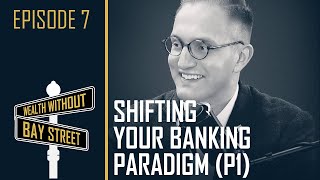
Ryan Griggs explains the Infinite Banking Concept, which lets you borrow against your own life insurance policy instead of relying on banks. He contrasts this with the standard "buy term and invest the difference" advice and roots the idea in Austrian economics and personal capital control.
Chapters
You are listening to the Wealth Without Bay street podcast, a Canadian guide to building dependable wealth. Join your host, Richard Canfield and Jason Lowe as they unlock the secrets to creating financial peace of mind in an uncertain world. Discover the strategies and mindsets to a financial future that you can bank on.
All right, welcome to another episode of Wealth Without Bay Street. We're joined today by special guest Ryan Griggs and of course, my amazing co host and partner, partner in ibc, the Richard Canfield.
Oh, I get a the. I've moved from the. To the.
How was that? How was that for an intro? Ryan, welcome. It's so good to be with you. Thank you for joining us and our listeners here today.
Absolutely. Thank you guys so much for having me. I really appreciate it.
Now I'm going to throw a curveball and just get the conversation started. Buy term and invest the difference.
Go.
My gosh, talk about the conventional life insurance perspective.
Right?
Let me get as much death benefit for as little premium as possible. One of Nelson's rules, don't be afraid to capitalize, don't be afraid to pay a premium. And my gosh, life insurance is so great. Just don't buy too much of it. Come on.
Well, you know what's interesting too is that when you look at a term life insurance policy which does serve a purpose, but you can't solve a permanent problem with temporary coverage, as one of our late mentors, Bob Shields used to say. But you know what's interesting is that if you look out the life of a policy as it becomes more and more cost prohibitive, you really don't have much of the invest the difference money available.
Right. I thought it was spend the difference. Isn't that what normally.
Yeah, for most people.
Or lock it up behind a tax qualified plan so you can't touch it until you're 59 and a half or older, which is really what normally happens. And it jumps clean over what I talk about a lot, which is the actual problem that most people are really facing, which is the need to build and deploy capital throughout their lifetime. Their need for finance. As Nelson used to say, that your need for finance is much greater than your need for death benefit. Absolutely. The buy term and invest a difference thing is jumping over the need to take control and manage and own the banking function. So it's just an indication when you hear that, when I hear it, when I hear it from the financial entertainers on the blogs or on television big names that all that mutual fund money is going to support and pay their advertising for it becomes clear to me. And if it's a potential client or even if it's an agent that I'm talking to or training, if they bring that up and it's not just like in this form of conversation, if they bring it up genuinely as a potential objection to ibc, it's an indication to me that they're still in the conventional financial framework. And that's okay. But like Nelson used to say, IBC is more caught than it is taught. And that's someone who raises that objection, just hasn't caught the concept yet. That's okay. But that's where that person is in their process, right?
Yeah. The learning process and the time it takes for everyone is different because we're coming at it from different vantage points, different angles, different financial conditions, and different levels of financial programming that we've received throughout various stages of our life from our parents, our teachers, our academic world, our business life, whatever it is. And so I really love the way that you put that. It's a process of learning and it's more caught than taught. I'm pretty sure I said that yesterday on a call with a client, because that's one of my favorite Nelsonisms.
Well, he used to say often to meet people where they're at and that you can communicate the knowledge of the process of becoming your own banker, the infinite banking concept. But he would share that the process is ridiculously simple. It doesn't need to be sensationalized. And that's one of the things that I think our listeners really need to know about Ryan, is that, first of all, he's, I think, nothing short of brilliant in his approach and how he talks about the process and the concept from the occasions that we've heard him speak. Quick plug Ryan. A fantastic podcast. Banking with Life, yourself and your mentor, James Nethery. We just want to give a shout out to the both of you. And for our listeners who are tuning in, you would be well advised to subscribe to that podcast and to tune in to each one of their episodes. They're just. They deliver massive value and they're practical.
Well, thank you.
Both Jason and I subscribe to that podcast. We love it. We think it's fantastic. And I would, you know, among both you and James and some of our other colleagues, I would say that you've been part of the inspiration for us to really kick this off. Definitely a little bit of a Canadian perspective and to just help grow some of that content. Hopefully that will help enhance the movement and add value to all the listeners. And our existing clients and that sort of thing.
Yeah, can't forget about the Canadians, man. Well, thank you.
And you have to come. You have to come visit us at some point. And actually, you know what? I'm in the United States right now. Coming at you live. Live from Palm Springs. I'm here for a speaking engagement that I'm doing on Sunday. And so, you know, you're an hour.
East of where I'm from.
No kidding. Really?
Yeah. I'm from Redlands, California. So you get on a 10 freeway, keep heading west, head for the ocean. You'll run through my town. Oh, got it.
Wow.
But I do need to come to Canada. I appreciate both of your guys comments. That's really sweet. It means a lot coming from you too. I appreciate the recognition. I'll tell James. I know he would be appreciative as well. And yeah, on the podcast, we. I've had people, because we have a certain philosophy on marketing, and I've had people characterize what we're doing as a marketing thing or this kind of deal, and it's really not. We believe in the attraction style of marketing. And so that podcast came out of the conversations that James and I would have anyway, that we still have. Before that podcast was a book review. On this book right here, becoming your own banker, James and I did like four and a half hours, and in between the takes, we said, you know, my gosh, this conversation's fun. You know, maybe someone would like to listen. And so we really do. That's all we do, is we turn on the cameras and continue to have the same conversations. We would anyway. And that's why maybe we get a little controversial sometimes. I'm not. I'm not. I'm aware of that, but that's okay. And. But I'm glad that it speaks to y' all and that you. You gained some value. And I know that we have other agents, too, that also listen. And yeah, I'm. I'm fortunate. I'm fortunate to have spent the three years that I had with Nelson. I'm fortunate to have James in my life. I'm fortunate that I've been able to learn so much. And I came from the Austrian background, the Austrian economics background.
Could you maybe expand a little bit on that, Ryan, for our listeners, and.
Just share a little bit about that master's degree? And you're a PhD student in Austrian economics, and I think you were on the professor track. That was kind of the vision and the direction you were heading down, right?
Yeah. So a little background in general, I do have a bachelor's and a master's in economics, conventional mainstream economics, ultimately from California State University, East Bay in Northern California and Hayward. I went to a number of different undergraduate schools, but that's where I ended up. That's where I finally got the degree. I was. Richard, you're right. I was on the track to become a professor of economics. I was enrolled at Texas Tech University in Lubbock in West Texas. I'm currently in Fort Worth, about five hours east, but I was in Lubbock. I was at Texas Tech. There's an organization there called the Free Market Institute. It's sort of a university affiliated organization. So they're formally a part of the university and they provide money to graduate students to get their PhD. So I was literally paid to go to school. And the conventional mentality out there among potential and current economics graduate students is that you'd be crazy to go to a PhD program unless you get paid, right? And so I was, I was going down. I'd only applied the one school, not supposed to do that went to the one that accepted me. I applied after the deadline, still was accepted, still got funding. So you know, things were, look, the point is that things were looking good and things were going well on paper. But I looked around and you know, at the time Bob was there. So don't get Bob Murphy, that is co founder of the Nelson Asch Institute, very prominent Austrian economist. He at the time was faculty there as well. And so these comments don't pertain to him. But I did, you know, I looked around at the, some of the other professors and noticed their lifestyle. Noticed, I just noticed, I saw how the sausage was made, let's put it that way, and wasn't wild about it. No, thank you. No thank you. And I was like, if this is what it means to become a professor in the conventional mainstream format in the US then no thank you.
So share with listeners your your description of Austrian economics and how the process of becoming your own banker, it really is the solution to the problem. And if you were to bring that down to the Richard and I level, would you mind just clarifying that for our listeners who maybe this is the first time that they've heard that term? What is Austrian economics and how does that relate to the process of becoming your own banker?
My gosh, how much time you got? It's like that, it's like at the networking things they say, what's your elevator pitch? You know, explain IBC in 30 seconds. It's like, no, not going To. Well, okay, so if I were to explain, you know, there's various schools of economic thought. The Austrian School is one of them. We call it the Austrian School because the founders of this intellectual tradition were from Austria. The headquarters now of the intellectual movement called the Austrian School is now in a place called Auburn, Alabama. It's at the Mises M I S E S Institute. Mises.org I've actually interned there. Very friendly with the people there, in fact. Well, I won't give away any future news. I don't know if it's public knowledge yet, but I know that one of the president at that organization, Jeff Diest, has been involved with Nelson Nash Institute events before he came, for instance, to the premiere of this Is Nelson Nash, the biography that aired in the 20 at the 2019 think tank.
Anyway, got a great photo with Jeff. When I was there with Jeff and Nelson, it was a. That was a really awesome moment. Nelson was extremely happy and excited to see Jeff there. That was. I think that was a bit of a highlight for him amongst some of the other interesting people that came out of the woodwork to watch the film, which at the premiere, that was fantastic.
Yeah. And Lew Rockwell himself, founder, chairman of the Mises Institute, also there, and advanced in age, but still made the trip. I was. Lou's a wonderful man. Jeff's a wonderful man. Anyway, great people at the Mises Institute, no question. But as far as the Austrian school is concerned. All right, so there's various schools of thought. The Austrian School is one of them. Intellectual headquarters is in Auburn, Alabama. We're distinguished. This school of thought is distinguished from the other schools of economic thought by a number of things. But one of the things is our emphasis on the individual, on human action, on the things that the individual does. And there's a lot of dots to connect to get to all these various conclusions. But one of the implications of that emphasis, one of the implications of the focus on the individual is in the method of our study, the method of our analysis. It's literary. We don't try to shove human action into mathematical equations, put it that way. But that emphasis on the individual, in my view, links very nicely with the infinite banking concept with becoming your own banker. So for more, really, for more, I gave a Talk at the 2019 Nelson Nash Institute Think tank, the last one that Nelson attended before he passed, sadly. But I was so. I get emotional talking about it, but I'm glad he was there. And the point of that talk was to explain more in depth why it is that I believe Nelson Nash and becoming your own banker as a consequence. But Nelson Nash is an heir, an intellectual heir. He has a linkage with the founders of this Austrian tradition. So to put it in a nutshell, what I would say is that becoming your own banker is how one practices and implements the Austrian view of economics in their own life. James has a more succinct way to put it, something to the effect of learn to practice Austrian economics in your own life and become your own banker. That's what it is. And so as a coming from that intellectual, that professor track, that background, to see that the ideas that I came to love and understand could be implemented on an individual level without having to ask permission, without having to pass a law, without having to end the Fed, without having to do any of these other top down types of solutions to all of society's ills. What I could do instead and myself, and I did do it myself, I practice what I preach. You could just opt out. No, thank you. I don't want to be a part of the entire apparatus that finances and funds the state or that consumer contributes. On economic grounds, we don't have to get political, but on economic grounds I can opt out of the institution and the apparatus that contributes to inflation, the expansion of the money supply, which that's a whole nother spend. A whole nother podcast episode on that.
Well, one of the things, Ryan, that I wanted to share with you, just to add to what you've already described, is that when we connect with the general public or we connect with advisors who are wanting to discover how to share this message with their own client communities, the conversation leans rather quickly on product. It's all about the life insurance contract and the anatomy of that contract and which means the rate of return and all that other stuff. And I've really, for the, for the past, gosh, just over a year now, I have really been consciously focusing and re aiming people back at the problem and the process. And so how would you describe the problem to our listeners?
The way I would describe it is that, and I think I may have said this in the talk, but I certainly say it on the podcast all the time, is that the financial problem facing the, in my country, we say facing the average American, but facing the average Canadian. The problem in the Western world today is that the individual has abdicated their responsibility and not because they went out and tried. I mean, but that's the world we live in, right? James would say that's the construct we live in. The individual does not own and control what Nelson Called the banking function. And what I would say is the function of owning and then deploying capital. We don't control that. We are dependent upon the financial apparatus, we're dependent upon the commercial banks, the third party lender, the mortgage lender, the auto lender, you name it. We're dependent on them for our capital. And like James says, there's never a problem until there's a problem, right? We could be going along and nothing. The bank hasn't come from my house, they haven't come from my, you know, my car's not been repossessed, right? What, what's the problem? Well, there's never a problem until there's a problem. But you know, when those financial crises, and this is just one element, I mean, don't get me wrong, there's a number of reasons to become your own banker. But one particular incident, one particular motivating event is, you know, when we have those financial crises that come around every now and then and financial institutions change hands and suddenly all those notes get called due, those, maybe it's not a car repossession, but maybe that your house gets foreclosed. That was a big event in 08 here. Well, all of that is a function as a consequence of the fact that the individual does not own and control the banking function. The individual does not own and control the capital on which he depends. That is the problem. And so there are negative consequences, right? Potential loss of assets, all of the various costs involved with achieving access to conventional credit. There's a laundry list of those problems. And that's really the negative side. But on the positive side, there's a whole world of things that we don't ever have the opportunity to experience because we lack control to capital. And this is really what sticks out to me. What I think is under emphasized in our little IBC community is the unseen. The house that gets taken, the car that gets taken, the costs we have to pay, the interest rates, the applications we have to fill out, the hostile bill collections, people, all that's seen, we see that, we deal with it, right? But there's a whole world of the unseen that when we miss it, when we don't get it, we don't know because we don't see it. Okay, so the business you could have started, the house across the street you could have bought at a discount price for cash, right? The world of opportunity that one misses out on because they don't lack, because they do lack control and, and access to capital. Nelson has said in many places, if you have access to and control over a large pool of financial value. Opportunities will track you down.
Yeah, you become an opportunity magnet, and.
They become of higher caliber the more that that transpires.
Yeah, you know, we just covered that on a recent podcast. I think it's coming out probably sometime in February. I don't know when this will air, but anyway, it comes out February 2020, and I told the story that I was at a chamber of commerce type of deal and a little investment person there was giving me a hard time. All you life insurance people, what if a client wants to invest that. Objection. It bothered me in the way that I knew that what we do was good, but I didn't have in that moment a precise response to it. So I began to think about it a lot more in that. That statement that I brought up that Nelson said that opportunities will track you down, and in person, he would say that if you have control over capital, opportunities will hunt you down. That really was the kernel that led to, for me, a deeper understanding of the relationship between capital and not just investment opportunity, but entrepreneurial opportunity. In fact, I think that investing is a category of a type of entrepreneurship.
Absolutely.
You're making an entrepreneurial judgment when you invest in something.
And Nelson said that the process has nothing to do with addressing the yield of an investment. It has everything to do with how you go about financing the things in your life, which can certainly include investment.
Right.
On one of your blogs, you really identify that. Ryan, you said that. I love this quote. If the focus is on rate of return, then you've missed the point of ibc. People need to exit the investment paradigm. I just thought that was such a beautiful summary.
Yeah, that is really good.
Well, thank you. And that really is just like the buy term and invest the difference thing. And there are other types of objections that people make. Before I kind of went down this more, I guess, intellectual path, I don't know, before I developed this understanding, those objections would frustrate me. And now that I've come around and I'm in the third year of this, but now that I see things the way I see them, those objections are more often a indication to me that, okay, there's just more learning to do, you know, by Gosh, it's only 92 pages. You know, spend the evening. That's really what it ended. And the people, what I've come to love and enjoy are the people who call me, who say, I've listened to all your podcasts, read a lot of your blogs. I read the book twice. I'm Ready to go?
Yeah.
Or I've got these two questions to clarify and I'm ready. Oh my gosh. And then I had a call yesterday, one of my earliest clients, who's been with me the whole time, we just had a call for an hour about various financial questions he had, things he was planning on doing, a future oriented, long term oriented conversation. And it was so beautiful, it was so pleasant. And that's the kind of interaction that I think can come out of this type of understanding with other agents, with clients. And you said something earlier, Jason, I wrote it down. You said, you know, IBC doesn't need to be sensationalized. And my gosh, there's plenty of that out there. Undoubtedly, I think James would call it part of the noise. And I don't want to, you know, Nelson used to say, focus on the light, be the light. I don't want to focus on negative things. But for the viewer out there, for the person investigating ibc, my recommendation is there's a lot of noise out there, there's a lot of sensationalizing, trying to make the concept look better than it is, which isn't necessary. Right. The thing to do is just to go to the source. Yeah, go ahead and go to. Now that book, becoming your own banker, black cover, hard copy, 5th edition, all you need.
And don't just read it once, keep going.
Yeah, I'm in the middle of a, I don't know, whatever reading it is, I'm in the middle of another one before heading here. We are recording in mid January and we've got the annual 2020 Nelson Nash Institute think tank coming up. And so, yeah, I'm in the middle of my, I don't know, 25th or whatever reading it is heading into, heading into that event. So, yeah, read it once and then start over. I say don't knock repetition, you know, keep at it.
Yeah, we always say when we speak at live events we share with people that repetition is your best teacher. And because each time that you. And again, you know, we quote Nelson constantly because he, he was the domino. And he would always say that the more that you see this process, the more that you see, you didn't see. And that is just so true. I'll tell you, every time Richard and I have a conversation or if we're. And we will do this on our way to Birmingham for the think tank conference, we literally on the airplane are walking up and down the aisle, back and forth to each other going, did you see that on page 56? Like, and then, you know, it's highlighted and. And we get in. It's just you get inspired. You know, one of the things that I really wanted to get your perspective and insight on is when Nelson described his own system of policies within the family. He said that they achieved a point where there was no outside loans from any outside lender. And we hear so much dialogue within our own institute community. We hear so much dialogue about policy loans and the simple interest associated with loans and when you should take a loan, when you shouldn't take a loan, and people establishing parameters around that and trying to justify it with mathematics. And, you know, I share with Richard, I mean, we understand that if you can access capital from a commercial bank at 3% and you're paying 7% simple interest to a life insurance company, a grade 3 student of math can tell us that the interest rate is lower. But I do want to get your perspective because I'll just preempt you with this. So Nelson, one day we were having the same conversation and he said, jason, listen, when you borrow capital from a commercial bank and you repay that capital regardless of the rate, who is that commercial lender putting that money to work for? The response obviously is the stockholders of the bank. He said, now when you access capital from the life insurance company that you are a part owner of, regardless of the rate, if you're an honest banker and you are repaying your policy loans. And Nelson had that beautiful pregnant pause. He would ask, now may I ask who are they putting the money to work for? And the response was, of course, the participating policy owners. And he would say, I rest my case. What more is there to discuss? But what is your perspective, Ryan, on access? So building capital is one thing inside of an entity that you own, you control, and it's not subject to stock market manipulation or government intervention or any bad economic cycles. Can't wash any of that money away. But what about access to capital? What is your perspective on policy loans?
So I think this. It's a good question. There are two types of perspectives that people come from when they ask that. Either they're hung up on it and it's an indication that they're still in the conventional financial framework, or they just general, you know, I have current clients who ask that question. You know, so do we. Let's suppose, you know, the auto lender is going to give you a genuine loan at 2% and the insurance company is going to charge you 5. Or in your example, 7. Okay, listen, you're the banker. Bankers get to do what they want. Bankers, conventional Bankers borrow from other bankers all the time. Right. In September 4th quarter of 2019, there was the repo or repocalypse. Right. The spike in interest rates in the repurchase market. Right. That's a market where banks are lending to each other. Right. Bankers borrow from other bankers all the time and you know, even overnight. Even overnight, yeah. It's the makes up a substantial proportion of the volume of their lending. Well, gosh, if they're doing it, you know, it wouldn't be the worst thing for you to do it too if it is the case. And I preface this all the time by saying policy, loan repayment is the most efficient loan repayment in the entire world of credit. Right. The repayments go first to principal. You know, we can quibble about the numbers and you're right to call it simple interest, but at the end of the day, because the underlying collateral is guaranteed by the lender, it's by the lender itself. By the lender itself, which exists nowhere else in the world. In the world of credit, it must be. It follows logically that that repayment is going to be hyper efficient. And it is. But okay, let's stack the deck against ourselves. I don't mind that. Let's suppose that there's a legitimate conventional loan at a legitimate lower rate. You know, they haven't inflated the purchase price of the asset in order to shift the interest cost from the interest column to the msrp. We'll suppose that didn't happen. Right. Lot of assumptions here. But we'll suppose that even that's the case. Okay, go get the money. Listen, if I would rather have the capital at my, under my ownership and at my control in order to pay off anybody whose money I might have used. Right. Suppose, you know, maybe I do take the conventional money. Suppose the, an unlikely event happens, the financing companies bought out, they call the note due. If I have control over a large pool of financial value, that's no problem. If that happens to somebody who doesn't have control over a large pool of financial value, if they haven't implemented ibc, that could be life changing.
It is for many people.
Yeah.
And if you have that large pool of financial value, every additional dollar that's added to that pool increases your own margin of safety.
Right.
Especially a problem for business owners too with like their operating lines of credit because those can be called due and they're wholly dependent on, they live and die by cash flow. And so if they don't have that financial stockpile set aside in a, in a liquid pool you know, their business could shift, the market could change with relevance to their products or their consumers or their ability to get their product or whatever kills the business instantly.
Kill the business. James says that regardless of what you're doing, IBC or no, he puts it this way, IBC is just putting jet engines, whatever it is you're already doing at the end of the day, anybody I talk to, regardless of their relationships with third party lenders, regardless of their comfort level with third party lenders or whatever it is, I know at the end of the day that if they became their own banker, their situation would improve there. You know, it's almost a, it's like a, it's really irrefutable. You know, I tell people, can you have too much capital? No. Okay, well, I can't have too much capital either, you know, and, or maybe someone that you know, yeah, 50,000 is enough for me. It's like, okay, well, I can't help you there. Right. But if you think about it and you're willing to be teachable and listen, then, you know, you can't have too much capital. I can't have too much capital. I can't pay enough premium. You can't pay enough premium. The problem is we don't make enough money and that'll never change. We're always going to be playing, paying from behind. Playing from behind. Right, right. So we can start catching up now. And you know, I like to say greater than zero, that's progress. So, you know, we're behind. Our parents should have done it. Their parents, their whole life insurance, been around a long time. Yeah. Our generations ago, should have started this. They didn't. We have an opportunity to be that change in the family. And you know, some people, I don't, I say this because, you know, nothing's impossible, but maybe it is the case that for whatever reason, someone doesn't want to become their own banker. It's like, okay, I'm not here to convince anybody. I've really learned that. And I did competitive, not speech, but it was called mock trial in high school and college and was good at it and all that. But I've had my debate days. That's over. And I'm not here to convince anybody or persuade anybody of anything. At the end of the day, I know the value of the concept and I know that if someone had ownership and control over the capital in their lifetime, that not only would they be able to more cost effectively finance the things that they were already going to do, but there's going to be a whole world of opportunity opened up to them that they've never even considered. I'm the economist. I'm coming at it from the intellectual tradition of having studied this. And I didn't see it. Bob Murphy, my current dissertation advisor, co founder of the institute, he didn't see it. None of us did. There was all a time where the light bulb clicked or we caught it and we saw what could be done, what could be possible. You can't tell anybody. Flipping through part four, equipment financing in that book and looking at the cumulative net outlay column, one illustration to the next, and you can't tell me that's not good. It's just not. And so either the person's been the individual raising that sort of objection or who's wondering about that, you know, who's stuck in that part. What they need to do or what they should be encouraged to do is back up. Go back to the book. You know, IBC is not so much about going down a rabbit hole as it is about as it is moving laterally, shifting your paradigm. The problems, the objections you raise themselves will change once the paradigm has been shifted.
Thanks for listening to the Wealth Without Bay Street Podcast where your wealth matters. Be sure to check out our social media channels for more great content. Hit subscribe on your favorite podcast player and be sure to rate the show. We definitely appreciate it. And don't forget to share this episode with someone you care about. Join us on the next episode where we continue to uncover the financial tools, strategies and the mindsets that maximize your wealth.
More from Richard





How Do You Use a Policy Loan to Buy Dividend Stocks? #dividendstocks #infinitebanking #shorts


Can Compounding Dividends Pay Your Bills? #wealthbuilding #investment #financeeducation


Should a Corporate Policy Offset Your Personal Coverage? #shorts #insurancetips

What Is Human Life Value? #shorts #insurancetips #dividend #wholelifeinsurance