Ryan Griggs - Shifting Your Banking Paradigm - Part 2 Banking With Life | Wealth Without Bay Street
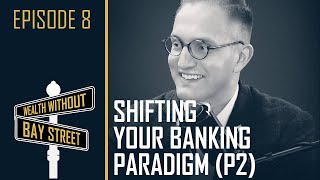
Ryan Griggs explains the Infinite Banking Concept, where you use dividend-paying whole life insurance as capital you control, rather than giving money to conventional investments with no guarantees. The key is financial education so clients understand what they own instead of relying on advisors.
Chapters
You are listening to the Wealth Without Bay Street Podcast, a Canadian guide to building dependable wealth. Join your host, Richard Canfield and Jason Lowe as they unlock the secrets to creating financial peace of mind in an uncertain world. Discover the strategies and mindsets to a financial future that you can bank on.
IBC is not so much about going down a rabbit hole as it is about, as it is moving laterally shifting your paradigm. The problems, the objections you raise themselves will change once the paradigm has been shifted. So I find that, and I love it, be on the phone and they say, well, I was gonna ask you this, but then I thought da da, da, da. And it's like, I ain't even got to tell you, you already know, right? They made this way. And that's what I love too, is that I'm sure it's true with your clients, it's true with mine, is that they're not dependent on us so often in the financial community, advisors and agents in the mainstream conventional community. And I'm sure they don't do it on purpose. I assume angelic intentions all the time. But often a consequence of the mainstream approach to finance breeds a dependent relationship. The individual doesn't know what they bought, they don't know what they own. And so they're dependent upon the agent, the advisor or the company to explain it to them down the road. And I mean, I fear that, I don't ever want that to happen. I tell my people if I get hit by a bus tomorrow, I want you to know what you own, why you own it, and how to manage it.
And that 92 page book will help enhance that every time if something happens to me, go to the book, go to the book. You know, there's so many resources available to help grow and empower people to be in that control position and make those command decisions about their own financial life versus as you, you know, again, as that dependency that you, you've identified. And I agree with you, I think that is a, almost a, it's almost an unintentional consequence of a systematic problem in the typical financial world.
Well, and for, for advisors who are tuning into this episode as well, one of the, one of the things that they would be well advised to do is to really hear, really hear what we're sharing. Because when you close the loop on, if you approach it from the vantage point and the thinking of a product and all that your client is going to remember is what they purchased from you, not why. And if you don't understand the problem, the solution just doesn't matter. And you will run into experiences with clients. We have experienced that where we have a periodic meeting and questions come up in the meeting or conversation is had where it's very clear to us that they've lost the process. And so we have to kind of go back and revisit those things to make sure that they remember why they're doing it.
Yeah.
And we can really be the author of our own misfortune there if we don't resist the urge to go to the product. Hey, let's look at the dividend that you were paid this year and let's take a look at how that's increased the value of your policy versus having discussion around what specific things are you planning to do this coming year to implement the process as it relates to your own needs? Let's have a conversation around the process and how are you going to go about, you know, achieving that objective that you've just described to me and how much ready access capital do you have and have any opportunities been tracking you down? Is there anything that you're considering and can we have a discussion around that? And you know, it's just, again, the approach is just so important because the people that connect with us, particularly from the advisor community, they've read the book maybe once, maybe partially, maybe maybe they've consumed some content and maybe an advisor will listen to this and get inspired to take the next step, which would.
Be amazing, which would be great.
But we want to reinforce like, I mean, we. I'm going into my 13th year of my journey with this process. So in July this year it'll be 13 years and I'm, I'm still learning every single day. And there's no escaping the time, the study, the connection to folks like yourself, Ryan, and other people in our community. There's no escaping the necessity for that. You can't read the book once and say with any degree of intelligence that you get it. Like I understand it. No, you don't.
You have a glimpse into the possibility of what it can be and you probably the realization that you should, you should look more, you should dig deeper, you should, you know, continue to enhance. And that's one of the things I loved about, you know, Nelson and some of the conversations you talked about the scene versus the unseen Ryan. And you know, I reflect back on. It's actually available on YouTube, on the Nelson Nash Institute YouTube channel. A live session that he did for, I think was a Freedom Advisors event and he went over his very first policy with State Farm that he got when he was 29 years old, I believe. And he talked about what that policy did. But he said this is what you see with the policy. But that's not what mattered. Two of the most profitable real estate deals I ever did in my whole life came from policy loans. Cause I had access to capital because of this one policy, which I didn't buy for infinite banking. I bought for a death benefit to protect my family. And I was still able to do all those things. And I even did it wrong for the first 15 years cause I didn't know what I was doing. And on and on and on. And in that one session, it's about an hour long video, he's like, what's the value on me being able to go and buy that piece of timberland at 34 cents on the dollar and then sell it 15 years later to somebody, finance it at 15% interest for 10 years. You don't see those numbers on the policy statement.
Yeah, what's the rate of return on that? Match that up with the mutual fund. Nelson used to do these two day 10 hour seminars. And I went to a couple first one in 20 and of course after he passed that really stopped. So I now do. I did two last year, started just last year. I still do them. A two day, eight hour seminar. It's very similar from becoming your own banker. It's for other agents. Right. Another agent sponsors it. Their people are their people. I'm just there to teach it and whatever and so kind of continue hopefully to a lesser degree, but to still attempt to do and same similar pricing and all that. Try to stick to what Nelson did and what he did for other agents. And I saw the reason I mention that is I tell that very story at the end is that. And I show excerpts from building your warehouse of wealth where he goes into that very example and talks about what he was able to do. The 100 acres of timberland. He was able to borrow, I'm sorry, able to finance. Able to borrow from the life insurance company in order to finance. It's a great story in it. And so often you know that that is the unseen. You know, that's not. Show me, show me where that is. On the illustration. You know, James tells a story that Nelson was hesitant to put illustrations in that book. To put illustrations in becoming your own banker. And at first when I first heard that I'm like what? Like that. Those, those are so crucial. And as I've grown and developed further, it's like I really. I get it. It's so we're so human beings are. We have the innate proclivity to get hung up on what we can see, what we can touch and feel and at the, at the neglect, you know, at the expense of the unseen. And unfortunately, or fortunately, whichever your perspective, the unseen is what motivates so much of what happens in life, right? It's, it's such an integral part to our day to day seen experience. But if we don't take account of, if we don't acknowledge, if we don't develop our awareness to grasp often intellectually or abstractly, the importance of the unseen. I talk a lot about capital. The idea of becoming your own banker in my mind assumes capital having been built somewhere. Well, capital itself is an abstract idea. You can't see and touch capital. But by gosh, it's important. You know, that's how we finance the deal. That's how, you know, that's what the cash value and a dividend paying whole life insurance policy is. It's capital and it's going to have a tremendous impact. And so I think you mentioned other agents and agents who might be watching. Jason. You know, oftentimes there's this and I see it everywhere and I try to not get upset about it, but there's this tendency to want to sell from the illustration. I'm going to get a dividend paying whole life insurance illustration and your hot little hand, fast. You know, before the first hour long call is up, I'm emailing you an illustration, right? And people say, I think the initial presumption is, well, of course, you know, I've got a show, I've got to give something that they can look at and all of this. And I get that, I hear that. But just understand that selling from the illustration, I say this, an illustration can be a source of clarity if the proper education has been done. If it hasn't, then an illustration is a source of confusion or worse, potentially dependency, potentially distraction. Right? Because the agent, you know, the agent who wants to sell from an illustration, who wants to convince or persuade the client to buy based on what's on the page, that agent is indulging the, that desire for a dependent relationship. That agent has no idea if the individual client actually understands not only what's on the page, but the typically far more important things that are not on the page. Right. Like we talked about the whole unseen, all the possibility you could get into other things, recognition, policy or the number of consecutive years the company's paid a dividend. Where's that on the page? Right. It's not there so much, so much that's valuable that matters for becoming your own banker is not on the page. And so, and I get it, you know, especially for I was there, you know, a new young person starting in the business or a new older person starting in the business who, who wants to get, to make a sale to feed their family. Like, I get that. Right? And so there's a, there's a, an urge to cut corners, to not pay your dues, to do what you said, Jason, and not be a part of the community, to not reread Nelson's book, to not insist that the client reads the book. All of these things that, yes, they're going to take time. And yes, the last thing that happens is you're going to get paid. And yes, who knows how long it's going to take. But by gosh, if you don't lay the educational foundation first, then what you're not doing, you're not gaining a client, you're purchasing a liability because down the road it's going to cost you. The policy will lapse, they'll stop paying the premium, or more than likely they'll call you up and it's. I'm, I'm about to write this massive check, right, for whatever it is, for whatever individual financial situation it is. And why am I doing it? Can you explain to me again what I'm doing and why? So it's just time frame.
A few additional things come up for me. You know, if you, if you have the very best tool for the job and you put that tool in the hands of an incompetent, not only are they not going to turn out any good work with the tool, they're likely going to break the tool. And so the, you know, I heard something at a Joe Polish genius event that really resonated with me. Somebody just said, in all simplicity, they said, you know, a shovel doesn't dig a hole. Think about it. And Nelson would always say, everything begins with the way that we think. And if you catch this, if you truly understand the problem, the solution will become very clear and you will know exactly what to do. And so one of the things that, as our client community, Ryan, just to share with you, as you're progressing on your journey as well, as our client community continues to expand and to grow today, it's become quite enormous. And we find that there's a real desire on our part to continually ask ourselves what are some additional things that we could be doing to add value to our client community, to continue to reinforce the process to expose them to other practitioners of the process who might have a great idea or something to transfer within the community. And the other thing that we have been discussing, Richard and I, quite extensively is we were reminded of Nelson saying, when I first got underway with educating the general public about this process, I began by doing a seminar for a couple of hours. And I realized very quickly that it just was not enough time. It was just not enough time. And so I literally smiled beyond ear to ear when I saw your posts about the, you know, the seminar that you're doing and that it's, you're, you're really carrying on the tradition and the legacy of how Nelson delivered that message to the general public and the time that it took to really get it across. And we are reminded that at no time during that delivery of that seminar did Nelson ever reference a policy illustration.
Right?
Not once in the very first paragraph in the book. This is the workbook for a 10 hour seminar. It's the very first paragraph.
And so we, you know, we are, we feel drawn and we feel pulled back to that because we, we delivered a seminar years ago. For many years it was a Friday evening and a full day Saturday. And then we worked to try and compress it. How do we get this to a four hour or a half day so we can run two in a day? I think that we really have to go back to the importance of spending the time necessary up front to educate the general public. And for the people who catch it, they'll know what to do. And for the people who don't, we never give up on them, ever. We get contacted constantly from people who say, hey, do you remember that seminar that I attended back in October of 2015? You know, I'm ready to go now.
Years later, people will reach out and they'll say, I've been thinking about this and I think I'm, it's the right time for me now. And so, you know, the, an idea sits with you and it goes back to another thing that Nelson would say, you know, you can't. And I'm going to paraphrase this, but it's hard to unsee something once you've seen it.
So give yourself time to ruminate.
Yeah, yeah.
Once you see it, you can't unsee it. That's it. That's exactly right. And I found in that two day, eight hour deal is that that's not enough. I had a whole. In the first one I did, it was in June of last year in Northern California and I had a Whole section at the end on Austrian economics and the business cycle. And sure enough, hour eight rolls around and I haven't even got to it. It's like there's no way. And I have an unexpected turn of events has been with the podcast with Banking with Life is that current clients watch it and it's become a method, a resource for them to continue to improve their own education.
Yeah.
And to continue to stay involved and we get spiritual with it. You know, I became a Christian in October of 2017 and I believe that God's called us to work. And as the first thing that man had to do after being thrown out of the garden is the man's got men got to work and the women are going to have labor pains. We'll say. But it's an integral point being. It's an integral part of, of the human condition is to continue to do the work. And so, and so that's another. I see the, the ones who, the folks out there hate to continue to go back to this, but the folks out there who make the sale, or I call them, James calls them orphans. You know, the individual clients who had a relationship with an advisor and that advisor moved on or whatever, did something else with his life and now that individual's an orphan.
Yeah.
Or. Or the individual had an advisor, might still have one. The advisor still might be in the same position. But that advisor maintains no continuing relationship with the client.
Right.
I call those unfortunate souls refugees. They're with a man without a country, a man without an advisor. They're looking for it. And so I have discovered that myself. I think you're so right that it's on us. And I believe this. I'll say this too, and there's implications to this, but I believe it is the agents responsibility to provide the educational resources and tools the agent.
Amen.
Not anybody else. Not associated individuals. Or I'll leave it there. It's the agent's responsibility.
I love that you said resources and tools because resources is something you can tap into and tools are things that you can use. But the individual, it goes back to the individual having the ability, the responsibility. If you want to tap into it, you've got to take on, if you're the client or you have to take on the desire and to want to go and utilize those tools and tap into those resources because they're available, they're out there and you need to be encouraged by the agent, the advisor to tap into those things. Because you can lead a horse to water, but you can't make A drink.
I love something that you said, Ryan, and forgive me, I can't recall the, the episode or the commentary other than you said something so brilliant. You held up a copy of the book or you referenced the title becoming your own banker and you said, listen, this is really all about the two most important words in this book title is your own. This is about becoming your own banker, your own.
Yeah, not me.
Right. And so, you know, we share with folks and you know this would be valuable to our listeners. You know, we share with folks that as a coach and Nelson would always say, you need to have a good coach. And we expanded on that and share to this day that as your coach we are responsible to you, not for you. And that just, it just really seems to click and to resonate with folks because it really is an ongoing, it's not a transactional, hey, here's a policy. You pay your premium, the advisor gets remunerated. We wish you well and hoping that you have success with this tool where presently, for lack of better description, you're an incompetent and you have the best tool for the job in your hands. And if you don't understand how to use it, you're not going to turn out any good work with it. And so I agree with you wholeheartedly. It's our responsibility to be providing those resources and tools hands down.
And on that note, something that I really wanted to make sure we could capture in our call today with you, Ryan, that's been on my mind because I've had conversations, really good one on one conversations with clients about this and you always refer back to capital and also capitalization itself. And in your talk at Think Tank and we'll put it, we'll put links to that, the video that you have in the show notes for us, for any listeners. But you did a great comparison and bullet points I just thought was so great summarization. I'd love to get your, you maybe just reference that on the call here today is the difference between capitalization versus investment and how they're different and they're almost like the antithesis of one another. And I thought that was so profound when I saw you do that. It really, really resonated with me a lot. So I'd love you to speak to that.
Yeah, I'm glad you mentioned that. When I put that slide up, half the room, grabs their phones and take a picture of it. It's like, guys, I'll send you the slides. It's okay. And then as I was putting that together, that Distinction just jumped off the page at me. It's like capitalizing is essentially the inverse, the converse, the opposite of investing. And so a couple of the ways you can sort of see that and get your arms around it. You know, with investing, the whole idea is that you give up control of the money. You're giving it to somebody else, right? To whomever, the fund, mutual fund manager, the borrower, whoever you're giving it to, you're giving it to. They're going to go use the money, right? They're going to go generate that return, whatever it might, hopefully generate a return, right. And hopefully they'll give it back to you eventually. Well, with capital, if you're capitalizing, if you're accumulating capital that you expect to use at some point, well, in order to use it, you might want to have access to it. You might want to be able to obtain it. So the whole idea is the opposite of investing. I don't want to give up control, I want to retain. And in fact, I want to maximize that control. And I would prefer if that was all by contract. That's brilliant. I would prefer it to be a unilateral contract. I would prefer to be the residual claimant of the company on the other end of that contract. You know, I'd prefer. You could make a list of all the ways I'd really like for that situation to be. And it's like, oh, my gosh, dividend paying, whole life. There it is.
Yeah.
And so that's one element is the retention and maximization of control. Whereas with investing, the whole point is to give it up. And so we kind of. The next point there. Well, in the investing world, there's no guarantee, right. You might get that money back, you might get a return, right. The person in whom you've invested, obviously you expect to receive a return from them at some point. And not just a return on your capital, but a return of your capital, hopefully, but no guarantee. However, if we turn over to the other side in the capitalization world, we do have the possibility to achieve guarantees, right. There is a way in which. Now there's ways not to. Right. There are other assets. James says you can bank with anything. You could borrow against the equity in a house. You can do it with business, you can do it with farm equipment, whatever you please. There are other assets in which you can implement a capitalization strategy.
It speaks to the point brilliantly that Nelson used to always say that your money must reside somewhere.
Has to. You've got a primary residence. I've Got a primary residence. I know James expanded on this in the Banking with Life DVD he made once that I might leave my house to go take advantage of an opportunity to visit somebody, to go on a vacation. But sure enough, I'm going to come back to that primary residence at some point and your money is the same way. It's going to go somewhere. It's probably right now it's going to a bank. And that banker, like you mentioned earlier, Jason, you know, retelling that story of how Nelson was talking about who that banks put that money to work for, you know, the bank, or that wherever your money is currently residing, that institution is probably, if they're profitable, they're, they're allowing others to participate in that profit. And it's probably not you, they're probably not sending you a dividend. The only reason your bank might send you a dividend is because you might happen to own stock in that bank. But most people don't. And come on, how many people, when choosing who to bank with and what stock to buy, go through that process? It's like, no, nobody does that. But it would be nice if they did send you a dividend. And in fact, if they sent you a dividend not because you searched out a company in which to invest, but instead because you wanted to accumulate capital in one of the most financially conservative, most dependent, some of the longest running institutions in the world and most solvent. And not because it's magic either. It's by nature of the product actuarial design. They're making a promise to pay in 50, 60, 70 years, right? Honda knows that that car is going to my last Honda failed after 10 years. Okay. It's not a 70 year promise that in this case the auto manufacturer is offering is selling. Right. In almost no other business is the nature of the product itself so long term oriented. It's really only in life insurance. I mean, my point is here and going back to Richard, your point about the difference between capitalizing and investing. You know, you could make a laundry, you could make a laundry list of all the things that you would prefer. If we first acknowledge the importance of capital, the fact that you will need capital throughout your life and that you might want some too to take advantage of life's opportunities. If you acknowledge that, which I think is really the problem is we don't acknowledge that, at least in the financial community, we don't acknowledge that that is really the thing to address the need and the usefulness of capital or for capital. But if we do it, if we acknowledge It. And then we think about, well, gee, how might I go about pursuing that? How might I go about implementing a strategy to achieve that goal of having superior access and ownership of capital, access to and ownership of capital. So if you could lay out all those lists or lay out that full list, you know, the guarantees by contract, private property, no government involvement under my ownership and control, I can, I can personally affect by my own action. I ain't got to ask permission. I don't care what the economy is doing. I don't care what interest rates are. I don't care what the latest Federal Reserve chairman had to say this quarter. None of that bothers me. I know that when I pay a premium, the value of my. Not only the value of my. Not only is the value of my capital going to go up, the short term, the value of my capital for the rest of my life will go up so that the access and the degree, the quantity of capital and the access to it that I have over my lifetime increases. I can do that. I tell people the greatest factor that contributes or that causes growth in your policy is you. Your premium payment.
I love it. That ties into something that Bob Shields would say, so you did okay if you lived. Did you do okay if you died?
Yeah. And he would also say if you. And he would really express this in. If you had the opportunity to.
Heavy SCOTTISH ACCENT Very heavy Scottish accent.
And he would say, if you wanted to save money, would he pay your policy loans? If you truly want to save money, repay your policy loans. And that was just an aha, you know, brilliant, brilliant moment from him. And, you know, we can't forget too. I mean, the tool itself, it does have a death benefit associated with it. And Bob would tell us, you know, I wish that everyone could die once for a week and see the financial problems that they leave behind.
Oh, my gosh.
And so on that note, Ryan, we would love to have you back on the show. And I would wager that our listeners are going to leave feedback requesting the same. Having you with us today was just amazing. I know Richard's going to include a lot of links to some really valuable content. How can people stay in touch with you? Ryan, we understand you have a newsletter. And before we get to that, are we able to convince you to share with us, unless you've already made it public knowledge, what is the theme of your dissertation?
Oh, my. How much time you got? I'm going to build the sort of the theoretical groundwork for an Austrian financial economics. So a lot of what passes for financial Economics these days so happens to come out of the University of Chicago in the mid-1950s. And it's certainly not from an Austrian perspective. And I think that one of the reasons that IBC is not as well known in the financial community is because of that lack of understanding of the importance and the need for capital. And I think the reason that that's not there is because we haven't done the intellectual work to go about demonstrating scientifically what it is and why it matters. And so that's really the goal to develop to criticize mainstream financial economics, conventional financial economics from an Austrian perspective, and then from the pieces, build at least the groundwork for an Austrian style financial economics. So that's.
Love it. Love it. Richard, any parting comments for our listeners before we get to the hero question?
Well, I just think everyone, you definitely want to tune into Banking with Life podcast. Ryan has an unbelievable blog at Media. If you go to medium.com dgriggs that's Ryan Dgriggs, phenomenal blog there. And I think you can access it on his website, which is griggscapitalstrategies.com we're going to put some links to those in the show notes. But it's very refreshing to have Ryan part of our movement. I know Nelson had, in some of my conversations with him, especially when we were doing the documentary film, he had identified how he was particularly intrigued and excited about, you know, that, that, that Bob Murphy had been able to connect with you and bring your youthful energy, your passion and exuberance for the Austrians mindset and to capture the essence of IBC so quickly. He just felt that you would be a really a core aspect of the future of the movement. So that's something that was my take and I just wanted to share that with you.
Wow. I really appreciate you saying that. I didn't know that. Thank you.
Wow. Such a great episode. Thank you so much again, Ryan, for being with us. And one of the things that we do with every one of our guests on our show is we end the show with a question. And I'll just preface the question by saying that not all heroes wear capes. And so you might think of yourself as a hero and. But every time you create value for other people, you're benefiting and making life easier for them in some way. And by identifying the key audience that you want to create value for, you focus on the most crucial people in your life and helping them to grow their capabilities. And you're also growing your own capabilities as well. And so our parting question to you is who do you want to be a hero to?
Oh my gosh, who do I want to be a hero to? I've had a Nelson and Bob are the exceptions of this, but I've had a difficult relationship with heroes in the past. You don't always want to meet your heroes. It's not that you never want to meet your heroes. Sometimes you it's not good to but other times, of course it changes your life like Nelson did for me, who do I want to be a hero to? I don't. When I'll tell you what I thought of when you said the question because I don't view I hope I don't think of myself in those terms and if someone thinks that, I'm honored and grateful. But what I thought of when I lived in Lubbock, I did a CASA court appointed Special Advocates for Kids Removed from Their Homes by cps and I had a the kid that was assigned to me, he was 17 and he popped up in my mind when you asked that question. So to him.
Wow.
Ryan, thank you. It was an honor to have you on our show. We look forward to having you back again. For all of our listeners again, this is Ryan Griggs. We will post all the resources for you to stay connected to him and keep an eye on this gentleman. He's going places. So thank you again, Ryan. We appreciate you. Enjoy the rest of your day and thank you to our listeners for tuning into another episode of Wealth Without Bay Street.
We look forward to seeing you on the next episode. Cheers. Thanks for listening to the Wealth Without Bay street podcast where your wealth matters. Be sure to check out our social media channels for more great content. Hit subscribe on your favorite podcast player and be sure to rate the show. We definitely appreciate it. And don't forget to share this episode with someone you care about. Join us on the next episode where we continue to uncover the financial tools, strategies and the mindsets that maximize your wealth.
More from Richard





How Do You Use a Policy Loan to Buy Dividend Stocks? #dividendstocks #infinitebanking #shorts


Can Compounding Dividends Pay Your Bills? #wealthbuilding #investment #financeeducation


Should a Corporate Policy Offset Your Personal Coverage? #shorts #insurancetips

What Is Human Life Value? #shorts #insurancetips #dividend #wholelifeinsurance