Smith Manoeuvre With IBC
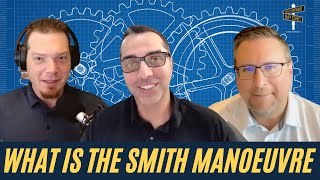
Monty Bhatia, a software engineer and real estate investor, explains how to combine the Smith Maneuver with Infinite Banking Concept to convert non-deductible mortgage debt into tax-deductible debt. He walks through concrete examples: using $2,000 monthly rental cashflow to prepay your mortgage and free up HELOC funds for income-producing investments, or using a $5,000 policy loan to fund the same cycle. The key is keeping LOC funds strictly for investments and working with an accountant on tax treatment.
Questions this video answers
October 4, 2022
Smith Maneuver certified (certified ambassador)
Chapters
I remember we had that discussion about the different stages of infinite banking, at least the way they, kind of the way I saw them. And yeah, and I feel like this, like the Smith Maneuver in conjunction with, with IBC is just, it's another, it's another tool. It aligns with those stages as well and seeing how they, like what happens with like during the capitalization phase or capitalization stage and so forth and what it looks like in retirement and what it looks like. I don't like to say the word retirement because I don't like that word. But. But yeah, what, what does it look like in, like in the drawing money out of, Whether it's a policy down the road or, you know, taking, taking dividend payments and using that to consume. Possibly, I don't know. But, but it's, it's knowing that you have these different approaches.
What is the Smith Maneuver and how does it relate to the infinite banking concept? It's the Smith Maneuver. So it's not a person dovering, it's, it's an actual process. And we are just honored to be here today with a client of mine, Monty Bhatia, who since inception, when he first connected and had so many great questions about the infinite banking concept and the process, how it could be an advantage for him and for his family. And fast forward to today, he's Smith Maneuver certified, which he's going to lead us through a great conversation as to what exactly that process is and the advantage that it represents to the right fit client. He graduated from University of Toronto as a software engineer and has been working in the technology space for just about the past 20 years now. And he's also a real estate salesperson, real estate investor, and as I mentioned, a Smith Maneuver certified ambassador. He practices the infinite banking concept in his life. Monty, it is super awesome to have you here on the Wealth Without Bay street podcast. And we're going to get into the Smith Maneuver, so let's do that. How you doing, Monty?
Fantastic. Thank you, Jason and Richard, for, for, for, for that intro. And thank you again for having me on the show. As Jason was saying, I've been, I've been working with Jason for a while, been listening to your show for a couple of years now. I appreciate. So you guys always talk about, hey, who's the hero? Like, who do you want to be a hero to? And I feel like both of you are heroes to all the people who listen to you and you know, you being people who are spreading the word about ibc. It's helped me throughout my journey with regards to IBC and the process itself. And I'm here to at least attempt to follow in your footsteps and try to share knowledge about another financial tool called the Smith Maneuver and how I've implemented it in my life. So thank you for that.
Welcome.
Thanks for being with us. Thank you. And we appreciate that. And it's, it's very nice to hear that people are listening to the show firstly and, and that they're getting the, the kind of value that, that you said there. So thank you for that. And you're going to add a ton of value today. Now, Now Jason had indicated that the Smith maneuver is not, it's not something that you're going to see in the UFC ring.
It's not something or in an NFL football game where it's like he just executed the Smith maneuver perfectly.
That's right.
And yeah, so yeah, John Madden isn't going to make a bunch of noises when somebody gets crushed or whatever on a, on a major play. So, so, you know, walk us through a little bit of that and I think what's going to be really interesting as you, you know, you kind of give a bit of an overview is then we can kind of dig into, you know, because if my understanding is, and correct me if I'm wrong, really, the Smith maneuver entered your life prior to IBC and then you had this, this, this existing knowledge, this, this understanding something you were working with in your life and then that the addition of IBC into that is really kind of made for a really positive marriage. So I'm excited to hear about that as we, as we delve deeper.
Great, thank you for that. And you're right, it's not a, it's not a wrestling move or anything like that. But yeah, I'll, I'll, I'll definitely, I'll definitely share my experience with it and maybe I'll take a step back and talk about how this all started. So I, so during the pandemic, I guess at the start of the pandemic, you know, we had our second born child and I was, you know, at the start of the pandemic, we had a child and that child is, you know, it's a pandemic baby. But we were in a point where, you know, I had to ask questions to myself of like, how do I, how do I become more financially literate? Like, how do I learn more and like, create a legacy for my kids and for my family and make sure everyone's quote unquote taken care of to a certain extent. So Those are like, that was one of my questions and one of the goals I had. And I had been learning about the Smith maneuver, you're correct. Just a little bit before the, I learned about the IDC process and you know, it came to a point where, you know, I was having a bunch of sessions with Jason and Jason was teaching me, you know, and, and sort of mentoring me with regards to the IBC process. And then I learned about the Smith maneuver piece, I guess, like a couple of maybe like half a year before I actually learned about or heard about it probably 10 years ago. And I just thought, okay, well, this is way too complex for me. I don't know how this works. It seems risky or whatever the case, and I just kind of left it at that. And fast forward 10 years, I, I, I heard a podcast with Rob Smith and his father, Crazier Smith was the, I guess, original creator of the Smith maneuver. And you know, it like there was like he had a book that you could purchase and I purchased the book. Similar to becoming your own banker. I read the book and it actually was very easy to read. Very similar to becoming your own banker. Like, there's some similarities between both, both are processes using products that, you know, anyone can possibly attain in, in, in multiple ways. And, and so there were some similarities I saw between the two in terms of the approach. Obviously they're completely different financial tools. But yeah, so I, I learned about it. I, I, I, I reached out to the Smith, like, I guess Rob Smith and so forth, and I asked, hey, how do I learn more about this? How do I get more involved? And, and how do I, like, how do I become someone who actually understands this rather than just, hey, this is an idea like, you know, just a big cloud in the sky. So yeah, so I, so he did talk about, hey, there's a, there's a course that you can take being a real estate agent. You know, I, I, I took the course and I, so I read the book first, I took the course and I became certified. And, and then the next step I did was I started to implement it in my own life and I felt like, okay, well, yeah, at least for me in my experience, you know, coming from a technology background, I can, you can learn as much as you can from a theory standpoint, but until you actually do it, it's, it's like you don't find, you don't find those little pitfalls or those little scenarios where you're just like, oh, well, this is how it actually functions when I actually am implementing My own life. So I, I implemented and then. And I'll get to the, like, get to some of the details on that and. But, you know, just not too long after that, I was listening to a podcast from Mary Jo Erman, Farming without the Bank. And I told Jason about this shout.
Out to Mary Jo. He's absolutely awesome. If you're tuning in, you're amazing.
Absolutely. And so I listened to that. Riding a bike and I was hit by a car. And yeah, so that was my moment. Like, it took me about a year of. I'm sure Jason, Jason was very patient. So thank you for being patient with me. But it took me a, quite, quite a bit of time for me to actually implement IBC as well as a Smith Maneuver in my life. I had to, like, really understand it. Being a software developer or software engineer by trade, I like to like, pick at things and like, understand it before I, before I actually move to the next step. So.
Really?
Yeah. You don't say.
Every other engineer listening to this is like, he's talking to me. He's talking to me.
Exactly. Yeah. So I, I got so fast forward riding a bike, listening to a podcast, hit by a car, had a moment where I said, okay, I need to actually get, like, wake up and do this, like, start with this IBC process. And that's when I finally said to Jason, look, it's time, right? Like, I'm, I'm ready to go. I've done as much like, on the fence type of balancing as I could. It was time to actually execute. So now I'm, I'm implementing both. And, and then I started to see where I could take advantage of the benefits of IBC as well as a Smith Maneuver together. And they're completely separate financial tools, of course. But there are ways where you could, like, at least I found the way I'm using it, I could take advantage of some of the benefits of one versus the other and kind of have them work together. So, so that's kind of like my story with regards to these processes. And what I'll do is I'll just, I'll kind of give like some details on some of the things that, you know, as a Smith certified or Smith Maneuver Certified Ambassador, you know, some of the things that we see and we talk about in, in any of our sessions. And one of the big things is the challenges that Canadians face. And, you know, and we all know this, like, high taxes. And I don't think taxes are getting. Going to go any lower. I'm sure you guys can if you were betting men, you would probably bet that they are going to go higher. No.
Would you believe Monty? Nobody, nobody has ever reached out to us or said to us, you know, I wonder if you have a solution in place that can help me with the fact that I feel like I'm not taxed enough. That's, Is that something you might be able to like, do you have a solution for that somewhere? Yeah, it's called a psychiatric evaluation. But yeah, like if you could, if you could describe the essence of the Smith maneuver, what would that be?
Sure. Okay, so. And yeah, so, okay, so think of it from the point of view of, to list the whole purpose behind a Smith maneuver is to convert your non deductible debt. It's a non deductible, meaning you can't, you can't use as a tax deduction when you go to the, do your, you know, you do your taxes at the end of the year and converting that non deductible debt to tax deductible debt. And that's the whole, like, I guess that's the whole basis behind it. That's the whole goal.
Okay.
One of the biggest things you have from a non deductible standpoint is your, is the mortgage on your primary residence. It's, you know, like we're talking hundreds of thousands of dollars and in today's world with the markets that they are, especially like what I see in GTA and so forth is it's, it's more than just a couple of hundred thousands of dollars. Right. It's, it's, it can get very significant.
Yeah.
And, and so the whole, the whole basis behind it is to convert that non deductible debt, which is your mortgage, into, into something that every year you get tax deductions. All the interest on that loan that you have will become a fully a hundred percent deductible, you know, deductible loan that you can send to the CRA and say, hey, give me my tax return. And so that's the, that's the like I guess the ultimate goal, the end goal behind it. And then the idea like the actual process is, and I won't get into like too much of the details but I'll, I'll explain like at a high level the way it works is, and maybe I'll, I'll do it with an example is so you ha. What you would do is you would get a re advanceable mortgage on your primary residence. Re advanceable, meaning you have, you know, you have your traditional traditional mortgage which is you have an amortization period and so forth, you have monthly payments, you know, they, whether it's fixed or variable, you have that mortgage. And then what you can do is assuming you have 20% equity in your home, you can get attached to that mortgage, you can get a line of credit tied to it. So you know, think of something like a HELOC or. But the idea is it's very specific meaning like the most efficient way to do it is it should be re advancing right away. So what I mean is, let's say you pay down a thousand bucks on your mortgage, right. On regular payments every month on a traditional mortgage, you pay it down, your mortgage is going down fantastic. With the re advanced portion, what happens is you pay that thousand, thousand dollars down. Let's say, you know, 600 goes to interest maybe at the start and 400 goes towards principal. So what happens with the readvanceable mortgage is now that $400 is available on your readvanceable line of credit to be able to do whatever you want with a lot of people what, what they may do is say oh my gosh, I have, you know, like over time that might be thousands of dollars or tens of thousands of dollars and they might say okay, this is fantastic, let's go buy, let's go buy a car, let's go on vacation. And the, I guess that meant like that. The issue with that is anything that you're buying which has the expectation with, sorry. Which you're going to be using to consume. So let's say you're going to be going on vacations, buying gas, groceries, clothes, whatever the case, fancy dinners, vacations, this is all non deductible. So it's all things that you know that, that do not have the reasonable expectation of generating the. So it's, it's sort of, it's, it is a mental shift where you say, okay, well if you're practicing the Smith maneuver, that line of credit I'm only going to be using for things that have the reasonable expectation of generating income. So things like stocks, bonds, mutual funds, you know, your own business, real estate. If you're using that loan for that purpose, all the interest on that loan now becomes a tax deduction. Yeah. And so the idea is to over time to continue to pay down your non deductible debt. And so like think of, think of two bars, right? One bar at, at the start your non deductible, which is your mortgage, is high. The bar for your line of credit is very low, meaning you don't have access to it, you haven't used it for anything or whatever the case or you have a low amount available. But as you pay down that, that, that mortgage, the availability of, of I guess the availability of capital you have on the non, on the, on the loan side, that starts to go up. Okay. And once you start using that and you're only using it like that's the key, you're only using it for things that, like things that, that, that are growing your wealth. Right? That's the key. And they're going to provide you income and so forth. All that interest now is going to be a tax deduction. So now fast forward, let's say, you know, 10, 15 years down the road. The idea is your, your mortgage is down to zero on the left hand side. But on the right hand side your line of credit is high. So it is a, it is a bit of a, you know, the idea of always being in debt that is still there. Like you have to have, you have to get past that. But the whole, the whole idea is now you've replaced that bad debt which destroys your wealth with good debt which creates wealth.
Sorry, go ahead coincidentally with that. I mean, because you're taking these readvanceable portions and you're entering them into some market activity and hopefully what's going to go work out well and we're going to generate a profit, we're leading towards that. You've built up an account value that is equal to or greater than the amount of the loan. So you have now still the equity in the house. You've replaced mortgage debt with this new more advantageous tax deductible line of credit debt over a period of time. It's kind of like, you know, you're transforming from mortgage debt into this line of credit debt. And now you have on the side, somewhere else an account or multiple accounts or, or property, let's say that is that has asset value or equivalency greater than, than the debt and then hopefully ideally some cash flow as well. Then that cash flow can help support paying the, the line of credit payments also.
Exactly. Yeah, thank you for bringing that up, Richard. And, and so you have it right on the nose. So, so one example that I've, I've implemented my own life. So the Smith maneuver has what they call quote unquote accelerators. So different ways you can, you can implement this process. One of them is let's say, so we have like, we have a real and one of our investment properties and traditionally what we were doing is we get money coming in. So rent is coming in into that property and we're using that rent to pay the expenses. Pretty standard. Most people are using that approach. And now you have, you know, you have income and expenses at the end of the year. You have a certain amount which is, you know, which you can write off and so forth, which is great. The, there's a, with this, there's a shift and the shift is, let's say you get $2,000 in rent, right? Let's say you have, you know, let's just keep, keep it, keep it balanced. Let's say you have $2,000 in expenses. And those expenses are mortgage interest, property taxes, heat, hydro, all that stuff, right? What you do is, with this process is you bring into, you bring in a Smith maneuver. And the way you do that is that $2,000, you prepay your mortgage now. So you prepay your mortgage on your primary residence, not on the investment property first. So you prepay your primary residence. So that $2,000 now goes directly to principal, meaning now you have $2,000 available on the line of credit side right away. And so now what you do is, okay, I have these expenses that are Gonna cost me $2,000. You take that amount that's available on the, on the line of credit side. And I mean there's a, there's a process where you have to set up accounts and you have to structure in a way where, you know, from an accounting standpoint it's relatively clean. But like over at a high level, what happens is that line of credit, now that $2,000 has gone to service those expenses. And now what you've done is think of what you've done. You've one, you've reduced your non deductible debt by $2,000 for the month. You've, you've used this line of credit, you've converted it to deductible debt by using that line of credit to pay for those expenses. And you'll get, you'll get, you'll get a tax deduction for that, for the interest on that $2,000 at the end of the year. And so I, we did this with one of our properties and the impact was is it was quite drastic. When I look at It From a 25 year standpoint, the Smith maneuver, like online, the. We'll have links to this that we can share with with the audience, but there is a online calculator that you can, you know, you can take advantage of. And it was, it was quite eye opening for me when I tried it on My own situation. And like it's not, it, like it's over the span of like 20, 25 years. It was in the hundreds of thousands of dollars. It's not, it's not a small amount. And so because if you think about it, $2,000 over a year, that's 24k. You're paying down your mortgage by 24k in addition to what you're doing already and you're not adding in any additional money. Right. Like, it's, it's, I would have been paying that money to that property anyways.
And so if you, if you think of kind of walking this down the aisle now with, with IBC and this, the, the process of becoming your own banker. So where do you see that marriage happening in, in these two processes?
Okay, so that's, that's a great question, Jason. So I, so I remember the first podcast I heard you on. And that podcast was on, I think it was Breakthrough Real Estate Investing. That was the first time I had, I had heard about this IBC program and, or this shout out to Rob.
And Sandy at Breakthrough Real Estate. If you guys are listening to this too, you guys are awesome as well.
Yeah. And coincidentally, Rob Smith was also on that podcast at some point as well. And so when I, when I heard you speak about how you were able to take advantage of, you know, poly policy loans to pay down a property that you had, had, you had purchased.
That's right.
And so I started to think about that and I started to think about, okay, this, this sort of, this cycle of money that's going around in the Smith maneuver. The way I see the, these policies like being sort of integrated into this process is, and I, I, and I'm a, like, like I said, software engineer. I, I think in terms of systems, I think of these as two different systems. Yeah, I drew a fancy picture at one point. I showed it to Jason and you know, it was just literally like, like chicken scratch. But I drew that picture. And the way I, the way I kind of incorporate into this whole process is I, I, I see the ability to use the policy loan as capital to fund the pay down of my primary residence. And so what happens is I'm paying it down. Let's say I take, you know, I take a $5,000, you know, loan, policy loan from my, of my policies. I take that, I put it into my primary residence first. I, and my purpose behind that 5k is to invest it. So take it, put it towards my primary residence. Now my primary residence mortgage has gone down. My 5k and I have access to 5k on the readvascible side and I will then invest that in, in whether it's stocks, bonds or real estate or whatever the case. And I guess in my, in my situation what I did was I, I invested in dividend paying stocks, simple standard ones. Like nothing, nothing too sexy. Right? Like just things that gives you a good, like good dividend at the end of the day. And so then what I do is I take that dividend, you know, the, the dividend, the cash dividend that comes out of that investment and I pay back my, my policy loan. And so I'm cycling that money through this system and what I'm doing is I'm taking a policy loan against a like you know, a financial tool that I co own. I'm, I'm then invest like prepaying my mortgage. So I'm reducing my mortgage by 5k for you know, which you know, for many people that's, that's quite difficult. Like just. Oh yeah, stretching with inflation the way it is these days.
Yeah, you're paying that for, you're paying that for a batch of bananas right now.
Yeah, exactly.
Well, the price has gone up just a tad.
That's right. Yeah. So, okay, so I've, so I've taken a policy loan and you know, practicing ibc. I'm taking advantage of you know, a tool that I co own. I'm putting that towards this, this bad debt, quote unquote bad debt which, you know, which we want to get rid of because there's no, there's no tax advantages of having this bad debt. I'm converting it to good debt by, by, by investing it into anything that has a reasonable expectation of generating income and then the income from that. I have a choice. I can pay back my policy because the policy can be paid back on my own terms or I can then follow the traditional Smith maneuver approach of just paying it back into the mortgage. So I have options and that's the key behind this. Like I have, have control and I, I, for me that's, that's, that's worth more than like many things I can think of like actual control of my financial situation. And, and so yeah.
How does it, how does it feel?
It feels really good. Like I have to be honest, like I'd say pre pandemic Monty is a lot different than pandemic Monty and post, well kind of post pandemic Monty. I guess we're kind of in that position where we're almost, I don't know, hopefully one day we'll be out of this whole pandemic world. But, but yeah, I feel like it's, it's really liberating because now I have, you know, a tool with IBC where I can create generational wealth and I have a way to expedite my bad debt and getting all those, you know, those crazy dragons. Is that, is that what Sarblo calls us, the dragon?
Well, Nelson refers as snakes and dragons. And, and the other thing too, Monty, God forbid, God forbid the unthinkable happened to you. And you know, you, you already had a life scare, know being struck by a vehicle that can quickly end someone's life. And so you, you've already experienced that scare. And God forbid if, if the unthinkable happened to you, you're not leaving behind any indebtedness to your family. They still control the assets that you purchased and that you're, you know, accumulating. And that windfall of money that shows up, that windfall is also income tax free. And so you're, you're doing a lot of great for your family and for yourself while you're alive. But you'll, you'll be a hero too, God forbid if something happened to you. And gosh, we just don't know, right? There isn't anybody listening or watching that can pull out a calendar and say this is the right time for me to go and this is the calendar date that it's going to happen. Like, it just doesn't work that way. And so what you're describing in this, you know, this Smith maneuver I think would be appealing to someone who wants.
To grow their wealth.
They want to participate in opportunities, whether it's dividend paying stocks or maybe just other investments caliber opportunities that track them down and to be able to create, you know, resubordinate the debt, so to speak, so that you, you now trigger an event that's where the interest is portion, is tax, tax deductible and full disclosure too. I mean, Monty goes on saying, I mean, none of us here on the show today are chartered accountants or of course, you know, we're not, we're not providing any tax advice or any, you know, advice related to CRA's interpretation of the process or anything like that. It's just something interesting to investigate to see if it, if it could make sense, you know, for, for your individual circumstance.
Well, on that note, I think, you know, one of the things I heard you say as you were talking about certain examples, in your example, you're talking about dividend paying stocks you also mentioned, of course you have rental property. So those are two areas where you know, park parking, the Smith maneuver on the side for a moment and we just look at the rental property. Well, that rental property has a mortgage on it as well. And that mortgage is because it's already there. It was, it was created for the purpose of generating an income. You've got rent coming in. I mean that mortgage interest is already tax deductible at least as a rental property owner. That's what I do and that's what everyone else I know does. So you know, now if you think there was another thing you kind of mentioned as an option that you've seen or maybe it's you know, others who have done this, there's the, you know, might be applicable for them to even take that capital on the readvanceable side of the line of credit and plug it into say their corporation or their business because they have a, an expectation of earning a profit there. Now again, not providing tax advice, but I'm sure you've seen examples of that as well now that you're in this certified ambassador position.
Yeah, exactly. And, and I think, and there's, there's many ways to, to take advantage of this tool. And, and that's where the, the book goes into details of like okay, they call them quote unquote, as I was saying earlier, accelerators. And it's, it's very eye opening, at least it was for me to see. Oh well, if I just did this small shift in my life, what is it like? The, the impacts, the long term impacts are, are astronomical. And, and that's similar to what I felt with ibc. And, and that's how I see that like there's similarities in terms of the approach and like the ideology and like the old like the uber goals, but they're very, very different tools like if you think about them. Right, but, but I like this is how I see them kind of working hand in hand and. Yeah, and then you know, there's other things that you know, thinking about how they can relate to each other down the road. So let's say you know, at a certain point, 10, 20 years from now, you have completely converted your non deductible debt. Like your primary mortgage is, you know, it gets paid down in record time and it might even be like five to 10 years and you're at a point now you have this, you have this, you know, this fully deductible loan on your mortgage and you know, you have options. You can say okay, well I'm okay with continuing to be in debt on this loan because I know I'm getting tax deductions every year and I will use those tax deductions to, you know, maybe pay back my policy or something else. Right. Like you have options or, and I'll just pay the minimum interest payments because I'm okay with keeping that debt. Other options are, some might say, well, no, I don't want this debt anymore. And you might say, okay, well, I'm going to, you know, fast forward 10, 15 years from now, I have, maybe there's a plan where you leverage your insurance policies to pay down that debt. And, and so there is, there are options, right? Like, there's so many ways to take advantage of it. And of course, course, you could always pay. You can always sell one of your assets and like, that you've utilized out of this process and, you know, pay back that loan. So there are ways to adjust it. It's just knowing that you have those options. And I think that's from my experience talking to others, I found like, that sort of opened up their, their eyes in terms of, hey, this, it's not, it's not necessarily for everyone, but at least now I know that this, this pl. This tool works and it exists. And, you know, everyone's different, everyone's risk tolerance is different. But just knowing that there are ways to like fully reverse this as well, I think that's important to know.
That's awesome. And we're going to include in the. The show notes, we're going to include some links that you were kind enough to provide to us, Monty, and that will give folks not only your contact information how they can connect with you, but also the calculator that you mentioned earlier in the show, how to purchase the Smith Maneuver book and the Smith Maneuver homeowners course. And so there's some really good links there that we'll be sure to include in the show notes. And I think what, what I really recall too about your journey is when you defined. Because you, you as an engineer, you. You can define things in stages and, and that's how you had come up with, you know, those stages of ibc, right? And it was, it was just such a brilliant. You know, we've recorded some content around that and, and given you full credit for it because your, your imagination got to work on. Okay, how do I, how do I think about this as different life stages and the Smith Maneuver is just part of those life stages for you. And so it's really interesting how you've rethinked your thinking?
Yeah, yeah, no, no, thank you for that. And yeah, I remember we had that discussion about the different stages of infinite banking. At least the way they, kind of the way I saw them and yeah, and I feel like this, like the Smith Maneuver in conjunction with, with ibc, it's just, it's another, it's another tool. It aligns with those stages as well and you know, seeing how they like what happens with like during the capitalization phase or capitalization stage and so forth and what it looks like in retirement and what it looks like. I don't like to say the word retirement because I don't like that word, but. Yeah, what does it look like in, like in the drawing money out of? Whether it's a policy down the road or, you know, taking, taking dividend payments and using that to consume. Possibly, I don't know. But, but it's, it's knowing that you have these different approaches and, and, and knowing that, you know, taxes, I like, in my opinion, I feel like they're, they are relatively high. I'm sure there's a few on this call like, who are listening will probably feel similar and you know, finding ways to take advantage of, you know, what, what is that? What is available from the CRA standpoint. And I agree as, as you said earlier, it's, you know, always like working with an accountant, working with, with those who actually understand this process. And yeah, I have like, for, for my side, I also have a network of, of brokers and, and so forth who, who practice this Smith Maneuver approach as well. And I can, I can help at least provide my thoughts on, on, you know, if, if any, if I ever spoke with anyone on. Okay, maybe this is a way where you could take advantage of this tool and, and how it kind of works together with ibc. So. Yeah, no, you're absolutely right. And thinking from a stages point of view, that's, yeah, it, it kind of, it helps me picture it, picture it down the road and what does it look like? Because otherwise it's just someone can explain something to me and if that's how I sort of consume knowledge and consume information and make sense of it because, because there's a lot of information out there, right there.
Sure is. Rich.
Any. Anything to add?
Yeah, I'm curious that, you know, being that, you know, you're, you're a real estate investor and you know, going on this journey of learning and discovery for yourself. One thing that I pick up on, Monty, is that you, you also have a desire to share that knowledge and to express to other people. And so now that you've, you've been integrated with this and you're talking to people, people are coming into your, your network, your sphere. And I imagine that you get pretty excitable about, about trying to share this information to them. How do you find it when you're speaking to people? Is there a lot of people who are familiar or they've heard of the Smith Maneuver before or is this a brand new experience to them that you kind of have to, you know, start from the beginning and build up them. I'm curious in your interactions with people what you're finding and then kind of piggyback on that. You know, I would imagine the Smith maneuver doesn't come up without mentioning IBC somehow within the, within the following two sentences. So what do you find your reception is from people when you have these kind of conversations? And it's, it's fairly new to them.
That's a, that's a great question, Richard. So I, I find it's very, it's varied. There's, there's like different groups. I've, I've noticed where some are, they're, excuse me, they're. Oh yeah, I've heard of it before and you know, someone has said to me about, said to me, they, they're aware of the whole Smith maneuver process and similar to ibc, I've heard a few that have said, hey, well yeah, I've heard of that. And, and then there's some who are like blank canvas who know nothing about the either approach. And, and, and I find with those who are, when I, when I'm speaking to, to them about the Smith maneuver process, at first it's, there's a reluctance to talk about it because there's a worry about okay, this is going to cost me a lot or you know, my cash flow is hit. And the idea behind this is, you know, the, the interest that you pay on that re advanced portion, let's say it's, you know, interest has gone up in the last like, you know, that's like six months or so or even longer. But the idea is to service that debt with that readvancel portion as well. So yeah, let's say it's $300. You take 300 from that re advanceal and you pay it back and that service is that debt and it's still, you know, you're still getting those tax deductions and so forth. So it's, it's just providing knowledge and providing. Oh like in those scenarios where I suspect there's going to be a question or. Okay, this doesn't make sense because of xyz. Like, I, I can answer those because I've gone through myself and I'm, I'm kind of. I'm living this process right now and I'm living both processes. And it's similar with ibc. I find, I find there's, there's groups who are, who are very, like, they, they don't have any idea what it is. Right. They're, they're just like, okay, I've never even. I didn't even know you could do this. I didn't even know this was a process. And I totally get excited about sharing the knowledge with them because it's, I'm seeing the benefits in my own personal life and, and being able to show them like specific use cases of. Oh, yeah, I, you know, we wanted to do a rental on, you know, in the background, you can't see it, but there's like, there's a ton of stuff going on. But we wanted to do a rental and. Okay, well, we can take advantage of a policy loan to, to, to do that rental and, or we can use that policy loan to service debt or we can use it to, to prepay our mortgage. And like, there's so many options. But. Yeah, you're right. Like, it's, it's. I find it's very varied and different groups have different, different sets of experience with it and. Yeah. And I find you, you, you'll see it in their eyes sometimes, just when they have that moment of, okay, this actually makes sense. And I know I.
That every day.
Yeah. Yeah, exactly. I was going to say, Jason, I'm sure he saw that in my eyes probably 30 times because there are 30 situations where I was just like, yeah, I need to, I need to go back and say. And re. Read this chapter. And when I come back, it's like, okay, yeah, you're. I get it now. And so, yeah, it's, it's. It takes time. Well, it took time for me, but once I got it and I'm very like, I'm very excited about learning about it and thank you for that. And I'm excited that I was able to learn about the Smith maneuver in more detail than what I knew 10 years because 10 years ago I was that person. I was the. Okay, this, this is too complex. It doesn't make sense to me. But it's actually a pretty simple process when you're actually implementing it.
One of the really key things I heard you say in there And I think you know my understanding and familiar with Smith Maneuver, maybe not to the advanced level of yours, but you know, there is a really importance, and I think you identified it here, of making sure that you're not commingling funds. So when you're using that re advanceable line of credit in order to kind of simplify your tax, you can't, all of a sudden you're doing this and doing this and doing this and then oh, oh, boom, we're going to go now do renovations on, on our house, which is not profit generating center or we're going to go on that family vacation. As soon as you start to interfere now with the purpose of that credit line, you could be getting yourself into potentially some hot water. So one of the advantages that I'm picking up on that you stated is because you're also doing IBC at the same time and you're building up a capital reservoir, you're creating equity in another location. Now when you want to go do something, you can, you can implement that in your life for let's say the family vacation renovations as you identified on your primary residence. And you're not now commingling that circumstance in with the other Smith Maneuver activity. So really what I hear you saying, Monty, is that you have a lot more options available because you're walking both paths in your life and you get to determine how you decide on which path is interacting with your financial life at any given moment in time. Am I capturing that right, Richard?
You're absolutely right. That was one of the first things when I started to execute these processes in my life. At first I was, hey, I, I don't like, it was great to me in terms of okay, well you know, they both have these benefits and how do I take advantage of one versus the other and when do I use one? And, and, and that's so, you know, non deductible. Hey, I'm going on vacation and I want to take advantage of, you know, a policy. I, I would go down that path rather than okay, my line of credit. I don't want to touch that for anything that's not, you know, you know, revenue generating or income generating. And, and you're absolutely right. Like if you start to co. Mingle them, it, it, it, it's going to be a county nightmare. And, and at least that's what I'm told. And I don't want to go down that path. So it does kind of create a, a line in the stand between the two and say, okay, well if I want to Do X, then I'll, I'll use the policies and otherwise, if I'm using it for investments. Let's start with this and let's see if we can accelerate our, you know, that the pay down of my mortgage. So you're absolutely right. And that was one of the things that started me down the path of seeing how they kind of work together and they're two, two complete systems, but kind of how they coexist in my life. So yeah, yeah, I love that.
And it also speaks to the fact that they each require an appropriate mindset. So there's ways that you could be successful with these things and there's also ways that you can be not successful. And it's our thinking and our mindset that really makes that difference and our commitment to follow the path, you know, otherwise you could create potentially some landmines, you know, with this, you know, commingling, what have you. So I really appreciate what you've shared with us today, Monty, because it's been so beneficial for people understand. I mean, we know many people in the real estate investor community that are already familiar with this but maybe they don't know exactly how to implement it or they've been in real estate investment, now they're discovering ibc, trying to mingle those things together in their life and now they want to know how they add this layer in. So I think you've provided a ton of value there. And you know, now I understand based on what you said about, you know, having your, your incident where you were taken out by a car while you're riding your bike. Now you may not have thought when you came to and got out of the hospital that you were a superhero, but you're still with us today. And so goodness, you know, you, you may have some adrenaline superpowers that, that, that yet to be discovered. So hopefully no scientists are going to come and, you know, snap, snag you out of your house way. But I really do appreciate what you've shared because it's so beneficial for our community to hear this kind of content and understand what are real people doing in their life. People that are investing, they, they understand things like real estate, they're, they're using dividend stocks, they're practicing new techniques, not really new techniques, but new to maybe our listeners, things like the Smith maneuver. And they're able to integrate these things together as a cohesive financial vehicle that's working throughout their life. So well done. And I mean, I would just love to hear, you know, again, who do you most Want to be a superhero to.
So thank you for that, Richard, and, and thank you, Jason, for both of you to have me on this call and, and on your podcast. So, yeah, I, I had a thought to think about that. And for me it's so, of course my family and you know, make like I want, I want a situation where my kids down the road when they're old enough to. Hey, it's time for you to read becoming your own banker. And it's time for you to read the Smith maneuver and, and you can see how we've implemented it in our world. And I. For them to be able to see the advantages that we've set up for them from. From inception, from the time they were born. So being heroes to them and being heroes to, you know, the bloodline, right. Like thinking as a bloodline like their kids and going forth. And so to my family, to my wife, of course, and you know, to my immediate family. You know, I preach all this stuff to anyone who wants to listen. So, you know, to my, my, my siblings, my, you know, everyone around me and people I meet who are in a situation where maybe it's like, hey, I see the pre pandemic Monty in you, right? Like where you're just at that point where, hey, I want to, I want to be in a better situation financially. I want to, I want to create this sort of this engine that continues to pay back over time and. But I just don't know where to start. So being able to provide this knowledge to, to. To groups like that, I think that's who, you know, that group, all the above there. I know it's a big group, but that's who I, I'd love to be a hero to.
There you have it. Monte Batia, everybody. And check the show notes. We've put some links in there. And for everyone who's watching us on the YouTubes, a playlist just appeared because our editing team is awesome and that playlist is there for you to continue your journey of learning. And so, Monty, thank you sincerely for being with us and we will have you back on the show as we, you know, as time continues to, To. To progress and we, we see the impact that both of these processes in concert are having a positive impact on your life financially and we appreciate having you here. So thanks for being with us and to all our viewers, all our listeners, we sincerely appreciate you and wish you an outstanding rest of your week. Thanks so much, guys. That was a lot of fun.
Thank you so much. Thank you. Take care.
More from Richard





How Do You Use a Policy Loan to Buy Dividend Stocks? #dividendstocks #infinitebanking #shorts


Can Compounding Dividends Pay Your Bills? #wealthbuilding #investment #financeeducation


Should a Corporate Policy Offset Your Personal Coverage? #shorts #insurancetips

What Is Human Life Value? #shorts #insurancetips #dividend #wholelifeinsurance