The $50 Book That Outperformed $45,000 in Financial Education
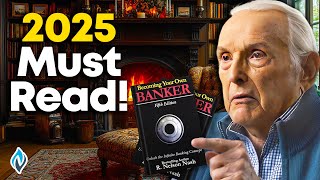
Richard Canfield spent $45,000 on financial courses before a $50 book by Nelson Nash changed everything. He became a licensed insurance producer in Canada to teach the Infinite Banking Concept, a strategy that helped one Alberta oil-service business survive crashes and COVID by using policy loans instead of bank debt.
Chapters
I was actually angry after I read the book. I was angry because in the previous decade of my life, I had spent approximately $45,000 going to courses and trainings and personal development and real estate seminars and, you know, weekend, week-long, multi-day events. And in all of that financial education that I had done, I essentially got a better financial education for $50 than for the $45,000 I'd spent.
Hey Richard, how you doing today, man?
I'm doing great, guys. I'm pumped. I'm excited about being here. It's going to be, uh, going to be a blast.
Okay, maybe we'll get a chance to talk about that cool t-shirt you have there because I know I see that a lot these days. But anyway, save that for later. Okay, Lee.
So Richard, just tell us a little bit about your background and how did you first discover the infinite banking concept and becoming your own banker?
Well, my background, I'll circle back a little bit. So I grew up in a family-operated business. We had portable toilets and my dad had a septic truck. We lived on a farming community. So I grew up in a very small town. You know, my entire school had about 310 students from kindergarten to grade 12. So it was a pretty small community. And I learned a lot about working hard, not so much about working smart because we just We're taught to just put your head down and just go, go, go. And those are valuable skills, but I'm learning later in life that it's okay to take some time to think about the leverage you can create by working with other people. We had an early foray into some rental real estate. I was on title to my first rental property when I was 12 as a beneficial interest, and I learned a lot about landlording and all the bad things and things that you shouldn't do. We learned in a 6-year timeframe. And so I kind of got started in the rental real estate arena a little bit and I said I would never do that again when I was 18 and we sold that property. And then 3 months later my parents and I were buying another property. So apparently I got over it in 3 months' time. Shooting forward, I started my career as an electrician and I became a journeyman electrician and I did that career for approximately 10 years and enjoyed it. It was a wonderful career, but I realized when I was doing job site seminars in Fort McMurray, Alberta, which is an oil, oil community that, you know, I had 30 to 50 guys in a job trailer and I was teaching them about certain strategies that they could implement with their investments and stuff and teaching them things that they weren't being taught anywhere else. I realized I'm in the wrong industry. I need to change this. This is not a helping, you know, Oil Company ABC get oil out of the ground isn't a way that I can properly serve humanity. It's not the right path for me. So I transitioned out of that and I became a licensed realtor in the province of Alberta. In my hometown of Edmonton. And shortly thereafter that, it was roughly about 6 or so months later, I was connected to an individual through a mortgage broker. That individual is Jason Lowe, and we became friends and colleagues and operating in a business that he had helped bring into Canada. And it was roughly about, you know, a year, 9 months or so later after getting to know Jason, when I sat down with him in his office and he told me to go out and buy the book Becoming Your Own Banker. So this was in the early summer, late spring of 2009. And at the time I ordered it on Amazon like most people do. And I didn't know that it was being shipped by, you know, David at the time. It took a while for it to get through the Canadian border and get to me. And it was probably 2 weeks or so before I actually got a copy of that book. And the exchange rate was pretty brutal at the time. So it cost me about $50 Canadian to finally get the book. And after I read the book, and I'm a, you know, I'll confess I'm a bit of a slow reader and I associate reading with sleep, so often puts me to sleep. And, but this is a book that didn't do that. And it, and I just, it really made me think a lot and it actually created a great deal of frustration for me. The reason I was frustrated, in fact, I would go beyond that. I was actually angry after I read the book. I was angry because in the previous decade of my life, I had spent approximately $45,000 going to courses and trainings and personal development and real estate seminars and, you know, weekend, week-long, multi-day events all over Canada and a few in the United States. And in all of that financial education that I had done, I essentially got a better financial education for $50 than for the $45,000 I'd spent. And that really bothered me. And I think it would bother anybody. And the other thing that was coming up for me, and this, this sat with me for, it was probably a good couple of weeks, maybe 3 to 4 weeks. I was upset because not only had no one told me the information and all the gurus I'd spent all that money on, not a single one had told me the information in Nelson's book. But, you know, I, I'm the kind of person, I like a good steak dinner. You go to a great place or a great restaurant, or you have a good service from like a plumber or someone that comes and services you in the house. And you want to recommend that individual. And so after reading the book, I realized that I would be doing myself and every single person I encounter a disservice if I wasn't sharing with them what I now knew. What would that say about me as a human being if I'm just going to hold that to the chest and I'm not going to share it? So I felt conflicted and upset because I just changed careers and I was just starting to make some headway in the new career. And I was thinking, oh my God, do I gotta change everything and start doing this now? How can I do that? And it meant going and getting a government license with the provincial body, you know, the regulator. And I didn't really want to do that for several reasons. So I was really frustrated about that and I felt torn because I really didn't want to have a license to do, like I was already licensed in real estate. I didn't want another one. I didn't want more bureaucracy, you know, overarching at me in different ways. And, uh, I'll be honest with you, it was a struggle for me to make the decision to move forward, but I felt in my heart I, I had to. I had no other choice. I had to make the decision because otherwise I would be out of integrity. That's how I felt.
Oh, good one, good one. And so that was 2009, and so you got licensed as a life insurance producer in Canada. And you're off. And so did you focus on IBC from the get-go, or you just kind of do everything in the industry?
Yeah, like, like many people, uh, who, you know, everyone's had some kind of an experience with insurance. And those experiences, whether it was maybe home or auto or travel insurance, like some other line of insurance Sometimes those experiences aren't very friendly. You know, you end up having a chip on your shoulder or a bad taste in your mouth with a past experience. And I had had some of that to a degree. And so I was a little bit jaded about the idea of having an insurance license because approximately 10 years earlier, I'd looked at getting an insurance license for a different reason with a different company to help teach some financial education. And I got soured by that process. Previously, and it wasn't until I read Nelson's book where it's like, oh man, this is bringing all this up again. Not this insurance thing again. Oh my God, I got to do this again. So that's where a lot of my hesitation had come from. And so when I did this, I did this specifically and wholly to do IBC and to teach IBC. I didn't actually care about insurance at all. And it's not until I got going and realized the importance and the value of the insurance. And now looking back on that, not only has it been the best decision of my life other than asking my wife to marry me, you know, it's what we are able to do for people. So Infinite Banking, 100%, absolutely outstanding and amazing. But just disconnect that for a minute to being able to add the value of insurance to people's lives. It is so tremendously profound, the things that we're able to do for people when people need capital the most, we show up with a check and it's tax-free. You know, Uncle Sam and you know, the CRA, the Canadian government doesn't get their hands on it. That is a really incredible thing that we're able to provide for people. So I absolutely love this industry and what we're able to do. I'm glad I made the decision. Still not so happy about the licensing part, but beyond that, I'm really happy about making that decision. And so, you know, in 2009, it took a while. I had a very busy real estate, it was summer, so it was a busy real estate season. I don't know if you know much about, Edmonton, Alberta, but they have a lot of winter there. So you make hay when the sun is shining. And so it was a very busy real estate season and it took me a while to get the license. So it probably wasn't until maybe October where I was able to actually write the exams. And then you have to go through the process of actually getting appointed and a license and contracting and all this other stuff, which is a lot of paperwork that I didn't want to deal with. And so by the time that was all said and done, we were, you know, we were rolling out into Christmas. I'd committed to an office space. Even though I had not done a single piece of business, didn't even know what we were going to do yet. And in Canada, we were really just trying to figure this out because at the time, it's certainly by our searching and our understanding, there was nobody doing this in Canada at all at that time. And maybe there was, but we certainly didn't know about it. A lot of people were certainly doing things with whole life insurance, but no one was teaching Nelson's concept and we didn't even know what we were doing. And so I delivered the very first presentation in January of 2010 to 6 people. And I thought it was going to be about an hour and a half. It turned out to be 2 hours and like 50 minutes and they all stuck with me anyway. And I didn't even, you know, I built this presentation and all from scratch, didn't really know what we were doing. And I used Nelson's book and some other things as inspiration. And, you know, we proceeded over the next basically, you know, year and a half, year and a bit. Doing regular evening presentations of about 2 hours at a time. And we were finding that we weren't having a lot of success because how do you understand the infinite banking? How do you, Nelson would say, how do you even explain the word infinite in 15 minutes or in, you know, in 2 hours? So we, all the things that Nelson, I learned later on that Nelson went through the struggles of trying to teach this concept in the early years, doing 2-hour evening sessions and multiple sessions. And realizing he needed a certain amount of time. And we went through that struggle and literally it's in the first paragraph of the book. This is a workbook for a 10-hour seminar. And for some god-awful reason, I completely blitzed on that. And my colleagues around me, and we just like, we just completely, you know, oh, well that's the first paragraph. That can't be that important. Like we just didn't really resonate and understand how valuable that was. And so I can tell you emphatically, the first 2 years were a big, big struggle for us. It was really hard to get any traction. And I don't— I'd be surprised if I made $1,000 in my first year in insurance. It was hard. It was hard.
Good thing you're moonlighting as an electrician though, right?
So, no, I was paying the bills with real estate and I was living off savings and it was difficult. I'm not going to— I also went through a period where I didn't pay the taxman for a while, so I had to get get clear on that later on. These are many of the things you do when you start a business from scratch. And, but I was committed. And so we actually launched a course in January of 2011 and we said, we need to change this. This 2-hour thing's not working. Let's do a 4-week program. We'll do 4 weeks and we'll get people together for 3 or 4 hours at a time and then we'll do that. And so we tried that and guess what? We had 6 people attend the first program. And then we did it again. So we did that a number of times and then, okay, well it's not working on Saturdays. We can't be able to commit. People aren't committing to every week, then let's do it 4 evening sessions. And then eventually we did a Friday evening and a Saturday event. Coincidentally worked out to being 10 hours. Coincidentally is exactly what Nelson ended up doing with his seminars. Didn't even realize that at the time while this was happening. And it wasn't until February of 2000, and I believe it was '12, when I attended my first 10-hour seminar by Nelson and my first Nelson Nash Institute think tank. And I met Nelson for the first time. And within the first, within the first probably 30 minutes, we realized what we'd been doing wrong. One of those things is that we weren't selling Nelson's book. We weren't teaching directly from the book. We were trying to create or do our own thing. In retrospect, we were using too many numbers and illustrations, which was not necessary for people to understand the concept at all. Which we've learned. And, and there's no doubt it explains all the reasons why we struggled. So not only was that a very impactful and empowering time, just getting to meet and be with Nelson and learn from him directly and sitting front row, just absorbing the information, meeting so many other people in Alabama, you know, first time in Alabama, meeting the, the other practitioners and people that were out there. Absolutely incredible, a momentous thing for me. When we came back, we immediately retooled everything and we put all of our focus on selling the book and making sure we got the book into people's hands and making that the core elements of our training. And instantaneously things began to change for us almost within, you know, within 30 days, the change was impactful. And I can't stress enough for people who might be listening to this, that if you haven't read the book, you need to, you need to absolutely do that. And if you have, and if, if you haven't read it in a while, you need to go back and open it up. And so we began that process and it really started to change the things for us. And so, you know, my books, you know, this one's signed by Nelson. Of course, this is my original book. I've got a lot of highlights in here, and I know both of you guys have seen a lot of people's books and they all look like this to some degree. And what's— what's mine's, you know, been bound and coiled and laminated because it was falling apart. These kind of things happen when you use this book a lot. But you know, it travels with me most places that I go. And you know, I do my best to read it cover to cover every year. But if, even if I'm not reading it cover to cover, I am frequently, almost if not on a daily, certainly a weekly basis, I'm reading passages out of this book. And often I'm doing that with clients because I'll get on a meeting and they'll have a question. I say, great, where's your book? Go get Nelson's book. Do you know where it is? You don't know where it is. You should know where it is. You need to know where that book is. So I'll, I'll give them the gears because they need to know where it is also. And then I'll have them go to a page and we'll read something together and then we'll talk it through. And that creates more clarity for them and being able to reference the information. It's, it's, it's a way to tap in and access Nelson's knowledge even though he is not with us. And it's, it's instantaneous because it's right there in, in, in fine print.
So what is your favorite page out of Becoming Your Own Banker? I know sometimes it depends on your conversation you're having with a client, but you personally, what is your favorite part of the book?
It does modify a little bit from time to time, but consistently I always come back to what I now refer to as the David page, and it's page 85. I didn't realize until more recently in the last year or so, I learned that this page Wouldn't have— it wasn't in the book until David inserted it in there. Page 85 is called Points to Consider, and it's a nice little summary page of many of the core elements, and there's some good thinking questions that are in there. One of the reasons I really love and resonate with that page is, number one, it was very easy to memorize a couple of components on it. So point number two is if you knew at passive income time you'd be getting back every single dollar that you put into a system tax-free, I say potentially tax-free in Canada. Would you ever object to putting any more money into it? I mean, it's a rhetorical question, but it's a good thinking question. And the reality is when you implement this process as Nelson describes, that is not just a possibility, that is a reality for people when they begin to follow Nelson's steps. So that connected with me right away and it was because it was easy to remember. It was easy to bring people back to that. And to the point now where when I send a book, to someone or they purchase a book, I provide a bit of a letter on how I recommend they read it. And I actually have them start with that page first before they go to the beginning of the book.
Well, shucks. Oh, just for clarity about page 85, you know, Nelson wrote it, I didn't. But I just suggested that we needed to have like a wrap-up at the end of it so they could take all that information they went through. And most people go, "Man, why are we Talking about grocery stores, who's Willie Sutton? All this stuff like that. So, okay, you read it, that's fine. 85, wrap it up, think about it. And then, when you sit down and talk to Richard or somebody else, you can ask all those questions about what does a grocery store have to do with IBC? And so, that is some insightful information and everything you went through, Nelson would do the same thing. When he first designed the seminar, it was a 10-hour seminar done once a week for 1 hour a night. And, you know, so the first night he might have 10 people there, the second week 9, the same week 8. And so nobody got to the whole course because there was always, you know, life got in the way. But you're right. But Nelson, I mean, people had their, you know, when he's doing a 10-hour seminar, you'd raise your hand and you say, "Yeah, do you have a question?" Yes.
When are we getting a bathroom break?
He would just get on a roll and keep on going.
And we keep bringing him a coffee.
He would hold on, hold the Styrofoam cup, man. That coffee, man. Boom, boom, boom. He's like, geez, that guy's got— he's got— anyway. Yeah. It's— if— let me just do a little insert here. If you didn't have a chance to hear Nelson live, you have that opportunity. Because that seminar is, is on our website, so infinitebanking.org. You can find it there if you, if you, uh, want to watch the man in action, because he is definitely one of a kind.
I highly recommend that. And there's also some incredible, you know, content on the Nelson Nash YouTube channel of, of many interview pieces of Nelson, um, where he's speaking and sharing the kind of things that he would do in the course on and inside conversations with people. You get a lot of that in so many of those amazing videos that are now available on the YouTube channel. And, you know, every time I get a chance to watch one, it takes me right back to a moment in time where I was with Nelson. For me, maybe more so than others, because in many of those, I actually was physically in the room for some of those recordings. So there's that component for me. But anyone who had the chance, who was blessed to actually see him, it's literally like he's in the room with you. And if you weren't able to see him, you can get an idea and a gauge for what it was like. Like, it still has that. And I've talked to people who didn't get a chance to meet Nelson, clients, and especially watching the documentary film, they feel very connected to Nelson, and they feel connected to understanding the importance of why this matters in the world and in, in their lives personally. And, uh, you know, I, I've never had a single person tell me that they didn't enjoy that film. Or that they didn't get immense value out of it.
Yeah. And you go back to the film, This is Nelson Nash, and tell me how many times he talks about life insurance in that, in that 1-hour video. Okay. It's not about that. It's about life philosophy is what it's about and how to gain control of your financial freedom, which is a stress point that everybody has. Can identify with. So I don't know where you are with your personal banking situation, Richard, but we haven't seen a banker since 2004, I guess. So 20 years. And it feels pretty good not having to worry about any of that stuff. So, but Lee will catch up eventually, I think, I hope.
So Richard, you had— you were fortunate to have a personal relationship with Nelson, and you met with him many times, and I'm sure lots of fun conversations. What is one of your favorite Nelson stories or memories that you have?
Um, I mean, it's hard— it's a bit hard to narrow that down, um, but I guess two, two things kind of come up for me, and You know, the first, the first one is really just the experience of being, uh, being blessed to be involved with the, the recording of the documentary film, um, spending time, you know, David, in your home, uh, destroying by moving all the furniture around and, and just having these, you know, really epic conversations with Nelson. Uh, that to me is a very fond time and memory. Um, but when I think about Nelson teaching and training You know, what comes up for me is the way that he was able to weave comedic levity into all the things that he did in a session. And one of my all-time favorites, and I have a pretty big, you know, raucous laughter when I'm in a room of people, and it probably has disturbed a few Think Tank videos, I would imagine, in the background. And even like being at a Think Tank, you know, if Nelson was just a participant, he'd be sitting in the mid-zone or in the back, wherever he would be, would plop himself down and he would chuckle at some of the things happening on stage in the way that he did. And I always, you know, I always was, you could always hear him somewhere in the room and I really appreciated that. But when he would talk about the, I call it the Martian story, when he is going through equipment financing and he's talking about self-insuring a vehicle for collision coverage and he goes to this whole weave story about, you know, watching The Space Channel, which he wouldn't normally do, but one night in the hotel he was watching it and would you believe it, you know, he started thinking about these Martians zapping a truck and all of a sudden you got a molten pile of metal and just the way that he told, told it, it was so, so incredibly, uh, well thought out, comical, and it just almost brought me to tears of laughter every single time I heard him do it. And I, the first time, I mean, I, I, you would, didn't know it was coming. And even the following few times I heard it, I still didn't really know it was coming. But then it's like, oh, he's about to go here. And then my brain would go back to like, oh yeah, I don't even remember the exact punchline. I just know it's so good that I can't wait. So I think about that pretty, pretty frequently and how much I enjoyed that part of Nelson's seminar.
Yeah, he didn't hold back anything in those seminars either. It's like, if you're in the front row, watch out, man. You're, you were going to be his guinea pig for that. Session.
Yeah, you gotta write your names big on the tent cards so he can read it good, call on you.
Yeah, yeah, yeah, yeah.
So, okay, so let's shift, um, to the Authorized IBC Practitioner Program. And, um, you know, what does that community— what is your favorite aspect of being an Authorized Infinite Banking Concept Practitioner?
For me, there's a, there's a piece of community that's really important. And I think in doing this type of work, being that it's, you know, I mean, the world is learning about it more and more, you know, every day. But certainly, especially for me in the early years, I imagine it's to some degree what Nelson felt like, kind of being a Lone Ranger out there in the world trying to trying to take this idea and move it forward. And, you know, today there's, there's so many more resources. The Nelson Nash Institute has thousands of amazing resources that didn't exist, you know, when I first got started, or I didn't know to leverage or to utilize. And, and so when, you know, I tend to think tank, or I attend, as an example, one of the new coaching academies that's being put on, when I'm able to be involved and together with other practitioners who loved Nelson, who are inspired by his work and his message. And we all have our own individual business and we're all in different locations, but we're forging ahead on a similar track and a similar path because we recognize that there's tremendous value for every individual family that implements Nelson's wisdom into their life. And the result of people doing that has an aggregately larger impact on the overall economy.
So you talk about the collaborative community with the difference with IBC practitioners and just, you know, this is not a sales organization, right? This is a community which are advocates of infinite banking and they're all licensed producers. They echo the same thing you said earlier in this conversation about, you you really enjoy this because you help people, right? You don't feel like you're selling a product or pushing a product and you feel good about things. And when you talk to clients and you make their lives better if they get it. So, that's kind of my summation of the community as a whole from my perspective anyway. So—
Yeah. So, one of the key elements of people going about this work and helping all the families that they do is the bigger element, the bigger picture, and it's the aggregate effect on the overall economic outlook, the overall economy, the, the, the sound money solution. And when we take more and more of the individual's spending power and we begin implementing it in the way that Nelson taught, not only are we feeling more personal control of our own financial circumstance, more empowerment, more more, you know, Nelson would say it was a peaceful, stress-free way of life when you get the banks out of your life. But because we're changing the location of where we store and warehouse our capital, we're also having a bigger impact on the money printing component. If we're working with an organization that doesn't print money out of thin air like the commercial banking sector does, thanks to the Federal Reserve and centralized banking institutions, We're able to have a much bigger impact. Now we have to reach a level of scale to really see that dial move. And that's really fundamentally one of the things that I recognize and love about the Nelson Nash Institute is that that is part of its, its, its reason for being is to increase the degree of knowledge for the general public, for the practitioners who wish to serve the way that Nelson did and help them with the right tools, strategies, and components to be able to be successful at doing that. You know, Nelson really felt that you can't solve big problems with top-down thinking. You need a bottom-up solution in order to create the right outcome that you're looking for. And so that's why, you know, his second book, I believe the subtitle is A Grassroots Method to Solving Fractional Reserve Banking or something to that effect. You know, it's so building your warehouse of wealth the way that Nelson described has so many profound ripple effects into the world. But you feel them at the personal individual economic level first, and you become personally empowered and profitable implementing the strategy. And by the virtue of doing it, you're also having an aggregate larger effect. As long as we can do that en masse. Here's one thing I have to share that I think is just so important. When you are in free contract with other free people through the usage of mutual whole life insurance as a, as a contract, You're automatically choosing to be in business with other people who care about their families. You know, people who don't care about their families don't go and get any life insurance. And that creates a ripple effect of its own problems. And then it requires dependency on government resources. People that care about those things, they take the necessary precautions to put their families in a good position if something were to happen, unfortunately, to them. When we use properly structured dividend-paying whole life insurance and we do it in the way that allows for the mindset and the process of becoming your own banker to be implemented, you're automatically entering into an arrangement where you become a co-owner in a, in an entity, a shared pool of money that's well managed and administered for the benefit of you and everyone else in that pool. That co-ownership model is automatically aligning you to some degree with people who already care about their families. And I think that there's something really profound and powerful about that if we think that through on a big scale.
Yeah, that's a good point. Yeah, that cued me about people that want to be involved in us and say, "Why are you guys so interested in what this Austrian economics thing, what's that all about?" Well, what you just said about creating hard currency through mutual insurance company, coffers instead of printing money or digitizing money with a keystroke. Privatized banking is part of the sound money solution. Okay? And Infinite Banking Concept talks about privatized banking. Your policy is your capital basis, and that's your collateral for your loan. That's hard money. That's, you know, given to you in the form of a loan from the insurance company instead of, you know, the central banking system. So that's a key component. That's why it's important that Carlos is involved in what we're doing. Carlos Lara, he's our Austrian on staff. And he's, if you get our Bank Notes, our weekly news, monthly newsletter, you'll see articles every month by Carlos Lara and they're all related. To Austrian economics, you know, sound money and internet banking. So that's an important component of what we're looking for, especially when we interview prospective IBC practitioners. We want to know, you know, why are we on this call with you? What are you here for? You here to sell life insurance or you're here to help people? You know, what do you know about the sound money solution? So that's— I'm glad you brought that up. That's critically important to us here at the Nelson Nash Institute.
So yeah, Richard, what are some of the challenges or misconceptions that you have, that you hear about the infinite banking concept?
I think a couple of the big ones would be a lot of focus on the idea that the concept is actually a product. So there's, whether it's intentionally or unintentionally, because the tool to get the job done, you know, the best tool for the job, as Nelson indicated, is to use a participating dividend paying whole life contract with some, some specific design elements preferably attached to it that allows you to utilize that tool to manage the process of banking. Now, banking is happening every day in your life. You're moving money throughout your life for all things. Money's coming in, money's going out, money's coming in, money's going out. That transactional movement of capital is really what banking is. It's an action word, and that action is taking place in your life. So someone is performing the role of banker and doing the banking function in your life right now. When you implement the tool, which is the insurance, as, as part of the solution to that process, you can begin to change the way in which you do it. So the Infinite Banking Concept is just that. It's a way of thinking. It's a concept., and it's a way that you begin implementing a process in your life. Using a product is just the tool to allow you to do it efficiently. And so I think one of the biggest misconceptions that I hear out there in the marketplace and in whether it's social media or whatever marketing sphere is out there, and there's an assumption even by people in the insurance industry that, oh, oh yeah, I've heard of that. Well, that's, that's just all life insurance. Well, no, it's A, it's not just whole life insurance and B, whole life insurance on its own isn't just whole life insurance. 'Cause there's lots of different ways to get it. There's non-participating, there's participating, there's participating with different features. There's certain companies that have different, like there's a whole host of elements there. And, and, and so it's like, it's like saying, oh, well, hey, that's just a garden. Well, no, that's a garden that has every vegetable under the sun in it and a couple of fruit trees, right? So. You can have a garden with a whole bunch of things in it that's growing, or you could have just a cornfield that only grows corn. So people try to lump in things into like this little silo and then to make our brain make simple connections. But, but Nelson would say, when you, you know, people will take a little bit of information and they will jump to an absurd conclusion. And that's what happens quite frequently out in the marketing sphere. And unfortunately, a lot of advisors bring that up to people, and then the general public, the consumer who just wants to implement a— they just want to have more control over their money. That's at the end of the day, just want more control over their money. Then they get sometimes confused, and through some of this language and the lingo, and, and it creates an unnecessary, um, you know, ripple effect in the marketplace. And so I think that's the biggest misconception. There's certainly some other ones, but not having clarity that the infinite banking concept is a concept. It's not whole life insurance, and that whole life insurance is whole life insurance. And there's lots of different ways you can get, acquire, and add bells and whistles to it. So those two things, I think, simultaneously is probably the cause of a lot of the unnecessary confusion that exists out in the marketplace.
Yeah, I think a good example of that confusion is the term, I want a banking policy. Well, there's no such thing as a banking policy, okay? It's a cash value dividend-paying whole life insurance policy that's designed specifically for the client's goals and aspirations, okay? And then how they use it is, is up to them, as long as they do it, do everything correctly. But yeah, we, we talk about that. We talk about it here is you have, you have the process and you have the platform. The process versus the platform. And that's, you know, the process is Infinite Banking Concepts or infinite banking as the quote-unquote descriptive term. And the platform is that properly designed whole life insurance policy. So good, good, excellent points. Good.
Can you share with us any stories about some of your clients who have implemented the infinite banking concept in their lives and how you have seen that impact.
Yeah, I mean, one that comes to mind is actually something I was working on last night. It's actually going to become a chapter in an upcoming book that the Nelson Nash Institute is putting out around client stories. And, you know, it's a, it's a gentleman and his family where they, they actually started policies 10 years ago in 2014. But I didn't help them start the policies. They were very busy in their business life and they had a group benefit provider for their company and they were doing several things around insurance all at the same time. And it was like a really busy time and they said, look, I know I want these whole life insurance policies. Can you just help me get these? And I want them to be able to borrow and have cash value so I can do this thing called the Infinite Banking Concept. That's kind of roughly the description he gave the individual. And the result is he ended up with some whole life policies and they were okay. They weren't like horrific, but they certainly weren't how I would've done it. So there was, they could have maybe been optimized a little bit better, but you know, Nelson would say the best policy is the one you started. Okay. So the end result is literally within weeks after getting those policies initiated, the oil price dropped like a hot potato from like $141 US a barrel down to $41 US a barrel within 6 months. This company's business is very oil dependent. They do line locating in the province of Alberta, you know, through Western Canada. And, and that when that happens, it shuts down production because Alberta oil doesn't sell for the same price as West Texas crude. Okay. It sells for a big discount because it's, it's They were, you know, it's, it's not as high, same quality of oil. And so that has a huge impact to investment in the province. And then literally another 6 months, you know, 6 months after that, the provincial government changed. And for the first time in 43 years, a new government administration came in of a different party. And to call it, to say it simply, they were the socialist government. And they had a hate-on for oil companies. And so they drove investment out of the province and it created an economic nightmare in the province. And so for the next 4 to 5 years, they basically knew that they had their, they had their back up against the wall trying to resolve what they could do. They have employees, staff commitments, and they were charged, you know, they would bill on like these 90 to 120-day receivables. So they would do all this work and it could be 3 to 4 months before they got paid on the work.. So you have to have capital to float your staff, your employees, your business expenses. When you do that, it's not an easy deal. People think being in business is easy. It's, it's not. And so lo and behold, about, you know, almost, you know, not quite 2 years after they got these policies, I got an email say, Richard, can you help me with these policies I've got? I tried to get them set up for the infinite banking concept, but you know, I don't think they're set up right. And I'm, we're thinking about, canceling them and all these things. And they, they were under an economic crunch. So I came in, I did what I could to resolve them. I said, these aren't the way I would've done it, but they're good. You've got them. You, you don't have a lot of flexibility though. So you're committed to a pretty high premium and there isn't a lot of wiggle room on that. So there's not a lot we can do there. The end result is we were able to preserve and save the policies that they were gonna cancel. And although it was difficult, they were able to to stick with them. We did have to make some modifications. In fact, we were able to get them approved medically to increase how much flexible premium they could put into the policies. You know, I never got paid for any of that work, and that was okay for me. I just wanted to help the client out. The result is, move forward years, years, years later, through multiple periods of time, through multiple economic challenges and weird periods, oil price, you name it. They were able to take policy loans to get them through some of the leanest periods. They wouldn't even be in business today if it wasn't for those policies. They were able to make payroll, they were able to pay their heat and electric bill for their buildings. They were able to get some, you know, make some changes to bridge financing on a down payment for a property while they were waiting for another property to sell. Right? A whole host of unbelievable things that they were able to do. Moving forward, several years later, they were able to take— once they, you know, they built up a reservoir, they were able to obliterate their operating line of credit, which at one time was $1 million from the third-party bank. And now they run that operating line of credit through policies that their holding company owns. They got rid of a lease on their business that was expensive, and they moved to a different area, smaller town that they were from, and they Bought several buildings using policy loans and paid cash for them with policy loans. Then they renovated multiple buildings. They, for a shop for their employees, for an office building, and they bought several other small commercial buildings. This is a small town with maybe like 15, 2,000 people. It's a small community. It's got like one general store. And they bought several little commercial buildings and then they renovate them over the next 6 to 9 months. They use all that capital, was all fund policy loans, the purchase price, all the renovations. Now they rent all of that. Their business rents from them and the business rent for the office building, for the shop goes back to the policy loans. They rent out some commercial bases like, I don't know, me, a barber shop, a couple of other things. All of those market rents go back to repay policy loans in, in about 5 to 6 years' time. They will have recovered all of that capital and they have built massive equity in all these buildings that they own outright. None of that would have been possible if they didn't commit to following through on the process. And although they felt bad about stealing the peas for a while, they were always committed to returning the peas. They just sometimes didn't know how on earth they were going to get it done because they had economic, massive economic challenges that faced them. They almost shut— got shut down several times. And COVID was another big impact, but they were able to keep the lights on because they had policy loans and they had done things. They had now been through that process for a period of time because they committed to it. So even though it might have been hard and there were some difficult times, through coaching and through commitment, they were able to preserve what is now a growing business. They've now purchased out one— I'll call it a competitor, but it was really a similar business in a different market environment that's going to open up new opportunities. And they're looking at doing that again. And rather than seeking third-party financing, they're able to close on the deal, short and negotiate better terms because they can close on the deal using policy loans.
What a great story, not just for your clients, but also for all of their employees and beyond in the community that they live in and that their employees live in those communities and how it in turn impacts, you know, positively all those around them. So that's a very powerful example.
Yeah, that's what privatized banking is all about, man. You're, you're the banker, you're the client, you're the shareholder. And who's the fourth person you are?
Yeah, you got, you got the depositor, the borrower, the banker, and the bank owner. You know, you get to play all, all characters of the financial play. And what people don't realize is that they're involved with all characters of the financial play at all times. They're the depositor, they're probably the borrower, and someone is the bank owner and someone is the banker that makes all the rules. And it is like that all the time. And even if you're using your own cash, you don't realize that you're the banker and you are making the rules. And so what happens for most people is they make really crappy rules or they have no rules at all. And the result is money finds a way to disappear out of their life because they're very unintentional. Nelson's mindset and concept brings intentionality and clarity to that while you're thinking at a long-range vision. And you get, you know, one of the most powerful things that Nelson— I learned from Nelson is how to think beyond my own lifespan. He would say, learn how to think 70 years down the road or learn how to think 2 generations into the future. So thinking beyond your own lifespan, and if you recognize— so I have my kids are just turned 7 and soon to be 9. And, you know, I think, Lee, we have some kids that are some similar ages. So when I think about things for my kids and the policies that we have, I'm thinking about the grandkids that I don't have yet. And I don't know if they'll ever exist. I sure hope so. I look forward to one day being a grandfather. But if I don't start planning for those things now, who will? The government's not going to plan for that for me. No one else is going to look after that for me, and no one's going to look after for my kids because they don't know enough to even consider that opportunity today. And Nelson taught me that it was possible to think beyond my own lifespan.
Excellent point. Yeah, he's all about that, man. It was— yeah, that's his forestry upbringing, man. We plant those little pine trees, takes a long time for them to grow, man. But yeah, good point. Okay, Richard. Well, really enjoyed talking to you today, man. Thanks a lot for visiting with us today. And great friend, great supporter of the Nelson Nash Institute, and appreciate you very much.
More from Richard





How Do You Use a Policy Loan to Buy Dividend Stocks? #dividendstocks #infinitebanking #shorts


Can Compounding Dividends Pay Your Bills? #wealthbuilding #investment #financeeducation


Should a Corporate Policy Offset Your Personal Coverage? #shorts #insurancetips

What Is Human Life Value? #shorts #insurancetips #dividend #wholelifeinsurance