The Infinite Wealth Consultant Who Started As A CPA | Wealth Without Bay Street Podcast
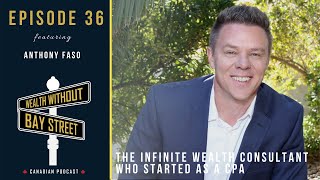
Podcast episode (Nov 10, 2020) featuring hosts Richard Canfield and Jason Lowe interviewing Anthony Faso about the Infinite Banking Concept (IBC). Discussion covers Faso’s transition from CPA to IBC practitioner, benefits of IBC (access to capital, family banking, teaching kids), critiques of conventional retirement accounts, and personal stories illustrating the approach.
Chapters
You are listening to the Wealth Without Bay street podcast, a Canadian guide to building dependable wealth. Join your host, Richard Canfield and Jason Lowe as they unlock the secrets to creating financial peace of mind in an uncertain world. Discover the strategies and mindsets to a financial future that you can bank on. Do you want to create passive income and connect with like minded people? If you're an entrepreneur or a high earning business professional and you want to join others just like you who want to build wealth, they want to save on tax and secure their financial future, then join our community. Head over to wealthwithoutbaystreet.com community. Well, we are pumped and excited for everyone joining us on the Wealth Without Bay street podcast. Of course I've got my incredible co host, Jason Lowe, the CEO of Ascendant Financial with us here. And joining us all the way from Las Vegas, very good friend of ours, the incredible and amazing Anthony Faso, who is an authorized IBC practitioner, a real estate investor and he likes to consider himself a self proclaimed recovering cpa. He's so much recovering that he won't even look at a balance sheet anymore. He started his career with PricewaterhouseCoopers, one of the largest accounting forms course in the world. Then he was a CEO for a chain of restaurants. Eventually decided he wanted to start making other people wealthy. So he got his own business, went out and forged ahead into CPA land and realized, you know, I could do better by teaching people about Nelson's great work of Infinite Banking. And that's where we find it today. And that's how Jason and myself got a chance to get to know this amazing, amazing man. And so he's got an incredible podcast. You can see him in his incredible studio if you're watching us on the YouTubes today. His partner Cameron there not joining us today, but we are so grateful to have you here, man. We love communicating with you, talking to you. You've got a wealth of knowledge to share with our listeners. And how is the wonderful world of Infinite Banking working down in Vegas?
I will say. Well first, I'm honored to be on your podcast. You guys are doing a lot of good, putting some good content out there. So kudos to you guys. Privilege to be on the podcast.
We appreciate you, buddy.
Okay, yeah. What's going on right now? I will tell you, for Infinite Banking, it's been great. What I found is whenever there's uncertainty, people are looking for options, they're looking for certainty. And really I think that's one of the many things that Infinite Banking does. It does provide a level of certainty. And then also people are looking okay, our economy is doing terrible, unemployment is in double digits and our stock market's at an all time high. People are starting to realize that doesn't make sense. And so some people are starting to realize, looking for alternatives. And also there's a lot of people that are hurting right now. And one of the downsides of putting money in their 401 is it's very difficult to get access to it. There's limits on how much you can take out and you're going to pay taxes and a penalty to access your own money. And right now is when people need access to liquidity. For one, if they lost their job or there's or a loss of income. But also I'm telling people there is going to be a ton of opportunities these next two years.
Agreed.
And one thing I like to say is the bigger the opportunity, the smaller the window it is to take advantage of it. So you need to have access to capital. So I don't know what's going to happen with the housing market, but the last crash, you know, your house, your neighbors, your house went down to 50 cents on the dollar. I want to be in the place, I want to buy your Neighbor's house for 50 cents on the dollar. Okay. The only way I can do that if I have access to capital and infinite banking, I would say is the best way to get access to capital.
Well, and Anthony, if you think about your journey that led you to embracing this process, into implementing it in your own life, now that you've essentially you mentioned you're recovering cpa, chartered accountants, and so what do you see chartered accountants now nowadays? What do they most often miss as it relates to this process? And so surely you're running into prospective clients who say, hey, you know what, this sounds like a great idea and I'm really thinking about implementing it. And so I'm going to engage my chartered accountant just to get some additional input and feedback. So what are you seeing that CPAs most often?
Ms. Well, I would before I get into that, let's talk about what people miss I think people Are you saying CPAs aren't people? No, they're not. We're not. We're superhuman or however you wanted to classify it. But ZPAs are not, nor are not normal human beings. But normal human beings, I think put too much emphasis on what they the CPA advice they give them. And I think that their expectations of what the CPAs actually do is different than what's actually done and What I say that a lot of like, I can say that because I was a CPA or I mean, I am, but I'm still recovering. Right. To me, with the cpa, there's really three main skill sets or avenues for expertise. One is tax, tax preparing, which is more doing stuff historical. Then there's tax planning, which is being proactive. And then there's like IRS audits, which is being more proactively defensive. Okay. All three of those are very different skill sets. And to me, it's very difficult to be an expert in more than one field, which is one of the deciding factors. Why? When I started teaching IBC and I had a growing CPA firm, like financially it was great, but I'm looking long term. I wanted to be an expert. Like whatever my sandbox is, I want to be the best at it. And it might even be a small sandbox, I don't care, but that sandbox is going to be mine. But if I can't properly learn how to prepare taxes, how to plan taxes, and devote time to learning about infinite banking. So I think it's important. I didn't want to be the jack of all trades, master of none. Very good point.
You wanted to be the surgeon and just show up and perform surgery when.
The whole room for you. Yeah, yeah. With the CPA, most CPAs are very overwhelmed, particularly right now with everything going on with COVID It's made their business processes delayed. The, there was extensions and then there's the cares act like there's just a lot going on. So they're trying to learn this new information and prepare these tax returns. So they, they're, a lot of them are very spent, so they don't have the time to really analyze and, and do the planning piece.
Right.
But clients always think that the, the CPAs are doing the planning piece. And if you want them to do the planning piece, they will, but you're going to have to pay for it.
But you know what's interesting too is I remember and you know this, I mean Nelson, God rest his soul, you know, he used to say to us all the time, everything begins with the way that we think. And we find that, you know, CPAs think in terms of taxes and the business owners, the clients that, that we encounter, they think in terms of capital. And so when you, when you understand that everything begins with the way that we think, it's, you know, the CPA has their, like you said, it's important to be a specialist rather than be a jack of all trades and master of None. And so that, that's where we found, you know, here in our group is the connections that we make with CPAs when we're approaching it in that way, they really work well. They really work well because the CPA is still a part of the process and still a professional that's engaged in that communication with the client. But we really emphasize that very same thing. We say, look, we are specialists and experts at this. We respect that you're a specialist and you're an expert and that you're thinking in terms of taxes, our mutual clients thinking in terms of capital. We're showing them how to build a growing pool of financial value capital and all the other advantages that the process of becoming your own banker represents. And so it's just a different approach versus the most common, which is, okay, I'm going to go to my CPA and ask him or her, what do you think about this? Hence the word think. Well, if you make a remark about something that you have no direct knowledge of, then all that you're doing is expressing an opinion. You're not describing what you think about it, you're just expressing an opinion about it. And we can all agree that opinions change and that you can reach absurd conclusions with very limited information. And so we wouldn't send a client to a dentist to get an opinion on whether or not they should have the cardiovascular procedure that could be life saving.
So well said.
Right.
And if any of our clients have done that, get out of that office.
Yeah. Please, please do.
Not a proper doctor.
But, Anthony, I saw you speak years ago at Think Tank and I just loved it because you talked about your journey, you talked about. And you always approach things with a very common sense approach. And so how would you describe to listeners what your perspective is on the process of becoming your own banker? How do you see this being most transformational to households and business owners?
Okay, well, what I see what happens now is what most people are doing is they're putting money into their 401k IRA, or what do you guys call it in Canada? RSP?
RRSP.
Yep.
Yeah. What we do is we're taking our money and we are giving it to somebody else. We have no idea what, what is going on. What we do see is, oh, the stock market went up. Or is it Bay Street? Is that what it is in.
That's what it is.
Okay, so you're good. You've done your homework. And I can also read the sign behind you. What most people do is they think again, back to think. Oh, well, the market's up 10%, 20%. My, my wealth is up 20%. But that, that just ain't so. And I remember when I had, he's my ex financial planner, he would write up on the board, okay, this mutual fund was up 12%, this one was up 20, this one was down 3. Or he'd write it all up on the board. And then I'm trying to, in my mind, kind of average those out. And it seemed like it's a high number. I'm like, sweet. But then I look down on my statement and it ain't so sweet. Like there's some disconnect here. Right. And what's that?
I said I'm shocked.
Yeah, right. And so I think what if people were to really look at, analyze if they were to take their, take their statement, not just focus on the balance, but focus on how much money did, how much money did I put into this? And then what is the balance? And they're going to be shocked because there's a lot of fees and again, I mean there's all those losses and the difference between average and actual rates of return. So I think to me, one of the benefits of going through this journey is having more control and some more say, what happens to your money? And I remember a couple years ago my wife and I went to Cancun, Mexico on vacation. Why I was watching the news, I don't know, probably because that was the only station in English. But this is when there were those riots going on in Greece. Right?
Right.
A whole continent away. And then the news is saying, okay, stock market down 300, stock market down 400. And I'm waiting for my wife to get ready. I don't know about your wife. Mine takes a little bit longer than me to get ready. And then it's like 500. I'm like, Babe, can you hurry up? I mean, the stock market is tanking. Oh, I want to get out of here. It ended up going down 900 points that year or that day. And you know what? If I would had money in my 401k, that would have hindered my vacation, I wouldn't have been able to enjoy the dinner. I've been thinking, oh man, I just lost this money or what's going to happen and am I going to lose more money tomorrow? But I didn't have any money in the market. I knew that. You know what, when I woke up tomorrow, my cash value went up a little bit. And if I have a great time in Mexico and sleep through the next day, when I Wake up two days later, it's going to be up a little bit. Even more. So having that relief of having some certainty that my money's going to be there. I mean, it may not go up as much as I would like, but each. Each day it's going to go up and up and up. It's a slow process, but now that we have capital, like, one thing Nelson talks about is if you have cash, opportunities will find you. And I found that so true. I've had some people that were in a bind and needed to borrow money. Okay, I'll take a policy loan. Here you go. And of course, we're gonna have collateral. You know, we actually started a family business flipping raw land. So I have my kids in it, and my wife and I, we each took money loaned from our policies, put it into the new llc, and now we're creating a family business. Wow. Which is awesome in many ways. Now I have my kids. I mean, my kids 26 and 21. My daughter is a senior in college and she has her own business.
Okay, that's fantastic.
And they are working it like, we have split out the duties and they are contributing to that. And not only is our goal is to teach our kids that entrepreneurial spirit, but now. But also it has brought our family together. We were already close, but now we're communicating on a different level. And, you know, it is great to be able to feed into my kids of these examples. Okay, here's what you do here. We're talking to a seller. All right, here's some things, and here's what you got. We gotta keep a good job on our accounting. We gotta know where our money's going. But I am teaching this to my kids. And now my daughter gonna graduate in May. Probably one of the worst times to graduate. Right? And, you know, she's got some opportunities with some people in real estate here in Las Vegas. And the guy had told her, hey, if you do this, you're going to work your butt off for the first couple years and you're not going to make much money. But you stick with it, then you can make a lot of money. But now if she's got some income from that business, she's not going to. Well, I got to take this corporate job because I got to pay my bills. Now she's got some money, so she can pick and choose. She can think long term on her financial decisions, because short term, she knows she is going to be okay.
I love that. Direct from Anthony, Infinite wealth podcast. We want to make sure that Our listeners tune into your podcast, they're going to undoubtedly get a ton of value from it. And we'll include the links rich on the YouTubes and the show notes and the Facebooks and LinkedIns and all the other posts that we do. And man, that was awesome. Thank you for sharing that story, Anthony.
You know what? I'm sorry, I want to add one more thing here. Okay. Because when I went through 08 and tried to figure it out, something's wrong. I'm following this typical financial advice, and there's these crashes every 10 years, and unless I do something different, why would I expect a different result? And I started asking my clients. There were some clients that did actually very well during that time. They were the ones buying my neighbor's house or, yeah, my neighbor's house, 50 cents a dollar. So I started asking them. I first started asking them, what books are you reading? Right. What's your mindset? Because I knew is all about the thinking the actual product or whatever they deploy, their money isn't as important as learning about it. And so that's when I first got exposed to Robert Kiyosaki's rich dad, poor dad, which we're actually. I think his better book is the Cash Flow Quadrant. Right. But so what he taught me, you know, everybody would talk about, well, I want to be financially independent, you know, but what does that mean? Right, Right. You got to put some numbers or some things to it. And Robert Kiyosaki simply said, financial freedom or financial independence is your passive income, meaning income you're not actively working for is more than your expenses. And that you can achieve that. You don't. Not when you're 65 or 75. You could achieve that when you're 25 or 35.
Right.
And to me, that was. That spoke a lot to me. And my 401k, where in 08 turned to. Turned into a 201k, was not going to make me passive income, but creating a business does. Buying real estate does. I mean, so now I'm able to achieve financial freedom. And so I think that's another benefit of the IBC journey.
Wow. One of your very recent podcasts, you and Cameron were talking about financial sense, but. And it's kind of like, well, you can eat financial dollars, but, you know, you also need to get financial sense. And IBC has a way of creating financial sense in a different format. It's about common sense. So you kind of spoke to that a little bit here. And it kind of dovetails perfectly with the story about getting Your kids engaged in the business. You really have a heavy focus on that communication model, that discussion that you're having with them now, now about the new business. But you've also had a lot of discussions leading up to that point about ibc. And so I'm curious about, you know, if you were to share with our listeners what are some of the things you found to be very successful in communicating the idea of family banking to your, to your children?
Well, the first obstacle I had to overcome is to teach my daughter that it was ibc, not ibs because I found she went to somebody, neighbors, a friend's house. What does your dad do? Well, he teaches people ibs, which here is irritable bowel syndrome. Right. So this is literally the exact, the exact opposite of it.
That happens when the 401k drops to a 201k. Right. Isn't that how. Yeah.
And now he hands out free samples of Turbo Lax.
Yeah. So part of this there is, I wouldn't say it's hard, but it's not easy to teach kids these concepts in part because they may not realize what I haven't, maybe they haven't heard of capital or they kind of haven't heard of passive income. So there's a, there's, there's an educational barrier and particularly they're not teaching that, that stuff in schools.
Ain't that the truth?
What I, what I wish I, if I had kids now, I mean there's the book series by the Tuttle twins, like that would be in. Cameron has kids, I think like 8, 810 and 12 or somewhere around there. Hopefully he doesn't listen this because I think I just threw. Those numbers were not correct. But, but he's, he's having these kids read the book and he probably, maybe most importantly, he's having them kind of give like a book report or okay, tell me, tell me what it's about. Which is great because that's now putting it into a different part of the brain from reading and then now you're kind of teaching, but also it opens up for discussions. So Cameron is doing some great things like what I did, what we did when we had 529 plans, which in the United States it's kind of like a Roth type asset or account that you can use solely for higher education. We had those because that's what we were told to do. Right. And in 08 my son who's going to college in two years lost 60% of his 529 plan. Now my good news Is my daughter. My daughter did better. She only lost 50%. So what, so what we did then I said, screw this, I'm not. We took that out and, and that's when we put that into to jumpstart the kids policies. And we've used this for pay for their education. Right. Because we finance everything. We either pay cash or use credit or even better, use a policy. So that's what we did. And then when my son graduated, I bought him a nice watch and I gave him. Becoming your own banker.
Love it.
Okay, you read that and then we're gonna, then we're gonna come and talk about it. Then I said, you know what, when you look next and when you're at work, look at your co worker, they have student loans. You don't you have something better? Policy loans. So take some of your money. I want you to treat these policy loans as student loans. And there's a huge difference between them paying a student loan and you paying a policy loan. And the answer is, who keeps the money? Yep, they pay that money and it goes to somebody else. They pay that policy loan, it starts to fill up. Starts to fill up their policy. And then I said, now your other coworker is misinformed. Is going to be putting money into his 401k, which he's doing that when he's in the lowest tax bracket he's ever going to be. But he's still doing it because that's what he's told. Now I want you to pay the, I want you to pay the premiums. Awesome. Once you show me that you are a good steward of your money, I want you to take a loan and I want you to pay it back. When you do that, then I am going to gift you this policy. Now, as you know, with the way we design IBC policies, they get better and better every year. So he's got a policy that's about 11 years old and is screaming cash. I know in one of his policies the premium I think is $2,400 and his cash value increased by five grand. So in essence, he put in $1 and his policy grew by two.
You mean to tell me you can open up a bank account and put $2,400 in and draw $5,000 out of it and you also get a tax free death benefit. Where would you get one of those? An insurance company. Interesting. Interesting. It takes a little while to get there. Oh, okay.
Yeah. So, but this is the fun part because we want. Because what's going to happen if you're practicing infinite banking, you're going to have more death benefit than you ever imagined.
True.
Okay, so what's going to happen to that death benefit? You know what we decided as a family, my wife and I, we're breaking it into thirds. One third my son, one third of my daughter, one third is going to go. If Vicki and I pass early, is going to help. Is going to help our parents. Okay. But then upon their passing, we got a third of this money that we want to go to charity, and we want our kids to get involved. So the kids are gonna do their research and they're going to determine where what charity is, what charity they feel should have to have that money.
That is awesome. And the kids can get the deduction for it.
Yeah, you're right. The kids will get. Will get the tax deduction. Win, win. But also they're going to get a big. They're going to get an inheritance. And I know for me, if I would have gotten an inheritance when I was 20 years old, I wouldn't have went in the army, I wouldn't went to college. I would have had a blast for about three years. Okay. Then the money would have been gone. And I'm like, oh, I mean, that would have been terrible for me. So what we're doing here is what we need to do is we need to teach that next generation some of these principles, Right. If they need to learn how to manage a little bit. So when they get a lot, they're good. They're going to know how. They're going to know how to handle it.
I heard a lot about the money staying in the family and a lot of people being blessed by all this capital that's been flowing through your life and now cascading throughout life beyond you. And I heard a lot of. Not the CRA or the IRS getting any of it. That sounds pretty good to me.
Yeah, no, yeah, yeah, you're right. And I will say I am a huge proponent on policies on kids all day long. All day long. And like, what we originally did, it was for savings, you know, to pay for their education. And whether that is college or trade school or taking a real estate. Yeah. Taking a real. You don't need to go to college, in my view. You do need to be educated, and there's a lot of different avenues to do that. And that's one of the advantages of having the money in a policy as opposed to like a 529 plan when you can only use it for higher ed. Right.
And that would be the equivalent of a Canadian registered education savings plan. And the policy provides all the advantages and none of its disadvantages when you compare or contrast them. Anthony, one thing I want to ask you is so important to any of our colleagues like you, who were blessed beyond the definition of good fortune to know Nelson as we did for so many years. Could you share with our listeners? So again, we're talking about. For listeners who are joining us for the first time, we're talking about R. Nelson Nash, who pioneered, developed, founded the process of becoming your own banker, the infinite banking concept, and authored the book titled Becoming youg Own Banker and Building youg Warehouse of Wealth, and co authored the case for ibc. All of those books are available. If you find yourself at any time during this podcast episode thinking this is something that I just, I'm feeling that we need, we need to learn more about. This is what I've been looking for. And just make sure that you ease on over to the link that's provided in the YouTubes, in the show notes and get copies of these books. We sell them for less and ship them all across Canada. And so, Anthony, think about your fondest memory of Nelson. Would you be kind enough to share that with our listeners?
Sure, sure. Yeah, that one is a easy one. He came out here to Las Vegas, I don't know how long ago, but I think it was like his. I think it was like the last year. He's like, hey, this is my final tour. So we had him come out here and he spoke to. We had him speak to some clients. Then we had some A one on one time. And then on Sunday, the person he was staying with had another obligation. So he was like, hey, Anthony, can you take Nelson to church? I would be honored. So we went over, we picked up Nelson and Mary and drove. Like, our church is more of a. I don't know, I don't like to use the word progressive because that gets political. But it's one where there's a full band, right? And people are standing up. I mean, then speakers and screens. And I'm like, this guy's from Alabama. Is, Is he gonna be okay with this? He loved it. They were over there kind of. They were standing up and shaking. They were shaking hands at everybody. And we had a great time. Then we went out to lunch at a place here. And I've posted this picture a couple times because I don't think anybody else could have something close to it. And I have a picture of R. Nelson Nash, and behind him is Carrot Top.
Oh, my goodness.
If you don't know. Carrot Top, he's a prop comedian with this big red hair. Funny guy. Funny. I like him. He's a little different looking. But to have that visual of Nelson and Carrot Top, I bet you Nelson.
Would have said, golly, yeah, yeah. Would you look at that?
So we went to church, then we went out to lunch. Then we went over and had a little barbecue. So then some other people came over. There were a bunch of kids. Nelson and Mary got in the pool. I don't know how old they were. This was maybe five years ago, but I believe he was in his 80s. But not only did he get in the pool, we were playing catch. I was playing catch with Nelson in the pool. I'm like, this guy is a machine. He's got that passion for life, loves people. And so that really isn't anything IBC related, but it just shows the character of him and the zest he had for life.
Yeah, totally love it, man. That's a beautiful story. Thank you so much.
And Carrot Top, I mean, that was just ice on the cake. On the carrot cake.
Well, there you have it, folks. Anthony, we appreciate you so much. We just love having you on and wanted to give you, of course, as much airtime as we could to hear your stories and to hear, you know, the guidance and your journey with this process. It's just been. It's been awesome. Richard, any additional questions that you wanted to share?
Well, you know, I could probably go on for a while, but I know we do have to let people listening on their drive time get to work so they can get out of their car and not be late for work. The last thing I'd like to really just ask you, Anthony, is it's something that we ask a lot of our guests. It comes directly from one of our mentors, Dan Sullivan. And not all heroes wear capes. You may not always think of yourself as a hero, particularly, but really, you're in the business of creating value for people. And so every time you go out and create value for other people, you're benefiting them. You're making their life tremendously easier or better in some. Some way. I believe that you do that in a tremendous way. Your podcast does it. You and Cameron, as a team, and you've added value into my life personally. And, Jason, I'm sure you would echo the same, so I appreciate that. Yep. And so the question we would. We would want to ask you is, and for our listeners, who do you want to be a hero to?
For me, I was raised by a single mom and my dad was not in the picture. So to me, I have for one, that made me the dad that I am because I had the view is I wanted to be the dad that I never had. But also I know there's so many people out there that don't have both parents. And it was hard enough to raise my two kids with my wife and I. I could not imagine doing it with only one. Even more what's going on right now with this Covid situation. So what I like, and this is what great about Infinite Banking does compared to maybe traditional financial planning. If you want to go to a good financial planner, they're going to have a minimum. And the better they are, the higher the minimum is. And what that means is there's people that, that that need our help. And to be honest, those single parents get more impact. I feel, and I hope I'm not sounding too pompous, but I feel what we do with IBC is going to help the single mom more than it is the millionaire business owner we have.
Right.
They're already doing great. We're just making them extra great. Maybe their kids have a couple extra million dollars, you know, but knowing. But with that single mom wanting that security, wanting that death benefit which some of them don't even have, and it gives us the opportunity to mentor that kid as well so they can achieve financial freedom.
Wow. Beautiful.
Absolutely beautiful. And we can't thank you enough, not only for your friendship and for being an amazing colleague and just an all around great guy. And we appreciate you very much and we hope that our listeners, you know, got a glimpse into the essence of just how special you are. So thanks so much for joining us and to our listeners, we appreciate you. Thank you for tuning in. If you're joining us for the first time, let us be the first to welcome you. If you're a return listener, we sincerely appreciate all of your feedback and comments about the value that you're taking away from the Wealth Without Bay street podcast. So be well and.
Make sure to check out the next next video or the next podcast and keep, keep, keep your listening ears open.
Awesome. Thanks everybody. We wish you, Anthony, an amazing rest of your day. Appreciate you so much.
Thanks for listening to the Wealth Without Bay street podcast where your wealth matters. Be sure to check out our social media channels for more great content.
Hit subscribe on your favorite podcast player.
And be sure to rate the show. Definitely appreciate it. And don't forget to share this episode with someone you care about. Join us on the next episode where we continue to uncover the financial tools, strategies, and the mindsets that maximize your wealth.
More from Richard





How Do You Use a Policy Loan to Buy Dividend Stocks? #dividendstocks #infinitebanking #shorts


Can Compounding Dividends Pay Your Bills? #wealthbuilding #investment #financeeducation


Should a Corporate Policy Offset Your Personal Coverage? #shorts #insurancetips

What Is Human Life Value? #shorts #insurancetips #dividend #wholelifeinsurance