The Infinite Wisdom of Nelson Nash | Wealth Without Bay Street Podcast
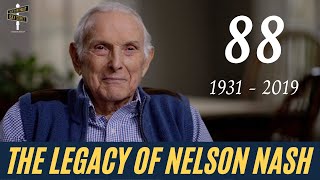
This is a tribute episode (Episode 88) of the "Wealth Without Bay Street" podcast (published Nov 9, 2021) in which hosts and guests (including Richard Canfield) reminisce about R. Nelson Nash — his personality, seminar style, teachings (Infinite Banking / Becoming Your Own Banker), and lasting influence. The speakers describe meeting Nelson (first think tank Feb 2012 in Birmingham, AL), filming the documentary, screening/premiere moments, seminar anecdotes (weedeater joke, grocery-store sketch, engaging first rows), and resources for further study. They highlight archival projects (DayofNelson), the documentary (nelsonnashfilm.com), and YouTube playlists; they report the documentary's view growth (about 138,000 views in June 2021 to ~157,337 by the recording). The episode emphasizes Nelson's generosity, storytelling method, stamina (still traveling/seminaring through ~2016), and how his work guides the hosts' decisions posthumously.
Questions this video answers
Episode 88
February 2012 (Birmingham, Alabama)
2016 (last year traveling/doing seminars mentioned)
~138,000 views in June 2021; ~157,337 views at time of this recording (Nov 2021)
dayofnelson.com; nelsonnashfilm.com; Nelson Nash Institute YouTube channel (and Baker's Vault playlist)
Chapters
When I meet with somebody for the first time and they've already had a chance to watch the film, and I asked them, tell me about your experience. What did you learn? What captured you in it? And everyone says something to the effect of, wow, what an incredible man. I really felt connected to him, and he just made a lot of sense. And he made me laugh, and I was emotional. And the kind of commentary that we get from people who watch the documentary film, it's profound. It's an experience. You really get connected to Nelson.
You get to connect with who he was as an individual and how he really showed up in life and how he impacted people. And so we have this incredible podcast which we are able to utilize. It would not exist had it not been for Nelson. Nelson's a stone in the pond and the ripples that carry out from him in an infinite way. And we talk to people every week on our podcast who are just feeling some component of impact because of Nelson. If you really want to think about the word legacy and consider for a moment, what's the legacy of a guy like R. Nelson Nash. Now, if you're listening to this podcast, you should know who Nelson is, and probability you do, maybe you even had a chance to meet Nelson. And so just consider what could your life be like? What kind of a legacy could you leave behind if you could channel your inner Nelson?
Episode number 88. Something that Richard and I have been anticipating for some time as a tribute and just reminiscing about the late R. Nelson Nash, our mentor, someone who has just blessed our lives in immeasurable ways. And for anyone who's been tuning in to the Wealth Without Bay street podcast would know that Nelson is mentioned in every. Every single episode and will continue to be. And the reason we chose episode 88 is that something. Something interesting was happening.
You know, if you.
If you take.
If you take an eight and you just tilt it sideways and it represents infinite. And after Nelson had passed, that was, you know, how things show up in your life. And I remember flying home from his funeral, and when I landed in Denver, connecting Birmingham, Denver back to Edmonton, we rolled up to gate 88. And I took a picture of that and I sent it out to say, you know, thank you, Nelson. And it was. So when we were planning, of course, our list of episodes, we had earmarked episode 88 to. To talk about Nelson. And so, Rich, it's awesome to be with you. We were chatting, obviously, before hitting the record button here on a number of things you want to share. But what would Your. What would your opening remarks to the episode be?
Well, I mean, there's. There's so many. I. I recall, you know, you know, first thing that kind of pops to my head is I remember driving down the road, you know, coming. Leaving my previous acreage out by Edmonton, and before, of course, we moved out to the WAC was I was calling Nelson back. He'd phone and left me a voicemail and I was reaching out to him. It was one of the. One of the last conversations I had with Nelson. And as I was driving down this kind of, you know, back road out by Sherwood Park, Alberta, you know, there's a, you know, fields and stuff, and so there's a bunch of cattle around me. And I was calling Nelson back and I said, well, would you believe it, Nelson? I'm driving by and there's a bunch of cows in the field. And I know a thought occurred to me. I wonder if that anyone's taught that.
Farmer how to grow his own cow.
Chow, you know, and that's one of the clips. We have a little clip that's available in our Day of Nelson project where they. Nelson talks about the importance of, you know, you got to be growing your own cow chow. And just every little thing, he would find a way to infuse not only a little bit of humor and some energy into, but just like a lesson. Everything had a lesson. And so I miss that. And I, I definitely. It's. It's so nice to be able to have a conversation. I mean, we're always doing wonderful interviews with people, but it's nice to just have a conversation with you and talk about Nelson and what he meant to us and how the things that we're here from our clients, the things that we hear from people. And we're going to share a couple of resources today. So for the listeners, we're going to provide some. Some resources in. In obviously the YouTube that you'll be able to see. We're going to do a bit of a screen share here today and we're also going to be, you know, pointing you to direction of some of those resources in the show notes where you'll be able to go and access them. What, what I find is so interesting is just talking for a moment. A moment, Jason, about the documentary film. And now it's something I always make sure I ask people who are looking at this process to go and check out. And obviously our existing clients, most people have watched the film, but when I meet with somebody for the first time and they've already had A chance to watch the film. And I asked them, tell me about your experience. What did you learn? What captured you in it? And everyone says something to the effect of, wow, what an incredible man. I could just. I just. I just wanted to reach through the screen and hug him. And, you know, I. I really felt connected to him, and he just made a lot of sense, and I just. I loved his. He made me laugh, and, you know, I was emotional. And the kind of commentary that we get from people who watch the documentary film, it's. It's profound. It's. It's an experience. It's not. It's, you know. You know, there's. It's kind of like. I equate it to, you know, a movie that's one of my favorites is the movie Rudy.
Yeah, Rudy's a great, great film.
Yeah, it's a. It's an amazing film. It's the underdog kind of story.
And. And everyone, you know, roots for. For Rudy and. But there's a feeling that you get watching that film. You get really connected to the character and his. His strife and his struggles and things. And now there's not a lot of that in the documentary film, but you really get connected to Nelson.
You get to.
You get to connect with who he was as an individual and how he really showed up in life and how he impacted people. And so we are. We have this incredible podcast which we are able to utilize. It's. It's. It did. It would not exist had it not been for Nelson. It's just another ripple effect. It's that, you know, Nelson's a stone in the pond, and the ripples that carry out from him, and in an infinite way, and much as your.
Your.
Your Sideways eight would be, is really profound. And we talk to people every. Every week on our podcast. We talk to people every day in our lives who are just feeling some component of impact because of Nelson. And what an amazing thing to do. If you really want to think about the word legacy. And just consider, if you're listening to this, what does legacy mean to you? It may mean something. Maybe you've thought about it already. Consider for a moment, what's the legacy of a guy like R. Nelson Nash? Now, if you're listening to this podcast, you should know who Nelson is, and probability you do. Maybe you even had a chance to meet Nelson. And so just consider, what could your life be like? What kind of a legacy could you leave behind if you could channel your inner Nelson?
Well, and I'll say to you that what comes up for me, when I reflect back on how quickly the time has passed. You'll never forget the very first think tank attending that, being there, being introduced to Nelson for the very first time. It was in February of 2012. We were in Birmingham, Alabama, and we had traveled there. We flew the Denver route. Remember the tiny little regional jet that I kind of look back at Rich and I'm like, is he going to be able to get this thing off the ground? It's just this tiny jet. And we made our way to Birmingham. And the moment that we went through Nelson's seminar in advance of the think tank conference itself, we knew in an instant that this was something that we were just so passionate about, making our own lives work. And then that led to being introduced to so many great people who had already known Nelson for many years. And when those think tanks, my understanding is they got going in somewhere between 2005, 2007, or in that timeframe. And so we met so many people who, most of whom have been interviewed on this podcast, and we have lifelong relationships with now, and it's all directly connected to Nelson. And I find myself reflecting back on that period of time and asking myself what led to that. There's always a moment in your life where somebody suggests that you read a book or introduces you to someone, and you just never know where that is going to lead you and take you in your life journey. And I couldn't imagine doing anything else. I just. I couldn't even imagine doing anything else. And so it was there. I remember it. I can close my eyes and see it walking into the.
The.
The Birmingham Conference center and walking into the room. And David Stearns was the first fellow that, you know, we met at the time, and, you know, he had already begun making references to us as crazy.
Canadians, and he was making some hockey jokes.
Yeah, totally. And. And then meeting Nelson himself, and everything began from there. And I just really admire how generous he always was with his time and his wisdom. He always had time for you. Always, always. There was never a time where he was like, you know, because we would always ask when we call him, right, hey, Nelson, did we catch you in an okay time? And he would always say, all right.
And he didn't. You know, he was. He was generous, as you said, with his knowledge and. But he wasn't. And although he could be very direct, he was all.
He.
He was a master at sharing things and sharing information and components of history, etc. But. But doing it in a tale, doing it in a story, and, and interconnecting things. And, and he wouldn't always, you know, if you asked him a direct question, he wouldn't, he would generally not give you a direct answer because he wanted you to think it through. And so he would use an analogy or he would use, he would go to, into another story and then, and then 25 minutes later he would bring it back to the question that you asked. So he was really artful and masterful at doing that. I think a lot of it was probably just through practice.
Right.
You know, you get, get 88 years behind you and you get to figure out how to, how to, how to weave a tail pretty good. But he was so polished at delivering his seminar. Now recently we did an event for our, our clients on our. One of our client quarterly client coaching sessions. And what we did is we actually went through Nelson's seminar on DVD as a large group. It was fantastic to do that. And so we spent hours. Yeah. And, and this, that segment was interesting because it was about a year prior to that where you and I and a number of our team members who got together actually at your house. We had the big theater experience. We had Nelson up on the big screen.
Yeah.
And, and we went through a different version of like a previous older version of that DVD series. I think Nelson was probably in his late 70s when that one was recorded versus the one that we did here recently. And so both were fantastic. Of course they were. But it was also. And as much as they were, they were consistent. Like the themes are there, the, the delivery was the same. There's some consistent jokes throughout there that Nelson used because they, they became part of, they're part of the seminar. They, they connect to a lesson. Right.
Yeah.
Yeah.
You know, Nelson's famous weed eater joke is. It's there because it's also, it's funny, but it's also about a lesson. It's about a lesson about logic and that you can take a little bit of information and jump to an absurd conclusion. That is the premise of the whole reason he tells that joke. It's it, but it's perfectly timed.
You know, it's.
Everything's so polished. And so he has those, those, you know, that he would do in his seminars. But then there's all the ad libs. It's the subtle little things that would happen at an event because of the unique group that was there, how Nelson would tailor his message. He'd pick on people in the crowd. Everyone had to have. You know, if you ever sat in one of Nelson seminars, you had big Big name tags in front. You had to write your name in big so he could see it. First two rows, he wanted to be able to see and pick on the people in the first two rows. Somebody had to go in a grocery store because when he did the grocery store, he would put somebody in the, into the grocery business, you know, and that's the minute. It's the miniature grocery and this is the Canfield grocery over here. What's your wife's name again? You know, he would use your names, he would embrace that. And so that would get everyone interactive. And you know that that's an art form and it's, it's not easy to do. It takes practice like anything. But to be able to go and have the energy that he did and be teaching his message so long. I mean, 2016 was the last year that Nelson was traveling and doing seminars. And he did, I don't know how many he did, but I'm sure he did probably at least 20 of them, if not 25.
Yeah, yeah. And then he was done, I think November, at the end of November of that year.
Yeah. So, you know, at that point he would have been 85. I think 85 would have been the last, or 86, maybe 85 somewhere would have been the last year that he did that. And so just consider for a moment, think of how many people that you know in your life today, if you're listening to this, that are 85 years old and they're energetic, they're passionate about something in life despite whatever maybe ailments they've got going on. They're getting on planes, they're going and delivering eight hours of, or some case 10 hours a Friday evening and then an all day Saturday drinking about as many, you know, like pots of coffee as someone will continue bringing out to you in a to go mug.
And having dinner the Friday night, having dinner Saturday night, having breakfast. You know, we, whenever we had occasion to go to his seminar or bring him to deliver his seminar, like he would want to have breakfast, you know, the second morning and say, hey, why don't we meet at, you know, quarter to seven and just enjoy each other's company over breakfast. And he had more energy than you can imagine. And he was so passionate about the message and about educating people about how to become their own banker. And what an example, what a leader to follow just in terms of his stamina. I mean, he just kept going. And he would talk like he talked for 24 hours. If you'd let him.
He absolutely could. He absolutely could and, and then you, you know, we, we shoot forward to was. I believe it was right at the, it was early 2017 that we went down to do recording for the documentary film in January. Was it 2017? I think it was 2017. We went down there. I don't know, whatever. It was a while ago. It was awesome. It was, might have been 2018. We, we fly down, I get this phone call. I got a phone call from Jason. I don't know, it was like maybe two weeks or something before Christmas, might have been a week before Christmas. And you're like, hey, I've got this idea going to Birmingham. I'm like, yeah, we're going to Birmingham. It's like February, we're going to Birmingham. It's like, no, no, no, no. We're going to Birmingham in January. Are you coming? I'm like, I guess so.
What are we doing?
He's like, well, we got a project, we're going to be filming some stuff and I want you to come down there. Like, yeah, okay, sounds good. I'll, yeah, let me know the day, I'll book my flights and we'll go. So I had a, you know, couple weeks notice and book some flights and we went down and we were down there I think for five days recording. We had a lot of fun with our awesome film crew of people, of course with Jason Rink and the team and a lot of laughs. But more importantly, we got, spent a lot of really quality time with Nelson and Mary and David, tear apart David's house, et cetera. A lot of people have heard that story. But you know, what we got to capture there was really, really amazing and we got to have some really incredible one on one conversations of course with Nelson that obviously didn't make the film and some things that maybe weren't recorded. But the, the time that he would spend going through all that and what was really meaningful, like one of my most, I think happy moments, I think in relation to that was being able to be with Nelson. When we premiered that film in Birmingham and the following think tank and for Nelson to have friends and family there, like family travels from other parts of the US to come down. His, his heart surgeon was there, you know, who has also become a client, a guy who loves Austrian economics. He was there. And people that loved and respected Nelson from a lot of areas were there to participate and see that event, come through it.
It was really, truly a special time. And when we were in the process, you know, of recording and the one thing that Jason Rink did such a great Job at, you know, he's, he's a brilliant. So, so brilliant at bringing out what, what you envision, you know, and, and he would add his, his ideas and he would want to arrange things a certain way for the filming and, and have. Have you talk about it a certain way. And he was just really, truly committed to the project and really immersed himself in it. And he just brought his best skills. And it was incredible, absolutely incredible. I'll never forget it for the rest of my life, that experience. And, you know, we also shot a lot of additional footage that will, it will surface, it will make its way out to the world. And all that time I felt. I felt like it was. I don't know. I don't know how to describe it. You know, Nelson would often say, right, you know that I'm going to graduate sometime soon. He was always kind of reminding you that his time on earth was coming to an end. And when we screened the film at the think tank conference, it was just a very, I don't know, a mixed feelings. It was, you know, amazed that there was something in the form of a film to share with the world. But at the same token, it was just brought up feelings of sadness to know that, I don't know, for some strange reason just had that feeling that, you know, his time, his time was coming. And then shortly thereafter, you know, he passed away.
And.
We have some just prized collection items that Nelson was just so kind. We wanted to do this project of framing up every edition of his book. And I had reached out to Nelson and to David and I said, I'm looking for the first, second and third edition of Nelson's book. I can find the fourth. I own the fifth. So we're okay there. And they had put together, Nelson had provided. This is the very first copy.
Of.
The first edition of Nelson's book. And this is a prized, prized collection item, prized possession. And this is the second version. And he, he wrote to some very kind notes in each book. And it all began there. We talk about that all the time. It all begins with the book becoming your own banker. And Nelson referred to it as a filter. He would have people go through that filter of reading the book before having a conversation with them about how to implement it in their own lives. And it's just so many, oh, gosh, we'll go on for days.
Well, people would always ask, always ask Nelson. And this would happen at every, you know, everything tank event or you'd even hear. You'd hear him having a conversation with somebody maybe who was new or like a newer advisor or a person who was in the advisory space that was new to the message. Maybe they'd been an Advisor for, like, 20, 30 years. And they would ask, you know, everyone would ask Nelson, well, Nelson, how would you introduce IBC to people? He says, well, golly, look, man, do you ever have the gut feeling there's something fundamentally wrong in the financial world we live in?
Yeah.
Well, give me 20 bucks. Read this book.
Yeah. And, Rich, do you remember the number of times even, like, most recently, like, when we went to the, you know, the last think tank, or I think, I believe, the one after that, actually. And so when we. When we travel and we take in a day being among great colleagues and learning and growing, and so often we'll either pick up a snack on the way back to the hotel, like the. Eugene's Fried Chicken, where.
Oh, my God, you thought you were shout out to Eugene's. Eugene's Fried Chicken, by the way, in. And they gave Birmingham, Alabama, bucket.
You know, I thought I was getting.
Like, a little, like a thing, like 12 chicken wings. I got like, four chickens in a. In a bucket. And I'm like, oh, my God, we already ate a meal.
Yeah. And we get back to the hotel and we just. We dive in. Like, we. Hey, you know, we heard something interesting today. Let's. Let's dive into that a little more. And then, you know, the. Before you know it, we've got remnants of snacks and, you know, just laptop computers and, you know, paper pads and pens, and we're just. We're having this, like, dialogue and diving deep into and coming up and crafting ideas and just being inspired. That's not captured anywhere on any of the, you know, the think tank footage that's out there. It's everything that happens after that and what you take in and what you talk about. And it was so often inspired directly from Nelson, something that he said. And, you know, he used to interact with the crowd, right, where sometimes he would just ask for the microphone and he would want to clarify a teaching point or just add his own, you know, wisdom to whatever was being shared at the time. But it's just memories like that that I just.
I don't know.
I really, really love it. And when we were down to pay our respects to Nelson and we had everyone, you know, gathered together and we were. Were there to. To honor him, you know, his final resting place. And it was so cloudy and drizzly rain, and. And then when we got there, literally when we got there, everything broke right the Clouds parted and then an airplane.
Flew right over and sun came down.
It was great.
Even that. It was just again, a moment where you could just picture, you know, it would be Nelson kind of just giving you a bit of a wink and saying, I know you're here and thank you for being here. You know, he was, yeah, it's just such an amazing, amazing man and continues to influence in a very positive way.
And, well, and we're always reflecting to see and even when we're having conversations, you know, about projects or things that we want to do, he's becomes the guiding force. And we're always, we're always checking in with one another and we do this with other teammates as well. Is, is that what Nelson would have wanted? Is that, you know, how would Nelson think about that? And so we often, we often, you know, he becomes like a, like a barometer basically of decision making processes. And we're trying to, we're trying to gauge to the best of our ability, because we can't for sure, but we're always trying to say, well, is that how Nelson would have conveyed that message? Or can we, can we try to channel this in the best way that Nelson would have, you know, wanted to, you know, are we, are we meeting the object of making sure people understand the process and they really get it clear on the message? And like, again, all this, all this business about product versus process and it's like, okay, well, again, yeah, we use life insurance.
Get over it.
Like, you got to store capital somewhere. We just use this capital storage facility happens to be life insurance. Nelson said, look, it shouldn't have been. Never been called life insurance. It was misclassified. It should have been called a personal monetary system with a death benefit thrown on the side for good measure. But we need some kind of a silly acronym for it. And so, you know, it's. We're trying to get through all that confusion and all that noise that doesn't matter to the core of you need. You need capital, you got to put it someplace. You want it to be efficient. You want to be able to use it as many times as possible over your lifespan. And coincidentally, you're probably going to die at some point, you know, unless you're the Terminator, right? Like you're, you're, you. You got a limited period of time on planet Earth. I don't know what the gap is, but sooner or later it's going to come to an end. Don't you want a bunch of money to show up to solve problems? Like, why don't we just do all of it combined into one magical tool. We were on a podcast earlier today, and I was talking about the financial minivan.
Right, yeah, that was a great analogy.
It's this thing. It's a Swiss army knife of financial products. It's got every little thing that you need. Maybe it doesn't do every exact thing perfectly. The Swiss army knife's got a screwdriver on it. It might not be the exact one you need that fits the screw perfectly.
But, boy, if you put a little.
Pressure on there, you could probably work with that screw. Right. Like, it's got all the components, and so that's really what the tool is. But how you think about its utilization is all about you. And Nelson really wanted to get that across. And it says all about how you think. It's all about how you think. This is all about how you think.
Well, thank goodness he didn't say this is all about how you drive. Because I'll tell you, like, when he. Gosh, man, I would literally be white knuckles when go down for Think Tank. You'd be like, hey, swing by the airport, pick you up and bring you the hotel. Because we would often invite him to dinner the first night that we would get there. Well, hey, I tell you what, I'll swing by the airport and pick you up.
Great.
You get in the car, and then, boy, he'd get on the expressway and he would pin it, and then you would see traffic stopped, right. Whether it was just congestion or whatever. And it took him a while to see that traffic had actually stopped. And he would just almost literally brake, check the car, and you're like, hey, Nelson, you okay? You want me to drive? And, oh, no, I'm fine, I'm fine. And he just said, when I want to get somewhere, I want to get there quick. I'll never forget that, man.
And I had a similar experience in a car with Bob Shields, actually.
Oh, yeah? Yeah.
I remember you talking about that St. Catherine's heading towards, like, Niagara or whatever. Him and his wife.
It was.
Yeah.
Merging onto, like, the 401. What? I was like, oh, my God, this might be the scariest drive I've ever been on in my whole life. But through a tour of wine country with Bob Shields, it was.
Well, I would. I. I would tell Nelson, say, you know what? I'll keep an eye on the road for the both of us. You just. If you want to go fast, that's great, but I'm going to give you. I'm going to forewarn you when we need to slow down or stop. How does that sound? Yeah, he's, he was amazing, man.
Well, what I think it would be really good for our listeners is we, we talk on many of our episodes about this, but maybe this is your first time hearing. Where are some of the resources that you can, you can go towards to learn more about Nelson or to learn of Nelson or experiencing in him in some way? So we're gonna, we're gonna pull a couple of those up and I'll, I'll bring my screen share up here in a, in a moment. But we would definitely encourage you that it all starts with Nelson's book Becoming youg Own Banker. We really would encourage that. And there is an audio version of it I think you can get. I don't know if it's on audible, but there's CDs you can get.
Yeah, it's on, and it's on the Canadian audio Audible platform.
Oh, great. Excellent. Yeah, that's fantastic. I think that's a fairly recent adjustment recently, but we're gonna talk about a couple of these key resources. And so the first one, I think that, I mean for the purpose of what we're doing here today in kind of celebrating Nelson and in episode 88 is we want to highlight Day of Nelson. So you can see my screen there.
Right now, right, Jay?
Yeah, I've got you. Gotcha.
Yeah. So dayofnelson.com dayofnelson.com here's where we have commemoration, of course, Nelson. And this is a project that we did earlier in 2021. And if you play this, of course, it's filled with interviews and a lot of great clips.
I'm going to walk through that a.
Little bit, but you can, you can scroll down and you can see pictures of Nelson, you know, moments of him.
With many different people.
You can add a comment, you can feel free. This is a living page where you can go and you can, you can share yourself what Nelson's meant to you. If you're, maybe you've just started practicing this and you just discovered his message or maybe you've been doing this and you just, you know, you use policy loans to pay off your third party creditors and turn the wind current of money and payments coming back into your household life. Maybe that's where you're at today. So, you know, come and, come and check this out and leave a comment, share what Nelson's meant to you in your life and your journey. And if you open, if you open Day of Nelson up, you can kind.
Of click on it right here and open it up where it's, it's hosted on YouTube. When you go down to the YouTube commentary, there's, there's chapter titles so you can see the different interviews that we've had with people here. And in between those interviews there's a Nelson seminar highlight. So if you scroll over, you know, some of these are five minutes long, some are two, three minutes long. Some of them are, I think the longest is maybe 12 or 13 minutes. But there's really incredible content available here where you can, you can learn from Nelson stuff that was never really previously released to the public that you can, you can learn from him. Fantastic lessons about how to think and you know, different good stories about death claims that he received about the policies on the family and Lorelei leasing and how there's a, you know, how he sold his house to Dr. Barry Nash's son and boy. He was a slum landlord. He jacked the rent on, you know, on, on Nelson, you know, for his business. But yet he gave a nice separate lease to his. What you know, to, to marry Nash. Right. So like little good stories there where you got to hear the pieces of thinking a little bit differently.
Yeah.
And then of course we got Nelson Nash film. Nelson Nash film.com. it's just a nice easy way to remember how to get to the documentary nelson nash film.com and that's, it'll bring you right to where you can access it. There's a little interview of Jason and myself and Jason Rink, of course, the film director there. The film is hosted on YouTube. So if you go to where it's hosted, you know, it's a day of this recording. If you see my screen share were at 157, 337 view 157,000 views of this documentary film. This is incredible because Jason, if you recall a few months ago we released a podcast episode with David Stearns.
Yep.
That was recorded in June of 2021. So here we are, we're, we're at the time of this recording.
We're right around Halloween.
So we're approaching November of 2021, less than five months away. And at that time there was 138,000 views on the video. So we're, we've seen 20,000 new views on the documentary film in that five month period. It's incredible the direction that we're moving the momentum, picking up people hearing about Nelson, learning about his message, finding that film. That means people are sharing it more frequently and they're getting a chance to Experience him. Even people who, you know, I guess I'll use the word naysayers, people who would, you know, say, oh, whole life insurance. Like that's sounds like a really bad idea because they just have no contacts whatsoever. All of a sudden they get to see Nelson. It's like, oh yeah, clearly I had no. This was out of the fringe of what my knowledge was aware of. And now Nelson's exposed me. You know, he shed a flashlight over on this corner of the financial products I just didn't know about in a way of doing things. It's like, wow, like I'm really interested in this now. So just phenomenal, which you can do there. And then another great resource that we want to bring up, just bring my screen up again here is of course you know, on the YouTube channel for the Nelson Nash Institute, they have a ton of great content that's on there that they're going to be adding some more. But one of the, one of the ones that I quite like is there's a, there's one titled Nelson Nash at the Freedom Advisors eventually. And so this was released in 2016. Again, it's at almost 55,000 views. This is about an hour program. But Nelson goes through an important lesson here. He goes through his State Farm policy example. He talks about many different components here.
And in this session. This is something that you and I were able to see Nelson do many times. But from my perspective, this version of it is one of the best ones that I've seen because Nelson ad libs a little bit on his story about a couple of the most profitable real estate deals he ever did, which stem from a policy loan. From this one policy which was never set up for infinite banking purposes. It had stunted growth because Nelson used dividends to pay the premium for the first 15 years of the policy. Yet the policy perfectly kept up with inflation over that entire timeframe. It still left, I believe, when he passed. I think it left about $140,000 tax free death benefit, just shy of that. Yep, Nelson had all of his money out of that policy. He'd already taken dividend checks out of it. A number of different things he did. So this policy became an incredible teaching tool. And in this one session you can go there as a person who's just learning and discovering and you can let Nelson teach you the life experience over like a 50, 60 year time horizon just to what one policy was able to do for him. Yeah, it's incredible. You know, I don't have an ability to show you a 50 year old policy because I haven't been doing this long enough and I'm certainly.
And I'm.
Although I do have a little bit.
Of new beard going on here.
I don't. I'm not quite up to that age level yet. So, you know, we can leverage what Nelson did for us. And what he did for us is he showed us history. Yeah. The history leading up to thinking about this concept than his own personal life's history in embracing the concept and how he was able to do so many things throughout his life for his family and. And the thinking that went into its creation and its iterations of design over time. This brings up something that pops into my head. Jay, you remember. Do you remember when this might have been? I think we talked about this when we went down to do the film and it came up, I think a time before that when we'd seen Nelson, maybe it was when he did an event in Kelowna, but Nelson was at a point where he was talking about something that they didn't think through earlier on. And it was as this machine of family policies began to grow and grow and grow when they would have a new grandchild born, or in Nelson's case, a great grandchildren. Yeah, well, Nelson wanted to get a policy as a great grandfather. Then the grandfather wanted to get a grandparents wanted to get a policy. Then the parents wanted to get a policy. So three people are trying to get a policy on one child.
Right.
Total death benefit is just too much that the life insurance company wouldn't want to grant these things. They had to really fight over it. And the teaching point, the lesson was that they realized they had created a problem unintentionally, an unintended consequence where they hadn't loaded up enough on the parent because the parent, the parent needed more insurance to help augment the ability to get more insurance on the child, the new infant that was born. So they were always learning. The infinite of discovery was always present, ever present, right up until the point where Nelson was no longer with us. And it's still continuing on after he's gone.
Yeah, that brings back a great memory. And we talked about it too, with David at his house in is. We were having a chat in his dining room, remember, in between filming. Like it was just, like it was just a. What a day, you know, because we're just going and going and going and going. Like we, we went for days and just like recorded from dawn till dusk, like literally. And we were having that conversation in his dining room. Never forget that. And it was great you know, I always loved. And we would sit down to dinner and again, you know, Nelson, he would just be so conversational. And I missed, I missed that, that it's those, those special times and moments and sharing a meal, sharing a great conversation, sitting down to breakfast, talking on the phone. I'll tell. I gotta tell you this story. This is funny. So one time, coming down for a think tank, Nelson had said, we, you know, we'd love to. We'd love to have you spend the evening in our home, spend the night in our home, and then the next day I'll take you to the hotel and you check in at the hotel. And so they had a guest room. And I'll never forget that on each of the end tables, nightstands. Pardon me, there were like a number of trinkets. Like, Mary just decorated their home so beautifully. And so I'll never forget, I was turning in for the night and I traditionally, I put my phone and my glasses and I'll just put that on the nightstand. Well, I turned the lights out and completely forgot about the trinkets. Well, I got to put my phone and my glasses down on this nightstand and come on. Stuff falling off. So I thought, oh, no, please, I hope I don't wake anybody up. I hope I don't wake anybody up. And I'm trying to find the light and I get the light on in the room and there's trinkets on the floor and I'm picking them up and trying to put them back on the nightstand. And the next morning I. I hand wrote a nice note thanking Nelson and Mary and made reference to that. And I said, I sincerely hope I didn't, you know, break anything. I tried to put everything back the way it was and please let me know. And I folded this note and I just left it on the bed. I made the bed and I just left the note there. And thankfully, nobody called upon me to replace anything. I'm glad I didn't break anything. But they were just always so kind and welcoming people into their home. Yeah, those are the things that just come up for me today. I'm just so thankful. And you know, our. For yourself and I, when we met, prior to discovering this process, this just set us off on a whole new, like, just a whole new trajectory. And when we got excited about it, we got excited about it and. But the time sure has flown by, hasn't it?
Yeah, it was. Well, I've been doing as. As you know, but nobody else will know. I've been working on a big project Another big project where we're going to be releasing perhaps, perhaps by the time this episode comes out, we'll, we'll maybe have some of that stuff available. But we're putting together a project that will be available on YouTube, which is, you know, a previous recording of Nelson at an event. It was an event that was done for advisors, but you know, we're going to have transcriptions and there's going to be some way to follow along with Nelson. It's going to be chopped up into, you know, 10, 15 minute segments. But you know, basically you'll be able to go through about a five hour or so training session with, with Nelson and hear a ton of incredible stories and great commentary from people and the interaction of that live connection in the group. And what's really unique about this is I was, I was listening to some of these clips, of course, recently as I'm going through and trying to, you know, feverishly get editing kind of components done. And Nelson was talking about a CPA and he was talking about, you know, hey, you know, there was a CPA reached out and you know, some people are unteachable. He's talking about the arrival syndrome and how some people are unteachable. And he said, you know, sometimes you get people who ask you questions. Well, yeah, this is all sounds really.
Good, but hey, I'm going to go.
And run this by, you know, I'll just run this by my cpa. And Nelson's response would be, well, you might as well run it by your garbage man. He knows more about it, so why.
Would you want to run it by that guy?
What are they, what are they, what are they going to do for you? You're the, you're the business owner, you're the guy that's, you know, putting the money in or are they putting any money into the deal? Just like, do you want to do it or not? Kind of a situation.
Oh boy.
Just as the way that he would, he would, he would say something would catch you, you know, in a moment and it would just like, I have a pretty loud laugh. It's pretty obnoxious.
And when I'm in it, when I'm.
In like a conference setting, I oftentimes I have to get up and leave the room or like go to the back of the room. And anytime I was in the same room as Nelson, I'd start hearing him chuckle or laughing. He would have like a, like a little burst out quick laugh that he would do. Yeah, yeah, you would hear in the room and it would get me every time and there was always points where we would be like different points of a conference room in like a think tank and I, we would like laugh at the same time and it was, I just love that those moments, you know, and his sense of humor was really something that, that, that I definitely miss and I love being able to hear his, his jokes and listen to old audios and things and, and connect with his, connect with his spirit, you know, connect with the way that he would, he would show up for people and how he would, he could put a smile on anyone's face by doing that.
And when he would open up the think tank, you know, he was often the first, you know, speaker to welcome everybody and to always express how everyone brought so much joy to his heart. And it set the tone, it set the tone for the day and you know, he would get the moment, he'd be up there on the platform, you know, just be standing ovation and he would, he would inspire us, he would teach us something and get us off to the right start know for the think tank and yeah, just, you know, I, I, I can't wait to get back there in person in 2022 to be with all of our colleagues and to, to, to get back to that togetherness and, and sharing and learning and growing and yeah. Wow, what a. Than, thanks for, thanks for stirring up so many great memories today. Richard. I, I appreciate you, I love you very much and couldn't imagine being on this journey with anyone else and you know we, and we've had, we've had.
A ride and had some good times and.
Right back at you.
And so for our listeners, thanks for tuning into this special episode of our tribute to 88 for Nelson Nash. Celebrate. Celebration of the amazing life of Nelson Nash. And again, remember we've got the incredible stuff over@dayofnelson.com you want to watch the documentary film, share it with other people. It's easy to remember. Nelsonnashfilm.com and we are going to have a new playlist that's going to be on the Baker's Vault channel that you can head on over to. It will be called I believe it's.
Going to be the Infinite Infinite Banking Concept.
Infinite Banking concept. Nelson Nash training a playlist on there. It's going to be dedicated to Nelson. It's, it's, it's all about him and connecting with that message and something you'll be able to watch through progression. We might be doing it as a bit of a live release that's yet to Be determined. But you know, again, there's going to be a lot more good content available from Nelson to come and make sure you check it all out because you, you always have an opportunity to learn something new. And Jason and I can clearly share with you. Any experience we had to be with Nelson was eye opening. It was something that got us to come up with new ideas, even hearing the same thing again in repetition. We were just at a different point in life where suddenly something new sparked. That's what Nelson's book does. That's what a conversation with Nelson does. That's what watching Nelson's the seminar on DVD does, or one of these videos. And so we would encourage you to. To embrace that learning process and recognize that there's an idea in your melon somewhere, trapped up inside of your head, waiting to be released, that maybe Nelson, by his good grace, will be able to help extract out of your head so that you can go into implementation in some other positive area of your life. Love it.
Love it. Great episode and make the rest of your week great, as we always say.
And.
Looking forward to think tank next year, but have a great weekend. Rich, it was. Today was awesome. What a marathon of episodes. Like five.
Did we do five?
Awesome, man. Have a great rest of your day, buddy.
All right, thanks. And make sure to check out the playlist right next.
Oh, yeah, that's right.
For those of you on the youtubes and youtubes, if you're on the tweeters, click on the YouTube view link so that you can see the playlist to get from the tweeter to the YouTube.
Just throwing that out there. Cool. Little bird. Little bird told me about that.
Thanks, man.
More from Richard





How Do You Use a Policy Loan to Buy Dividend Stocks? #dividendstocks #infinitebanking #shorts


Can Compounding Dividends Pay Your Bills? #wealthbuilding #investment #financeeducation


Should a Corporate Policy Offset Your Personal Coverage? #shorts #insurancetips

What Is Human Life Value? #shorts #insurancetips #dividend #wholelifeinsurance